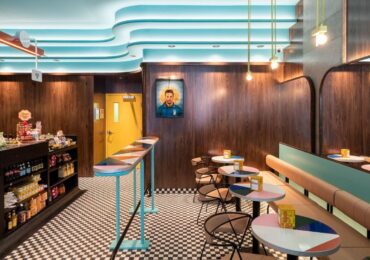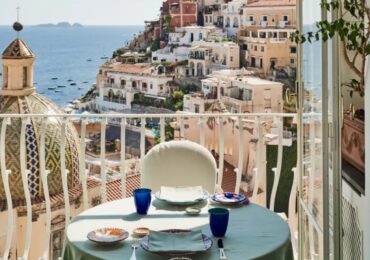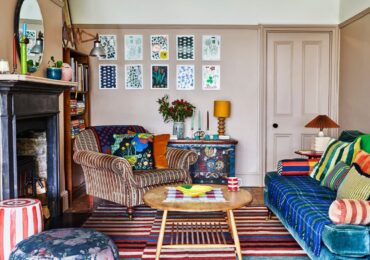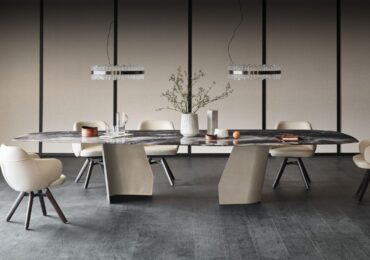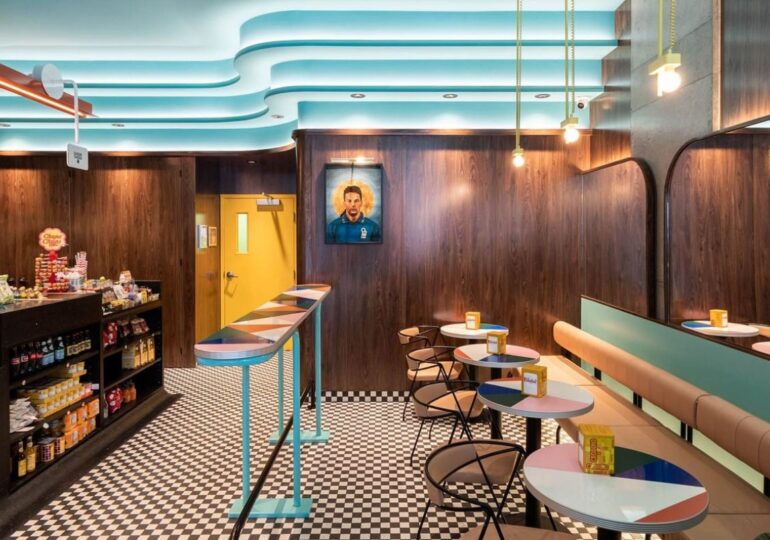
In Italy, the bar is no longer just a place to grab a coffee: it has become, in every sense, a social infrastructure. Active businesses classified as bars and similar venues without a kitchen (ATECO code 56.30) total 127,667 (2024 data, FIPE elaboration on InfoCamere). But if we widen the lens to the real, on-the-ground density of consumption points, FIPE—based on a Tradelab analysis—counts 152,650 bars nationwide: a network capable of generating nearly 6 billion visits in 2025 and a market value of €23.8 billion, with an average ticket of €4.20.
That’s why 2026—on the interior and furniture side—won’t be the year of “cute trends,” but of decisions that hold identity, durability, and performance together. Investments exist, but they’re selective: in 2024, 42.6% of bars said they made at least one investment. And among the most “physical” ones—directly tied to spatial design and interior architecture—stand out: counter renewal (5.7%), renovation/expansion (4.0%), outdoor area/dehors (3.8%), new chairs and tables (3.3%), and thermal/acoustic insulation (1.7%).
In the background, there’s also a European scale that matters if we want to read the sector correctly: in the European Union, “tourism industries” count 2.4 million enterprises (2022), and more than half are concentrated in Italy, France, Spain, and Germany (with Italy at 382,000). This makes one point clear: bar interior design today isn’t a decorative afterthought—it’s a concrete positioning tool in an increasingly crowded and competitive market.
Bar Furniture Trends 2026: The Bar Becomes Multi-Moment, Not Mono-Style
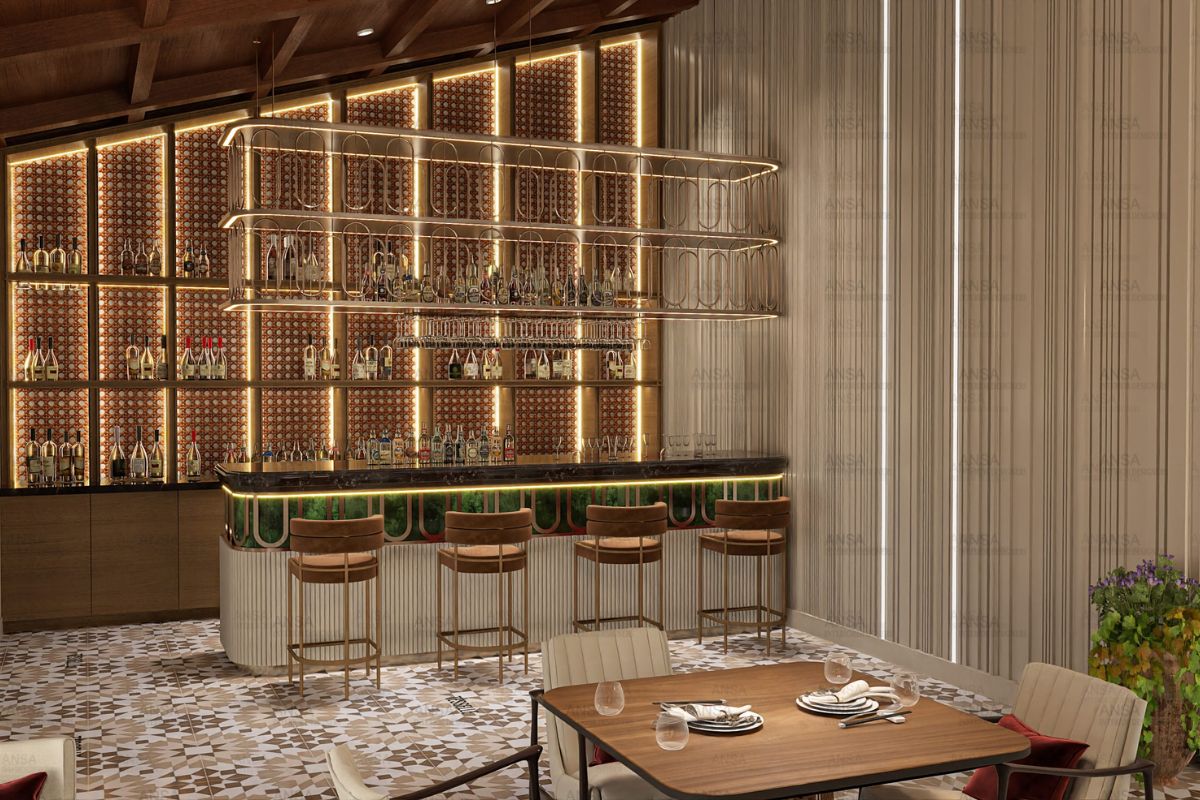
In 2026, talking about bar furniture trends essentially means one thing: designing a venue that changes skin throughout the day while staying coherent. The contemporary bar is no longer “a beautiful space,” but an interior that can sustain different rhythms—fast breakfast, a quick break, an informal meeting, aperitivo—through micro-decisions in layout, seating, lighting, and materials.
This is where design stops being decoration and becomes strategy. You don’t need to transform everything: often it’s enough to build a clear hierarchy of zones and perceptions. One area lets you “fly” (espresso and out), another gives you permission to stay (comfort, better acoustics, softer light). The result is a bar that works because it’s legible: you understand it in three seconds—even when it’s full.
In practice, the 2026 bar thinks in scenes: a fast lane near the counter; a more protected, comfortable corner; a more intimate evening zone; a dehors conceived as a second room. And when the direction is done well, you don’t notice it—you feel it.
Layout and Flow in Bar Design 2026: Less “Packed,” More Intelligent
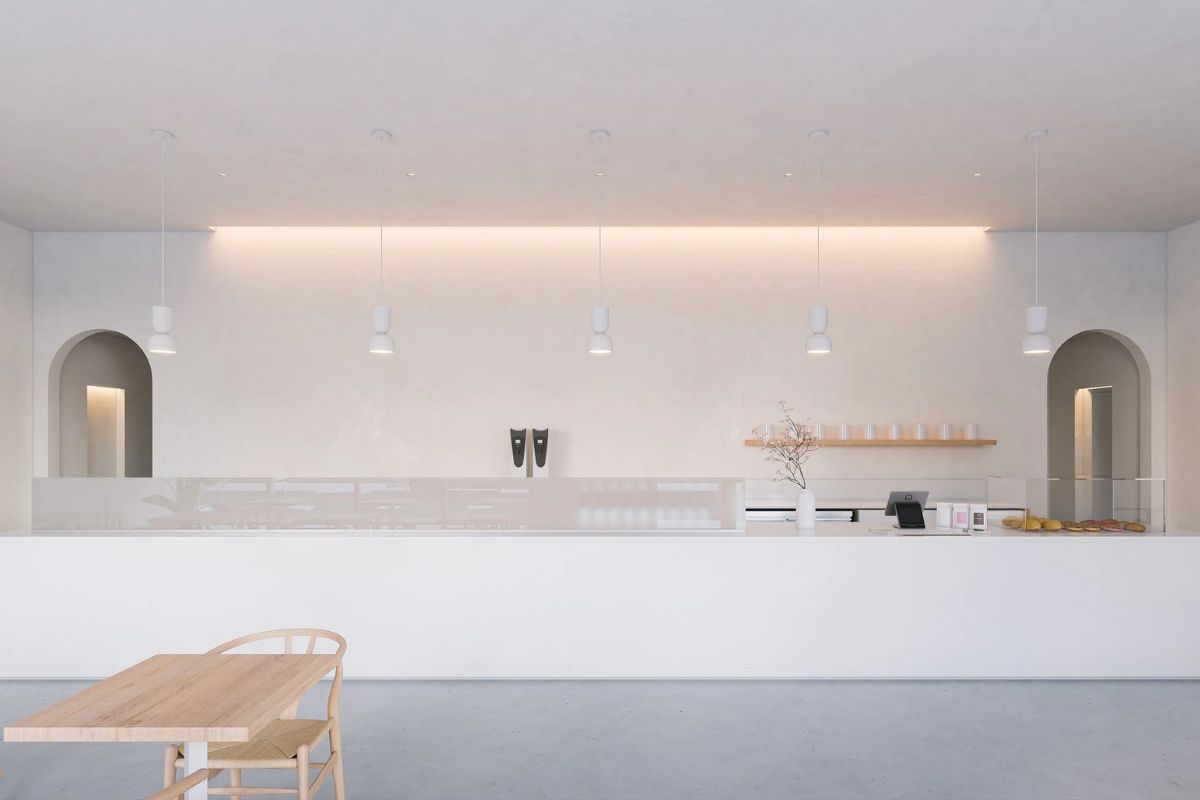
Bar design in 2026 puts flows at the center: people, orders, take-away, deliveries. It’s not glamorous, but it’s decisive. A bar can be small as long as it never feels clogged—and the difference isn’t square meters, it’s pathways.
A successful project makes it immediately clear where things happen: the counter is visible, the cashier doesn’t block, waiting doesn’t spill everywhere. The room isn’t a carpet of identical tables: it’s a set of micro-zones that discreetly declare their function—table height, distance between seats, light, even sound.
If you want one operational criterion (without turning schematic): a contemporary bar benefits from at least one “one-minute perch” and at least one “stay zone.” The rest is balance: removing where needed so gestures can breathe—and so the perception of quality rises.
Bar Counter Design 2026: Back in the Spotlight, But It Must Work Like a Machine
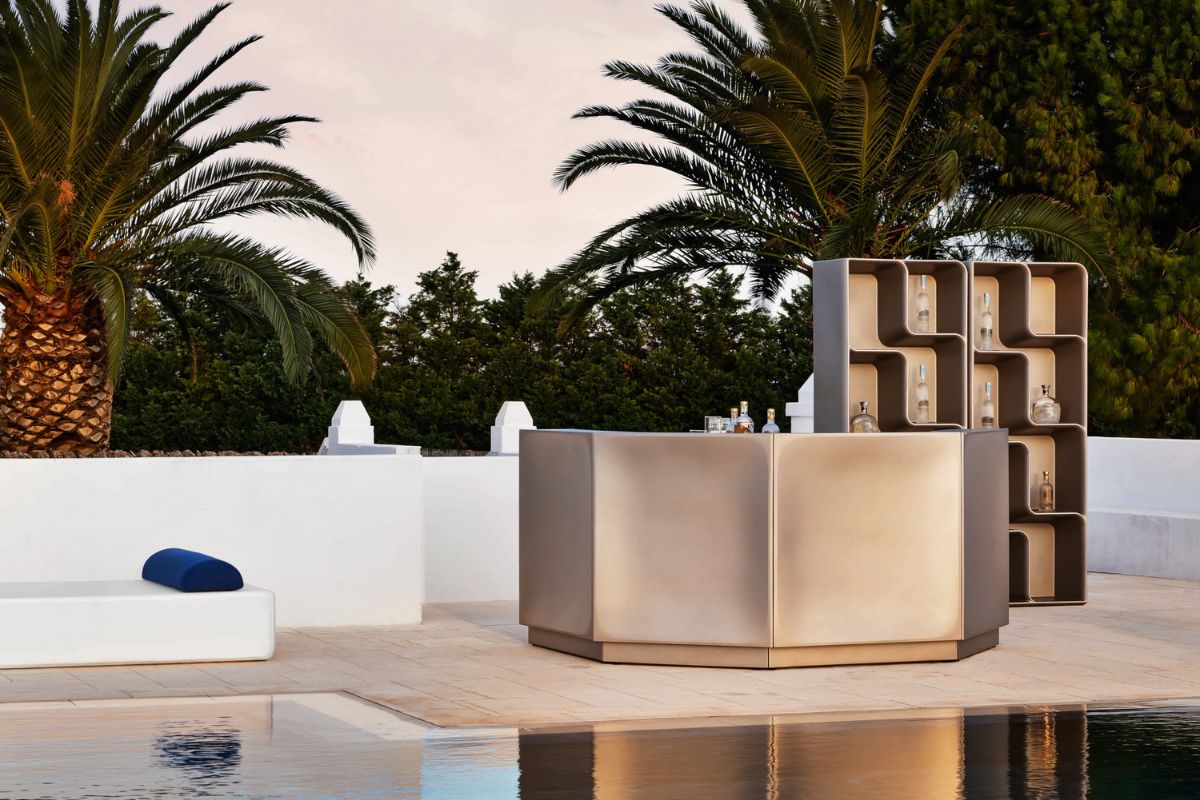
In 2026, the bar counter is no longer a linear front: it’s an identity volume, almost a face. Shapes soften (curves, rounded edges), surfaces become more tactile and matte, and the back counter turns into a mini-scenography made of niches, slim shelves, reeded glass, satin metals, and integrated light.
But one rule matters more than any trend: a gorgeous counter that works badly ages fast. That’s why the most interesting direction is the integration of aesthetics and performance: fluid workspaces, rational landing areas, details that resist daily intensity. In 2026, luxury isn’t only what you see—it’s the sensation that everything sits exactly where it should.
Bar Chairs and Stools 2026: Contract Comfort Becomes Desirable
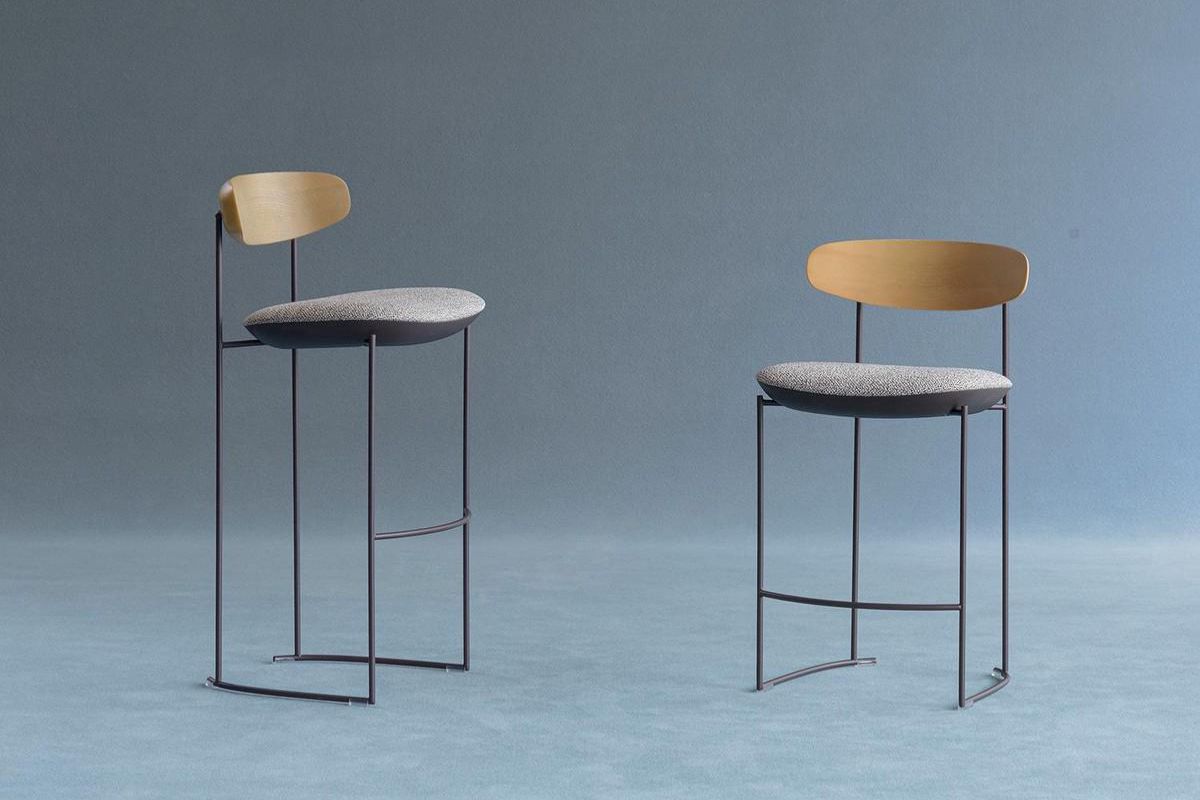
Among the top bar furniture trends for 2026, seating makes a real leap: it’s no longer a secondary chapter, but a lever for dwell time. Bar chairs and stools become serious again—ergonomics, resistance, maintenance—and finally seductive too, with fuller volumes and more mature finishes.
Stools with a real backrest increase the desire to stay. Custom banquettes (even short ones, even on a single wall) create an immediate “signature” and often improve acoustics. A mix of heights—standard tables, high tables, quick perches—makes the space more elastic, and therefore more contemporary.
The key difference in 2026 is this: you’re not choosing a chair, you’re choosing a behavior. Do you want a fast room, or a room that holds people? The answer is in the seating before it’s in the color palette.
Bar Walls 2026: The Trend Is Depth
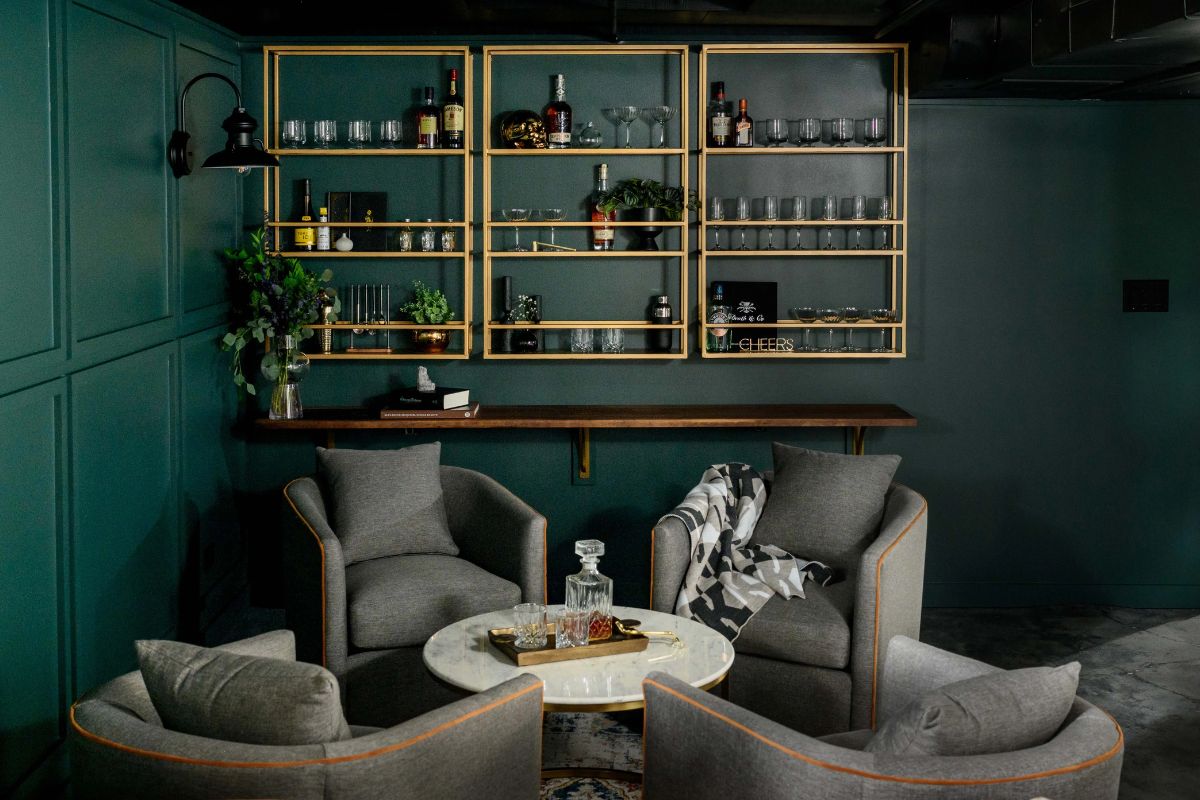
In 2026, bar walls stop being background and become a design tool: they set rhythm, correct proportions, absorb noise, build identity. It’s a subtle but decisive shift: you don’t need to fill walls with patterns or frames—you need material presence and a clear visual hierarchy.
More and more, surfaces work in layers: one “calm” wall that lets the space breathe, and one more narrative point—a niche, a back counter, a partition—where character concentrates. That’s where the so-called hero corner is born: not a set, but a memorable angle because it’s coherent with the venue and built intelligently (light + material + proportion).
And then there’s something too often treated as mere technical detail: acoustics. In 2026, a wall can be beautiful and “useful” at the same time—sound-absorbing boiserie, well-designed micro-perforated panels, technical fabrics integrated discreetly. The result isn’t just comfort: it’s a stronger premium perception.
Bar Materials 2026: Matte, Tactile, Repairable
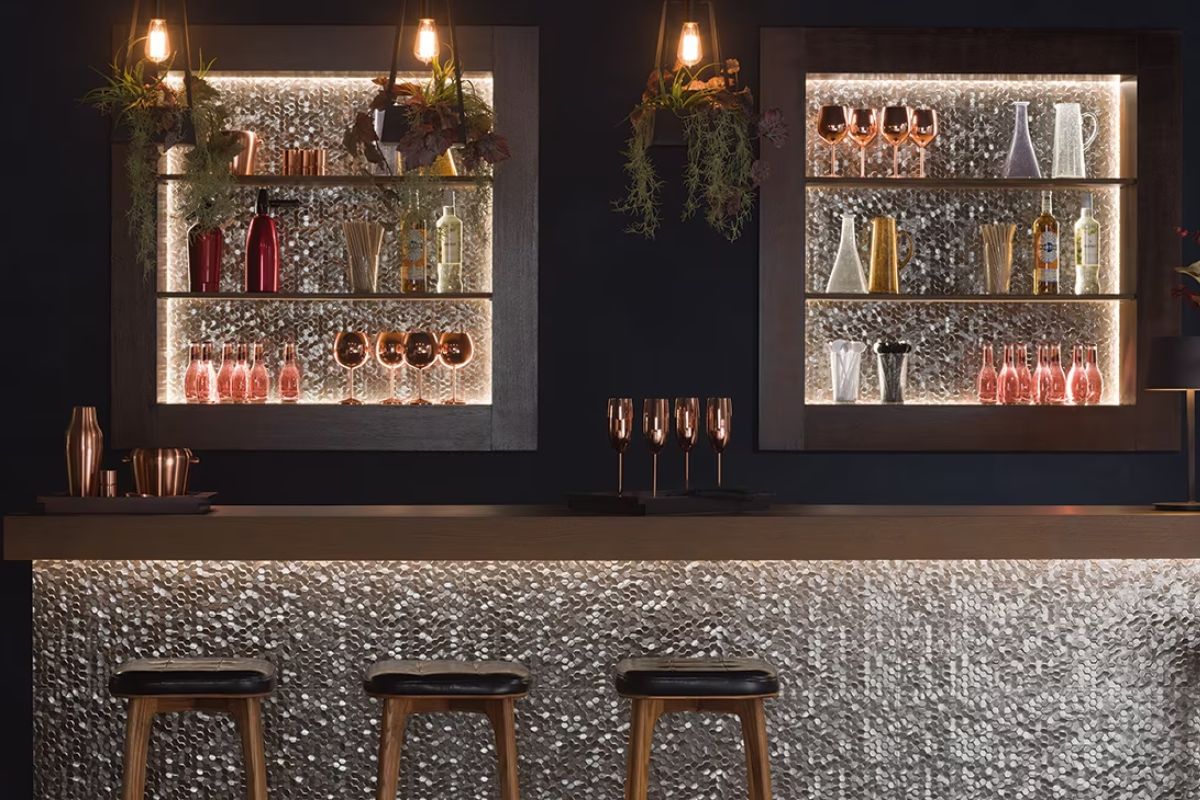
Material trends for bar interiors in 2026 reward surfaces that truly hold up: easy to clean, not ruined by the first impact, able to age with dignity. The opposite of the “perfect new” showroom look. A bar is a lived-in place: if you pretend it isn’t, it shows.
The direction is clear: more matte, more material, more “silent” even to the touch. Engineered stone and compact surfaces for counters and tops; advanced ceramics for walls and details; medium and dark woods that are protected but not plasticized; satin metals (muted brass, pewter, brushed steel) that add depth without theatrics.
Bar Colors 2026: Warm, Sophisticated Palettes—with a Controlled Cool Accent
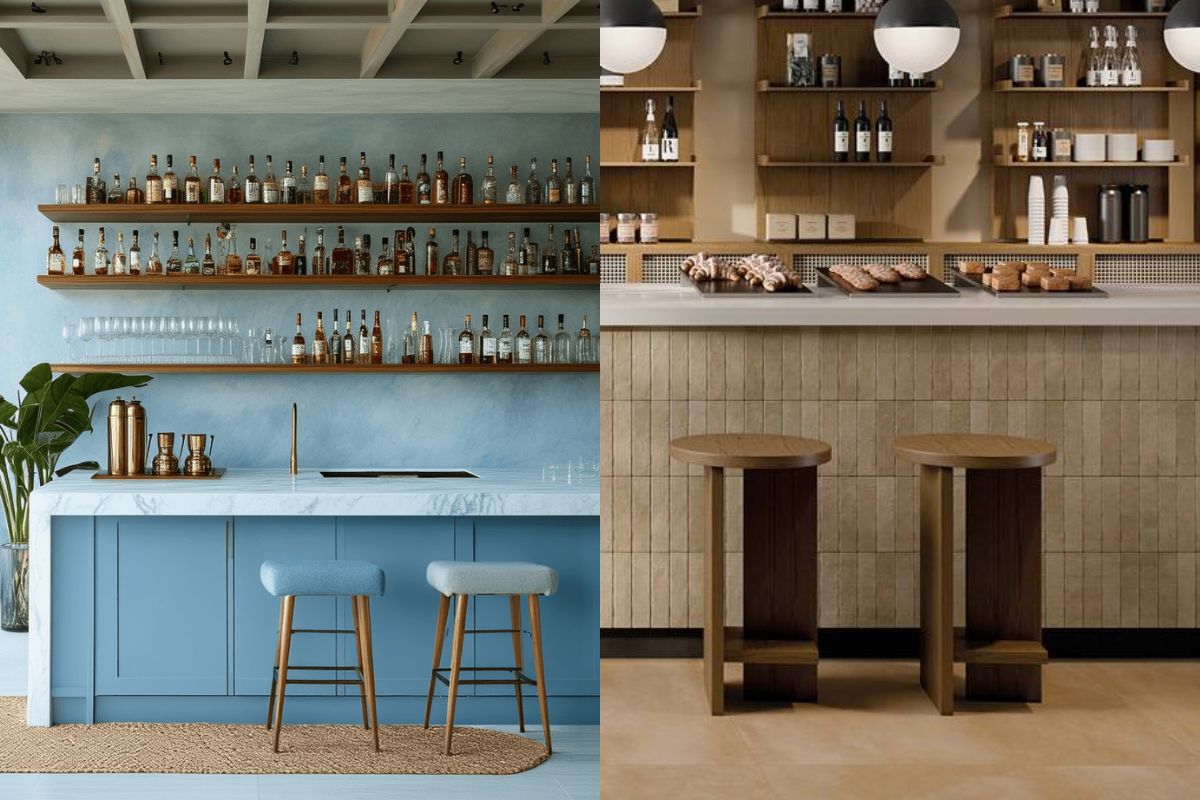
Bar color palettes in 2026 move away from the instant “wow” effect and lean into a more mature kind of luxury: warm, full but desaturated tones that don’t tire the eye and that elevate materials and light. Cream, sand, dusty terracotta, cocoa, medium and dark woods—this is a chromatic vocabulary that feels curated without shouting.
Modernity arrives via a cool note, but controlled: a powdery light blue, a deep green, a graphite grey. Not an aggressive contrast—more like depth, the way a well-placed shadow works.
If you want project-ready combinations (useful as industry references), here are palettes that recur often in contemporary bars:
-
oat milk + walnut + desaturated brass: premium day bar, very “Italian” but current
-
sand + dusty terracotta + olive green: contemporary Mediterranean, warm and recognizable
-
graphite + pewter + dark wood: cocktail bar, wine bar, elegant evenings
-
ivory + powdery light blue + light stone: daytime bars, bright venues, coastal mood in an urban key
-
cocoa + cream + muted burgundy: quiet neo-deco, intimate without becoming theatrical
A practical rule that saves many projects: choose a broad warm base, then place the cool accent in a few “right” points—seat, wall, graphic detail, lighting element. The palette stays contemporary without becoming a fleeting fashion.
Bar Lighting 2026: The Direction That Makes Everything Look More Expensive
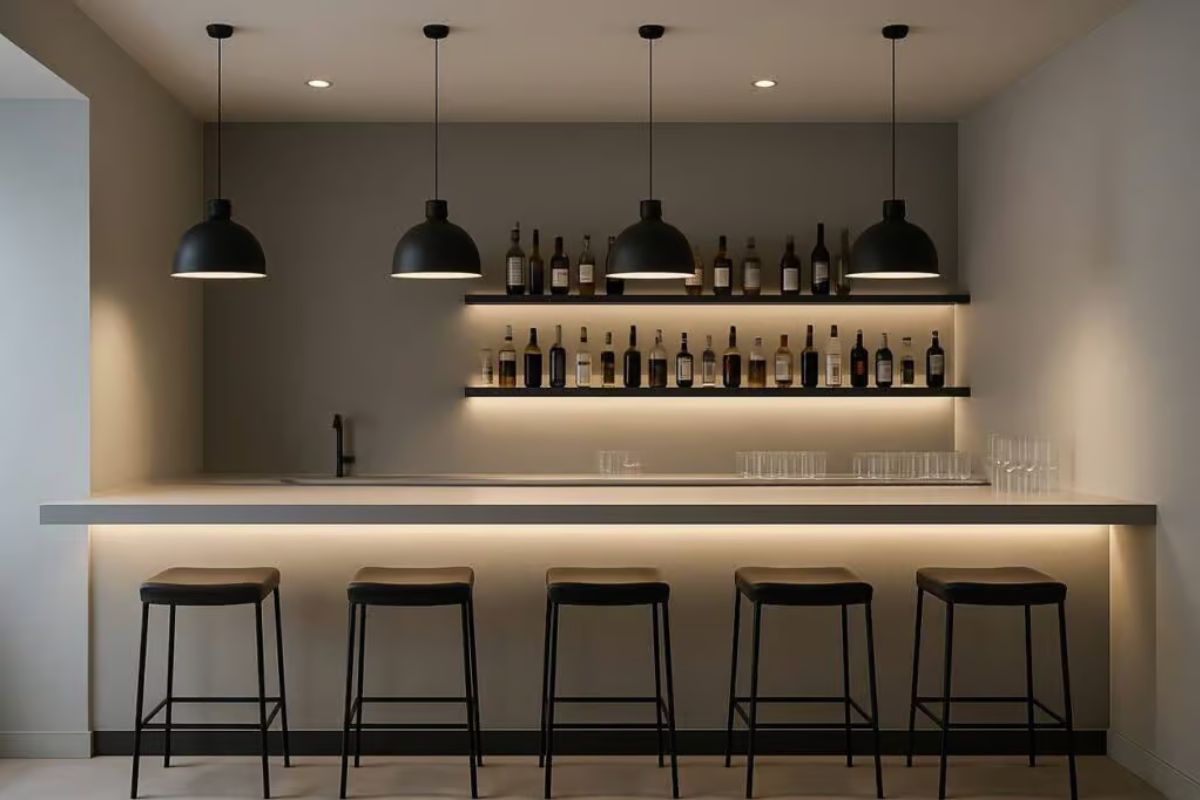
In bar design 2026, lighting is the most powerful restyling tool because it changes a space without changing everything. And because it builds atmosphere dynamically: a bar doesn’t need “a lot of light,” it needs the right light.
The trend is layered lighting: soft ambient light, functional light on the counter (without glare), and accents that highlight materials, bottle displays, niches, textures. Then comes the truly contemporary part: scenes. Morning is cleaner and more legible; afternoon is welcoming; evening drops lower and deeper—almost cinematic.
A detail that separates successful venues: decorative lights aren’t “a collection of lamps,” but a few well-chosen marks. In a bar, one iconic pendant in the right spot can do more than ten random elements.
Acoustics and Comfort: The Quiet Luxury of the Contemporary Bar
There’s a reason why some bars instantly feel higher-end: you can talk without shouting. In 2026, acoustics enter the trend conversation not as a technical chapter, but as part of the experience.
You don’t need to turn the place into an anechoic chamber—often, smart and beautiful interventions are enough: acoustic panels integrated as boiserie, micro-perforated ceilings, upholstered seating, technical curtains where coherent, a few more soft surfaces in lounge zones. It’s invisible work—and precisely for that reason, precious. The customer won’t say “great acoustics,” but they’ll stay longer.
Dehors / Outdoor Areas 2026: From Accessory to Second Room—even in the City
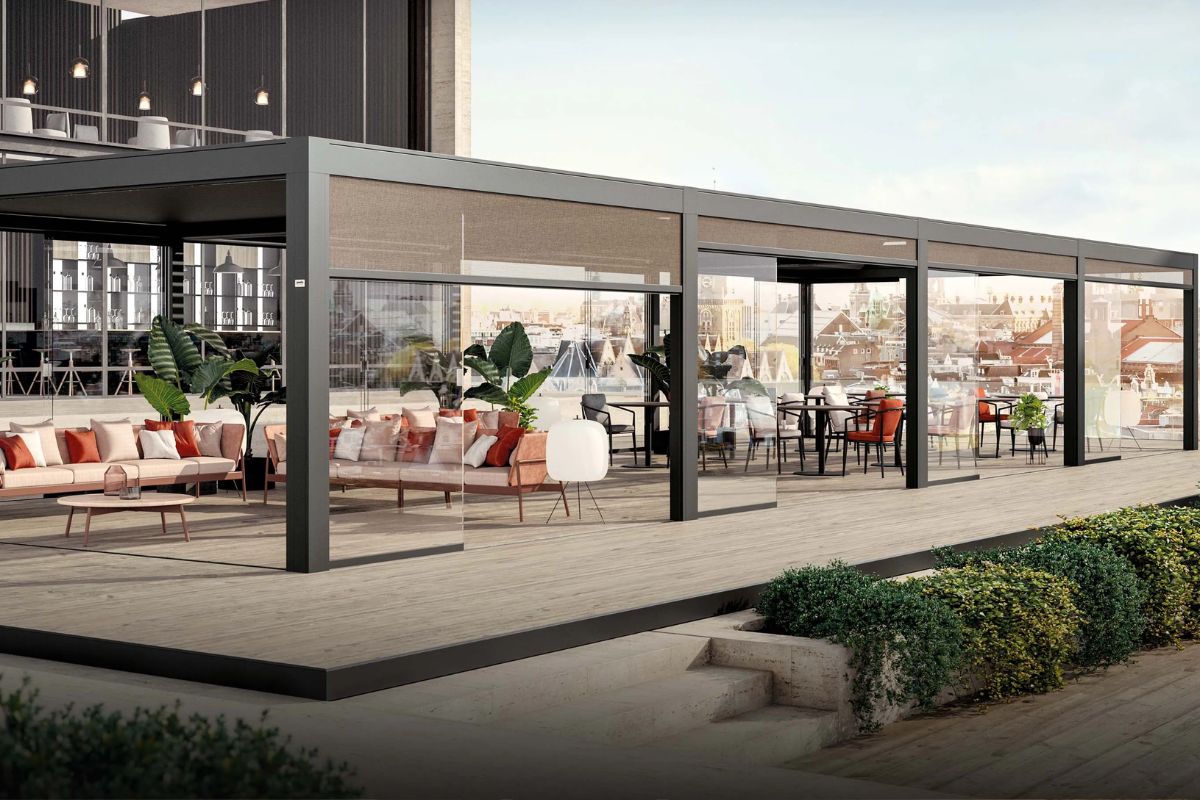
In 2026, the dehors stops being an improvised extension and becomes part of the project: a “second room” that must withstand seasons, light, and comfort. The clearest trend is modularity: elements that can be reconfigured, light screening, truly contract-grade outdoor seating (not domestic garden furniture), greenery conceived as architecture rather than decoration.
And above all: its own lighting. A well-designed dehors doesn’t depend on street lamps. It has a lighting direction—softer, warmer, more intimate—because outdoors, atmosphere is perceived even more sharply.
Objects and Details: In 2026 You “Collect,” You Don’t Fill
Bar interior design doesn’t end with furniture and walls. In 2026, details make the difference—but with a new logic: don’t accumulate, curate. Quality comes from visual coherence repeated everywhere: glassware, menu board, counter accessories, take-away packaging, even handles and coat hooks.
It’s a more editorial aesthetic: fewer objects, better chosen, better told. A simple rule applies: if a detail doesn’t add function or identity, in a 2026 bar it becomes noise—and noise ages quickly.
The Most In-Demand Bar Styles in 2026
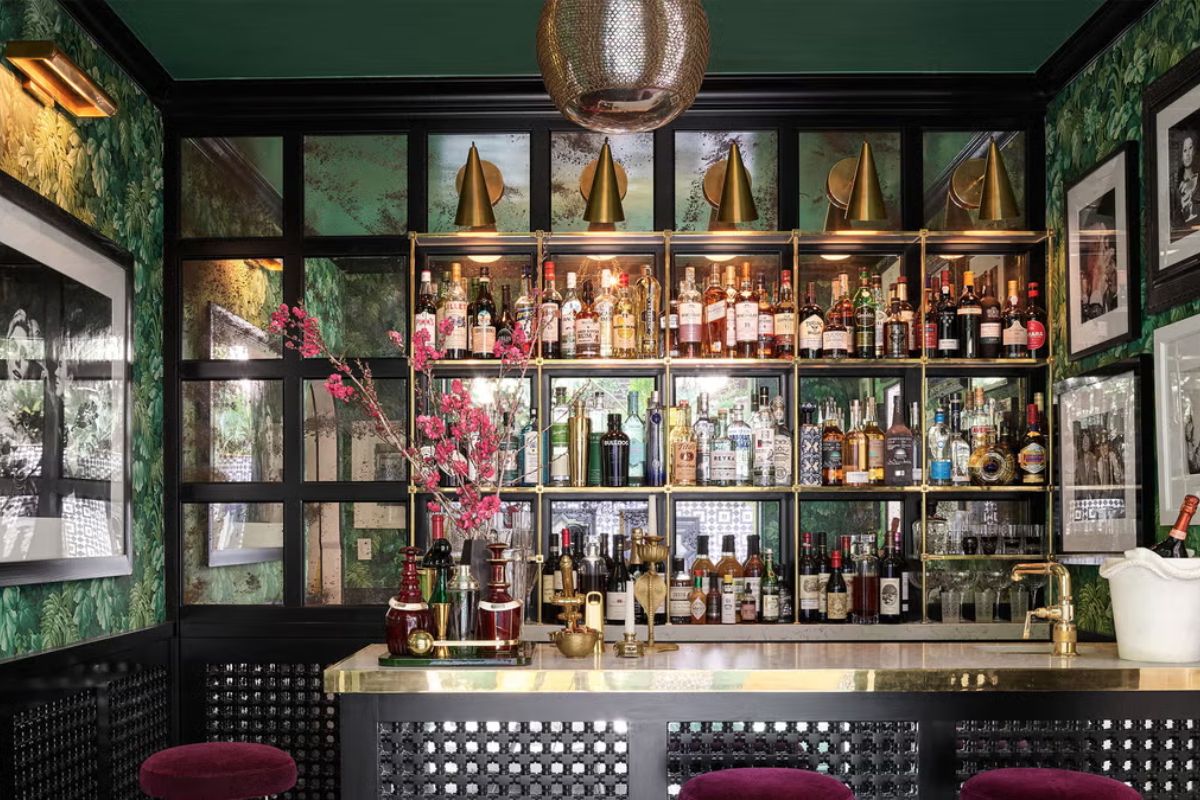
In 2026, winning styles aren’t costumes—they’re languages coherent with a type of bar, a price range, a consumption moment. What works is clarity.
Warm minimal keeps growing because it lasts: light-to-medium woods, matte stones, warm palettes, soft light. Neo-Mediterranean becomes more sophisticated: lime plaster, ceramics, sand and powdery blues—without folklore. Soft industrial cleans up: satin metals and warm woods, less “workshop,” more comfort. Quiet neo-deco plays with curves and reeded glass, with desaturated metals and deep colors—without excess.
Two lines are also finding a mature form in bars: the Japandi café, essential but warm (visual silence, artisanal details, protected natural materials), and the cocktail lab, where the counter is scenography and light is direction—darker, more theatrical, but controlled.
The truth is: style isn’t the starting point—it’s the consequence. First decide what bar you are—and for whom—then the language becomes natural.
Mistakes That Make a Bar Look “Old” in Six Months
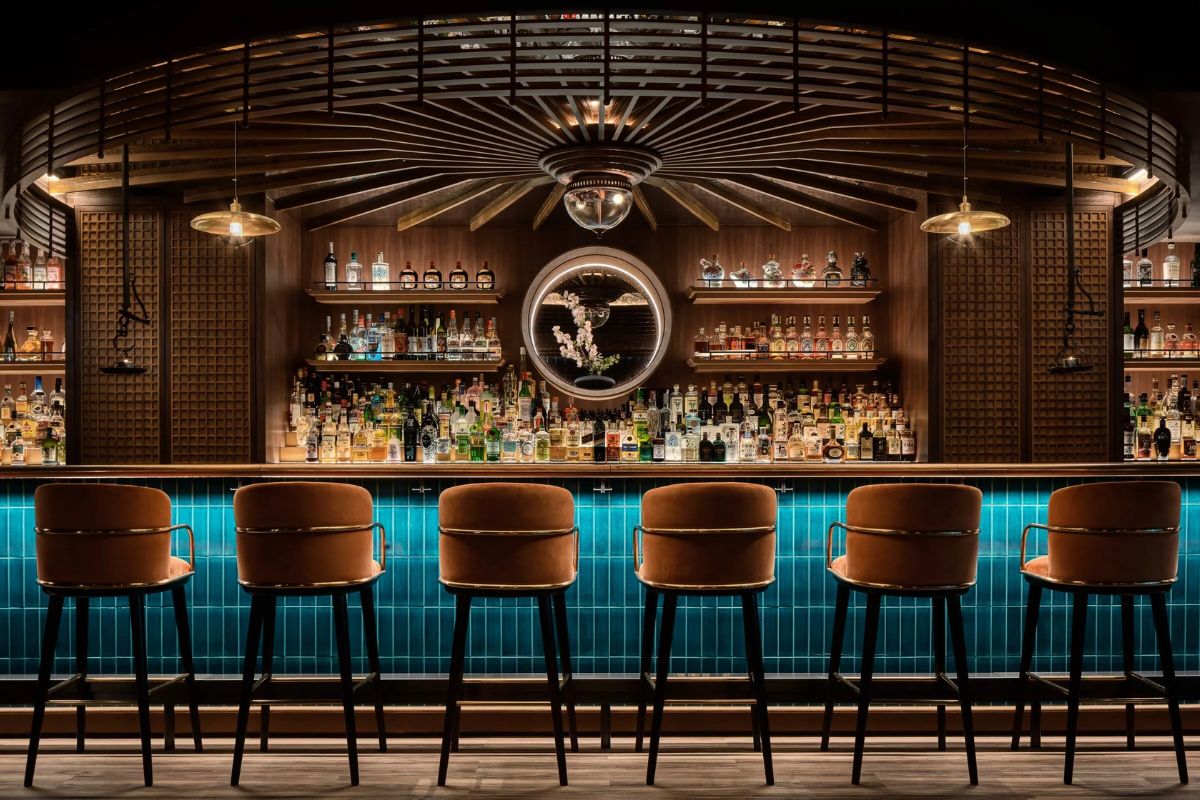
Some choices age faster than ever. In a crowded market, bar furniture can’t be a pile of trends.
The most common:
-
chasing an Instagram effect with no overall coherence (one beautiful corner, the rest anonymous)
-
cold, flat lighting—especially in the evening
-
“cute” but uncomfortable seating that shortens dwell time
-
delicate materials in a high-intensity space
-
ignoring acoustics (and then wondering why the venue feels tiring)
Bar Trends 2026: Less Fashion, More Choices That Build Identity
If 2025 pushed many venues to freshen up, 2026 asks for more: a project that holds function, atmosphere, and durability together.
Bar Furniture Trends 2026
What are the main bar furniture trends for 2026?
Multi-moment design (breakfast/short breaks/aperitivo), a more scenic yet functional counter, more comfortable contract seating, matte and tactile surfaces, lighting by scenes (dimming and layers), greater focus on acoustics, and the dehors designed as a true “second room.”
Which colors are trending for bars in 2026?
Warm, desaturated palettes (cream, sand, cocoa, dusty terracotta) with a controlled cool accent (powdery light blue, deep green, graphite) to bring modernity without making the space feel trend-driven and unstable.
Which materials are best for bar interiors in 2026 (contract perspective)?
Matte, durable surfaces: engineered stone/compact surfaces for counters and tops, advanced ceramics for walls and details, protected but natural woods, and satin metals (desaturated brass, pewter, brushed steel) for depth and longevity.
What chairs and stools should you choose for a modern bar in 2026?
Stools with real backrests and comfortable seating to increase dwell time; custom banquettes/booths to create a signature and optimize space; a mix of heights (quick perches + standard tables + high tables) to manage flows and different moments.
How should a bar counter be designed in 2026?
As an “operational stage”: beautiful for the customer, fluid for service. Trends include softer volumes (curves/rounded edges), tactile matte surfaces, a scenic back counter with niches and integrated lighting, plus ergonomics and optimized work paths.
What are the lighting trends for bars in 2026?
Layered light (ambient + task on the counter + accents), different scenes between day and night, dimmers, and anti-glare control. Fewer iconic points chosen well, more integration (niches, back counter, textured walls highlighted).
How do you make a bar Instagrammable without turning it into a set?
Create one coherent signature element: a material wall, a lit niche, a graphic detail, a curve of the counter. The memorable corner must be part of the design, not a special effect disconnected from the rest.
What mistakes make a bar look outdated in 2026?
Cold, flat lighting; uncomfortable seating; delicate materials in high-wear areas; too many decorations/patterns without hierarchy; ignored acoustics; layouts that obstruct cashier/counter/waiting areas.
Which bar styles are most requested in 2026?
Warm minimal (clean and warm), sophisticated neo-Mediterranean (lime plaster, ceramics, sand/powdery blue), cleaned-up soft industrial (satin metals + warm woods), quiet neo-deco (curves and reeded glass), Japandi café (essential but warm), and cocktail “lab” bars (dark elegance with directed light).
How do you choose the right style based on the type of bar?
Daytime café: bright, legible, light and durable materials.
Wine/cocktail bar: deeper palette, seating that encourages staying, lighting by scenes.
Hotel bar: quiet elegance, premium materials, custom details.
Premium neighborhood bar: warmth, comfort, strong identity without shouting.
How important is acoustics in bar design for 2026?
Very: sound comfort is perceived as quality. Integrated solutions (acoustic boiserie, micro-perforated panels, upholstered seating, technical curtains where coherent) improve dwell time and premium perception.
How do you design a dehors in line with 2026 trends?
As a second room: modular contract furniture, light screening, architectural greenery, and above all an independent lighting direction (warm and soft) so it feels credible even in the evening and mid-season.