There are places that do not simply host: they are intertwined with the territory that welcomes them. They are hotels designed as extensions of the landscape, where the project dialogues with the geography and silence is an integral part of the experience.
In this selection, design is not a formal affectation. It is a language that respects natural materials, integrates landscape and internal spaces, restores a sense of proportion and lets the strength of the elements emerge: earth, water, light, vegetation, air. No excessive gestures, no spectacularization of luxury. Only aesthetic coherence, design intelligence and a precise idea of ??well-being.
We have chosen 15 hotels around the world – including boreal forests, European mountains, volcanic islands and living deserts – which convey the essence of living in the landscape. Not as spectators, but as temporary guests of a carefully designed scenario.
The best design hotels surrounded by nature in Italy (2025)
They are not simply “places to sleep”, but places where architecture meets geography, and where nature is not decorative, but identifying. The Italian hotels selected here tell of a new form of hospitality: rooted in the territory, designed with aesthetic coherence and created with materials that speak the language of the places. They are refuges where design becomes part of the quiet.
1. Forestis Bressanone, Alto Adige
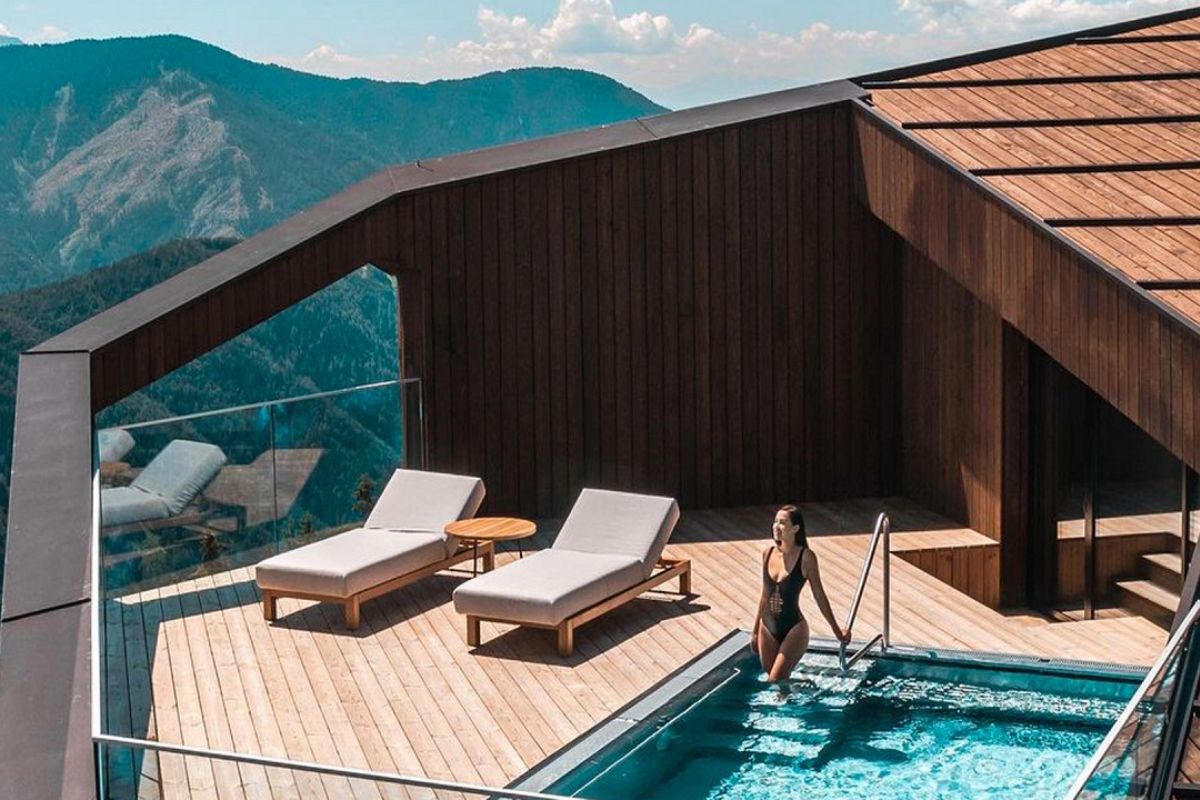
Vertical architecture, oriented towards the forest
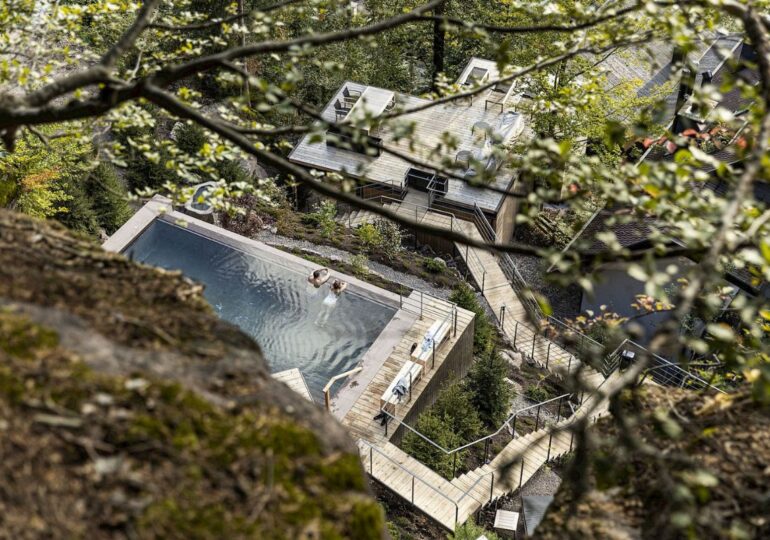
Designed at 1,800 meters above sea level, Forestis is the design hotel that best summarizes the relationship between form and nature. Three towers clad in local wood stand out in the landscape without interrupting it: they amplify it. The interiors are an invitation to subtraction: no decorative opulence, only dolomite stone, loden, wood, panoramic windows and millimetric care in the passages.
2. Miramonti Boutique Hotel Avelengo, Alto Adige

The room is suspended, the panorama builds the space
There is a moment, entering one of the most famous rooms of the Miramonti, in which the landscape imposes itself as the strongest element of the project. The hotel is in fact built like a platform suspended in the woods, with geometric volumes that project towards the valley. Spas and panoramic terraces, tea rooms with fireplaces, tone-on-tone furnishings, warm lights: everything works to make the landscape a private experience.
3: ADLER Lodge Ritten Renon, Trentino-Alto Adige

Circular chalets around a natural lake
The ADLER Lodge at Renon is an eco-resort built according to principles of conscious sustainability. The wooden suites are distributed around an alpine lake, integrated into the forest with an essential architectural grammar.
The aesthetic theme is that of “sophisticated warmth”: clean lines, fireplace in the suite, natural fabrics, dark woods, circular shapes and the constant presence of water and silence.
4. Lefay Resort & SPA Dolomiti Pinzolo, Trentino

The mountain as a frame, design as an instrument of energy
Lefay Dolomiti is the Alpine version of the famous Lefay brand. More than a hotel, it is a manifesto of sustainable luxury: stone and glass facades designed with a bioclimatic, interiors where the palette mixes deep shades, material tactility and ordered geometries. The spa, one of the largest in Europe, integrates natural elements and sensory rituals. The landscape enters every environment.
5. Sextantio Santo Stefano di Sessanio, Abruzzo

Restoration as a project, history as interior design
Sextantio is among the most interesting projects of critical restoration in Italy. Here the design is invisible, because everything we see is not “new”, but brought to life: arches, doors, plaster, iron beds, stone floors. The rooms are inside medieval houses, accessible on foot, lit by candles or warm lights. A form of luxury that doesn’t need to declare itself.
Design hotels surrounded by nature in Europe
The European continent offers some of the best examples of architecture integrated into the landscape, where design is designed to dialogue with different climates, geographies and cultures. From the Nordic fjords to the Atlantic coasts, passing through the Alpine valleys, the following selection offers a conscious geography of the project: essential, calibrated, without formal excesses.
6. Juvet Landscape Hotel Alstad, Norway

The landscape as a natural frame, glass as invisible architecture
Designed by Jensen & Skodvin Architects, the Juvet is a hotel made up of wooden and glass capsules lowered into the middle of the Norwegian forest. The rooms, isolated from each other, have entirely glass walls that erase the boundary between inside and outside. No concession to ornaments: just light, moss, logs, wind, raw concrete and silence.
7. Bühelwirt Valle Aurina, Austria

Black wood and geometric shapes in a suspended valley
The Bühelwirt is a boutique hotel led by the work of the Noa studio*. Here the mountain enters the interiors not as a decorative theme, but as an aesthetic grammar. Facade in charred brown wood, light interiors in fir and loden, windows framed by geometric cuts. The result is abstract and warm, sculptural and welcoming at the same time.
8. Areias do Seixo CTorres Vedras, Portugal

Dunes, wood, glass and shade: a refuge on the Atlantic coast
One hour north of Lisbon, Areias do Seixo is a hotel designed as a manifesto of emotional luxury. Local materials burnt wood, stone, jute, recycled iron coexist with pure shapes and poetic details. Exposed fireplaces, suspended beds, concrete tubs, total transparency. Space and intimacy alternate continuously, in a highly free design culture.
9. Valsana Hotel Arosa, Switzerland
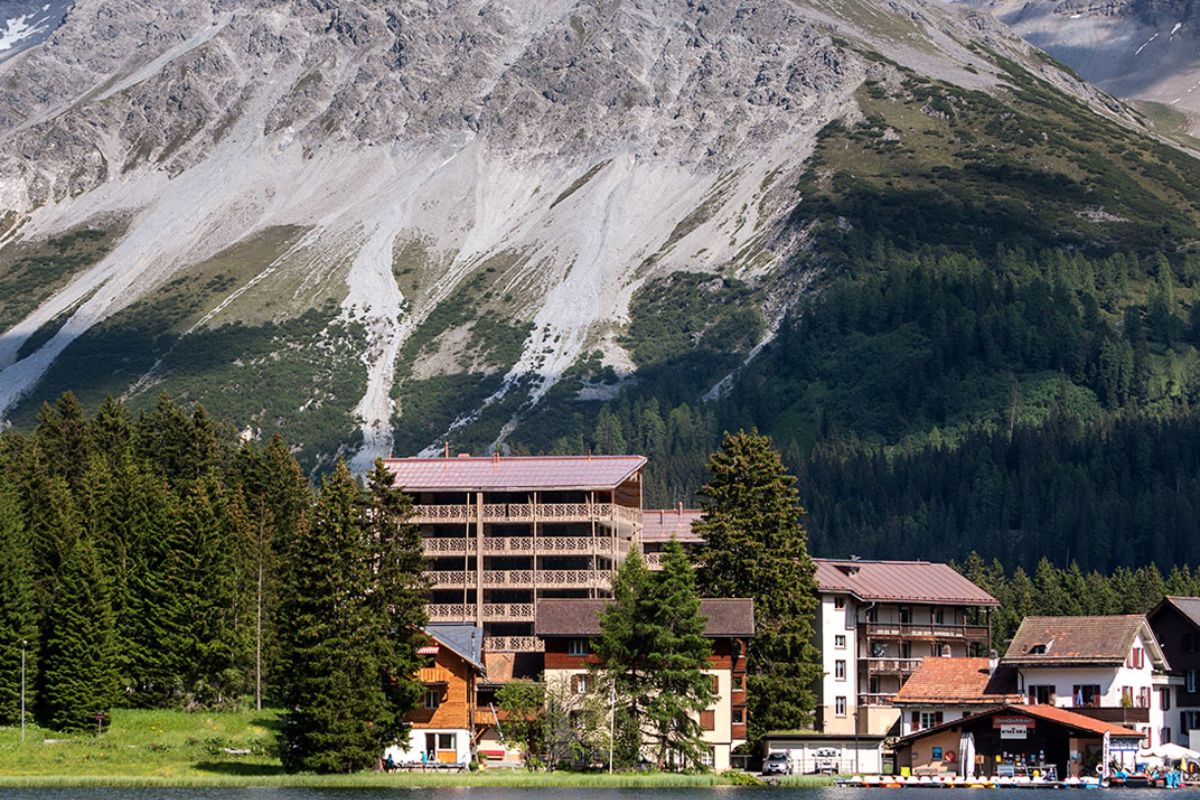
Alpine, but with urban sensibility
Located at 1,800 metres, the Valsana reinterprets the idea of a mountain hotel without folkloristic sagging. The wood and glass architecture enters into relationship with the frozen lake and the surrounding forest. Interiors designed by Carlo Rampazzi: soft lines, tobacco tones, integrated vintage elements. A mountain more cosmopolitan than picturesque.
10. Pedras Salgadas Spa & Nature Park Trás-os-Montes, Portugal
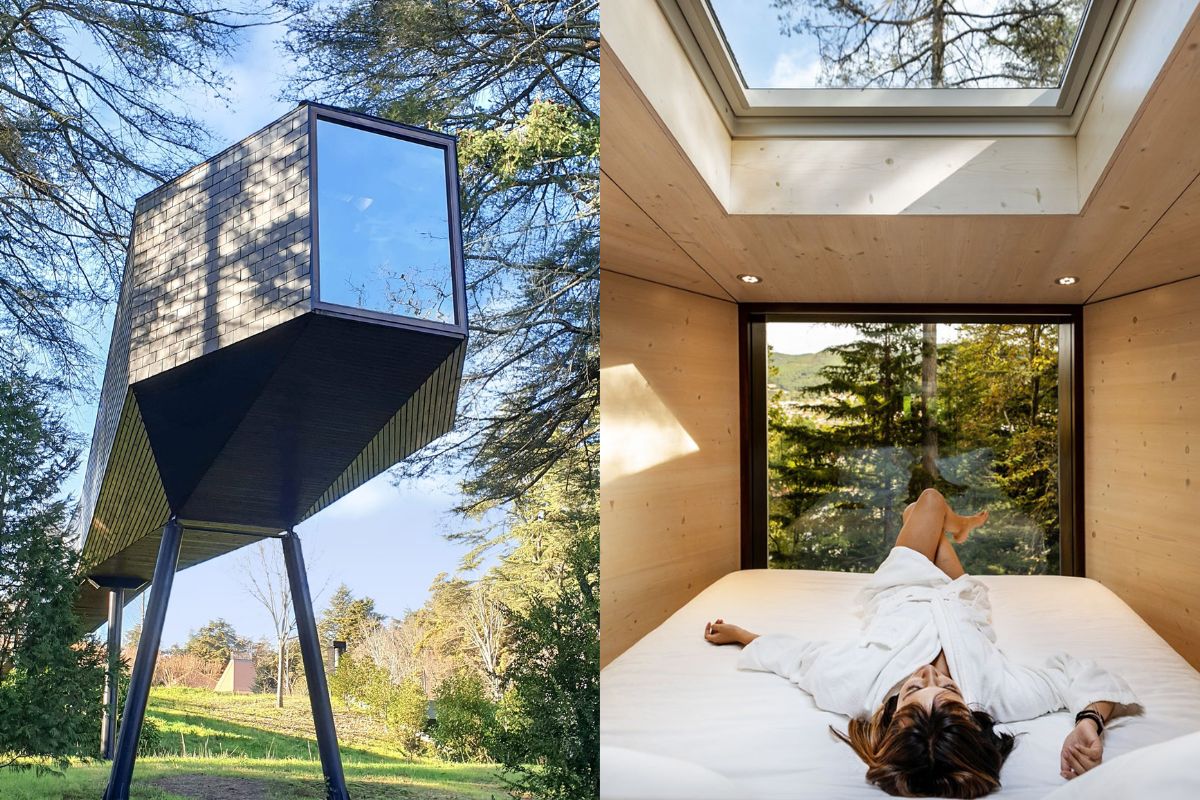
Prefabricated micro houses in the woods, tra sustainability and modular design
Pedras Salgadas is famous for its Eco Houses: completely prefabricated wooden units, designed by Luís Rebelo de Andrade. Resting on pilotas, the accommodations do not touch the ground, but respect it. Simple, minimal, immersed in a historic spa park. One of the best synthesis between architecture and contemporary forest therapy.
Design hotels surrounded by nature in the world
Invisible architecture in the desert, glass capsules among the boreal forests, resorts mineralized on volcanic rocks: here the project becomes a gesture, the environment becomes matter, the living room becomes landscape. They are not “spectacular hotels”: they are places designed to immerse yourself, not to dominate.
11. Amangiri Canyon Point, Utah, USA

Concrete, canyon and mineral silence
An icon of desert architecture. Signed by Rick Joy and Marwan Al-Sayed, Amangiri interprets the landscape of the Utah desert in an almost liturgical way: pigmented concrete, monolithic volumes, open horizons. The central pool is embedded in the rock like an ancient sign. Here the design does not compete with the territory: it breathes with it.
12. ION Adventure Hotel Selfoss, Iceland
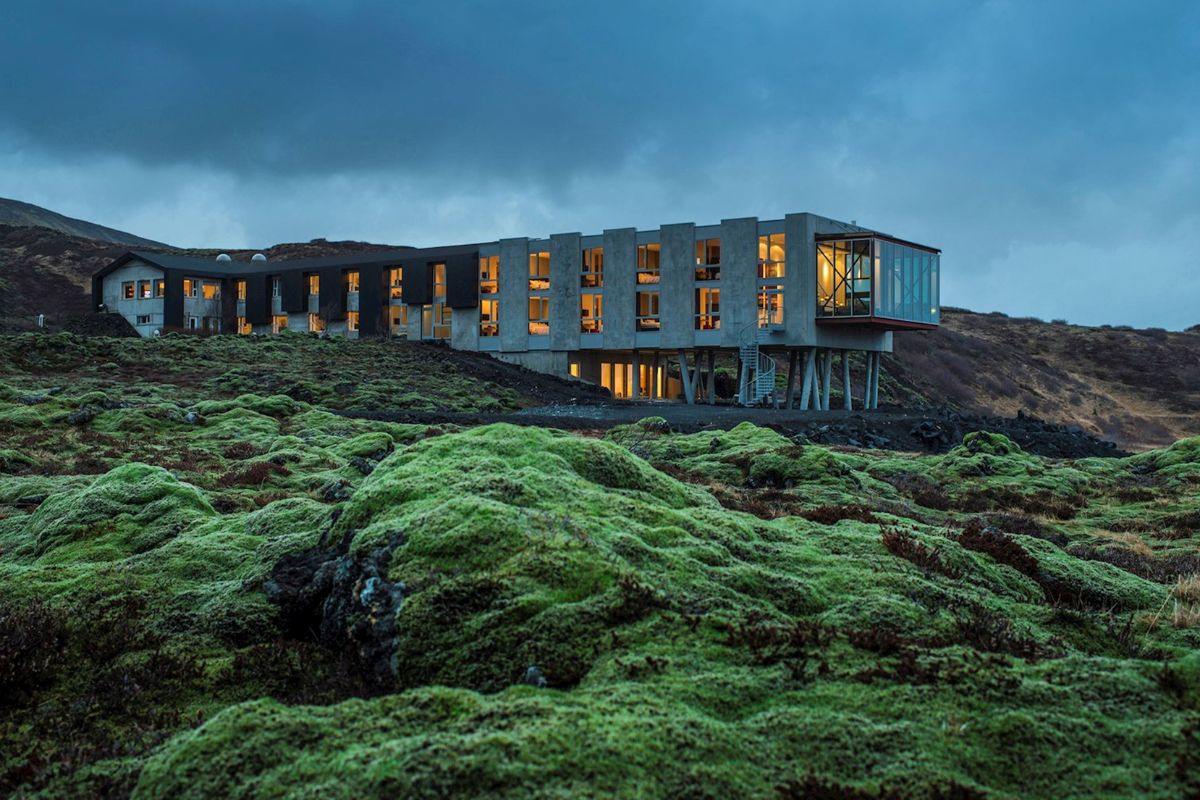
Slabs of black lava, geothermal steam and raw glass
Next to an ancient geothermal station, this unique hotel is a manifesto of volcanic design. Designed by Minarc, the building is suspended on pillars, with an almost brutalist aesthetic: concrete, oxidized metal panels, soft lighting. The bar open to the Northern Lights is already a social icon of conscious Nordic travel.
13. Tsingpu Yangzhou Retreat Yangzhou, China
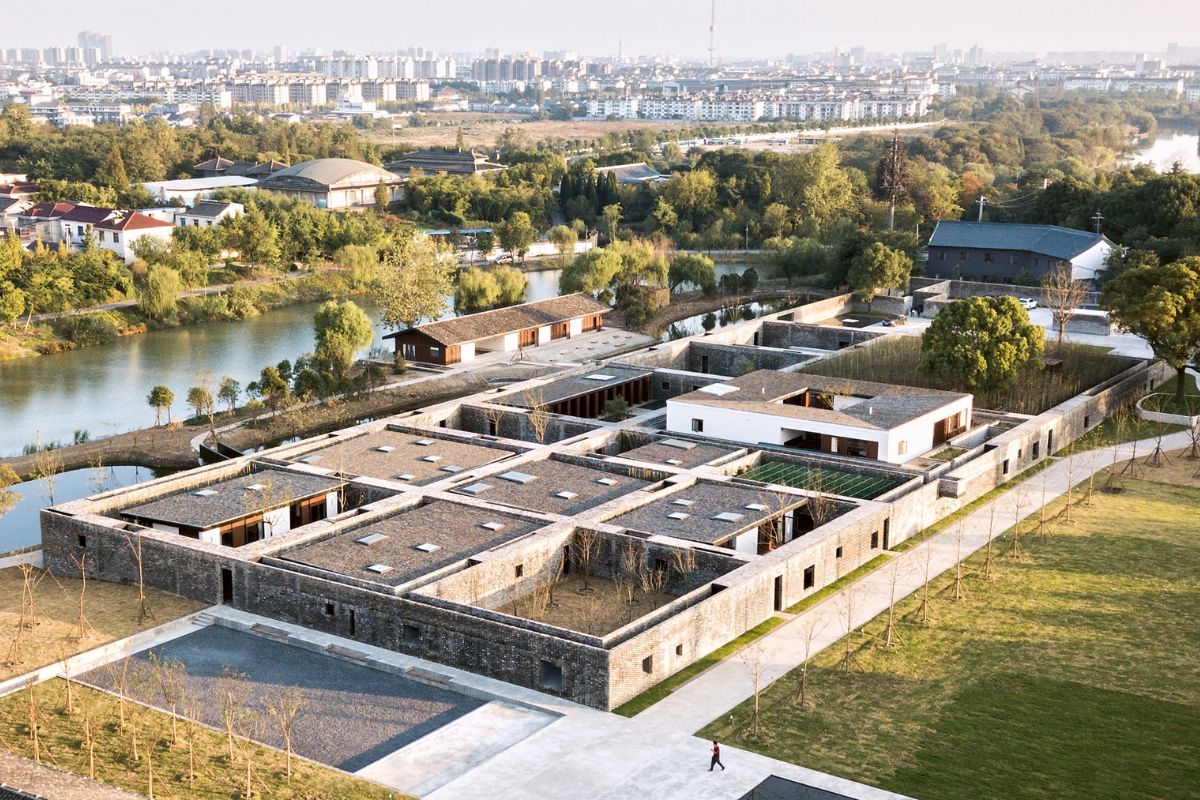
Reformulated tradition: bamboo, water courtyards and zen silence
Designed by the Neri&Hu studio, it is a conceptual hotel: 20 rooms around a system of courtyards, pools and canals. Contrasting materials (bamboo, glass, brick) and a millimetric study of natural light. More than a refuge, it is an exploration of cultural continuity.
14. Longitude 131° Uluru-Kata Tjuta National Park, Australia
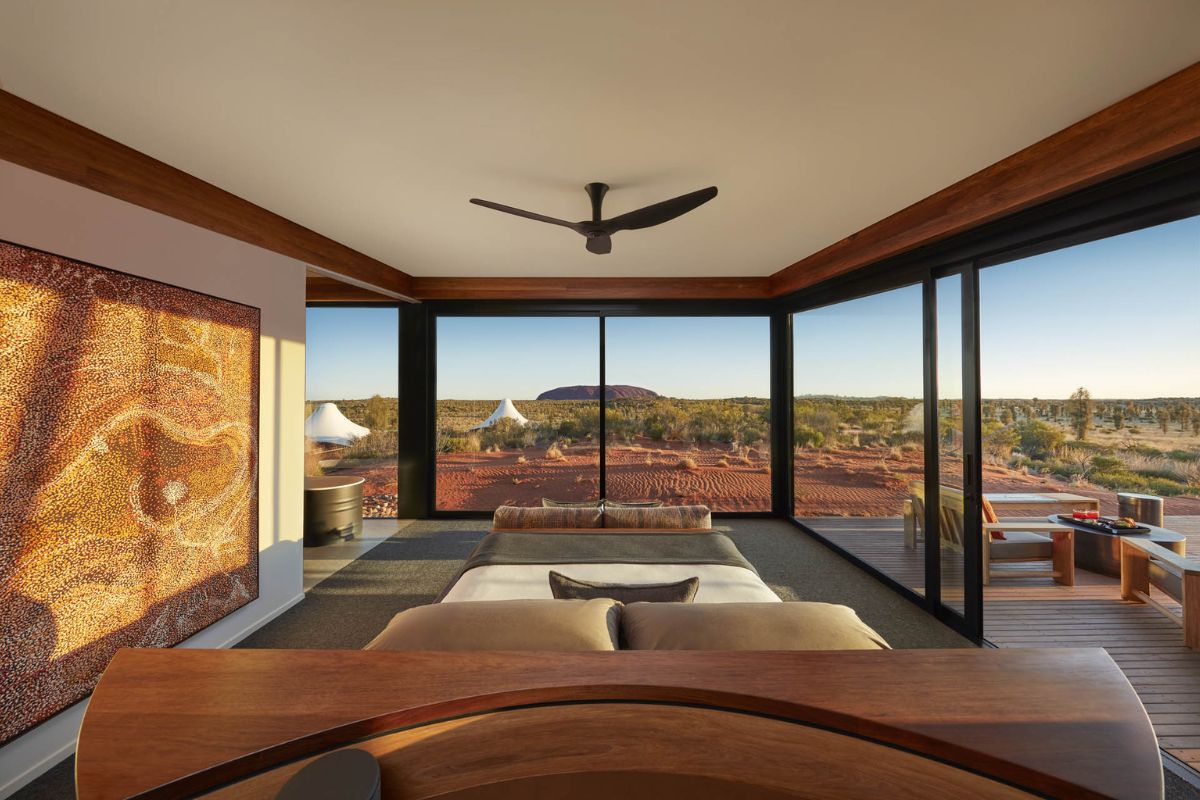
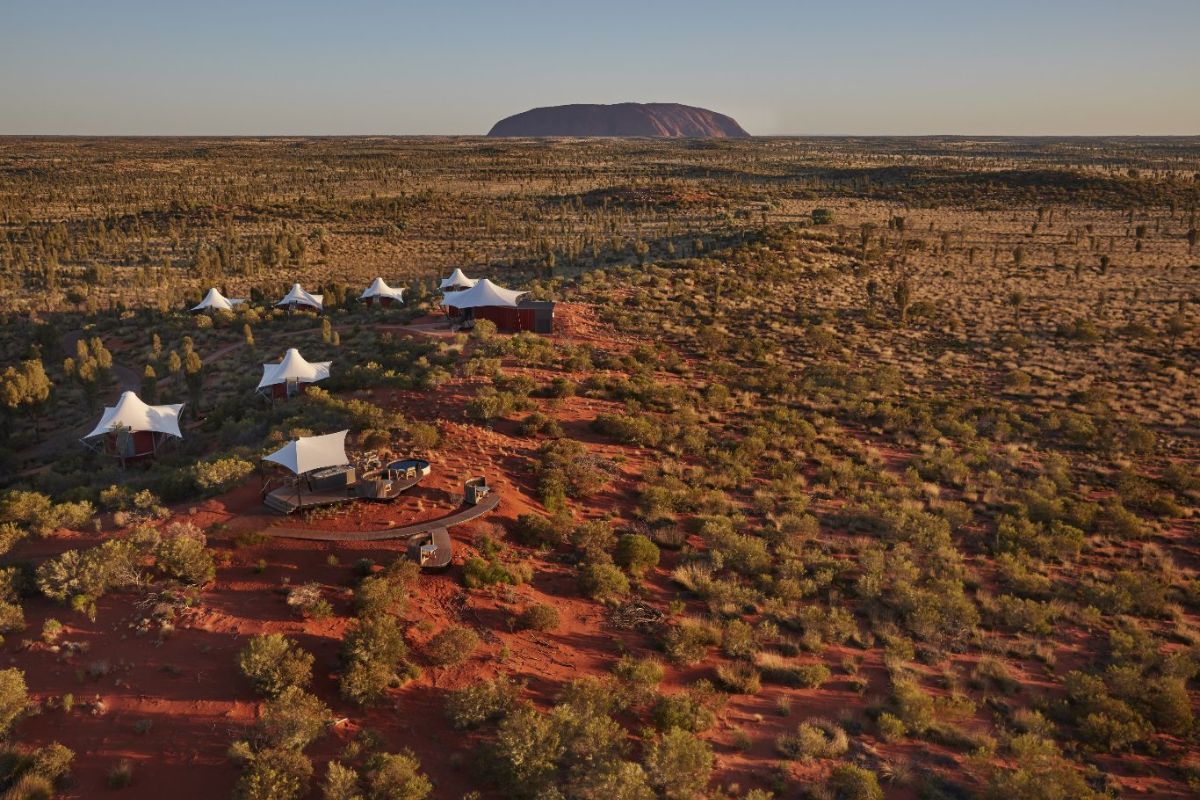
Lodge tents in the red desert, with a view of the sacred monolith
Similar to the logic of African lodges, but immersed in the red spirituality of the Australian Northern Territory. The fabric and steel architectures signify a suspended, light, observational style. Interior in local woods, aboriginal works, sand tones. Here hospitality is a respectful form.
15. Shishi-Iwa House Karuizawa, Japan
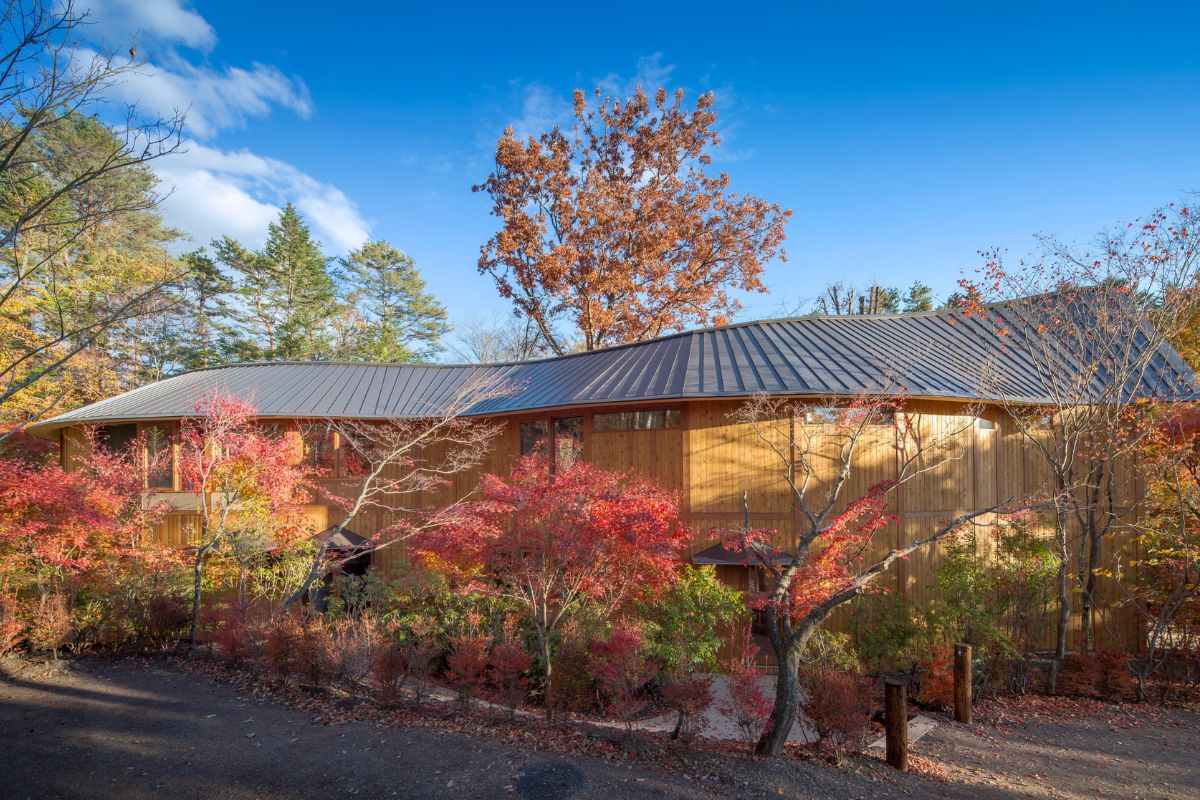
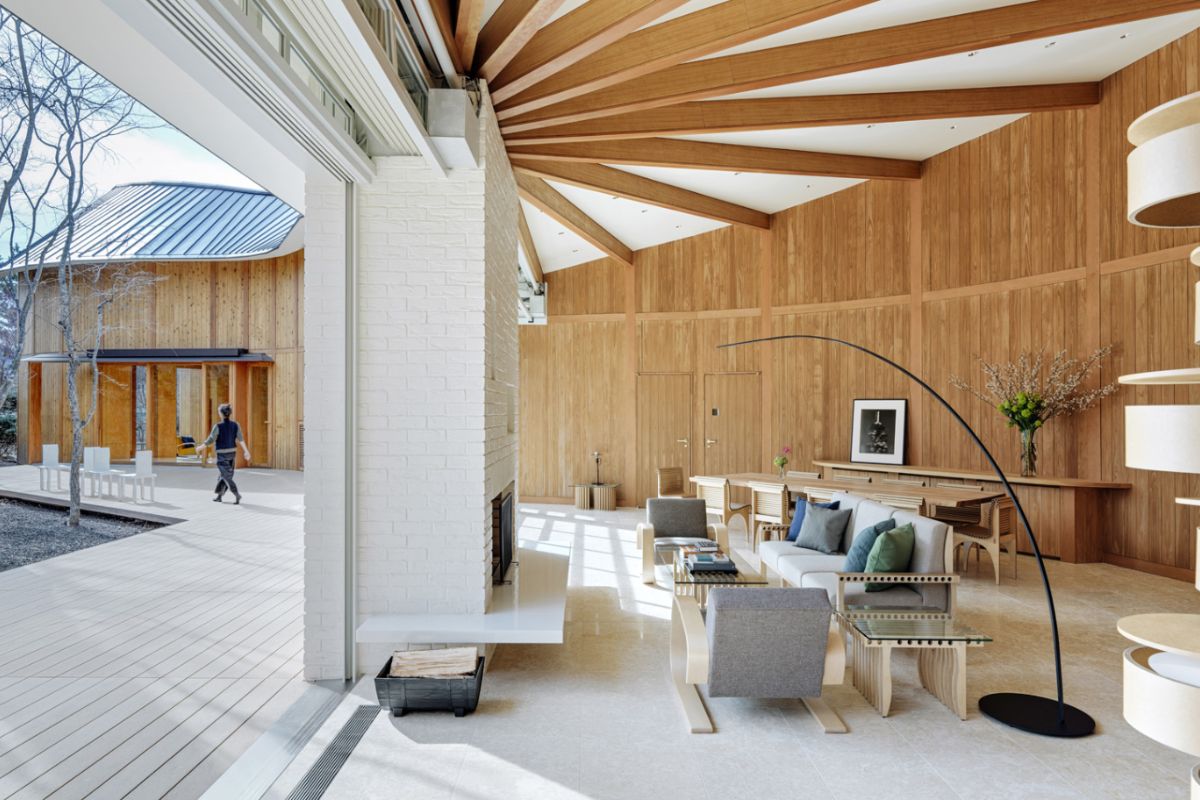
Modular architecture by Ryue Nishizawa surrounded by centuries-old cedars
Three wooden pavilions, curvilinear, nestled between the trees. Project signed by Pritzker Prize winner Ryue Nishizawa (SANAA): light textures, canopies, total transparencies, interiors in cedar and sh?ji paper. A manifesto of collective intimacy in the landscape.
Living in the world, in the wonderful silence of nature
Visiting one of these hotels does not mean “escaping” from the city, but measuring how much the space in which we live can be redesigned by calm, matter and light. Each structurera of this selection demonstrates that design, when you listen, is able to cancel out the superfluous and restore the essence: the presence of a tree, the slowness of a stone, the sound of water, the breath of air.
It is a path that reconfigures the way of living, even when you return home. The true legacy of these places does not lie in the stay, but in the new gaze that you take away.