In a country like Italy, culture is closely linked to the art of living. Museum houses are the most silent and incisive manifestation of this. They are spaces that have contained life, creativity, forms of thought, objects of the world, and continue to do so even after the death of those who passed through them. …
In a country like Italy, culture is closely linked to the art of living. Museum houses are the most silent and incisive manifestation of this. They are spaces that have contained life, creativity, forms of thought, objects of the world, and continue to do so even after the death of those who passed through them. They can be visited, they can be observed, but above all they can be read as three-dimensional pages: stratified, imagined, revealing.
Visiting a house museum is not like entering a traditional museum. Here the boundary between public and private is blurred, and what we see is not arranged according to the visitor: it is the reflection of a subject who has inhabited, chosen, owned and given meaning to every single element. A house museum does not explain: it suggests. He doesn’t expose: he testifies.
This journey passes through twelve extraordinary Italian homes. Domestic spaces that have welcomed collectors, architects, painters, photographers, archaeologists, poets and designers. Ancient and modern places, inhabited by ideas and objects, built in the relationship between interiority and visual expression.
What is a house museum?
A house museum is not a museum set up like a house, but rather it is a real house made a museum without betraying its nature. It seems like a subtlety, but it is decisive. Compared to an exhibition space created as such, the house museum has three distinctive features:
-
It is inhabited : it was by those who owned or frequented it.
-
It is a self-portrait : the arrangement of objects, works and environments does not follow the curatorial logic, but the existential one.
-
It is a document : it makes visible the relationship between inside and outside, between individual and historical time, between intimacy and the world.
The ICOM (International Council of Museums) defines house museums as “institutions open to the public that protect and enhance environmental collections on the site in which they were created”. But beyond the definitions, a house museum remains a place where the gaze becomes a story.
Why visit house museums today
In an era in which the virtual dominates cultural narratives, house museums offer a physical, tactile, temporal experience. They are the space in which collecting takes shape, design becomes used, thought settles and is reflected in the eyes of things.
For those who love interior design , they are places in which to learn the grammar of combinations, of solids and voids, of natural light as a design device.
For those who deal with art , they are archives of vision and style.
For those who travel with awareness, they are life narratives observable in a state of quiet.
An invitation, therefore, not only to see – but to reread: countries, eras, characters.
The 12 unmissable house museums in Italy
1. Boschi Di Stefano House Museum Milan
Where modern art has been a private collection
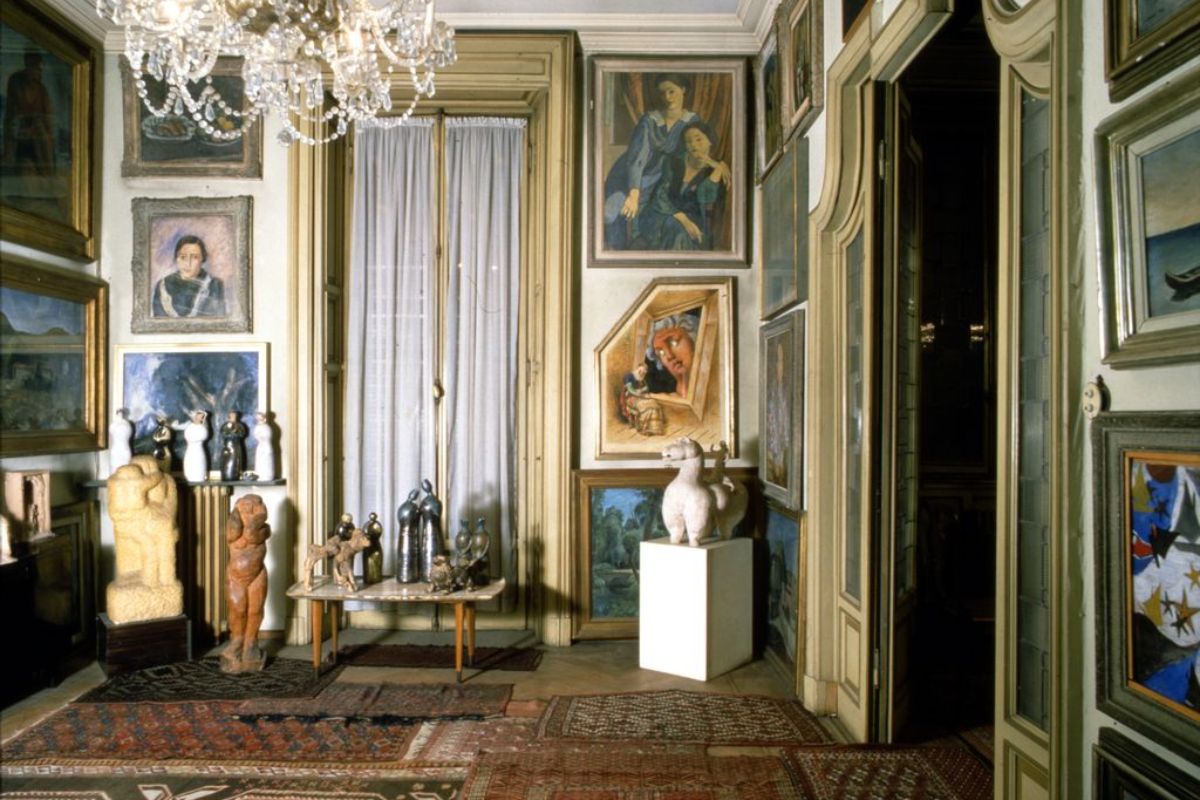
In Via Jan 15, Buenos Aires area, stands one of the most fascinating examples of house museums in Italy. Born from the partnership between Antonio Boschi and Marieda Di Stefano, this residence is a living catalog of 20th century Italian art. Over 3000 works collected over the periodof half a century, today partially exhibited in 11 environments integrated into Milanese rationalism.
The museum project has not altered the domestic nature of the spaces: the same rooms once used as bedrooms or living rooms today host Balla, De Chirico, Fontana, Sironi, Morandi. But it is the texture of the environments that is striking: rational geometries, diffused light, frames in dialogue with furnishings, surfaces, colours. The house is a body in which art is not inserted, but is born and stratified organically.
Info: Casa Boschi Di Stefano is part of the House Museum System of Milan.
2. Villa Necchi Campiglio Milan (FAI)

Bourgeois modernity told by Piero Portaluppi
Iconic home for anyone involved in furniture, architecture, urban aesthetics or Italian design. Built between 1932 and 1935 for an industrial bourgeoisie family, it bears the signature of the famous architect Piero Portaluppi. 1930s minimalism, formal clarity, geometric boiseries, mosaics, technical details, garden with indoor swimming pool: an example of radical modernity, created to measure functional elegance and the “grammar of well-being”.
Today managed by the FAI, Villa Necchi Campiglio is a manifesto of the art of living: a cultural icon for designers, students, historians and interior enthusiasts.
3. Casa Mollino Turin

The house as personal mythology
If Villa Necchi is the house of convivial rationalism, Casa Mollino is the opposite: symbolic, erotic, visionary. In the environments of Via Napione 2, Carlo Mollino – architect, professor, photographer, pilot, designer – has never really lived; but he created them as a mental scenography. Each room is a device: a memory, an obsessive search for the sacred gesture of living.
Nothing here is random: the chairs, the drapes, the mineral palettes, the polaroids, the oval mirrors, the plant skeletons. Casa Mollino is an enigma constructed with surgical precision, a theater of the soul where every object is part of an intimate ritual.
Can only be visited by reservation.
4. Casa Morandi Bologna
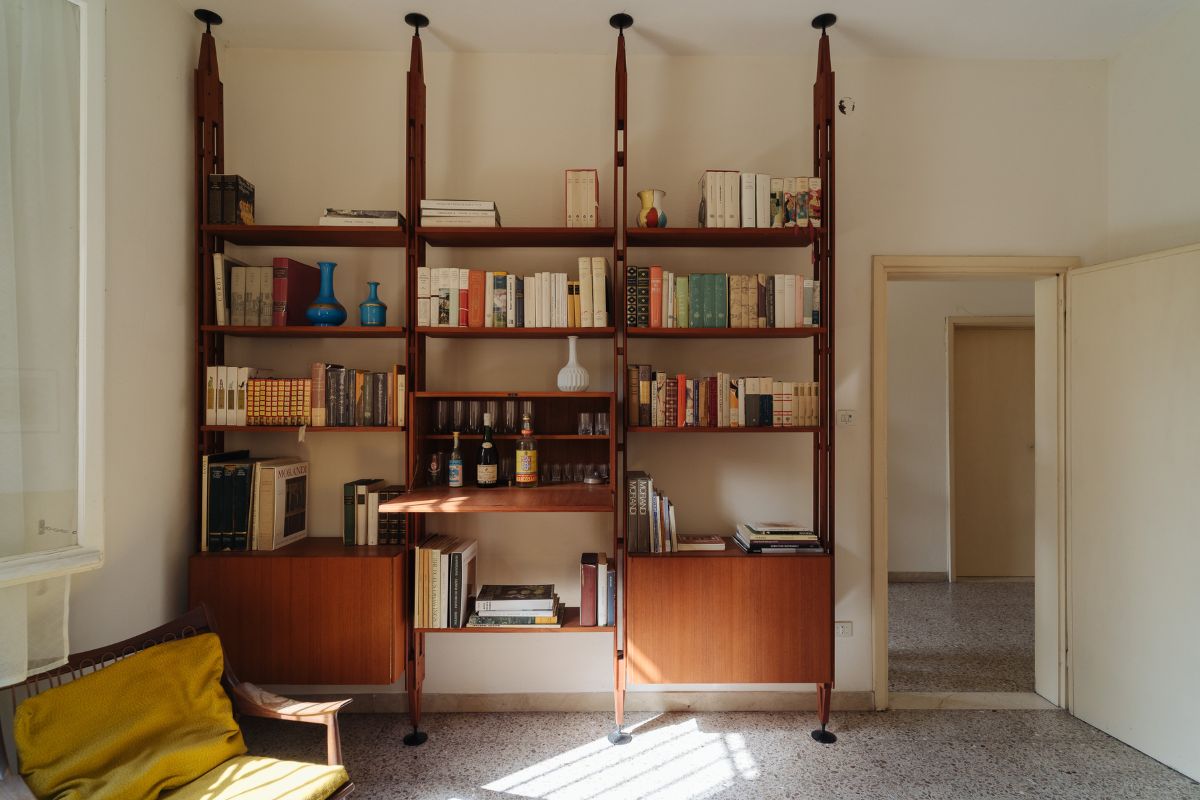
Pictorial silence, dusty light
The apartment-studio of Giorgio Morandi, one of the most introspective painters of the 20th century, is a total work. Located in Via Fondazza, everything has remained as it was: the table with the bottles that made up his still lifes, the evolving canvases, the dull colours, the common objects elevated to a visual project.
Casa Morandi is the opposite of aesthetic clamor: it is a discipline of gaze, a laboratory in which the essential becomes visual narration.
5. Sextantio Albergo Diffuso Santo Stefano di Sessanio (AQ)

Memory as a contemporary form of living
More than a house museum, Sextantio is an entire medieval village kept intact, philologically restored and inhabited as a widespread domestic experience. Daniele Kihlgren has sculpted stone, wood, raw earth and artisanal fabrics to build spaces suspended between anthropology and design.
The absence of artificial light, the essentiality of the materials,the rooms dug into the rock: every detail reflects the still and profound life of the centuries, in a contemporary form. A lesson in ethical and sensorial design.
6. Giorgio de Chirico House Museum Rome
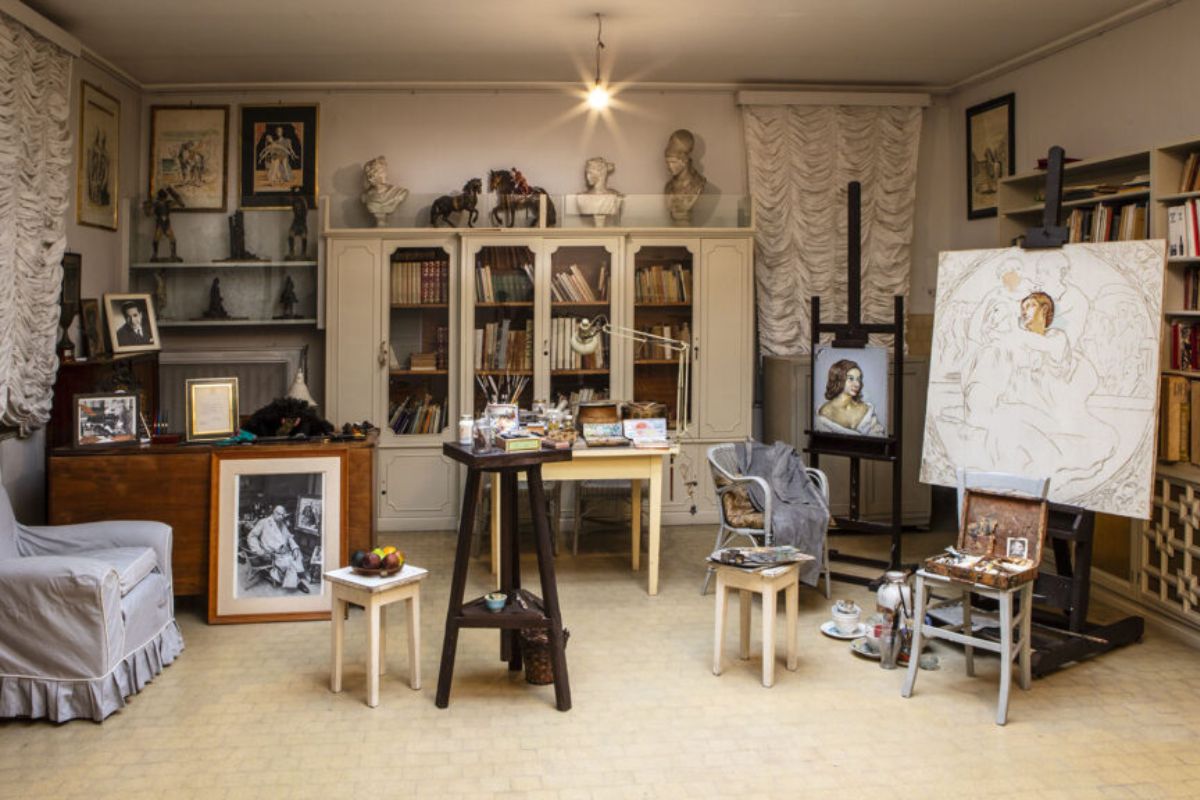
The metaphysical in the domestic space
Whoever enters Piazza di Spagna 31 does not just enter a house: he enters De Chirico’s mental room. The Maestro lived there from 1948 to his death in 1978. In the house-museum, opened to the public in 1998, the Roman light falls on paintings, easels, sculptures, books, objects and furniture chosen or designed by himself.
There is no discontinuity between the inhabited space and the creative one: here everyday life merges with imagination. The house is a studio, the studio is a home. The mystery remains intact, suitable for a stay.
7. The Vittoriale degli Italiani Gardone Riviera (BS)
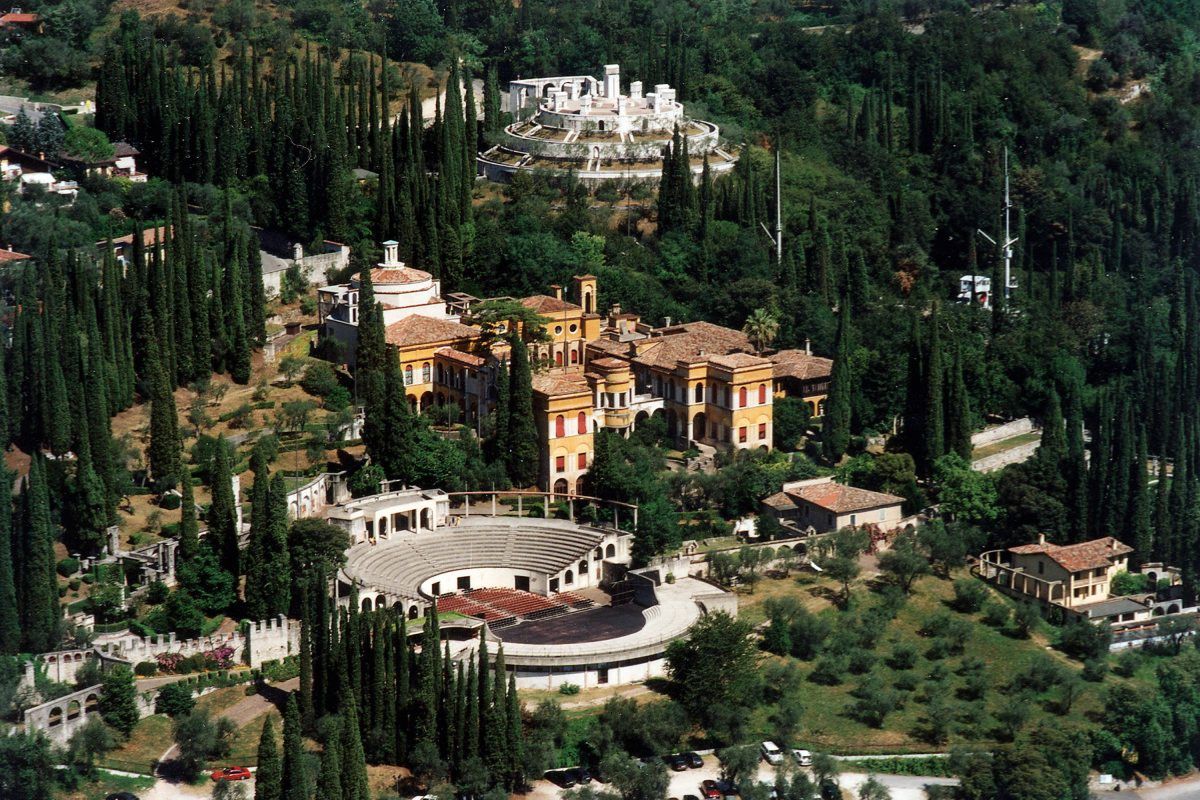
D’Annunzio’s dream made of stone and aesthetic corpse
The Vittoriale is the extreme case: the house that becomes a collection, the collection that becomes a city, the city that becomes a theater. Fruit of the narcissistic, strategic and visionary genius of Gabriele D’Annunzio, this complex is a habitable sculpture of stratifications: sailing ships set in the hill, rooms satined with black velvet, masks, books, relics, stuffed animals, marble, mirrors, symbolic obsessions.
A place that disturbs, fascinates, disorientates, enchants: the greatest example of “living as a total art”, for better or for worse. An orchestrated explosion of aesthetics, power and interiority.
8. Bagatti Valsecchi House Museum Milan
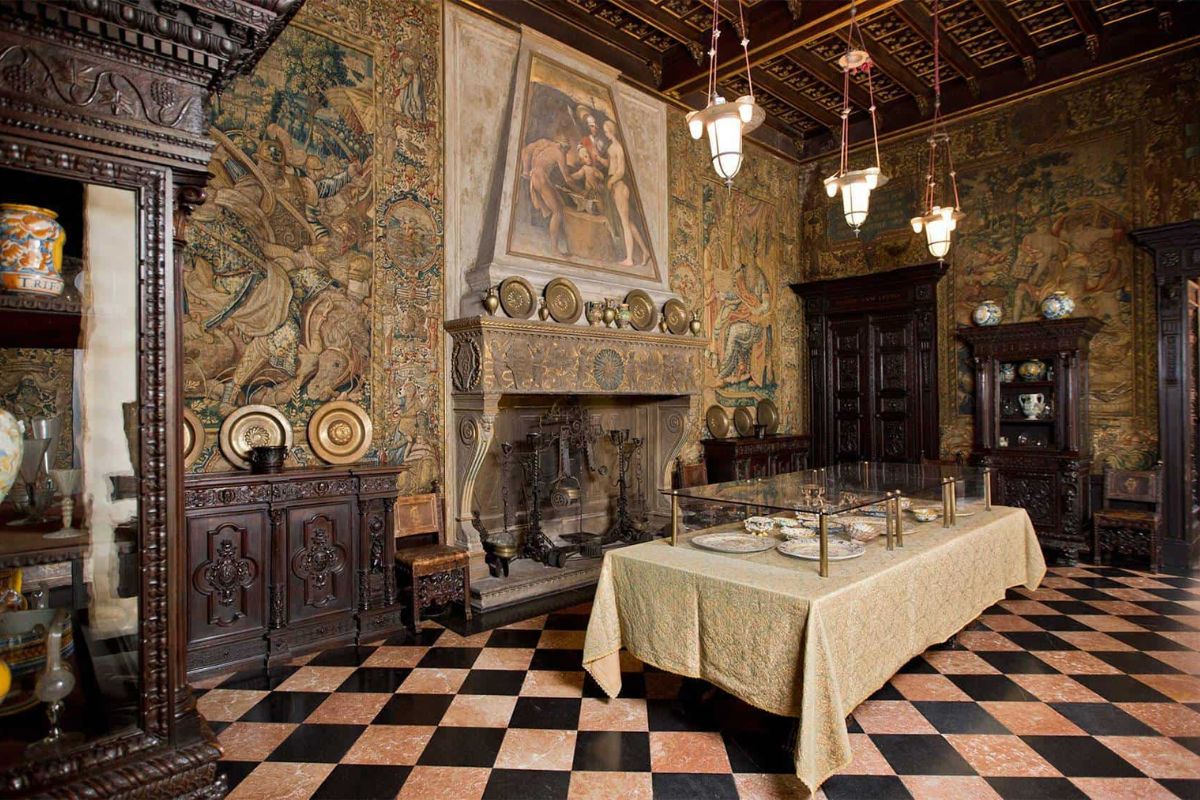
The Renaissance recreated in the heart of Brera
In via Gesù 5, in the Fashion District, there is one of the rare cases in which the historical reconstruction is itself a contemporary project. The brothers Fausto and Giuseppe Bagatti Valsecchi, passionate collectors, transformed their nineteenth-century residence into a perfect Lombard Renaissance style home.
It is not a historical fake, nor a Disney world ante litteram: it is an obsessive work of research and meaning. Today the house museum offers a journey through the history of taste, always remaining faithful to its original narrative.
9. Enzo Ferrari House Museum Modena
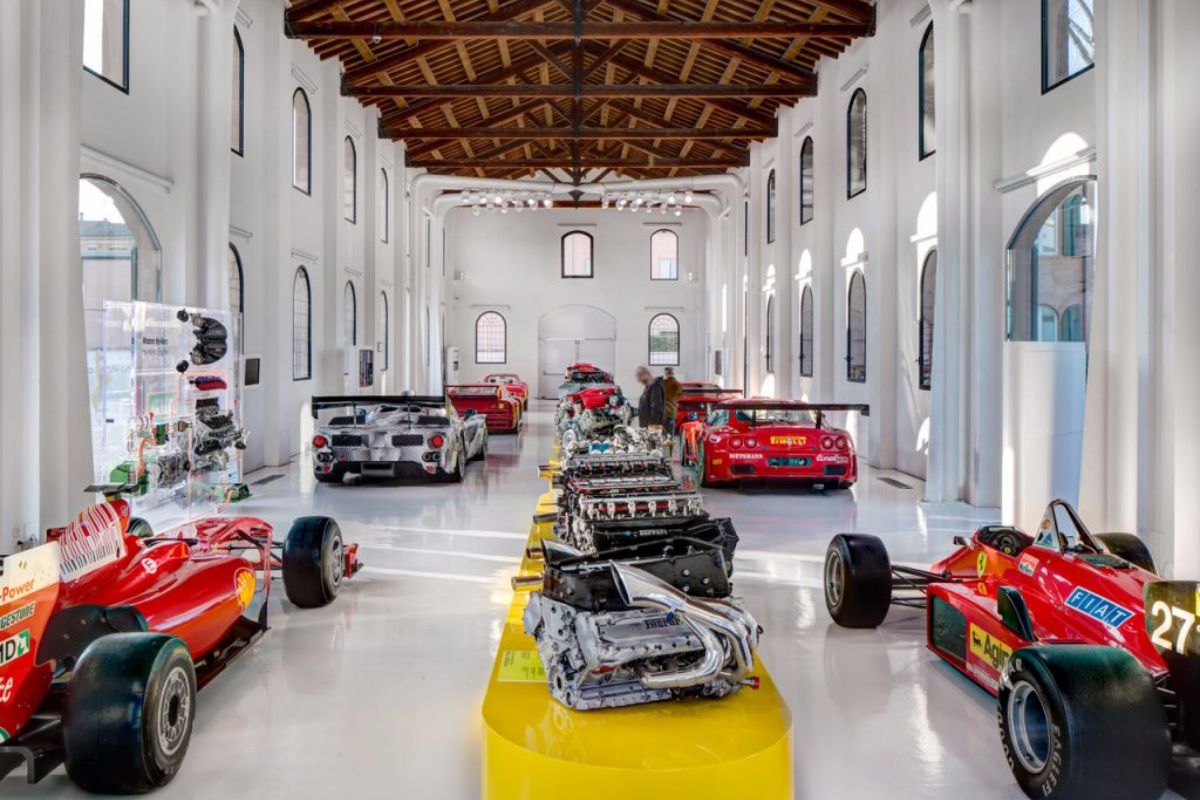
The motor as an identity fetish
Designed by architect Jan Kaplický, the yellow treasure chest museum in Modena incorporates the birthplace of the founder of Ferrari. The building is a hyperbole: curved lines, large windows, smooth sheet metal, futuristic melancholy. But next door, visible, is the room in which Enzo was born in 1898. The short circuit is powerful: engines as art objects, house as the cradle of myth.
An anthropology of industrial design which in Italy has domestic origins and global ambition.
10. Mario Praz Museum Rome
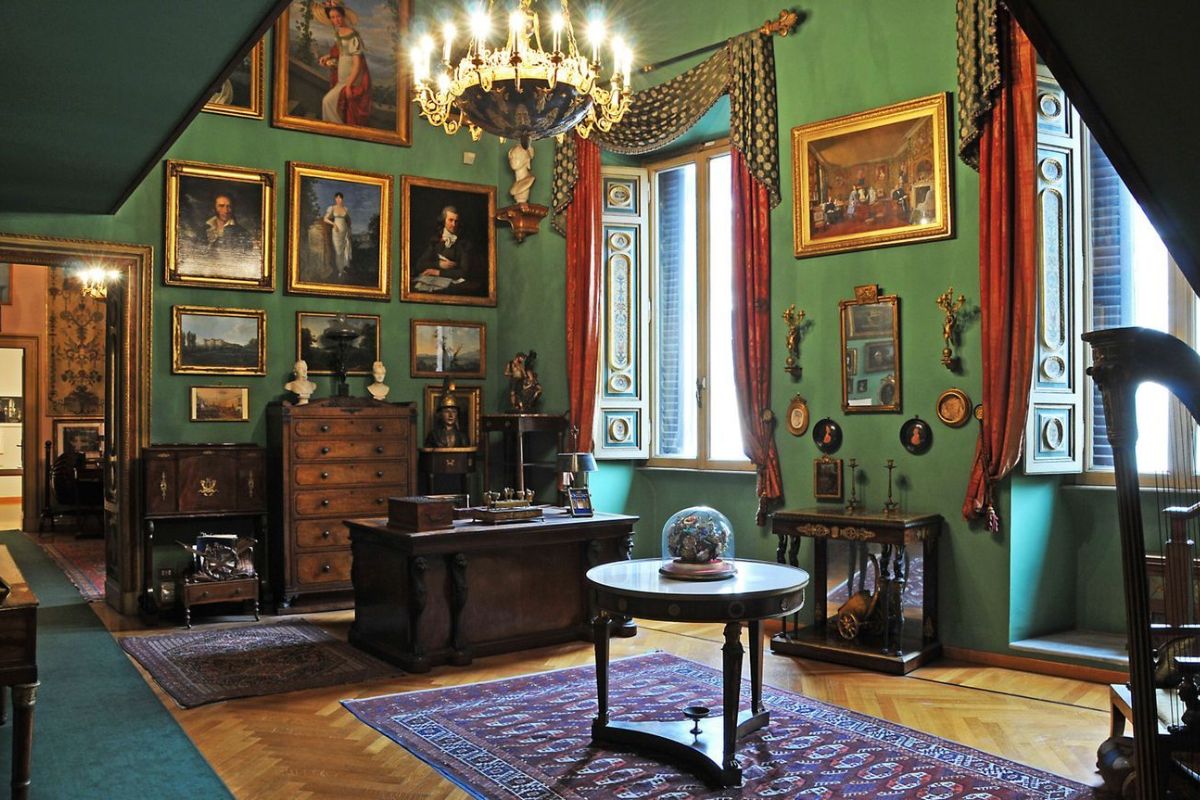
The chamber of wonders of the aesthetic collector
In the neoclassical setting of Palazzo Primoli, a few steps from Piazza Navona, the Mario Praz Museum restores the soul of the man who loved literature, prints and the decorative artstive and Beauty understood as a structural necessity. The 10 rooms are saturated with objects chosen by Praz over the years: Empire beds, miniatures inspired by Shakespeare, English paintings, painted fans, inlaid furniture.
The result is a sensorial self-portrait. A regular labyrinth of aesthetic thought.
11. Casa Studio Albini Milan
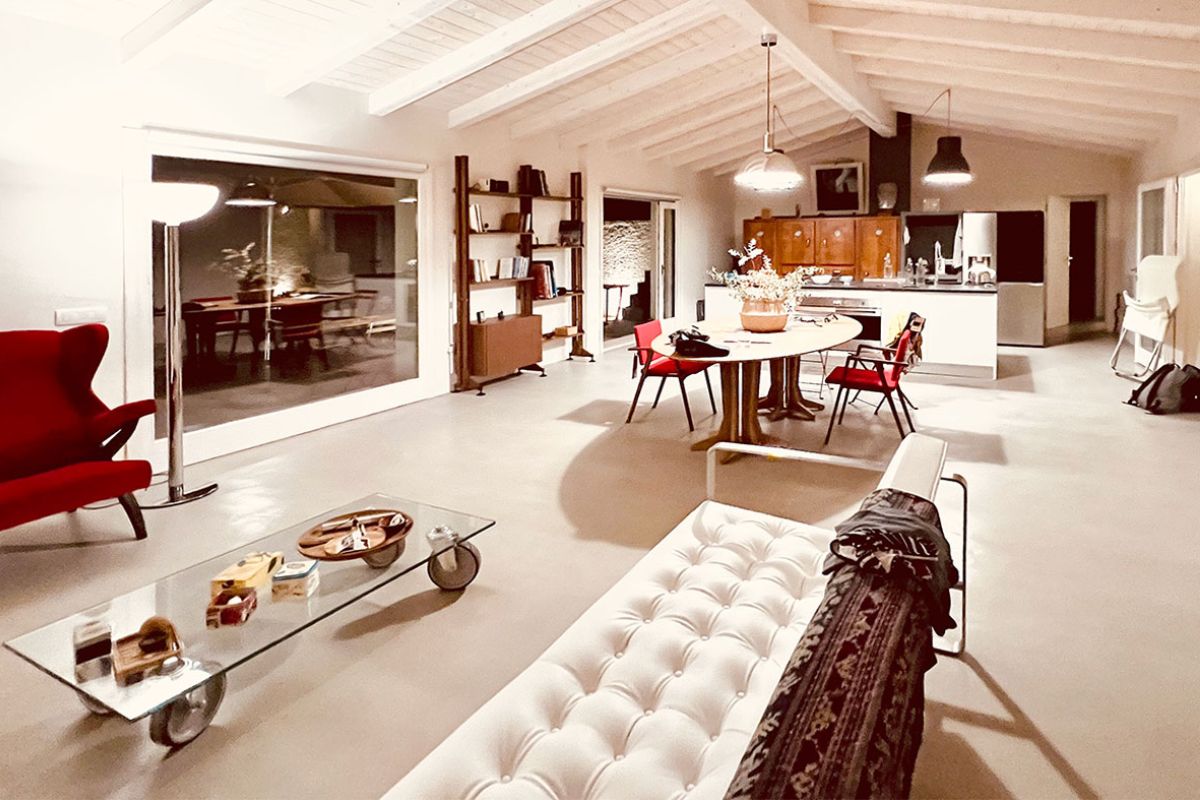
Sophisticated rationalism as a poetic act
In the rationalist complex of via Telesio is the home-atelier of Franco Albini, a capital figure of twentieth-century Italian architecture. The domestic project is a masterpiece of living order: overhead shelving, light metal structures, suspended beams, horizontal lines, transparencies, light woods, iconic seats designed by Albini himself.
Here design is one with living: the house is a laboratory of constructed lightness.
12. Villa Panza Varese
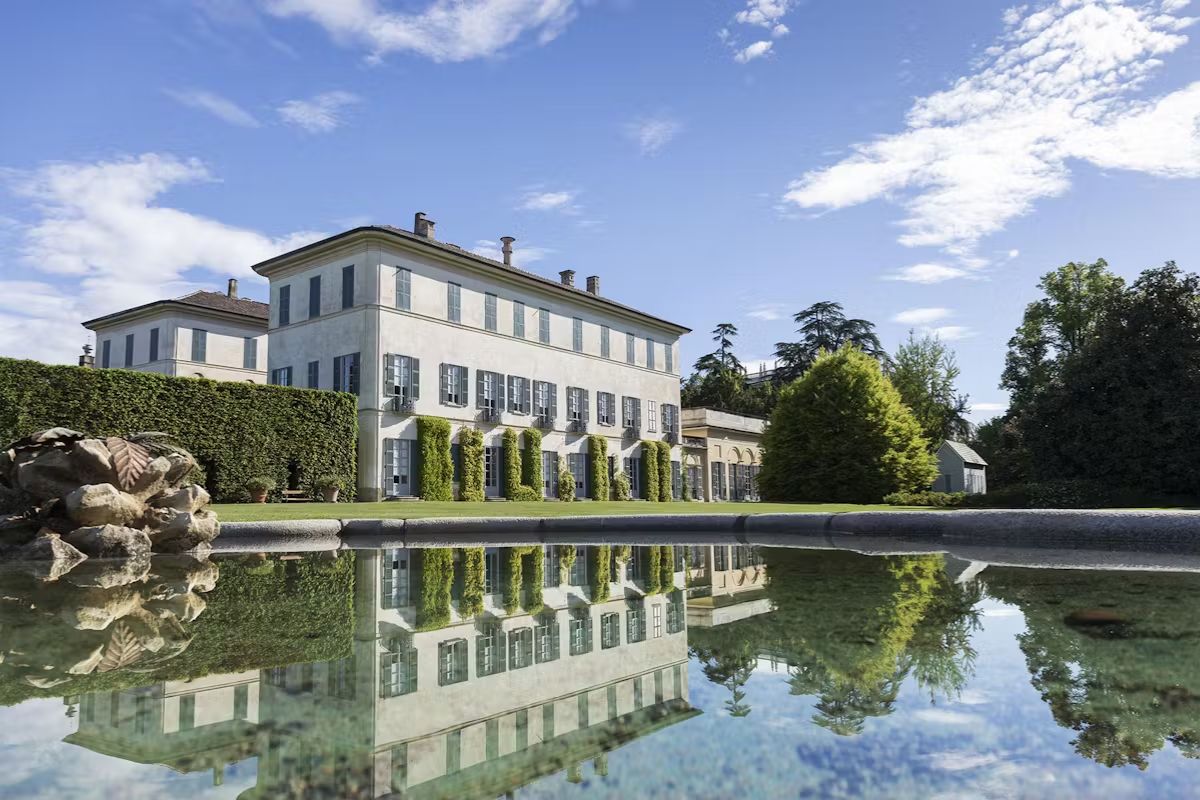
When light becomes matter: contemporary art in an 18th century noble residence
On the hills that embrace Varese, Villa Panza is one of the greatest surprises of the Italian museum panorama: an 18th century residence that lives today thanks to a unique dialogue between architecture, nature and contemporary art.
Having belonged to Count Giuseppe Panza di Biumo (19232010), one of the greatest art collectors of the 20th century, the villa represents an exemplary cultural case: a place where domestic intimacy coexists with light installations, site specific works and minimalist works that have given shape to a new idea of private European collecting.
Inside, 33 rooms inhabited by radical artists such as Dan Flavin, James Turrell and Robert Irwin, who worked side by side with the collector to adapt their works to the space, transforming it into a perceptive laboratory. A museum itinerary emerges in which the white of the ceilings, the living shadow of the corridors and the natural light that filters through the windows become an integral part of the artistic project. An experience suspended between discipline and intuition.
Today the villa is managed by the FAI – Italian Environment Fund, which protects its historical and cultural value, keeping Panza’s intellectual legacy alive and opening the house to temporary exhibitions, meetings, workshops and sensorial itineraries. It is an essential stop not only for those who love minimal or conceptual art, but for anyone who wants to explore the fertile border between domestic space and artistic installation.
The house as a narrative of the world
A house museum is not a dead space. It is physical proof that culture and living are not separable. Every plate, armchair, painting, vase, book or window tells of a choice: political, emotional, aesthetic, ethical, material.
In 2025, visiting house museums means rediscovering a form of public intimacy that does not exist elsewhere. It means observing not only who made a work, but how they lived. And learn that there is no distinction between work and room, between art and everyday life: life is already a thought form.
How to build your itinerary of house museums in Italy
You can experience house museums in different ways:
-
The routeof the architects : Portaluppi, Albini, Mollino
-
The thread of art : Morandi, De Chirico, Vedova
-
Literary Italy : Pascoli, D’Annunzio, Praz
-
Milan, the capital : in one weekend you can visit 4 iconic museum houses on foot
All the house museums mentioned are part of easily consultable regional or national networks:
- FAI Italian Environment Fund
- Milan House Museum System
- Case della Memoria Association
House museums in Italy: where art meets everyday life
From De Chirico’s metaphysical rooms to Portaluppi’s modernity, from Morandi’s silences to Mollino’s existential theatre: 12 Italian house museums to visit to discover the most intimate side of history, design and culture.
Living is an aesthetic choice. In our country there are places where this choice has become vision, language, architecture. Visiting Italian house museums today means measuring the transition between what we have been and what we will continue to be: creators of spaces, creators of domestic worlds, readers of objects that tell stories.
Houses are museums, but museums when they still breathe life are houses of thought.