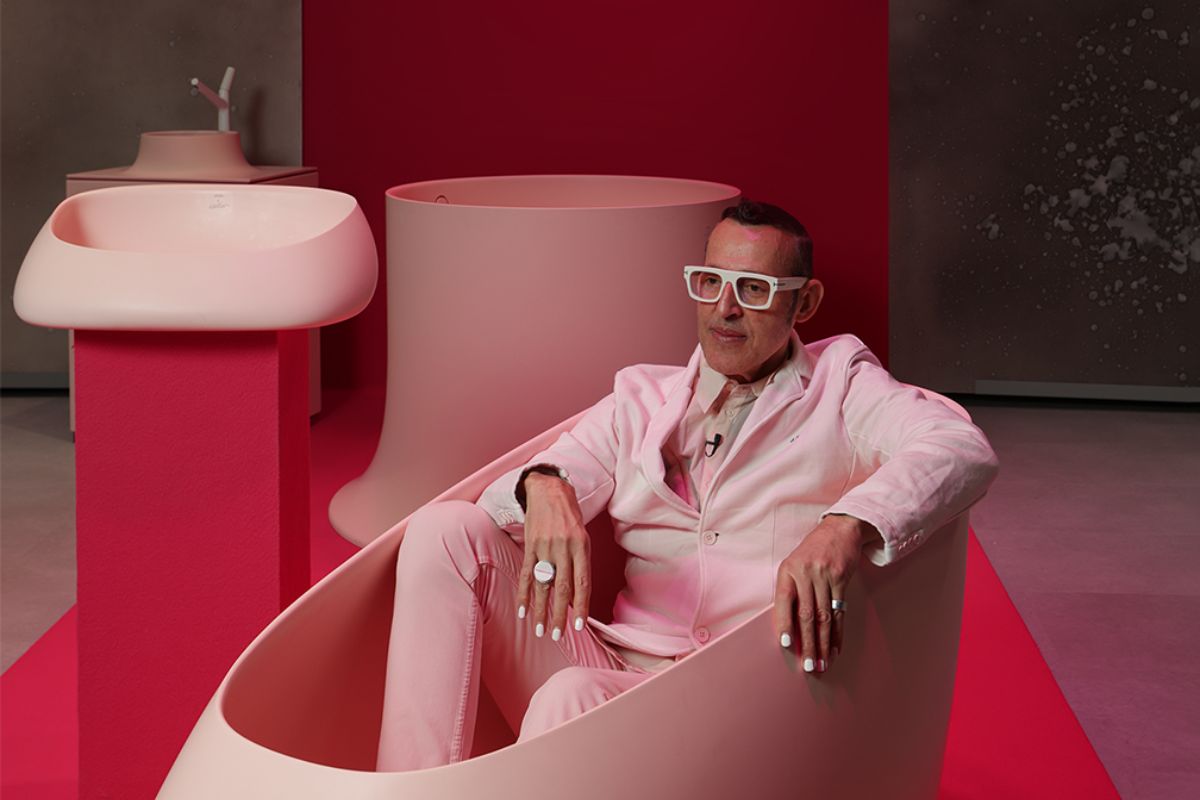
There are those who draw objects. And then there are those who draw visions. Karim Rashid belongs to this second category: that of designers who do not limit themselves to interpreting the present, but anticipate it - transforming design into a living language of contemporaneity. Born in Cairo in 1960 , to an Egyptian father …
There are those who draw objects. And then there are those who draw visions. Karim Rashid belongs to this second category: that of designers who do not limit themselves to interpreting the present, but anticipate it – transforming design into a living language of contemporaneity.
Born in Cairo in 1960 , to an Egyptian father and an English mother, and raised in Canada , Rashid is today one of the most influential and recognizable industrial designers in the world . After graduating in Industrial Design at Carleton University in Ottawa , he continued his education in Italy , between Naples and Milan , honing a vision that intertwines art, craftsmanship and technology.
With over 4,000 products created , more than 400 international awards and a presence in over 40 countries , Rashid has built a unique visual language: soft shapes, organic lines and vibrant colors that tell a poetics of lightness and sensuality contemporary.
His philosophy – often summarized in the expression “design democracy” , or design for everyone – arises from the idea that every everyday object must be beautiful, accessible and full of emotional meaning . Not a simple tool, but a vehicle of participation, emotion and cultural identity .
From collaborations with Vondom, Natuzzi, Alessi, Cielo, Artemide and Tonelli Design , to projects in interior design, hotels and public spaces , each creation brings with it an optimistic and sensorial vision of the world. The famous Garbo basket for Umbra , which has become an icon of contemporary design, is an example of this: a simple object transformed into a symbol of industrial elegance and sensuality.
His works are part of the permanent collections of the MoMA in New York, the Center Pompidou in Paris and the SFMOMA in San Francisco , testifying to a research that goes beyond time and fashion.
Today, from his studio in New York , Rashid leads an international team with a multidisciplinary and holistic approach , where objects, spaces, fashion, music and art merge into a single aesthetic vision.
Its design is fluid, democratic and digital , a hymn to the contamination between human empathy and technological intelligence .
In the following dialogue with Archi&Interiors, Rashid reflects on artificial intelligence, emotion, Made in Italy and the future of design : a lucid and poetic story of how design, today, can still be an act of love towards humanity .
Interview with Karim Rashid: the future of design is fluid, sensual and human
In an era where artificial intelligence can replicate creativity, how do you imagine the next evolution of design as a language of contemporary culture?
Design is the evolving DNA of human progress. Every era leaves behind its own artifacts, and those artifacts tell the story of who we were and what we valued.
Artificial intelligence does not threaten creativity, it expands it.
Become another penllo, another algorithmic intuition that allows us to hybridize human emotion with machine precision.
The next evolution of design will concern consciousness , where human empathy meets digital intelligence to create a new aesthetic language fluid, emotional and dematerialized.
Your projects blend form and feeling, reason and pleasure. How important is the sensorial dimension of design for you?
For me, design must seduce.
Function alone is not enough: the emotional response is what makes an object capable of transcending utility.
A chair or a lamp really works when they speak to your senses, when you want to touch them, experience them, and let them become part of your daily ritual.
sensual minimalism is my way of giving emotion to the rational, softness to the digital and humanity to the industrial.
Color has always been your manifesto. Is there a color you feel most connected to today?
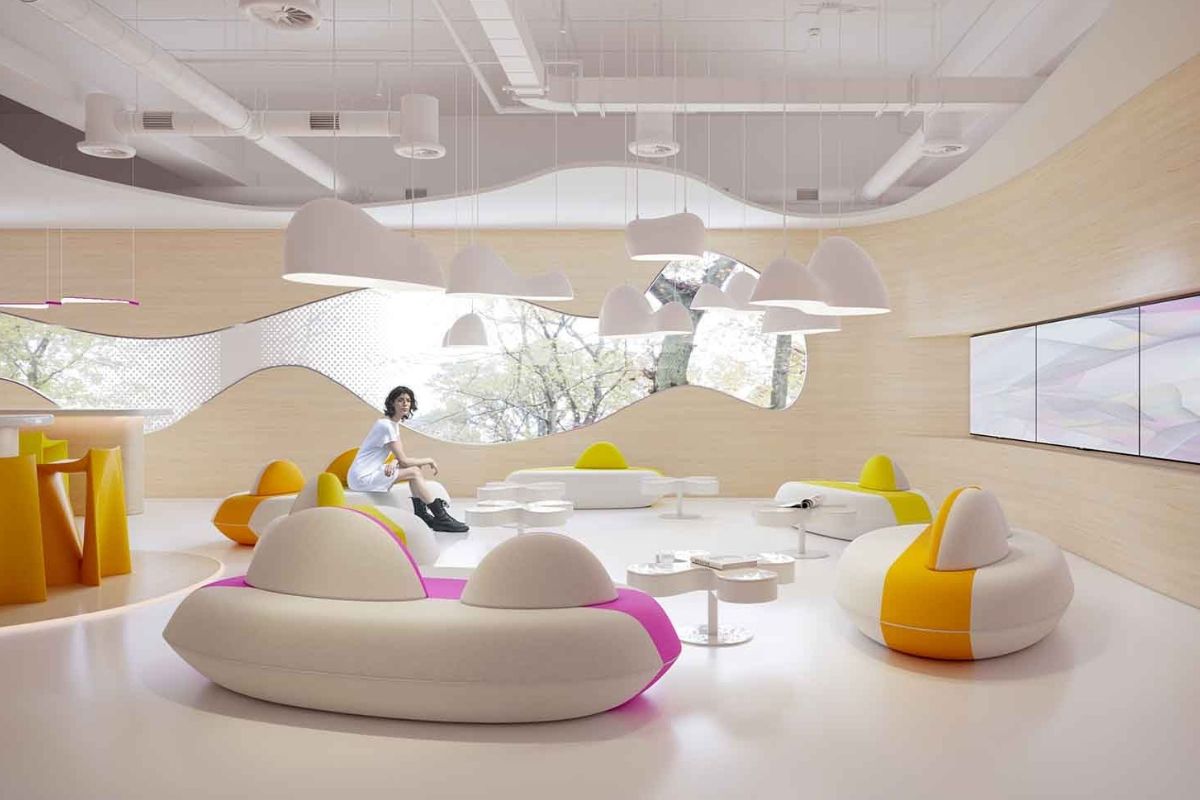
Color is energy, it is our first emotional language.
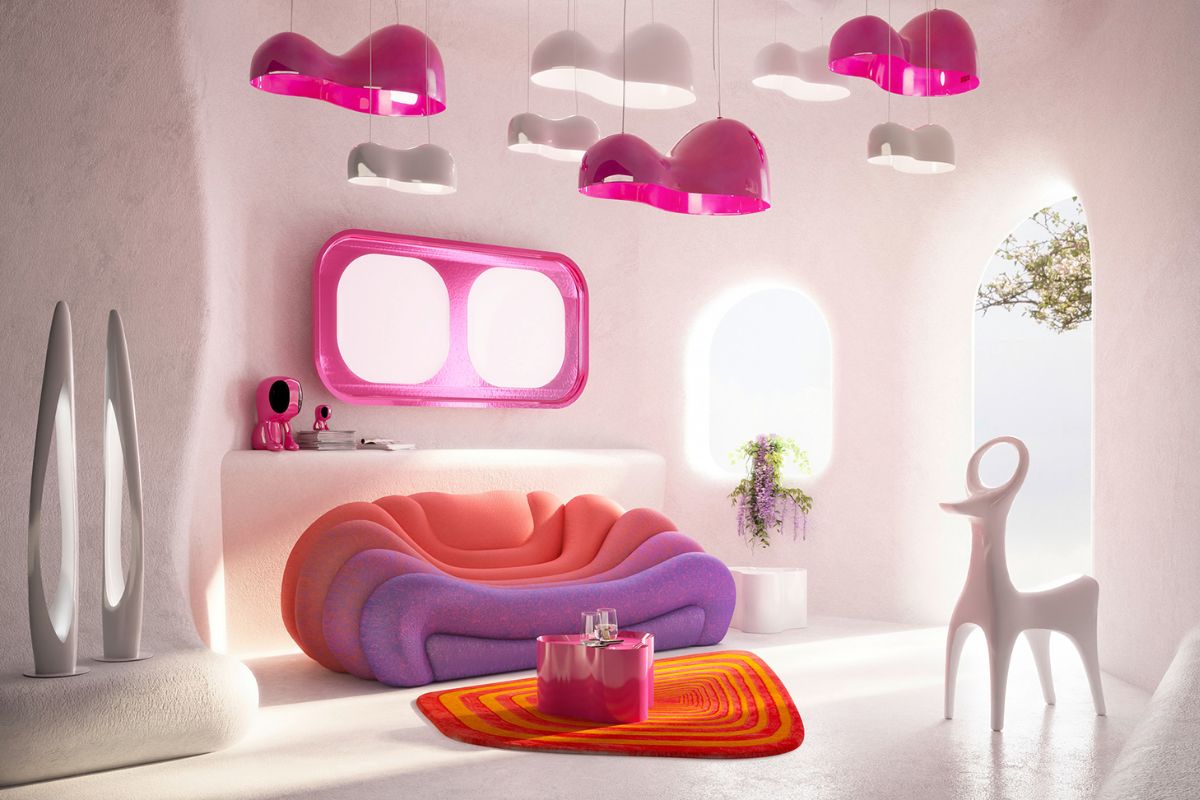
I have always felt deeply connected to pink , because it symbolizes the new human being beyond gender, beyond clichés, full of optimism and digital sensuality.
But lately I’m drawn to pale yellows, baby blues and luminous creams , shades that suggest a softer, more spiritual future.
The future should appear light, not heavy .
You trained in Italy, between Naples and Milan. What did that period mean to you?
Italy was my training laboratory.
I studied with many masters there and received my bachelor’s degree from an architecture and engineering school.
The Teutonic education I received in Ottawa, Canada, was completely opposite to the poetic, human and political approach of the Italians.
In Naples I discovered the beauty of imperfection, how life and craftsmanship coexist with emotion and authenticity.
In Milan I learned discipline, rationalism and the power of design as a cultural system.
That duality between logic and lyricism still defines everything I do today.
What does Made in Italy represent for you today?
I prefer to say conceived in Italy ( conceived in Italy ) rather than Made in Italy, because now it no longer matters where something is produced.
Globalization and technology have changed this paradigm.
What still matters is the Italian mentality that profound understanding of the beauty, quality and sensuality of materials.
It is the art of doing with soul and intelligence , not just producing.
The Italian spirit remains a bridge between tradition and innovation , where local wisdom meets global consciousness.
You often talk about democratic design. Can beauty, sustainability and mass production coexist?
Absolutely yes.
This is the great challenge of our time: designing for the 99%, not just for the elite .
True democracy in design means intelligent materialspeople, recyclable production, affordable prices and emotional impact.
Sustainability is not just ecological, it is cultural .
It means designing things that people will love and keep with them, not throw away.
Among your countless projects, is there one that best embodies your vision of the future?
Each project reflects a different moment in my life, but if I had to choose, I would say that the Garbo basket remains emblematic, because it transformed something banal into something sensual and iconic.
More recently, my collaborations with Natuzzi, Nisi Italia and Zellerfeld speak of the future where softness meets technology, where physical form merges with digital fabrication.
You have often anticipated trends from digital to genderless. Which directions do you find most interesting today?
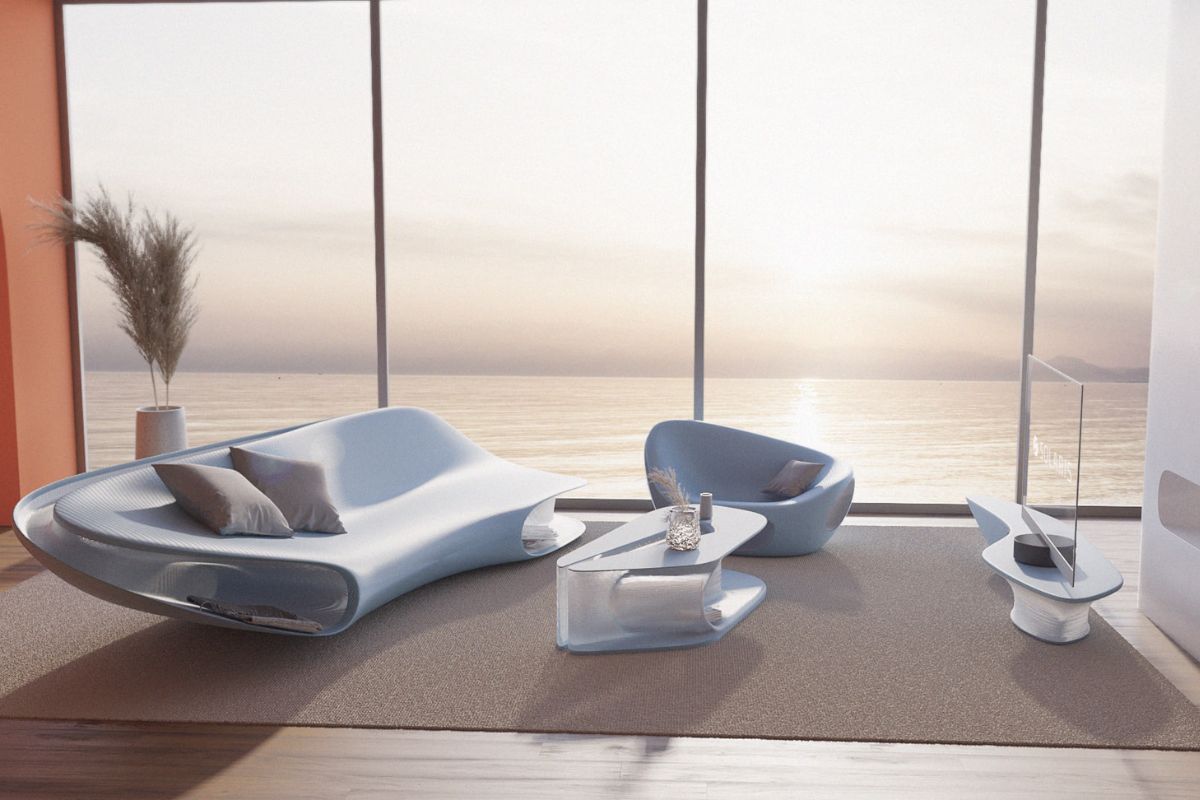
We are moving towards dematerialization , where objects, spaces and identities are fluid and borderless.
I am fascinated by digital materiality , virtual tactility and the fusion between real and virtual in hybrid experiences.
The future of design will be linked to emotion in immateriality , how we create meaning in an increasingly virtual world.
Your studio in New York is a creative laboratory of contaminations. How important is interdisciplinarity today?
Today design cannot exist in isolation.
Everything is connected: architecture, music, fashion, art, science, digital culture.
My studio is an ecosystem in which these disciplines merge into a single creative energy.
Designing holistically means understanding that a space, a shoe, or a chair are all part of the same cultural continuum they all express our human condition .
What if you had to imagine a manifesto for the design of the future in three words?
Sensual. Human. Fluid.
Because design must always touch our senses, serve humanity and flow with the changing times.
The future is not about control or perfection, but about fluidity, empathy and evolution .