Today we want to remember Virgil Abloh , who passed away prematurely in 2021 at just 41 years old due to a rare cardiac angiosarcoma. One of the most visionary architects and designers of his generation, he left a legacy that continues to inspire the world of fashion and interior design. Virgil Abloh (1980 …
Today we want to remember Virgil Abloh , who passed away prematurely in 2021 at just 41 years old due to a rare cardiac angiosarcoma. One of the most visionary architects and designers of his generation, he left a legacy that continues to inspire the world of fashion and interior design.
Virgil Abloh (1980 2021) was much more than a designer: he was a cultural pioneer , a narrator of our times who was able to translate the social, aesthetic and technological transformations of the 21st century into visual languages. An architect by training, designer by profession, creative director for Louis Vuitton Men and founder of Off-White, Abloh embodied the figure of the total creative , capable of breaking down the barriers between fashion, art, architecture, music and furniture.
His approach was at the same time radical and democratic : he loved the idea of bringing the codes of high fashion into the streets and, at the same time, of bringing the street language into museums and homes. If fashion was his launching pad, interior design proved to be one of his most fertile platforms for experimentation.
Abloh did not consider a chair or a table as simple furnishing elements, but as cultural symbols capable of telling stories, conveying messages and stimulating reflections. For this reason, his legacy in design goes far beyond forms: it is an invitation to rethink the relationship between spaces, objects and people.
A hybrid education: engineering, architecture, music

Virgil Abloh’s path explains his transversal vision well. Graduated in Civil Engineering , he quickly realized that the boundaries between disciplines could be undermined. The meeting with Kanye West was decisive: he worked with him as an art director and contributed to redefining the relationship between music and fashion , introducing concepts of branding, storytelling and visual contamination that would become central in the following decade.
Not satisfied, he continued with a Master’s degree in Architecture at the Illinois Institute of Technology . Here he studied modernism and construction logic, assimilating the lessons of Mies van der Rohe and the masters of rationalist architecture. However, Abloh did not limit himself to adopting the dogmas: he reinterpreted them with irony and a critical spirit.
Music, engineering and architecture intertwined in his mind, giving life to an approach that we could define multidisciplinary and liquid . An approach that will lead him to conceive furnishings and installations as “cultural tools” rather than as functional objects.
Virgil Abloh and interior design: between luxury, street and industry
In the last years of his life, Abloh signed some of the most daring projects between fashion and furniture, with collaborations that rightfully entered the history of contemporary design. Its strength lay in the ability to keep one foot in luxury and one in the street , making craftsmanship dialogue with industrial production, historic companies with young enthusiasts, icons of the past with the aesthetics of the future.
His work was not limited to decorating spaces: it transformed them into immersive . From Ikea carpets that have become cult objects to Cassina modular blocks designed as a creative game, each project brought with it a reflection: on consumption, on the future of living, on sustainability, on cultural identity.
The collaborations that made history
Vitra Twentythirtyfive (2019)

At the famous Vitra Campus , Abloh imagined the room of a teenager in 2035. An environment that mixed icons of modernist design, such as the Antony chair and the Petite Potence lamp by Jean Prouvé, with conceptual elements such as the Ceramic Block , a parallelepiped inspired by industrial construction.
The result was a dialogue between past and future , between memory and provocation. The installation had great critical resonance, showing how Abloh was capable of inserting street culture into the temple of European design.
Ikea Collection MARKERAD (2019)

The collaboration with Ikea marked an epochal turning point. The MARKERAD collection included objects that went around the world: the red carpet with the writing Keep Off , the leather shopping bag inspired by the famous blue Frakta bag, chairs and furniture with ironic details.
Within hours, the items sold out, turning into collectors’ items . But the scope was broader: Abloh demonstrated that design could be democratic , without losing quality and creativity. It opened a door for millions of young people who, for the first time, were able to purchase a piece signed by one of the greatest contemporary creatives.
Carpenters Workshop Gallery Acqua Alta (2019)

Presented at the Venice Biennale , the installation Acqua Alta was composed of inclined seats that evoked the image of furniture submerged in water. A poetic and at the same time dramatic project, which spoke of climate change and environmental fragility.
With this work, Abloh has demonstrated how design can become a political language , capable of raising awareness and conveying urgent messages. Not just aesthetics, therefore, but social commitment.
Off-White Homeware (2020)
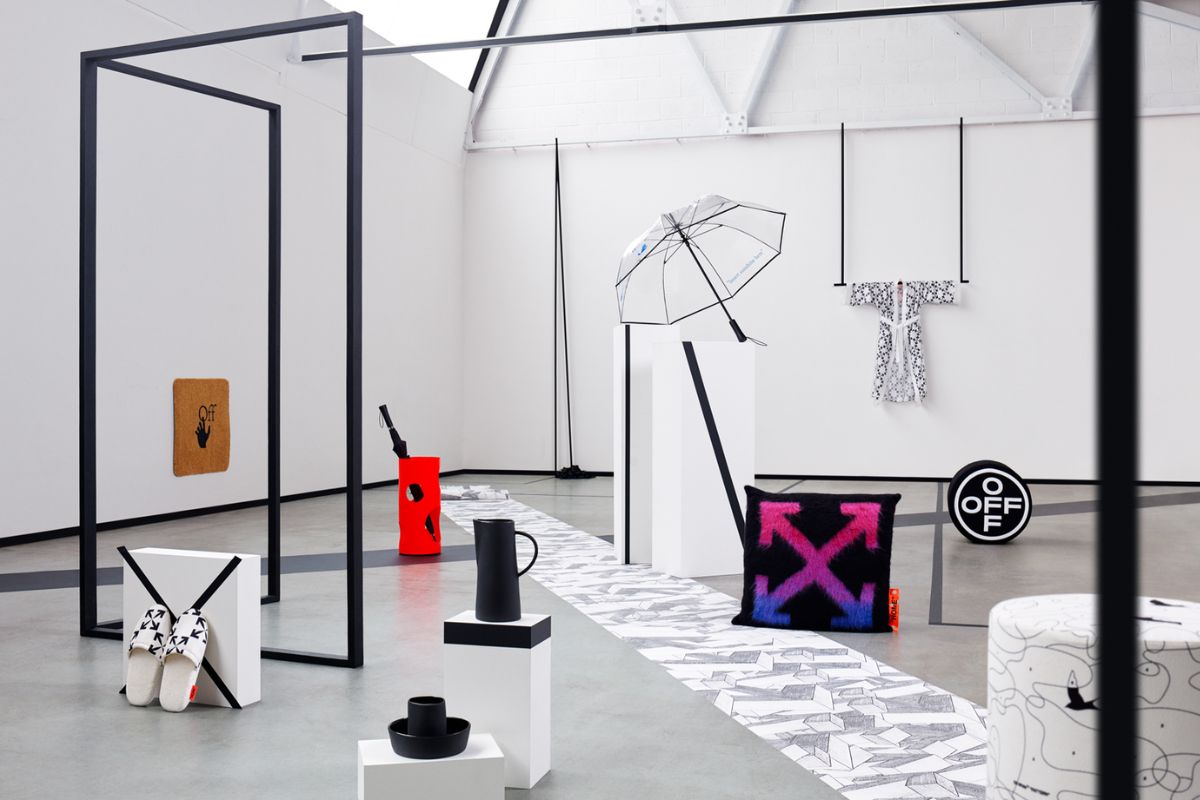
Bringing the language of Off-White into the interiors was a natural move. The collection included mirrors, doormats, umbrella stands and accessories decorated with the famous arrow logos and the Meteor motif.
Everyday objects were thus transformed into pop icons of interior design , demonstrating how branding and urban culture could live even in the most intimate spaces of the home.
Galerie Kreo Efflorescence (2020)

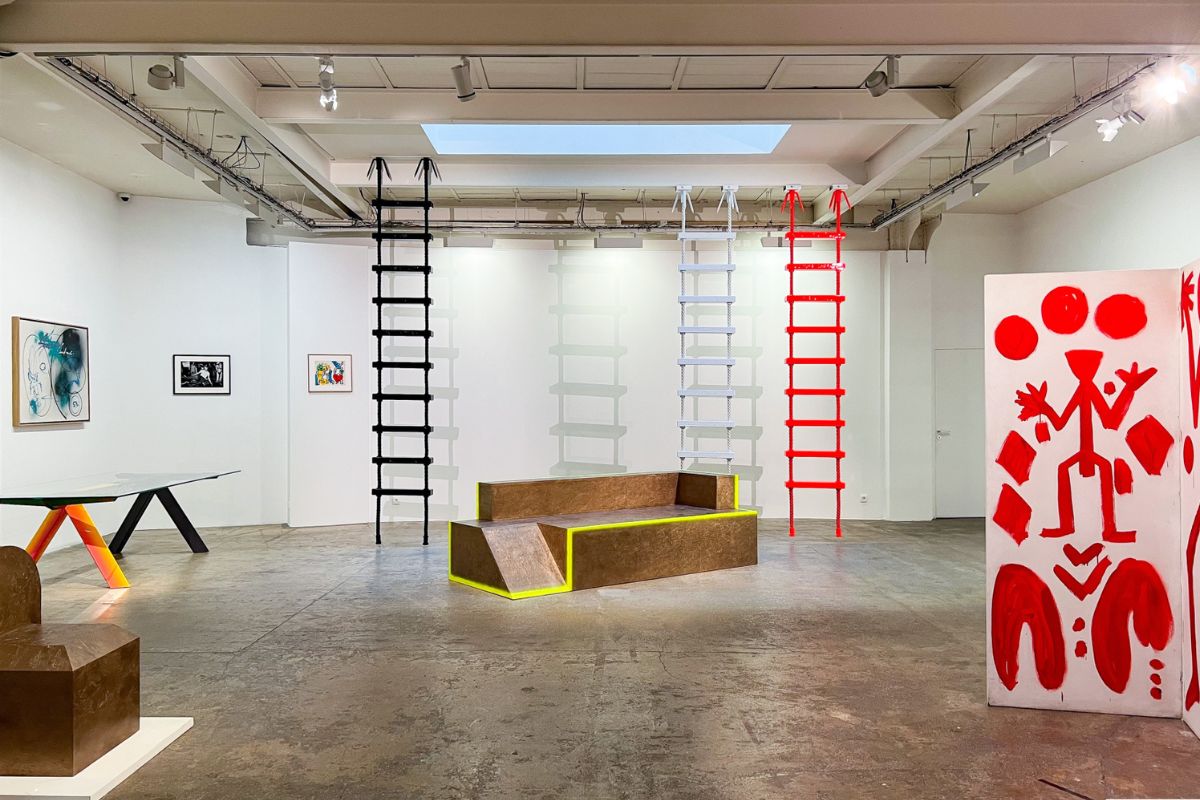
For the Galerie Kreo in Paris, Abloh created Efflorescence , a collection of twenty raw concrete pieces decorated with colorful graffiti. Tables, mirrors and consoles that seemed to come from an urban construction site, but reinterpreted as works of art.
Aperfect example of his poetics: combining architectural brutalism and street culture, making the furniture urban sculpture ready to live both in a gallery and in an apartment.
Ginori 1735 Street Table (2021)
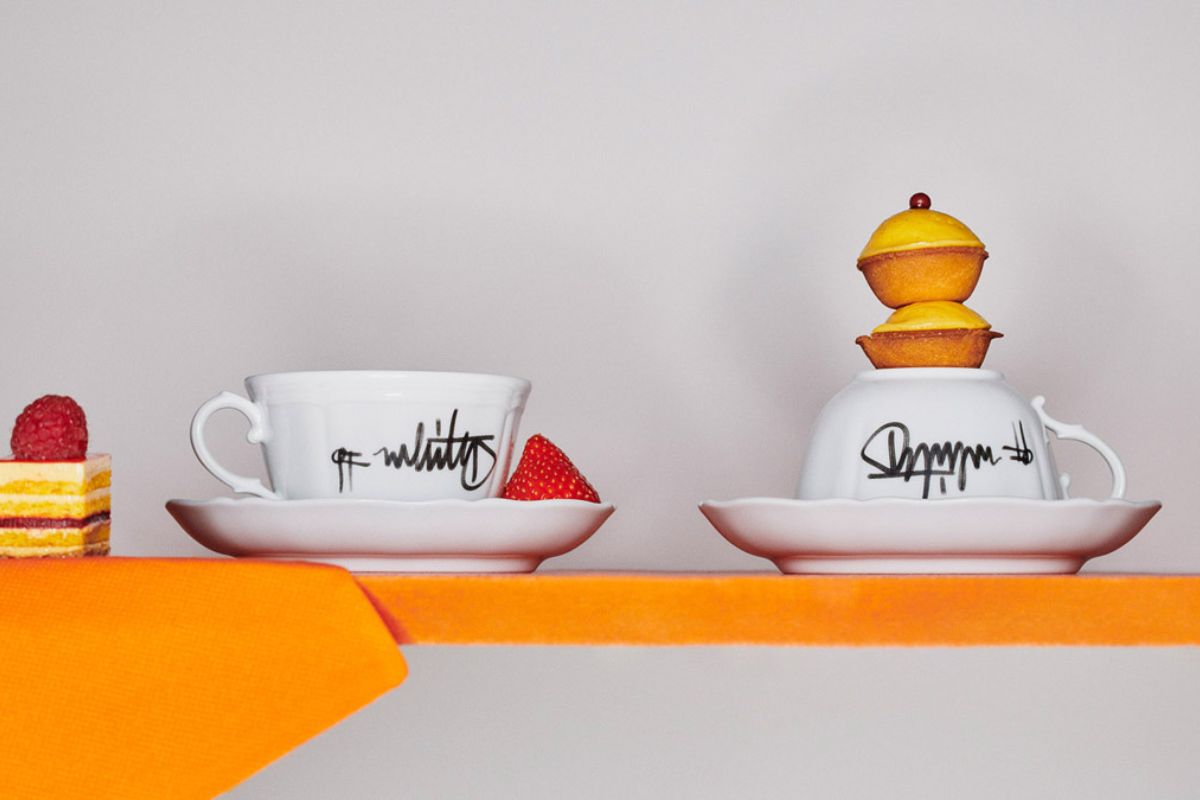
At Milan Design Week 2021 , Virgil Abloh signed the Street Table collection for Ginori 1735 , reinterpreting the historic Antico Doccia line through his unmistakable urban aesthetic. As reported by Living Corriere , dinner plates, cups and saucers and teapots were decorated with tags, black and white graffiti and graphic signs typical of Off-White , transforming Florentine porcelain into conceptual and provocative objects.
The result is an unprecedented dialogue between the Tuscan manufacturing tradition and the streetwear language, capable of bringing the table to the center of a cultural reflection: from a place of conviviality to a stage for contemporary experimentation.
Cassina Modular Imagination (2022, posthumous)

Perhaps his most emblematic legacy. Presented by Cassina after his death, the Modular Imagination collection was composed of black polyurethane blocks with orange feet, stackable and recombinable.
A project that did not define a piece of furniture, but an attitude towards space : playful, modular, open. The installation at the Cassina flagship in Milan during Design Week, with the total orange set, was one of the most photographed and discussed of that edition.
Virgil Abloh and his contribution to design
There are three pillars of Abloh’s contribution to interior design:
-
Accessibility with Ikea he showed that design can be for everyone, without losing intensity.
-
Cultural contamination with Vitra, Galerie Kreo and Ginori he demonstrated that design dialogues with art, music, fashion and architecture.
-
Play and experimentation with Cassina he redefined the concept of modular furniture, transforming it into an open and creative language.
But his impact is not limited to companies: Abloh has inspired a generation of young designers who today see design not just as a profession, but as a cultural and political act.
The future through the gaze of Abloh
Years after his passing, the name of Virgil Abloh remains a beacon. His projects from Ikea to Cassina, via Vitra, Ginori 1735 and Off-White Homeware continue to circulate in homes, museums, galleries and online.
His lesson is clear: design is never just form or function , but a language capable of connecting different worlds, reflecting on the present and anticipating the future.
Virgil Abloh hasn’t just changed fashion. It has changed our way of imagining space, demonstrating that living always means telling a story .