On 3 April 2024 Gaetano Pesce left us, one of the greatest masters of contemporary design, a tireless innovator and visionary artist. Gaetano Pesce: a visionary who redefined design A man who, with his genius and his gaze beyond the function of the object, has redefined the concept of design. Gaetano Pesce , during his …
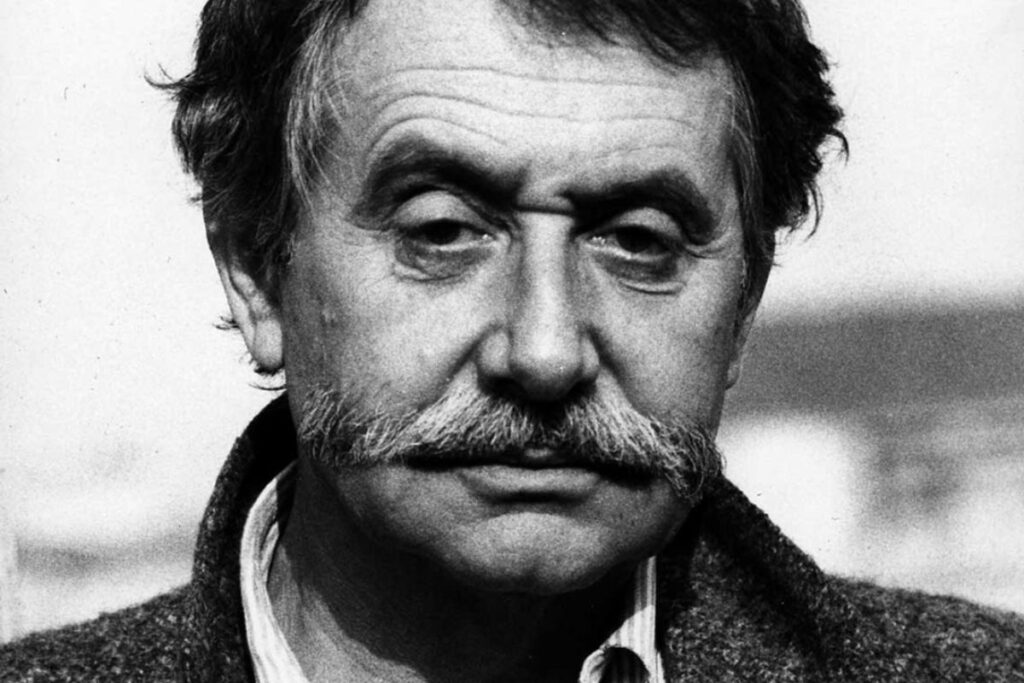
On 3 April 2024 Gaetano Pesce left us, one of the greatest masters of contemporary design, a tireless innovator and visionary artist.
Gaetano Pesce: a visionary who redefined design
A man who, with his genius and his gaze beyond the function of the object, has redefined the concept of design. Gaetano Pesce , during his sixty-year career, has theorized about diversity, change, originality, unpredictability.
He spoke of design as something intimate, always driven by the desire to experiment and aimed at innovation. He explored different worlds, techniques and fields.
An Italian source of pride by birth and education: he was born in La Spezia on 8 November 1939 and undertook his studies in Architecture at the IUAV in Venice. His nomadic spirit makes him a true citizen of the world: he has lived in Padua, Venice, London, Helsinki, Paris.
Landing in New York: home-studio and creative rebirth

In the 1980s he settled in New York, where a charming loft in the Brooklyn Naval Arsenal became his home-studio, an experimental laboratory and a creative refuge.
New York captures him, welcomes him and proves to be the perfect backdrop to his creative mind. Here, in the mid-nineties, the project Fish Design originated, a collection of unique pieces created by hand with resin – a material dear to him – which contrast homologation and rampant serial production.
The project manifesto praised uniqueness as an evolution from the standardized, to the humanization of defects, to innovation. He dedicates some of his most famous works to New York: the sofas “Sunset in New York” (1980, produced by Cassina), “Notturno a New York” (2010), and the sculpture “WTC Rebuilding Project” , two towers joined by a luminous heart to commemorate September 11th.
Inconsistency as style: Gaetano Pesce and radical design
Internationally renowned designer, architect, artist, it is not easy to pigeonhole and define Gaetano Pesce. After all, he has always escaped definitions. The only one he has attributed to himself and defended with pride is: an INCOHERENT .
Among the greatest exponents of radical design , a movement that has dominated the creative scene since the 1960s, his career has been a vortex of contradictions, a continuous change of ideas and positions.
As soon as he graduated, he joined the Gruppo N , a collective of artists and designers linked to programmed and kinetic art. Later, he rejected abstraction, considering it soulless, to undertake an individual path based on the combination function-expression , making his work an example of free and multidisciplinary design.
Figurative design: between function and narrative
He promoted figurative design: he argued that a recognizable shape conveyed more information than an abstract figure, making it easier for the public to understand.
This principle led him to incorporate figurative elements into many of his creations, from decorative objects, to chairs, to tables, up to architecture. He was a visionary and a tireless manresearcher, in love with innovation, to the point of questioning everything in order to create the new. He hated repetitions and habits, with one exception: dinners at Antonucci Caffè in Manhattan.
The link with Cassina and the Up Series

He was a great friend and admirer of Cesare Cassina , who he considered his best client. Thanks to Cassina he was able to create, without prejudice or conditioning, some of his most iconic pieces, still in production today, such as the Up Series .
In his creative path, he always sought harmony. The use of color was one of his essential prerogatives, a strong visual appeal: “the warmer and more enveloping a color is, the more active the attention”. Red was her guiding color, although in recent years she had begun to prefer soft, transparent shades.
Gaetano Pesce: a social, provocative and poetic artist
He loved to entertain, but also to provoke. It was playful and light-hearted, yet deeply political. His works were full of meaning.
Much has been written about his poetics. He himself suggested representing his works not so much in a chronological sense, but through the key principles of his research:
-
Creative and random chaos
-
Multidisciplinarity
-
Experimentation
-
Praise of error : the defect as value
-
Use of innovative and contemporary materials
Pesce preferred synthetic and industrial materials, rejecting the use of classic materials already celebrated by his predecessors.
Ethics, aesthetics and representation: design as a message

For Pesce, depicting meant communicating . Adding meaning to the work political, social, cultural was essential. Ethics and aesthetics were inseparable for him. Design became art when it conveyed a profound message .
He closely observed human nature, drawing inspiration from female and male thoughts. This led him to explore anthropomorphism , using the human body as a creative starting point. His most famous work is the armchair “Up 5” (1969) , known as “La Mamma” or “Donna Chair” , combined with the pouf “Up 6” .
An armchair that represents motherhood and hospitality, but also a complaint: the woman chained to prejudice, symbol of her oppressive condition. A topic that is still very relevant today.
Equally touching is the installation “The Tired Man” , which represents a man crouched and without strength: a silent cry against the weight of social responsibilities.
Collaborations and Art Design
In the 1970s, he founded the design company Braccio di Ferro with Alessandro Mendini together with the Cassina Research Centre. The project is based on Art Design , i.e. the creationion of unique or limited edition pieces for collectors and galleries. From here are born provocative works such as the Moloch lamp and the Golgotha ?? collection, inspired by the Passion of Christ.
His projects become more and more organic: he uses soft and flexible materials, as in the case of the Sansone II Table , decorated by inexperienced workers with cartoon faces, celebrating error as beauty .
The Triumph of Diversity: Nobody’s Perfect and Other Iconic Works
The concept of uniqueness and diversity finds maximum expression in the collection “Nobody’s Perfect” (2003), produced by Zerodisegno: seats, tables and shelves in resin, with vibrant colors and unrepeatable shapes. A hymn to difference.
Among his best-known works we remember:
-
Pratt Chair : nine experimental seats in multicolored resin, created for the Pratt Institute in New York, now at MoMa.
-
Feltri Series (Cassina, 1987): armchairs in compressed felt.
-
La Michetta (Meritalia, 2005): sofa inspired by Milanese bread.
-
How are you? (Bottega Veneta, 2023): 400 unique chairs for Milan Fashion Week.

Architecture and latest works
Even in architecture, Pesce left his mark. Among his most important creations:
-
New York City Organic Building (2005): building with an organic and colorful design.
-
Tu si na cosa grande : homage to Naples and the figure of Pulcinella, expression of the dualism between beauty and ugliness, irony and flaw.
The legacy of Gaetano Pesce
An excellent designer with a disruptive personality left us a year ago. It divided, caused discussion, excited and provoked. His works are kept in the most important museums in the world:
-
MoMa (New York)
-
Metropolitan Museum (New York)
-
Victoria and Albert Museum (London)
-
Center Pompidou (Paris)
His contribution changed the history of contemporary design forever. A powerful and lasting message that will continue to inspire generations of creatives.
Our most sincere and heartfelt thanks go to him.