

In the 20th century, women played a crucial role in the evolution of interior design, introducing stylistic and functional innovations that transformed the way we experience domestic and public spaces. However, their contribution has often remained in the background compared to the male names to whom the general public has attributed the credit for these …
In the 20th century, women played a crucial role in the evolution of interior design, introducing stylistic and functional innovations that transformed the way we experience domestic and public spaces. However, their contribution has often remained in the background compared to the male names to whom the general public has attributed the credit for these aesthetic and design revolutions.
Through three iconic armchairs, we focus on three female figures who have left an indelible mark in the history of design. While their talent has profoundly influenced the creation of these pieces and the world of design in general their recognition has often been overshadowed by their more well-known male colleagues. Today is the right day to rediscover them and celebrate their impact, remembering the role they had and the place they deserve in the history of design.
1. Charlotte Perriand Le Corbusier’s collaborator
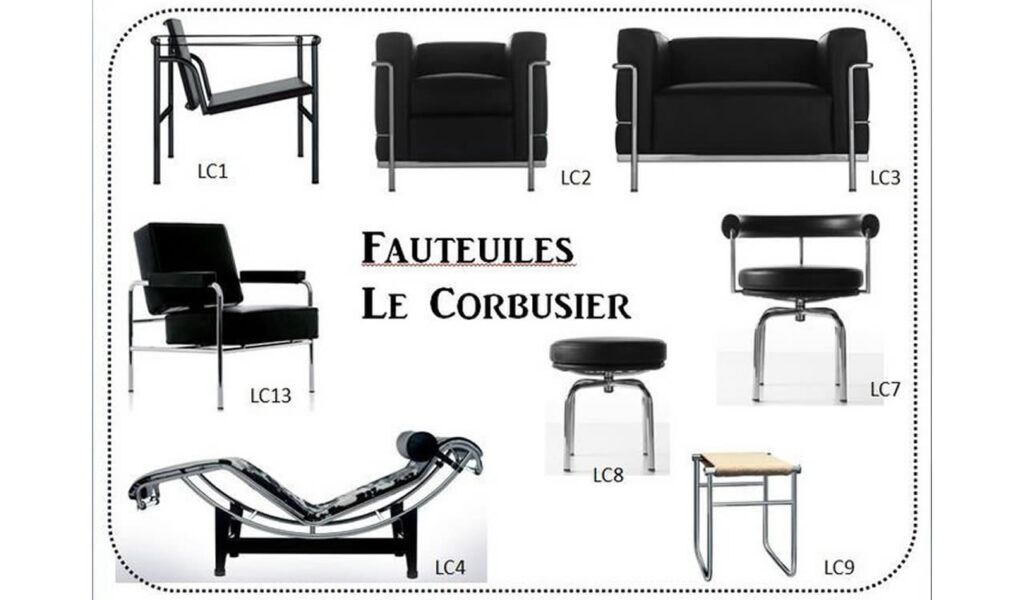
Even today, Charlotte Perriand is often remembered as Le Corbusier’s close collaborator, but her contribution to modern design goes far beyond.
His career took a turning point in 1927, shortly after completing his studies at the École de l’Union Centrale des Arts Décoratifs in Paris. Determined to get noticed, she presented her innovative project Bar sous le toit at the Salon d’Automne, a bar corner entirely made of steel and aluminium, a manifesto of modernity and functionality.
Le Corbusier, initially skeptical and perhaps influenced by the gender prejudices of the time, rejected his candidacy with the famous phrase:
“ We don’t embroider cushions here !”
However, after seeing her work, he radically changed his mind and wanted her at his side in his studio. From that moment, he began a long collaboration with Le Corbusier and Pierre Jeanneret , during which Perriand contributed significantly to the creation of some of the most iconic pieces of the Modern Movement.
Among his most famous works, often mistakenly attributed only to Le Corbusier, we find the LC collection, still produced today by Cassina. This furniture line, characterized by an essential aesthetic and the innovative use of industrial materials such as steel, leather and glass, includes: Chaise Longue LC4 (1928) An ergonomic and adjustable chaise longue, designed for maximum relaxation; Fauteuil Grand Confort LC2 and LC3 Modern and geometric armchairs with chromed steel structure, which have become symbols of elegance and comfort; Tabouret Berger and Tabouret Méribel Stools inspired by the Alpine tradition, an expression of his search for a more organic and authentic design.
The genius of Charlotte Perriand does not end in these masterpieces: with her innovative approach and her functional vision of space, she redefined the concept of modern furnishings, putting human well-being and the interaction between design and nature at the centre. Ahead of his time, he introduced today’s fundamental themes such as sustainability, modularity and the use of natural materials, transforming design into a tool for improving the quality of life.
Although his influence was often obscured by his colleaguesmen, Perriand was able to leave an indelible mark in the history of design, establishing himself as one of the most revolutionary figures of the 20th century. Today, his furniture is timeless icons, still produced on a large scale and sought after by collectors around the world.
His career, which at a certain point he chose to continue independently – a trip to Japan was crucial – demonstrates that he had nothing to envy of his male contemporaries, on the contrary, he was able to blend function, aesthetics and freedom of movement, demonstrating that design is not just a question of form, but an experience that improves the lives of those who live it.
2. Lilly Reich – A great talent in the shadow of Mies Van der Rohe.

Lilly Reich was one of the most influential designers of the 20th century, although for a long time her talent remained in the shadow of the fame of Mies van der Rohe.
Born in Germany, she began her career in the world of fashion and textile design, before dedicating herself passionately to interior design and furnishings. Her ability to combine fine materials, functionality and minimalist aesthetics made her a pioneer of modern design. In 1912, she was one of the first women to join the Deutscher Werkbund, a German association that promoted excellence in industrial and artisanal design, thus paving the way for women in an industry then dominated by men.
In 1926, he began his collaboration with Mies van der Rohe, a professional partnership that would create timeless masterpieces. Among their most famous creations stands out the Barcelona chair (1929) , designed for the German Pavilion at the Universal Exhibition in Barcelona. Although often attributed exclusively to Mies, Lilly Reich played a fundamental role in its design, thanks to her mastery of the use of luxurious materials and her sensitivity to clean, essential lines, distinctive characteristics of Modernism.
His influence also extended to the Bauhaus, where he taught from 1932 until the closure of the school at the hands of the Nazi regime. Lilly Reich not only helped define the language of modernist design, but she was also a pioneer in the use of glass, steel and fine fabrics, demonstrating that design could be both refined and functional.
For many years, his extraordinary talent was overshadowed by the fame of Mies van der Rohe, but today his contribution is finally recognized and celebrated. Lilly Reich was not just a collaborator, but a visionary who left an indelible mark on the history of design, anticipating many of the trends that still influence contemporary furniture today.
3. Ray Eames – behind a great man
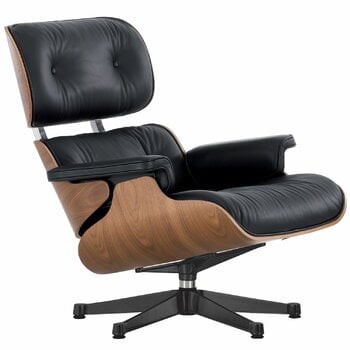
Ray Eames , born Bernice Alexandra Kaiser, came into the world in Sacramento, California, and initially trained as a painter and artist at the Cranbrook Academy of Art, a fertile environment for experimentation and creativity. It was precisely there that he met Charles Eames , starting an artistic and personal partnership that would revolutionize the history of design.
AlthoughFor a long time she remained in her husband’s shadow, Ray Eames was one of the most influential figures in 20th century design. Together with Charles, he redefined the concept of modern furniture, creating furniture that combines elegance, functionality and innovation, still considered timeless masterpieces today.
The two pioneered the use of innovative materials such as curved plywood, fiberglass, aluminum and plastic, with the aim of designing furniture that was accessible, ergonomic and suitable for industrial production. Among their most iconic creations, the Eames Lounge Chair (1956) stands out, a luxury armchair with a curved wood structure and leather upholstery, which has become a symbol of timeless comfort and refinement.
Ray Eames brought to the team a unique eye for color, pattern and composition, elements that made their designs not only practical, but also incredibly harmonious and captivating. His artistic touch gave the works of the Eames studio a distinctive character, capable of blending playfulness, elegance and innovation in perfect balance.
After Charles’ death in 1978, Ray dedicated his final years to preserving and disseminating their creative legacy, curating archives and projects until his passing ten years later in 1988. Today, their work lives on through the productions of Herman Miller and Vitra, and their design philosophy still inspires generations of creatives.
Ray Eames was not only Charles’ muse and collaborator, but a visionary in her own right, capable of redefining modern design with an approach that combined art, functionality and innovation.
Conclusion. The Influence of Women in Interior Design
The influence of women in 20th century interior design, therefore, was not limited to a simple aesthetic contribution, but redefined the very concept of living. We have mentioned three of them, taking inspiration from 3 iconic creations known in the collective imagination mainly for the famous men’s signature. The list of women who have left a trace in the field of interior design would, however, be truly endless.
Through their innovative vision, they have transformed spaces into places designed for well-being, functionality and sustainability, anticipating many contemporary trends. Their work has paved the way for more inclusive and conscious design, demonstrating that interior design is not just a question of style, but also of quality of life. Today, their legacy continues to inspire new generations of designers, testifying to the priceless value of their contribution to the history of design.