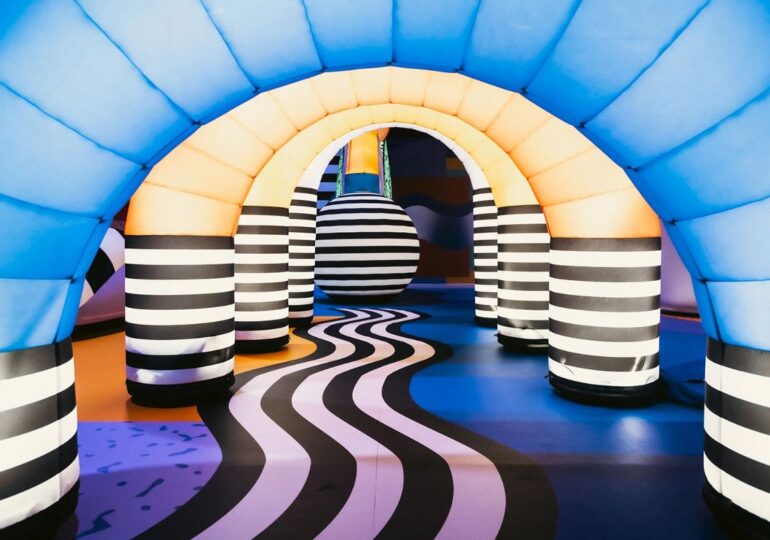
The Balloon Museum is not an exhibition, but a traveling cultural phenomenon that is redefining the way we experience contemporary design. In a historical moment in which the visitor is no longer content with passively observing, this innovative formula transforms design into immersive experience , making the spectator a co-protagonist in a visual, tactile and sensorial landscape made of inflatable shapes, interactive lights, scenography that seem to come out of a digital dream.
Born as a curatorial project that combines art, light architecture and pop languages, the Balloon Museum is today an international platform where monumental installations and soft sculptures redefine space, involving millions of people from Rome to New York. The object becomes an environment, the environment becomes a game, and the game becomes culture.
In an era dominated by “experience” as a value, this formula of participatory design overturns the hierarchy: there is no longer the museum and the public, but a single organism in which one enters, lives, documents – and above all remembers.
With a language that immediately speaks to the new visual codes of digital platforms but which has its roots in movements of historical research (from Italian radical design to the inflatable experiments of the 1960s), the Balloon Museum embodies one of the most lively and surprising directions of contemporary design: the one in which form is not only seen, but traversed .
Ballon Museum: from inflatable design to the culture of experience
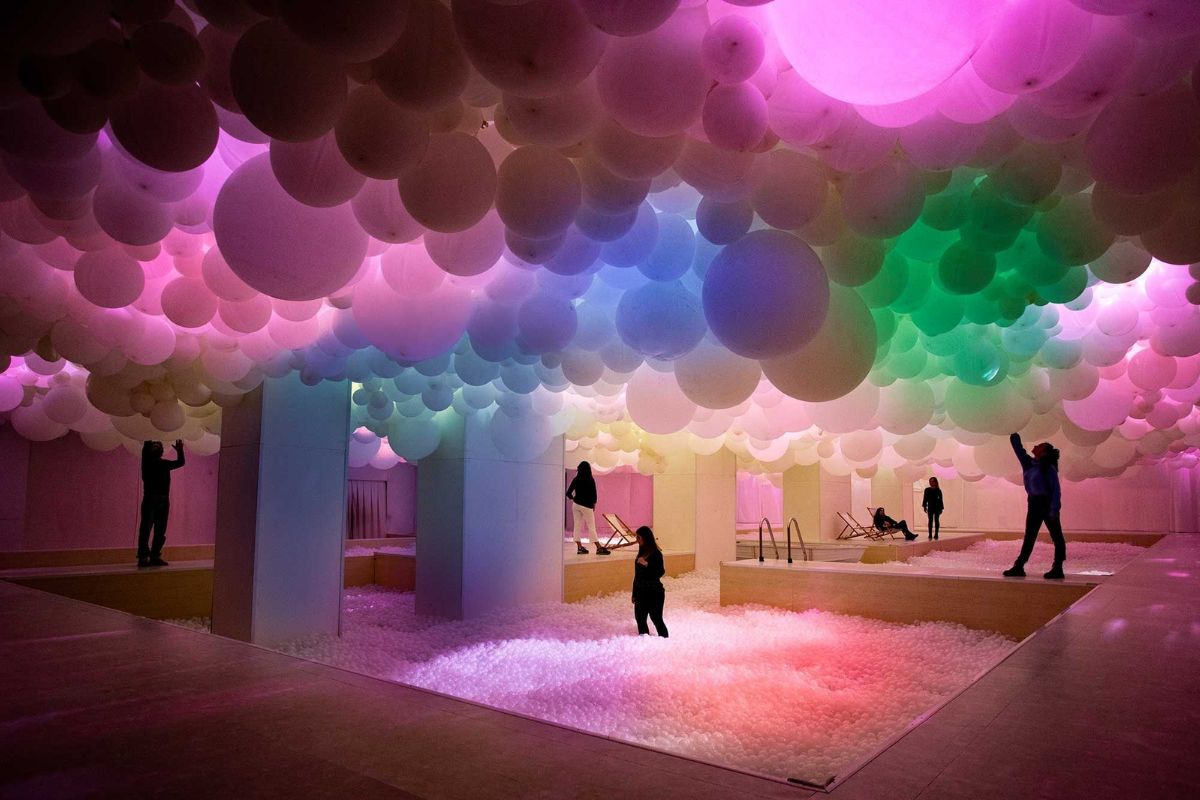
The Balloon Museum was born from a curatorial intuition that has its roots in the history of radical design and ephemeral architecture: the idea that space can transform, be temporary, light, surprising, yet profoundly significant. Behind this international platform there is a multidisciplinary team that has been able to synthesize apparently distant languages: contemporary art, inflatable design ( inflatable design ), scenography, event planning and digital culture.
The use of the inflatable as a means of expression is not an aesthetic quirk, but a real manifesto. From the heat-sealed PVC technique to highly resistant tailored fabrics, passing through more sophisticated structures in TPU and silicone, the materials of the Balloon Museum represent a concrete evolution of the idea of ??”light”, so dear to the avant-garde Italian design of the 60s and 70s (from the Superarchitecture of the Castiglioni brothers to the visions of Ugo La Pietra and Archizoom).
The result is an exhibition model that does not limit itself to “showing”, but invites you to cross the threshold of the work . The spaces become soft habitable volumes, the objects become architecture, the public becomes an integral part of the installation. The relationship between visual, tactile and narrative is constant; the body, finally, returns to the center of the experience, in a way that breaks the distance typical of the traditional museum.
The Balloon Museum reinterprets, with contemporary intelligence, the collective desire for sensitive, experiential, shareable spaces – without giving up the cultural complexity of which good design is the vehicle. It is a project that is a product of our era , but con deep roots that speak to the past while building the promise of the future.
Balloon Museum, a map of immersive design between cities and cultures
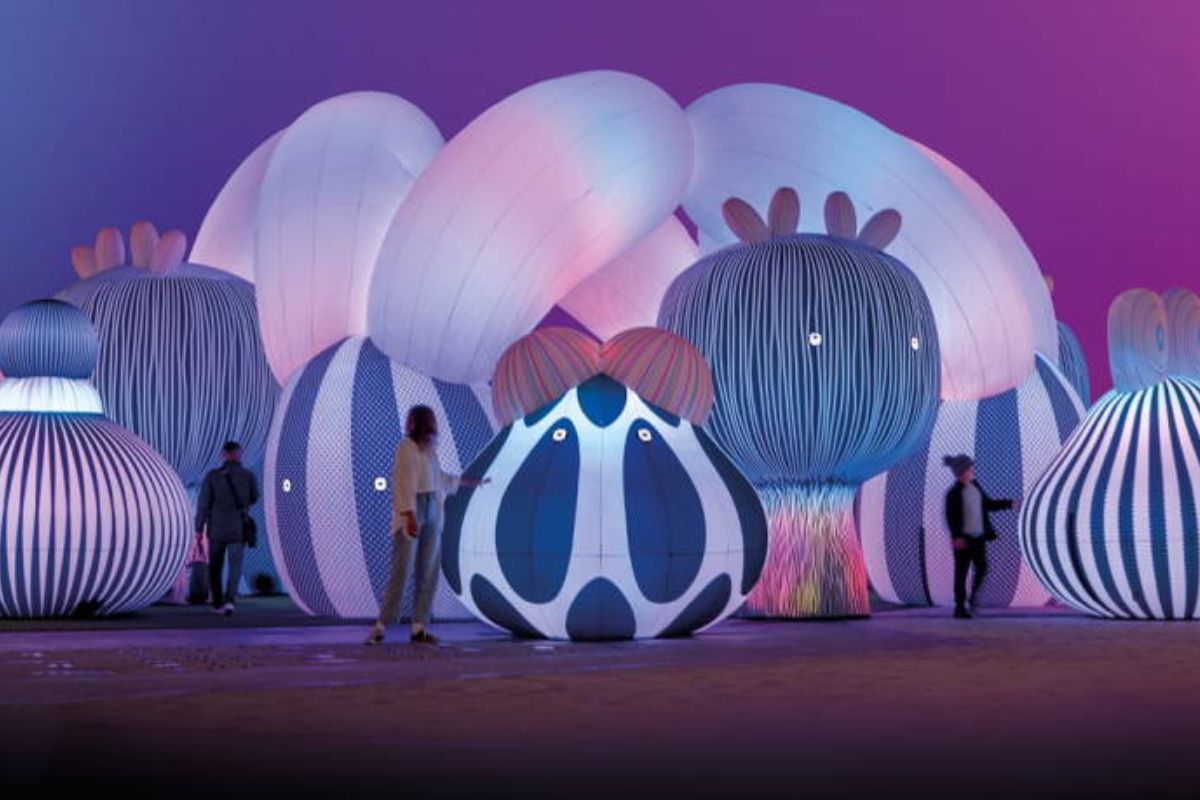
The Balloon Museum is not a static format: it is a living organism that crosses different cities, cultures and audiences, building each time a new dialogue between installations and the urban context. Its growth is not only artistic, but also geographical: in just a few years it has been able to rewrite the map of itinerant experiential design, positioning itself halfway between a pop-up museum, immersive architecture and a cultural entertainment phenomenon.
2020 Rome, EX Mattatoio: the first appearance
In the capital, the post-industrial space of the EX Mattatoio becomes the first home of the Balloon Museum: it is sold out in just a few weeks. This is where the concept is defined: inflatable forms, active participation, photographic spaces designed to be “experienced”. Rome acts as a testbed and immediately reveals the potential of the format: over 100,000 visitors in the first three months.
2021 Milan, Superstudio Più: the debut in the design hub
The Milanese stop – in the heart of via Tortona, during the Milan Design Week – marks a turning point. The language of the Balloon Museum finds full expression in the temple of contemporary design and conquers professionals, artists, architects and influencers. Milan certifies it as a cultural phenomenon, not just pop.
2022 Madrid, Casa de Campo: the international invasion
The museum goes beyond the Italian borders and debuts in Spain: the Madrid version welcomes more than 200,000 visitors in four months. The installations increase in scale, the sound component is enriched and a new target appears: families, teenagers, international communities looking for a shared experience.
2023 Paris, La Grande Halle de la Villette: towards creative Europe
In Paris, the Balloon Museum explores the potential of the comparison with a more sophisticated artistic scene: it is the French public who welcomes the intertwining of play and design with curiosity. The museum becomes a case study in cultural communication magazines.
2024 New York, Industry City: global consecration
In New York the Balloon Museum becomes an expanded, increasingly hybrid experience: inflatable art, immersive sound design, 3D projections and thematic environments reactivate a former industrial area of Brooklyn. It is the city itself that consecrates it as an international phenomenon of the new millennium.
A model that adapts to spaces and cities
Each stage is a laboratory: the design of the works changes based on the architectural proportions and the intended audience. There is no “definitive” version: the Balloon Museum grows with those who host it – be it a disused power plant, a trade fair space or a converted underground station.
Next steps?
There are rumors of Tokyo, Dubai, Berlin. And the public – increasingly geo-connected on social media – waits.
The artists of the Balloon Museum: when imagination becomes inflatable architecture
One of the traits dinstinctive of the Balloon Museum is the contribution of international artists, designers and collectives who use air, light and volume to build emotion. These are not simple scenography, but mouldable architectures , three-dimensional visions that transform space and the spectator.
Cyril Lancelin (France)
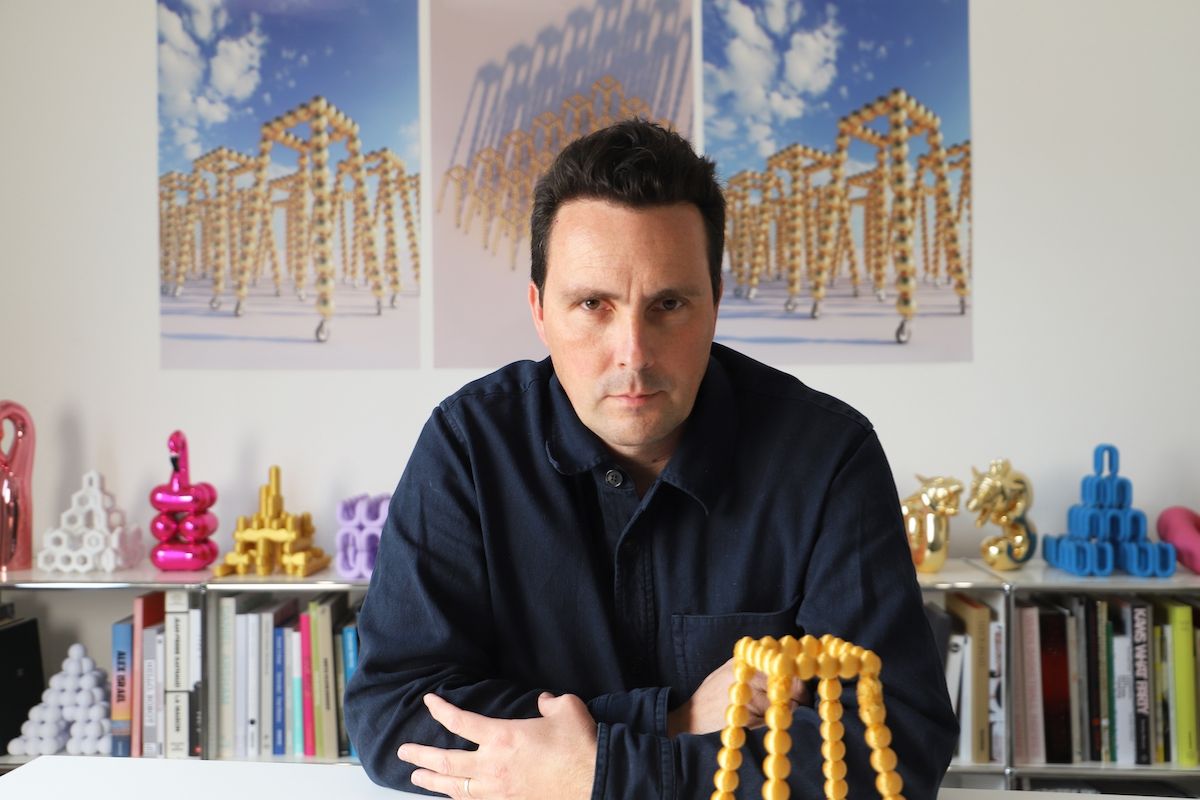
Known for monumental inflatable installations made of technical fabrics, Lancelin transforms simple geometric figures into surreal visual fields. His research combines parametric software and the physicality of the inflatable, creating “walkable environments” that shock and welcome at the same time.
Motorefisico (Italy)
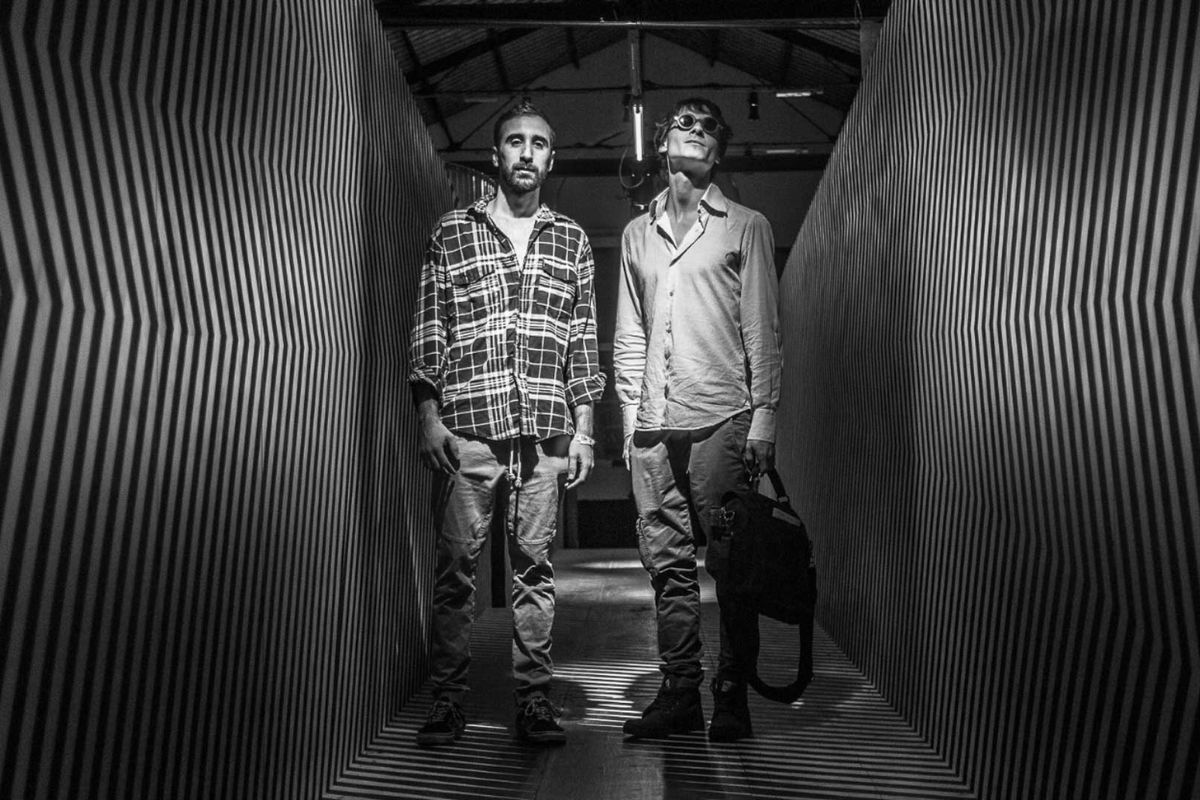
The Italian collective combines design, geometry and color in installations suspended between optical art and scenography. Their immersive spaces are constructed as mathematical fabrics that deceive perspective and amplify the visitor’s proportions.
Quiet Ensemble (Italy)
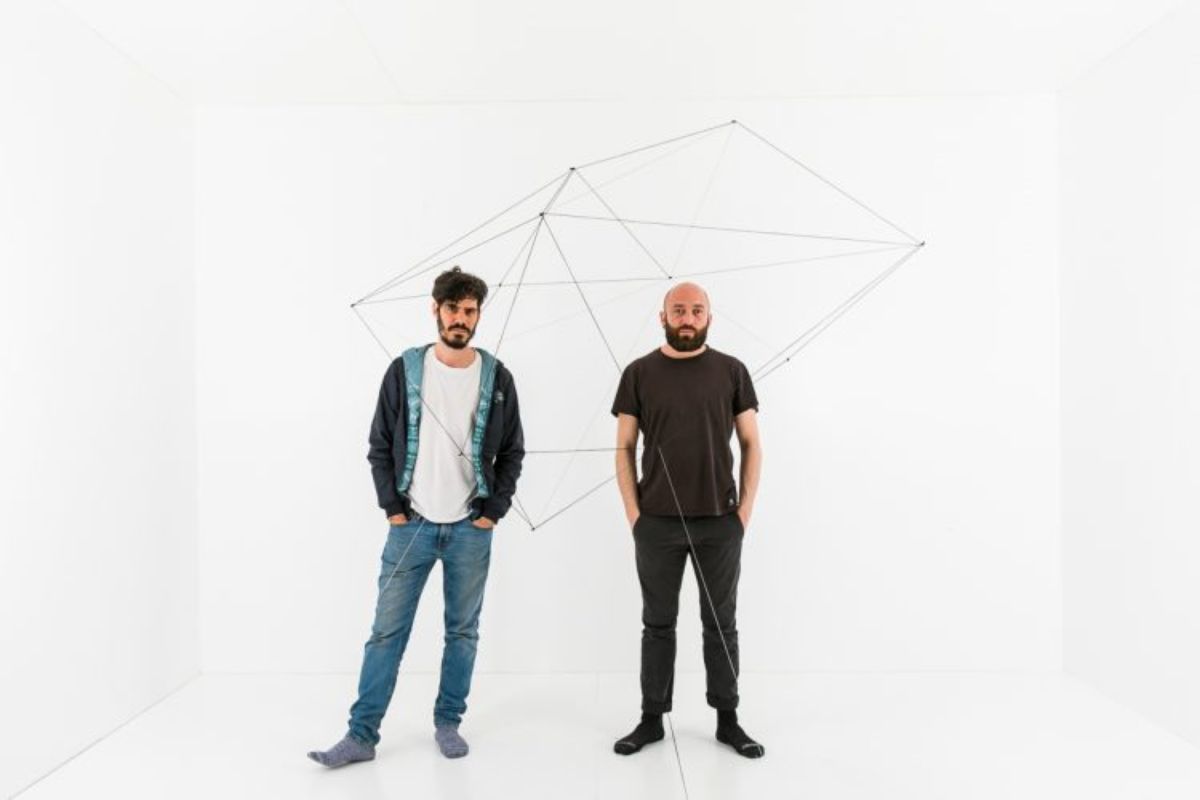
A visionary duo that works on the sound-space relationship, with immersive interventions created entirely with light, air and movement. At the Balloon Museum they presented installations that respond to the behavior of the public, transforming the environment into a sensitive organism.
Nastplas Studio (Spain)
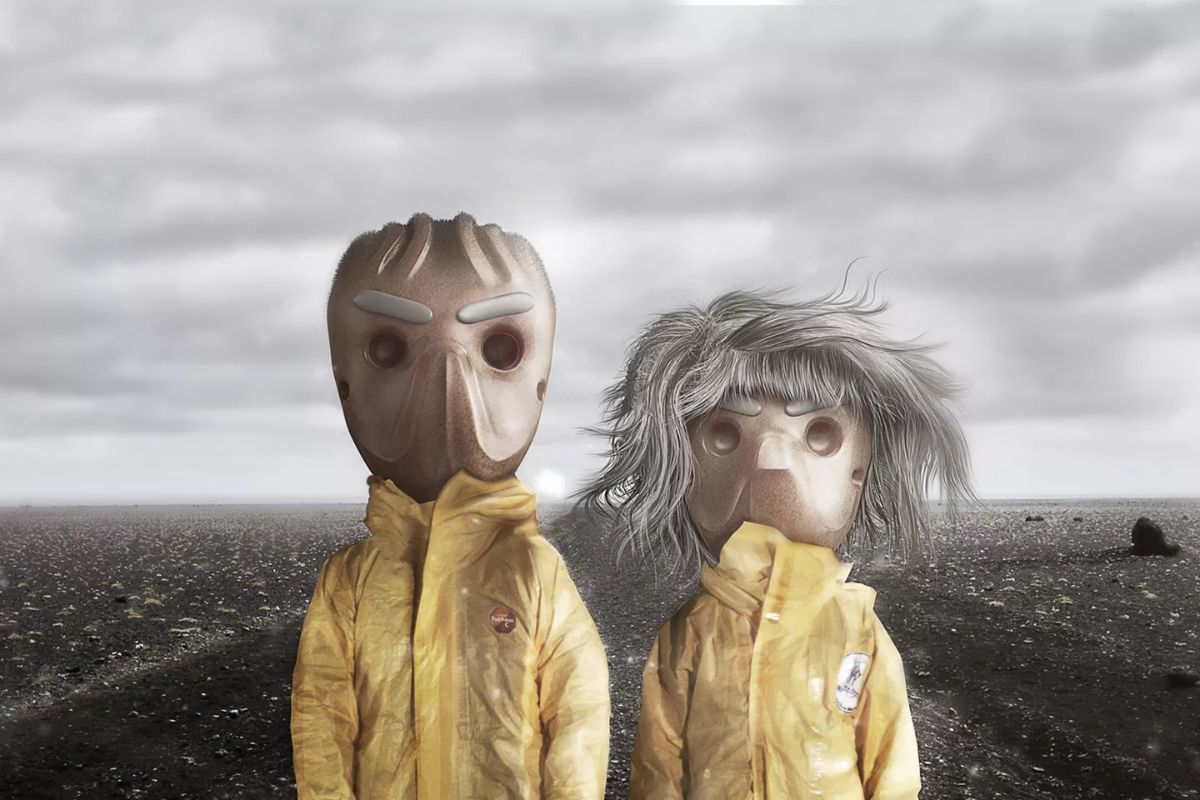
Their sign combines digital microillustration and soft materiality: inside the museum, they have redefined the “pictorial” dimension of inflatable environments, building scenography that recall dreams in motion.
Rub Kandy (Italy)
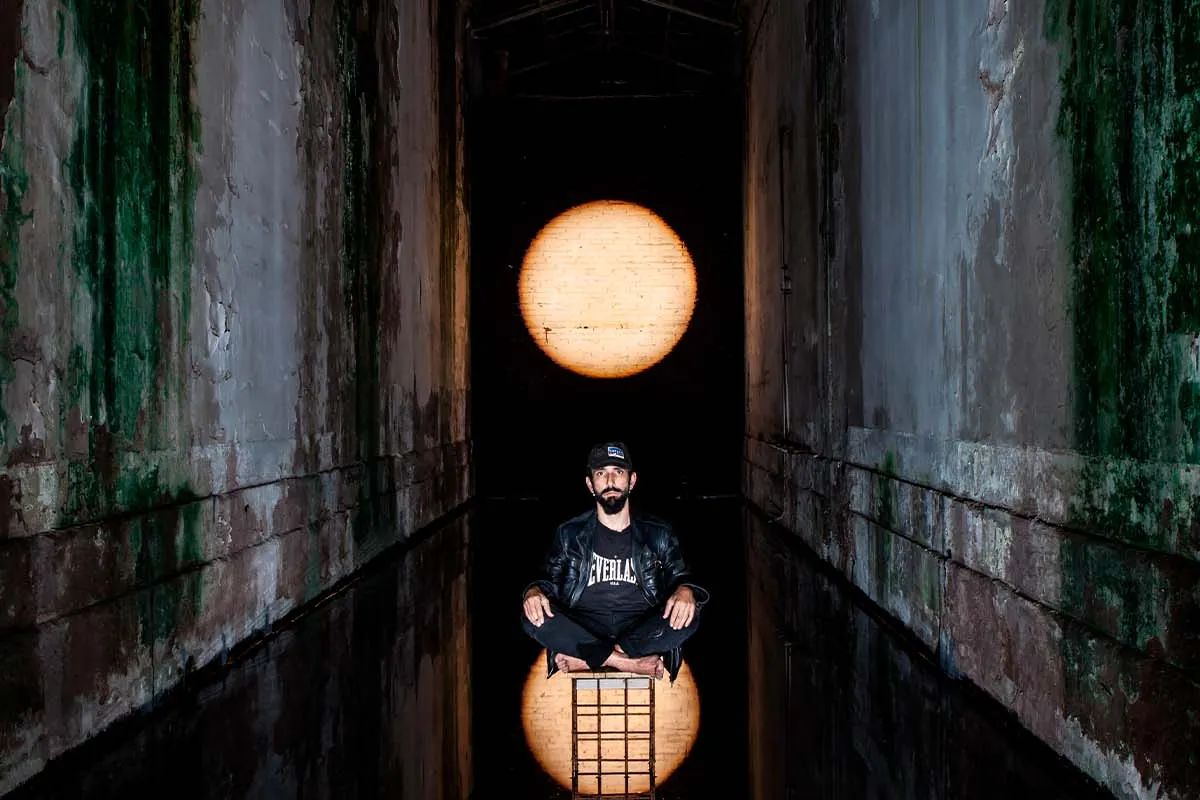
Street artist and sculptor, he interpreted the inflatable system with an ironic and nuanced look: pop creations that cite and distort urban icons.
Lights, sounds, algorithms: the new invisible direction of emotional design
What makes the Balloon Museum so magnetic is not just its oversized shapes or the pop appeal of its “instagrammable” spaces. There is much more: an invisible choreography made of lights, sounds, algorithms and intelligent materials that transform air into a true expressive medium.
Light as architecture
Nothing is random: the colors that change, the shadows that expand on the soft surfaces, the projections that flow like synthetic dreams. There is precise knowledge behind it: that of the most advanced lighting design, which transforms the simple “inflatable” into a living organism.
The sound that embraces you or surprises you
You walk, and the floor responds. You stop, and a soft note changes pitch. Sometimes it is the environment that speaks, other times it is an emotional symphony made to make the space vibrate together with the bodies. Here, acoustics are not background: they are an essential part of the design.
Interaction as a language
In the new installations you are not a guest, but a code. Artificial intelligence detects movements, interprets presences, modulates lights or shapes in response. The true immersive aesthetic is this: it doesn’t look at you, it includes you.
Materials that breathe with you
PVC, technical nylon, translucent films, membranes andlastic: surfaces that absorb reflections, swell as the environment breathes, diffusing light like tailoring lamps. It is the skin of the new design: light, reactive, sensitive.
An experience that remains within the body
The Balloon Museum does not simply show us a space; it makes us feel it. And this – in the age of the algorithm and distance – is already a radical act: bringing art close, inside, to the border between real and sensorial .
Why it works: pop, participation and the desire to stay inside the scene
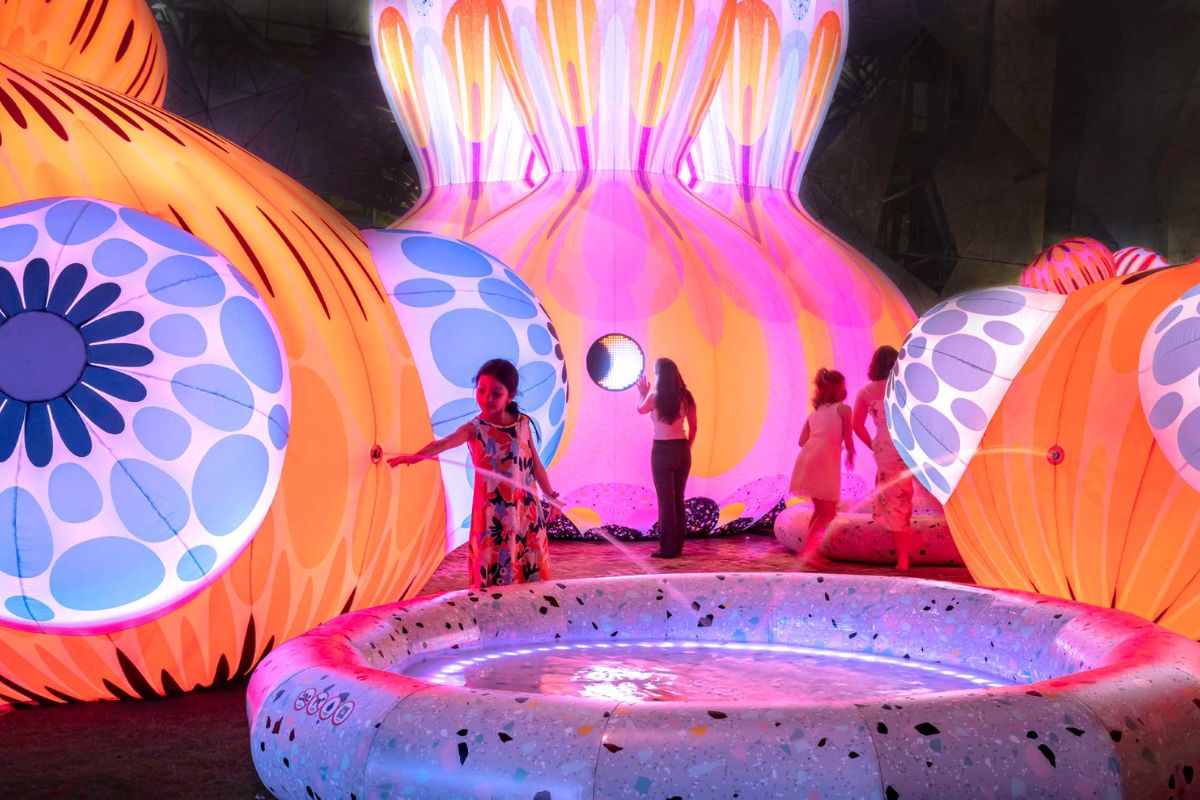
It works because it’s pop, sure. But it’s not enough. The Balloon Museum is above all the irresistible promise of a collective experience to live in , not just to look at. The public does not come to “see an exhibition”, but to stay inside a world made of colored shapes, enveloping lights and soft surfaces. That world calls him, includes him, contains him.
Aesthetics is immediate, luminous, photographable: it is already born under the light of the digital present, and does not fear it. But the strength is not in the selfie, it is in the fact that the selfie is not enough. It is the physical immersion that attracts: relating to the work, feeling it around you, touching it, sinking into it, becoming a child again for a moment.
Then there is a social, almost ritual component: you enter together, you move together, you laugh together, you interact together. The inflatable installations are democratic: they lower the level of awe typical of the classic museum and trigger spontaneous complicity between strangers. In the jumps, in the bounces, in the shapes that light up with colour, we rediscover something collective that contemporary culture has too often forgotten.
The Balloon Museum is liked because it doesn’t judge: it invites. And in doing so it overturns the typical dynamics of certain exhibition spaces, where the spectator is far from the work. Here, the design opens up, extends, encompasses you . Without too many codes to understand, without academic filters to decipher.
It is a sensorial feast that speaks of identification, play and wonder. And in doing so, it brings design to where it really originates: inside people.
Everything you need to know about the Balloon Museum
1. From what age can I participate in the experience?
The Balloon Museum is designed for a transversal audience: adults, young people, families with children. There is no minimum age limit, but children under 12 must be accompanied by an adult. Some areas may be inappropriate for very young children due to bright lights or delicate surfaces.
2. How long does the visit to the museum last?
The average recommended duration is 45 minutes 1 hour. However, the visit is free: you can stay longer to enjoy the installations or take photographs. Some stops include exhibitions with time-controlled entrances.
3. Are you allowed to take photos or record videos?
Yes, absolutely. The Balloon Museum was also designed to encourage visual sharing. Personal photography and video are encouraged, as long as you do not use flash, tripods, professional equipment, or drones without permission.
4. Where to purchase ticketsand how do you access it?
Tickets can be purchased online on balloonmuseum.world or on the official websites of the individual stages. You can choose specific time slots. Advance booking is recommended as many dates quickly sell out.
5. Is the museum accessible to people with disabilities or with strollers?
Yes, most installations are designed to be accessible to people with reduced mobility. Some internal surfaces may be less comfortable or include areas that are not recommended for use of crutches, wheelchairs or strollers, but the staff is always available to accompany and facilitate the route.
6. Are pets allowed?
For reasons of safety and hygiene of the inflatable and sensitive environments, animals are not allowed, with the exception of guide dogs for people with visual impairments.
7. Is it possible to eat or drink during the visit?
No. To preserve the quality of the installations and keep the spaces clean, it is not permitted to introduce or consume food and drinks within the exhibition itinerary. Some stages include external refreshment areas or agreements with nearby venues.
8. What materials and technologies are used in the installations?
The Balloon Museum combines materials such as technical PVC, TPU, inflatable nylon and other resistant textile films with dynamic technologies of light, sound, motion tracking and, in some cases, artificial intelligence. Each space is designed to be multi-sensory and interactive.
9. Are there any restrictions for people with epilepsy or allergies?
Some installations use strobe lights or intense sound effects. Photosensitive subjects or those with sensory disorders are invited to notify the staff or consult the information sheets on the official website before the visit.
10. What happens if I arrive later than the booked time?
Generally, a slight delay can be tolerated, but entry in the same time slot is not guaranteed if you arrive after the time limit. In case of significant delays, it is advisable to contact the staff at the ticket office.
11. Is the ticket refundable or changeable?
Policy varies by host city. Tickets are usually non-refundable, but some events allow date changes. All information is available on the official page of the chosen stage.
12. Is there a cloakroom or luggage storage?
Most locations have cloakrooms or lockers. However, it is advisable to bring small bags with you to move freely within the route.
13. How should one interact with the works?
The works are designed to be experiential , but not all can be touched or stepped on freely. The museum adopts clear signs indicating which works are interactive and which require greater respect. It is recommended to follow the instructions of the staff.
14. Are the installations sanitized? Are they safe?
Yes. The works swollenskilled are sanitized and checked periodically by the technical team according to safety protocols. Access is limited to avoid overcrowding, and some surfaces are treated with antibacterial coatings.