Talking today about baroque architecture means much more than evoking sumptuous churches, scenic squares and palaces decorated with golden stucco. It’s talking about a language that has forever changed our way of inhabiting space and experiencing it emotionally. If the Renaissance had built a universe made of perfect proportions and rational harmony, the Baroque introduced a new paradigm: that of emotion, movement, theatricality.
It is no coincidence that the term “baroque” probably derives from the Portuguese barroco , meaning “irregular pearl”. A definition that encompasses the very essence of this style: not absolute perfection, but the ability to surprise, to break the rule to create amazement.
Today, Baroque architecture continues to influence contemporary design and interiors. Not as a simple historical citation, but as a lesson in sensorial involvement , in the construction of atmospheres, in spatial direction.
Origins and historical context
Baroque architecture was born in Rome at the beginning of the 17th century, in a historical moment marked by the Catholic Counter-Reformation. The Church, after the tensions with the Protestant Reformation, needed to reaffirm its power not only through theology, but also with art and architecture. The buildings had to become communication tools, spaces capable of transmitting powerful messages to the people, exciting more than teaching.
It is in this scenario that architects such as Carlo Maderno , Gian Lorenzo Bernini and Francesco Borromini begin to experiment with new forms. The facades are animated by curves, the plans of the churches move away from the rectangular rigor to embrace ovals and dynamic geometries. The space is no longer static, but becomes a path, a story, a scenography.
Unlike the Renaissance, which put mathematical harmony at the centre, the Baroque puts the spectator at the center . Each Baroque building is designed to be experienced as an immersive experience: the light that filters from above, the perspectives that expand the space, the decorative details that guide the gaze. It is an architecture that speaks to the heart before reason.
Characteristics of Baroque architecture
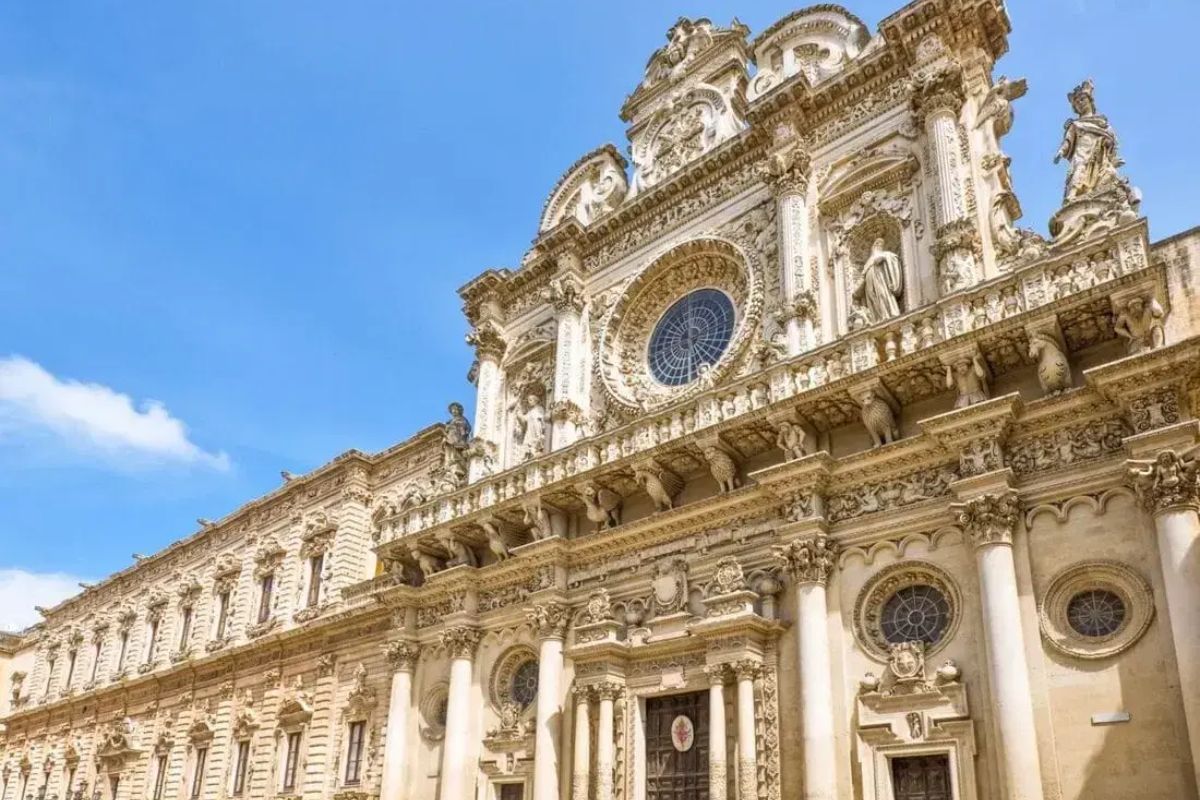
Baroque architecture is not just an aesthetic style, but a real language that breaks with classical canons to invent new ones. Its main characteristics are immediately recognizable and it is no coincidence that they have also influenced art, sculpture and even contemporary interior design.
Dynamism of forms
Curves, ellipses, broken lines: geometry becomes fluid and in movement. Borromini, the undisputed master, uses oval plans and concave and convex facades to create a sense of continuous tension. It is as if the buildings were breathing, pushing outwards or retracting inwards.
Scenic use of light
Light is never neutral: it becomes the protagonist, an architectural material. In baroque churches it filters through domes, lanterns and hidden windows, creating theatrical effects that highlight altars and decorations. A masterly example is the Church of Sant’Andrea al Quirinale del Bernini, where the altar is illuminated by a celestial beam that seems to guide the gaze of the faithful.
Decoration as an integral part
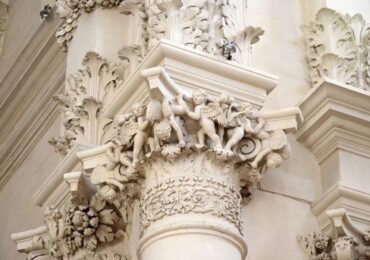
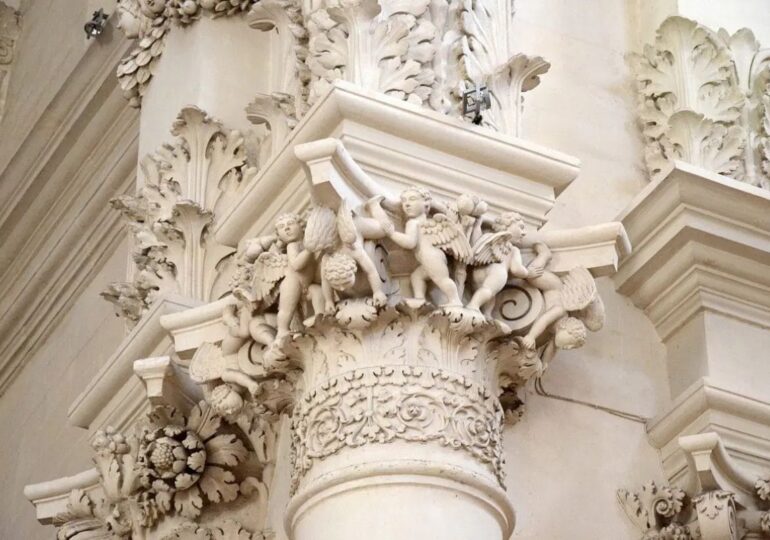
Stucco, polychrome marble, frescoes: the decoration is not an addition, but part of the architectural project. The goal is not sobriety, but sensory immersion. Every surface becomes a narrative opportunity, a fragment of a total work of art.
Centrality of the spectator
Unlike Renaissance temples, to be contemplated almost as models of perfection, Baroque buildings want to be experienced. The perception of those who enter becomes essential: the architecture guides, surprises, disorientates. It is an emotional experience before an intellectual one.
Arts integration
In the Baroque, sculpture, painting and architecture interact as parts of a single project. A bronze canopy, an illusionistic fresco and an undulating façade are not separate elements, but a whole designed to amplify involvement.
We can, therefore, say that baroque architecture is the art of making space alive, theatrical and participatory . It is never just structure, but a story in which the spectator becomes part of the scene.
The great protagonists of Baroque architecture
If the Renaissance had seen figures such as Brunelleschi, Alberti and Michelangelo define the canons of classical beauty, the Baroque brings new protagonists onto the scene who rewrite the rules of space. They are architect-artists, visionaries who often work in competition, sometimes even in conflict, but who together have left immortal works.
Gian Lorenzo Bernini (1598 1680)
Sculptor, architect, set designer: Bernini is the very embodiment of the baroque spirit. In his hands, architecture becomes a theatrical stage.
-
St. Peter’s in Rome : its St. Peter’s Square is one of the most famous urban planning works in the world. The colonnade, with its oval arms, seems to embrace all of humanity: a powerful and symbolic gesture.
-
Sant’Andrea al Quirinale : a masterpiece where the central space is guided by light, with an almost cinematic theatricality.
Bernini brings to architecture the sense of wonder and persuasion , the perfect expression of the Catholic Counter-Reformation.
Francesco Borromini (1599 1667)
Bernini’s historical antagonist, Borromini is considered the experimental genius of the Baroque. Where Bernini convinces with immediacy and emotional impact, Borromini amazes with technical ingenuity and spatial innovation.
-
San Carlo alle Quattro Fontane : the smallest church in Rome and yet one of the most revolutionary. Its oval shapes, concave and convex walls, and geometric dome show an architecture “in movement”.
-
Sant’Ivo alla Sapienza : with its star plant and spiral lantern, it is a manifesto of visionary architecture.
Borromini rejects the cl rulesaxes to invent new ones, anticipating modernity in a certain sense.
Guarino Guarini (1624 1683)
Architect, mathematician, Theatine religious, Guarini brought the Baroque to the regions of Northern Italy and transformed it into a more mystical and complex language.
-
The Chapel of the Holy Shroud in Turin : one of the most enigmatic architectures of the 17th century, with its intertwined vaults and the play of light that envelop the space in an almost metaphysical atmosphere.
-
San Lorenzo in Turin : another example of how geometry and spirituality come together in an innovative design.
Guarini combines rationality and spiritual vision , demonstrating that the Baroque is not just entertainment, but also intellectual research.
Carlo Fontana (1634 1714)
A transitional figure, the Fountain spread the Roman Baroque throughout Europe, paving the way for the late Baroque and Rococo. His work is less revolutionary but more systematic, suitable to satisfy the needs of the courts and monarchies who wanted to import the baroque language as a symbol of power.
The symbolic places of Baroque architecture in Italy and Europe
Baroque is not just an architectural language: it is a phenomenon that shapes entire cities, redesigns squares, facades and interiors, to the point of becoming the stylistic code of European power between the 17th and 18th centuries.
Rome, beating heart of the Baroque
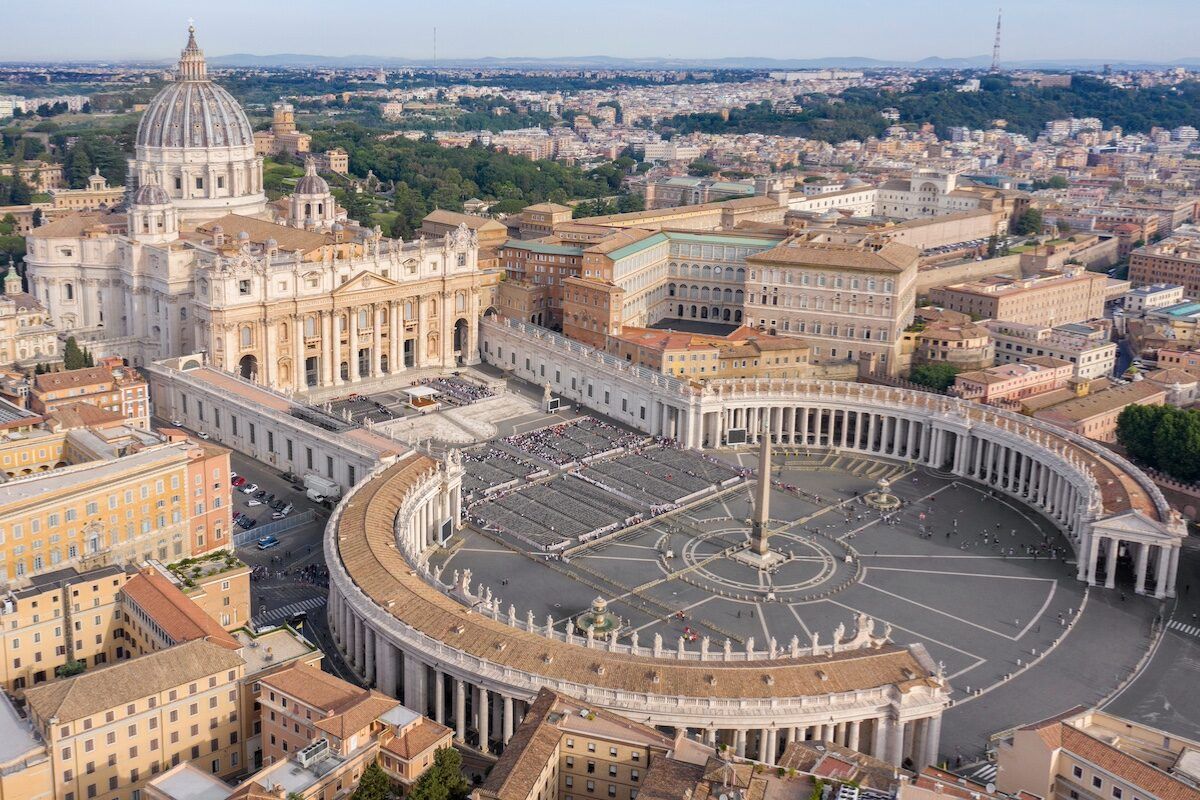
No other city in the world can boast such an extraordinary concentration of Baroque architecture. Rome becomes the creative laboratory where popes, cardinals and noble families commission grandiose works to assert their influence.
-
Piazza San Pietro by Bernini, with the colonnade that welcomes pilgrims.
-
Church of Sant’Ivo alla Sapienza by Borromini, manifesto of visionary ingenuity.
-
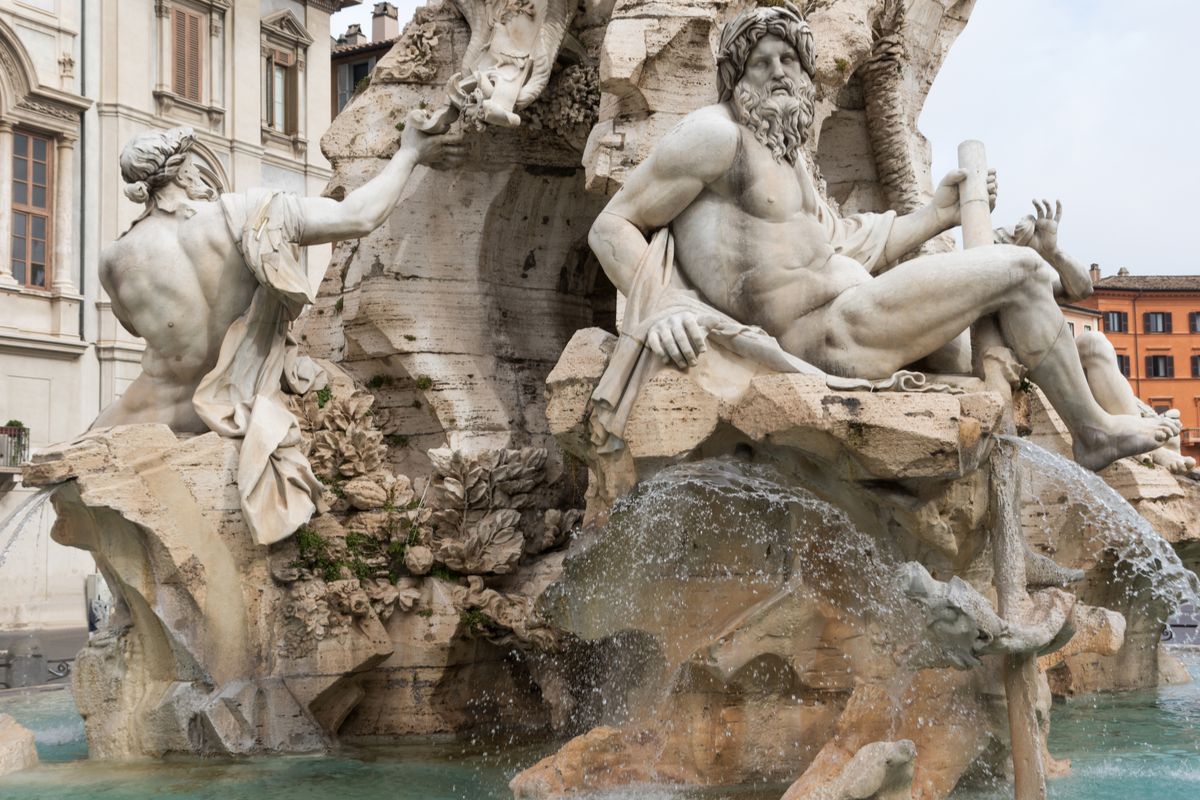
Fountain of the Four Rivers in Piazza Navona, where urban planning and sculpture merge into a total work.
Rome is the city in which the Baroque becomes visual theology , capable of exciting the faithful and surprising visitors.
Turin, the baroque capital of the North
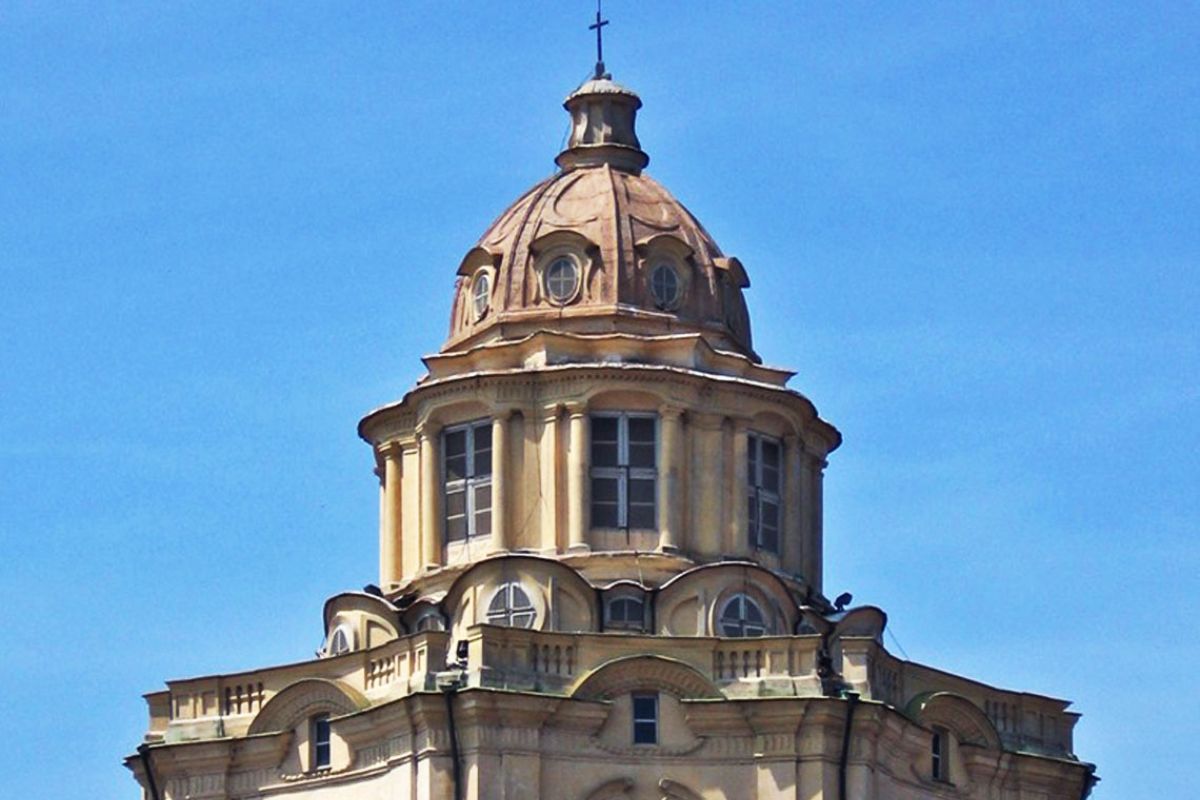
With the Savoys, Turin transformed into a European capital with a baroque face. Guarino Guarini and Filippo Juvarra create works that combine geometric rigor and theatrical imagination.
-
The Chapel of the Holy Shroud (Guarini), a tangle of arches and domes that defy gravity.
-
The Basilica of Superga (Juvarra), which dominates the city from above as a symbol of faith and power.
-
Palazzo Carignano , a Savoy residence and today home to the Risorgimento Museum.
Turin recounts a more rational Baroque, open to French and Central European influences .
Naples, the baroque soul of the South
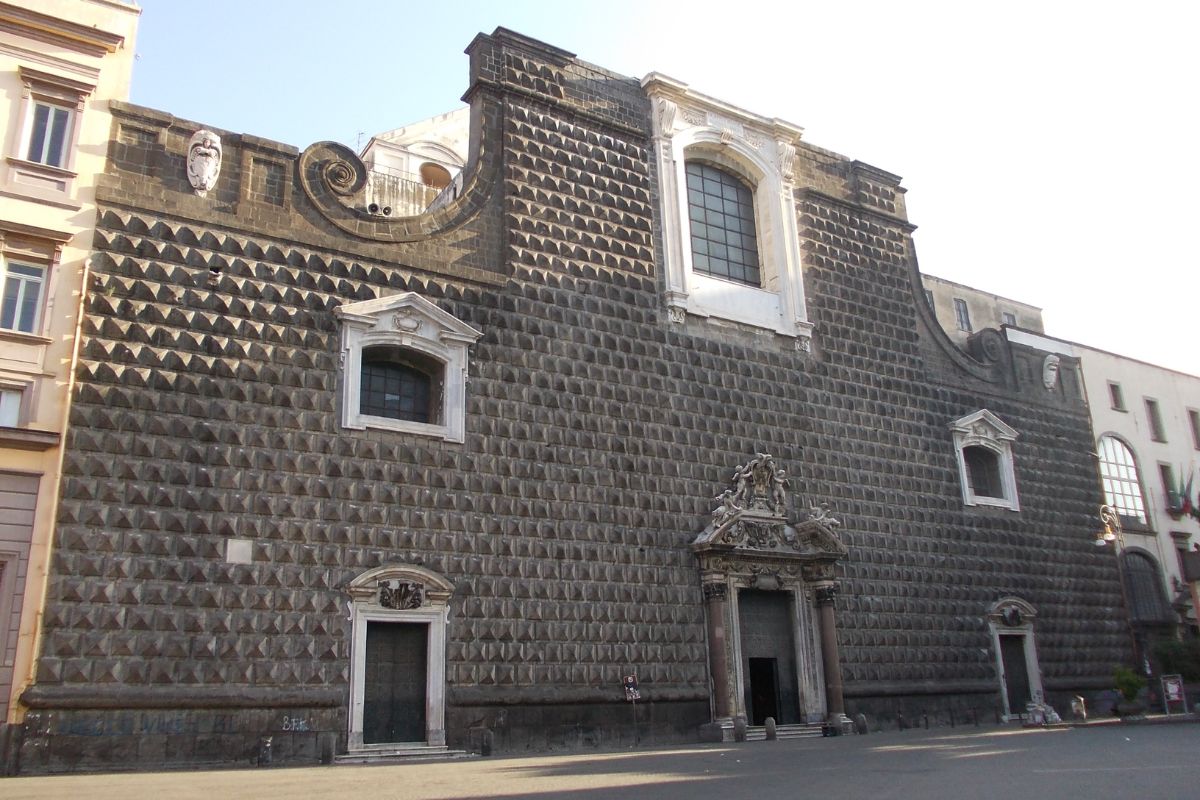
Sand Rome and Turin represent order and monumentality, Naples interprets the Baroque with a more theatrical and popular soul.
-
Church of Gesù Nuovo , with its ashlar façade and interiors rich in polychrome marble.
-
Certosa di San Martino , which dominates from above with its cloisters and frescoes.
-
Sansevero Chapel , a jewel of the late Neapolitan Baroque that combines art, science and mystery.
Neapolitan Baroque is exuberant, decorative, intensely emotional : a reflection of the spirit of the city.
Paris and French grandeur
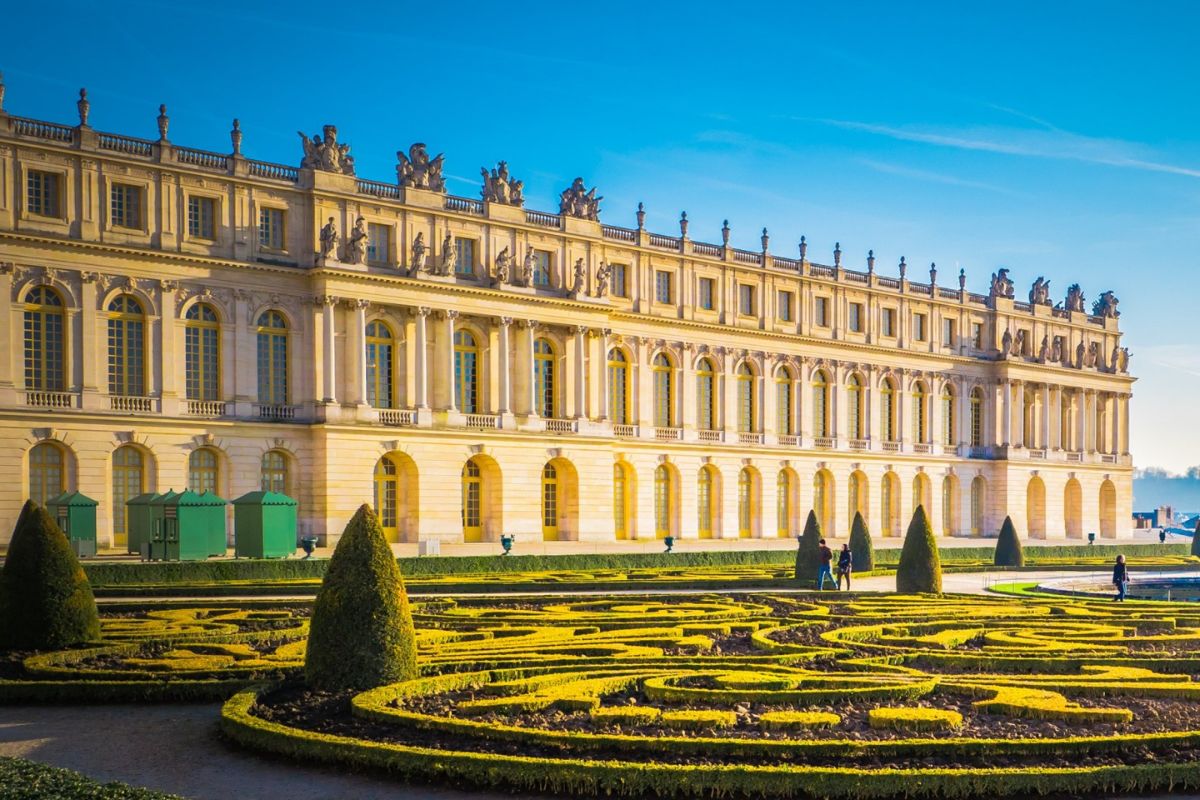
In France, Baroque becomes court classicism . Louis XIV, the Sun King, transformed Versailles into the absolute icon of monarchical power.
-
Palace of Versailles , with its infinite galleries, geometric gardens and the famous Hall of Mirrors, is the manifesto of French grandeur.
Here the Baroque loses its exuberance to become more disciplined, becoming the official style of the absolute monarchy .
Vienna and the Imperial Baroque
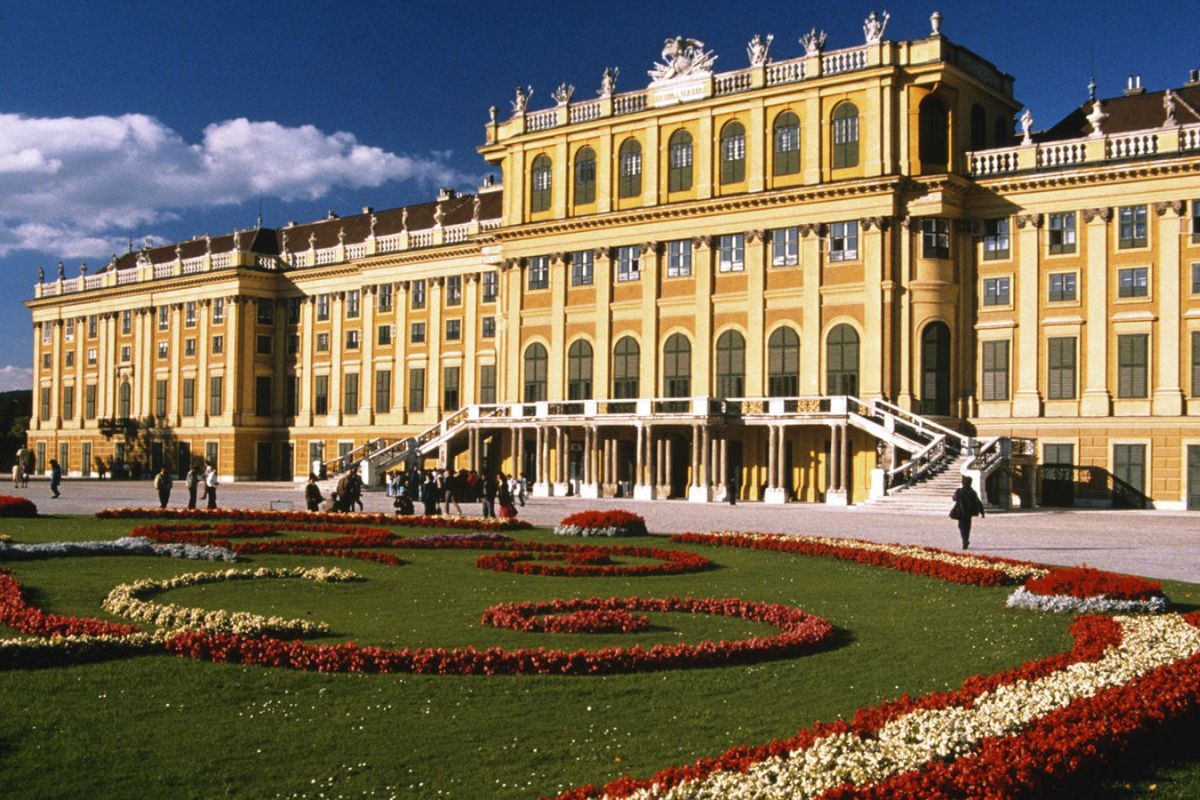
In the Habsburg capital, Baroque transformed into a dynastic language.
-
Schönbrunn Palace , summer residence of the Habsburgs, is the “Viennese Versailles”.
-
Karlskirche , a monumental church designed by Johann Bernhard Fischer von Erlach, blends Roman and Eastern influences.
Vienna demonstrates how the Baroque knows how to adapt, becoming a universal sign of imperial power .
Madrid and the Spanish Baroque
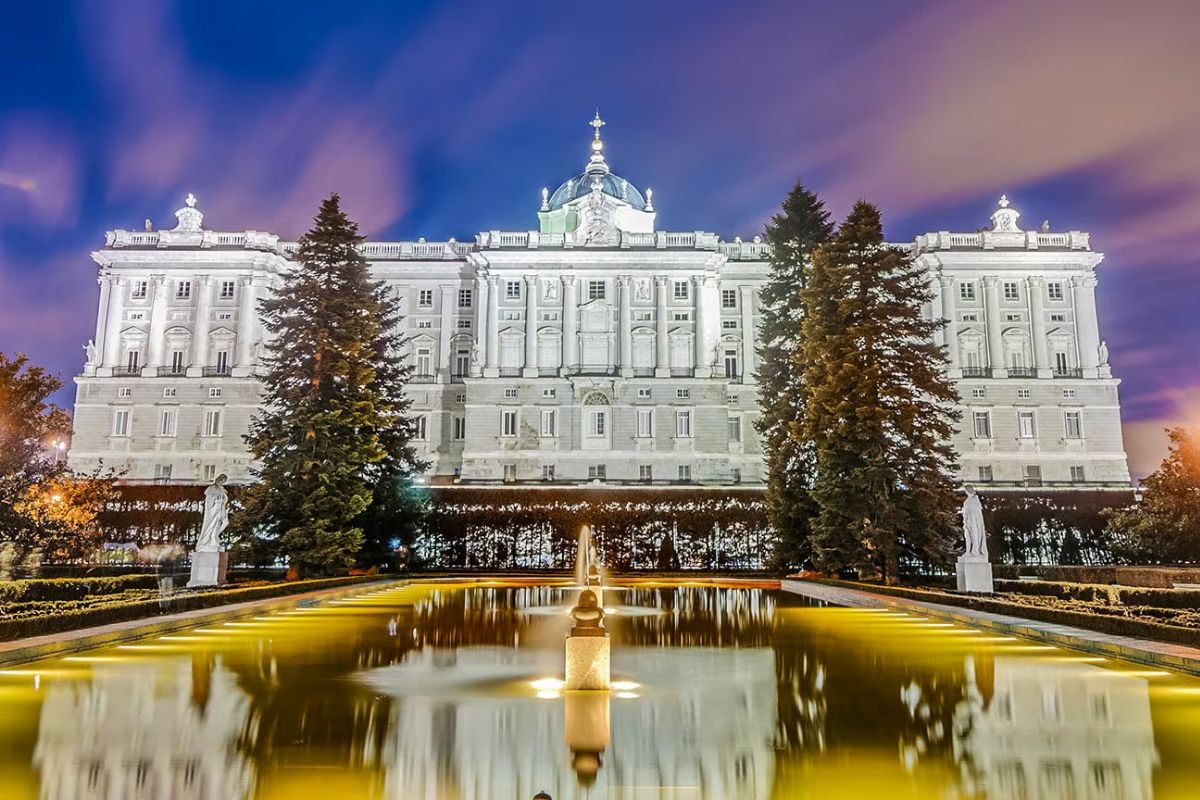
In Spain, the Baroque takes on more severe forms but with great plastic strength.
-
Palacio Real in Madrid , built by the Italian architects Juvarra and Sacchetti, is one of the most impressive examples.
-
Church of San Isidro and the great baroque cathedrals show the religious influence of the Counter-Reformation.
Spanish Baroque is distinguished by its drama and austerity , often closer to mystical feeling than spectacularity.
Baroque today: a language that never stops speaking
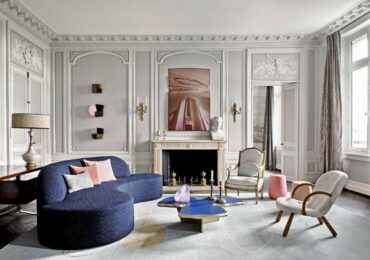
Talking about Baroque architecture does not just mean looking to the past. It is surprising to note how the strength of this language continues to emerge in the contemporary world. In Italian squares and European buildings the Baroque remains a living urban scenography, but evident traces can also be found in current architecture and interior design: bold curvatures, plays of light, attention to movement and the theatricality of space.
Today, architects and designers reinterpret the baroque essence with new materials and technologies: parametric facades that seem to dance, immersive installations that use light as Bernini used marble, interiors that enhance the contrast between solids and voids to capture the gaze.
It is not nostalgia, but a continuous dialogue: the Baroque becomes a source of inspiration to create emotional spaces , capable of surprising and involving, exactly as happened in the seventeenth century. This is why we cannot relegate it to simple “art history”: Baroque is still an expressive code today that can speak to the future.
Leave a comment