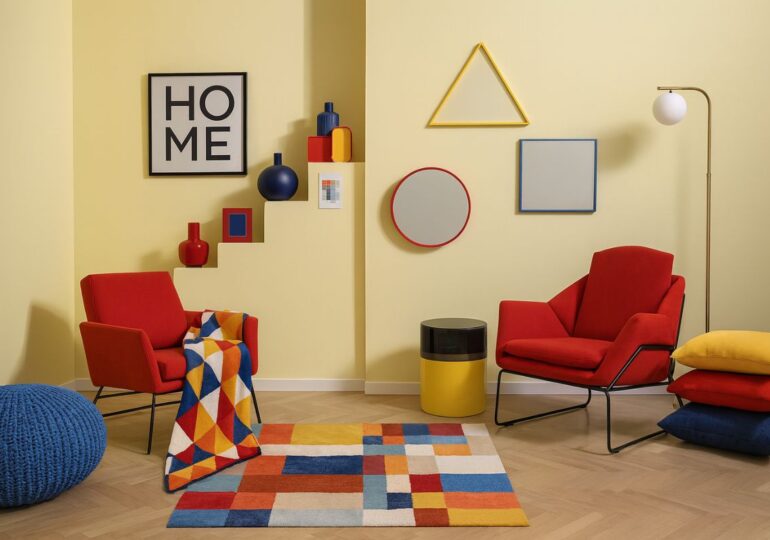
The Bauhaus style is a design language that has given shape to modern design: essential lines, authentic materials, calibrated colors and a constant search for functionality. Born in 1919 in Weimar from the vision of Walter Gropius , the Bauhaus is not just a school, but an idea: eliminate the superfluous, combine art, craftsmanship and industry to create beautiful objects and spaces, accessible and suitable for contemporary life.
This aesthetic made of pure geometries, natural light and harmonious proportions has spanned a century without ever appearing dated. Bringing the Bauhaus into your home means choosing tidy, rational and bright environments, where each element is designed to be useful and last over time.
The roots of a movement that has set a precedent

When Gropius founded the Bauhaus, he imagined a community in which painters, sculptors, architects and artisans collaborated to create a new way of living. His goal was to design a more functional world, where homes were rational spaces and everyday objects were beautiful but also democratic.
The school soon became a laboratory of experimentation: Paul Klee taught color theory, Kandinsky explored abstract forms, Marcel Breuer designed tubular steel furniture that would change the history of design. With the move to Dessau, the building itself designed by Gropius became a manifesto of the movement: a complex of glass and concrete, bright, functional, open to innovation.
The principles that define the Bauhaus style
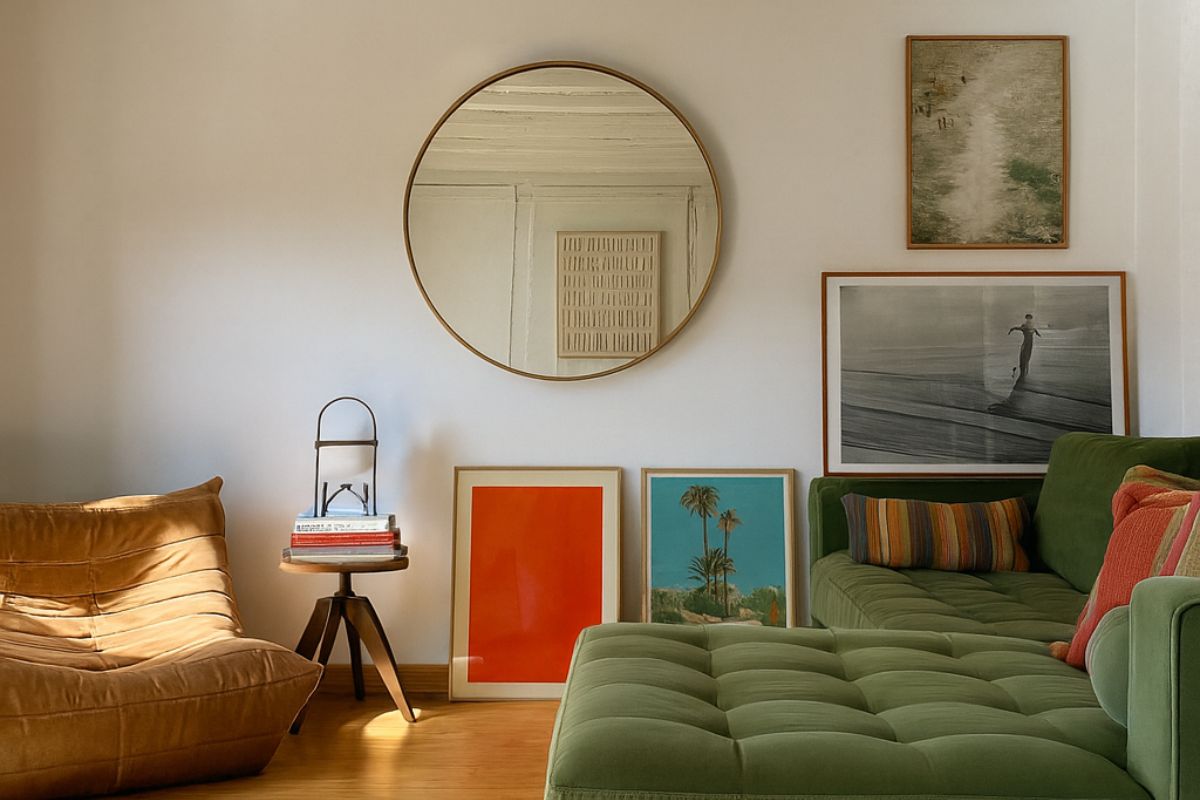
The Bauhaus is not a simple style, but a design method based on precise rules:
-
Function and form in balance the object is reduced to the essentials and designed for everyday use.
-
Pure geometries simple volumes, straight lines, ordered compositions that convey rigor and harmony.
-
Authentic materials steel, wood, glass and leather are exhibited for what they are, without masking.
-
Mass production the goal is to create accessible designs, designed to be replicated industrially.
-
Structural color white, black and gray are the bases, while red, yellow and blue serve to define accents and visual hierarchies.
The icons of the Bauhaus
Some objects designed in those years have become real symbols:
-
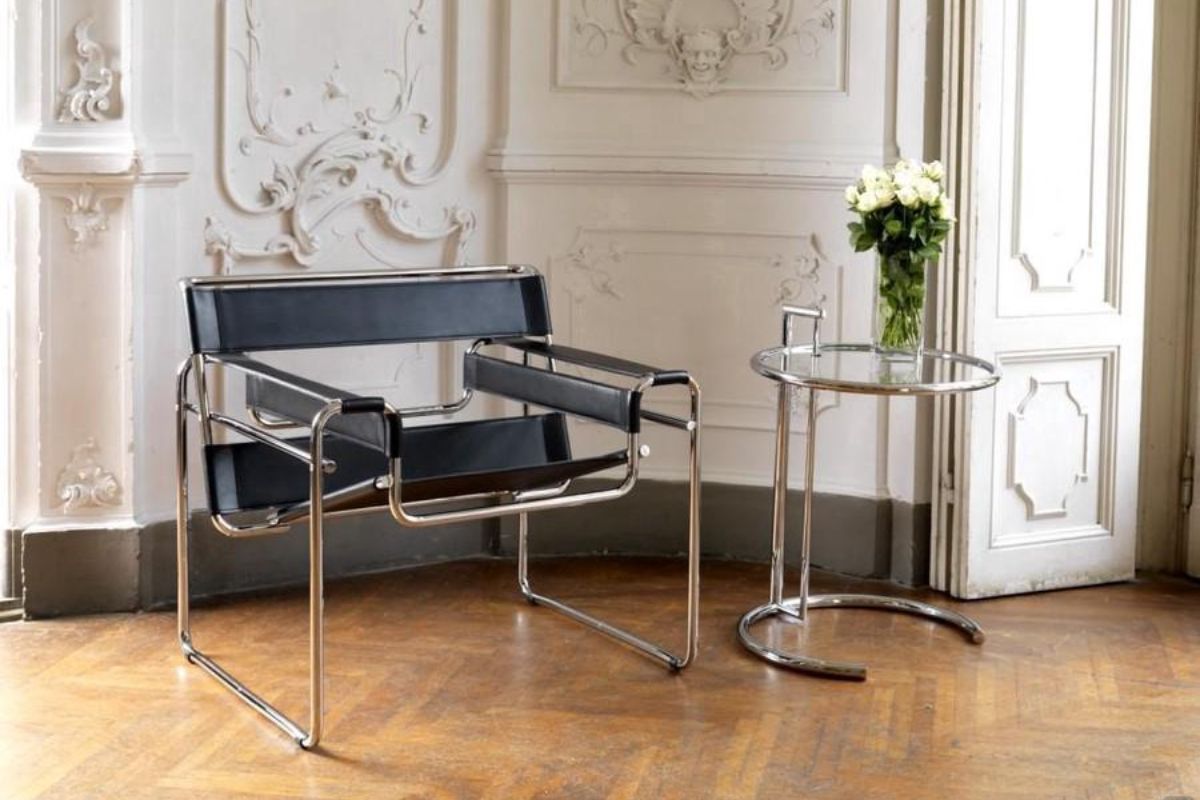
Wassily Chair by Marcel Breuer the first chair with a tubular steel structure, revolutionary for its lightness and modernity.
-
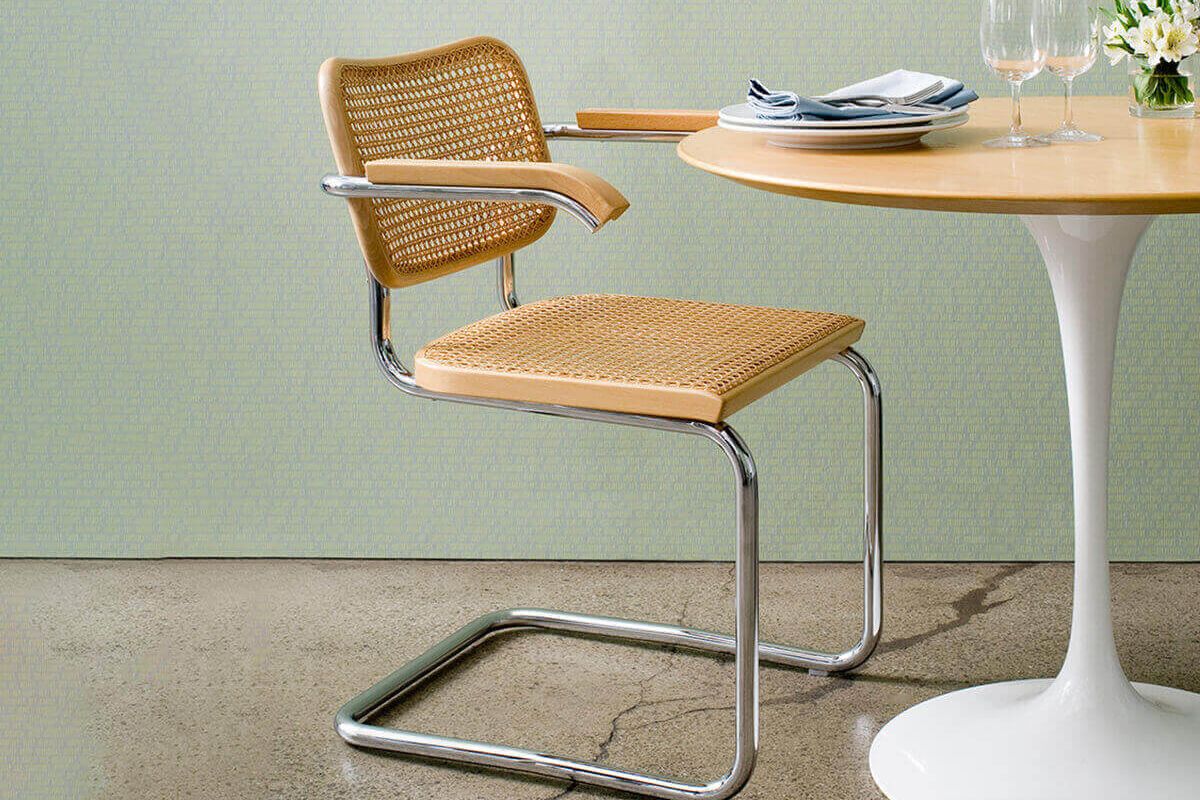
Cesca chair also by Breuer, with Vienna straw seat and steel frame, a classic still in production today.
-
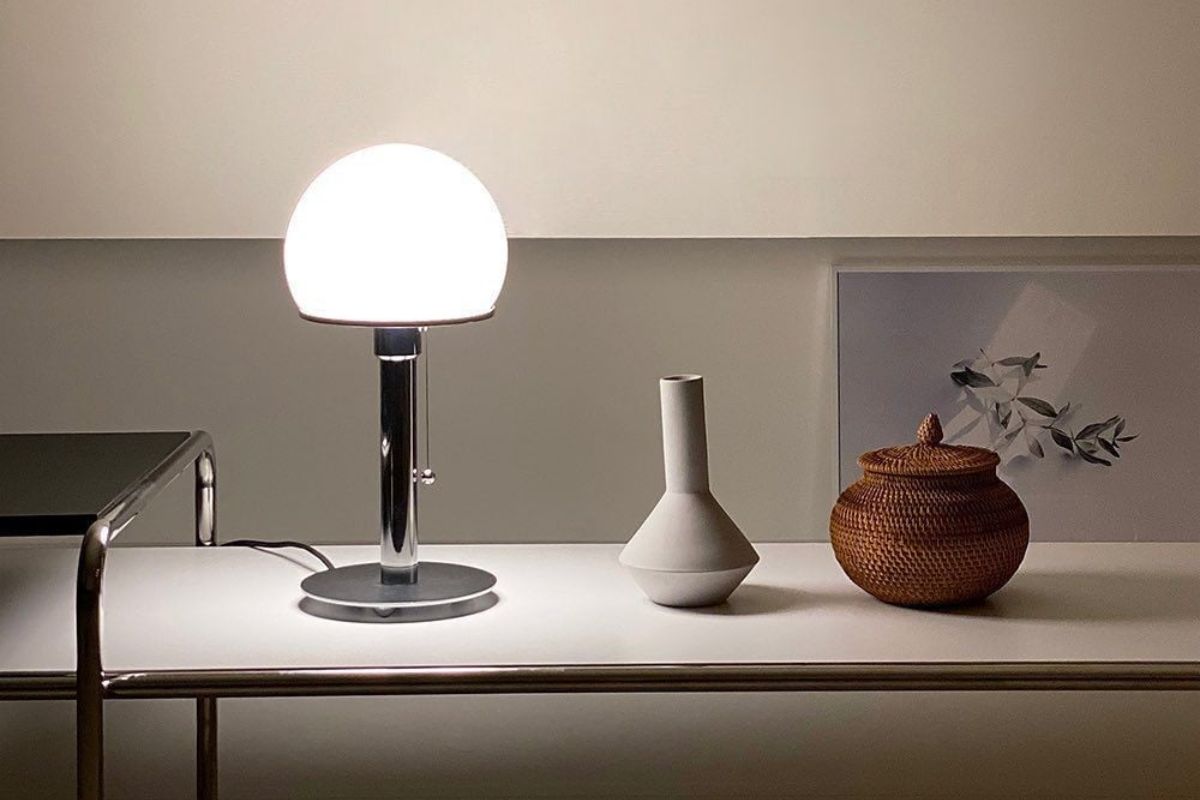
Wagenfeld lamp perfect combination of opaline glass and metal, an example of proportion and diffused light.
-
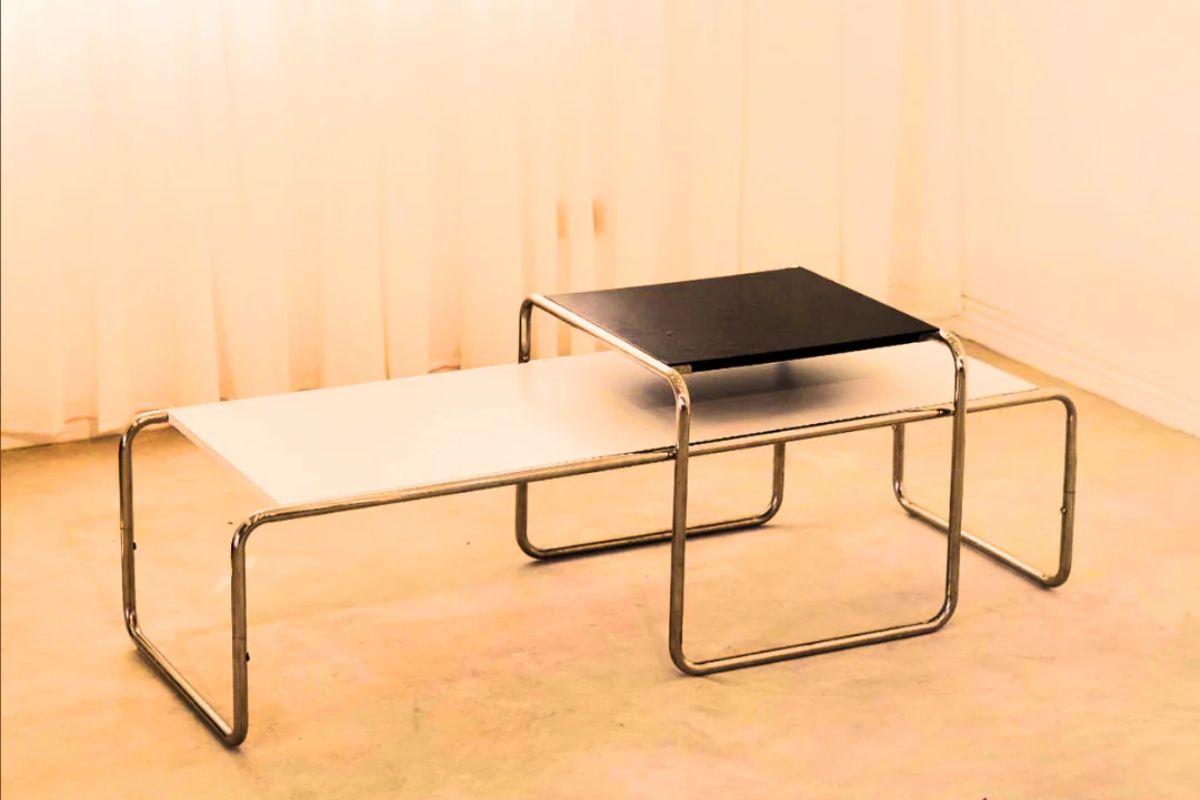
La tablesccio minimalist, with glass top and chrome structure, still relevant today in contemporary interiors.
-
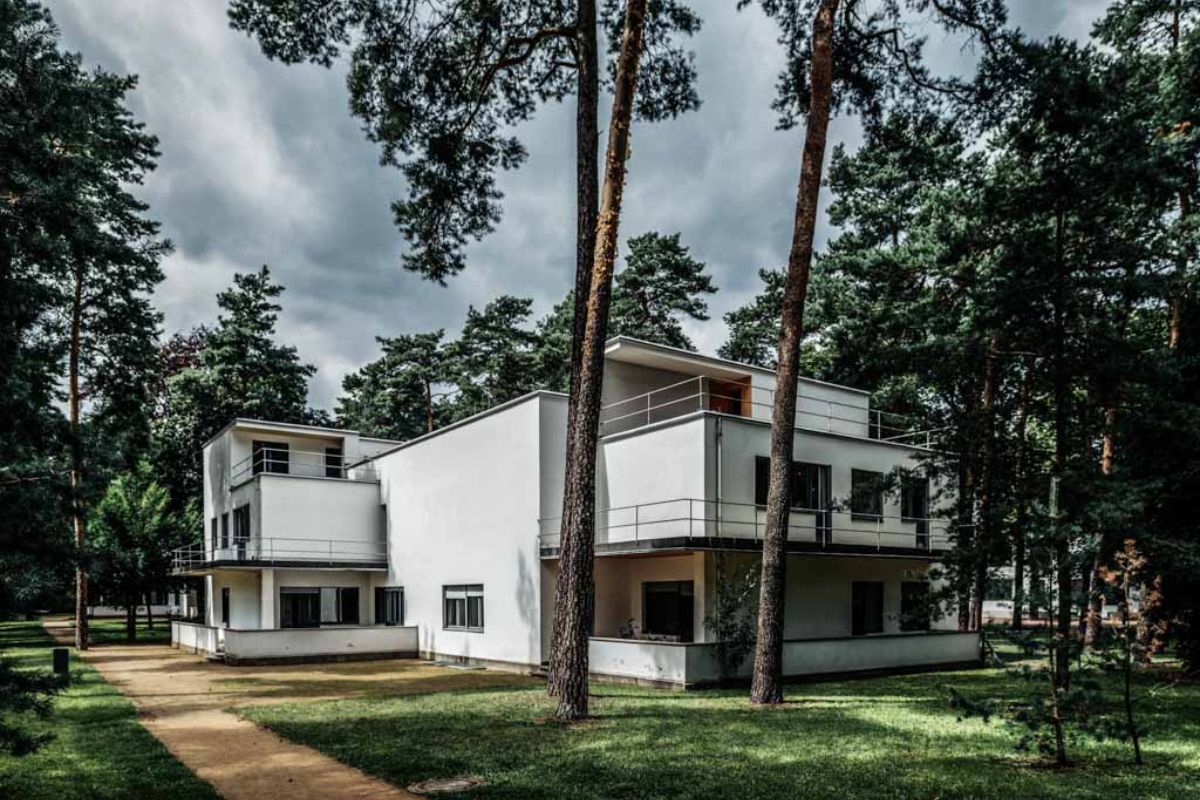
Masters’ Houses in Dessau modular, rational homes, with large windows that anticipate the concept of open space.
Contemporary architecture and influence
The Bauhaus also revolutionized the way of building: ribbon facades, simple volumes, open spaces, continuity between inside and outside. The Barcelona Pavilion by Mies van der Rohe, the Fagus Factory by Gropius and the houses of Dessau are milestones of a language that still today inspires industrial lofts, open space apartments and bright houses with large windows.
Today, when we choose linear environments, authentic materials and a design that does not fear the passage of time, we are still speaking the language of the Bauhaus.
Bauhaus in contemporary interior design
Bringing the Bauhaus into today’s homes does not mean creating cold or museum-like environments: it means interpreting its principles in a current key.
Living room
-
Modular sofas with geometric lines, with natural fabric or leather coverings.
-
Low tables with glass tops and chromed metal structures.
-
Functional lighting with adjustable floor lamps and simple suspensions, in opal glass.
Kitchen
-
Linear kitchens with smooth doors, neutral colors and steel or laminate worktops.
-
Cesca chairs or inspired replicas for the dining area, for an authentic touch.
Bedroom
-
Low and linear beds , suspended bedside tables, wardrobes with smooth doors.
-
Reduced palette: white, gray and a primary color chosen for textiles.
Materials and palettes
The Bauhaus prefers simple and honest materials: steel, glass, solid wood, natural leather. The colors are neutral with touches of red, blue and yellow, capable of creating a graphic dynamism in the space.
| Material | Why use it | Application example |
|---|---|---|
| Chromed steel | Symbol of modernity, resistant, reflective | Structures of chairs and tables |
| Glass | Transparency and visual lightness | Table tops, lamps |
| Light wood | Warmth and balance | Floors, furnishing details |
| Natural leather | Comfort and durability | Iconic seats and armchairs |
Contemporary designers and brands that reinterpret the Bauhaus
Today the Bauhaus continues to live thanks to brands and designers who reinterpret its spirit in a contemporary way. This is not a simple nostalgic re-edition, but a dialogue between past and present that constantly renews its principles.
Knoll is the most authoritative custodian of the Bauhaus: he still produces the Wassily Chair and the Barcelona Chair , icons of Marcel Breuer and Mies van der Rohe, in certified versions that respect the original designs. These pieces find space in both urban apartments and large contract projects, demonstrating that the Bauhaus language remains timeless.
Cassina and Zanotta keep the modernist tradition alive with re-editions of classics and collections inspired by rationalist principles, updated with new palettes and finishes. Their proposals are perfect for those who want sophisticated and coherent, but never cold, interiors.
Alongside the big historical names, brands emerge that translate the Bauhaus for a contemporary audience. Artek , founded by Alvar and Aino Aalto, today collaborates with designers such as the Bouroullecs to create furnishings that combine functionality and formal poetry, perfect for residential and public spaces.
BoConcept and TemaHome instead work on accessibility: they propose modular and customizable furnishings, clean lines, use of metal, glass and light wood, transforming the Bauhaus principles into concrete solutions for urban and compact homes.
Among contemporary designers, names like Konstantin Grcic , Patricia Urquiola and Ronan & Erwan Bouroullec made simplicity and modularity their manifesto. Their collections for Vitra , Magis and Moroso show how the Bauhaus can become a starting point for a softer, more sustainable design suited to today’s fluid life.
Even companies such as Menu , Ferm Living and Muuto offer collections that wink at the Bauhaus, with neutral palettes, softened geometric shapes and attention to the tactility of materials. It is a warmer and more welcoming version, which dialogues with the trends of “soft minimalism” and sensorial living.
The result is a living Bauhaus, capable of inspiring interiors that combine rigor and comfort, beauty and functionality, tradition and innovation.
Why the Bauhaus remains relevant
In an era in which interior design tends to oscillate between maximalism and minimalism, the Bauhaus offers a cultured and lasting middle ground : pure lines, balance, objects made to last. It is not just an aesthetic: it is a philosophy that invites us to choose less, but better, and to give importance to the quality of the materials and the coherence of the project.
The Bauhaus style is the demonstration that design can be democratic, beautiful and functional at the same time. Bringing it into your home today means choosing an aesthetic that has stood the test of time and will continue to be current in the years to come. It is an invitation to live in essential spaces butwarm, where each piece has a meaning and each line is designed to improve daily life.
Leave a comment