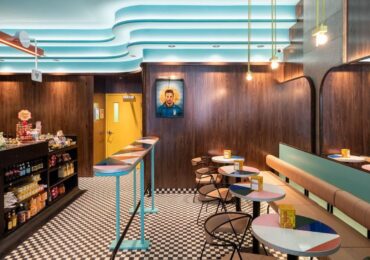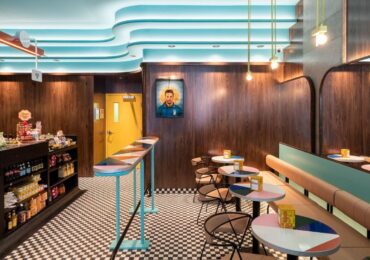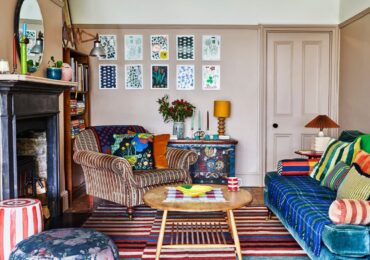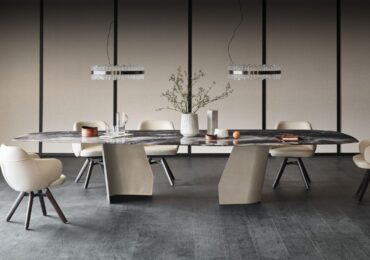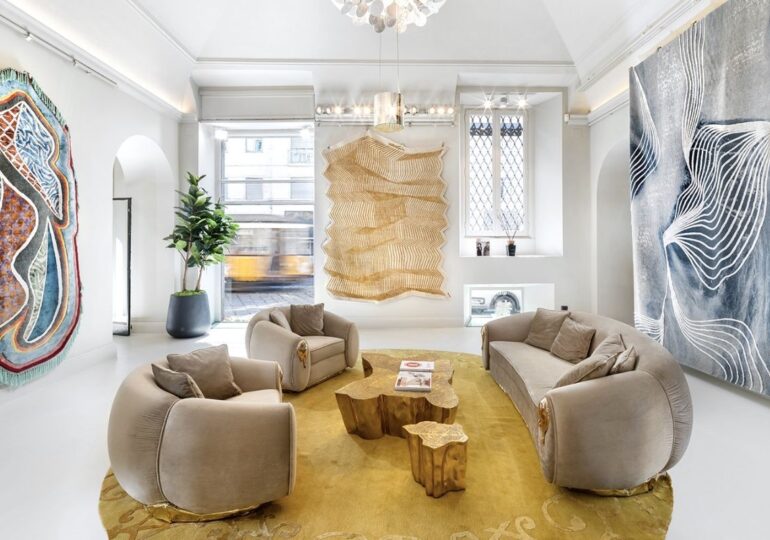
The design of the future will no longer just talk about aesthetics or function, but about perception .
In the era of artificial intelligence and digital dematerialisation, the challenge of the project becomes bringing experience back to the centre, giving space back its ability to touch the senses and the mind .
sensorial design was born from this need: to create environments that are not limited to being seen, but experienced . Light, sound, matter, perfume, temperature, color and movement become design elements like volumes and proportions.
No longer just interior design, but integrated multisensory experience , capable of communicating with the emotional and cognitive sphere of the individual.
From surfaces that react to touch to light that changes with mood, from scents that define the atmosphere to furnishings that modulate acoustics, contemporary design evolves towards empathetic design, intelligent and human.
A vision that is not just about comfort, but a new form of well-being: one that unites body, perception and technology in a single language.
The origins and principles of sensorial design
The concept of sensorial design has its roots in the thoughts of authors who have redefined the relationship between perception and design.
In the 1990s, Don Norman introduced the idea of ?? emotional design : an approach in which form is not an end in itself, but generates emotion, trust, memory.
Almost in parallel, the Finnish architect Juhani Pallasmaa with The eyes of the skin argued that “architecture is an extension of the senses”, inviting us to design for the totality of human experience, not just for sight.
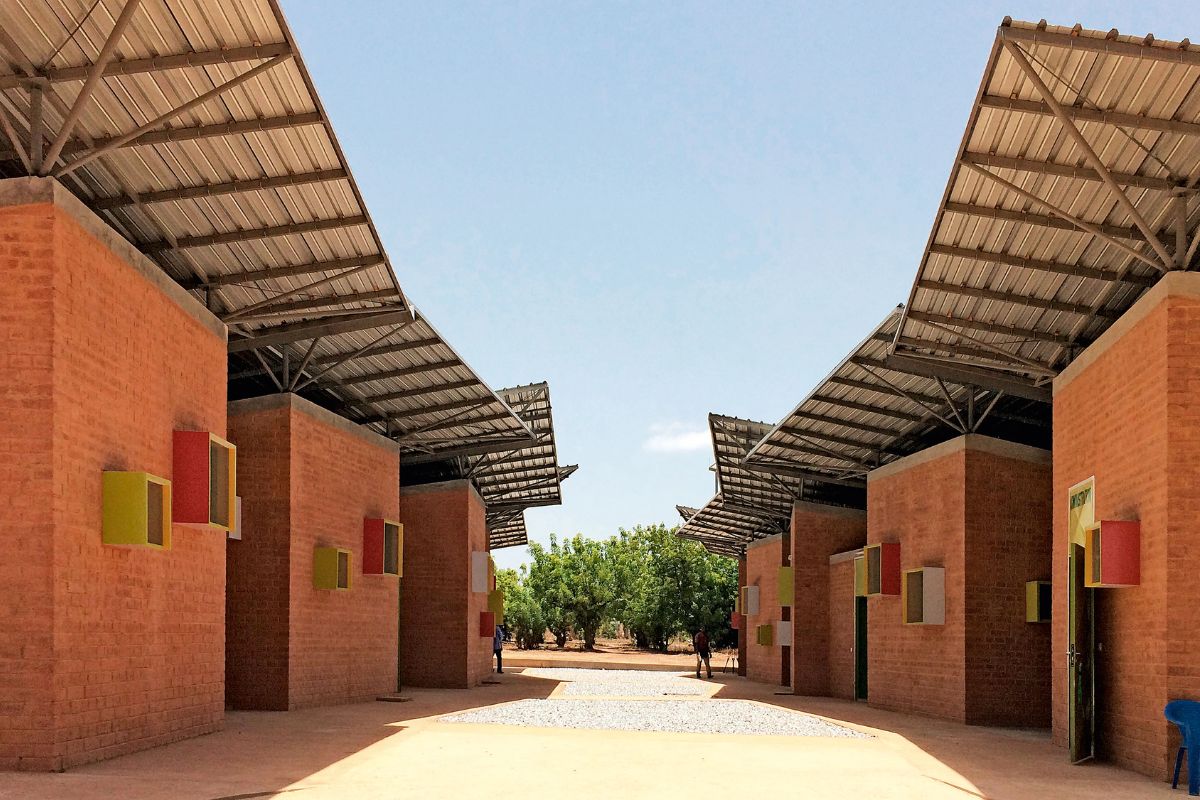
From these reflections a new design culture is born: multisensory, perceptive, immersive .
Sensory design considers each environment as a system of coordinated stimuli – tactile, acoustic, visual and olfactory – capable of activating measurable psychophysical reactions.
It is a constant dialogue between science and beauty , between neuroscience and craftsmanship, between comfort and technology.
The applications of this approach are visible today in many areas:
-
in retail , where light, music and perfumes guide the purchasing path and create brand recognisability;
-
in hospitality , where the sensorial experience becomes the hallmark of contemporary luxury;
-
in the residential , where the house returns to being a living organism, capable of regulating light, temperature, acoustics and atmosphere to improve daily well-being.
The future of the project, in short, is no longer two-dimensional.
It is a perceptive ecosystem , in which architecture meets psychology, technology interprets the senses and matter becomes an emotional language.
How the five senses translate into sensory design
Sensory design is not a catalog of perceptions, but a language that restores the centrality of the project to the body. Every sense becomes a threshold through whichreading the space: not separate instruments, but voices of the same perceptive symphony.
Sight: light as thought
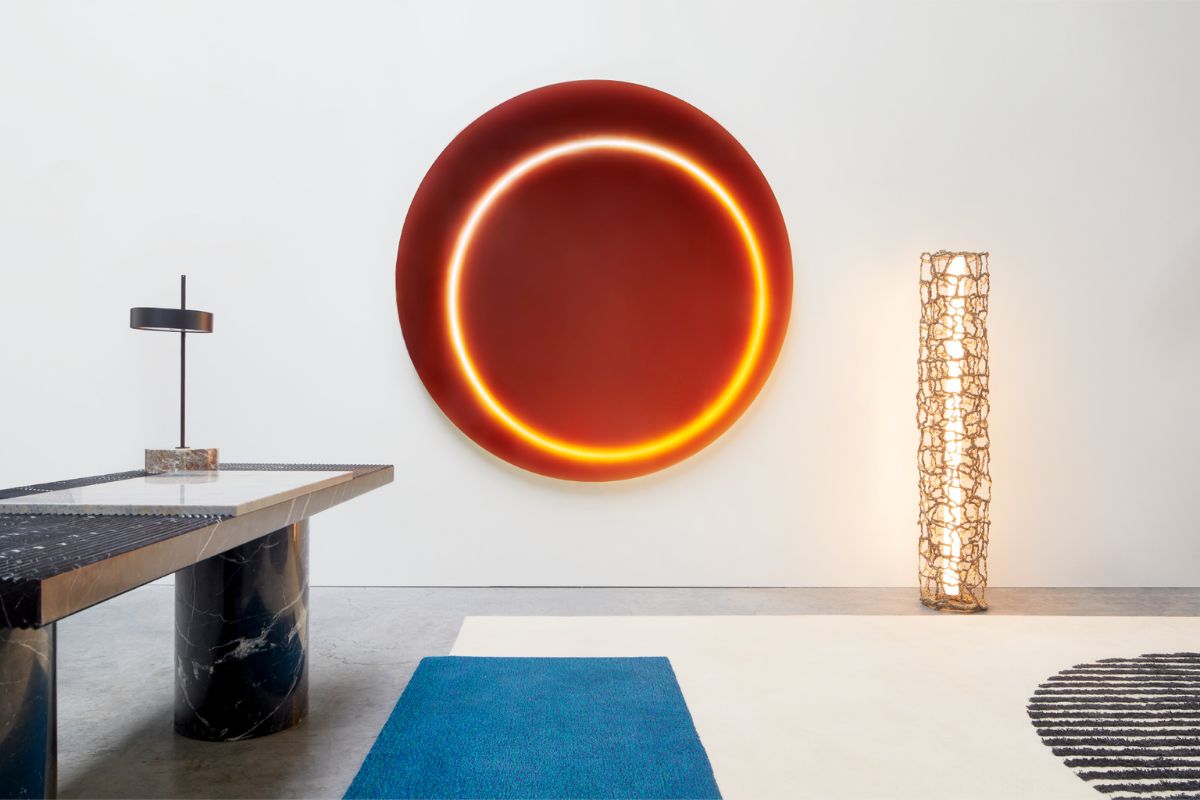
Sight, in sensorial design, ceases to be the domain of the image to become visual intelligence .
It is not enough to illuminate: we must give direction, depth and rhythm to the light.
The surfaces are no longer passive but participate in the direction of light – they reflect, absorb, modulate.
The color palette becomes silent, made up of neutrals that breathe with the environment.
Light, natural or artificial, becomes the instrument with which space thinks of itself.
Hearing: the sound of silence
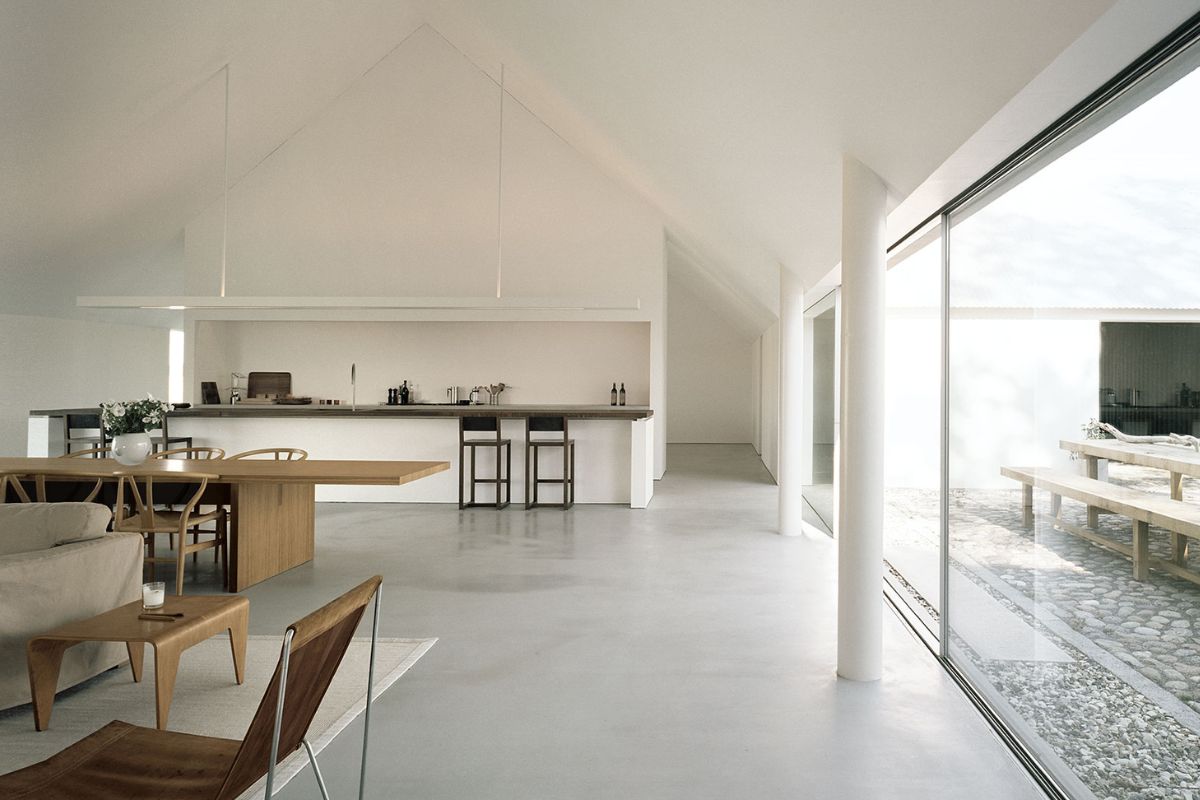
Every space has a sound, even when it is silent.
Hearing, often overlooked in design, is the invisible measure of comfort.
A sound-absorbing ceiling, a floor that does not resonate, a curtain that dampens the echo: sensorial design works on the margin between sound and silence.
The objective is not to eliminate noise, but to tune the space to the voice of those who inhabit it , like an instrument that finds its natural tone.
Touch: the skin of space
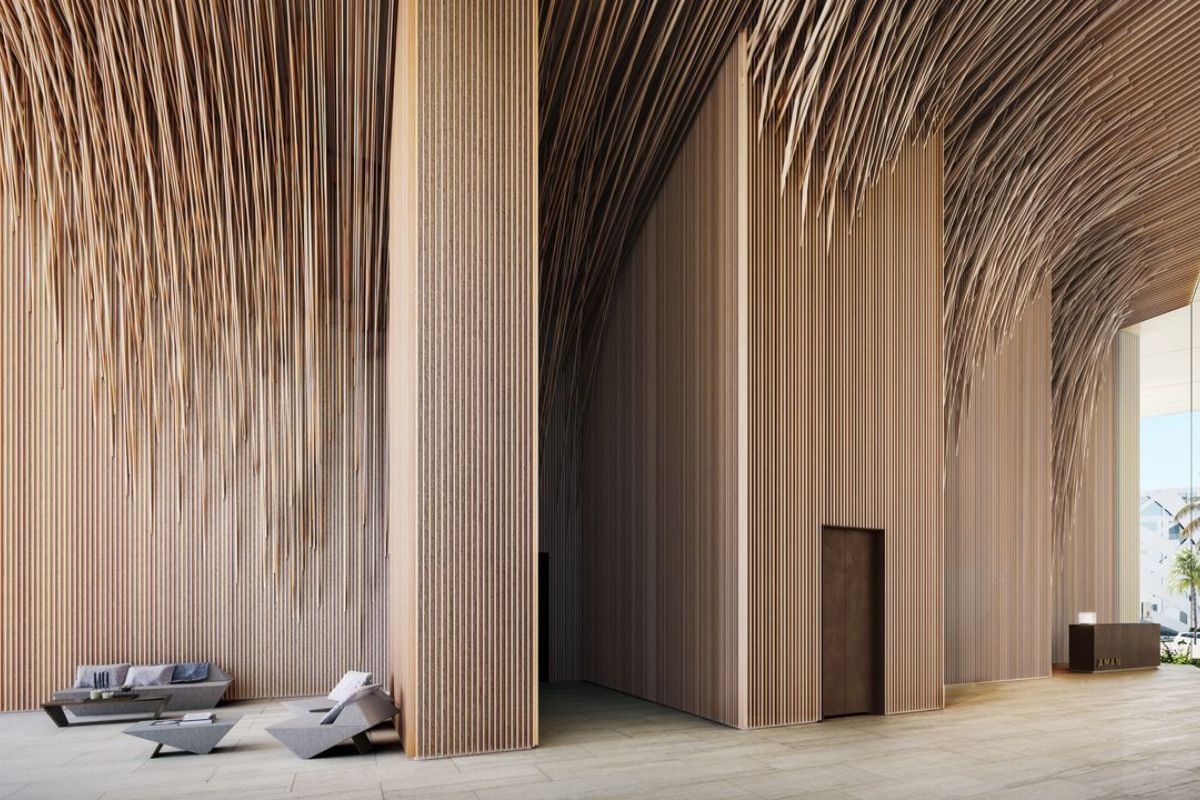
Touch is the first language of the body, yet it is the last one we think about when we design.
In sensorial design, matter returns to be the protagonist: woods that tell the story of time, stones that resist the touch, fabrics that envelop or repel.
Walking barefoot on a warm surface, resting your hand on a soft edge, feeling the difference between glass and velvet: these are experiences that define the value of a place more than any decoration.
The tactile project is what is remembered with the skin, not with the eyes.
Smell: the memory of the air
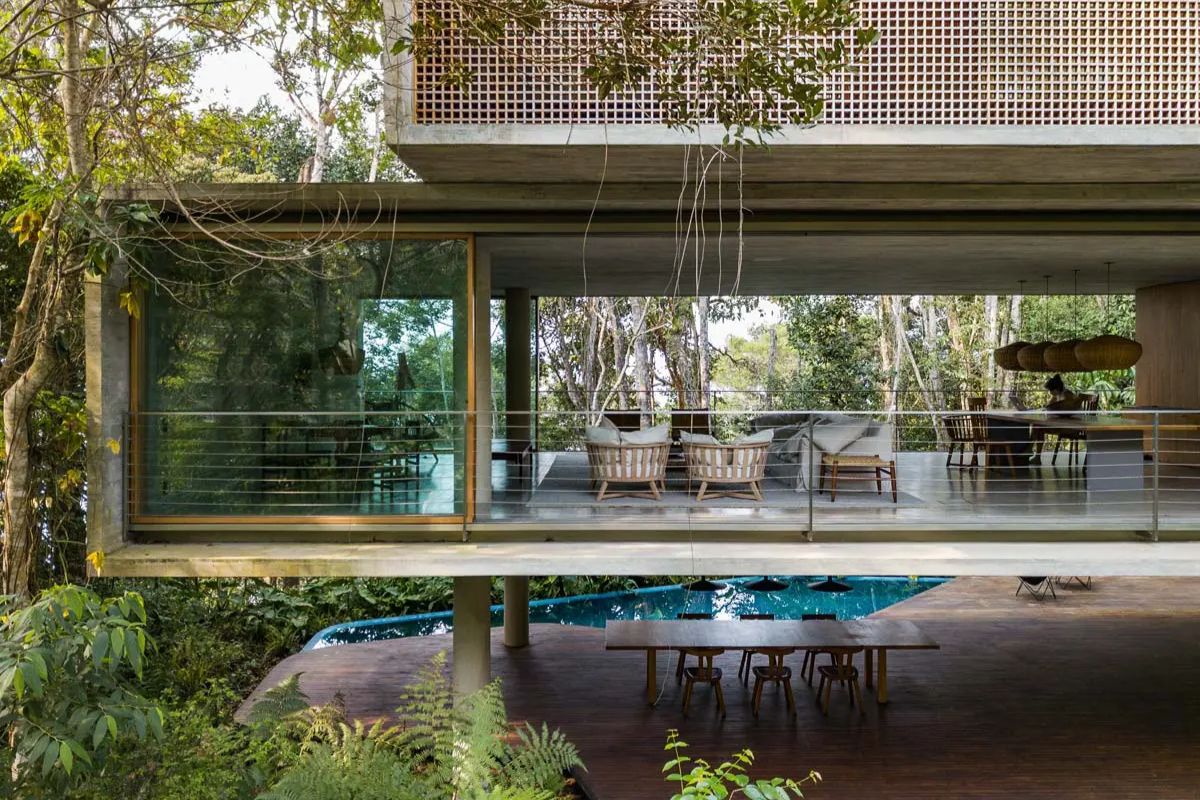
Smell is the most archaic and most emotional sense, capable of instantly connecting space and memory.
In sensorial design, air becomes matter: natural perfumes, light essences, materials that breathe.
It’s not about perfuming, but about composing olfactory atmospheres that make a place recognisable.
An entrance can smell of wood and resin, a suite of linen and sea, a restaurant of toasted bread and hot stone.
Every smell tells of an identity, a presence, a promise.
Taste: the form of the banquet
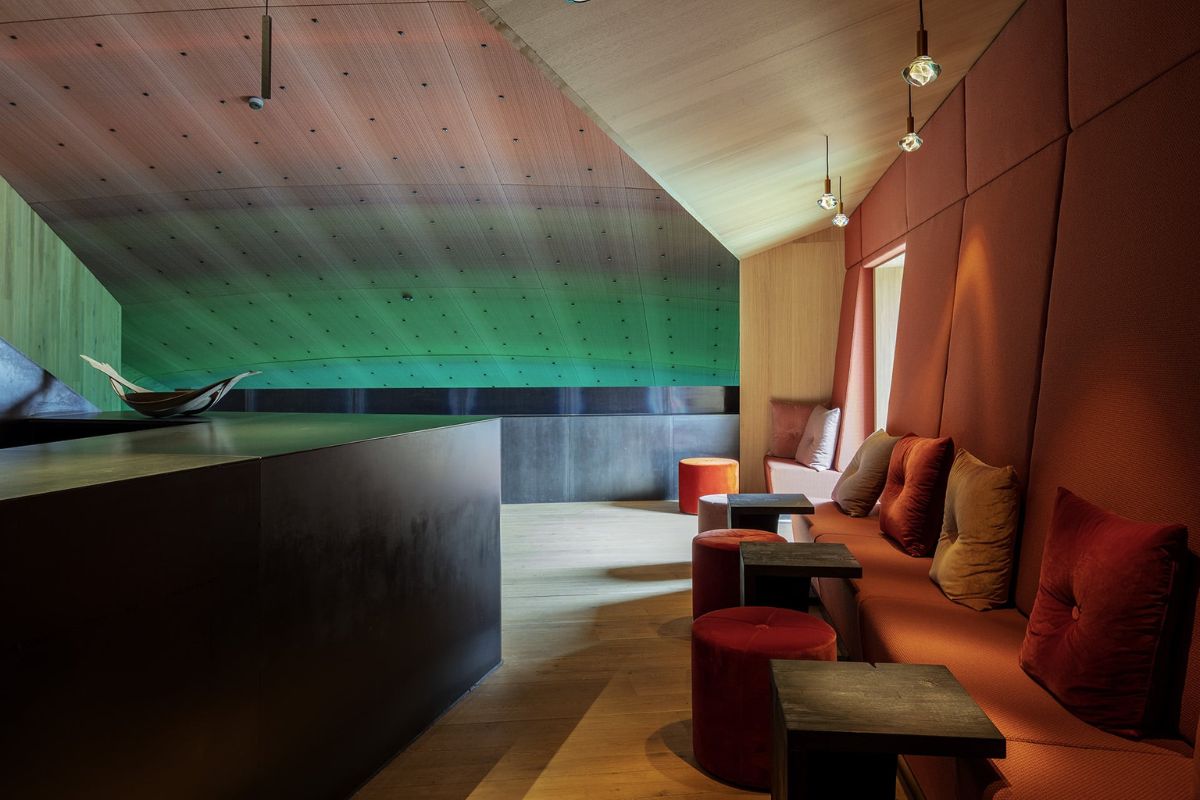
Taste is not just the palate, but the way in which living becomes a shared experience .
It is the sense of conviviality, of the gesture, of the matter that invites.
In the open kitchens, in the sculpted tables, in the materials that interact with food, sensorial design restores the pleasure of living together to the home.
Designing for taste means thinking about how the space accommodates: what light you eat with, what sound your voice has at the table, how your body moves while cooking.
It is the aesthetics of the relationship, not of the object.
The body as the new center of the project
Designing through the senses is not an aesthetic exercise, but a political act. In a digital and disembodied era, designsensorial puts the body and its ability to feel, remember and orient itself back at the centre.
Every material, luminous or acoustic choice becomes part of a system of resonances between space and individual.
The future of design will not only be intelligent, but perceptive : places that adapt, that speak softly, that listen to those who live there. Spaces that do not ask us to look at them, but to inhabit them fully – with all our senses open.
From concept to experience: how sensorial design redefines spaces
The value of sensorial design is measured in its ability to adapt to contexts, generating tailor-made experiences for those who live, work or pass through a place.
There is no universal formula: each space develops its own perceptual grammar.
What changes is the centrality of experience the way in which light, materials and sounds construct atmospheres and behaviors.
Residential: comfort as a dialogue between body and space
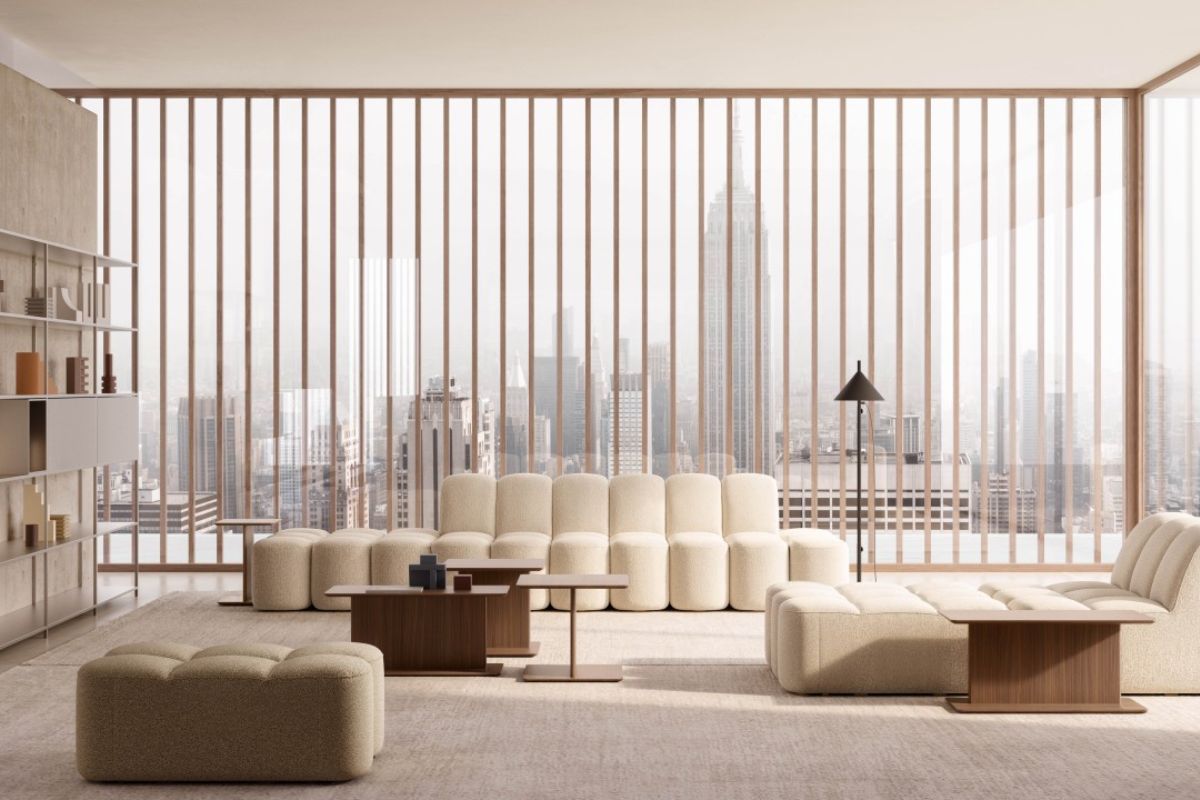
In contemporary homes, comfort is no longer just temperature or convenience, but sensorial tuning .
Natural light filters through surfaces that react differently during the day; tactile materials – wood, stone, fabrics – mark the transition between areas; the acoustics are controlled by volumes and curtains that soften urban noise.
The scent of the rooms helps to create emotional continuity: entering the house means recognizing an olfactory identity, a personal signature.
The result is a slower, more empathetic way of living, built on the perception of the body in space.
Sensory design, in this sense, is a form of domestic wellness : it restores value to presence, touch, sound, light.
Hospitality: emotion and memory as design tools
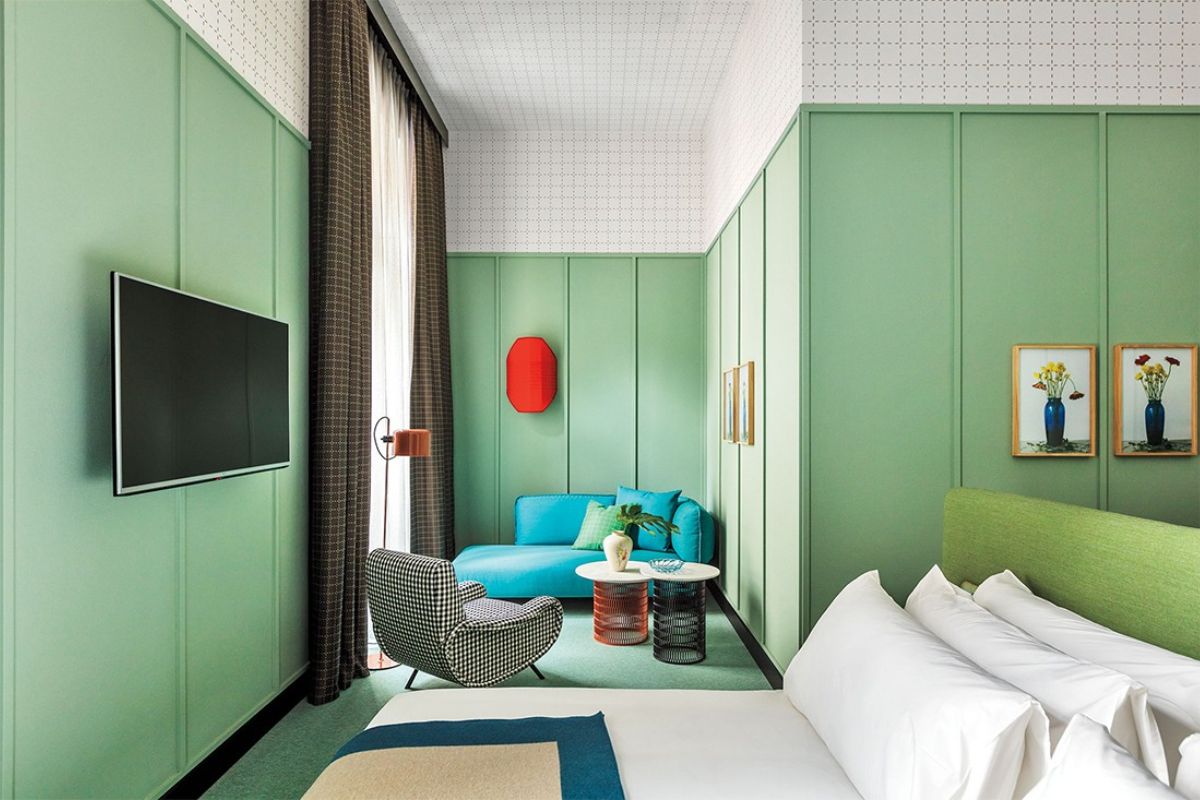
In new generation hotels and resorts, the project is increasingly measured on the quality of the perceptive experience .
From the hotel room that lights up with shades calibrated to circadian light, to the halls where the scent, music and temperature tell the story of the brand, sensorial design builds places that are remembered, not just visited.
Every detail from the muffled sound of footsteps to the velvety touch of fabrics contributes to generating emotional hospitality , a form of welcome that translates into loyalty.
In this context, the designer becomes almost a composer of experiences , capable of orchestrating materials, light and perception to transmit a coherent message.
Retail and public spaces: the direction of the senses to create identity
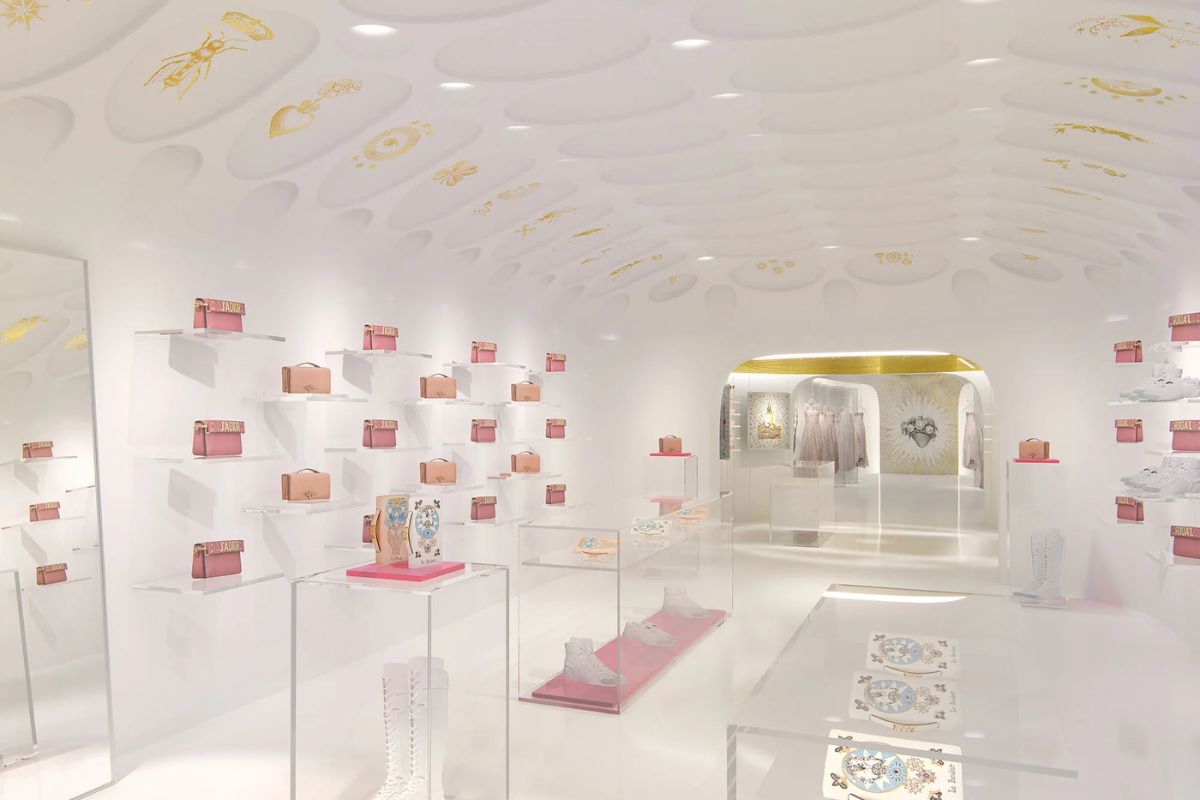
In retail, sensorial design is already a mature language.
Boutiques, concept stores and experiential galleries use multisensoriality to transform the visit into storytelling .
Directional light, tactile textures, sound speakers and ambient scents contribute to defining the personality of the brand.
The result is a perceptive marketing in which architecture becomes storytelling: the cthe customer does not just buy a product, but an emotion consistent with the values ??of the brand.
Sensory design, therefore, is not an ephemeral trend, but a new ethics of design .
It reminds us that the future is not just made of automation and digital interfaces, but of presence, emotion and memory.
And that the true luxury today is being able to feel the space in which we live.
Three designers today redefining sensorial design
Sensory design is no longer a theoretical territory, but a living field crossed by designers who bring art, technology and perception into dialogue. Three voices, in particular, embody the transformation of this language today.
Not everyone names it, but many practice it: in the materials that change with light, in the sounds that become space, in the gestures that restore intimacy to technology.
Patricia Urquiola works on the border between body and matter.
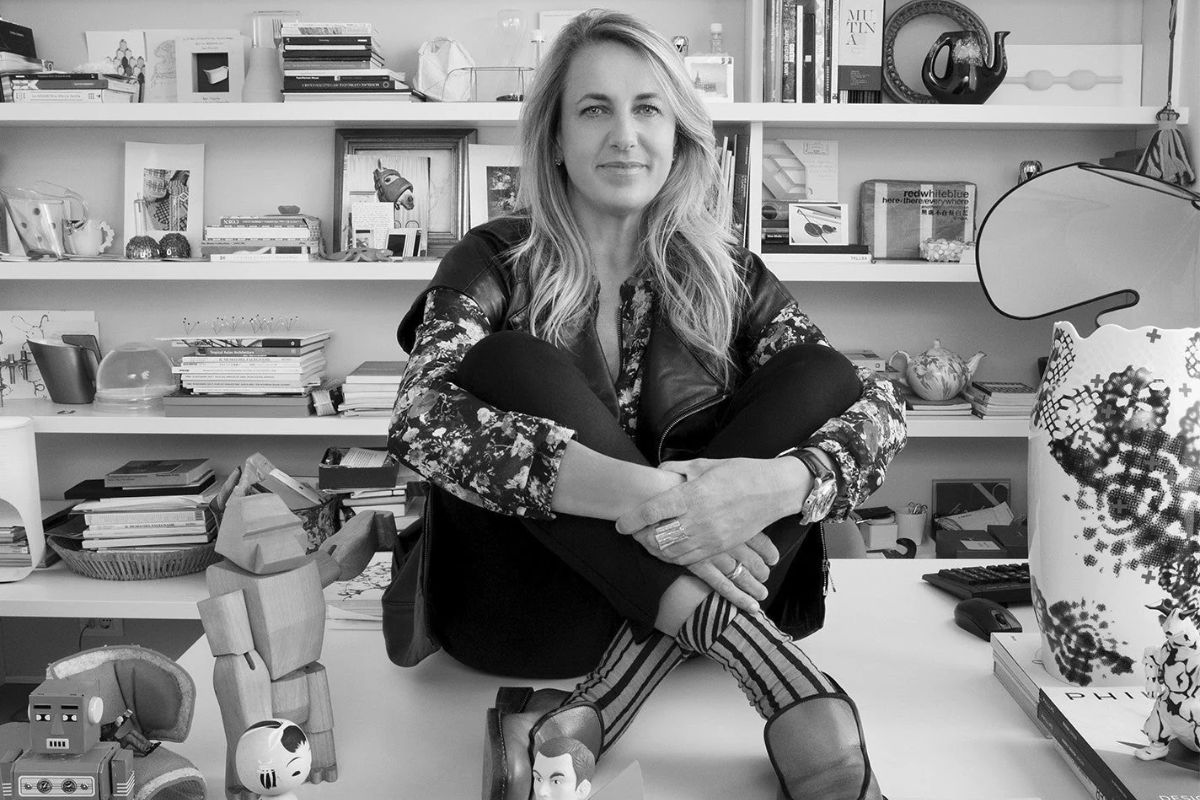
In his collections – more than in the objects – a tactile intelligence emerges: surfaces that invite exploration, details that seem to anticipate the gesture, furnishings that welcome fragility as a value.
Urquiola does not design forms but relationships: she builds environments that do not impose themselves, but respond .
With Sabine Marcelis , perception becomes an optical and spiritual phenomenon at the same time.
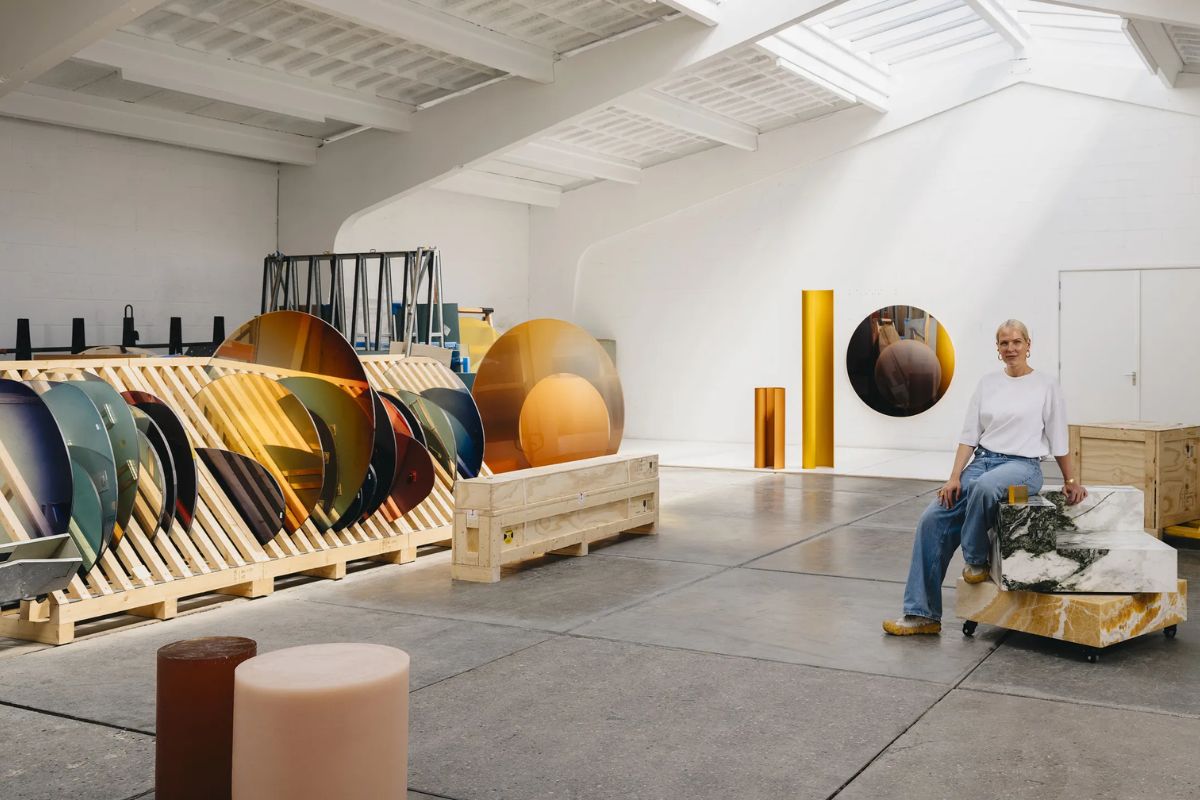
His works in resin and colored glass from installations for Vitra to luminous sculptures for Fendi transform light into living matter.
In a world that communicates in visual overload, Marcelis teaches the slowness of the gaze : he reminds us that vision is a physical act, not an algorithm.
The duo Formafantasma , instead, shifts the discussion to the terrain of ethics and material memory.
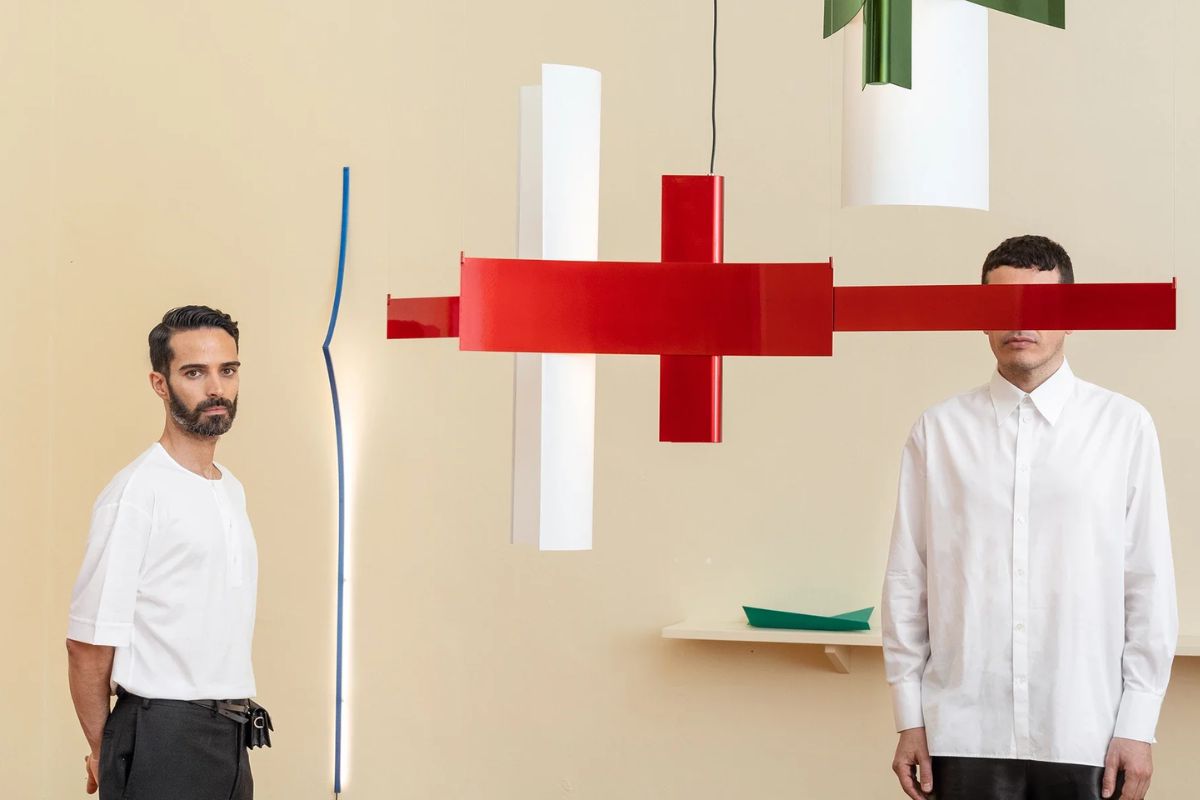
For them, sensorial design is not just a stimulus, but perceptive responsibility : understanding the origin of the materials, their smell, their reaction to time.
In projects such as Cambio or Oltre Terra , touch and smell become critical tools, capable of restoring depth to perception and consciousness to consumption.
Three visions, three languages.
Urquiola returns the body to the project, Marcelis returns the light to the matter, Formafantasma restores the meaning to the gesture.
It is through this intertwining – between empathy, perception and awareness – that the future of sensorial design passes today.
Sensory design as a new form of intelligence
In a world dominated by the immaterial, sensorial design represents a return to reality.
It is a response to visual saturation, an antidote to the excess of images, an invitation to return to feel what surrounds us.
It is not a tactile nostalgia, but a new type of intelligence: perceptive, empathic, adaptive .
Designing with the senses means designing for the human being as a whole.
Not for the user, but for the person: with his memory, his emotions, his internal rhythms.
Each ch.spaceand activates the senses – which sounds good, smells natural, reflects the right light – it becomes a place of identity, capable of welcoming and recognizing those who experience it.
The future of design, therefore, will not only be technological or sustainable.
It will be sensorial and relational : built on the quality of experiences, attention to gestures and the project’s ability to generate empathy.
Because true innovation, today, is not what amazes, but what reconnects us to our body, to time, to life .
Design of the senses: some useful answers
What is sensorial design?
It is a design approach that integrates sight, touch, hearing, smell (and sometimes taste) to create spaces that generate well-being, memory and involvement, beyond aesthetics alone.
What are the key principles of sensory design?
Direction of light, tactile quality of materials, acoustic comfort, olfactory identity, narrative coherence. Each sense contributes to an integrated and recognizable experience.
How is sensorial design applied in interiors?
With dynamic light scenarios, coherent tactile surfaces, acoustic control, discrete olfactory paths and calibrated color choices. The goal is a smooth and measurable experience.
What is the difference between emotional design and sensorial design?
Emotional design acts above all on affective reactions; the sensorial one works on physical perception (light, sound, touch, smells), integrating it with the overall narrative of the space.
Why will sensorial design be central to the future of living?
Because it responds to hyper-digitalisation by bringing the body and perception back to the centre: more human, adaptive, multi-sensory spaces, in which comfort and identity become cultural and competitive values.
Leave a comment