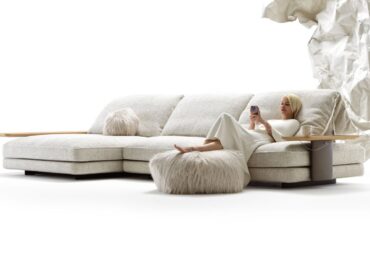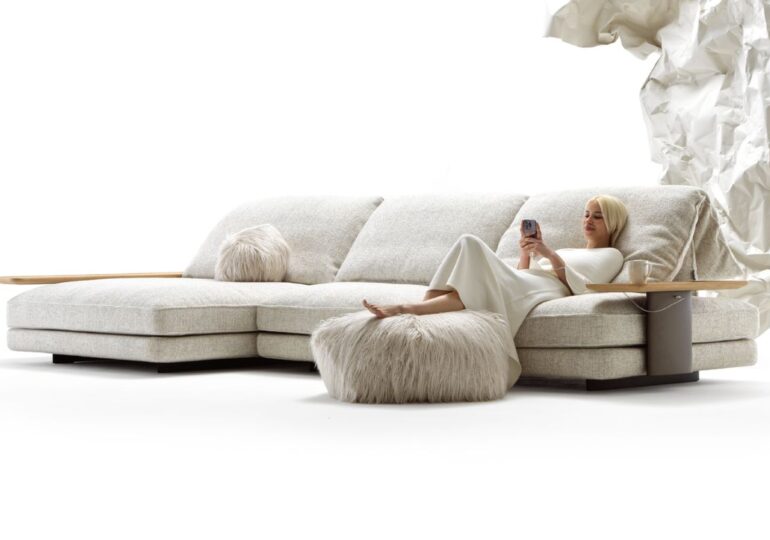
If you are looking for the best designer sofas 2026 , you have probably already seen dozens of “beautiful” models, but you are missing the part that matters: understanding which sofa to really choose for your home. Design today also means comfort, proportions, modularity, coverings that withstand daily use and construction details that cannot be seen in photos.
In this guide you will find a selection of iconic and contemporary models and, above all, the practical criteria that help you choose: which seat depth makes sense, when a modular is best, what changes between fabric and leather, which sizes work in a small living room and what affects the final price. The goal is simple: to arrive at a model that has style, but also sense.
What makes a sofa truly designer in 2026
The word “design” is used for everything: a modern shape or a trendy color is enough and the sofa becomes “designer”. In fact, a model truly deserves this definition when it brings together proportions, comfort and construction in a coherent way. It’s what makes the difference between a sofa that lasts ten years (even aesthetically) and a piece that tires quickly or ages poorly.
Proportions and presence in space
A designer sofa is not just “beautiful on its own”: it works within a room. What matters is the proportion between seat, backrest and armrests, the height from the ground, the way in which the volume occupies the space. In 2026 we see two strong directions: lighter models (visible feet, clean lines) and fuller, but always calibrated, volumes. If the sofa “crushes” the living room or forces you to sacrifice passages and distances, it is not a design choice: it is an encumbrance.
Designed comfort (not improvised)
Here comes the less photogenic part. Comfort depends on seat depth, backrest angle, padding density and support. A sofa can be soft yet uncomfortable, or supported but welcoming: the difference is in the design. Before you fall in love with the design, ask yourself how you will use it: lying flat, conversation, movies, laptop work. They are different needs, and require different models.
Modularity, configurations and flexibility
Many of the most interesting sofas of the moment are modular: not for fashion, but to adapt to open spaces, house changes, growing families. Modularity is an advantage if it is well thought out: elements that combine without a “puzzle effect”, comfortable corners, a chaise that is not too long, terminals that do not seem added. If, however, modularity is only used to create huge compositions in the showroom, it can become a problem at home.
Materials and coatings: aesthetics + real life
In 2026, cladding is not just an aesthetic choice: it is a maintenance choice. Performance fabrics, material textures, bouclé, chenille, leather: each has pros and cons based on light, use, animals, children. A “sensible” designer sofa is one that remains beautiful even after months of use, not one that is perfect only on the day of delivery.
How to choose the right sofa (based on space and lifestyle)
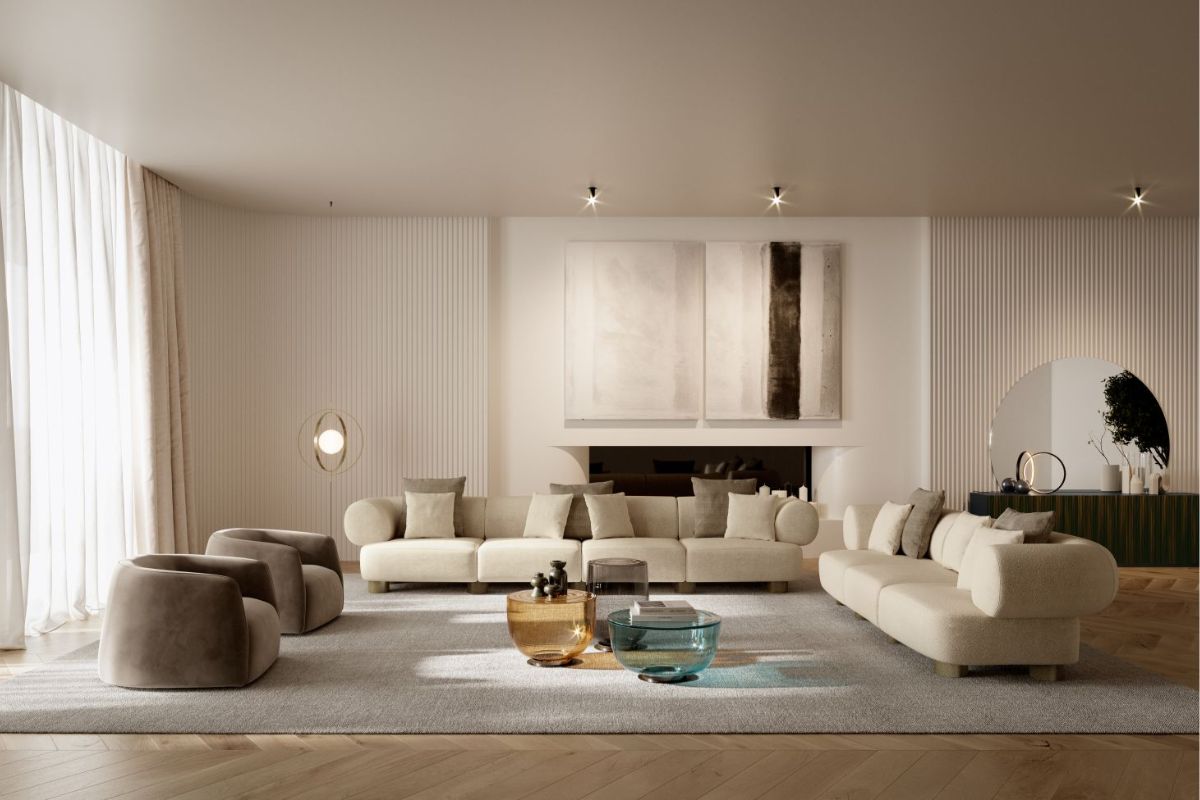
Choosing a designer sofa becomes simple when you stop looking for “the most beautiful” and start looking for the right one for your daily use . The useful questions are always the same: how many people really use it? How do you experience your stay? Do you have room for a chaise lounge? Do you need an easy-to-manage coating? From here on, the model narrows from a hundred options to a few sensible choices.
If the living room is small: proportions first of all
In small spaces the priority is not to “give up on design”, but to choose a model that does not weigh down the room. Sofas with clean volumes, raised from the ground (visible feet) and with not too large armrests work well. Pay attention to depth: a seat that is too deep can steal passage space and make the living room less livable. If you want a cozier effect without taking up the space, it’s often more effective to work on cushions, carpet and lighting, rather than increasing the size of the sofa.
If you have an open space: the sofa as an “architectural” element
In an open space the sofa is not just a seat: it is an element that organizes the space between living, dining and kitchen. Here modulars make sense, but only if the composition is legible and balanced (not a maxi block that cuts across the room). The “backs” also count: backrests and finishes must be taken care of, because the sofa is often visible from multiple sides. If you want a composition with a chaise longue or peninsula, measure the distances carefully: a successful project leaves fluid passages and does not force you to “go around” the volumes.
If you really use it every day: comfort and support matter more than style
Many designer sofas are designed to be beautiful and compact, but not all are suitable for hours of relaxation. If the sofa is your daily place (movies, reading, working on the laptop), carefully evaluate the inclination of the backrest, seat depth and lumbar support. A good test is simple: if after ten minutes you feel the need to change position, it’s probably not the right one. Comfort is not “softness”: it is a balance between welcome and support.
Families and animals: coverings and maintenance ahead of trends
If you have children or pets, the upholstery is not a detail: it is the difference between a sofa that relaxes you and one that makes you anxious. High-performance fabrics, durable textures and easy-to-clean solutions are often smarter than the delicate but perfect fabric. Colors matter too: shades that are too light or surfaces that mark easily can become challenging. In these cases it is better to choose a sofa that is beautiful, yes, but one that does not force you to live with it with the fear of ruining it.
Fabric or leather: it is not just an aesthetic question
Leather is elegant and, if of good quality, ages well, but requires attention to scratches and heat (especially with animals). The fabric offers more variety and can be “softer” visually, but it changes a lot based on the weave: some finishes are very delicate, others surprisingly resistant. The right question is not “what do I like best”, but: how much do I want it to be practical and how much does the aesthetic result matter to me.
The point that many skip: measurements and distances (the ones that make the project work)
Before choosing the model, define at least three measurements:
-
maximum length of the sofa based on the wall / living area
-
depthIt is sustainable without sacrificing steps
-
distance from the table and the TV (if present)
These are simple details, but they avoid the most common mistake: buying a perfect sofa in the showroom and the “wrong” one at home.
The best designer sofa models 2026
Below you will find a selection of models (not a ranking of brands): icons that have marked the living room project and contemporary sofas that interpret 2026 well, especially for proportions, comfort and configurability. The idea is simple: give yourself concrete examples to compare, so you can understand what type of seat you are looking for (deeper or more composed), whether you need a modular one and which details really make the difference in real life.
David (BertO)
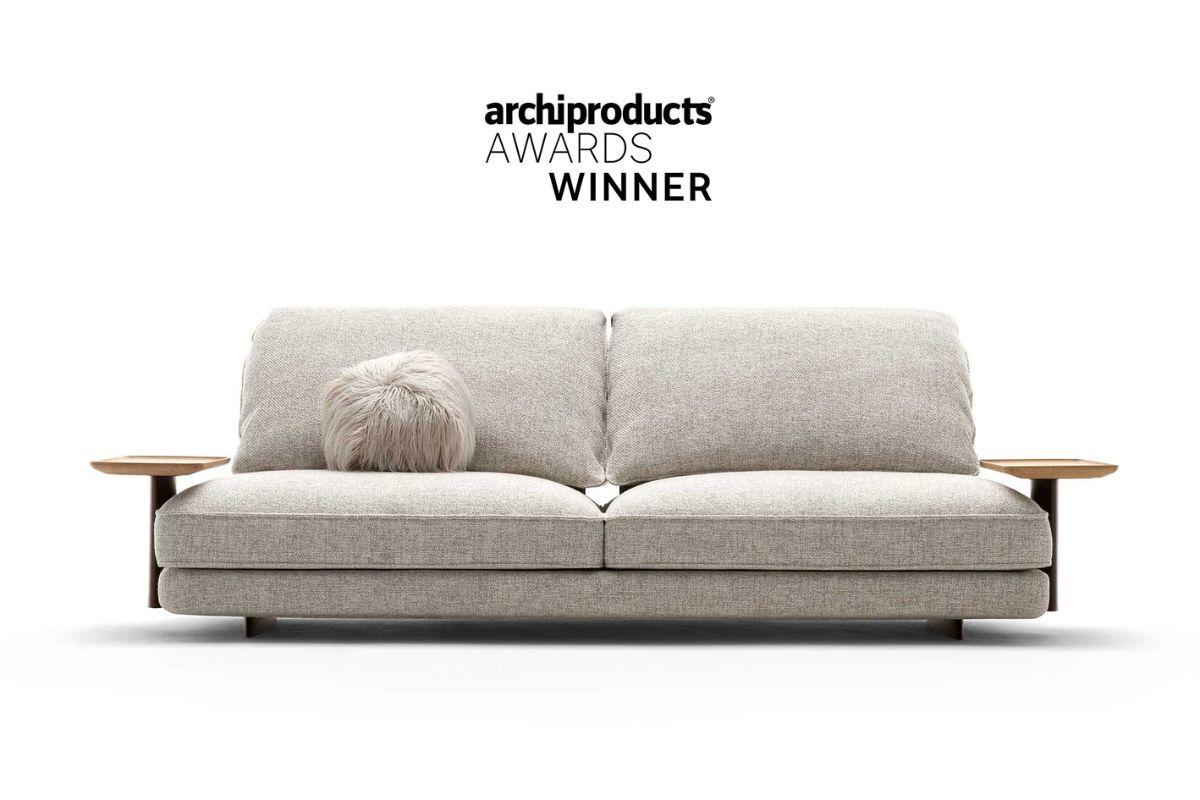
David by BertO is a contemporary model designed for those who want a sofa with “clean” lines, but very flexible in terms of design: in the linear version it is offered in three standard sizes ( 237 / 267 / 307 cm ) and can be developed in customized configurations thanks to 24 modules . The layout is modern, with a visually light structure: the body of the sofa appears raised and the hidden elliptical feet create a suspended effect that works well even in smaller environments, because it doesn’t add weight.
On comfort, the data sheets describe it with a seat of 42 cm and seat depth 56 cm (useful data if you are comparing “compact” vs “deep” models). An interesting detail, very 2026, is the “discreet” integration of the technology: the armrest can include integrated USB-C and, in the version with oak tray, also wireless charging . For those who care about maintenance: in the data sheets it is indicated as completely removable (depending on the fabric/leather version).
Also worth mentioning is an element of recognition: David won the Archiproducts Design Awards , an award that confirms his relevance in the panorama of contemporary design.
Camaleonda (B&B Italia)

Camaleonda is one of those sofas that in 2026 has not “come back into fashion”: it has become useful again. Born from the project of Mario Bellini (1970) , it is a modular system built around a seating module 90×90 cm , with modular backrests and armrests and the capitonné obtained through a system of cables, hooks and rings which precisely defines its modularity.
It is a model to choose when you want a protagonist and flexible sofa, capable of changing composition without losing identity. It works particularly well in large living rooms or open spaces where modularity is really needed (not just for show).
Groundpiece (Flexform)
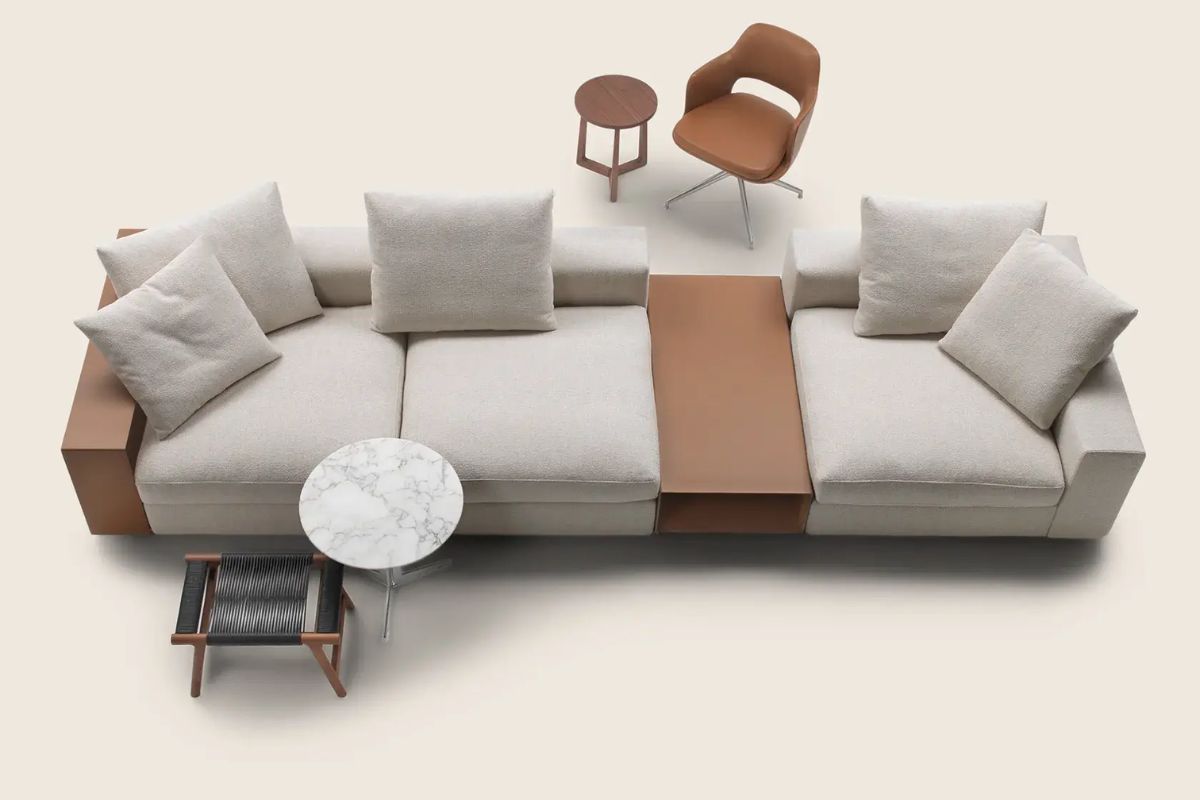
Groundpiece is a contemporary reference because it has changed the very idea of a “living room” sofa: Flexform describes it as a low and deep model , designed for a more relaxed and informal seat.
It is designed by Antonio Citterio and is often cited as the best-seller of the collection (with greatand attention to the comfort dimension, also thanks to the down pillows).
It is the right choice if your living room is truly lived in and you want a sofa that can withstand films, reading, long conversations: a “stable contemporary”, rather than a trendy piece.
Togo (Ligne Roset)

Togo is the icon of the “soft” seat, without visible structure: a low sofa, all about volumes and padding, designed for a free posture. It was designed by Michel Ducaroy and Ligne Roset places it as a project of 1973 , which over time has become a contemporary classic.
It is perfect if you want an informal and sensorial living room (very lounge-like), or as a second sofa in a relaxation area. Less suitable if you are looking for a composed and “high” seat: Togo is an invitation to change position, not to sit upright.
Maralunga (Cassina)

Maralunga is a rare case: an icon that remains current because it arises from a functional idea, not from a form. Cassina underlines the innovation of the adjustable headrest and the identity of the project signed by Vico Magistretti .
It is a model to consider if you want an elegant but truly comfortable sofa, capable of moving from a more composed seat to a more relaxed one. In 2026 it works precisely for this reason: it is a “practical classic”, which does not depend on trends or colors of the year.
Harold (Meridians)
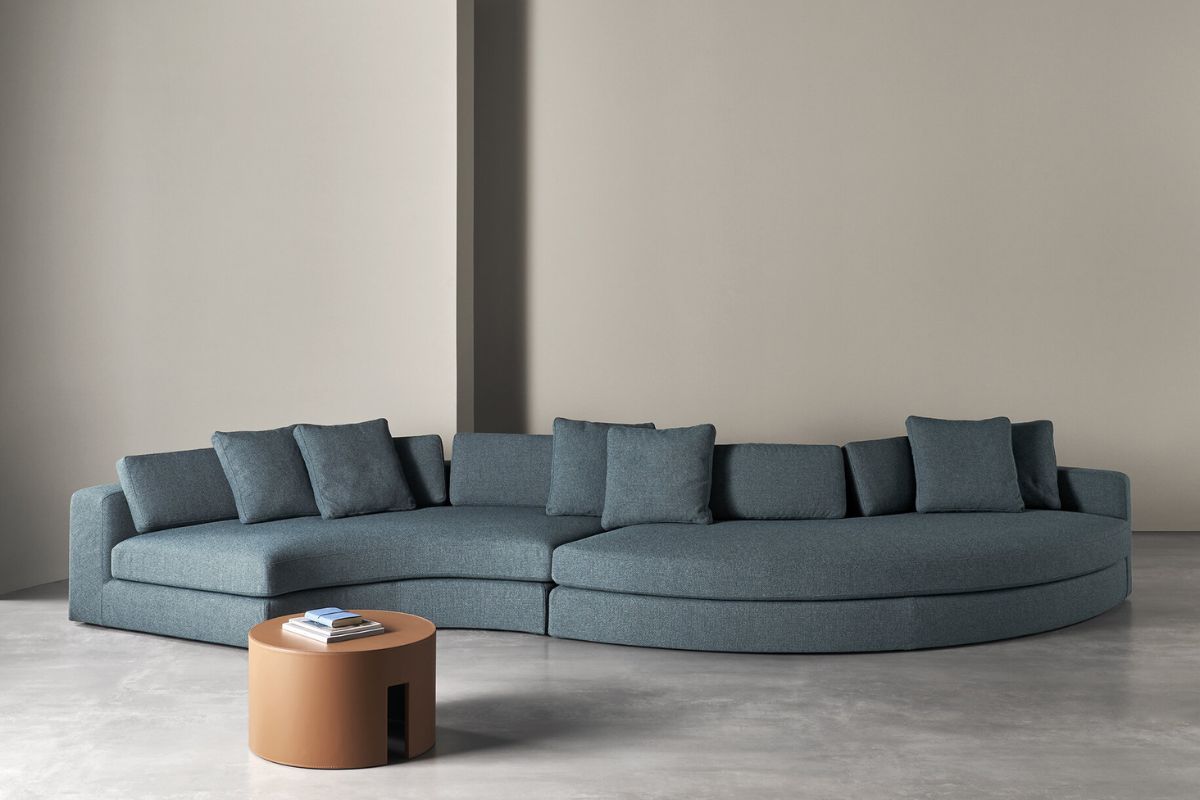
Harold is a seating system designed for those who want a contemporary but very “design” sofa : it is not just a linear one, because it was born as a modular collection with linear, curved and even asymmetrical elements, suitable for both residential interiors and contract spaces. The stylistic code is rigorous, but softened by a slight rounding that avoids an overly technical effect. The strong point, in 2026, is customization: Harold allows you to work on different seat depths and on the choice of armrests , so you can build a more composed or more lounge setup without changing the aesthetic language. It is also available in a version with Supersoft padding and, in modular configurations, it is indicated as removable cover (with differences between textile and leather covering depending on the versions).
Tufty-Time (B&B Italia)

Tufty-Time is one of the most interesting modular units for those who experience the open space in a free way: B&B Italia describes a system that starts from a pouf as a basic element, then is completed with central, corner and terminal modules, up to configurations with chaise longue, corners and island elements for a seat 360° .
It is a model that makes sense when you want a contemporary, informal, very configurable sofa, but with a recognizable aesthetic and not “generic modular”.
LC2 / 2 Fauteuil Grand Confort, petit modèle (Cassina)

LC2 is a modernist archetype: Cassina presents it as a derivation of the iconic 2 Fauteuil Grand Confort, petit modèle , signed by Le Corbusier, Pierre Jeanneret, Charlotte Perriand , with tubular steel structure and cushions independent of the metal cage.
It is a model to include in the list when you want a “declared” icon, more architectural than lounge. It works well in studios, clean living rooms, projects where the sofa is also a cultural sign, not just comfort.
DS-600 Snake / Non Stop (de Sede)
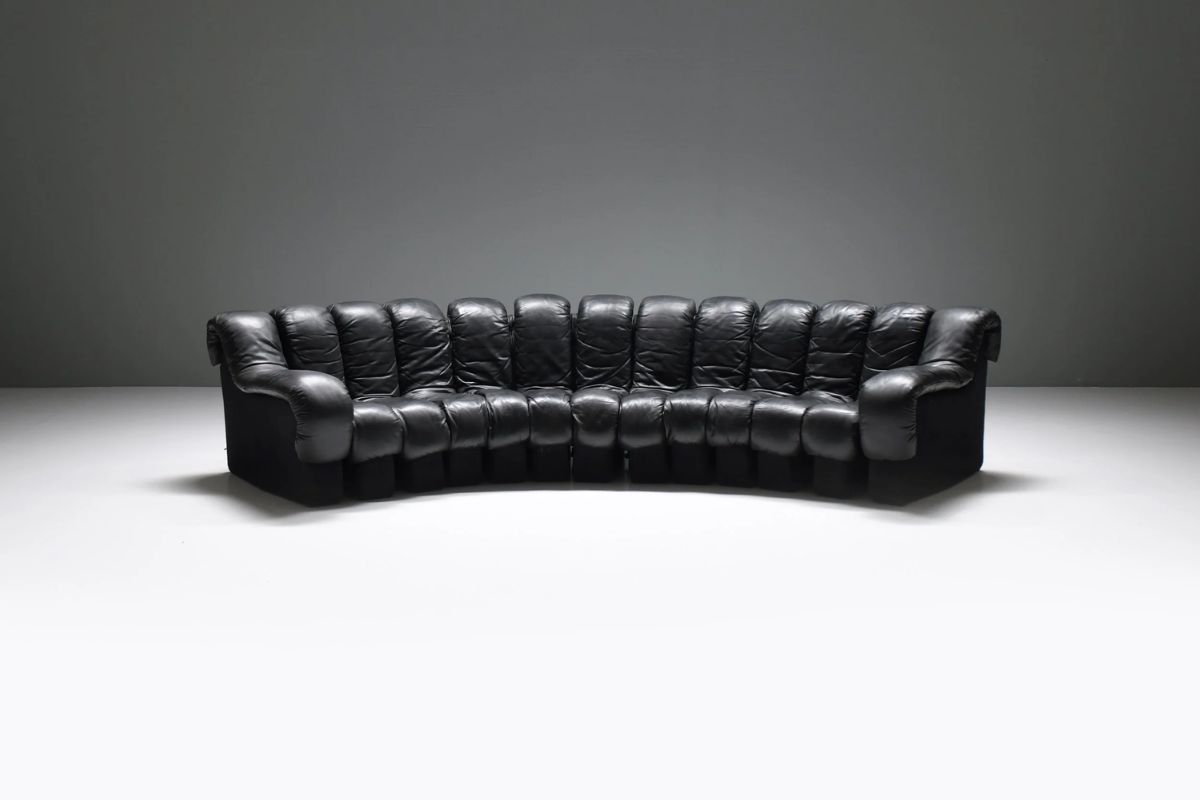
DS-600 is the definition of sculptural modularity: de Sede presents it as a system launched in 1972 , composed of single elements that can be added, connected to each other to create free compositions (from linear to very long serpentines).
It is a model that in 2026 often returns to large open spaces and scenographic projects, because it “builds” space. It is not the smartest choice for small environments: here the modularity is powerful, but requires space and space.
Charles (B&B Italia)
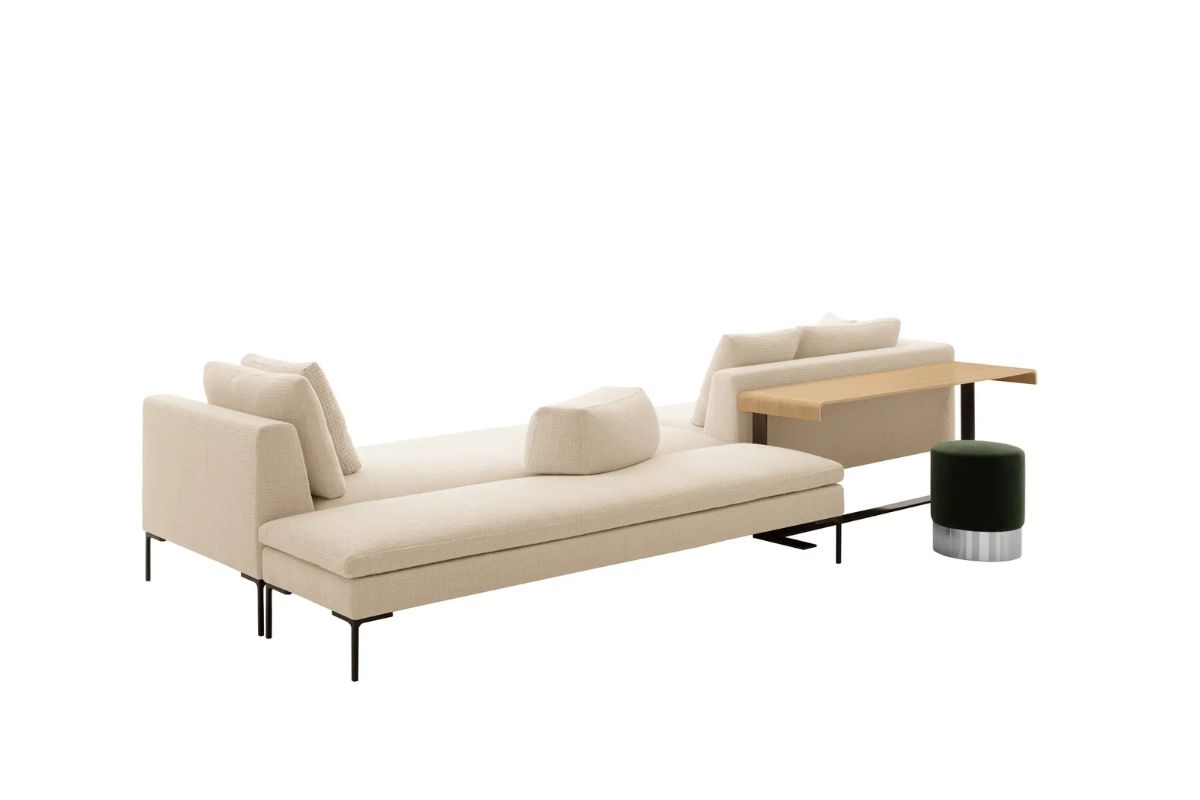
Charles is one of the most solid contemporaries to be included in a 2026 list: B&B Italia describes it as a sofa with a light image, recognizable for its inverted “L” shaped feet in aluminum and for an essential design that makes it very current even after years. It is attributed to the project by Antonio Citterio (1997) in many sector reports.
It is a “project” model that works well in medium and large living rooms, especially if you want an elegant, non-bulky and easily combinable sofa.
Le Bambole (B&B Italia)
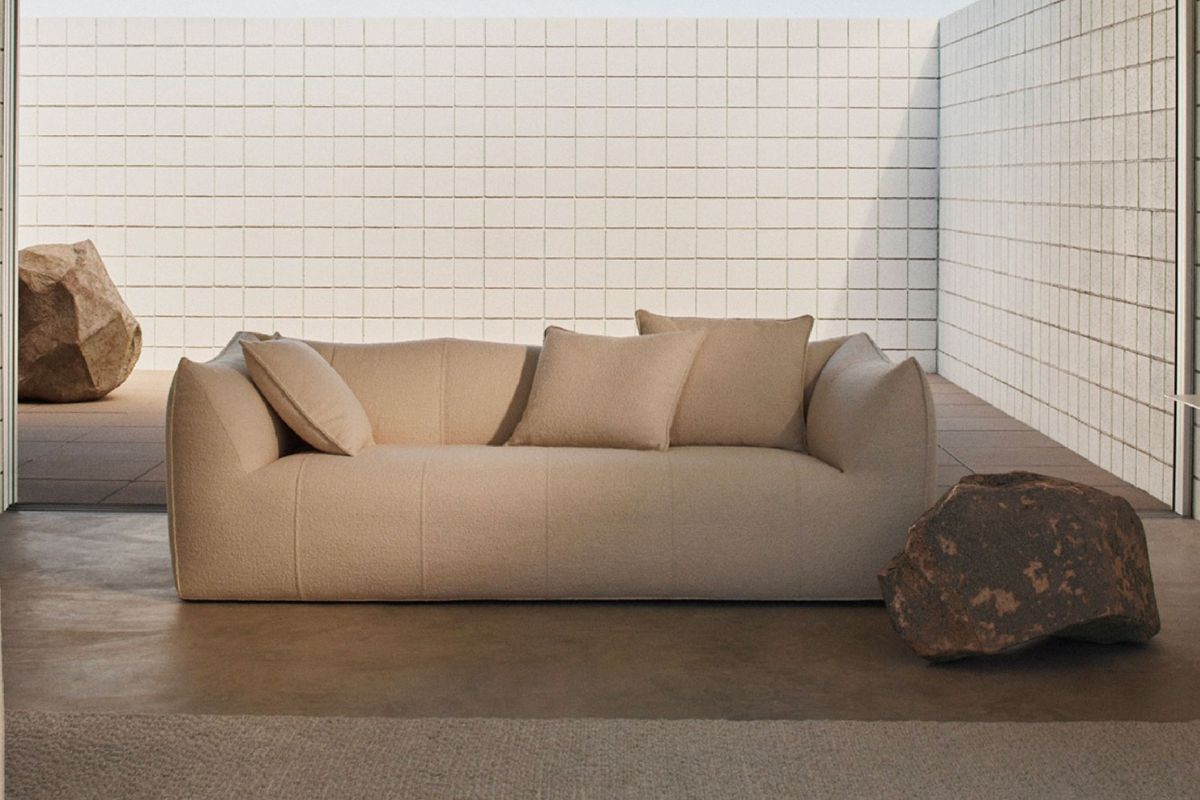
Le Bambole is an icon of Italian design and B&B Italia clearly frames it: original project from 1972 , awarded with the Compasso d’Oro in 1979 .
It is a sofa that in 2026 makes sense if you are looking for softness and a “full” aesthetic, very tactile, more emotional than geometric. Perfect in projects where the seat must be welcoming and recognisable, and where the shape itself becomes part of the language of the interior.
Lifesteel (Flexform)
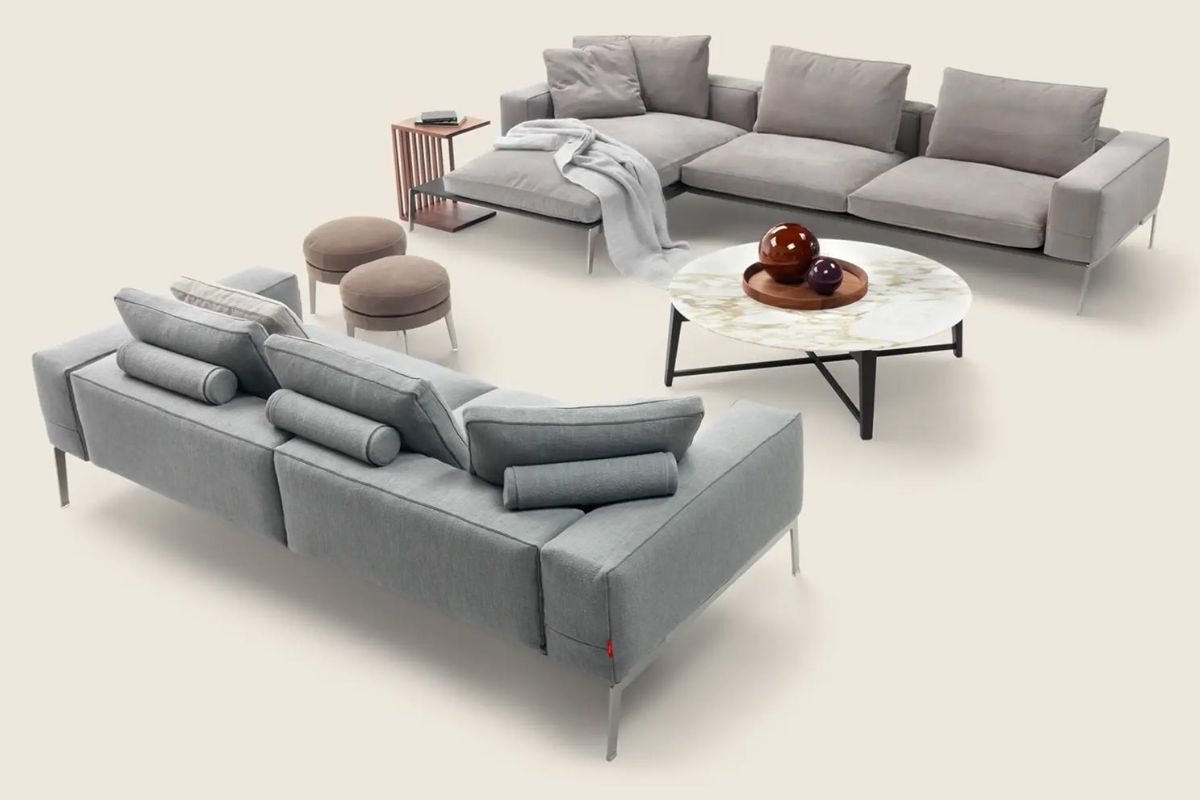
Lifesteel is an elegant and technical contemporary: Flexform describes it for the structure covered in leather which accommodates the down cushions (with internal insert) and for a light but precise image.
In various industry sheets it is indicated as a design by Antonio Citterio , consistent with the Flexform language of measured comfort and high-quality details.
It is a suitable model if you want a refined sofa, with material details (leather drawstring) and a contemporary profile that does not “scream”.
Comparative table of models: typology and context of use
| Model | Brand | Type | Ideal for | Useful note |
|---|---|---|---|---|
| David | BertO | Modular / modular | Contemporary living, tailor-made projects | Integrable technology (USB-C / wireless in some versions) |
| Chameleon | B&B Italia | Modular / iconic | Large open spaces, sofa as protagonist | Formhistorical larity, scenographic compositions |
| Groundpiece | Flexform | Linear / lounge | Daily comfort, deep seats | Low and deep profile |
| Togo | Ligne Roset | Iconic / lounge | Relaxation area, informal living | Low and soft seat, free posture |
| Maralunga | Cassina | Iconic / contemporary classic | Elegance + comfort, transversal use | Adjustable headrest, intelligent comfort |
| Tufty-Time | B&B Italia | Modular / informal | Open space, island compositions | System based on pouf + modules, 360° seating |
| LC2 | Cassina | Iconic / architectural | Studies, compound living | Modernist icon, more composed seat |
| DS-600 | de Sede | Modular / sculptural | Large spaces, scenographic set-ups | Serpentine compositions, highly modular |
| Charles | B&B Italia | Linear / contemporary | Elegant living, light proportions | Distinctive sign of the inverted L shaped feet |
| The Dolls | B&B Italia | Iconic / soft | Welcoming atmospheres | Full volumes, soft seat |
| Lifesteel | Flexform | Linear / contemporary | Refined interiors | Material details (structure with leather) |
| Harold | Meridians | Modular / architectural | Tailored, residential/contract projects | Linear/curved elements, high customization |
How much does a designer sofa cost in 2026: what it really depends on
When we talk about “designer sofa”, the price does not only depend on the brand: it depends above all on dimensions, configuration and materials . This is why two apparently similar sofas, seen in the photo, can have very different quotes. Understanding what really matters helps you read the proposals better, avoid distorted comparisons and decide where it is worth investing.
1) Linear or modular: the configuration changes everything
A linear sofa has a more predictable cost: choose size, upholstery and finishes. A modular, on the other hand, grows by the sum of elements (central, terminal, corners, chaise, pouf): compositional freedom is a real advantage, but it can significantly increase the budget if the composition is large or complex. In general, if you are evaluating a modular, the right question is not “how much does the sofa cost”, but how much does the composition I need cost .
2) Coverings: it’s not just aesthetics
Fabric and leather are not equivalent alternatives. Some fabricshigh-performance ones (resistant to wear, stains, pilling) affect the cost as much as or more than “decorative” coatings, because they work on durability and maintenance. Leather can increase the estimate significantly, especially when uniformity of yield and high quality is required on large surfaces. In practice: the covering is one of the first items that really shifts the price, more than the color or texture.
3) Comfort and padding: what you can’t see weighs
Two sofas may seem the same, but completely change in terms of seating and durability over time. Density and stratification of the padding, presence of more performing materials, quality of the cushions and the internal structure affect both comfort and the sofa’s ability to “hold up” over the years. If daily use is intense, this is one of the areas where it makes sense to invest: this is where a quality sofa really stands out.
4) Construction details and finishes
Feet, stitching, workmanship, special armrests, accessory elements: these are details that often seem marginal, but impact production and complexity. It also applies to some contemporary models with integrated functions (for example accessories or technical elements): these are choices that improve the user experience, but inevitably increase the cost of the configuration.
5) Actual dimensions and “scale” of the project
The price of a sofa grows very concretely with the scale: significant lengths, deep seats, island or U-shaped compositions increase materials, structure and coverings. This is why it is useful to first define the “sensible” size for your living room: often a slightly more compact, well-proportioned model works better in the space and keeps the budget more manageable.
How to read a quote without being fooled
If you want to compare two proposals seriously, always ask for the quote to be clear on:
-
configuration (elements included, measurements, accessories)
-
covering and fabric/leather category
-
cushions and padding (at least at the specification level)
-
possible removability and maintenance
-
delivery/assistance times and conditions
The point is not to find the cheapest sofa, but to understand what you are paying for : in design, the difference is often in the construction, not in the image.
Frequently asked questions about designer sofas
What is the difference between a modern sofa and a designer sofa?
A modern sofa above all describes a style (clean lines, contemporary volumes). A designer sofa, on the other hand, is a project that is also recognizable in its construction: studied proportions, consistent comfort, quality of materials and a formal language that stands up over time. In practice: modern can be a “trend”, design should be a “project choice”.
Is a modular sofa or a linear sofa better?
It depends on the space and how you experience the living room. Linear is simpler to manage and often more predictable in terms of dimensions and budget. Modular makes sense if you want to build a customized composition (open space, chaise, island) or if you think the house could change: but it must be designed well, otherwise you risk excessive volumes or uncomfortable elements.
Is fabric or leather better for a designer sofa?
Leather is elegant and, if of good quality, ages well, but can be more delicate with scratches and heat (especially with animals). The fabric offers more variety and is often softer visually; the difference is made by the texture and performance (resistance, cleanliness, pilling). The best choice is the one consistent with real use, room light and maintenance you are willing to do.
How to understand if a sofa is really of quality (not just beautiful)?
In addition to aesthetics, evaluate comfort and construction: the seat and backrest must support without immediately “giving way”, the stitching must be regular, the cushions well structured and the structure must not
Leave a comment