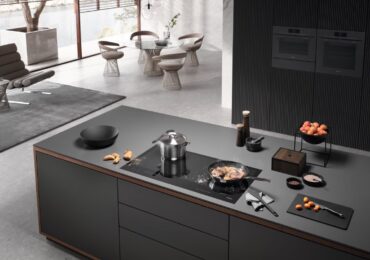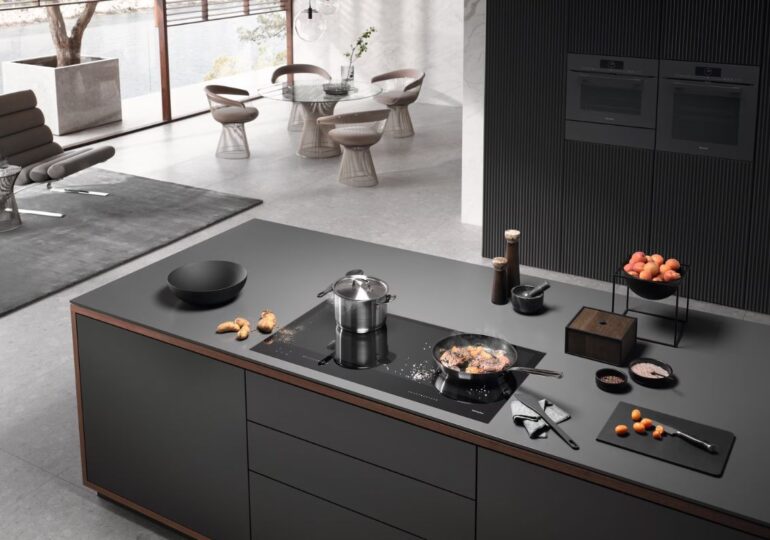
An induction hob cannot be chosen only “by brand”. You choose as you choose a project element: because it enters the design of the kitchen together with the top, the ventilation, the spaces under the worktop – and the power available in the house. It’s a technical decision, yes, but also a daily one: it changes the times, the cleanliness, the perceived noise, the way you actually cook.
The most searched question remains the simplest what is the best brand of induction hobs? but the answer that avoids mistakes is another: the brand guides, but the experience is determined by the series/model, power management and installation . That’s where induction becomes smooth, or forces you to “negotiate” with the meter every night.
Below you will find a selection of 7 best induction hob companies , which, in 2026, offer particularly solid proposals in this category: for each, a simple and readable motivation. Then we get into the criteria that really matter, so as to accompany you on a selection process that is closer to your needs, consistent with your cuisine and your way of experiencing it.
Best induction hobs 2026: the brands to know
1. Bosch: reliability and practicality in induction hobs
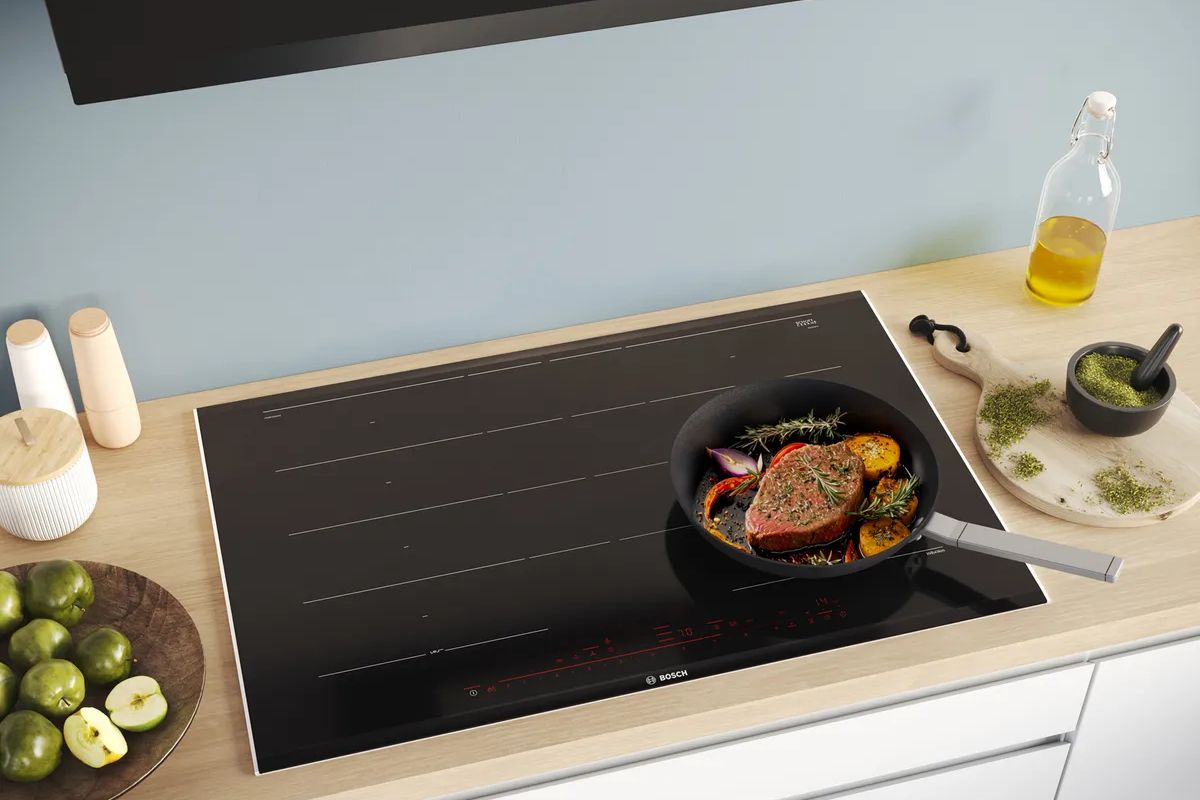
Among the best induction hob brands, Bosch is a highly popular choice for its balance between performance and ease of use. The range includes 60, 80 and 90cm models, often with useful features such as power management, dedicated timers and flex zones on some series. It is a suitable option for those who want an efficient and concrete induction, with a smooth and uncomplicated daily experience.
2. Siemens: control and technology for a contemporary kitchen
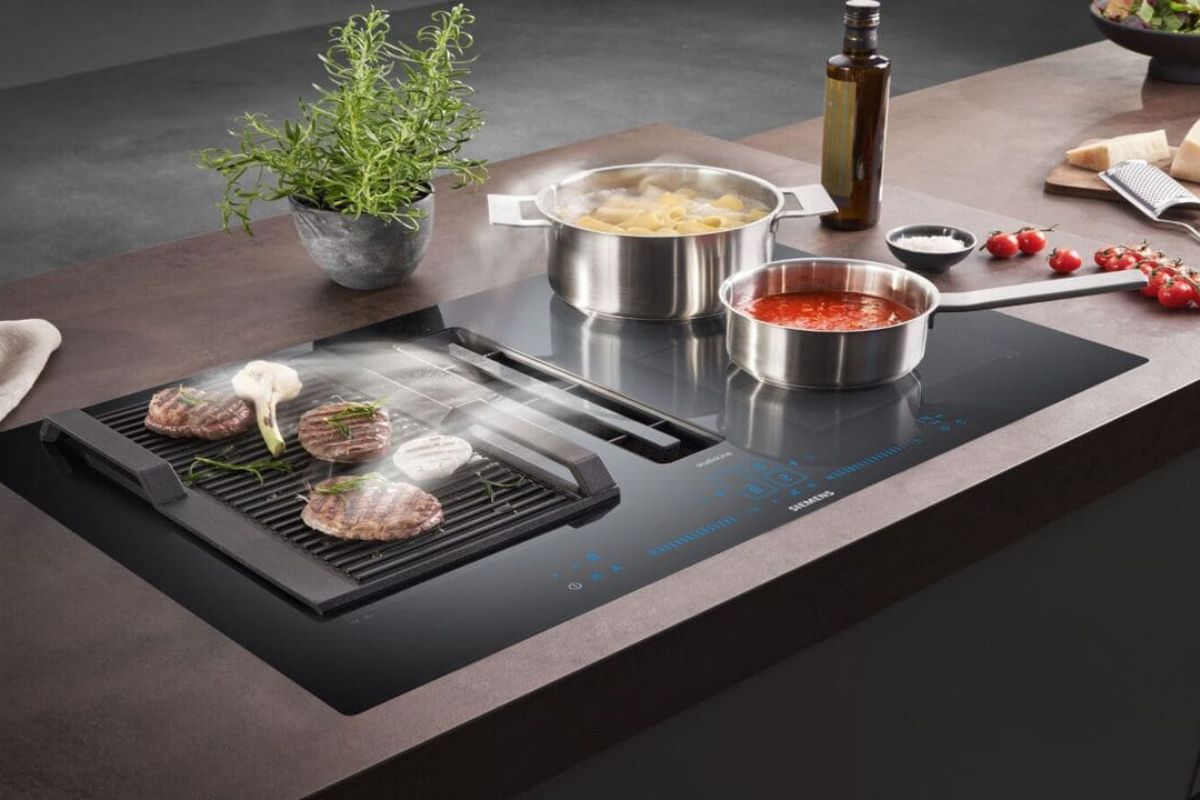
Siemens stands out among the most interesting brands for induction thanks to a more “technological” approach, which focuses on refined controls and advanced functions. In the range you will find induction hobs in different sizes (60 and 80 cm among the most requested), with flexible zones and power levels designed for precise cooking management. It is a suitable choice for those who love cooking with control and want a clear, responsive and modern interface.
3. AEG: balance between performance and useful features
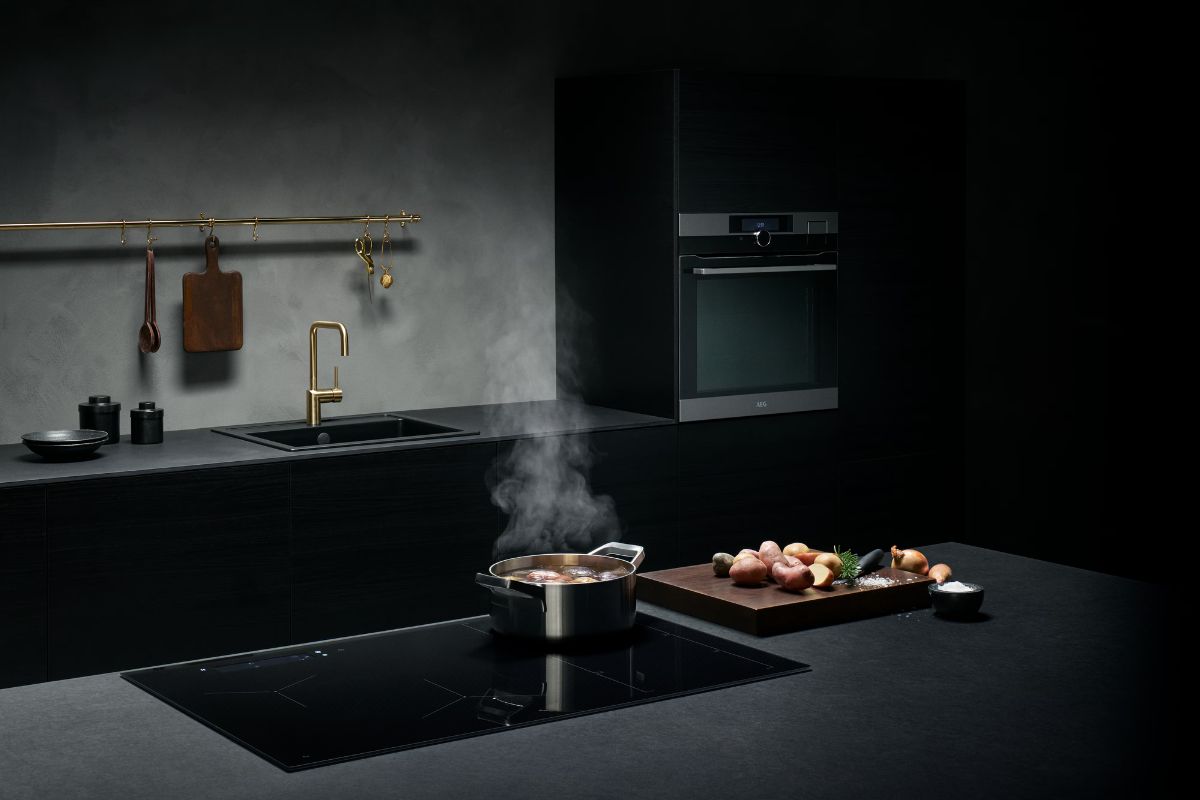
AEG is one of the brands to know for those looking for a complete induction hob, with practical functions and a good relationship between equipment and investment. The proposal includes models with expandable or flexible zones, intuitive controls and solutions that help you better manage power and cooking times. It is particularly interesting for frequent use, when the kitchen is used every day and a reliable and versatile product is needed.
4. Electrolux: ease of use and comfort in everyday life
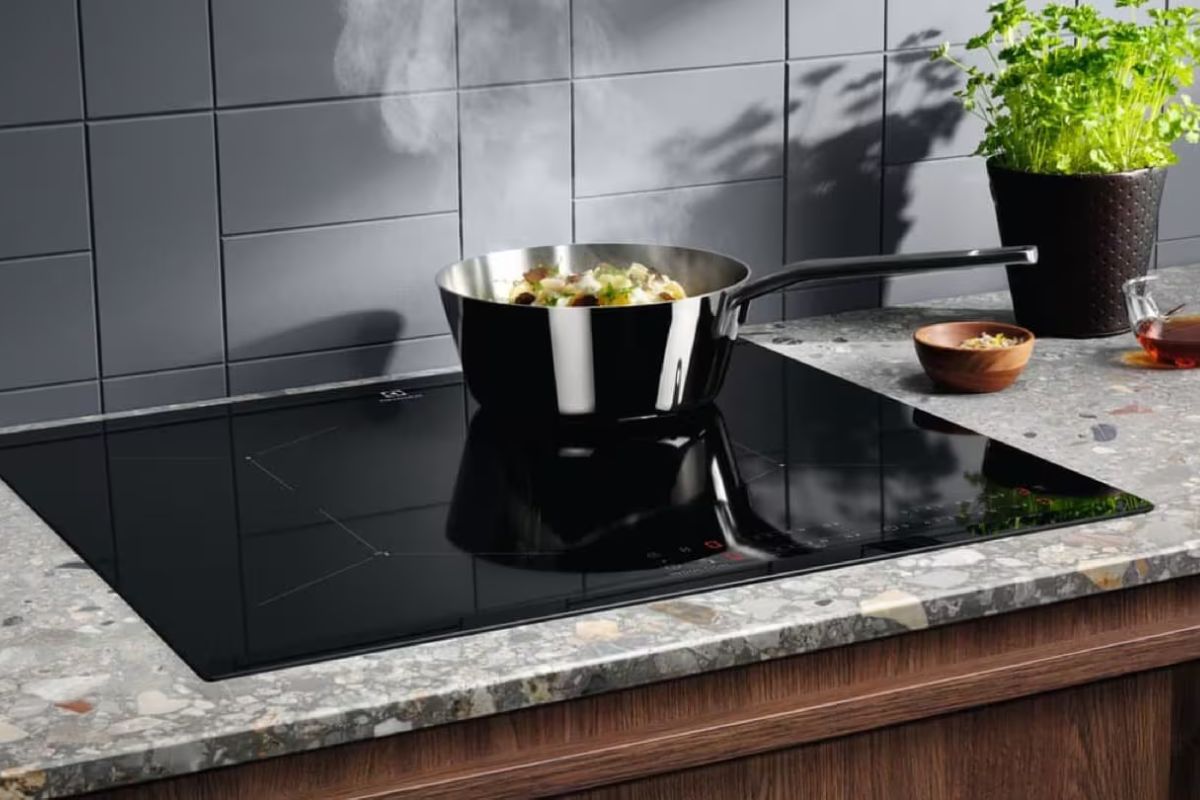
Electrolux is a name to consider if you want an easy-to-use induction, with a linear and friction-free interaction experience. Induction hobs are available in different sizes, with configurations also suitable for compact kitchens and for those looking for clear controls and well-made essential functions. It is a choice that works well when the goal is to cook with practicality,maintaining order and cleanliness with minimal effort.
5. Miele: high-end and attention to detail for a “definitive” kitchen
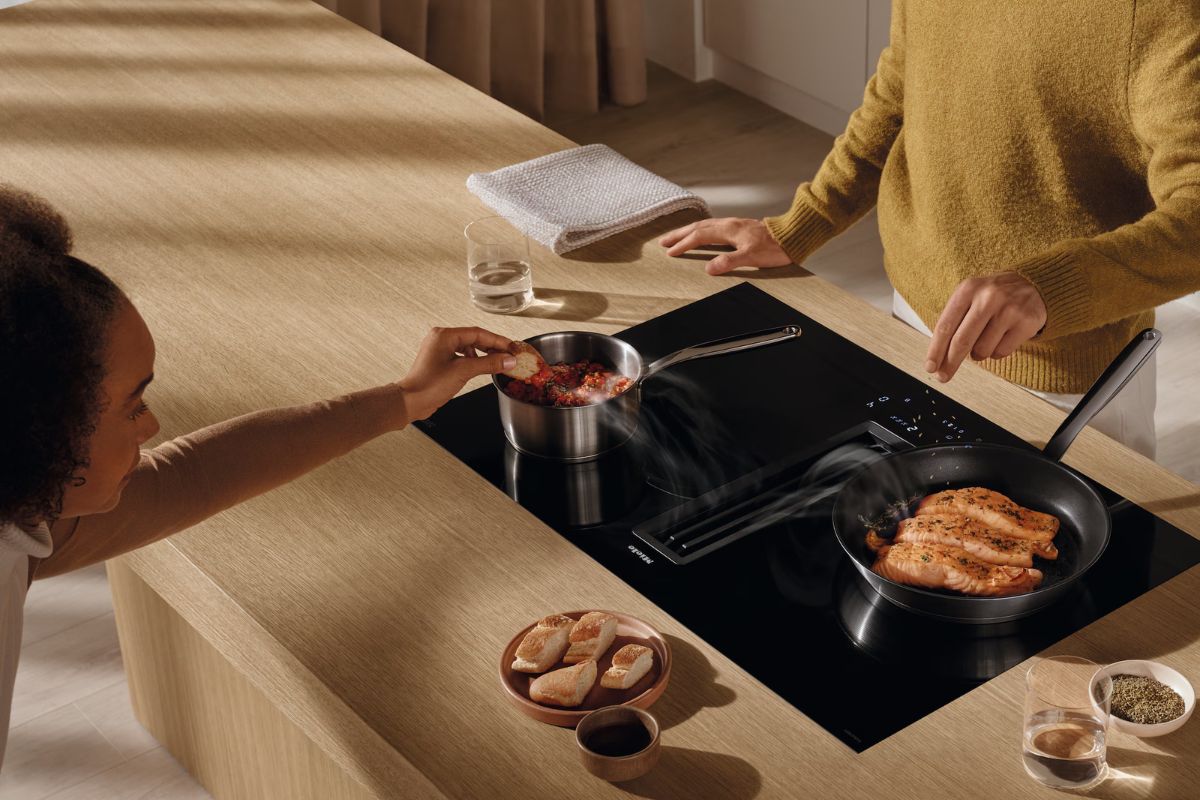
Among the premium brands, Miele is often chosen by those who plan a long-term kitchen and want a very high perceived quality. The range includes induction hobs with refined finishes, advanced functions and cooking management designed to be precise and constant. It is suitable for those looking for a superior experience, with attention to detail and an overall feeling of solidity.
6. Smeg: aesthetics and coherence with the kitchen project
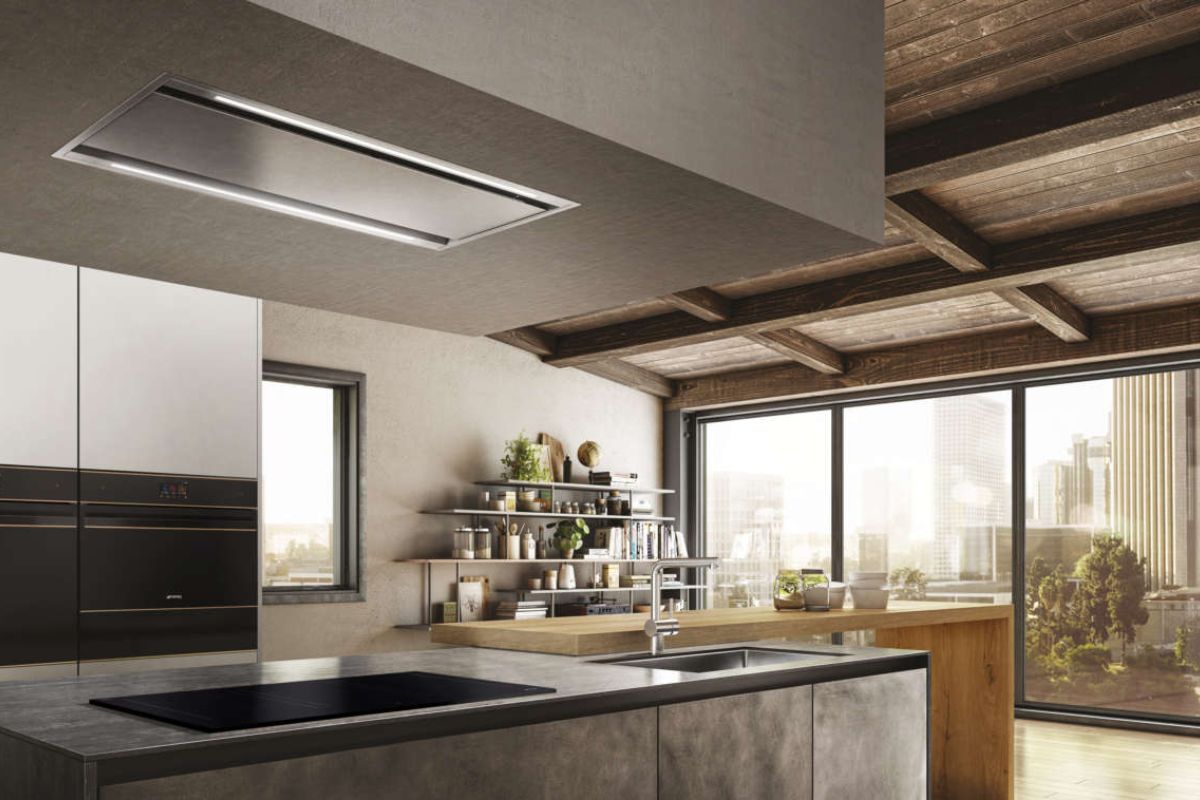
Smeg is a brand to keep in mind when induction must be included in a kitchen project where style and identity also count. In addition to performance, attention goes to aesthetic coherence with furniture, finishes and composition, especially in open kitchens or open spaces. It is an interesting choice for those who want an induction hob that communicates well with the design of the environment, without giving up essential functionality.
7. Whirlpool: value and concreteness for a pragmatic purchase
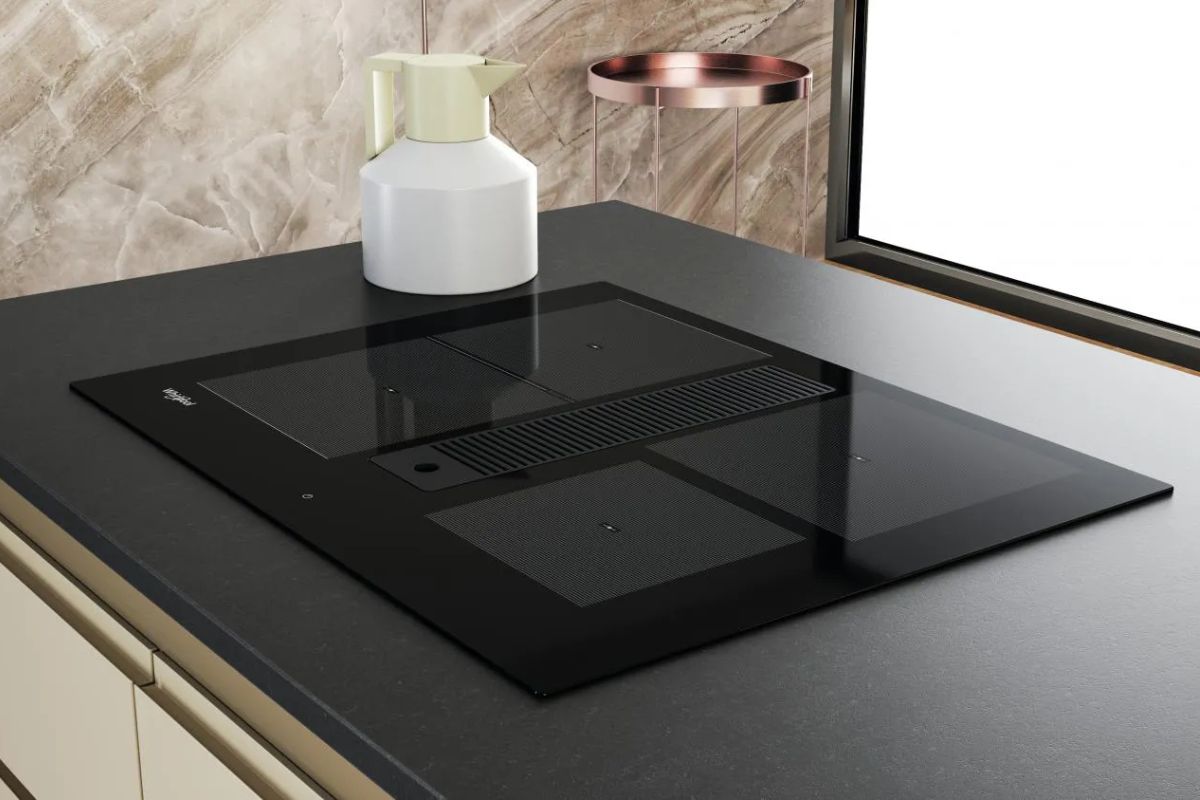
Whirlpool is a solution to consider if you are looking for a functional and concrete induction hob, with an often competitive positioning. The range includes models designed for practical daily use, with useful functions and configurations suitable for different space needs. It is suitable for those who want to switch to induction without necessarily chasing the top of the range, maintaining a good balance between performance and budget.
How to choose a 2026 induction hob: practical criteria before purchasing
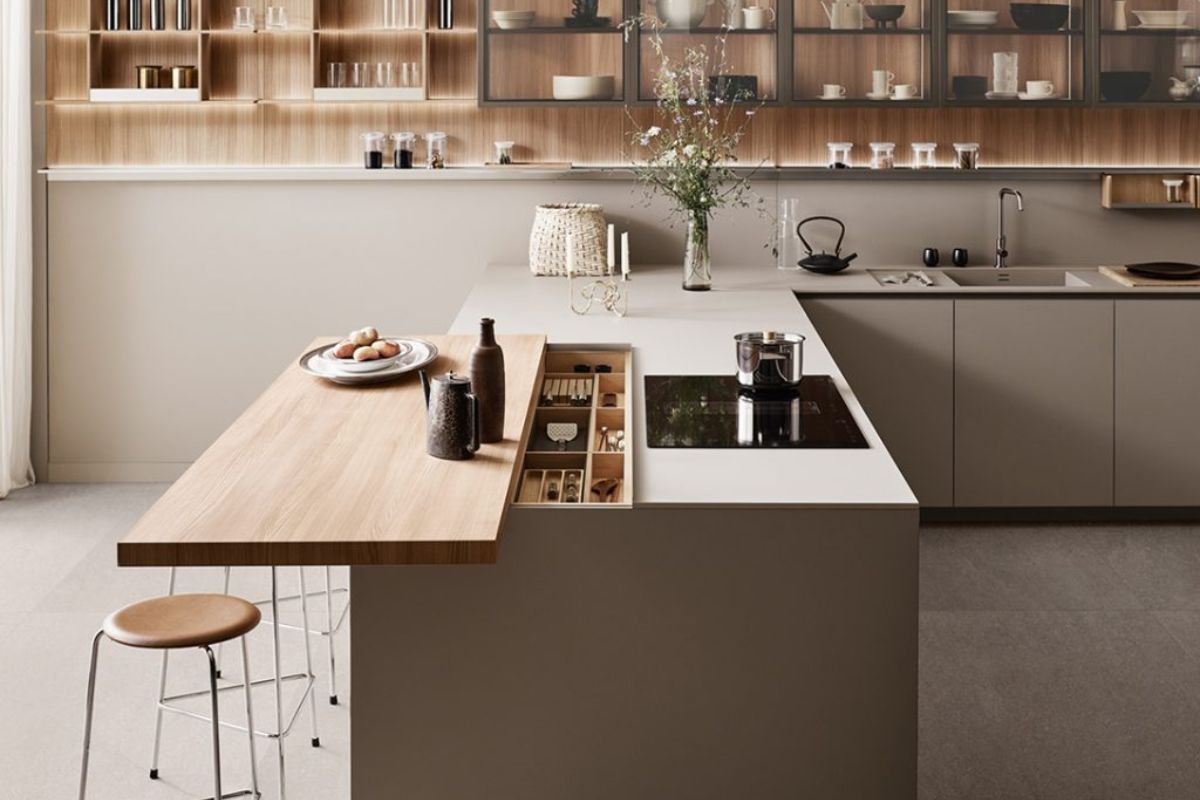
1. Power and kW management: power management counts more than the watts on the board
Before looking at functions and design, check how much power you really have available at home (3 kW, 4.5 kW, 6 kW) and above all whether the plan offers intelligent management of consumption. The power management allows you to set a maximum limit and distribute the power between the zones, avoiding meter jumps and making use more fluid. It is a decisive criterion for those who live in an apartment or have standard systems, because it transforms induction from “powerful on paper” to truly practicable every day.
2. Dimensions: 60, 80 or 90 cm (it’s not just a question of space)
The size of the hob changes the way you cook. A 60 cm is perfect for compact kitchens and medium use; a 7580cm offers more freedom with two large pans; a 90 cm is ideal if you cook often and want multiple separate “stations”. Don’t choose just based on the top: also consider the lateral distances, the size of the pots and the presence of the hood, especially in open spaces where the kitchen is also a living area.
3. Cooking zones: real diameter, flexibility and bridge function
Not all areas are the same: what makes the difference is the actual diameter and the possibility of adapting to large pots or pans. The bridge/flex functions (joining two zones) are useful if you often use large saucepans, griddles or fish basins. A hob with well-sized areas immediately feels more comfortable and “relaxing”, because it doesn’t force you to have joints or compromises when you cook.
4. Commands: slider, touch and readability (ergonoit’s all mine)
The induction hob is experienced through the controls: if they are unresponsive or confusing, the experience is ruined even with an excellent product. Consider clear sliders, well-scaled power levels and immediate functions (timer, pause, child lock). In a modern kitchen, the ergonomics of the controls are as concrete a criterion as the power: it makes cooking quicker, more precise and less stressful.
5. Noise: Fans, Vibrations and What to Really Expect
An induction hob can make noise due to the cooling fans and, in some cases, due to interaction with certain pans (bottom vibrations). This is normal, but can become annoying in open spaces. Here, construction quality, correct installation and under-top ventilation count: well-done assembly greatly reduces perceived noise and makes the experience more pleasant.
6. Installation: thickness of the top, ventilation and compatibility with oven and drawers
Induction requires attention to the project: thickness of the top, space for ventilation, possible presence of the oven underneath, drawers and crosspieces. A well-chosen but poorly installed floor loses performance and comfort (and can also increase noise). Before purchasing, it is worth checking the technical data sheets and built-in measurements: it is one of the points that separates a “beautiful in the photo” kitchen from a kitchen that is functional every day.
7. Cleaning and finishes: edge, flush-top and resistance to daily use
Glass ceramic is easy to clean, but it changes a lot if the top has frames and edges that retain residues or if it is installed flush with the top (aesthetically perfect, but requires precise installation). If you cook often, also consider practicality: a worktop that is easy to clean and well integrated into the worktop saves you time and keeps the kitchen tidier.
8. Compatible pans: quick check and what should be replaced
For induction you need pans with a suitable base: the simplest test is the magnet (if it sticks, it’s generally fine). You don’t have to change everything immediately: it is often better to gradually replace the parts that make them worse (they heat up irregularly, whistle, are unstable). The right pans make induction quieter, faster and more precise.
9. Integrated hood or traditional hood: design choice, not fashion
Induction hobs with integrated hood are especially interesting on an island or when you want a very clean kitchen composition. However, they require a more rigorous project: installation, filter maintenance, accessibility and real suction effectiveness. In many kitchens, a good traditional hood remains the simplest and most effective solution. Here the best choice is the one consistent with the space and the actual use of the kitchen.
2026 induction plan: common mistakes to avoid
1. Choose based on the “rated” watts and that’s it
One of the most frequent mistakes is to be guided only by the declared power. In real use it matters much more how the plan manages and distributes energy between zones, especially if you have a standard home system. A model with well-made power management can be more comfortable and “smooth” than a more powerful one on paperbut less governable.
2. Ignoring power management (and then arguing with the meter)
If you have 3 kW or at least a limited margin at home, power management is not an extra: it is what makes induction practicable every day. Not considering it means risking continuous power cuts or having to cook “halfway”, with a frustrating experience. Before purchasing, always check the presence and clarity of this function.
3. Underestimating the size and layout of the zones
Two or four zones don’t mean anything if you don’t know how big they are and how they are arranged. The typical result is a surface where large pans don’t fit, get in the way, or work poorly because the area is smaller than the bottom. A quick check on real diameters and bridge/flex functions avoids the most common mistake: buying a “nice” but uncomfortable top.
4. Buying a 60cm when you actually need more space
The 60 cm is excellent, but it is not always the right choice. If you often cook with two large pans, a 7580 cm radically changes the experience. The mistake is choosing the size just because it “fits into the top” without thinking about your way of cooking: cooking is a repeated gesture, and space becomes comfort.
5. Neglecting ventilation and installation (then noise and performance worsen)
An induction hob requires under-top ventilation and correct assembly. If the space is insufficient or the installation is sloppy, noise and overheating increase, and efficiency can drop. It is a typical mistake because you don’t see it “in the showroom”, but you feel at home every day.
6. Do not check compatibility with the oven and under-counter drawers
Especially in compact kitchens, induction often coexists with an oven underneath and nearby drawers. If you do not check the measurements, distances and manufacturer’s indications, you risk complicated assembly or forced solutions. Before purchasing, always check the technical data sheets and installation requirements: it avoids surprises during assembly.
7. Thinking that “all pots and pans are fine” (or changing everything unnecessarily)
Some pans work poorly on induction (heat unevenly, whistle, are unstable). The mistake can be twofold: not checking compatibility, or throwing everything away without criteria. The smartest choice is to check with a magnet and gradually replace only the parts that perform worse.
8. Choose the integrated hood only for aesthetics
The integrated hood is a design choice, not a “style” shortcut. If you do not carefully evaluate the system, filter maintenance and real effectiveness, you risk a beautiful but not very functional system, especially if you cook often. In many situations a good traditional hood remains simpler and more reliable.
9. Ignore noise in open spaces
In an open space everything is heard more: fans and vibrations become part of the living room. The mistake is not considering it during the choice and installation phase. If the kitchen is open, choose a model and installation that keeps perceived noise within acceptable levels: it is a detail that has a major impact on the quality of the home.
How much does an induction hob cost in 2026: indicative price ranges (by brand)
| Brand | Model (approximately 60 cm) | Indicative price from | Model (approx. 7580 cm) | Indicative price from | Model with integrated hood | Indicative price from |
|---|---|---|---|---|---|---|
| Bosch | PUE611BB5J | 249 | PIV83KHC1E (80 cm) | 616 | | |
| Siemens | | | EX875LVC1E (80cm) | 726 | | |
| AEG | IAE64843FB (SenseFry) | 1,159 | | | | |
| Electrolux | LIL61443C | 291 | | | | |
| Honey | KM 7466 FR 125 Edition | 1,099 | | | KMDA 7272 (with suction) | 2,499 |
| Smeg | SI2641D | 284 | SI1B2742D (75cm) | 377 | | |
| Whirlpool | WL B8160 NE | 274 | WF S7977 CPNE (77cm) | 444 | WVH92KFKIT/1 (with suction) | 1,404 |
Note: indicative prices from (end of February 2026). May vary by promo, availability and shipping costs.
Which induction hob is best suited to your needs
There is no absolute “best”: there is the one that is most consistent with how you cook , with the power available and with the design of your kitchen . Below you will find a quick comparison, with pros and cons, to orient yourself without wasting time.
| If your need is | The most suitable choice | Pros | Against |
|---|---|---|---|
| Balanced purchase, without complications | Bosch | Wide range, solid solutions, good daily experience | The differences between series matter a lot: the right model must be chosen |
| You want more technology and control | Siemens | Well-finished interfaces, advanced functions, often excellent on 80 cm cuts | Higher prices on average on “interesting” series |
| You cook often and want a good compromise | AEG | Practical functions “for intense use”, complete proposal on high series | As the functions increase, the price increases rapidly |
| You want ease of use and practicality | Electrolux | Linear experience, often very competitive on price | Less “push” on premium features compared to top of the range |
| You want a definitive, high-end kitchen | Honey | Premium perceived quality, long-term setting | High investment, only makes sense if you know what you are paying for |
| The kitchen design and aesthetics are central | Smeg | Aesthetic coherence, choice of “language” for open kitchens | Here too the series makes the difference: don’t choose just for looks |
| You want to spend well and stay on a controlled budget | Whirlpool | Good value, pragmatic solutions, often affordable entry prices | Attention is needed to layout zones and equipment so as not to lose too much comfort |
| You want a clean island and integrated extraction | Induction with integrated hood (Miele/Whirlpool) | More essential composition, island design solution | Requires design and maintenance: it’s not just the wow effect |
If you have 3 kW (or a standard system)
With 3 kW induction works very well, but you have to focus on two things: power management and well-sized areas . Generally, Bosch, Electrolux and Whirlpool in the more balanced series are sensible choices, because they allow you to cook fluidly without necessarily chasing the top of the range. Avoid “hyper powerful” models if you can’t manage them: a manageable plan is better than a brilliant one only on the card.
If you cook often (family, several pans together)
Here the priority becomes real space and comfort: 7580 cm cut , comfortable zones and, if possible, bridge/flex . In this scenario, Siemens (for more advanced set-ups) and AEG (if you are looking for useful functions for intense use) are often indicated. If the kitchen is your “laboratory”, you can feel the difference immediately: fewer joints, more rhythm, fewer compromises.
If you have an open space and fear noise
In open spaces the noise is perceived more: fans and vibrations become part of the living room. Here construction quality and above all under-top installation/ventilation count. If you want a more “definitive” and refined approach, it makes sense to look at medium-high and premium ranges (even Miele), but without forgetting the key point: a good model installed well is often worth more than a poorly mounted top of the range.
If you are designing a kitchendefinitive (and you want a long-term choice)
When the objective is a kitchen that lasts and remains consistent over time, the choice can move towards premium brands such as Miele , or towards solid brands with high-end series. Here you pay above all for ergonomics , perceived quality and a certain continuity of range. It makes sense if you know what you want: controls, zones, finishes and an experience that doesn’t get tired.
If the kitchen design is central (open kitchen, strong aesthetic project)
If the top must communicate with materials, tops and composition, Smeg is a choice to consider: not only for aesthetics, but for overall coherence. The advice is simple: choose the experience (zones and controls) first, then the look. A beautiful but uncomfortable piano can be seen every day, even when it is turned off.
If you want a clean island and integrated extraction
The “worktop with integrated hood” solution makes sense especially on an island or when you want a very essential composition. It’s a project choice: in addition to the price, you have to take system and filter maintenance into account. In this logic, the most convincing systems are those designed as a single product (not as a gadget), and must be chosen with attention to actual cooking habits.
Other Posts
- Related Articles
- More from Author
No related posts.