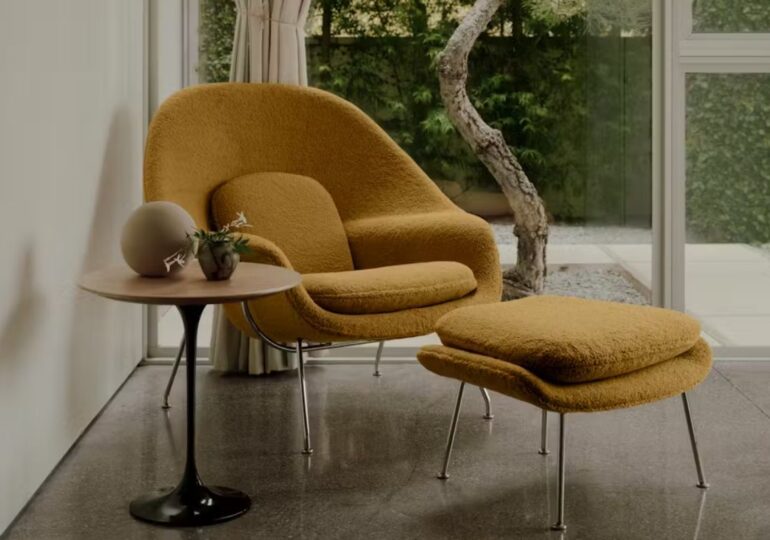
There is a material that in recent years has won the hearts of interior designers, architects and furniture enthusiasts: the bouclé fabric . Soft, enveloping, with its unmistakable texture made of small curls and knots, it has become a symbol of elegance and comfort. We see it covering sofas with sculptural shapes, iconic armchairs, poufs and headboards, transforming every room into a sophisticated and tactile space.
The success of bouclé is not just an aesthetic question: its charm also lies in its ability to evoke warmth and welcome while remaining extremely chic. The term “bouclé” derives from the French boucler , which means “to curl” or “to close in a ring”: a direct reference to its processing, which creates that typical three-dimensional and material effect.
What is bouclé fabric
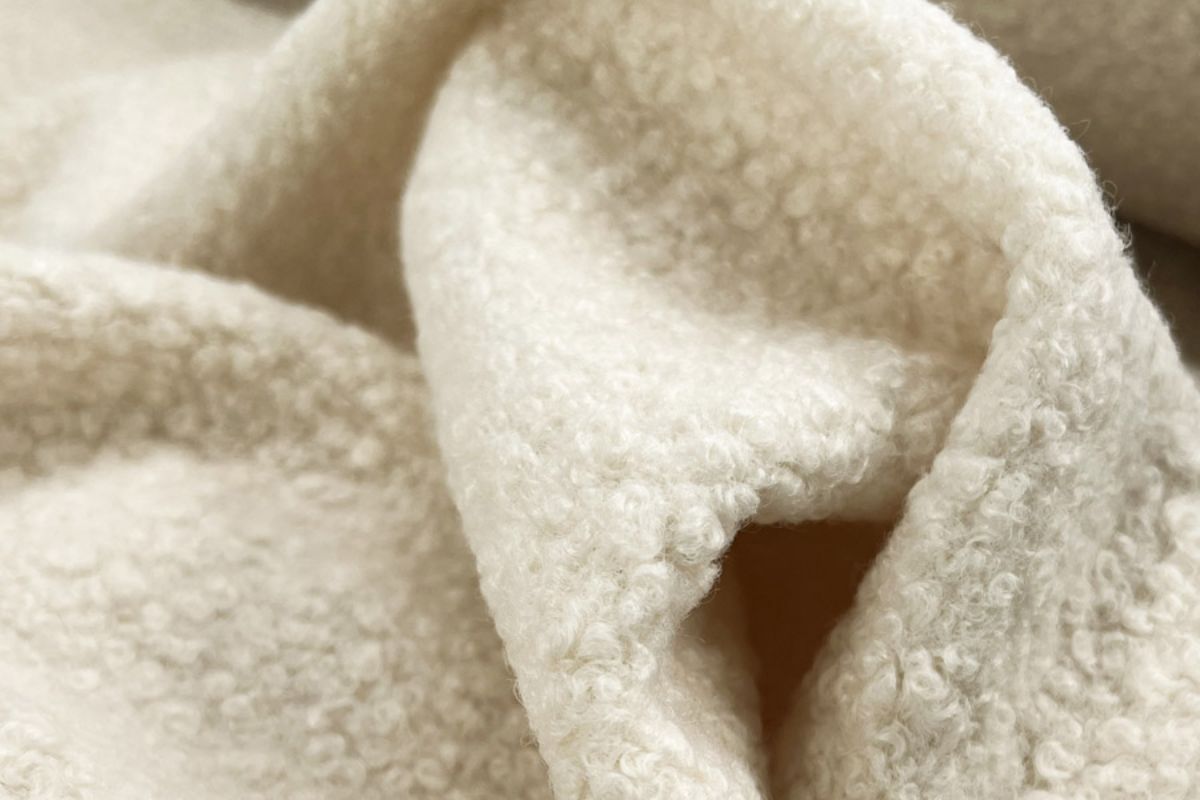
The bouclé is a fabric characterized by a surface rich in rings and curls, obtained by weaving yarns with variable tension. Its processing can be done with natural fibers such as wool, cotton or linen, or with mixed and synthetic fibers to increase its resistance.
Unlike a smooth fabric, bouclé has a deliberately irregular appearance, which constitutes its charm: each weave seems unique, with a pleasantly soft hand. It is no coincidence that it has become synonymous with “cozy luxury” furnishings, perfect for those who want a balance between elegance and a feeling of comfort.
Today bouclé comes in different palettes, from warm whites to pearl greys, up to more decisive tones such as forest green, midnight blue or terracotta, demonstrating its versatility in both minimalist and eclectic contexts.
History and icons of bouclé fabric
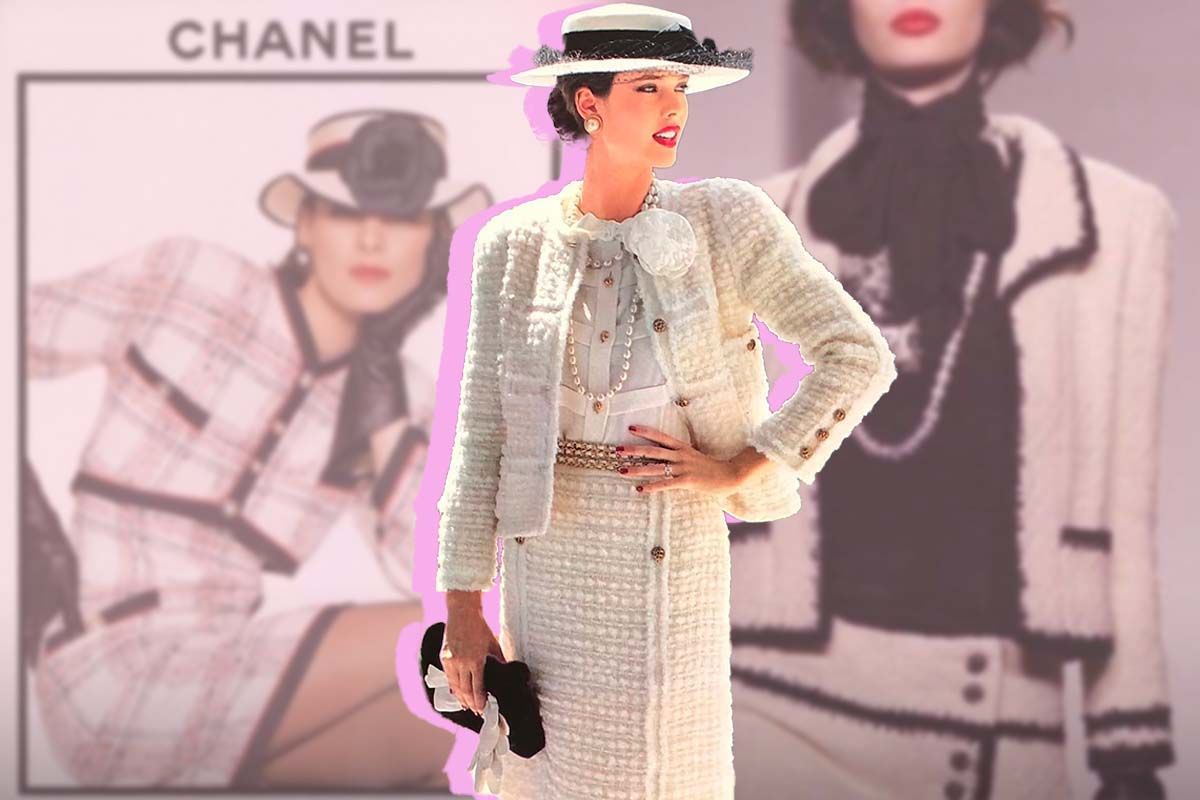
The bouclé fabric has origins that lie in the world of fashion even before furniture. In the 1950s, Coco Chanel made it famous with her iconic suit: a structured but comfortable jacket, which revolutionized the women’s wardrobe of the time. That fabric rich in texture, elegant but informal, embodied a new concept of luxury: less rigid, closer to everyday life.
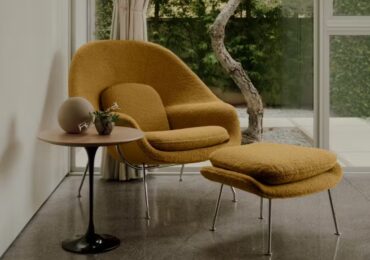
Shortly after, bouclé entered homes thanks to the aesthetics of the masters of Scandinavian and Italian design . Armchairs such as the Womb Chair by Eero Saarinen for Knoll or the Bouclé Chair by Pierre Jeanneret became symbols of organic modernism, where comfort was considered an integral part of the design.
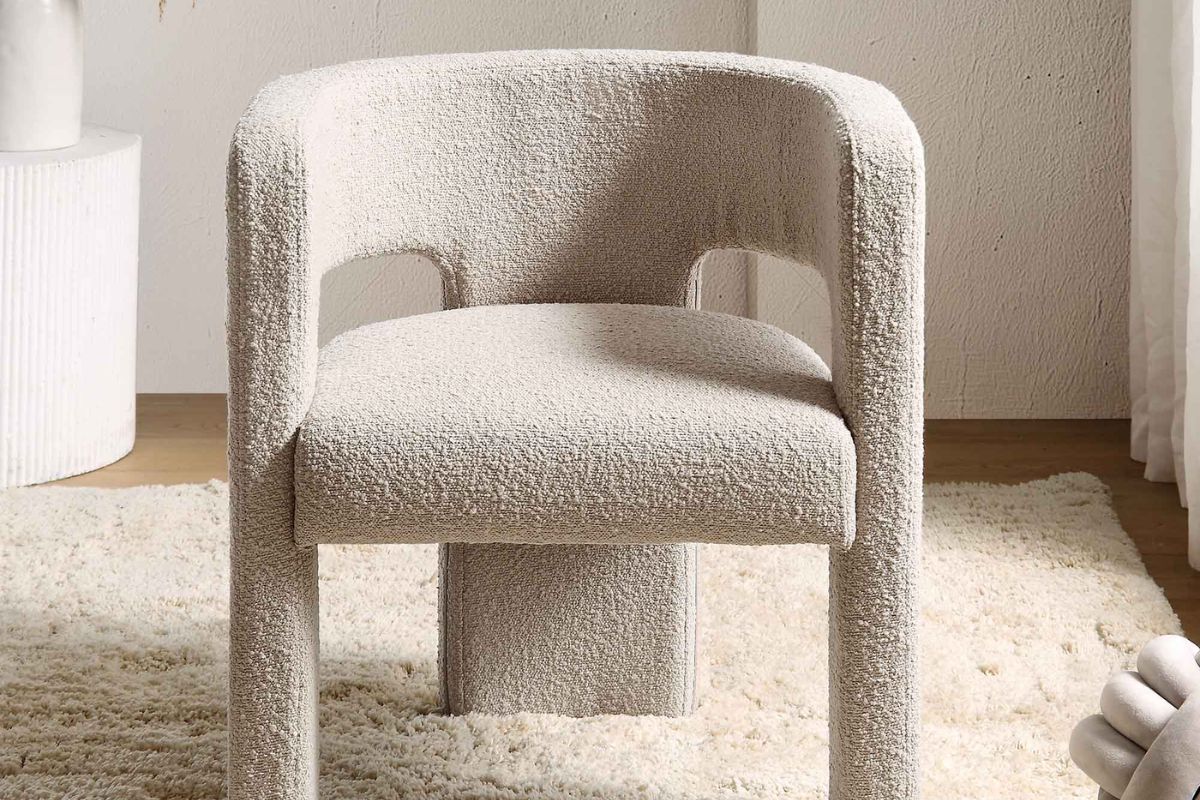
In the 60s and 70s, bouclé established itself as the covering of choice for sofas and seats with a soft and enveloping appearance, following the taste for rounder and more informal shapes. Today it is experiencing a new season of glory, thanks to the desire for welcoming, tactile and enveloping interiors. It is no coincidence that high-end brands from B&B Italia to Minotti , from Ligne Roset to Gubi use it to cover their most iconic models.
Why bouclé is back in trend
The return of bouclé fabric in interior design is not accidental. Its popularity responds to three great needs of contemporary living:
-
Sensory comfortle : neuroscience and design have shown that tactile and enveloping surfaces increase psychological well-being. The bouclé, with its irregular texture, stimulates the sense of touch and gives a perception of visual warmth.
-
Soft minimalism : in recent years interiors have abandoned the austerity of colder minimalism to embrace a softer approach, made of curved volumes, neutral palettes and welcoming materials. Bouclé fits perfectly into this trend, becoming the protagonist of sculptural sofas and enveloping armchairs.
-
Chromatic versatility : from milk and cream nuances to saturated tones such as forest green or ultramarine blue, bouclé manages to dialogue with both total white interiors and environments rich in contrasts.
Today we see it in collections of international brands such as Gubi (with the Pacha Lounge Chair), B&B Italia (sofas and armchairs in bouclé version), Cassina and Ligne Roset , which have relaunched some historical pieces by covering them with this material.
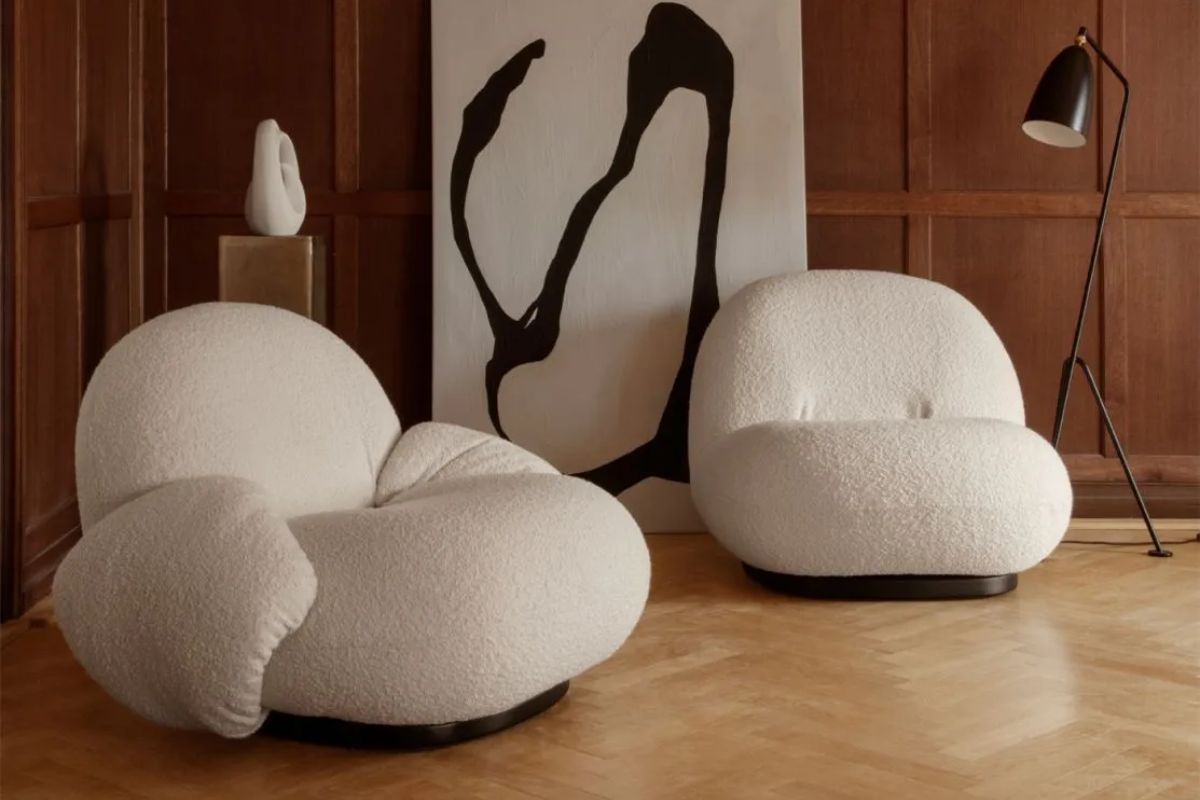
How to use bouclé fabric in every environment
Bouclé is one of those materials that can live throughout the home, but each environment requires a different approach to enhance its beauty.
Living room: the kingdom of bouclé
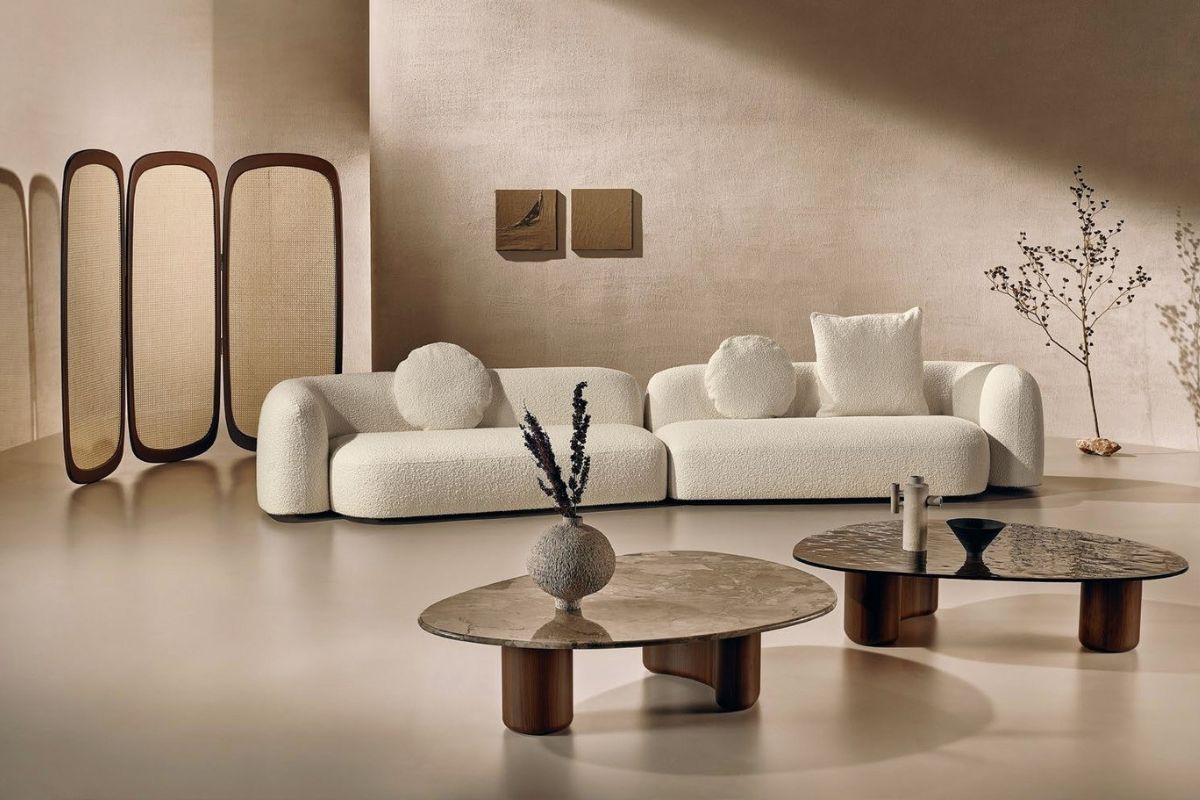
The living room is the ideal environment for experimenting with bouclé.
-
Protagonist sofa: choose a sofa with soft shapes, like the Mario Bellini Camaleonda covered in cream bouclé, for a sculptural and welcoming effect.
-
Armchairs and poufs: if you prefer a more discreet touch, insert single armchairs (for example the Little Petra by Viggo Boesen for &Tradition) or rounded poufs, perfect for creating a reading corner.
-
Pairings: the bouclé is enhanced when combined with tables in white marble, natural wood and satin metals.
Bedroom: softness and intimacy
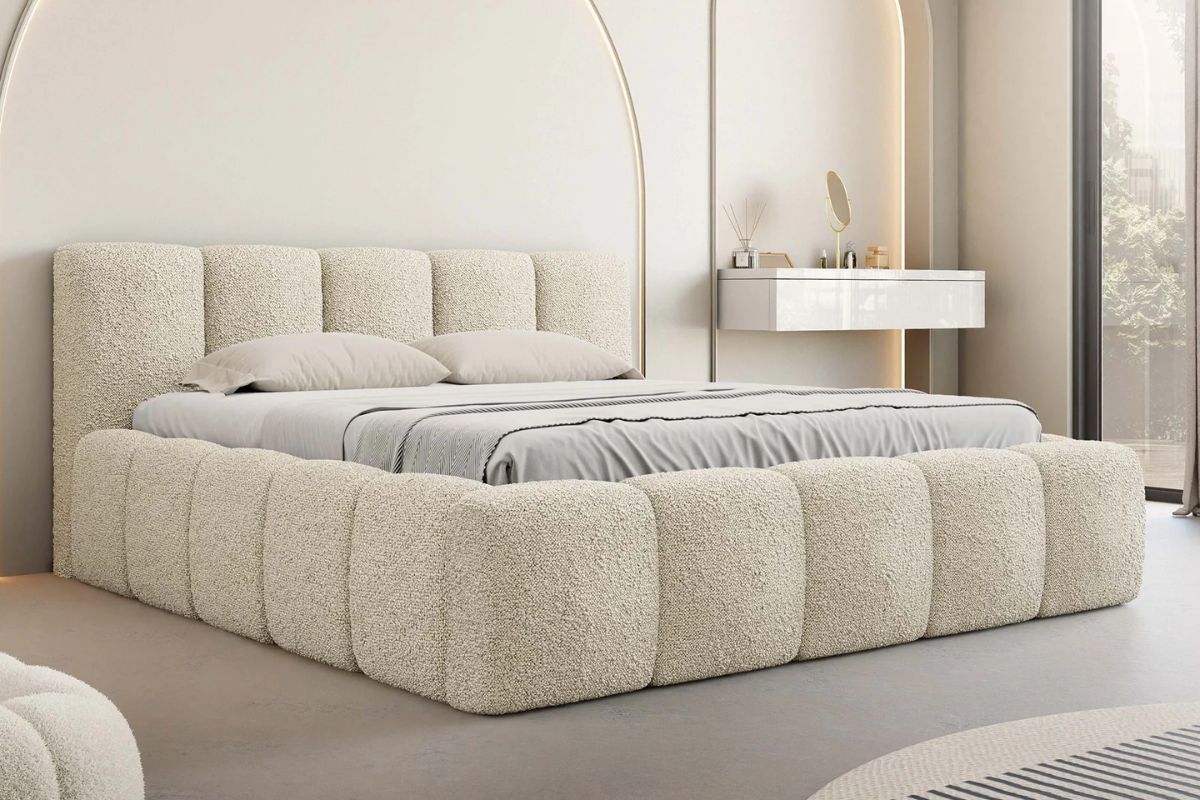
In the sleeping area , the bouclé becomes an invitation to relaxation.
-
Headboard: covering it in bouclé gives it a couture look and increases comfort.
-
Seats at the foot of the bed: a bench or pouf covered in bouclé makes the room more complete.
-
Recommended palette: warm neutral tones such as cream, sand and pearl gray for an enveloping look.
Studio and hybrid spaces: functional elegance
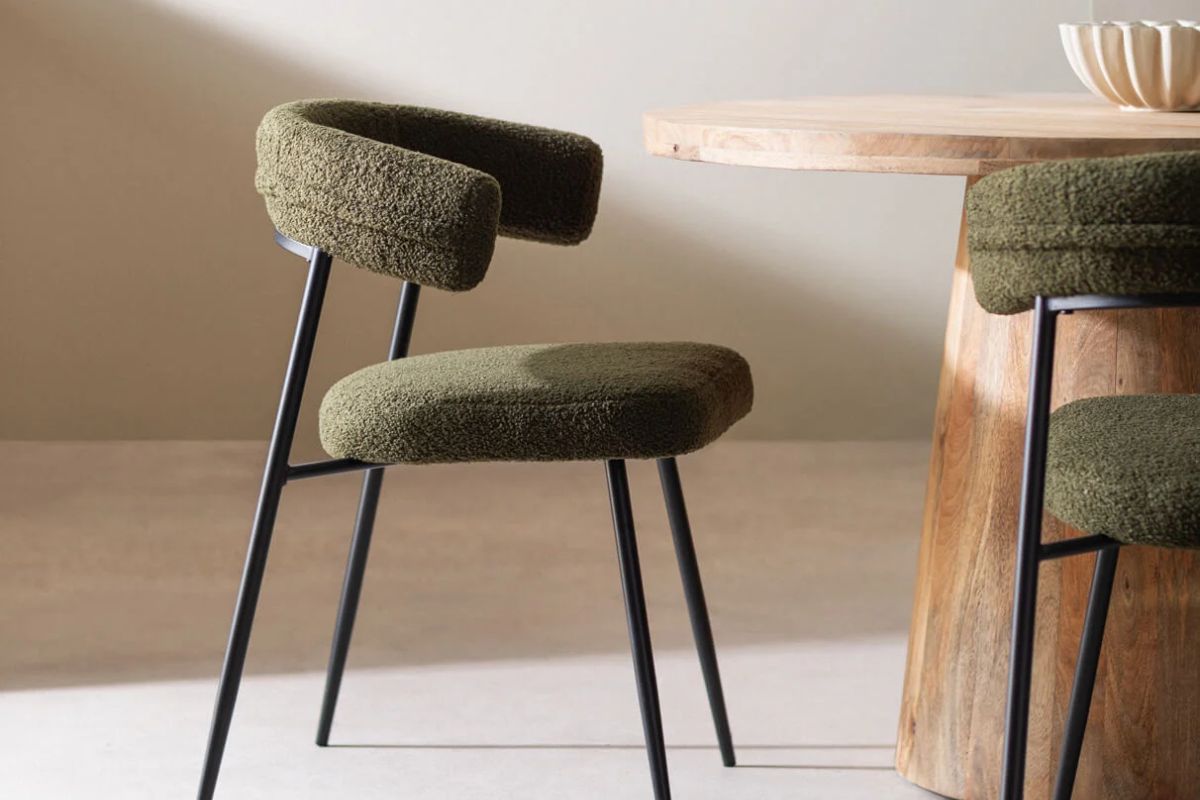
Bouclé is perfect for desk chairs and home office armchairs.
-
Ergonomic yet chic seat: a bouclé chair with black metal structure brings comfort without sacrificing style.
-
Combinations: desks in light wood or Fenix tops, thin shelves and warm lighting complete the environment.
Special corners: entrance and bathroom
-
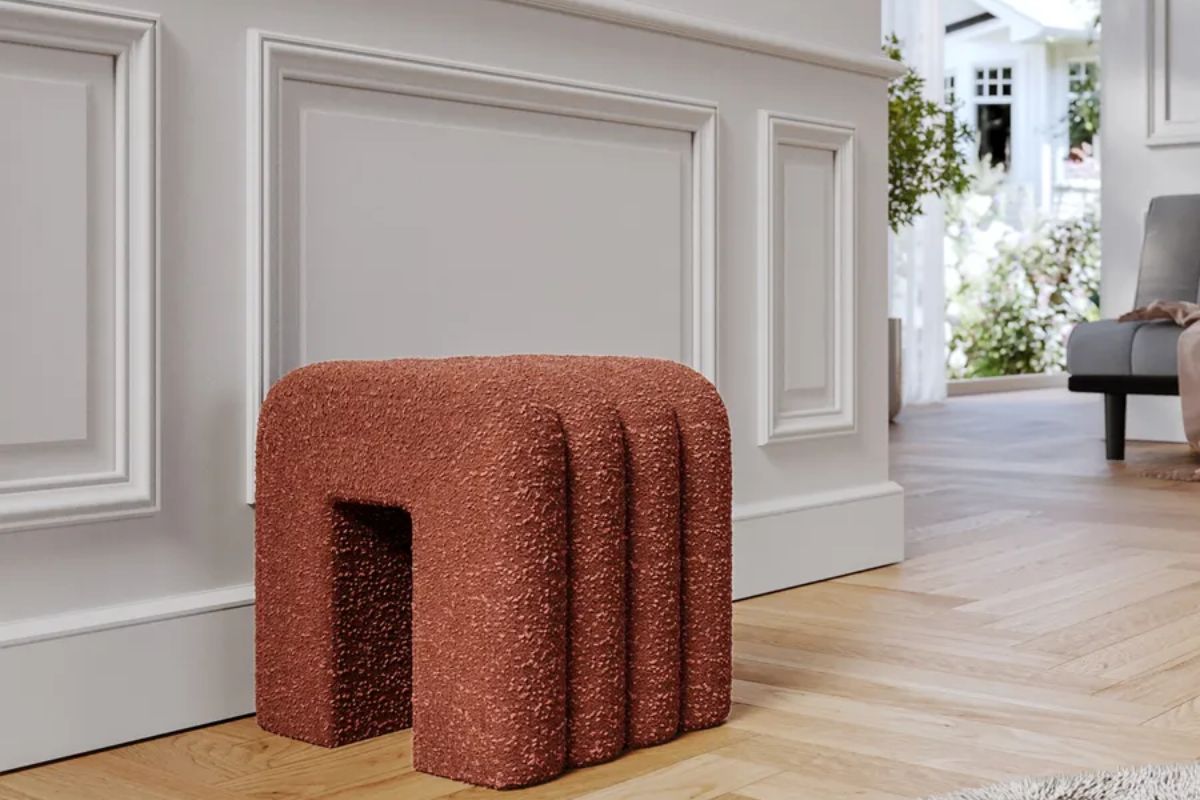
Entrance: a bouclé pouf next to the console is a detail that surprises and adds functionality.
-
Bathroom: if space allows, a small boucle armchair or ottoman next to the tub creates a luxury spa effect.
Combining bouclé: palettes and materials
To get the most out of bouclé fabric, it is essential to combine it with materials and colors that enhance its three-dimensionality and make it the protagonist.
| Color of Bouclé | Materials to Match | Visual Effect | Mood |
|---|---|---|---|
| Cream White | Calacatta marble, satin brass, light wood (oak or ash) | Sophisticated and bright | Timeless elegance, soft minimal style |
| Pearl Gray | Polished concrete, smoked glass, matte black metal | Contemporary and graphic | Urban mood, minimal chic |
| Beige Sand | Travertine, Vienna straw, natural linen fabrics | Soft and warm | Mediterranean atmosphere, natural comfort |
| Forest Green | Canaletto walnut, burnished brass, tone-on-tone velvet | Deep and theatrical | Sophisticated interiors, boutique hotel vibe |
| Midnight Blue | Glossy lacquered surfaces, brushed steel, smoked mirrors | Dramatic and enveloping | Metropolitan elegance, evening mood |
This color map helps to avoid common mistakes, such as combining a cream bouclé with surfaces that are too cold or shiny, risking flattening the effect. The rule is always the same: create tactile and visual contrast, combining the bouclé with smooth, shiny or hard surfaces to balance its softness.
Bouclé as a style signature
Bouclé fabric is much more than a trend: it is a real language of contemporary design . Its texture, capable of capturing light and inviting touch, makes it the perfect material for those looking for a home that is elegant, but also welcoming. It is a fabric that does not simply follow fashions: it crosses them, transforming and renewing itself from season to season.
Choosing bouclé furniture means bringing into your home an object that is not only beautiful to look at, but which communicates sensations and invites you to slow down. In an era in which interior design increasingly aims to create well-being, bouclé represents the meeting point between aesthetics, comfort and tactility.