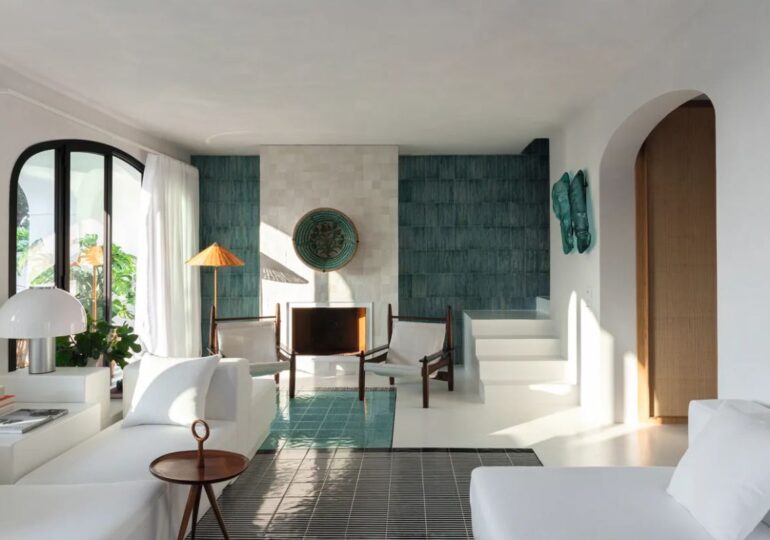
Transforming a room into a home is not just a building issue: it is a cultural act.
It means reinterpreting space, giving a second life to built material and restoring meaning to an urban fabric that changes faster than its intended use.
In recent years, reuse architecture has become one of the central themes of contemporary design. Former shops, warehouses, garages and artisan workshops are transformed into lofts, studios, micro-residences. It is a concrete response to the density of cities and the need for a new balance between living, working and living.
But the real driving force of this phenomenon is not just economic: it is planning.
The change of use is not limited to modifying functions, but requires a sensitive reading of the context, proportions, light, pre-existences. Each reconversion is an exercise in balance between norm and vision, between technical constraints and expressive freedom.
Today, architects and developers find themselves faced with a new scenario: the existing building heritage becomes the raw material of the future.
And the question can a room be transformed into a home? transforms into another, deeper one: how can we transform what exists into a more intelligent, sustainable and humane way of living?
Change of use: what it means and what rules regulate it
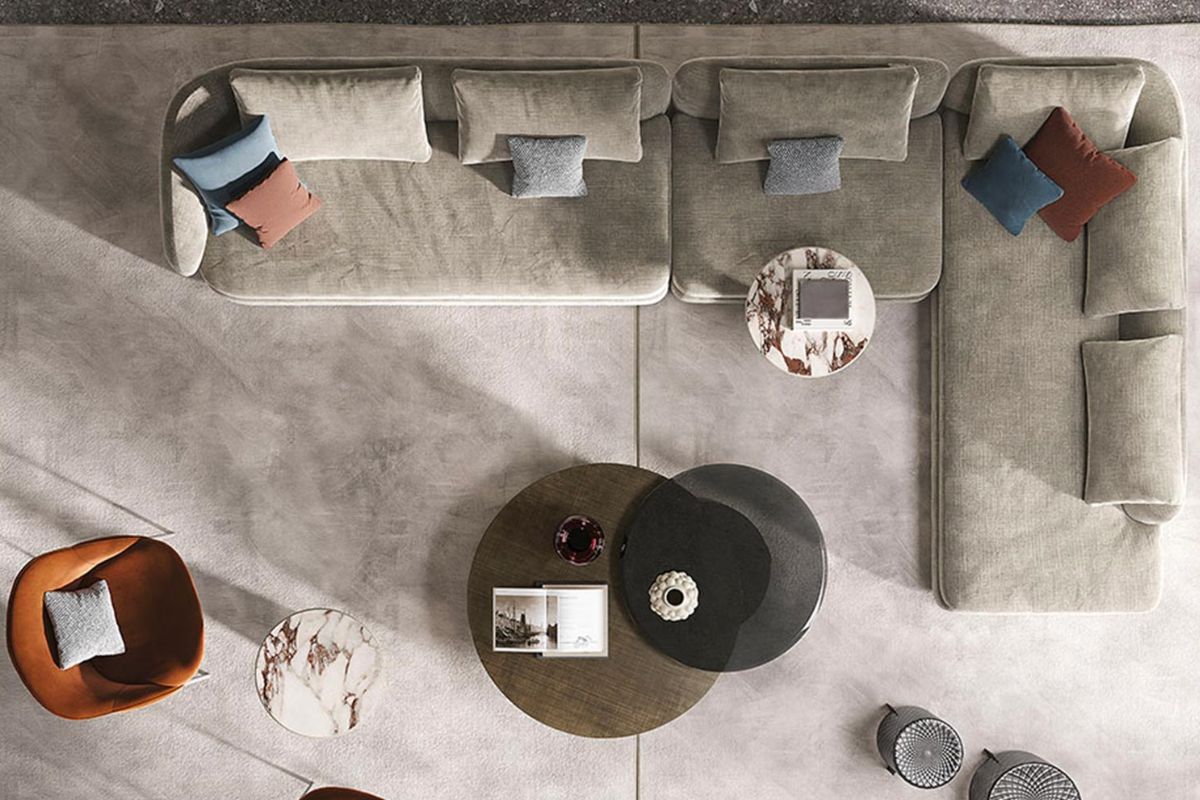
The change of use is not a simple cadastral update, but a passage of an architectural and urban planning nature: it is the act that allows to transform the function of a property , adapting it to new social, economic and housing needs.
In other words, it is the contemporary interpretation of reuse.
According to Presidential Decree 380/2001 (Consolidated Building Act), art. 23-ter, the change of use involves a change in the functional category of the property – for example, from commercial to residential – and can take place with works or without works .
In the first case, the transformation requires a complete building project and a qualifying qualification (Building Permit or alternative SCIA); in the second, an ordinary SCIA is sufficient, but always subject to urban planning compliance.
For the designer, the real issue is not bureaucratic but interpretative : understanding what the municipal planning tool allows.
Each Master Plan or PGT defines in which urban areas changes of destination are permitted, with precise limits linked to density, standards and use indices. Feasibility does not only depend on building regulations, but on the overall design of the city .
The change of use thus becomes a tool of urban regeneration : a way to restore life to underused volumes and to reduce land consumption.
For this reason, many Italian municipalities are updating their urban plans with a view to “adaptive reuse”, simplifying procedures and encouraging the conversion of production or commercial spaces into residences, professional studios or micro-housing.
Today, the change of use is no longer an exception, but a form of conscious project : it requires the ability to read the legislation, but above alltask of translating the constraints into architectural language . It is here that the designer becomes a mediator between norm and space, between function and identity.
When is it possible to transform a commercial space into a home
Transforming a commercial space into a home is one of the most complex and stimulating challenges of contemporary design.
It is not enough to imagine a new use: we need to check whether the structure, context and local legislation make it possible.
The first condition concerns urban planning compatibility . Each Municipality defines in its Technical Implementation Regulations (NTA) the functions permitted for a homogeneous area. If the Town Plan or PGT allows residential use, the change can take place otherwise an urban planning variation or specific authorization will be necessary.
Then there is the technical question, which for a designer means restoring living dignity to the space .
A former shop or warehouse is not created to host people, but to guarantee accessibility and visibility. Converting it into a home therefore requires a profound intervention on three levels:
-
Environmental comfort.
Height requirements (generally not less than 2.70 m), natural lighting and ventilation must comply with the Ministerial Decree. 5 July 1975, which establishes the minimum hygienic-sanitary parameters. The shop windows become windows, the shutters leave room for filtering systems, often with patios or skylights to expand natural light. -
Energy efficiency.
The redevelopment involves thermal insulation, adaptation of systems and improvement of acoustic performance. New technologies – radiant panels, high-performance fixtures, heat pumps – make it possible to respect sustainability criteria without distorting the existing building. -
Accessibility and privacy.
A room on street level must be rethought to guarantee safety, visual comfort and detachment from the urban environment. Here architecture comes into play: screens, entrance gardens, material or micro-short filters become compositional tools.
Many recent projects demonstrate how a former commercial space can become an urban micro loft of great architectural value. The generous heights, the depth of the floor plans and the presence of large openings offer creative ideas that are rarely found in a standard home.
Transforming a place into a home, therefore, is not a compromise, but a full planning act : it is about reading the city from below, enhancing what already exists and reinventing the way we live.
A theme that combines technique, aesthetics and sustainability the three pillars of the urban design of the future.
Examples of successful architectural reuse
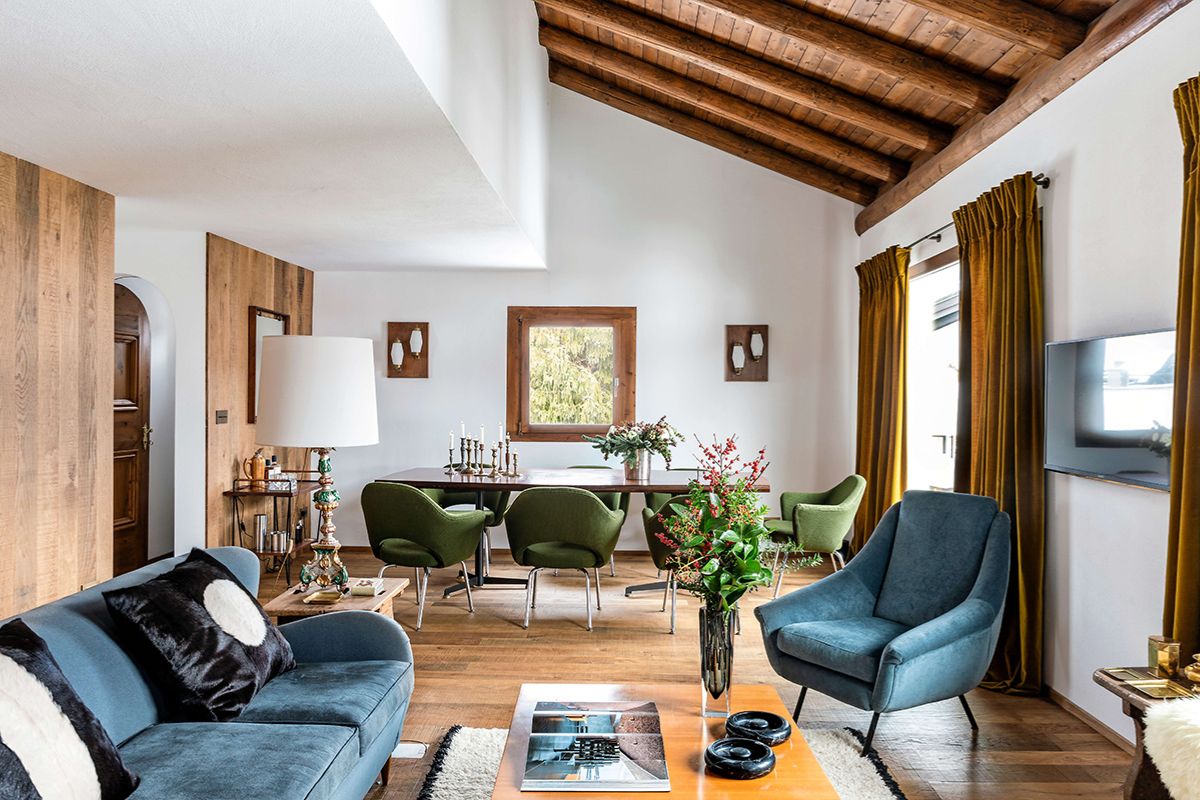
In recent years, the topic of conversion of commercial premises into homes has assumed a key role in Italian design research.
The contraction of local commerce and the evolution of post-pandemic cities have opened a reflection on the value of spaces at street level: from places ofconsumption to new flexible, hybrid and city-connected housing typologies .
Several studies have addressed this challenge by translating constraints reduced heights, openings onto the street, planimetric depth into compositional opportunities .
Here are some emblematic projects that show how a former shop or laboratory can become a high-quality contemporary home.
A former shop becomes a habitable loft Milan, Matteo Gattoni
A small commercial space unused for over ten years, 60 m² in the Via Monte Rosa area, has been transformed into a bright and functional loft .
The intervention works on the section: a mezzanine in steel and glass exploits the original height, while the light palette amplifies the light coming from the windows, now shielded by filtering curtains.
The distribution is fluid, with an open kitchen and suspended sleeping area.
It is a perfect example of how interior design can restore value to buildings, transforming a commercial property into a designer home .
Source: https://www.houzz.it/magazine/un-negozio-dismetto-diventa-un-loft-abitabile-di-60-mq-stsetivw-vs~121303573
Former artisan workshop ? home-studio Bergamo, Francesca Perani

In the Urban Cabin project, the architect Francesca Perani transforms a former artisan workshop into a 25 m² micro-dwelling .
The intervention maintains the existing volume and introduces a light architectural language: white walls, oblique cuts, integrated furnishings.
A small but emblematic project, which demonstrates how the quality of living does not depend on the surface, but on the ability to interpret the urban void .
Historic shop ? urban home Rome, SET Architects
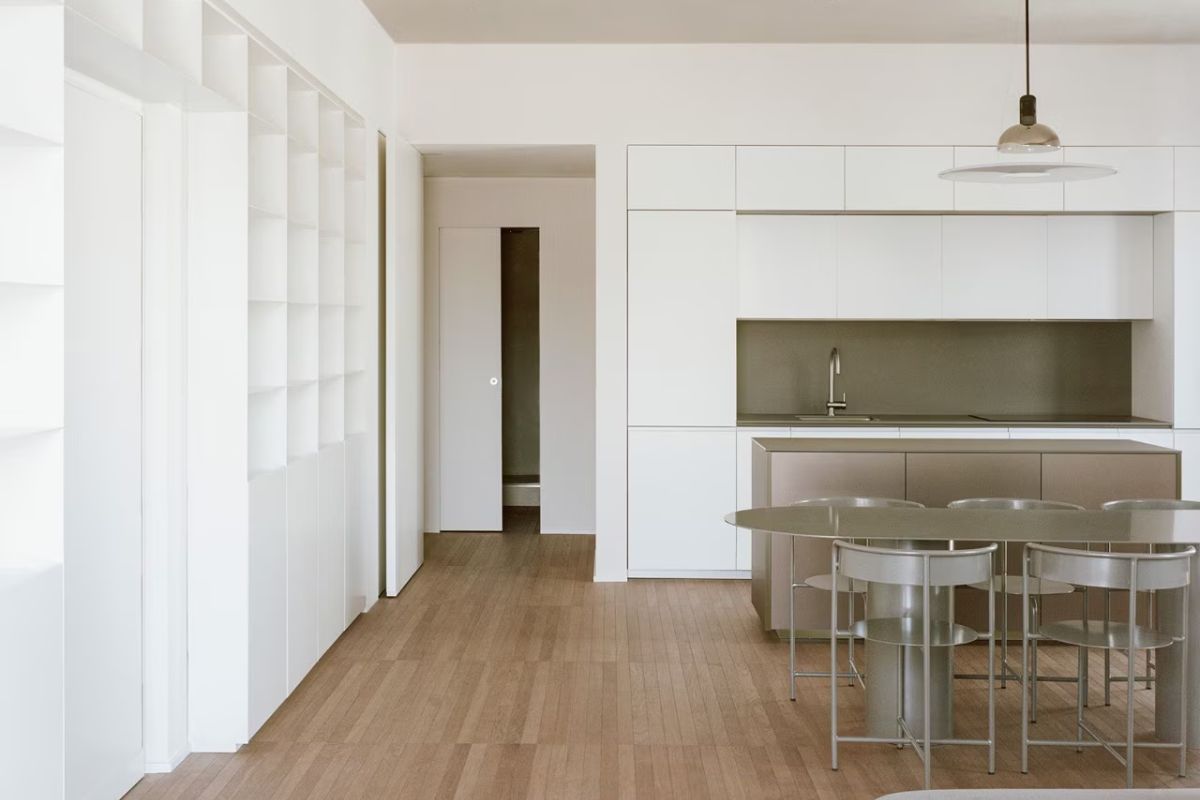
SET Architects intervenes on a former commercial space in the center of Rome , converting it into an 80 m² loft.
The project preserves the original beams and works on light: a system of vertical blades and a continuous microcement floor restore visual depth.
The result is a refined interior, between memory and minimalism, which redefines the relationship between domestic space and the city.
Former agricultural warehouse ? contemporary house Puglia, Studio Andrew Trotter
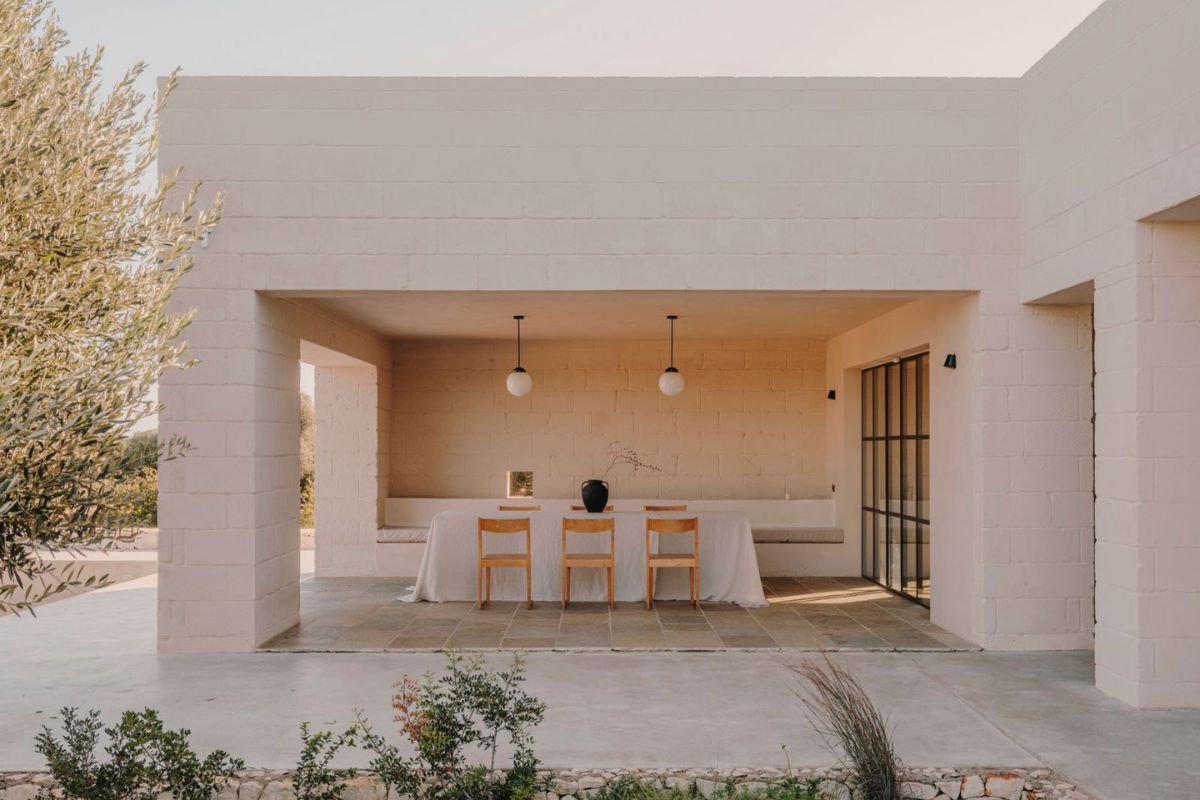
Even in a rural context, Andrew Trotter’s project shows the same logic of functional reuse .
A former agricultural warehouse becomes a house with essential lines, with tuff walls and calibrated openings.
The transition from service structure to living space is managed with contemporary architectural language, in continuity with the local construction tradition.
These projects confirm that transforming a room into a home is possible and, above all, it can generate quality architecture.
The technical limit becomes a design device : the depth of a shop is transformed into a spatial sequence, the windows into a source of light, the street level into an opportuneunity of relationship with the city.
What are the advantages and disadvantages of transforming a commercial space into a home?
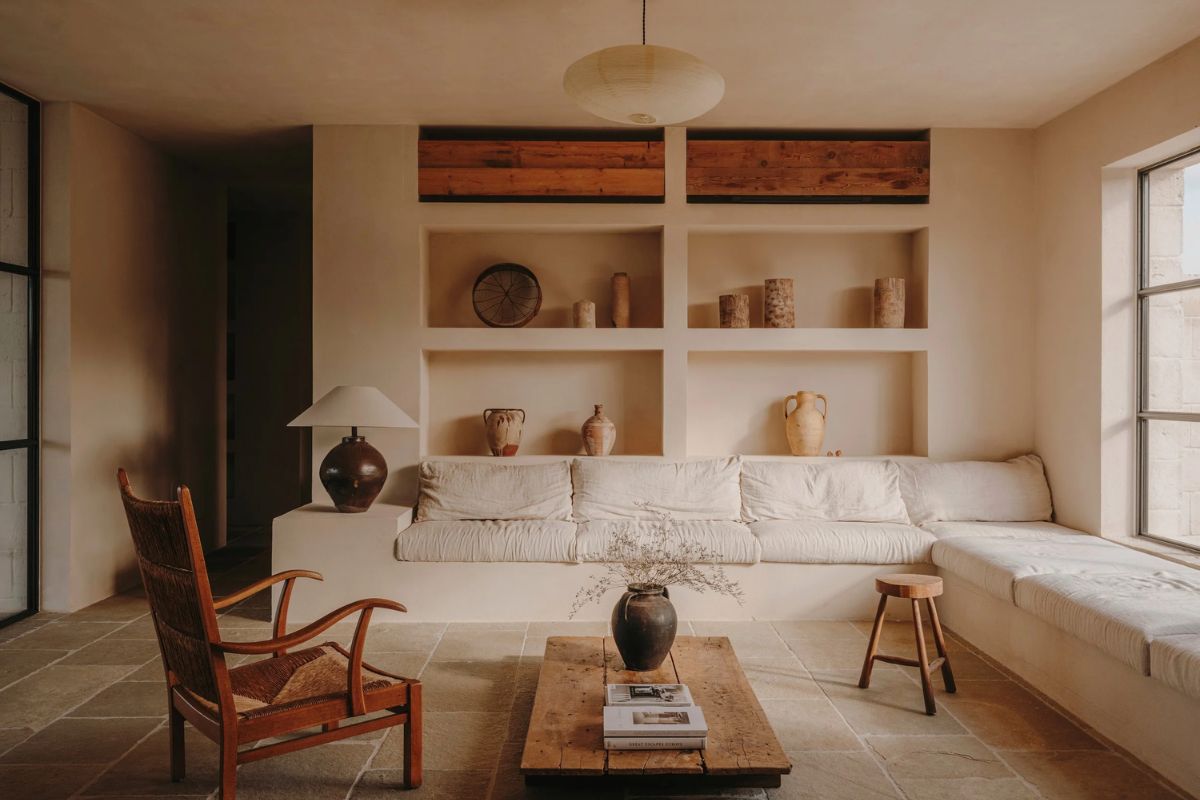
Every conversion project arises from a concrete question: is it really worth transforming a place into a home?
Why do many architects and developers choose this path, and what are the most frequent obstacles encountered along the way?
The most obvious advantage is economic: the cost of purchasing a property for commercial use is often lower than a residence, and the conversion can generate a significant increase in value, if managed with a coherent and compliant project.
But the real gain, for a designer, is architectural : these spaces allow compositional freedom, double heights, unusual openings, direct relationships with the city.
They are often imperfect volumes and for this very reason full of potential.
On the other hand, there are real critical issues :
urban planning constraints, health and hygiene regulations, lack of lighting, need for acoustic and thermal insulation.
Feasibility depends on the municipal master plan and on compliance with the minimum requirements for habitability: heights, air-lighting ratios, accessibility, safety.
For this reason, every transformation requires directing work between the architect, technician and client, capable of combining design vision and regulatory expertise .
In an ever-changing real estate market, the answer to the initial question is never an absolute yes or no.
Rather, it is a question of how : how to interpret the space , how to manage the constraints , how to give value to the pre-existing .
Useful questions before transforming a commercial space into a home
How much does it cost to change the intended use from a shop to home?
The average cost of a complete conversion varies based on two factors: type of intervention and urban planning constraints .
On average, for rooms between 60 and 100 m², starting from 9001,200 /m² for building and installation works, to which are added the urbanization costs and municipal secretarial fees (from 2,000 to 8,000 depending on the city).
An integrated architectural project can reduce structural interventions and optimize costs: the objective is to make the change of use sustainable also economically.
Do you always need a building permit?
Not always.
If the change of use involves the execution of significant building works (structural modifications, new openings, renovation of systems), a Building Permit is required .
However, if it is a change without works , a SCIA (Certified Report of Start of Activity) may be sufficient, provided that the municipal planning instrument allows residential use in the area in question.
In any case, the qualification must be assessed by a qualified technician – the error ofprocedure can cancel the entire change of use.
In which cases is the exchange not permitted?
Generally, the change of use is not possible if:
-
the area is intended exclusively for commercial or productive activities,
-
the property is part of a listed building or subject to landscape protection,
-
the minimum habitability requirements (height, light, ventilation, accessibility) are missing.
Each municipality establishes its own rules: even within the same city, two adjacent properties can have opposite urban planning destinies.
What design advantages does a former commercial space offer?
Spaces created for commerce often have characteristics that are highly sought after today: large windows, generous heights, direct access from the street, freedom of distribution .
With an accurate project, these qualities become identifying elements: transparency is transformed into diffused light, height into the possibility of a mezzanine, depth into spatial sequence.
It is an opportunity to create new urban housing typologies , more dynamic and connected to the context.
Is it a sustainable intervention?
Yes, on two levels.
On the one hand, because reuses buildings and reduces land consumption; on the other hand, because it allows to integrate efficient energy systems into an existing envelope.
The environmental impact is lower than a new construction, and the final performance can reach high energy class levels thanks to targeted insulation and new generation systems.
Urban reuse is today one of the most concrete practices of sustainable and circular architecture .
Designer questions: how to approach the reconversion project
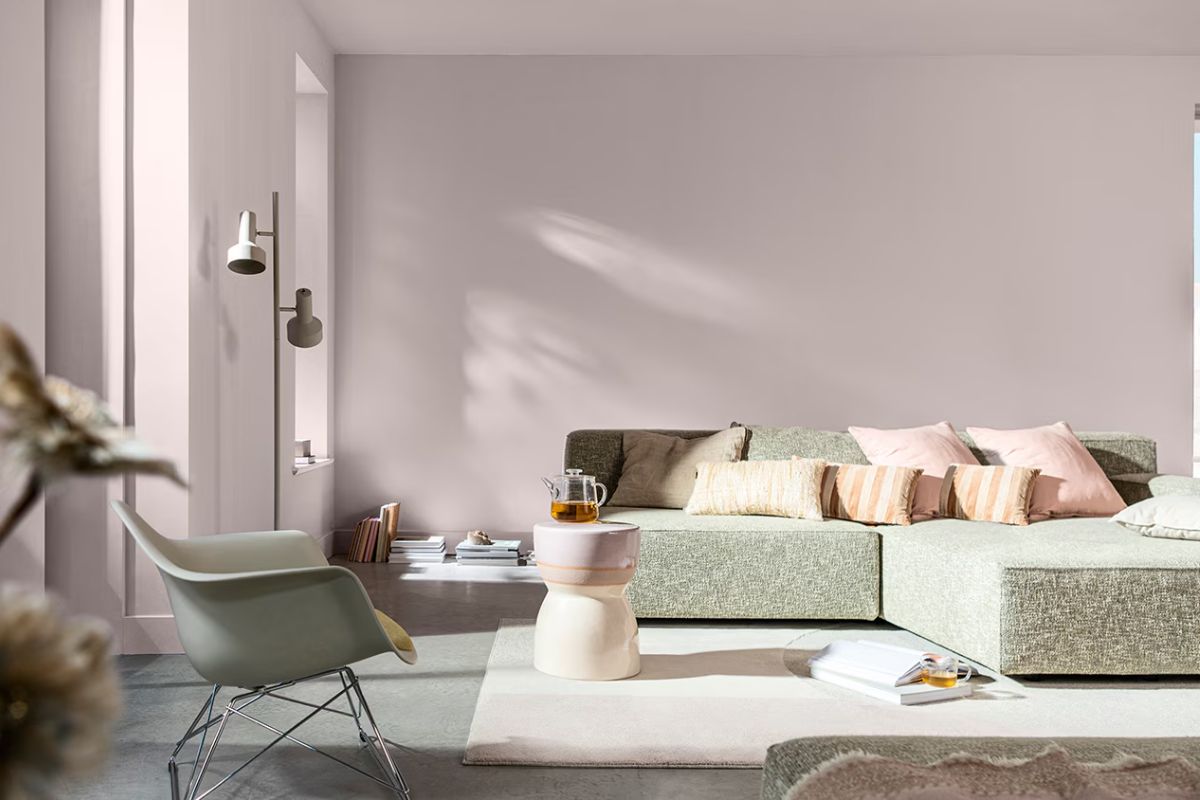
How to manage natural light in a deep or dark former commercial space?
It is one of the most common critical issues.
The key is to distribute light in depth through combined design strategies: light and reflective floors, translucent surfaces, glass doors, skylights or light wells.
When the structure does not allow additional openings, one can work on a system of dynamic lighting with variable temperature , simulating the natural rhythm of the day.
The lighting project is an integral part of the architectural concept, not a subsequent phase.
Which materials work best for living on the street level?
Materials must combine strength, comfort and thermal control .
For floors: microcement, engineered wood or material-effect stoneware, all with high thermal conductivity (ideal for radiant systems).
For the walls: natural plasters or breathable mineral paints, which regulate the humidity typical of low-lying environments.
A room in direct contact with the outside requires a technical building skin , but also a coherent aesthetic choice: the material becomes a filter between citiesand interiority.
How to solve privacy and sound insulation problems?
The large shop window, an identifying element of the commercial space, is also the first source of vulnerability.
The best solutions are acoustic laminated glass with solar control and opaline films or filter curtains integrated into the frame.
On an acoustic level, the design must include sound-absorbing false ceilings , wall panels and floating floors.
The perception of intimacy is not achieved by closing the space, but by modulating the thresholds visual and sound between public and private.
How to make a street level space energy efficient?
The street level is the level most exposed to heat loss.
To improve energy performance it is necessary to intervene on three fronts:
-
casing (insulation of the lower floor and the walls towards the outside),
-
high-performance fixtures (triple glazing, certified air tightness),
-
integrated and smart systems (heat pumps, controlled mechanical ventilation, home automation).
A former shop can achieve high energy classes if the project is conceived in passive and predictive logic.
The trend of change of use: from recovery to project culture
The trend of change of use the transformation of commercial premises and secondary spaces into homes is no longer a marginal phenomenon, but a new form of urban living .
It represents the most intelligent response to the saturation of buildings and the need to live in a more sustainable, flexible way, close to urban functions.
For the designer, it is a cultural challenge: every reconversion requires reading the city from the inside , understanding the material and social codes of places, transforming constraints into opportunities.
It is not a question of adapting a room to the needs of a house, but of reinventing living starting from what already exists .
The cities of the future will not be born from the new, but from the conscious recovery of the present.
And the “change of use” – when guided by architectural vision and design quality – can become one of the most advanced languages ??of contemporary design : one capable of giving shape not only to spaces, but to new ways of living.
Leave a comment