There are places that speak loudly even when they are silent. Capri is one of these. He never screams, yet he remains i unforgettable . Maybe it’s for the way the light slides on the white walls at sunset , or for those stairs that seem carved in stone to accompany thoughts . Or maybe it’s because here, where everything seems suspended, the time of the project slows down, there is meditation, there is a gesture.
Capri doesn’t need spectacular architecture: it already is. It is an emotional landscape , made up of solids and voids, of shadowy passages and sudden openings. This is where many designers come not to build, but to remember. Remember that design can be silent, essential, poetic . And it is precisely this tension towards the essential that has always attracted those who draw, those who shape spaces, those who give shape to ideas.
Capri and architecture: why it inspires the world of design
Villa Malaparte: a red wound in the silence
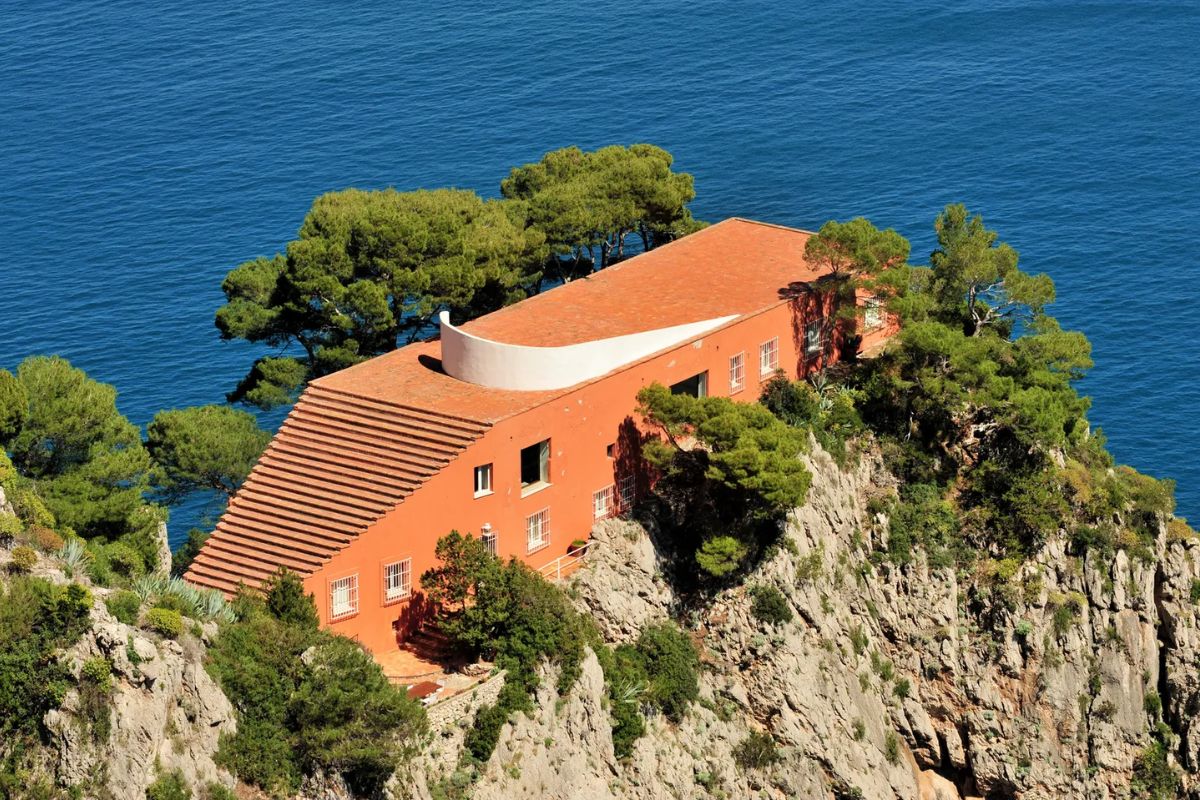
You don’t arrive at Capri by chance, and Villa Malaparte is proof of this. It cannot be easily photographed, it cannot be reached easily: it can be conquered on foot, after a long path between rocks and brooms. Yet, those who get there never forget it.
Built in 1937 by Adalberto Libera at the request of the writer Curzio Malaparte , this red house geometric, austere, solitary is perhaps the most powerful manifesto of what Capri represents for design: a space of radicality and contemplation. There is nothing superfluous, everything is designed to let the view breathe. The large staircase leading to the roof terrace is not just a function, it is a ritual. She ascended.
The sea surrounds it on all sides, but does not swallow it. It’s as if the villa was born from that rock. It is architecture that is silent, but imposes. And in this monumental silence, many designers have grasped the profound meaning of planning: the responsibility to impact the landscape without overwhelming it.
Capri and design, the island as a method: the art of removing
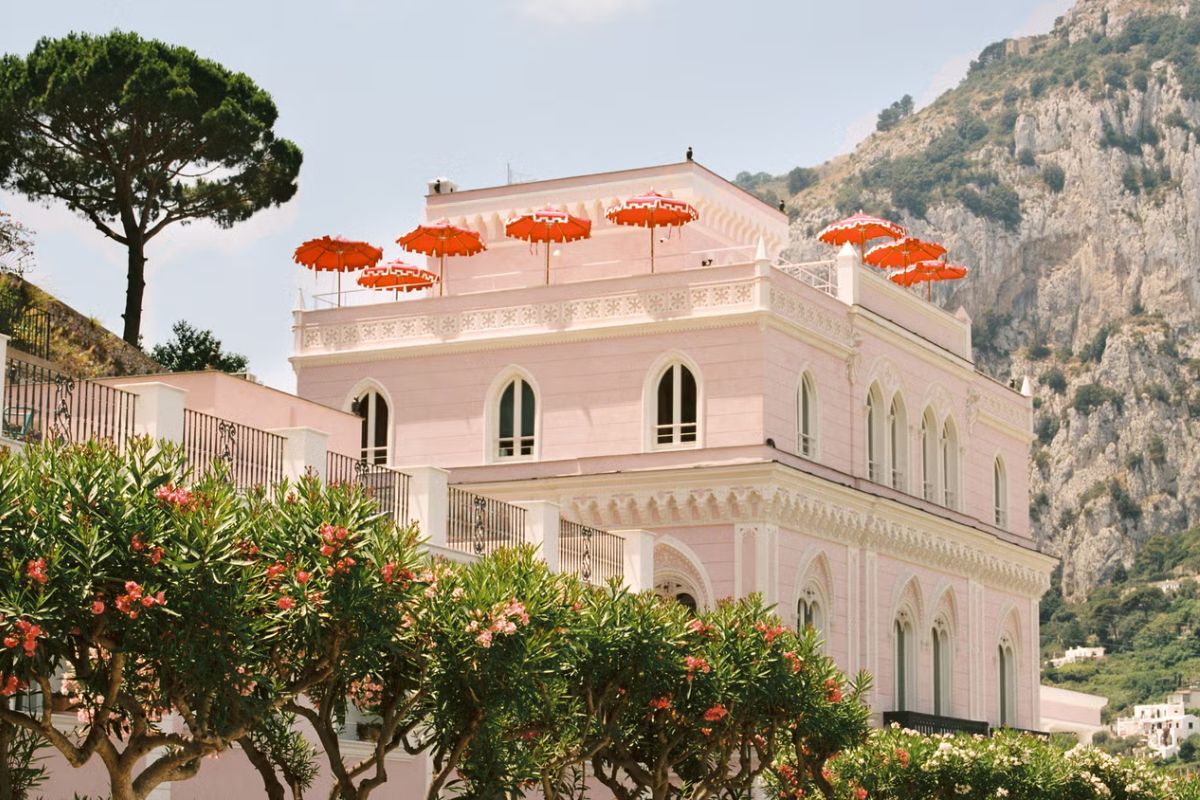
Capri teaches how to remove. To those who design, to those who furnish, to those who dream of homes. Removing is difficult, more difficult than building. But here, where every centimeter is saturated with light, scent and horizon, you don’t need much.
Capri design – the real one, the one that can be felt in the ancient terracotta floors, in the arched windows, in the dry stone walls – cannot be bought. It can only be understood by living it. It is the fruit of a deep-rooted material culture, of an aesthetic that arises from necessity, not from rhetoric.
In this, Capri is a teacher. Its most authentic interiors are not designed by star architects, but by generations of expert hands who have interpreted the place. White is not a trend, it is a reflection of light. Ceramics are not ornament, but memory. The vaults are not entertainment, but protection from the heat. Every detail makes sense. And this sense always discreet is what attracts architects and designers from every corner of the world.
Hospitality as a project: the new grammar of Capri luxury
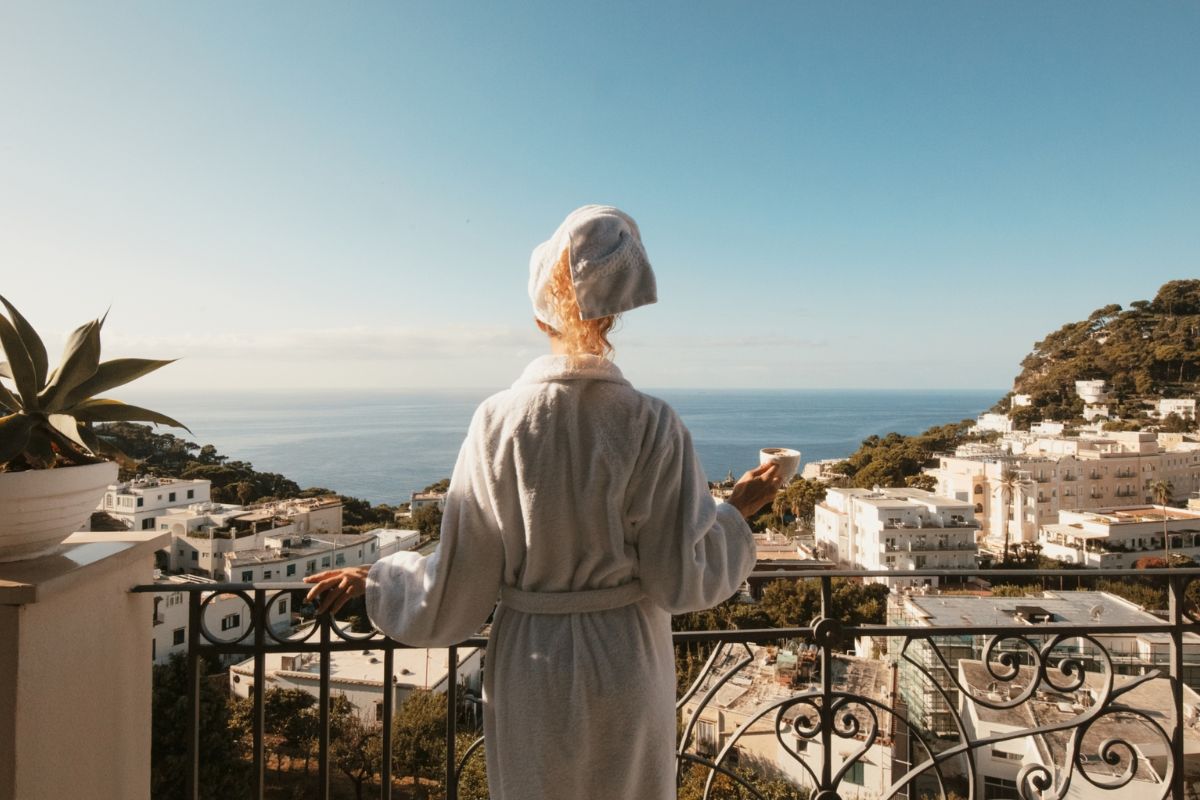
In Capri, hospitality is also architecture. But not that of excess. Here luxury is measured, often invisible, almost whispered. It’s choosing a wrinkled cotton instead ofa velvet, the scent of lemon in an airy room, the silence behind a curtain that sways slightly.
In recent years, some hotels on the island have been able to rewrite the language of hospitality, avoiding the postcard effect and embracing the deepest identity of the place. The Capri Tiberio Palace , for example, does not imitate. Reinterpret. It entrusts vintage geometries and Mediterranean palettes with an aesthetic that blends irony, style and respect for history. There is no nostalgia, but a cultured quote. The spaces follow one another like rooms in a lived-in house: marble meets ceramic, velvet fades into rattan, and each room tells a different Capri.
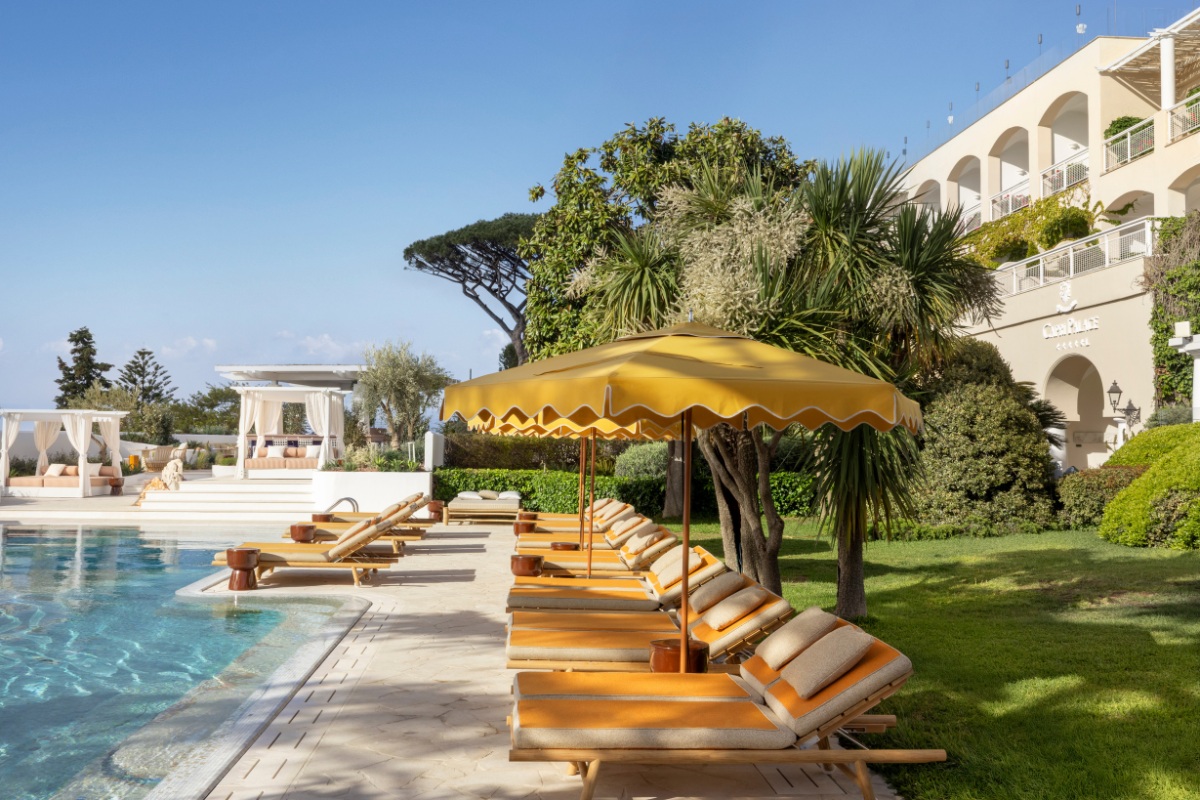
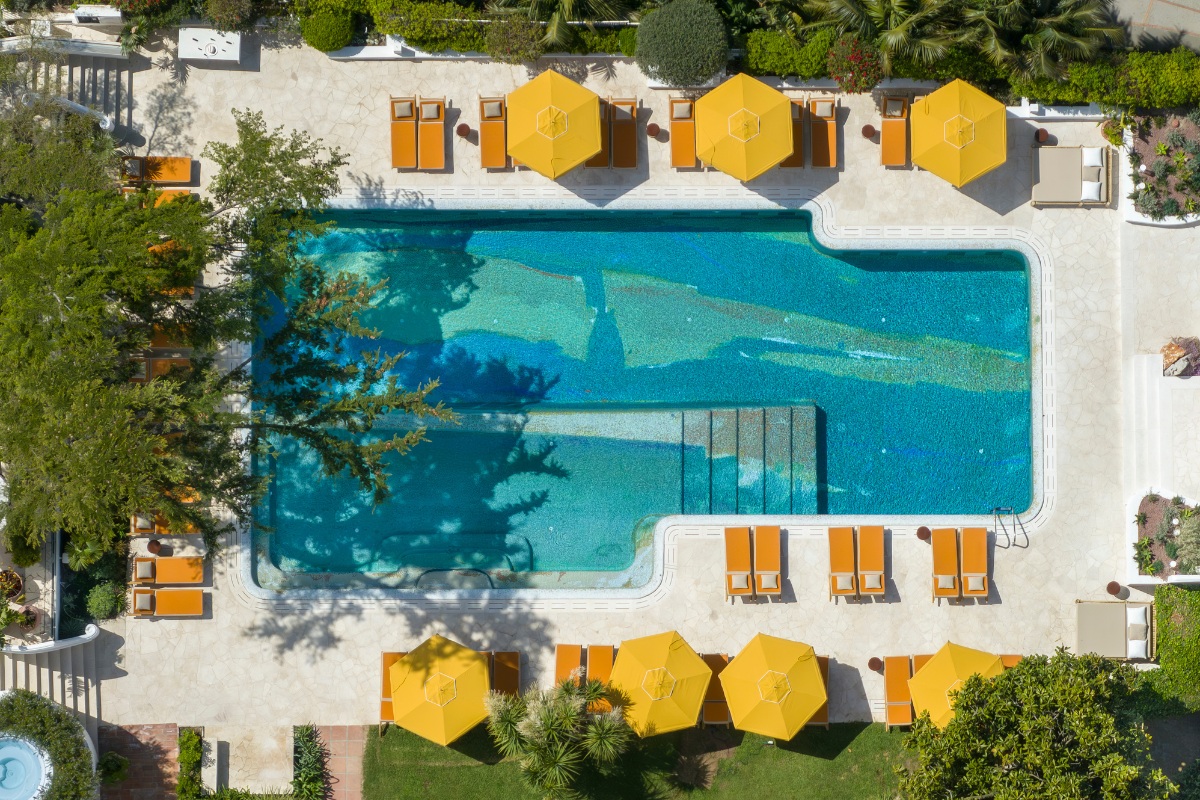
Even the Jumeirah Capri Palace , in Anacapri, goes beyond the standardization of the international hotel industry. Here the design is taken care of down to the smallest detail, but always with the lightness of those who know the island well. The rooms overlook a panorama that seems designed, and every furnishing element – from the chaise longues to the wall lamps – becomes part of a domestic and sophisticated scenography, today also completed by the new swimming pool area designed by Patricia Urquiola .
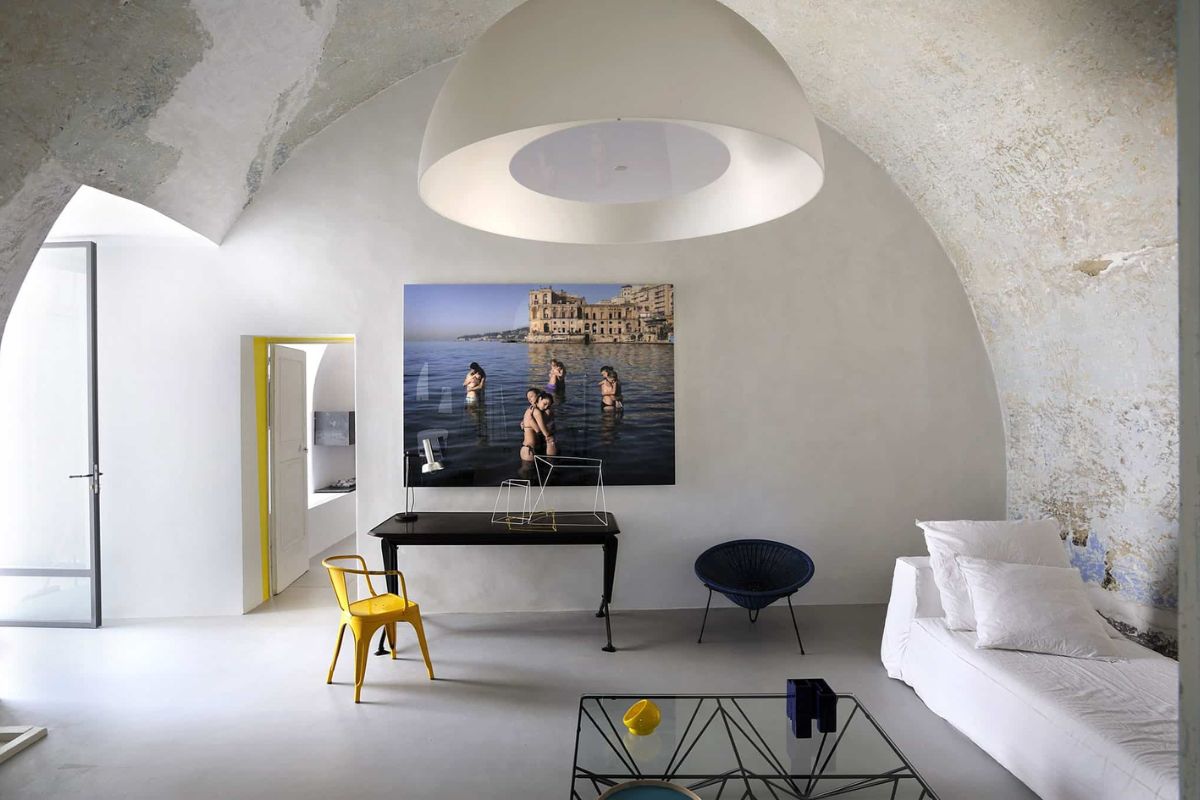
Finally, in the heart of the historic centre, Capri Suite represents one of the most intimate expressions of the new Capri design: just two rooms, a former 17th century chapel transformed into a microcosm of beauty, curated by ZETASTUDIO. Here simplicity is revolutionary: bare walls, selected furnishings, full colours. A lesson in sensitive architecture, which does not seek effect, but emotion.
Capri as a mental refuge: design that regenerates
Capri has something that many design capitals lack: emptiness. Space to think. The absence of hype. It is no coincidence that many designers – even those who have never built here – cite Capri among their sources of inspiration. It is a place that regenerates the eye and the mind. Where the design gesture is not created to amaze, but to re-establish a connection with what is essential.
This is what makes the island powerful, especially in an era in which design often risks making noise. On Capri, the exercise of the project becomes meditation: you learn to look at the shadow before the shape, the threshold before the entrance, the proportion before the colour. The genius loci is not an abstract idea, but something that you can touch, that you can breathe, that forces you to ask yourself questions.
Capri does not teach how to design. Teach why to do it. And this, today more than ever, is true luxury.
The intelligence of the hands: when craftsmanship becomes vision
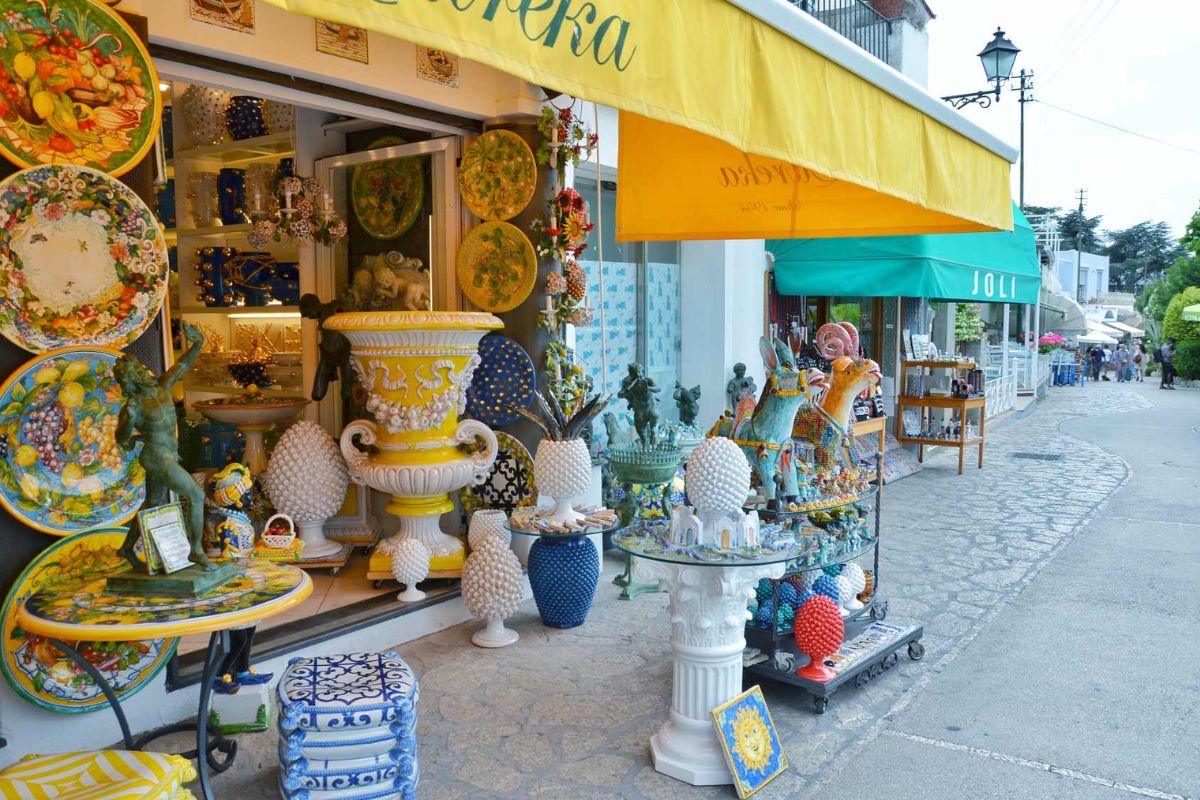
Capri is not just contemplation, but also craft. The island is inhabited by artisans who pass down slow techniques, gestures learned from fathers and grandfathers, forms that arise from necessity even before taste. Whoever works here does so by listening to the place. The tailors that sew linen shirts by hand, the ceramic workshops that transform earth into decoration, the carpentry shops that build with local woods – all this is design, in the most authentic sense of the term.
And today, in a world that urgently needs truth and measure, Capri shows how contemporary what is ancient can be. The challenge is no longer greatking, but keep. It’s not about surprising, but about guarding. Sustainability, here, is already inscribed in the materials, in the construction techniques, in the wise use of light and openings. The houses are protected from the sun with bougainvillea pergolas and light curtains. The roofs are white because they reflect. The rooms are small but fresh, cozy. Beauty does not arise from the superfluous, but from precision.
Capri, the slow breathing of the project
All this makes Capri not a destination, but a reference. A place that does not dictate trends but shapes looks. The designers who land on the island do not seek the clamor of novelty, but the authenticity of a profound inspiration. In a time when design is everywhere, Capri teaches the value of “not doing”: the importance of waiting, of detail, of slow time.
The island, with its silences, its sharp light and its essential shapes, continues to inspire because it has never betrayed itself. It cannot be captured or sold. It is a lesson in moderation, in elegance, in responsibility. For those who plan, living Capri even for just a few days means returning home with a clearer idea of ??what it means to build something that lasts. And may it have, like this land, the grace of not asking for anything.
Also discover the most fascinating design hotels in the world: art, architecture and relaxation