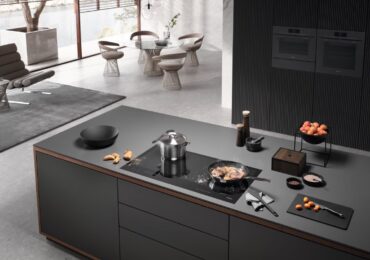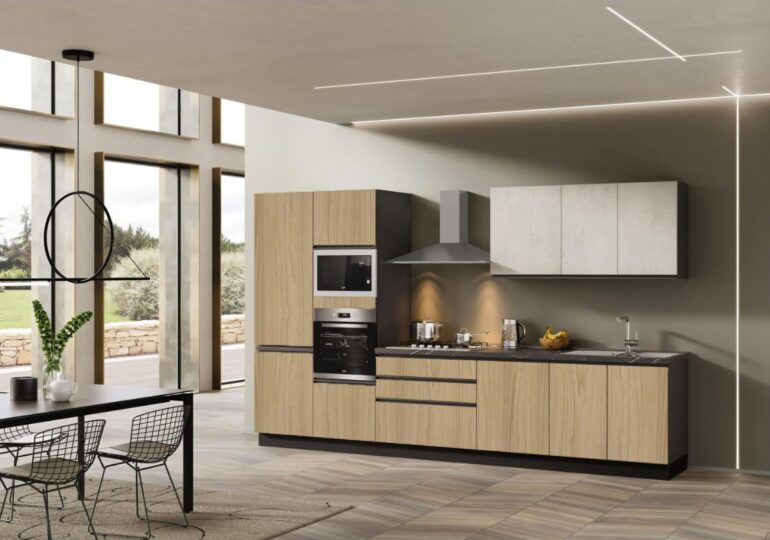
In today’s kitchens, technique and beauty have an increasingly close relationship. Appliances, from simple functional accessories, have become real protagonists of the home environment, integrating themselves as furnishing elements that give an extra touch of design.
Among these, the kitchen hood has undergone a silent but radical transformation in recent years: from a “technical object” to a visual component of the project, capable of influencing the perception of space, living comfort and air quality. Without forgetting aesthetics, a bridge between Italian design culture and international technologies.
Hood: the technical element that creates architecture
Every kitchen tells a story and, in it, the hood has the task of translating into a visible gesture what normally remains invisible: the flow of air, the breathing of the house, the protection of health.
It is a presence that is noticed when it is missing and disappears when it works well. It is an object which, when designed to perfection, becomes the detail that radically changes the perception and liveability of the interior. It is no coincidence that contemporary architecture studios now include it among the founding elements of housing design.
1. Miele The silent architecture of German precision
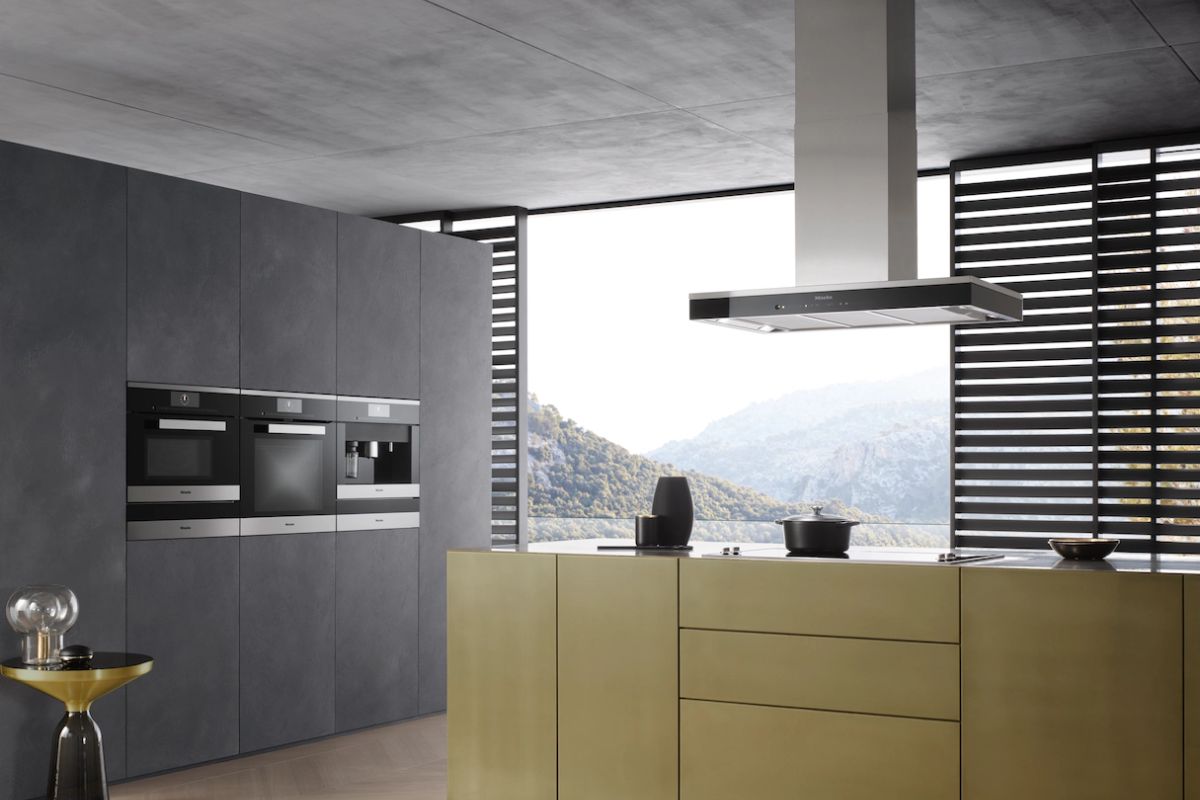
When we talk about technical excellence, Miele is a global reference. The German company has codified the concept of the household appliance “forever”.
-
Character : rigorous aesthetics, extreme silence, noble materials.
-
Iconic model : DA 6698 D Puristic Version sophisticated, suspended, essential. It is more of an architectural object than a hood.
Ideal for large environments and kitchen projects with an island, in which each element must be chosen with a museum-like and performative logic at the same time.
2. Elica The poetics of Italian design in the air
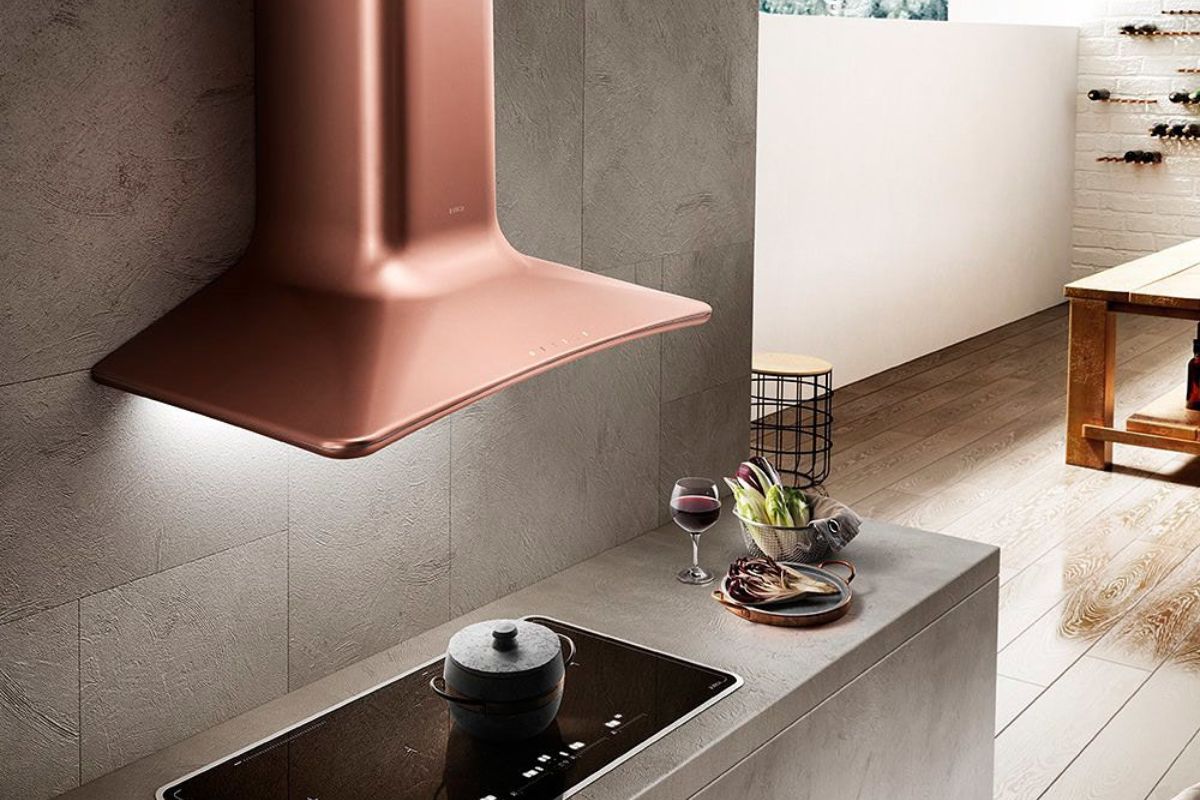
“New air at home” has always been their motto. Elica is the epicenter of the designer hood. Since 1970 he has been designing objects that combine technology and visual poetry, often awarded with the most important international design awards.
-
Character : design culture, experimentation with materials, form as language.
-
Iconic model : Sweet Copper sculptural hood with a pop soul and brushed copper finish. It is speaking architecture.
Perfect in homes where the kitchen is not just a place of preparation, but an environment to live, share and photograph.
3. Faber Air specialists since 1955
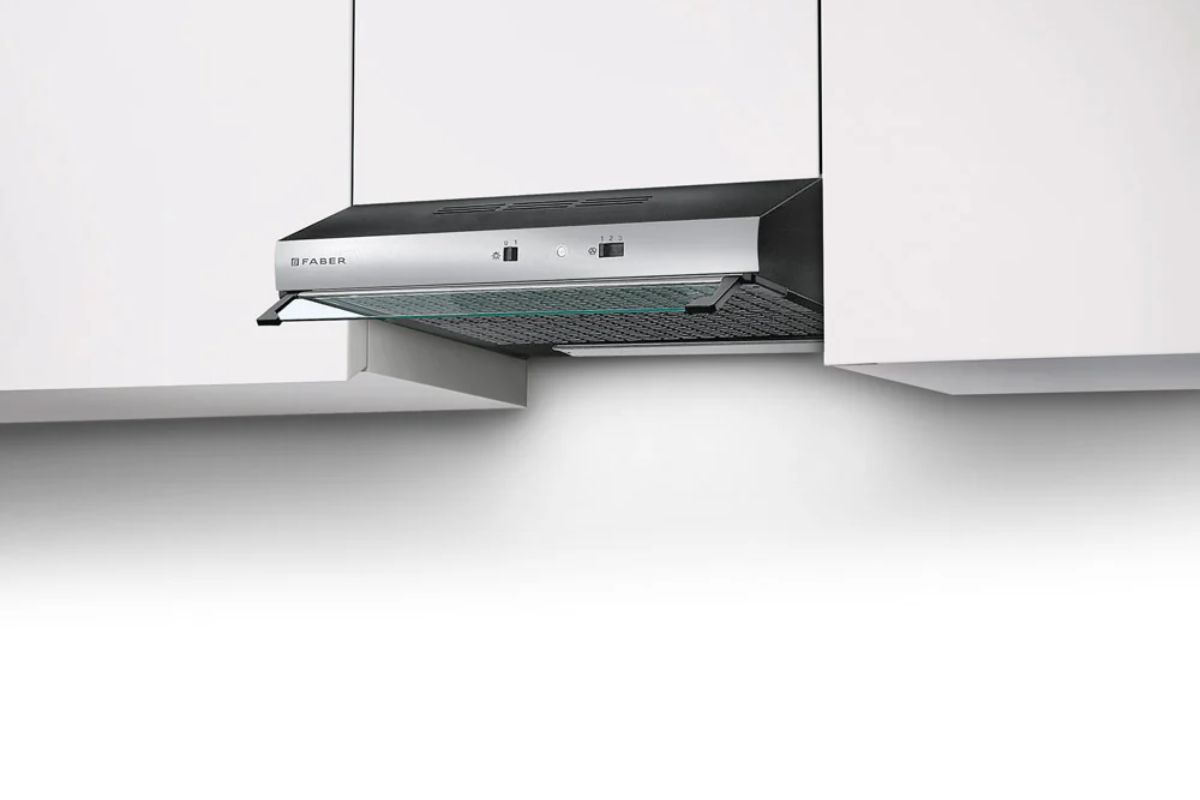
He is one of the world pioneers in the suction sector. Faber (a company from the Marche region) has transformed the idea of ??the hood into a “clean air machine”.
-
Character : functional efficiency, artisan know-how, control of details.
-
Iconic model : TCH04 the hood at the service of space, with a discreet but decisive presence.
In a custom-made kitchen projecta, Faber is often the choice hidden behind the furniture, but evident in the results.
4. Bosch The sober safety that architects like
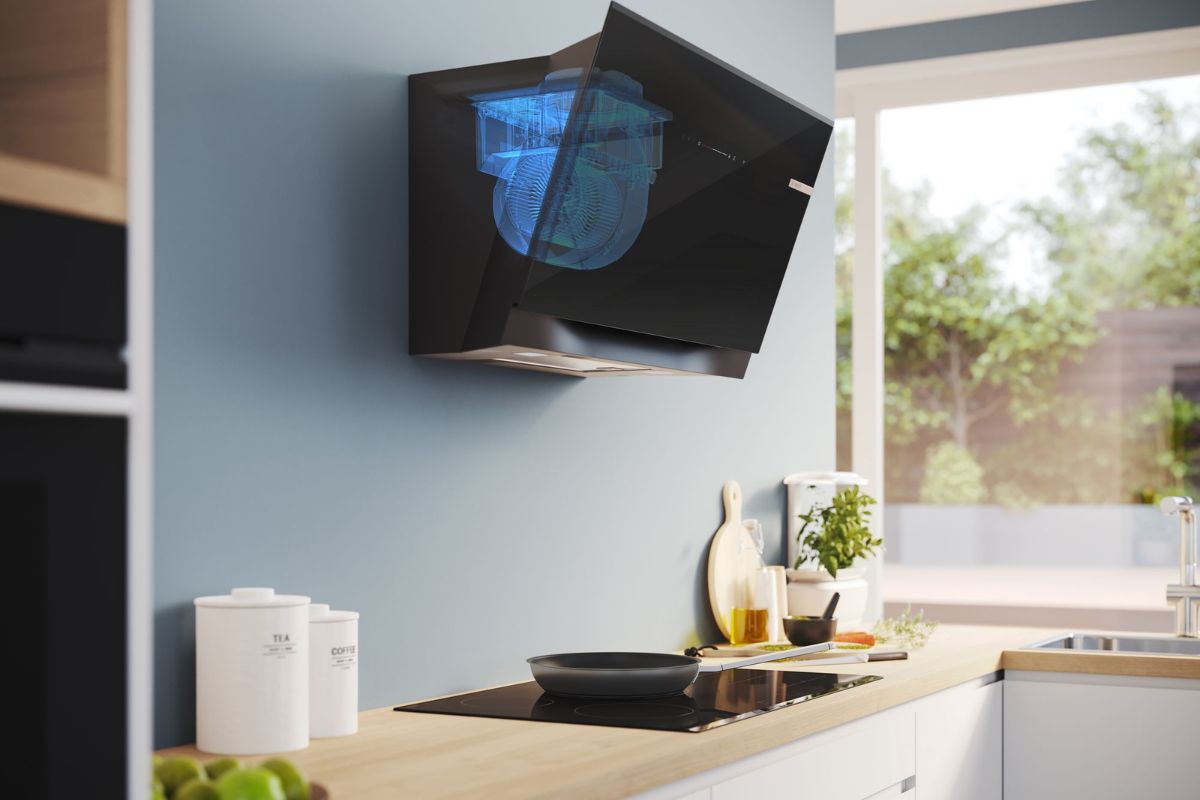
In Germany as in Italy, Bosch is one of the certainties of the integrated household appliances segment. An elegant presence, never shouted.
-
Character : reliable, intuitive, consistent in proportions.
-
Iconic model : DWB98JQ50 essential, clean cut, German rationalist design.
Designers and clients who favor visual order and formal continuity prefer it.
5. Smeg Retro charm dialogues with mid-century design
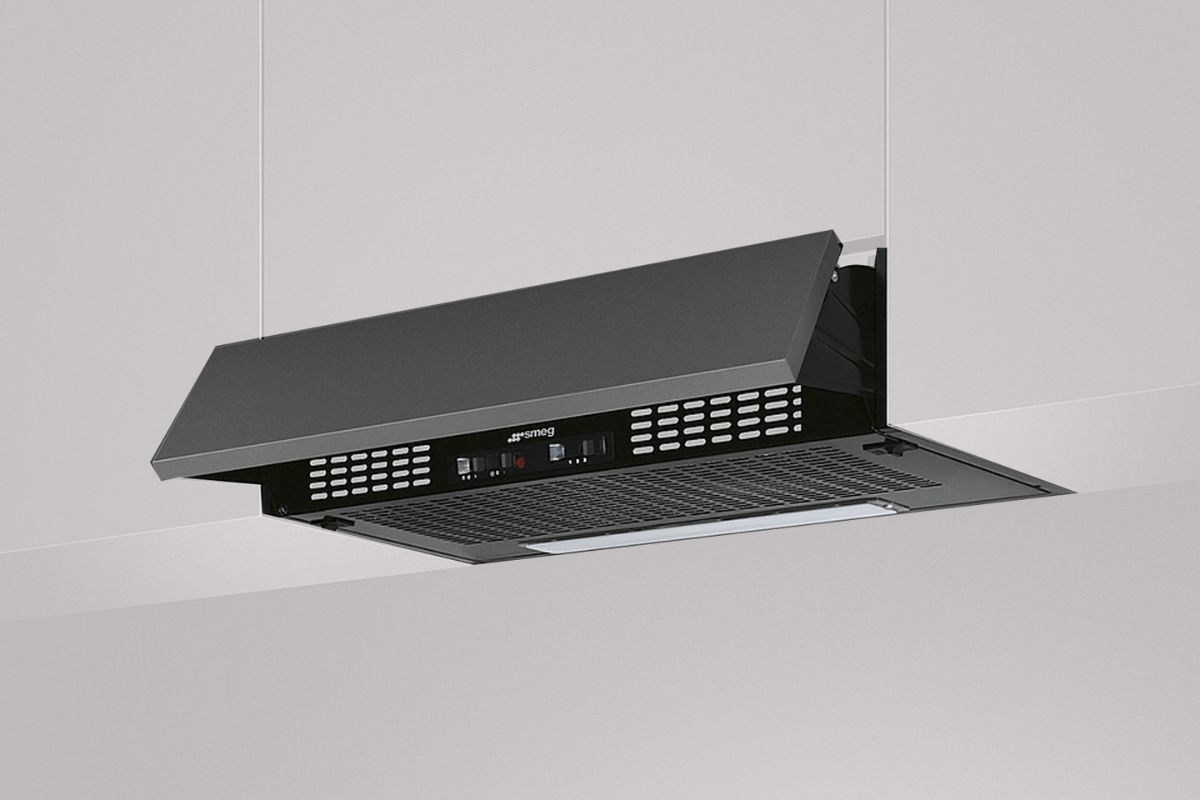
To tell the aesthetic soul of Italy to the world, Smeg is an essential brand. From Mediterranean lines to 1950s pastel colours, the hood becomes emotional.
-
Character : auteur pop, fluid identity, strongly identifying visual culture.
-
Iconic model : KSEIR62SE2 elegant, contoured, for those who want a hood as a familiar scenographic element.
It works in country chic kitchens, retro styles and dining rooms that want to “speak”.
6. AEG The design that doesn’t need to be noticed
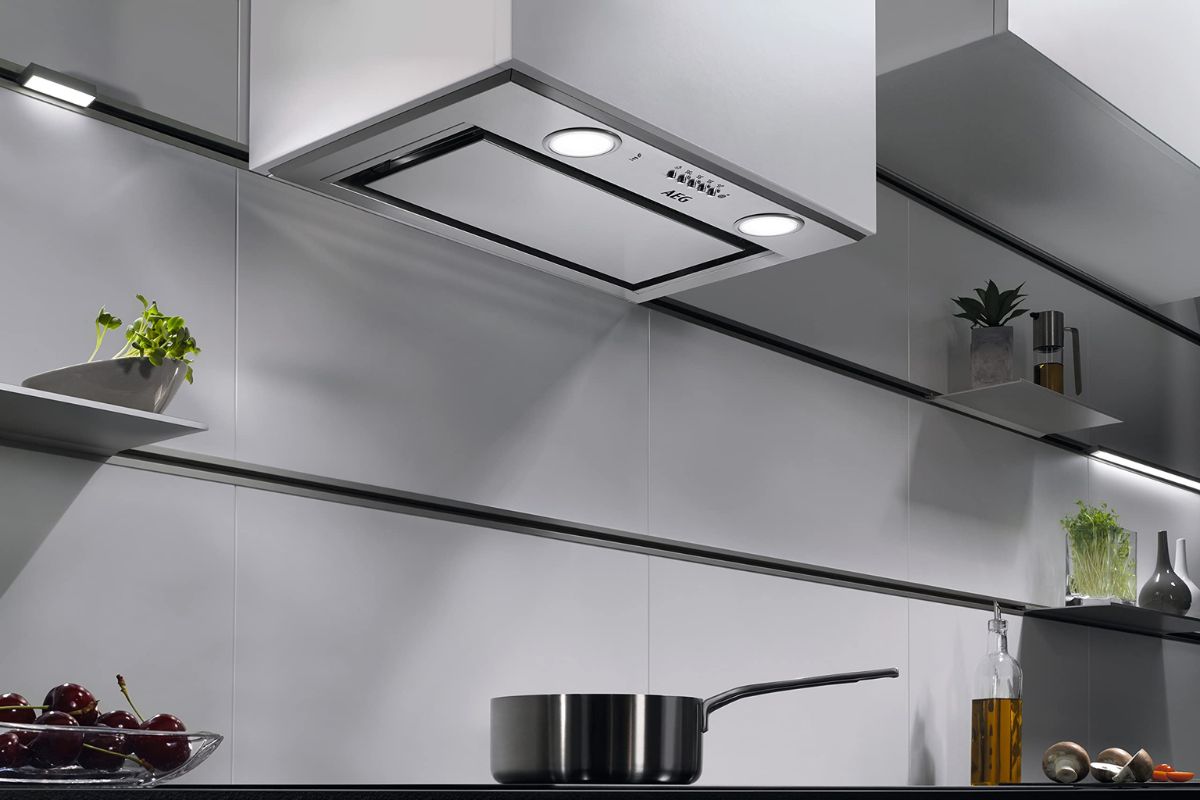
Leader in the medium-high segment, AEG focuses on formal cleanliness and performance. Its strength is subtraction.
-
Character : discreet, precise, essential.
-
Iconic model : DGE5661HM operational minimalism and integrated use in furnishings.
Perfect in contemporary home-work contexts.
7. Gorenje Functional essentiality for budget-conscious homes
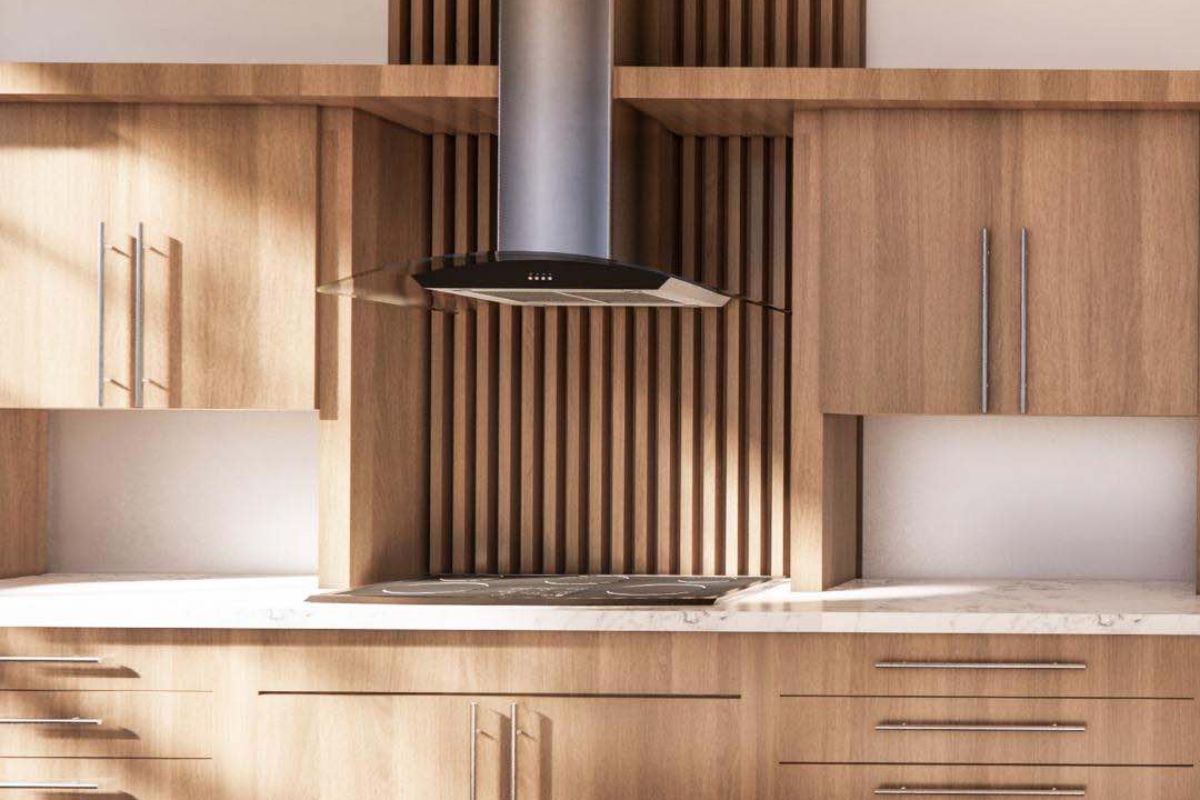
Solid production tradition, smart solutions, affordable prices: Gorenje is the intelligent choice for those who want quality without excess.
-
Character : compact, efficient, clean lines.
-
Iconic model : WHU629EW/S the hood that makes no noise (aesthetically and acoustically), and works well.
Excellent in conscious renovations and projects for young families.
How to choose the right hood in Italy?
An intelligent guide for architects, interior designers and clients
-
Type of suction : external ducted suction is always preferable.
-
Dimensions and proportions : in a central island, the hood must be wider than the hob .
-
Air flow (m³/h) : the basic rule is 10 times the volume of the room.
-
Noise : below 55 dB at average power the house is more livable.
-
Consistent aesthetics : a beautiful hood is a hood that holds space together.
Having a quality hood also means breathing better
In a country like Italy, where the kitchen space is the heart of family and social relationships, neglecting the quality of the air means neglecting part of our domestic culture.
Designing a kitchen hood is no longer optional. It is invisible architecture at the service of living .
What you want to know about the best kitchen hood brands
What are the best range hood brands in 2025?
Among the most reliable brands we find Miele, Elica, Faber, Bosch, Smeg, AEG and Gorenje. They offer high performance, silence and great attention to design, with models designed for modern kitchens and for the Italian market.
How large should the hood be in relation to the fires?
The hood should be at least the same width as the hob, but in the case of installation on an island it is advisable that it is slightly wider to ensure uniform extraction.
How to choose a silent hood for the kitchen?
To evaluate the silence of a hood, check the noise level expressed in decibels (dB). The quietest hoods have values ??below 55 dB at average speed. High-end models from brands such as Miele , Elica and Bosch offer efficient performance with a reduced noise impact, ideal for open plan homes.
Is it better to have a recirculating hood or one with external exhaust?
The hood with external exhaust is always preferable in terms of efficiency and air quality. However, in the absence of an external hole or in restricted urban contexts (e.g. historic centre), you can opt for a recirculating hood with activated carbon filters, to be replaced regularly.
How much does a kitchen hood consume?
Modern hoods are generally in energy class A or higher, with reduced consumption. An efficient hood consumes between 40 and 80 watts in the standard extraction phase. The integrated LED design hoods also reduce energy consumption for hob lighting.
What is the correct maintenance for a kitchen hood?
Correct maintenance includes:
-
Cleaning the metal grease filter every 2-3 months (also in the dishwasher, if indicated by the manufacturer);
-
Replacement of activated carbon filters every 3-6 months for recirculating models;
-
Cleaning of external surfaces with non-aggressive products to avoid marks or damage to the finishes.
Are there kitchen hoods without a chimney?
Yes, these are ceiling or suspended hoods , typical of modern kitchens with islands or lofts. Among the most popular models in Italy we find those by Elica and Faber , which offer high-tech solutions with integrated motors and sculptural lines, perfect for contemporary environments.
How much does a good kitchen hood cost?
The price varies greatly depending on the brandd, materials and typology. Indicatively:
-
From 150-250 for basic wall-mounted models;
-
From 400 to 1000 for medium-high quality hoods;
-
Over 1500-2000 for designer hoods suspended as islands or integrated into the furniture, produced by premium brands such as Miele, Smeg or Elica.
Can the hood be installed in a kitchen without a flue?
Yes, in this case we opt for a recirculating hood equipped with filters that purify the air and re-inject it into the environment. It is important to choose models with quality filters and consider regular maintenance to ensure efficiency and hygiene.
Can a hood be invisible?
Absolutely yes: today there are fully built-in hoods (mounted inside the wall units) or hoods integrated directly into the hob (vertically hidden), ideal for those who want a minimal and perfectly integrated kitchen. Some brands such as Bora, Faber and Siemens are leading the way on this front.
Which hood to choose for an open space kitchen?
For a kitchen that communicates with the living room, the hood must be:
-
Silent (below 60 dB);
-
High flow rate (at least 700 m³/h);
-
Well integrated visually with the furnishings. Suspended or ceiling-mounted island hoods are often the ideal choice, especially if they become a design element.