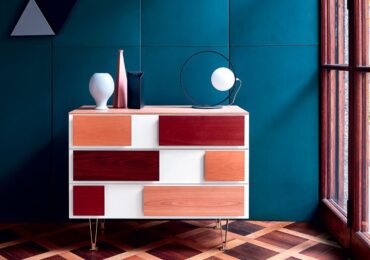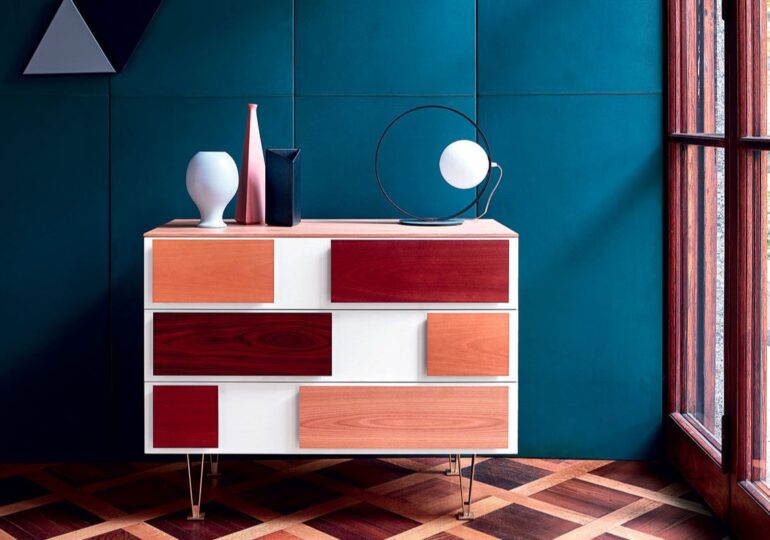
Among the most fascinating pieces of modern furniture, the designer sideboards and the designer sideboards occupy a special place. They are not simple “container furniture”, but elements that describe a way of living the home, becoming protagonists of the living space.
The function of the sideboard has always been twofold: to contain and decorate. A piece of furniture capable of storing crockery, textiles, precious objects, but at the same time communicating with the living room as an architectural sign. If in the past it was the fulcrum of noble dining rooms, today the sideboard is transformed into a versatile and transversal piece of furniture, capable of adapting to different styles: from minimal to classic, from vintage to contemporary.
In the lexicon of the project, the designer sideboard is never a neutral piece of furniture: it is a focal point, a surface that tells the story of the materials, finishes and manufacturing details. For this reason, great designers have reinterpreted it, transforming it into a signature object that combines beauty and functionality.
Choosing an iconic sideboard means introducing into your home not just a container, but a piece of design history : a piece of furniture that speaks of innovation, craftsmanship, aesthetics and culture.
The most iconic designer sideboards and sideboards in the history of design
From the Italian artisan tradition to the masterpieces of international design, the sideboard has passed through the centuries, transforming itself into an ever-present piece of furniture. Here is a selection of iconic design sideboards that have marked the history of interiors.
Sideboard Alexander Roux (1863) – Among the first iconic sideboards in the history of deisng

Made by the French naturalized American cabinetmaker Alexander Roux, this 1863 sideboard represents the pinnacle of the nineteenth-century artisan tradition. Richly decorated and of great scenic impact, it was designed not only as a container, but as a true status symbol for the bourgeois homes of the time.
Features
-
Solid wood structure, with complex carvings and sculptural reliefs.
-
Integration of an upper étagère to display dishes and furnishings.
-
Floral and figurative ornamental motifs of great refinement.
Because it is iconic
-
It is one of the greatest expressions of nineteenth-century American cabinetmaking.
-
It represents the idea of furniture as a symbol of social prestige.
-
It shows the very high technical and decorative level achieved by Roux, a key figure in luxury furniture of the time.
Sideboard Fratelli Svia-docht (1930)

In the 1930s, the Art Deco aesthetic redefines the face of sideboards, freeing them from ornamental overload. The Svia-docht brothers propose a model that enhances the natural grain of the wood and the geometric balance, with an elegant and modern language.
Features
-
Made with quality veneers in different wood essences.
-
Smooth and polished surfaces, without excessive decorations.
-
Chromed metal handles and essential geometric lines.
Because it is iconic
-
Symbol of Art Déco elegance, it combines modernity and luxury.
-
It underlines the transition from decorative furniture to essential design.
-
It represents the dialogue between quality craftsmanship and international style.
Riflesso Charlotte Perriand for Cassina (194042) – Iconic designer sideboards that made history

Conceived for her Parisian apartment, Riflesso embodies Charlotte Perriand’s vision: functional, democratic and innovative design. Reissued by Cassina in 2004 in the I Maestri collection, this sideboard combines rigor and creativity.
Features
-
Solid wood structure with wide feet.
-
Sliding doors in lacquered metal, with color contrasts.
-
Interior organized with colored open compartments.
Because it is iconic
-
It is a manifesto of French modernism of the 1940s.
-
Introduces industrial materials into domestic furniture.
-
It confirms the vision of Perriand, a pioneer in linking aesthetics and functionality.
Architecture Piero Fornasetti and Gio Ponti (1951)

The result of the collaboration between Fornasetti and Ponti, this sideboard transforms furniture into miniature architecture. Decorated with Renaissance perspective prints, it becomes an example of surrealism applied to design.
Features
-
Linear structure covered with perspective silk-screen prints.
-
Architectural motifs reminiscent of Renaissance palaces and loggias.
-
Contrast between graphic rigor and ironic play.
Because it is iconic
-
Transform a container into a narrative work of art.
-
It combines the architectural vision of Ponti with the poetics of Fornasetti.
-
It is among the most famous pieces of twentieth-century Italian collectible design.
Buffet Ico and Luisa Parisi, La Permanente Mobili Cantù (1950s)

In the post-war years, Ico and Luisa Parisi renewed the language of Italian furniture. This buffet, produced by Permanente Mobili Cantù, reflects their search for dynamic and light shapes, while maintaining functionality and rigor.
Features
-
Wooden structure with tapered and slender legs.
-
Modularity between closed compartments and drawers.
-
Fluid and slender lines that lighten the volume.
Because it is iconic
-
Symbol of the rebirth of Italian design in the 1950s.
-
It introduces a dynamic aesthetic that breaks the static nature of traditional furniture.
-
It is a constant reference for the Cantù school, cradle of modern furniture.
Buffet Finn Juhl for Spotti (1955) – Among the iconic design sideboards still famous today

This buffet designed by Finn Juhl, a great protagonist of Danish modernism, combines formal rigor and chromatic poetry. Thanks to the play of the sliding doors, it reveals internal drawers in blue shades, transforming functionality into an aesthetic surprise.
Features
-
Teak structure with sliding doors.
-
Interiors with lacquered drawers shaded from white to blue.
-
Thin base in wood and metal, slender and light.
Because it is iconic
-
It represents the perfect synthesis of mid-century Danish .
-
Shows the ability to introduce emotion and color into the feature.
-
It has become a collector’s icon, an example of poetry applied to design.
4D Series Angelo Mangiarotti for Molteni (1964)

With the 4D Series, Angelo Mangiarotti proposes a system of compact modular sideboards that go beyond the logic of the single piece. Each element has a different design, but can be placed alongside the others to create a unified composition.
Features
-
Walnut structure with essential finishes.
-
Three modules with doors designed differently.
-
Compact and clean lines, designed for modularity.
Because it is iconic
-
It anticipates the concept of modular and modular furniture.
-
It represents Mangiarotti’s rational and innovative vision.
-
It is an example of timeless design, which combines simplicity and function.
Bahut DF 2000 Raymond Loewy for Doubinski Frères (1965)

Designed by the famous Raymond Loewy, father of space age design , the Bahut DF 2000 introduces bright plastics and colors to the world of sideboards. A piece of furniture that looks to the future, inspired by the space age.
Features
-
Printed methacrylate doors with incorporated handles.
-
Lacquered metal structure, available in different color variations.
-
Simple and modular lines.
Because it is iconic
-
It is one of the symbols of futurist design of the 1960s.
-
Inintroduces innovative materials and a new aesthetic into the domestic space.
-
It remains among the most representative models of Loewy’s language.
Bramante Kazuhide Takahama for Simon Gavina / Cassina (1968)

Designed by the Japanese designer Kazuhide Takahama for Simon Gavina, then reissued by Cassina, the “Bramante” sideboard is a masterpiece of sculptural essentiality. With its lacquered surfaces and beveled profile, it appears timeless.
Features
-
Compact structure with smooth lacquered doors.
-
Three doors with lock.
-
Beveled profile on the side blocks.
Because it is iconic
-
Summary of the dialogue between Japanese culture and Italian design.
-
Transform the storage unit into a minimal sculpture.
-
Even today it maintains an elegant and timeless aura.
D.655.1 / D.655.2 Gio Ponti for Molteni&C (1954, 90s reissue)
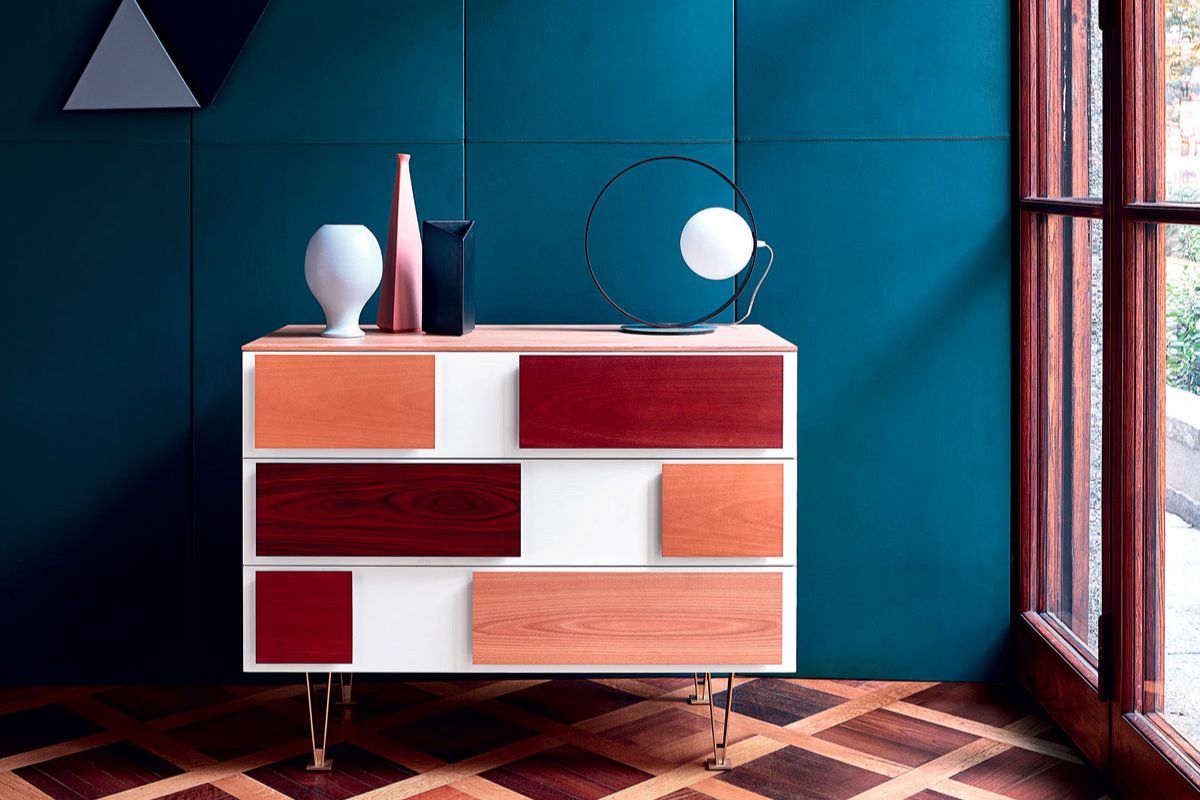
Designed by Gio Ponti in 1954, the D.655 sideboard was born at a crucial moment in his career, when the Milanese architect was redefining the language of domestic design, seeking a balance between elegance, functionality and chromatic experimentation.
In the 1990s, Molteni&C acquired the rights and re-edited it with a careful philological operation, bringing it back to life and consecrating it as one of the most beloved pieces of Italian design.
Features
-
Walnut structure with beveled sides and tapered feet in satin brass.
-
Doors and drawers characterized by colored geometries , with lacquered finishes in white, yellow, blue and red.
-
Essential but dynamic line, which combines craftsmanship and modernity.
-
Available in different configurations, from the most compact model (D.655.1) to the larger one (D.655.2).
Because it is iconic
-
It is one of the manifestos of post-war Italian design , capable of synthesizing formal lightness and decorative strength.
-
His color palette has become a distinctive feature, combining the rationalist tradition with the joy of color.
-
It represents Ponti’s ability to look beyond function, transforming a container into an architectural and cultural gesture .
-
It is still present today in the collections of design museums and in Molteni&C catalogs as a timeless icon .
Sideboard Arne Vodder (1950s1960s)

In the 1950s, Scandinavian design conquered the world with its sober and refined aesthetic. Among the protagonists stands out Arne Vodder , Danish architect and designer, student of Finn Juhl. His teak and rosewood sideboards , produced by Sibast Furniture, become a symbol of mid-century modern : furniture that combines impeccable functionality and the natural beauty of materials.
Features
-
Structure in solid wood (teak or rosewood), with extremely high quality craftsmanship.
-
Sliding doors and drawers with colored or natural wood fronts, often staggered in geometric patterns.
-
Light lines and balanced proportions, resting on thin legs that lighten the volume.
-
Wide variety of configurations, designed to adapt to both domestic spaces and professional contexts.
Because it is iconic
-
It is one of the most recognizable sideboards of Danish design , capable of combining Nordic rigor and material warmth.
-
The combination of fine woods and colored inserts introduces an innovative decorative dimension.
-
It represents the Scandinavian philosophy of the 1950s: a democratic, functional, yet profoundly elegant design .
-
Even today it is a piece coveted by collectors and vintage enthusiasts, as well as present in international design auctions.
Series of sideboards Ib Kofod-Larsen for Faarup Møbelfabrik (1957)

At the end of the 1950s, at the height of the Scandinavian design boom, the Danish Ib Kofod-Larsen created for Faarup Møbelfabrik a series of sideboards that embody the essence of Nordic modernism: pure lines, noble materials and refined details. These sideboards, in rosewood or teak, are considered among the pinnacles of Danish production and today are sold at major international auctions as masterpieces of cabinetmaking.
Features
-
Structure in fine woods (rosewood and teak), worked with extreme craftsmanship.
-
Sliding or hinged doors with natural grain always highlighted.
-
Internal drawers with integrated handles and invisible construction details, typical of Scandinavian minimalism.
-
Thin and slightly flared legs, which lift the volume and give it visual lightness.
Because it is iconic
-
It is one of the greatest expressions of the Danish school of the mid-twentieth century , alongside the works of Arne Vodder and Finn Juhl.
-
It combines rigorous functionality and the natural beauty of wood, with attention to detail that makes each piece unique.
-
It influenced generations of designers with its understated elegance , showing how a piece of furniture could become a timeless design element.
-
Today he is wantedprized by collectors and considered an investment object , a symbol of Scandinavian mid-century modern.
Sideboard 606 Universal Dieter Rams for Vitsoe (1960)

In 1960 Dieter Rams , a young German designer who would later define the “10 principles of good design”, designed the modular system 606 Universal Shelving System for Vitsoe .
Although conceived as a bookcase, this project includes sideboards and suspended containers which redefine the very concept of furniture: no longer a static object, but a modular and flexible element.
Features
-
Modular structure in aluminum and steel, with suspended or self-supporting elements.
-
Sideboards and sideboards integrated into the system, with folding doors and linear drawers.
-
Extremely minimalist design, based on purity of function.
-
Neutral colors (white, black, grey), designed to adapt to any environment.
Because it is iconic
-
It is one of the first modular sideboards of modern design , anticipating the concept of furniture flexibility.
-
Perfect embodiment of Rams’ motto: Less, but better .
-
It demonstrates that the sideboard does not have to be decorative to have character: its strength is its essential function .
-
Still in production today, the 606 system with its integrated sideboards is considered a cornerstone of 20th century industrial design.
Florence Knoll Sideboard Florence Knoll for Knoll (1960s)
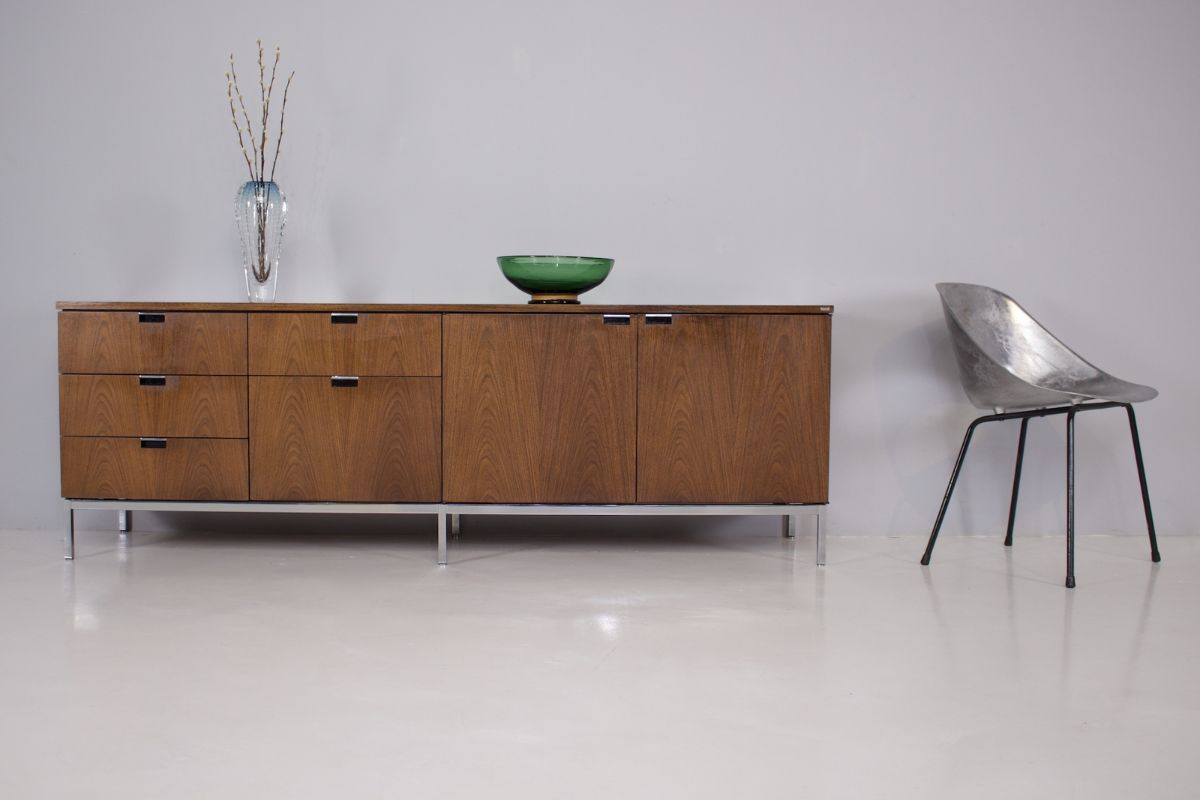
Among the furniture that best embodies American modernism, Florence Knoll’s sideboard holds a special place. Designed in the 1960s, it is the translation of his rigorous and functional vision into fur
Leave a comment