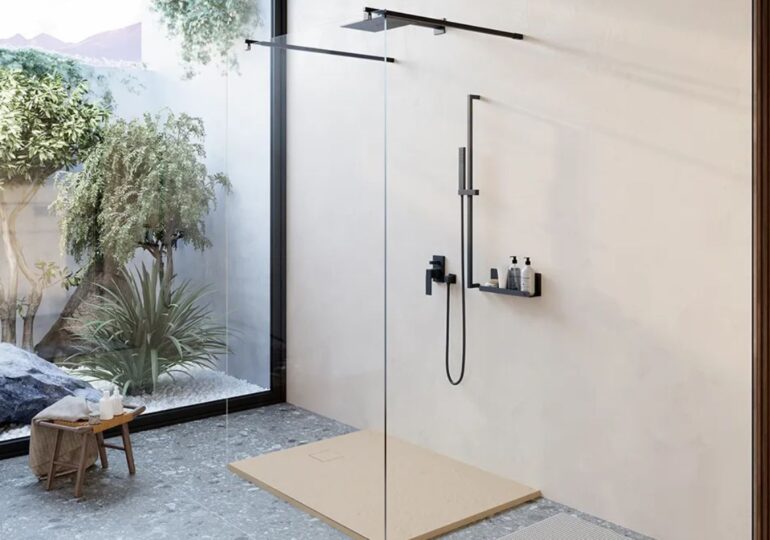
Renovating a bathroom is always a cause for concern and working on an environment with existing flooring and the need to maintain it is even more challenging. Installing a new shower tray without modifying the coverings requires careful analysis and in-depth research; However, obtaining an impeccable result is not only possible, but also within everyone’s reach.
Continuity with the existing floor, in fact, can be achieved by combining materials and textures capable of guaranteeing a coherent and credible result , even if designed at different times. To achieve this purpose, it may be useful to choose floor-level shower trays , planning to combine different surfaces and obtain a more fluid transition between the shower area and the rest of the environment.
The objective is not only to modernize the toilet, but is also to put two elements born at different times in communication, without causing tears. Of course, this balance requires design skills that take into account performance and technical constraints, but it can be done, without regretting the choice to save the floor.
Flush to the floor or ultra-thin shower tray: when to prefer them
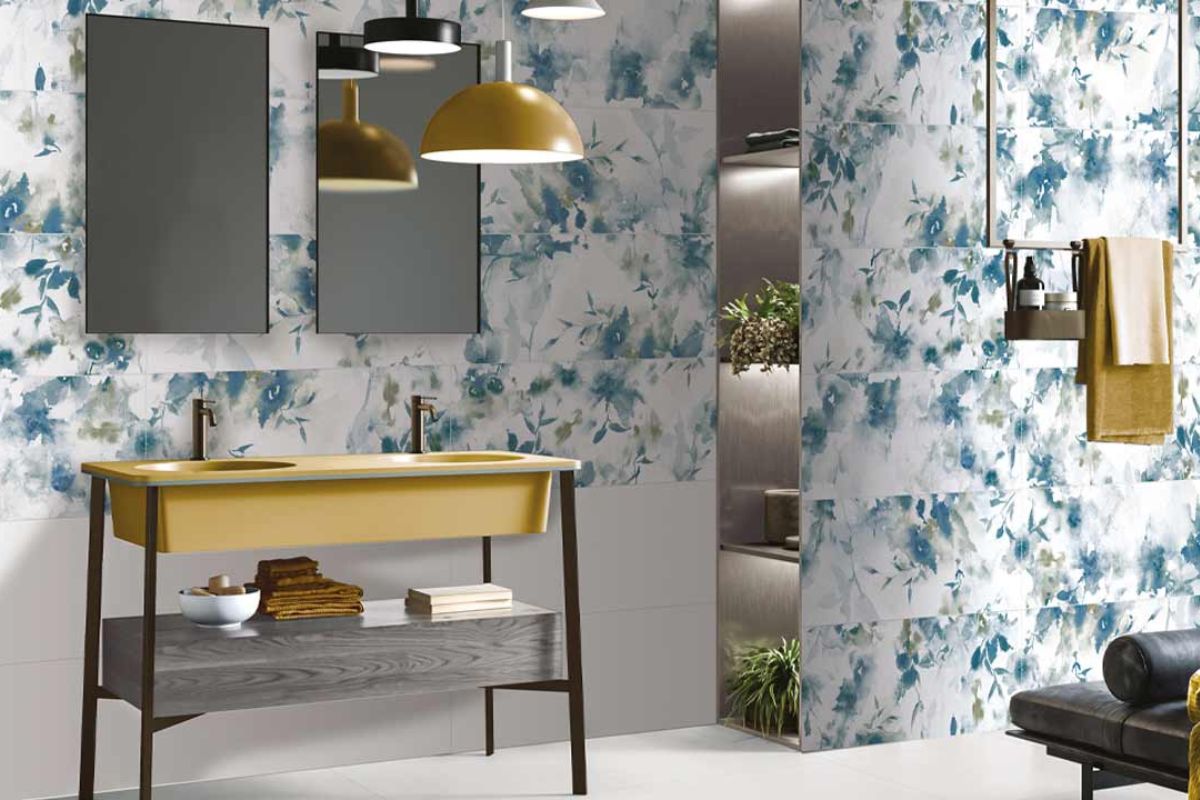
The floor-level shower tray is the most obvious choice when you want to maintain an overall view as linear and clean as possible. When eliminates the difference in height between the floor and the tray , in fact, the eye can travel up to the shower cubicle without obstacles.
A very similar result can be obtained with ultra-thin models which, although not completely aligned, are still very discreet, thanks to reduced thicknesses and linear surfaces. This is the preferred option when the height of the screed or the presence of systems prevents complete installation.
Slopes as a determining factor
A fundamental aspect for an efficient shower is the management of slopes . The floor-level trays are designed upstream with a uniform slope towards the drain: in this way stagnation which could lead to traffic jams and unhygienic accumulations of dirt and bacteria is avoided.
This feature allows for optimal installation without interventions on the existing surface, an important factor especially in bathrooms where the floor must be preserved.
Materials and finishes: agreements and disagreements
To make a pre-existing material go along with a new installation, two opposite but equally functional paths can be taken: total agreement or clear contrast. In both cases, shade , surface and size of the pre-existing tiles must be the starting point.
Shower tray and floor can share colors or textures already present, even in different shades, in this way the dialogue will be easy and the whole will appear balanced.
On the contrary, inserting a shower tray different in color and material can transform the box into a focal point . The contrast, in fact, becomes an architectural element when used to underline the clear separation between areas.
This setting is therefore not based on a harmonic chord of the palette but requires avery carefully designed so that the contrast is still fascinating and not jarring.
Pre-existing drain and ideal shower tray
As anticipated, the drain is the most important element for an efficient shower and adapting the shower tray to a pre-existing one may seem like a Herculean undertaking. Once again, the floor-level plates come to our aid. The location of the drain, in fact, can vary (central, lateral, off-centre), allowing you to find the solution that adapts most easily to the pipes already present.
This flexibility allows to limit interventions on the water system, maintaining – when possible – the existing arrangements.
Aesthetic strategies and practical solutions to make all the elements communicate
If the objective is to obtain a fluid transition between the shower tray and the existing floor, every intervention must be considered from this perspective: in some cases continuity enhances the environment, in others a thoughtful contrast can give character to the environment.
The alignment of joints , the use of similar or different shades but with uniform surfaces can be a starting point from which to connect elements installed at different times.
Technique and aesthetics at the service of balance
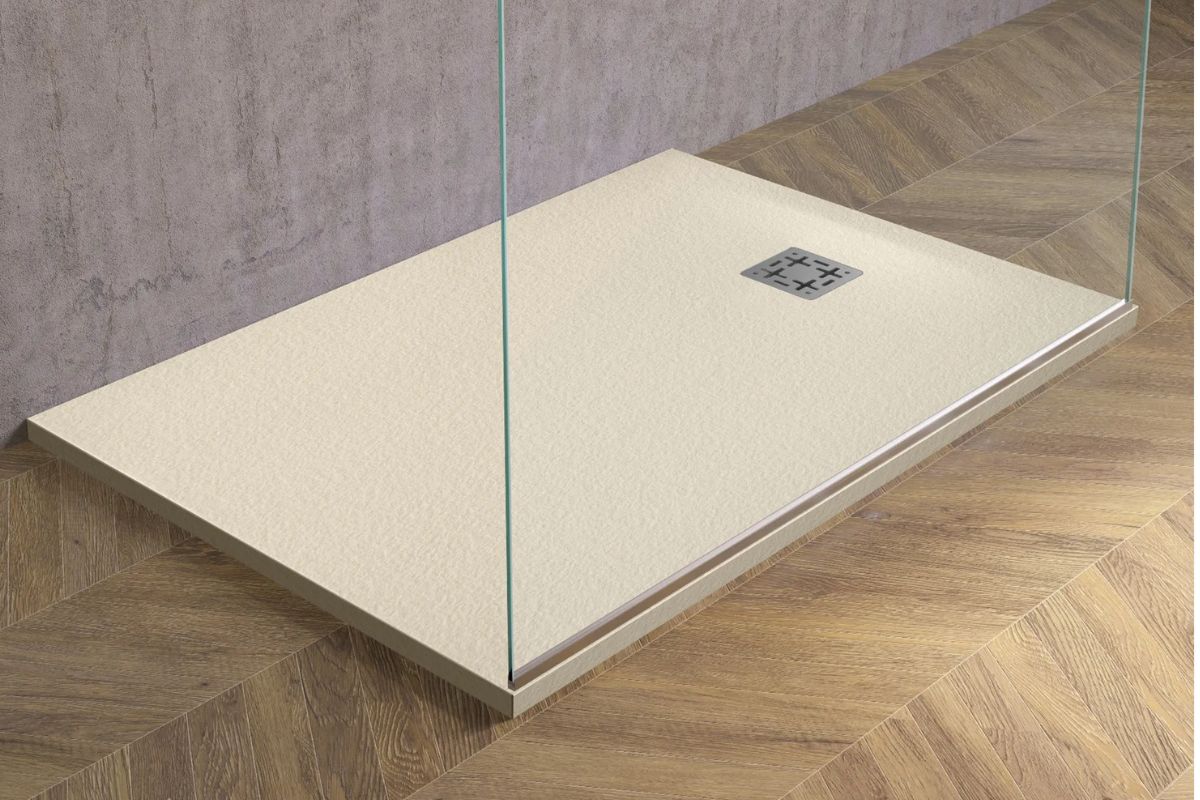
Integrating a new shower tray into an already tiled bathroom requires a balancing act between aesthetics and technical skills . The floor-level and ultra-thin plates are a functional option for this purpose, because they allow great flexibility in managing unevenness and help create a coherent dialogue between different surfaces.
The world is divided between those who prefer to hide defects by minimizing them and those who enhance them to transform them into strengths: in architecture the principle is the same.
In both cases, an accurate preliminary evaluation guarantees a precise intervention and perfect integration, respecting what is already present and enhancing what is to come.
Leave a comment