The designer houses are the architectures that best describe the most intimate and experimental part of the profession of designing. In them, the idea of ??home is transformed into a declaration of poetic architecture : proportions, light, materials and landscape become tools for expressing a thought, a character, a way of seeing the world.
What are the most famous and significant author houses of all time? From Mies van der Rohe to Le Corbusier, from Lina Bo Bardi to Tadao Ando, ??from Álvaro Siza to John Pawson and Patricia Urquiola, the great architects have left their most sincere signature in domestic design.
Twenty years of architecture can be read through these homes: transparent shelters, volumes carved into the stone, houses suspended in the landscape or immersed in the material.
The 20 houses selected in this article are chapters of a single story: that of architecture as a form of thought and as a space of the soul.
1. Farnsworth House, Mies van der Rohe the house as absolute transparency, among the most famous author’s houses in the world
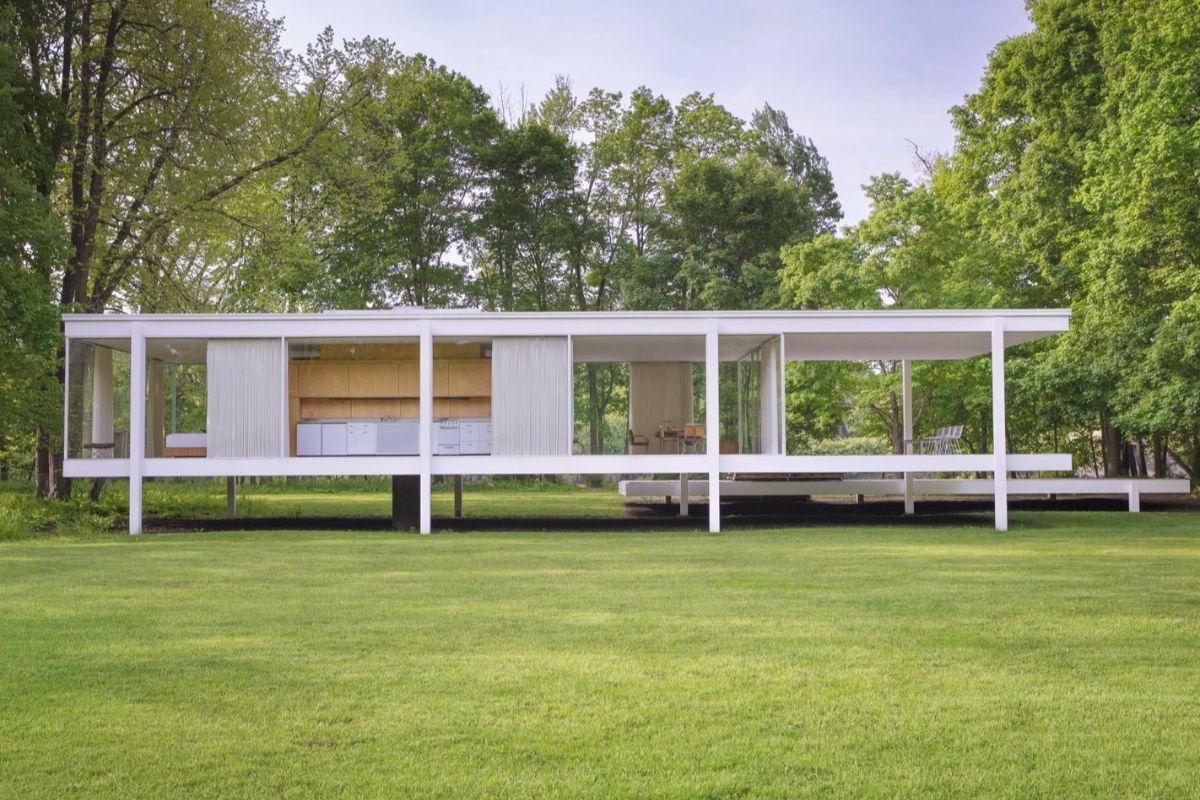
Built between 1945 and 1951 in Plano, Illinois, for Dr. Edith Farnsworth, the Farnsworth House is one of the most radical pieces of architecture of the 20th century.
With its volume suspended on white steel passatellis and entirely glazed walls, it represents the quintessence of the less is more philosophy of Ludwig Mies van der Rohe .
Here the house becomes a concept, reduced to its structural essence: platform, space and light .
Each element – the raised floor, the flat roof, the continuous glass – is part of a perfect grammar in which nature enters to define the limit between inside and outside.
There is no decoration, only structure; there is no protection, but immersion.
The house, now a museum, is one of the first examples of house-landscape , where the architectural boundary dissolves in the perception of the context.
A still very current manifesto for designers who seek lightness, clarity and visual order but also a warning: absolute transparency, if taken to the extreme, can become vulnerability.
The iconic houses of the twentieth century that made history
2. Villa Savoye, Le Corbusier the house as a machine for living
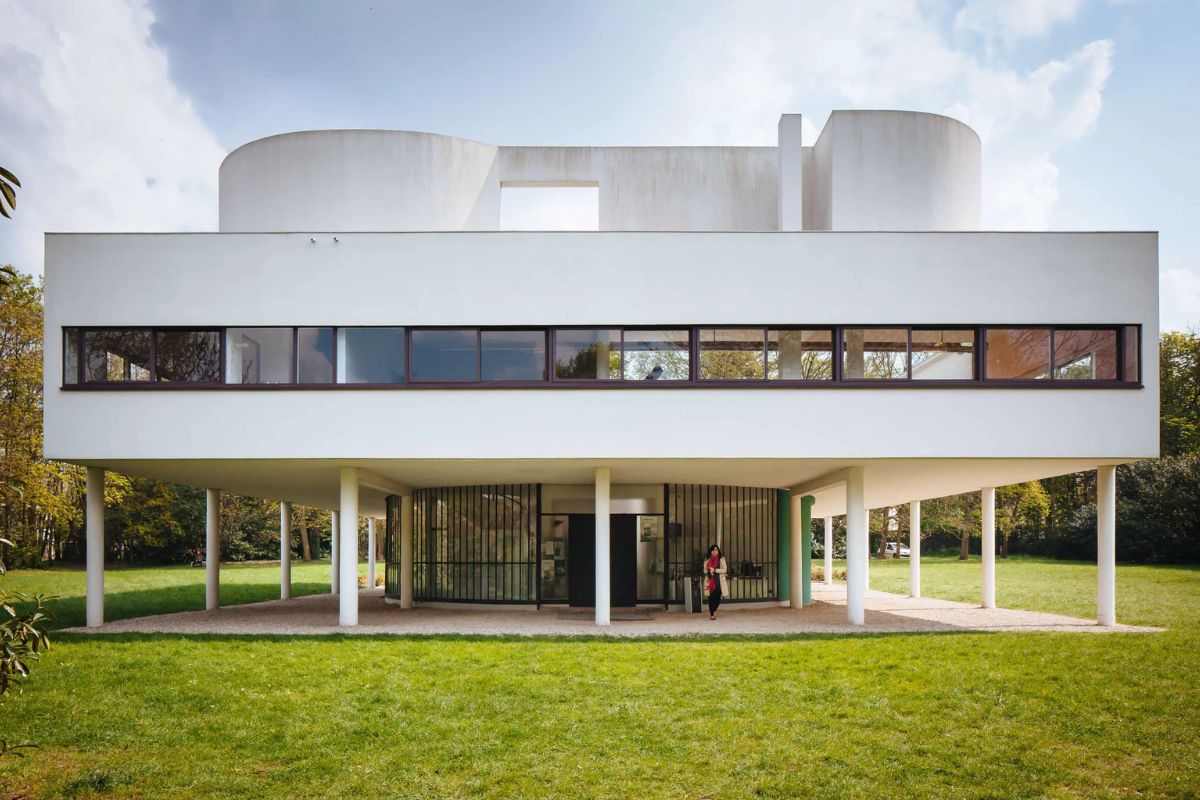
Completed in 1931 in Poissy, near Paris, the Villa Savoye represents the highest point of the modern thought of Le Corbusier and one of the undisputed manifestos of 20th century architecture.
Conceived for the Savoye family as a country residence, the villa is a laboratory of spatial and symbolic experimentation, in which the architect applies his five points for a new architecture in an integral way for the first time:
PILOTIS, garden roof, free plan, free façade and ribbon window.
The building appears as a suspended volume, pure and rational, in which the function determines the form.
The ground floor is freed from wall constraints and leaves room for the movement of the car; the first floor houses the main rooms, organized aroundup to an internal patio and connected by a ramp which becomes a perceptive experience of the project .
The natural light, filtered by the large horizontal openings, constructs the narrative of the space with an almost cinematic logic.
The Villa Savoye is more than a house: it is an idea of the world.
Le Corbusier defined it as “a machine for living “, understanding the house as a functional organism, capable of combining technology, aesthetics and well-being.
Its influence on contemporary design and architecture remains profound: from structural clarity to the relationship between form and function, up to the vision of the house as a fluid and rational space.
Today, restored and part of the UNESCO heritage, the Villa Savoye continues to represent the perfect synthesis between modern utopia and constructive poetry .
3. Casa das Canoas, Oscar Niemeyer the house as a sensual landscape
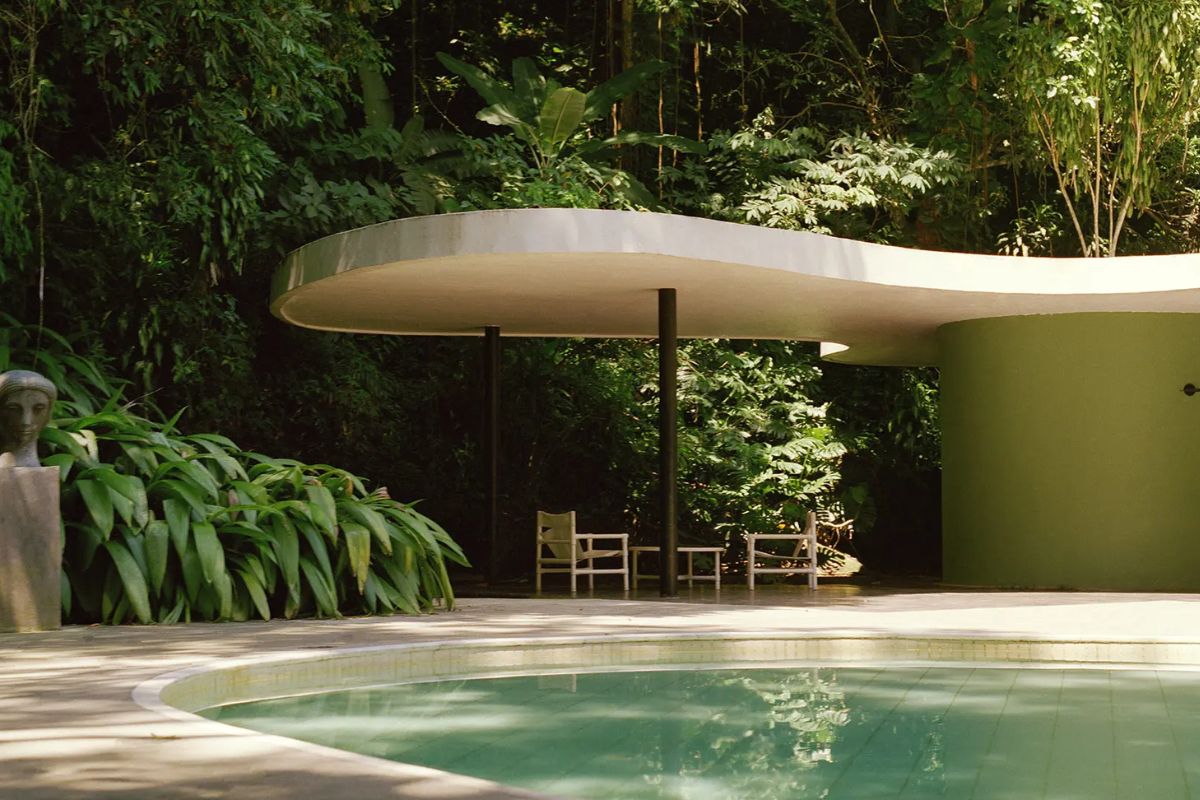
Designed in 1951 by Oscar Niemeyer as his own private home, the Casa das Canoas , located at the foot of the Tijuca forest in Rio de Janeiro, is one of the freest and most revolutionary domestic architectures of the twentieth century.
Unlike European rationalism, Niemeyer abandons all rigid geometry to let himself be guided by the tropical landscape and the natural curves of the mountain.
The house rests on the land like a fluid gesture, drawing a perfect balance between architecture and nature.
A single sinuous roof in reinforced concrete, supported by thin pilotas, covers open and closed spaces that alternate in visual continuity.
The water from an indoor swimming pool literally insinuates itself into the house, dissolving the boundaries between inhabited space and the natural environment.
Glass replaces the wall, light enters freely, matter becomes sensation.
The Casa das Canoas is an act of faith in the climate, vegetation and tropical transparency.
Niemeyer described it as “a house without obstacles, where the landscape is part of life”, anticipating the philosophy of bioclimatic and immersive architecture by decades.
Today, the residence is considered a symbol of modern Brazilian identity , where the eros of form and constructive logic coexist naturally.
It is a lesson that is still relevant today: true modernity does not arise from rigor, but from the ability to listen to the place .
4. Fallingwater, Frank Lloyd Wright the house as harmony with nature

Between 1935 and 1939, Frank Lloyd Wright designed the Fallingwater for the Kaufmann family, in the woods of Pennsylvania.
It is perhaps the most iconic house of the 20th century, capable of transforming a philosophy into architecture: living in nature, not next to it .
Wright places the house above a waterfall, merging structure and landscape into a single living organism.
The reinforced concrete terraces jut out like rocks over the watercourse, while the local stone, used for the load-bearing walls, roots the building into the ground.
The result is a composition poised between gravity and lawrezza, in which each element communicates with the surrounding environment.
The Fallingwater is not only an engineering masterpiece, but an ethical and poetic statement: the house must arise from the place and respect its rules.
The interiors, characterized by continuous spaces, integrated furnishings and grazing light, extend the sensorial experience of nature within domestic life.
For Wright, the house is an extension of the body and the earth.
The waterfall cannot be contemplated: it is listened to, it is experienced, it becomes a constant presence.
It is the maximum expression of organic architecture , a vision in which the project becomes an ecosystem.
Today, Fallingwater is a UNESCO World Heritage Site and continues to inspire generations of architects and designers with its simplest and most difficult lesson:
build in harmony, not in competition, with nature.
5. Casa Malaparte, Capri the house as an absolute gesture

Set on the promontory of Punta Massullo in Capri, the Casa Malaparte is one of the most recognizable and symbolic homes in the history of Italian architecture.
Designed between 1938 and 1942, officially by the architect Adalberto Libera , but profoundly modified by his client, the writer Curzio Malaparte , it is a construction that defies any classification.
The house rises like a solitary and sculptural presence , suspended between sea and sky.
A parallelepiped in red masonry stands out on the limestone rock, with a monumental external staircase leading to the roof terrace: a true natural stage facing towards infinity.
Inside, essential, austere and almost monastic spaces contrast with the absolute power of the context.
The Casa Malaparte is not a habitable house in the traditional sense, but a declaration of independence, an act of aesthetic and philosophical will.
Here architecture does not welcome, challenges : man and nature measure each other, face each other.
The staircase is not only a functional element, but a metaphor: ascent, isolation, contemplation.
Having also become famous thanks to the film Contempt by Jean-Luc Godard (1963), the house is now the property of a foundation and a symbol of architecture as an extreme authorial gesture .
It is the demonstration that the project can overcome the function, becoming a poetic and unrepeatable act a vertical dialogue with the landscape and with oneself.
6. Glass House, Philip Johnson the house as transparent introspection

Designed in 1949 as the personal residence of the architect Philip Johnson in New Canaan, Connecticut, the Glass House is a manifesto work of American modernism, but also an exercise in introspection and absolute control of space.
At first glance, the parallel with Farnsworth House by Mies van der Rohe is inevitable: both are built in steel and glass, immersed in nature, and declare flightnty of dissolving the limit between internal and external .
Yet, the Glass House has a radically different character.
If Mies seeks ideal purity, Johnson investigates the psychological dimension of transparency.
The volume, a simple rectangle of glass and burnished steel, is built as a perceptive device: an open space where nothing is hidden, but everything is reflected.
The custom-designed furnishings define functions without using walls; natural light constantly changes the atmosphere, transforming the house into an observatory of one’s existence .
The terrain of New Canaan becomes the true border: nature, reflections, the sky.
Around the Glass House, Johnson will build over time an entire landscape of architecture pavilions, galleries, studios which dialogue with each other like fragments of a single autobiographical story.
More than a house, it is a metaphor of modern living : transparency not as a moral virtue, but as an existential condition.
The Glass House remains one of the most lucid and disturbing works of the twentieth century, where the boundary between architecture and introspection becomes deliberately fragile .
7. Casa Gilardi, Luis Barragán the house as color and silence

Completed in 1976 in Mexico City, the Casa Gilardi is the last work created by the master Luis Barragán , and summarizes his poetics with extraordinary purity: architecture as emotion, color as light, space as introspection .
Designed for his friend Francisco Gilardi, the house develops on a narrow lot in the Tacubaya neighborhood and opens with a sequence of environments calibrated as a spiritual journey.
From the dark entrance you access increasingly bright spaces, up to the famous environment of the internal swimming pool , where the fuchsia wall and the intense blue one interact with the natural light filtered from above.
In Barragán, color is never decoration: it is immaterial architecture .
Every surface captures light, transforms it, returns it as time and memory.
Silence dominates the scene, broken only by the reflection of the water and the chromatic bounce of the walls.
The Casa Gilardi is a perfect example of how architecture can become a mystical experience, without losing geometric rigor.
The simplicity of the volumes, the control of light and the choice of materials – plaster, water, wood – create a balance between measure and spirituality.
Recognized by UNESCO as a world heritage site, the house is still today a reference for designers seeking a sensorial and contemplative language .
It is the demonstration that, sometimes, color can be more constructive than concrete.
8. Casa Batlló, Antoni Gaudí the house as a living organism
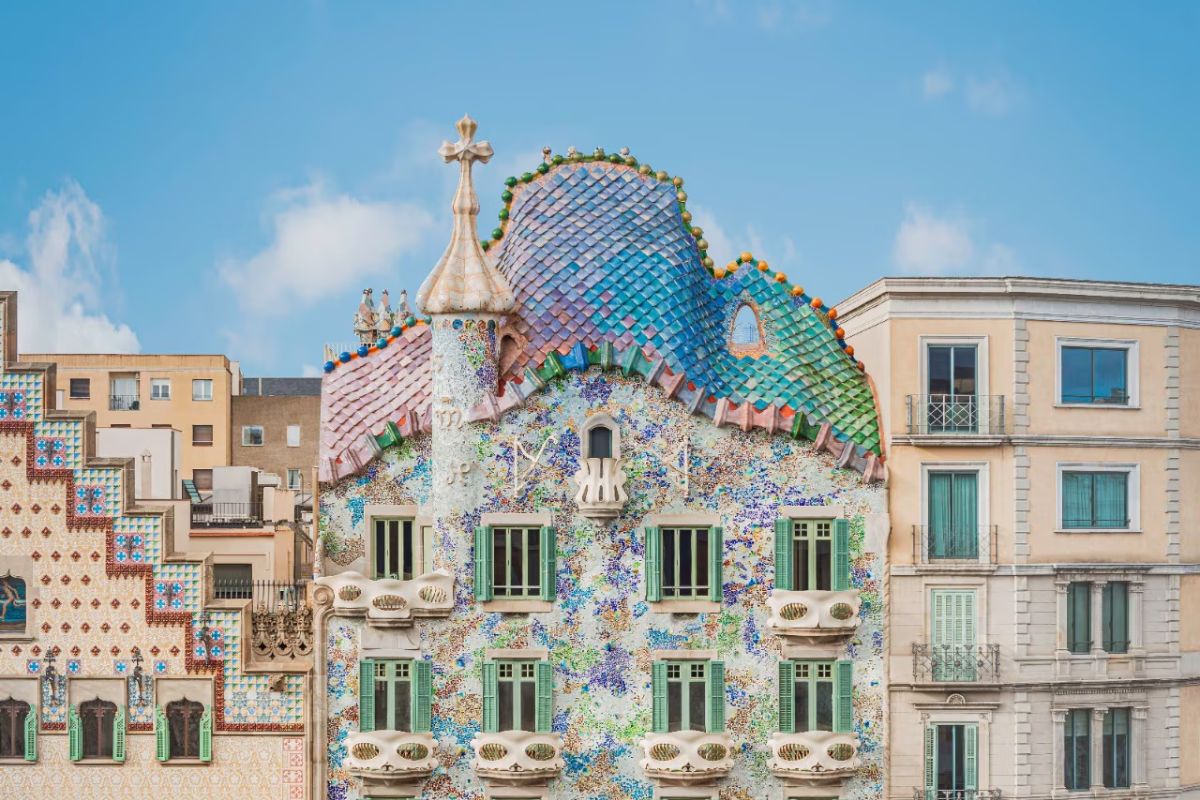
In the heart of Barcelona, along the Passeig de Gràcia, the Casa Batlló (19041906) represents the creative maturity of Antoni Gaudí and the pinnacle of the Catalan modernist season.
Renovated pFor the Batlló family, the house is one of the rare examples in which architecture becomes living material , capable of changing, breathing and telling.
Every detail of the building seems to belong to the natural kingdom: the curved lines of the facades, the changing colors of the ceramics, the wooden frames that recall vertebrae and shells.
Gaudí abandons the mechanical logic of the structure and builds an architectural organism where form, decoration and function coincide in a single fluid gesture.
The facade, covered with iridescent mosaics ( trencadís ), vibrates with the light of the Mediterranean; the roof, with its ceramic scales, evokes the back of a dragon – a mythical and spiritual symbol of Catalonia.
Inside, air and light flow as in a living body: stairs that wrap around, openings that dilate, surfaces that respond to touch.
The Casa Batlló is not just a building, but a total perceptual experience.
It is the manifesto of a thought that refuses the separation between art, craftsmanship and engineering.
For Gaudí, architecture is not representation, but transformation of matter into spirit .
Today, restored with immersive technologies, the Casa Batlló continues to inspire generations of architects and designers with its most timely message:
modernity is not born from the machine, but from the imagination.
9. Vanna Venturi House, Robert Venturi the house as intellectual irony
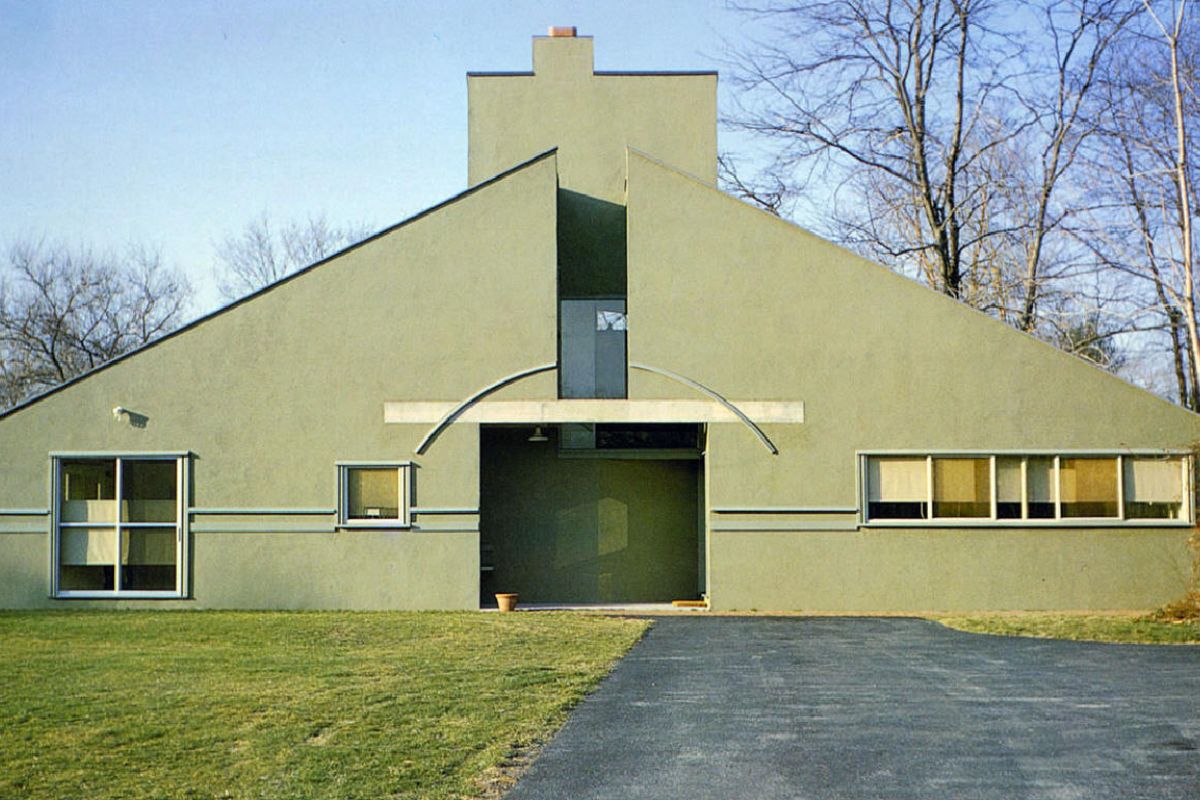
Built between 1959 and 1964 in Chestnut Hill, in the suburbs of Philadelphia, the Vanna Venturi House is one of the most discussed and influential projects of the twentieth century.
Dedicated to the architect’s mother, Robert Venturi , it represents the ironic denial of modernist dogmas and the beginning of the postmodern season.
The house seems simple, almost archetypal, but every element is the result of a semantic reversal.
The central pediment recalls the classical tradition, but is cut by a large asymmetric opening; symmetry appears and disappears, the staircase does not lead where one would expect, the proportions are deliberately unbalanced.
Venturi does not seek harmony, but complexity and contradiction , as he declared in his essay of the same name from 1966.
The Vanna Venturi House is a house that plays with the language of architecture, cites it and subverts it.
Every detail is a message, every ambiguity a critical act towards the rigidity of the Modern Movement.
Behind the apparent simplicity lies a profound reflection on the meaning of domestic space as a cultural and symbolic construction.
Today it is considered a turning point in the history of 20th century architecture: the moment in which architecture stops being dogma and returns to being discourse .
Venturi restores to living the freedom of being imperfect, contradictory, human.
10. Casa Rotonda, Mario Botta the house as an architecture of balance

Designed between 1980 and 1982 in Stabio, Switzerland, the Casa Rotonda by Mario Botta is one of the most emblematic works of his formal research.
In an era marked by linguistic fragmentation and emerging postmodernism, Botta responds with an absolute geometry: a perfect cylinder dug into the hill, in direct dialogue with the Ticino landscape.
The circular plan – inscribed in a square and organized on four levels – becomes the generating principle of the entire project.
The openings are calibrated as incisions in the wall mass; natural light penetrates from above and transforms the interiors into spaces of contemplation.
The use of red brick and exposed concrete restores a sense of material density and permanence.
For Botta, the house is a place of resistance : an architecture that opposes its form to the dispersion of the contemporary world.
The Round House does not seek mimicry, but balance: between geometry and nature, measure and emotion.
It is an architecture that speaks of centre, of rooting, of belonging.
Today, the house is considered one of the icons of European poetic rationalism, a symbol of the ability to create architecture with the essential .
In a time dominated by the image, Botta reminds us that true form is never surface, but structure of thought .
11. Casa Koshino, Tadao Ando the house as spirituality of concrete
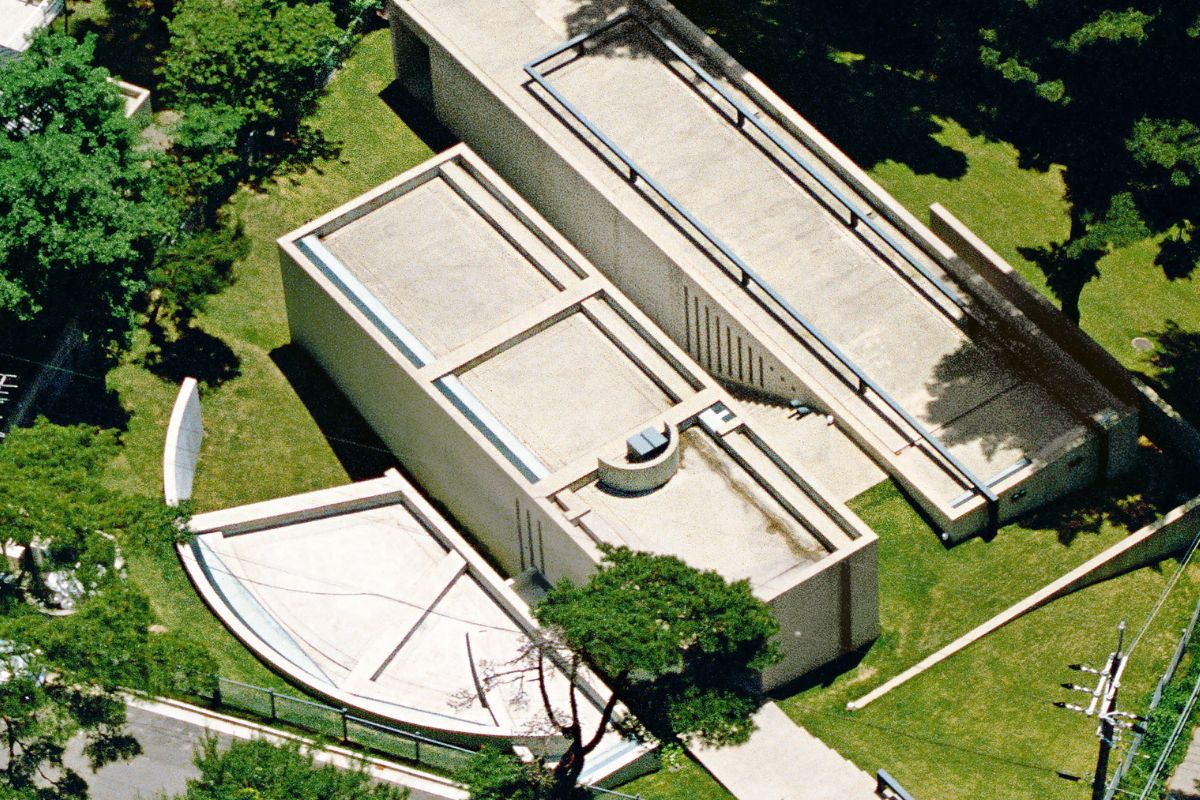
Built between 1980 and 1984 in Ashiya, in the Hy?go region, the Koshino House is one of the most intimate and revealing works of the language of Tadao Ando .
Designed for the stylist Hiroko Koshino, it is inserted in a steep terrain surrounded by vegetation, divided into two parallel volumes in exposed concrete , connected by an underground corridor.
Natural light enters through calibrated cuts, projecting shadows and reflections that animate the bare surfaces.
Architecture becomes a spiritual experience : the silence of the material, the measurement of space and the relationship with the landscape create a meditative condition.
Every constructive gesture is reduced to the essential, but possesses absolute emotional strength.
The cement , in Ando, is not cold matter, but a poetic instrument.
It is the support of light, the filter of time, the memory of form.
The house becomes a place of contemplation and discipline: architecture does not protect from nature, writes Ando, ?? but frames it.
The Koshino House is a masterpiece of balance between rationality and spirituality, a secular monastery immersed in the quiet of the Japanese landscape.
Today, it remains one of the most studied works by architects around the world for its ability to transform the hardest material into sensitive and sacred experience .
12. Casa Vieira de Castro, Álvaro Siza the house as a measure between landscape and silence
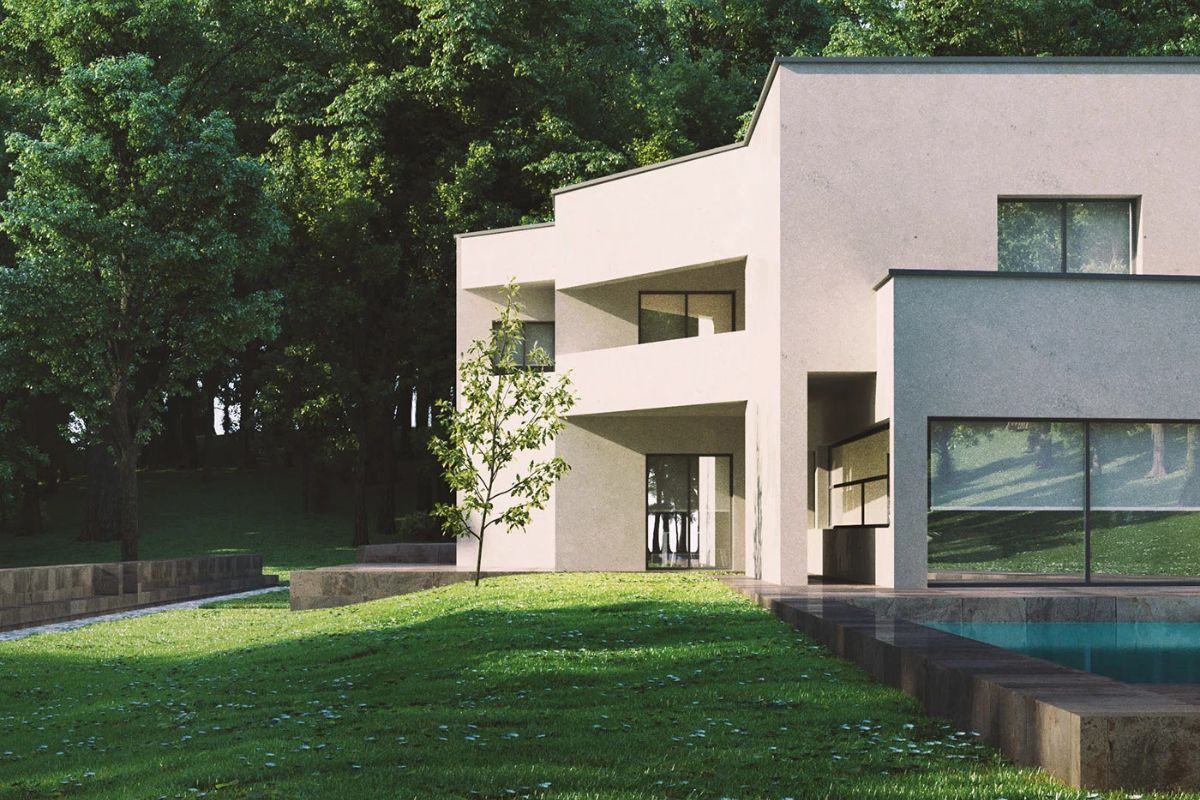
Built between 1998 and 2000 in Vila Nova de Famalicão, in northern Portugal, the Casa Vieira de Castro by Álvaro Siza Vieira is one of his worksand more intense and mature.
An architecture that dialogues with the hilly landscape through the logic of measurement, light and silence.
The house arises from a green slope and develops into two parallel volumes in white concrete, partially buried in the ground to follow the natural topography.
The relationship with the ground is calibrated with the precision of a geological design: the house does not impose itself , but emerges .
The windows are horizontal cuts in the wall mass, dosed like slits of light.
The interiors, measured and almost ascetic, combine open and intimate spaces, according to Siza’s typical dialectic between constructive rigor and sensitive perception.
White, concrete and local stone design an architecture that is at the same time presence and absence , construction and landscape