What are the most iconic houses of the twentieth century and why do they still represent essential points of reference for architects and designers today?
The last century has been a field of revolution: new materials, new technologies and new social visions have transformed the house from a simple refuge to a cultural and political manifesto . Each iconic project tells an idea of ??the world: transparency as a utopia of freedom, integration with nature as an ethical declaration, modularity as the promise of a democratic future of living.
If the nineteenth century had established the solidity of the bourgeois house, the twentieth century has called it into question , opening it, emptying it, elevating it to a habitable sculpture. Architects such as Wright, Le Corbusier, Mies van der Rohe, Gio Ponti or Adalberto Libera have not only created houses, but true laboratories of living .
Domestic architecture in the twentieth century: a new language
The twentieth century saw the birth of movements that radically influenced residence:
-
The Modern Movement : the house as a machine for living, rational and functional, designed according to industrial logic.
-
Rationalism and the International Style : pure lines, smooth surfaces, ribbon windows, exposed structure.
-
Organic architecture : the dialogue with nature, the idea that the house is not an isolated object but part of an ecosystem.
-
The artistic avant-gardes : from Futurism to De Stijl, from Expressionism to Bauhaus, each movement has contaminated the domestic project.
Thanks to this convergence, the twentieth century transformed living into aesthetic, social and philosophical experience .
The iconic houses of the twentieth century
Fallingwater (House on the Waterfall) Frank Lloyd Wright, 1939

Probably the most famous house in the world. Wright conceived it so that it did not dominate the waterfall, but overlapped with it like a natural organism. The reinforced concrete terraces seem to slide on the water, while the local stone roots the building to the ground. Fallingwater is the perfect synthesis of organic architecture : a place where living means merging with nature.
Villa Savoye Le Corbusier, 1931
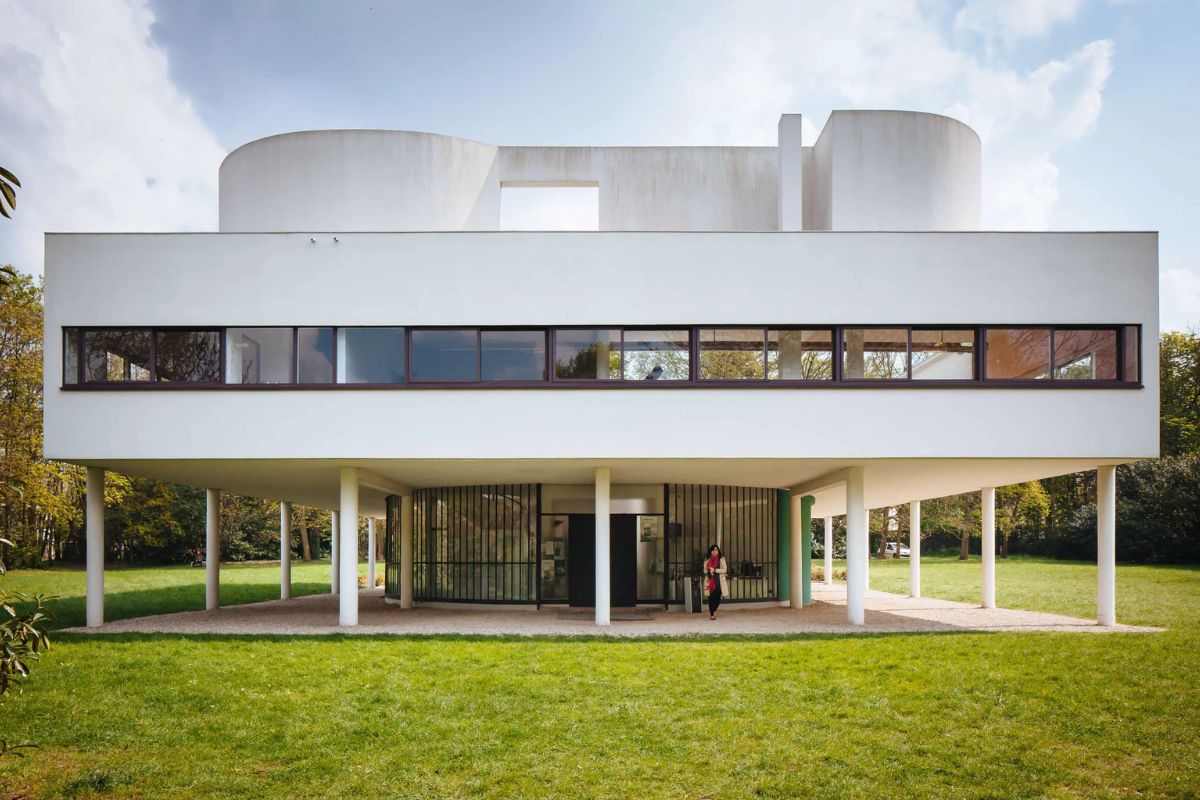
An absolute manifesto of the Modern Movement. Located in Poissy, the Villa Savoye applies the Five points of the master: passatelli that lift the building, free plan made possible by reinforced concrete, façade independent of the structure, ribbon windows that open the house to the light, roof garden as a living space. Not just architecture: a rational utopia that has set a precedent throughout the world.
Farnsworth House Mies van der Rohe, 1951
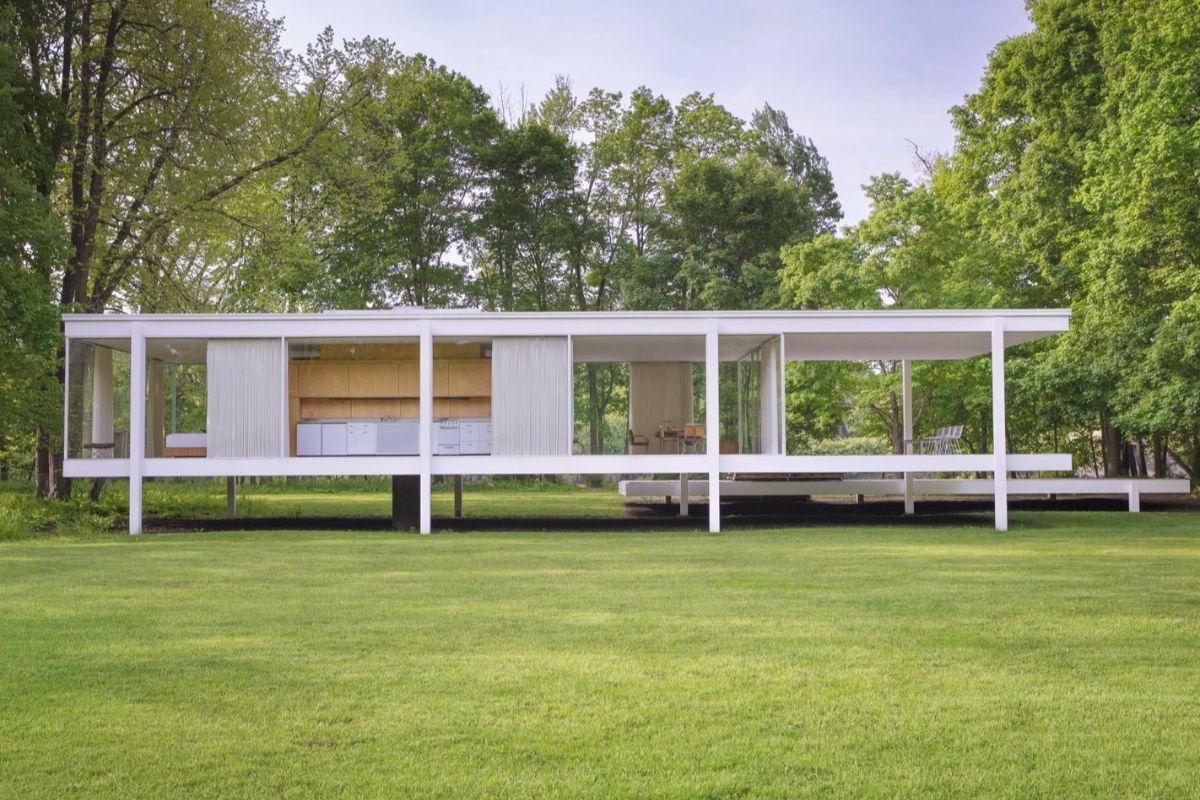
A transparent parallelepiped suspended among the trees of Illinois. The Farnsworth House is an extreme experience: glass and steel as the only elements, the landscape as the absolute protagonist. It is the purest house of modernism, radical in its abstraction. For some uninhabitable, for others the highest form of housing poetry.
Glass House Philip Johnson, 1949

American response to Miesian purity, but with greater domesticity. The Glass House, in New Canaan, eliminates the barriers between inside and outside: four walls of glass, a single open space, minimal furnishings. Around it, a park designed as “green rooms” which become extensions of the house.
Casa Malaparte Adalberto Libera, 1940

An architectural enigma, suspended between rationalism and Mediterranean lyricism. Built in Capri for the writer Curzio Malaparte, it is famous for its monumental staircase that leads to a roof terrace open to the sea. The Pompeian red of the facade, the local stone and the spectacular location have made it one of the most iconic and cinematic homes in history.
Read also: Capri and design: the island that inspires architects and designers around the world
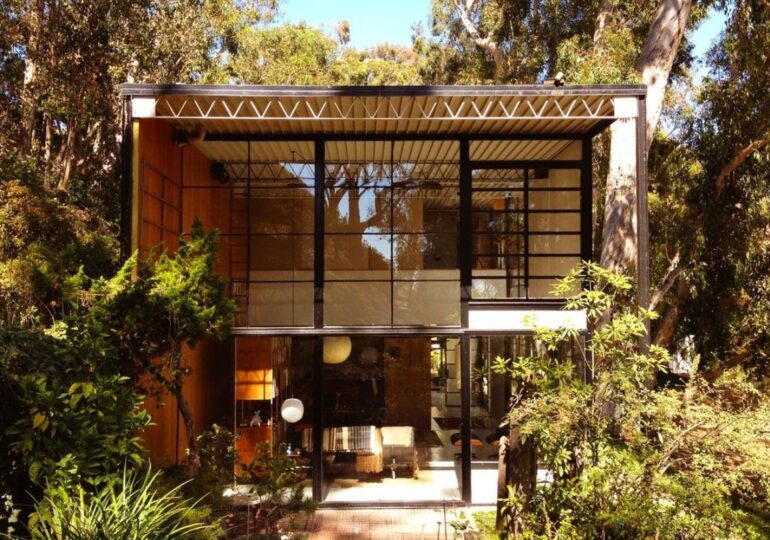
Eames House (Case Study House #8) Charles and Ray Eames, 1949

A prototype of modern living. Prefabricated structure in steel and glass, modular spaces, furnishings designed by the owners of the house: the Eames House in Pacific Palisades is a successful experiment in democratic design , where architecture and interior dialogue in perfect harmony. It is the manifesto of post-war Californian culture.
Villa Necchi Campiglio Piero Portaluppi, 1935

In the heart of Milan, Villa Necchi is the emblem of rationalist luxury. Elegant environments, fine finishes, cutting-edge details for the time (private swimming pool, lift). Now a FAI property, it is an extraordinary example of how Italian domestic architecture has interpreted modernity and the bourgeoisie.
Villa Planchart Gio Ponti, 1957

Considered by many to be Gio Ponti’s most complete domestic work. Built in Caracas, the Planchart villa embodies his idea of ??an “Italian house” projected abroad. Custom-made furnishings, innovative use of color, structural lightness: a total project, in which architecture, art and design come together.
Read also: Gio Ponti: architect of modern Italian design
Casa Gilardi Luis Barragán, 1976

Color becomes architecture. In Mexico City, Barragán uses pink and yellow walls, plays of light and a small body of water to transform a private residence into a spiritual experience. It is a rare example of poetic architecture , where living means experiencing a daily aesthetic ritual.
Casa Rotonda Mario Botta, 1982

A perfect top hat in the Ticino countryside. The Casa Rotonda embodies Botta’s approach: pure geometry, massive masonry, calibrated openings. A monument to order and measure, which transforms the residence into sculpture.
Why these houses made history
Each of these homes represented a design turning point :
-
New materials (glass, steel, reinforced concrete) as protagonists.
-
New ideas of space : open space, transparency, internal/external continuity.
-
New values : from the social function of modernism to the search for the spiritual relationshipwith nature.
They are not simple houses, but milestones of architectural thought . They have been inhabited, loved, criticized, photographed, and today they live as museums, foundations or studio homes.
Iconic houses and architecture of the twentieth century
The iconic houses of the twentieth century do not only belong to the past century: they continue to speak to us today, at a time when living is once again at the center of cultural reflection.
They teach us that the house is not a container, but a living organism, capable of reflecting ideas, dreams and utopias.
And above all they remember that domestic architecture is always political : every wall, every window, every design choice tells of a way of living and understanding society.