Lighting is one of the most powerful elements in the success of an interior project. Light has a profound impact on the psychophysical well-being of those who live in a space: a skilful fusion of aesthetics and functionality through light design can radically transform an environment, define its character, influence perception and improve comfort.
The undisputed protagonists of lighting are lamps and chandeliers. Whether pendant, wall, floor or table – opulent or minimalist, designed to diffuse general, accent or functional light – they are never simple light sources. They are real design elements, capable of enhancing a space thanks to their shapes, materials and plays of light. In particular, designer chandeliers are true works of art: they not only furnish, but define the identity of an environment with their scenographic presence.
Over time, numerous designers have explored lighting as a key element of furniture, giving life to iconic projects and objects that have marked the history of design. Some of these pieces have become true collector’s items, capable of illuminating with style and personality.
From sumptuous crystal chandeliers, symbols of classic elegance, to contemporary models with essential and futuristic lines, the evolution of lighting design has followed – and often anticipated – the aesthetic and functional trends of each era. Innovative materials, advanced technologies and sustainable solutions have made light an increasingly customizable element, adaptable to every style and need.
Today the chandelier is no longer a simple furnishing accessory: it is the protagonist of the space, capable of redefining environments and creating unique atmospheres. When turned on they make light, when turned off they are real sculptures.
We leafed through decades of history of light design, compared shapes, materials and visions. It wasn’t easy to decide what to include and what, unfortunately, to leave out.
What we present to you is a thoughtful and heartfelt selection of some of the most iconic lamps: true masterpieces that have passed through time, leaving a profound mark on the world of light design.
Designer table lamps: the iconic ones that made history
The Banker’s Lamp – Harrison D. McFaddin
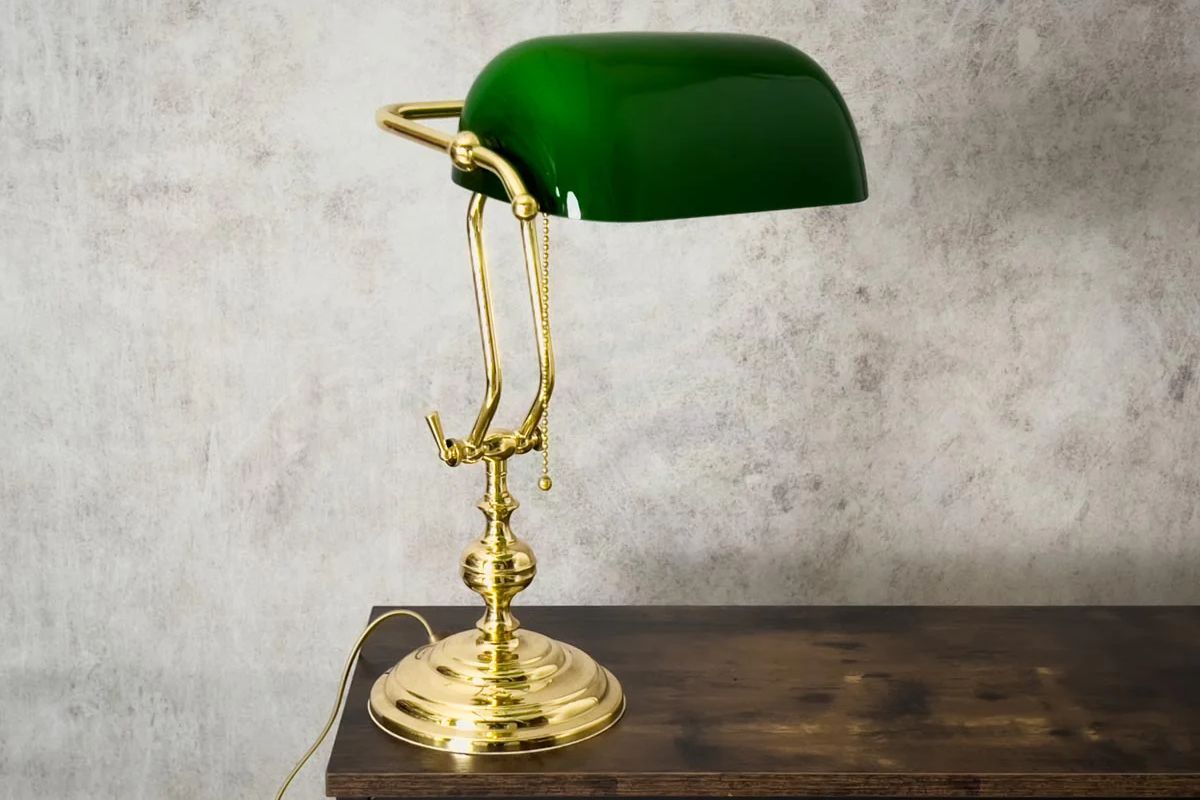
The Banker’s Lamp is one of the most iconic desk lamps ever, easily recognizable by its green glass shade and brass base. Patented in 1909 by Harrison D. McFaddin with the name Emeralite (a union of “emerald” and “light”), it was immediately appreciated for its perfect balance between austere elegance and functionality. Very widespread in banks, libraries and offices, it owes part of its success to the belief that greenery helps concentration and reduces stress. It is also called as Churchill Lamp .
In the 1930s, its popularity reached its peak, but World War II slowed production due to the difficulty of sourcing European glass. Less refined metal versions were thus introduced, while the company changed management and name. After a slow decline, production stopped definitively in 1962.
Today the Banker’s Lamp is considered a cult object: still reproduced throughout the world, its original versions have become precious piecescollectible. A timeless classic that tells a story.
Ball – Gio Ponti
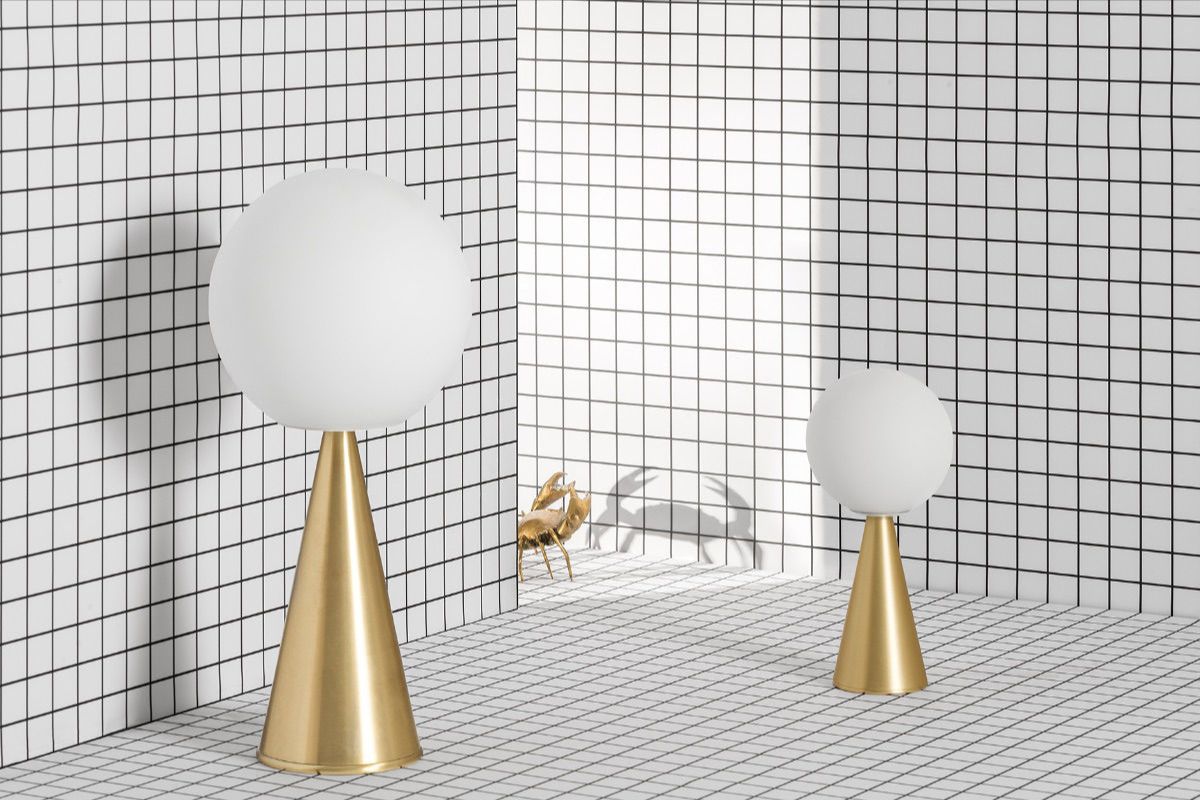
The Bilia lamp is one of the best-known creations of Gio Ponti, master of Italian design.
Designed in 1931, this compact table lamp perfectly represents Ponti’s poetics characterized by elegance and essentiality, typical of rationalist design.
Geometric and scenographic, it is composed of a conical metal base, available in different color variations, on which, with an illusory (and impossible) balance, an opaline glass sphere rests which diffuses a soft and enveloping light.
It has a strong aesthetic impact and a timeless style: its minimalist shape still makes it extremely current and versatile, allowing it to adapt to any furnishing style, from classic to contemporary.
Today the Bilia lamp is produced by FontanaArte, a historic Italian design company, and continues to be a cult object for interior design enthusiasts.
Bat Gae Aulenti

Designed in 1965 by one of the few great Italian architects and designers of the 20th century: Gae Aulenti – also known for projects such as the Musée d’Orsay in Paris – the Pipistrello lamp is still an emblem of interior design today.
Originally created for the project of two Olivetti stores, in Paris and Buenos Aires, it was only later that Martinelli Luce decided to put it into production for large-scale distribution.
Its design represents a perfect balance between Art Nouveau influences and the Rationalism of the 1960s. The distinctive element is the opaline methacrylate diffuser, which with its shape recalls the spread wings of a bat, from which it takes its name.
The telescopic base in stainless steel or painted metal allows you to adjust the height, a feature that makes it one of the first hi-tech lamps of Italian design.
Produced continuously by Martinelli Luce since its debut, the Pipistrello lamp is considered a symbol of Italian design of the 1960s and is still highly desired today, perfect in any environment.
Atoll – Magistretti
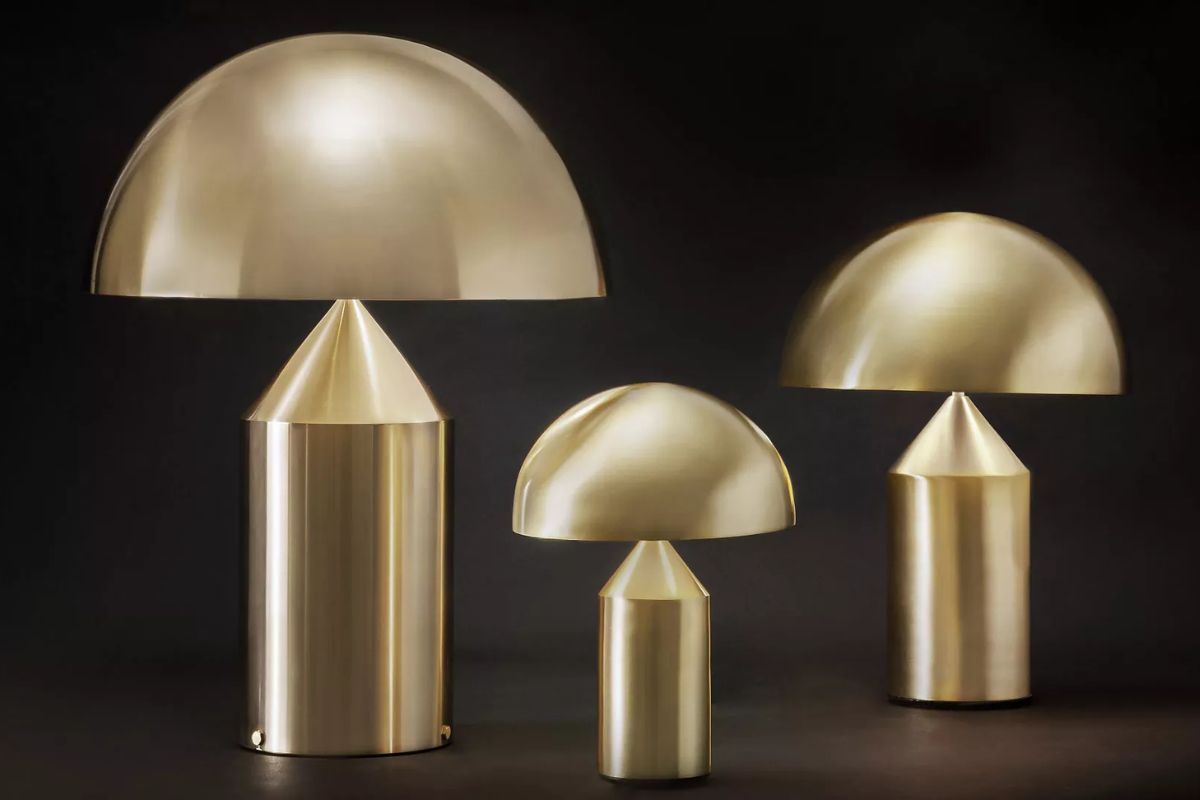
The table lamp par excellence, impossible not to have ever seen: protagonist of magazines, film sets, very often present in sophisticated environments.
Born in 1977 from the genius of Vico Magistretti, the Atollo lamp won the Compasso d’Oro in 1979. The perfect embodiment of the philosophy of its great designer, founded on geometric purity, it perfectly reflects Magistretti’s thoughts: “I love geometric shapes. I love making essential things that seem like nothing”, he said .
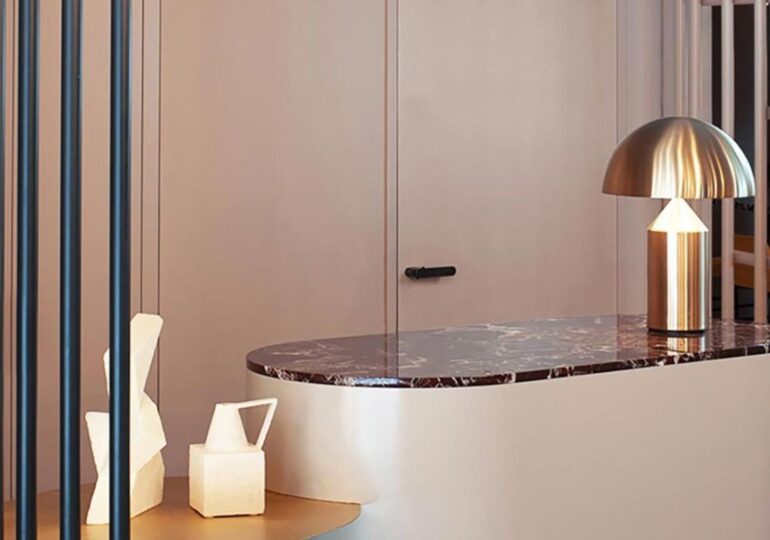
With Atollo, Magistretti reinterprets the classic lampshade through the balance of three pure shapes – a cylinder, a cone and a hemisphere – giving life to an object as essential as it is elegant, destined to become an icon of lighting.
Available in three sizes and in different finishes white, black, satin bronze and satin gold Atollo continues to be an undisputed synonym of style.
Tolomeo De Lucchi/Fassina.
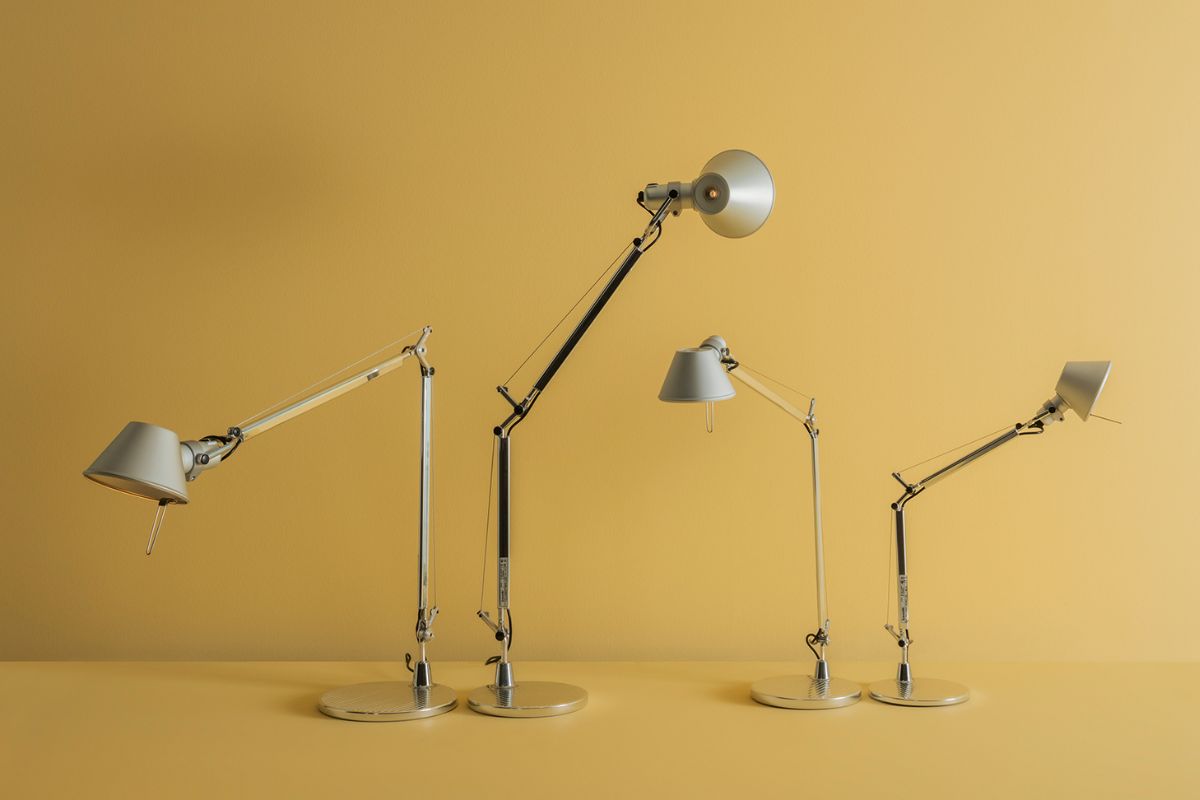
Designed in 1987 by Michele De Lucchi and Giancarlo Fassina , great exponents of Radical Design of the 70s. the Tolomeo quickly became thedesk par excellence. Although over forty years have passed since its creation, its design is still very current today.
The two designers have reinterpreted the concept of classic spring lamps, enriching it with modern technologies and an essential but extremely functional aesthetic. With its light lines and perfect balance between shape and movement, the Tolomeo conquered the public immediately, becoming a bestseller and winning the Compasso d’Oro in 1989 .
Its versatility makes it suitable for a wide range of contexts, from the most minimalist offices to contemporary domestic environments. Today Artemide produces it in numerous variations and colours. It confirms itself as a classic of Italian design, capable of combining practicality with innovation and style.
Iconic wall lamps: design models that have made history
Lampe Gras n.312 Bernard Gras

Functional and with a timeless character, the Lampe Gras n.312 is one of the variants of the famous series of lamps designed in 1921 by the Frenchman Bernard-Albin Gras , a pioneer of industrial design. This version is characterized by a wall structure with an articulated and adjustable arm , which allows you to direct the light precisely, always maintaining an essential and solid shape. It offers maximum mobility without any visible screws and with very clean joints.
Le Corbusier was a great admirer of it and took inspiration from it in numerous of his interior projects.
Today produced by the brand DCW éditions , the Lampe Gras n.312 is available in different finishes and colours, keeping the original spirit of the project intact.
An object still capable of integrating into both industrial environments and contemporary domestic contexts or offices.
Power Pivotante Charlotte Perriand

It is an extremely representative creation of twentieth century design, signed by Charlotte Perriand in 1938, the period in which she collaborated with Le Corbusier and Pierre Jeanneret. The Potence Pivotante adjustable wall lamp embodies the elegance of essentiality, extremely simple but not at all banal, it interprets a functional vision of space, in which every element must be useful and minimal. Made up of a long and articulated arm that ends in a naked light bulb, without lampshades, as it rotates, it forms a graphic sign on the wall and precisely illuminates different areas of the environment. A clear reference to the clean lines of modernist architecture. No superfluous decoration, just balance between form and function, sobriety and style. Perfect for a living room, a study but also for the sleeping area. Timeless, in line with the principles of functionalist modernism, it dialogues with contemporary interiors and adapts to any style. Nemo Lighting produces it faithfully to the great Charlotte’s design.
Lampe de Marseille Le Corbusier

Designed by Le Corbusier between 1949 and 1952 for the Unité d’Habitation in Marseille – a symbolic building of the Modern Movement, inaugurated in 1952 – the Lampe de Marseille takes its name from this extraordinary architectural project. The lamp was designed during the construction phase of the building and perfectly embodies its author’s philosophy: combining form and functionnor in perfect balance. With a marked industrial style, the Lampe de Marseille stands out for its functional structure: two adjustable conical diffusers, a double-jointed arm and a rotating base allow for both diffused and directed lighting. It adapts naturally to both residential environments and public or professional spaces, integrating harmoniously into any architectural style thanks to its essential and sculptural lines.
Still produced today by Nemo Lighting, it is also available in the Mini version, as well as in sophisticated finishes such as matt grey, satin white and matt black. The Lampe de Marseille remains one of the most elegant and recognizable expressions of modernist design: an object rich in history that illuminates the space with character and functionality.
AP2BD Serge Mouille

Created in 1953 by the master of lighting design Serge Mouille, the AP2BD is a wall lamp that perfectly represents the designer’s unique style: sophisticated minimalism, impeccable craftsmanship and strong aesthetic impact.
With a design inspired by human anatomy, the AP2BD fascinates with its light and dynamic silhouette.
It consists of two thin movable arms in black metal, whose sinuous shape evokes a sense of movement and harmony; adjustable metal diffusers at the ends, designed to direct the light in different directions, creating fascinating plays of light and shadow; internal white reflectors, which amplify brightness, ensuring intense and uniform lighting.
The AP2BD is much more than a simple lamp: it is an artisanal masterpiece in which the purity of the lines meets functionality. Each element is designed to offer elegance without excess, adapting naturally to any environment: Classic, for a touch of sophisticated discretion; Contemporary, for those who love essential but distinctive designs; Industrial, where materials and clear shapes find their maximum expression.
Despite a history spanning over 70 years, the AP2BD maintains a surprisingly modern and current design. It continues to be produced according to the original design, with the same artisanal attention to detail that Serge Mouille dedicated to each creation.
The AP2BD is a cult piece for refined environments, a true symbol of refinement and essentiality. Capable of transforming any space with its unique character, this lamp remains a perfect choice for those looking for a timeless design that combines style, quality and personality.
With the AP2BD, Serge Mouille has left an indelible mark on the world of design, offering lighting that is simultaneously art, architecture and functionality.
265 Paolo Rizzatto

In 1973, the Milanese architect and designer Paolo Rizzatto made his debut in the field of lighting with a project destined to become an icon: the Lamp 265 . With this creation, Rizzatto explored for the first time an area that would later become his strong point: light design.
“The reason I wanted to design a lamp was not to produce an object, but to produce light: a lamp that would help enhance the human experience of an architectural space.”
With these words, Paolo Rizzatto describes his design approach, highlighting a vision that seeto go beyond the simple function of the object to focus on the sensorial and spatial experience of light.
The 265 stands out for its essential and ingenious structure. It is an asymmetrical and adjustable wall lamp, composed of a long rotating arm (2 meters in the original version) which allows you to adjust the position of the light; a cone-shaped counterweight, fixed to the wall, which balances the arm and allows its fluid movement; a diffuser with a 360° rotating head, which allows you to direct the light precisely wherever you want.
Famous floor lamps: iconic design models
Fortuny Mariano Fortuny
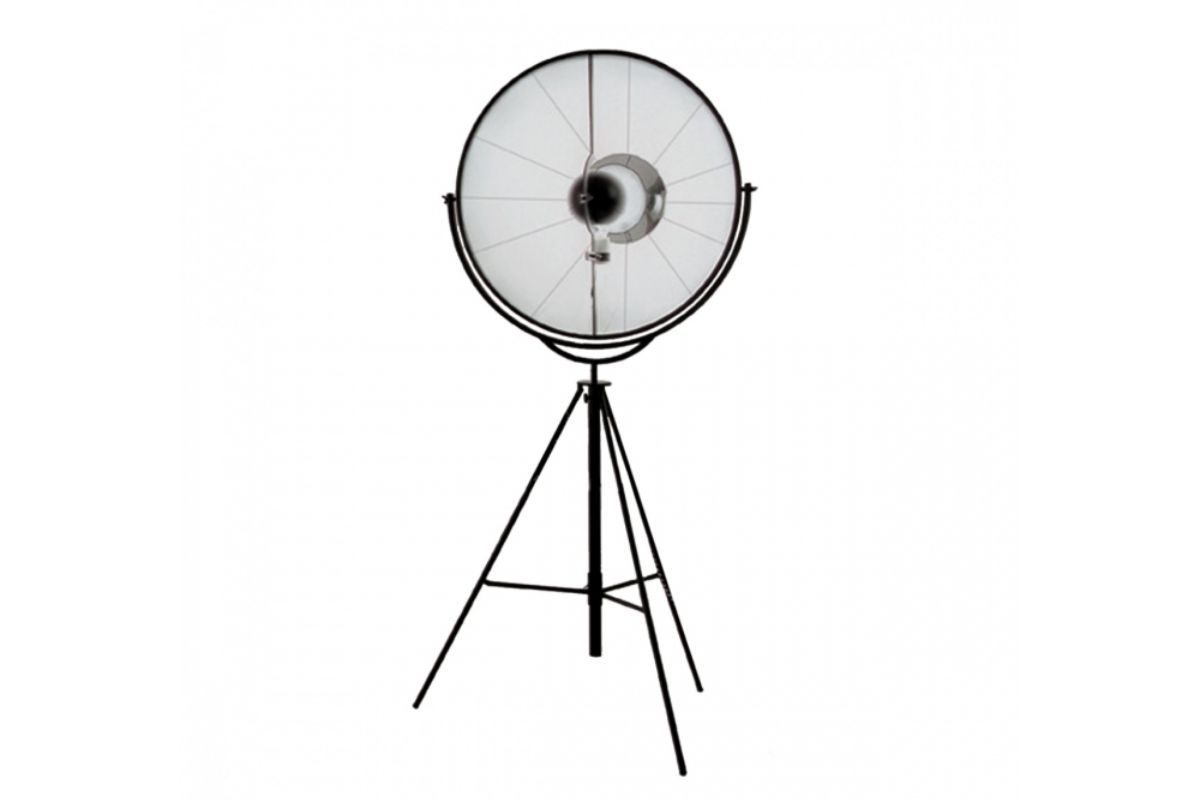
Designed in 1907, the Fortuny lamp is still extraordinarily contemporary and timeless today. Its creator, the Spaniard Mariano Fortuny y Madrazo an eclectic and visionary artist was inspired by the camera tripod and, by inverting the lampshade, devised a new way of directing the light. Thus was born a lamp that revolutionized stage lighting thanks to an innovative indirect light system designed for the stage. The new version with Silver fabric from the famous Rubelli weaving confirms its timeless value. Undisputed protagonist in an environment, a lamp that certainly does not go unnoticed!
luminator Pietro Chiesa

In the panorama of Italian design of the 1930s, few objects were able to embody avant-garde and formal purity like the Luminator lamp , designed by Pietro Chiesa in 1933 . Still in production today thanks to FontanaArte , a company with which Pietro Chiesa collaborated for a long time as artistic director. Luminator represents one of the first expressions of indirect lighting with a revolutionary idea: the light rises, aiming at the ceiling. No lampshades or ornaments, a metal body that opens slightly upwards directing the light which is refracted on the ceiling creating a soft and enveloping atmosphere. The base is cast iron. An experimental design that reflects the principles of Italian rationalism, capable of naturally communicating with classic and modern environments, a sculptural presence despite its essentiality. It retains its charm intact even after ninety years and is still present in museum collections and in interiors designed by the greatest architects and interior designers.
Parentesi – Achille Castglioni / Pio Manzù

Designed by Achille Castiglioni and Pio Manzù , and produced by Flos since 1971, Parentesi embodies functionality and minimalism and represents a true icon of industrial design all Italian and never waned. A lamp that moves in space. It is the result of the collaboration between two brilliant minds that perfectly embodies the fusion between function and poetic form The intuition was Pio Manzù’s, the idea was that of an adjustable lamp that would slide along a cable stretched between the ceiling and the floor . Upon the untimely death of Pio Manzù in 1969, Achille Castiglioni resumed and completed the project, replacing the fixed rod with a bracket-shaped tube , from which the n.ome. Essential at the highest levels, it is made up of a few elements: a vertical steel cable that goes from the ceiling to the floor; a lower counterweight to ensure tension; a metal tube with a typical bracket shape; an adjustable and minimalist light bulb, which can be oriented as desired.
It won the Compasso d’Oro in 1979 and is today part of the permanent collection of the MoMA in New York . Its success is linked to simplicity, attention to functionality, the ingenious use of industrial materials.
Flos continues to successfully produce it in different finishes and has produced a celebratory re-edition for the 50th anniversary.
Callimaco Ettore Sottsass

Designed by Ettore Sottsass in 1981, the same year as the founding of the Memphis group, Callimaco perfectly embodies the experimental and radical spirit of the movement: a design that does not respond to a simple functional need, but asserts itself as an aesthetic provocation and an act of creative freedom.
Despite being a lamp, Callimaco is first and foremost a symbolic and totemic object, through which Sottsass intended to overcome the dogmas of modernist functionalism. It presents itself as a vertical luminous sculpture, composed of colored geometric elements arranged in an asymmetrical and deliberately bold way.
It is made with materials that Sottsass loved to combine in an unusual and provocative way: metal painted in bright and contrasting colours, glass, plastic, wood and ceramic. Its function as a lamp deliberately takes second place, in favor of a strong visual and sculptural presence in the space.
Today Callimaco lamps are considered rare and highly coveted pieces by design collectors. Gallery objects, often sold at auction for significant sums. Originally they were produced in small series by Ultrafragola or other artisan companies linked to the creative universe of Sottsass.
G Altarel lamp Aldo Rossi
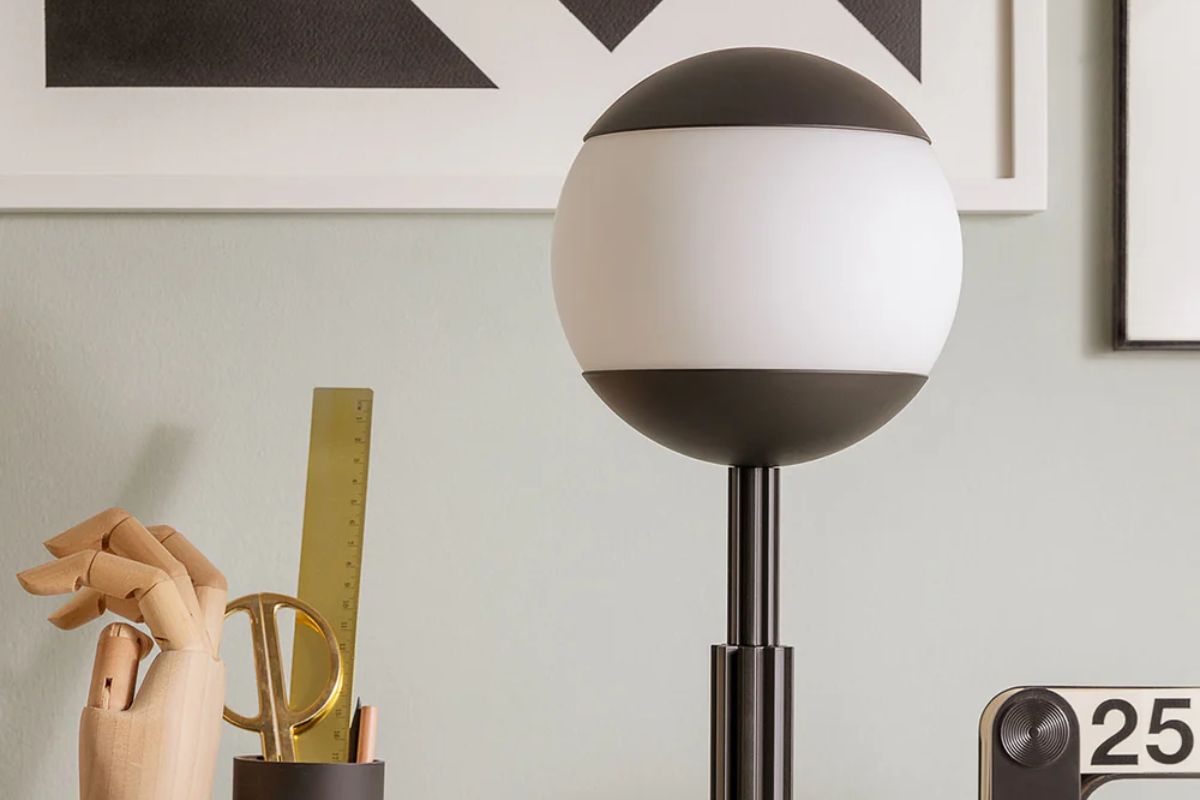
The G lamp , also known by the evocative name of Altarel , is one of the most emblematic creations of Aldo Rossi , an architect and designer famous for his ability to transform everyday objects into micro-architectures full of meaning . Designed during the 1990s and produced in limited series by Bruno Longoni Atelier d’Arredamento , G/Altarel represents an architectural and symbolic reflection on light , combined with a deeply personal visual language. The name Altarel already suggests the conceptual intent of the work which evokes in its rigorous form an altar , a place of meditation. As in many of Aldo Rossi’s works, the object is full of memory , symbols and historical references. The lines are clear, severe, geometric: it recalls a neoclassical façade , with elements that recall gables, columns and mouldings. All condensed into a small object, which conveys a silent and intimate solemnity. Made of brass, lacquered wood , G/Altarel is more of a symbolic presence than a simple object to shed light, which is diffused discreetly and creates an intimate environment. Like many of the works ofAldo Rossi in the field of design, the G lamp is a limited production , intended more for collecting than for large-scale distribution. Today it is a gallery object , often present in auctions and twentieth-century design collections.
Ingo Maurer: the sculptor, the poet of light
Speaking of lamps and lighting, one cannot fail to mention Ingo Maurer , to whom a separate discussion should be dedicated.
He is often called the “poet of light”. For him, light was much more than a technical function: it was “ the fourth dimension, a spiritual element that profoundly affects our well-being”, as he liked to say.
His creations escape the rules of conventional design: they are luminous sculptures , ironic, poetic, sometimes surreal. Each lamp designed by Maurer is a visual story, a gentle provocation, an invitation to look at light – and the world – from another perspective.
Choosing just one work among his is almost impossible: his production is a hymn to creative freedom, where technology and imagination meet in never predictable forms.
We have chosen two very similar ones, designed with almost ten years of difference:
One from the Heart
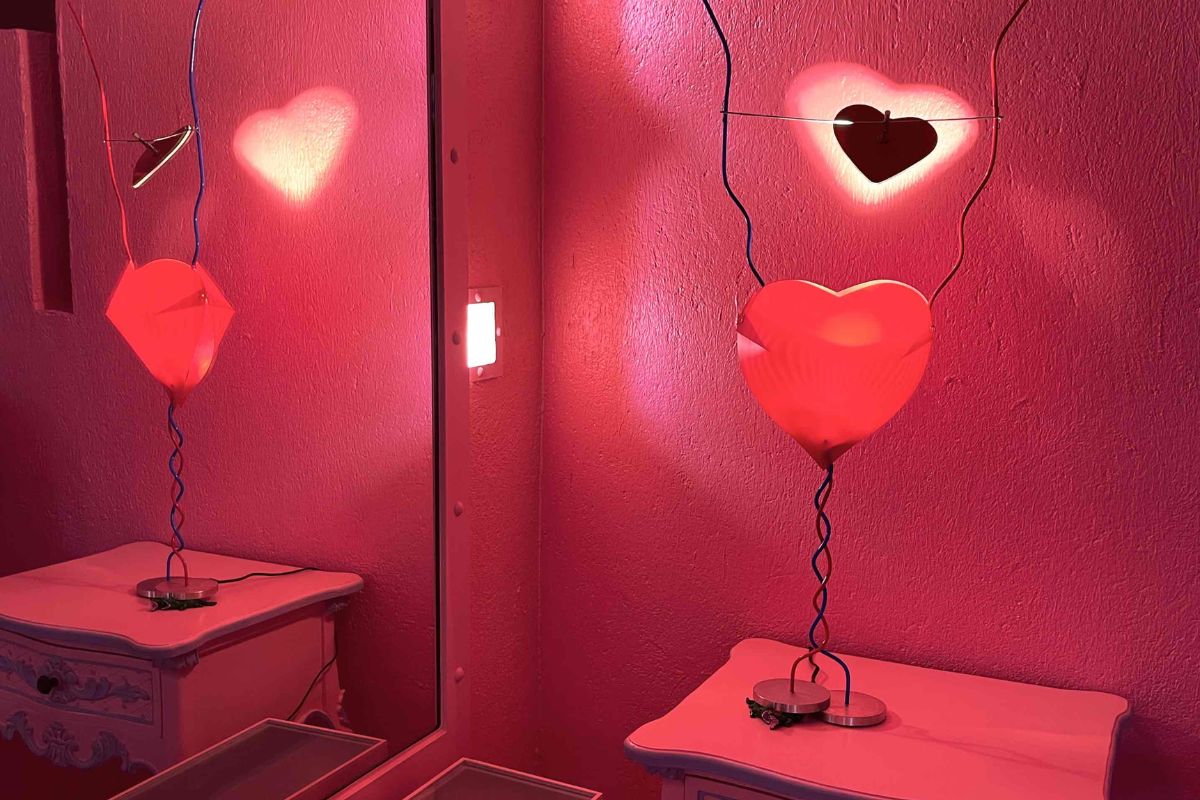
Among his most representative works stands out the lamp One From The Heart , which Ingo Maurer created in 1989 to symbolize love through a design object to give to two of his friends for their wedding.
The lamp is composed of a red heart in blown glass from which two thin metal rods branch out and support a small tilting mirror that seems to float above the base, reflecting and diffusing the light in ever-changing and evocative ways.
After this first example, Maurer decided to put it into production.
One From The Heart perfectly represents Ingo Maurer’s expressive language, in which functionality and poetry blend harmoniously.
The name One From The Heart resonates like a dedication of love, a gift made from the heart, this creation fully embodies Maurer’s philosophy: combining light and art, transforming an everyday object into something extraordinary.
It is a collector’s item that celebrates love.
Kokoro – Ingo Maurer and Dagmar Mombach
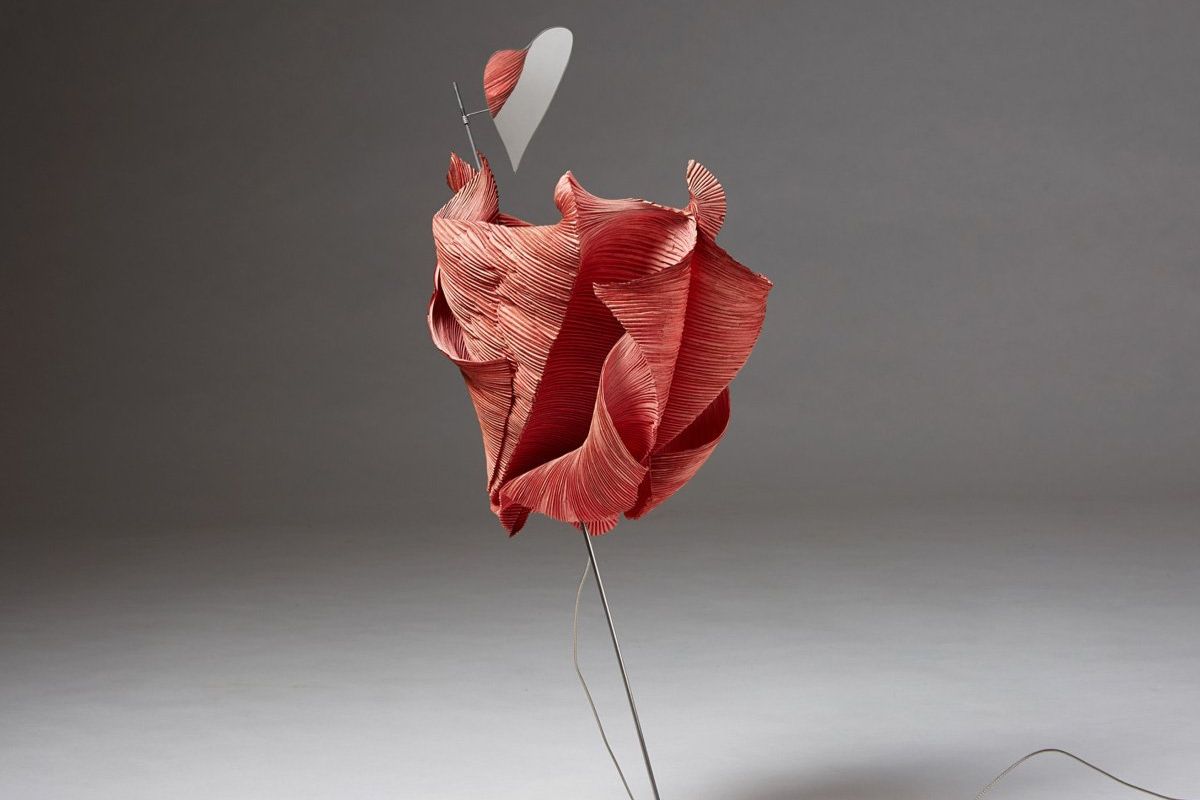
Inspired by One From The Heart (1989), but with a soul of its own, Kokoro was born about ten years later from the collaboration between Ingo Maurer and the talented German designer Dagmar Mombach.
A lamp that goes beyond lighting, light becomes emotion.
Kokoro , a Japanese word that means heart but also soul, is exactly what Maurer and Mombach instill in this evocative creation. A large red heart, made of artisanal Japanese paper, diffuses a soft and enveloping light, giving the room an intimate atmosphere. The irregular lines and delicate texture recall the wabi-sabi philosophy, which celebrates the beauty of imperfection and simplicity.
Another reference to One from the heart is the thin metal arm that supports the small tilting mirror also in the shape of a heart.
Kokoro presents a soft and organic aesthetic, One frome the heart has a more rigid and industrial structure, Kokoro appears more artisanal, it is pure poetic essence, a celebration of light as emotion, a design object that touches the soul.
More than a lamp, it is a sensorial experience, with a play of reflections and the warm and enveloping light that it diffuses, Kokoro does not limit itself to illuminating: it excites, inspires, relaxes.
Iconic designer lamps
In an era in which design moves between technological innovation and a return to the essential, these lamps remind us that light is not just a function: it is emotion, culture, memory and vision, we haven’t mentioned
Each piece we have chosen tells a story – of research, of audacity, of genius – and represents a turning point in the way we experience space. Whether they were born to revolutionize, amaze or simply accompany everyday life, these icons of light design continue to speak the language of art and architecture.
Leave a comment