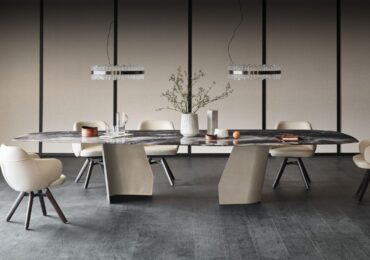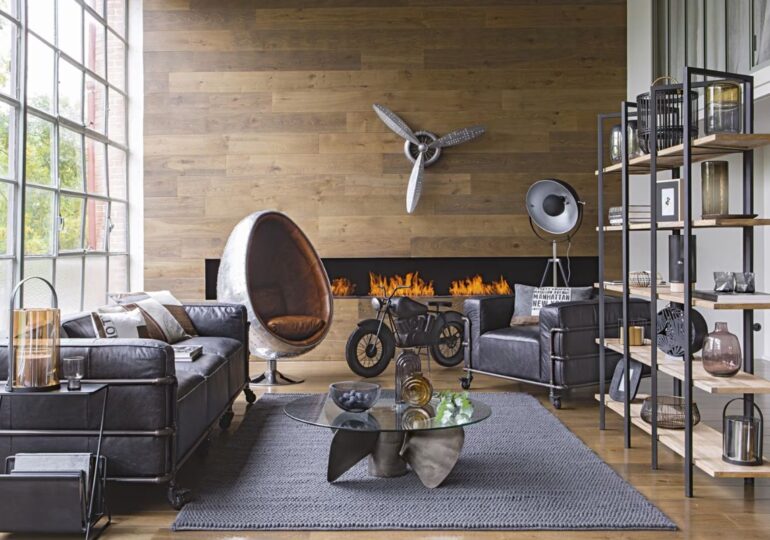
There is a style that, more than others, continues to conquer architects, interior designers and lovers of authentic living. A style that does not need to be decorated, that shuns plastic perfection and that leaves room for matter, for history, for the harsh light of raw materials . It’s the industrial style. But before staging it, it is worth asking: what does “industrial” really mean in furniture?
It’s not a trend. And it’s not even a scenography made of fake bricks and chrome lamps. Industrial style arises from a specific context, from a necessity. In the 1950s in New York and London, artists and creatives began to occupy abandoned spaces, factories and warehouses, transforming them into ateliers and homes. Nobody thought about making furniture. Simply, we lived in the space as it was : with iron beams, exposed bricks, huge windows, rough concrete floors. From that unfiltered reality, one of the most recognizable languages ??of contemporary interiors was born.
Today, however, there is only one risk: transforming the industrial style into a caricature. This is why we need to talk about it with respect and awareness , going beyond appearances.
Industrial furnishing style: a way of thinking that does not hide, but enhances

The heart of true industrial style is not in gray colors or wrought iron furniture. It lies in a precise attitude: not to hide, but to enhance . Show the structures, let the welds speak, bring out the raw texture of the wood. It is a form of design honesty, almost ethical: do not decorate to cover up, but let the materials tell the story.
For this reason, those who choose authentic industrial do not want cold or impersonal environments. Instead, look for spaces filled with meaning. And perhaps he recovers pieces of industrial archaeology, lived-in furnishings, machinery transformed into consoles or tables. There is no nostalgia, but a declaration of presence : “I live in a real place, not an illusion”.
All that glitters is not industrial
Today we often see patinated lofts with fake bricks and matt painted metal bookcases. But the industrial style does not tolerate pretense . A concrete-effect table made of melamine is not industrial. It’s a shortcut.
The same goes for excessive stylistic coherence. An industrial environment that is too studied, too perfect, loses strength. This style thrives on contaminations : a vintage Persian carpet under a rough iron table, a 1950s brass lamp next to a laboratory stool. There is no need to “do everything industrial”. A few real pieces, inserted intelligently, are enough to give soul to a space.
Is it possible to bring the industrial furnishing style to a modern home?
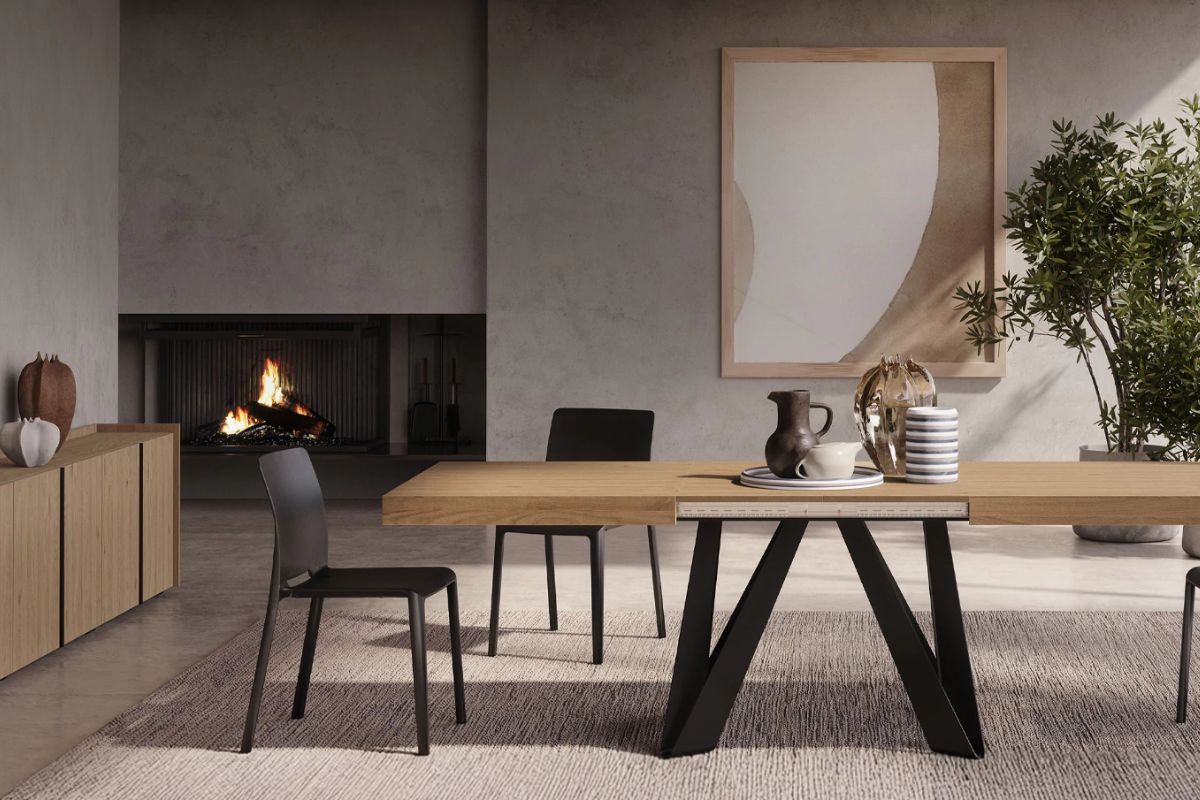
Absolutely yes. And you don’t need a loft in Brooklyn. Even a two-room apartment in the city can accommodate industrial accents if you work well with proportions, materials and atmosphere. A raw concrete wall, a steel kitchen, a matt black painted iron bookcase may be enough to give character to a neutral environment.
What if the structure doesn’t allow it? You can play in other ways: with lighting fixturescarefully chosen, with resin or microcement floors, or with custom-made furnishings made with real, recovered, lived-in materials. industrial is not an exhibition style , it is an experience: it works if you really live in the space you create.
Industrial style in 2025: how is it evolving?
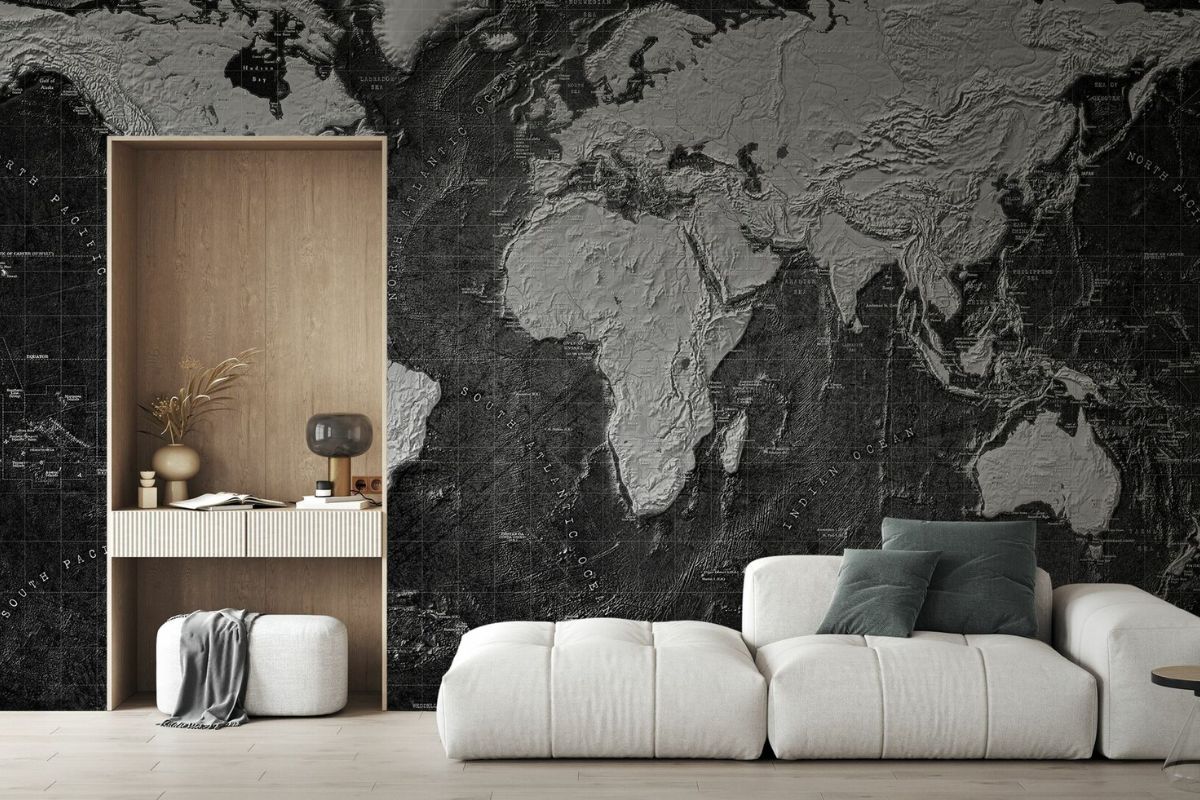
If one thing is certain, it is that industrial style has never been static. And today it is experiencing a new phase. No longer dark and rigid as in the past, but warmer, more material, more sophisticated . We see it in projects that mix industrial with Nordic or Japanese design. In recycled materials, in ecological paints, in artisanal details.
In 2025, industrial style embraces sustainability, and opens up to natural light, acoustic comfort and customization. Less reinforced concrete and more natural microcement. Less workshop shelving and more custom-made carpentry. It is no longer just raw, it is consciously raw . Behind every surface, there is a thought.
Why, despite everything, do we still fall in love with industrial style furniture?
Perhaps because, in a world where everything is smoothed, coordinated, filtered, the industrial style gives us the truth . It’s rough, but authentic. It doesn’t try to please everyone, but convinces those looking for spaces with character. Those who want to feel at home even in an environment that is not decorated, but built around their personality.
Industrial style is not a trend : it is a mental form. It’s the courage to let a wall speak for itself. That a lamp is not perfect. May beauty coexist with imperfection. And that living well also means – above all – living in reality .
Which furniture companies are best known for their industrial style?

When talking about industrial style furniture, it is important not only to look at aesthetics but also to choose companies that work with authentic materials and with coherent thinking. Some Italian and international brands stand out precisely for their ability to combine design, craftsmanship and industrial spirit .
Among the Italian brands, Baxter offers furniture in natural leather and wrought iron structures, perfect for environments with a strong but refined character. Diesel Living with Moroso is another name to keep an eye on: its collections mix metal, technical fabrics and dark colors with a young and urban identity. Kave Home and Maisons du Monde , on the other hand, offer accessible proposals that are stylistically consistent with industrial soft.
On the international front, Tom Dixon stand out for his sculptural and material approach to metal, and Vitra , which although not exclusively industrial, offers versatile and linear elements perfect for fitting into rougher contexts. Also interesting is the work of Muubs , a Danish brand that works with natural materials, iron and solid wood with a brutalist but elegant style.
Finally, for those looking for tailor-made solutions or unique pieces, the advice is to look to specialized artisans and carpentry shops : this is whereI find the most authentic soul of the industrial style, made of real welds, recovered wood and imperfect details that tell stories.
Leave a comment