There is a thread that runs through his entire trajectory: not the idea of ??”vocation” as an inspiration, but the slow construction of a figure that is recognized while working. Even before becoming a profession, design was a daily gesture drawing as the first alphabet, as a space to give shape to emotions and thoughts . From there, the transition was never a break: artistic training, Polytechnic, and that fertile friction between fashion and industrial project, between desire and discipline.
We interviewed her to enter into this point of balance: how an authorial imagination defends itself when it encounters times, costs, constraints and the supply chain; what makes a texture structure and not just decoration; and how to remain faithful to a method – and alive at the same time – when attention grows, expectations increase and coherence risks transforming in ways.
Interview with Elena Salmistraro Design Studio
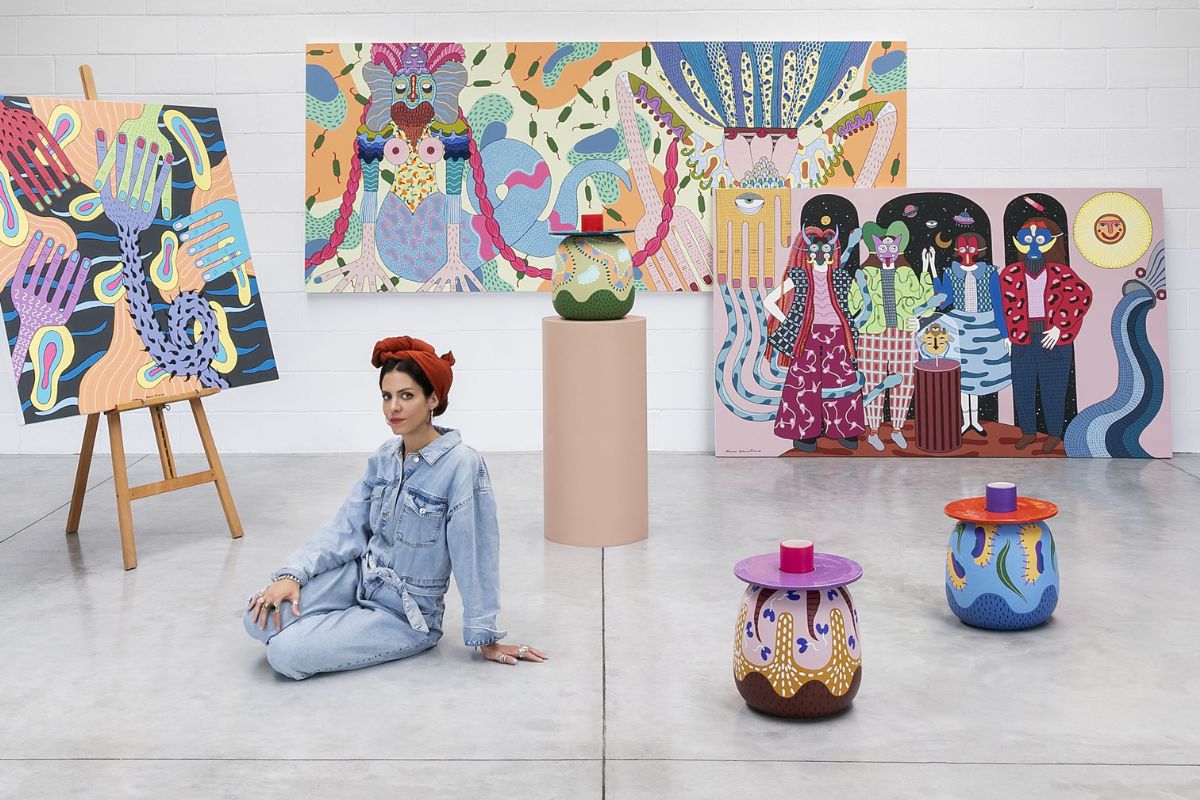
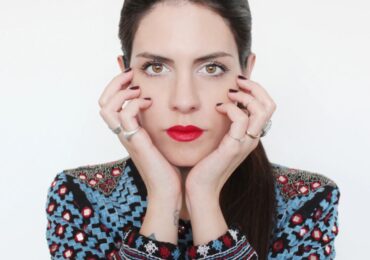
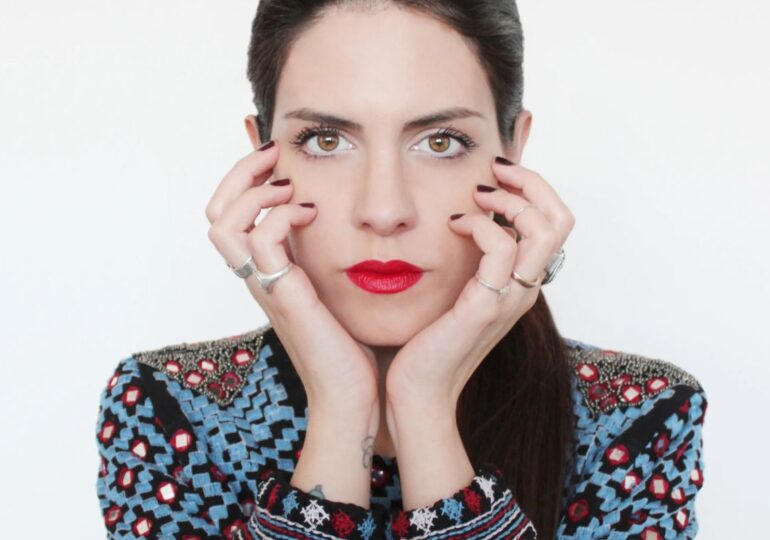
Born in 1983, the designer and artist Elena Salmistraro lives and works in Milan and in 2009 founded her studio together with the architect Angelo Stoli, after training at the Polytechnic of Milan. Selected by the editorial staff of Archi&Interiors among the 50 contemporary Italian product designers to keep an eye on in 2026 , in this interview she retraces her journey and focuses on the cornerstones of her method: the sign as structure, the material as a story, the emotion as the function of the object.
Hi Elena, tell us about yourself. Do you remember the precise point at which you realized that design would be your profession not just an interest? Where were you, what were you doing, and what made you say, this is my path?
My passion for art and design was born very early, spontaneously, almost inevitably. I have always drawn. As a child I was quite shy and drawing was my first real language , the most immediate means of giving shape to emotions and thoughts. It wasn’t a conscious choice, but a natural and daily gesture, something I simply felt I had to do. Over time that gesture transformed first into a deep passion and then into a decision, so much so that it led me to attend art school.
The next step was the Polytechnic, where I graduated in fashion design. It was an important and very formative experience, but as I moved forward I began to feel a growing distance from the rhythms and dynamics of the fashion system. At the same time, by delving ever deeper into the world of products, the need to start again clearly emerged. I understood that product design was the territory in which all my skills and sensibilities could coexist naturally, without forcing.
There wasn’t a precise moment, a sudden revelation in which I thought “this is my path”. It was rather a gradual path, made up of coherent steps which, looked at today, all follow the same logical thread. Design stopped being just an interest and became a profession while I was doing it.
Your training at Brera gave you a very strong aptitude for images and signs. What has art really taught you, in terms of discipline and gaze, that you still recognize today in your way of designing?
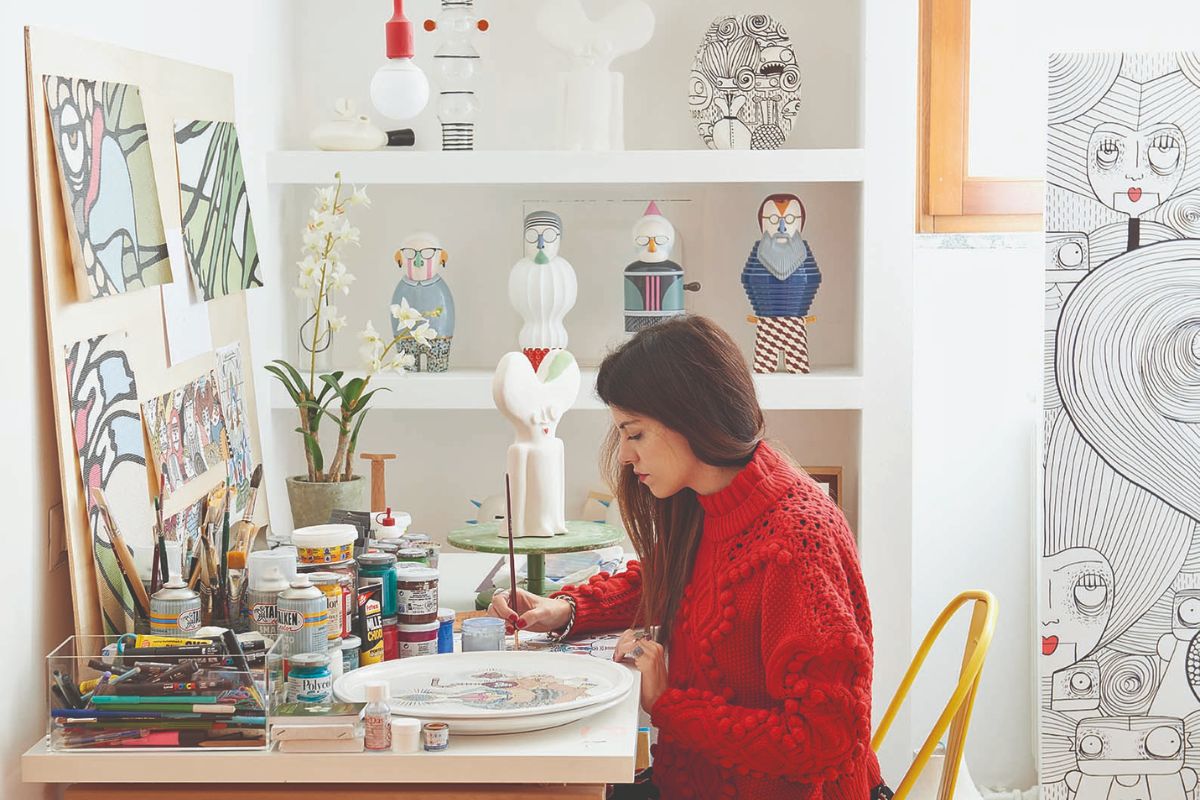
My training at Brera has left me with a legacy of much morea technical competence on the image or sign. He taught me, first of all, a way of looking at the world, even before a way of intervening on it. Art has accustomed me to thinking of the process as something alive and mobile, never truly linear, capable of changing direction based on what the project activates, suggests or reveals along the way.
I have never worked following a rigid or pre-established method . Sometimes the starting point is a very concrete functional need, almost brutal in its clarity, which over time opens up to other levels of reading, to other imaginaries, until a more complex and stratified structure is built. In other cases, however, it is the image that takes over. The form becomes an instrument of investigation , a field of exploration through which to understand how far the project can go.
Above all, art taught me a discipline of experimentation. Not in the romantic sense of the free gesture at any cost, but as a continuous exercise of trials, errors, deviations . I have learned to be wary of overly certain paths and to prefer the risk of error to the convenience of repetition. Repetition reassures, but often leads to homologation, and it is precisely from there that I feel the need to distance myself.
My outlook on the world also arises from this attitude. Inspiration comes from what surrounds me, from daily life, from what I read, listen to, observe, not exclusively from design. This fuels a very strong idea of ??authorship. Every project, every object, brings with it something of whoever imagined it. A silent trace, perhaps invisible, but tenacious.
At the Polytechnic of Milan you go through Fashion Design (2003) and then Industrial Design (2008). What is the decisive element that you brought with you from this “double” path and that today you consider a structural part of your grammar?
That “double” path left me with a way of thinking about the project as an elastic territory, never truly rigid. Fashion has accustomed me to moving within a fast , almost nervous temporality, in which the project is always in relation to someone who wears it, passes through it, lives it and consumes it emotionally even before physically. There is continuous attention to the user, to desire and to the imagination, but also to the awareness that an object or shape can age, change meaning, be outdated.
Industrial design , on the contrary, taught me discipline. The need to give things an internal structure, to build coherent systems, to deal with productive, technical and functional logics that are not negotiable. It is a less forgiving and slower sphere, in which decisions must stand over time and where the object cannot afford to be merely expressive.
Keeping these two approaches together has defined my design grammar. On the one hand there is freedom, stratification, the possibility of working on multiple levels of interpretation, typical of fashion and art. On the other there is a solid, almost invisible base made up of rules, proportions and structure. It is precisely that point of contact between the various worlds that interests me, where one undermines the other. In that space the project stops being just “correct” or just “seductive” and becomes something more complex, ambiguousand, for me, more true.
In 2009 he founded the studio with the architect Angelo Stoli, his life and work partner. What have you given yourself, professionally, in recent years? And how has your process changed, from the first idea to the finished product?
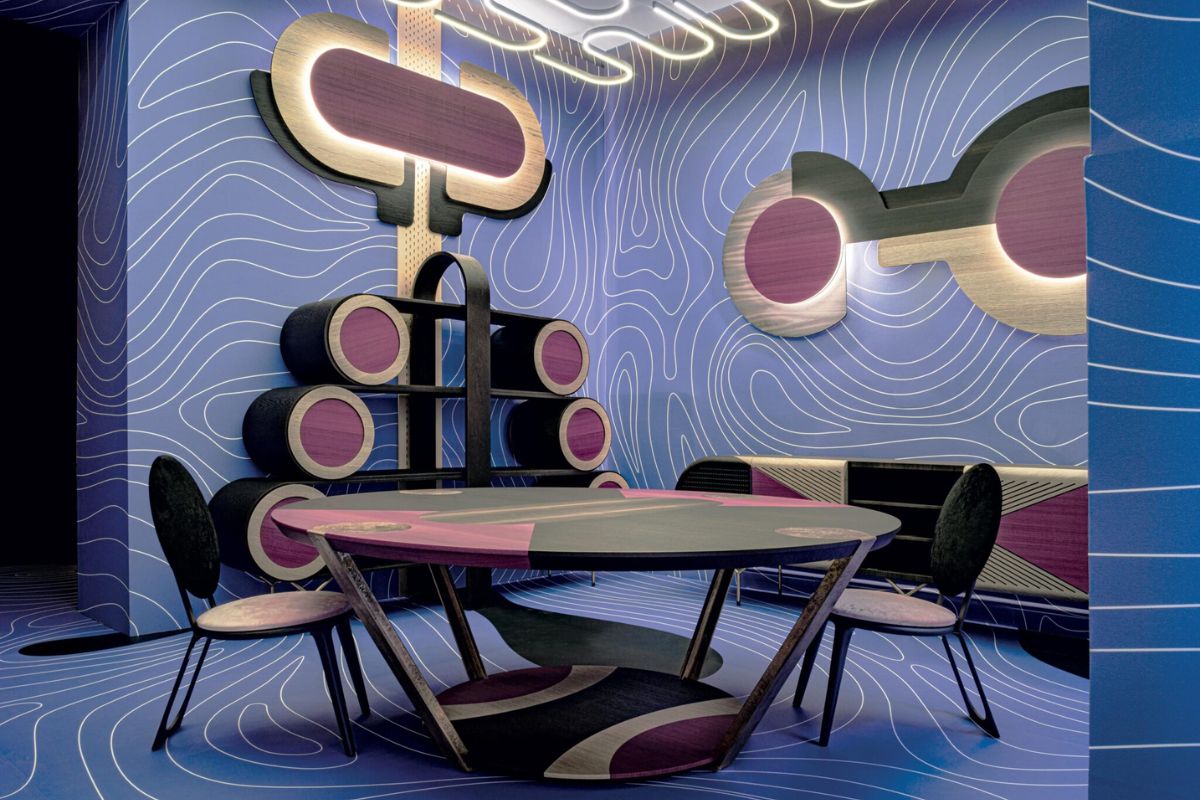
We complement each other on both a professional and human level. We share tastes and design sensibilities, but our approach to work is very different, I move in a more analogical, intuitive and imaginative way, while Angelo is digital, rational and oriented towards concreteness. This difference is not a limit, on the contrary, it has become the strength of our creative process, because I dream and sketch out the first ideas, he transforms them into realizable projects, translating visions into concrete objects.
From the beginning we defined the roles within the firm based on our skills and natural inclinations. Obviously there are discussions and exchanges of opinion, but always in a climate of mutual listening and collaboration, where everyone brings their own contribution without overlapping the other. Over time, responsibilities have grown and each project requires more attention to organizational and technical aspects, but always respecting everyone’s inclinations.
The heart of our work, however, has not changed, the dynamic between dream and concreteness, intuition and method remains.
In your work there is always a balance between authorial imagery and serial production. What is the minimum agreement that a company must accept so that your language is not “normalized” along the supply chain?
I do not believe that there is a formal minimum pact, but rather a real affinity of intentions and visions . When a company comes into contact with me, or I with it, we do so because there is mutual respect and harmony on values ??and creative approach. This is the fundamental element for making a project successful.
It is clear that, depending on the production scale and the type of product, a certain standardization is inevitable, materials, industrial processes, costs and times impose concrete limits. The difference lies in the way in which these limits are addressed, because when there is a true collaboration, every choice is shared and evaluated together, so as to maintain and enhance the language of the company and the authorial style of the designer. It is not about impositions and rigidity, but rather about creating a conscious balance between the creative project and production needs .
My approach is always collaborative, I like to say that I work “with” the company, not “for”. Exchange, continuous dialogue, sharing and above all human affinity are essential prerequisites. Without this connection of values ??and sensitivity, I would risk flattening my language, on the contrary, however, there would be a risk of distorting the essence of the company.
You said that emotion is a function of the object. When you land on a real brief costs, time, constraints, production how do you translate this idea into measurable choices? What must never be lost?
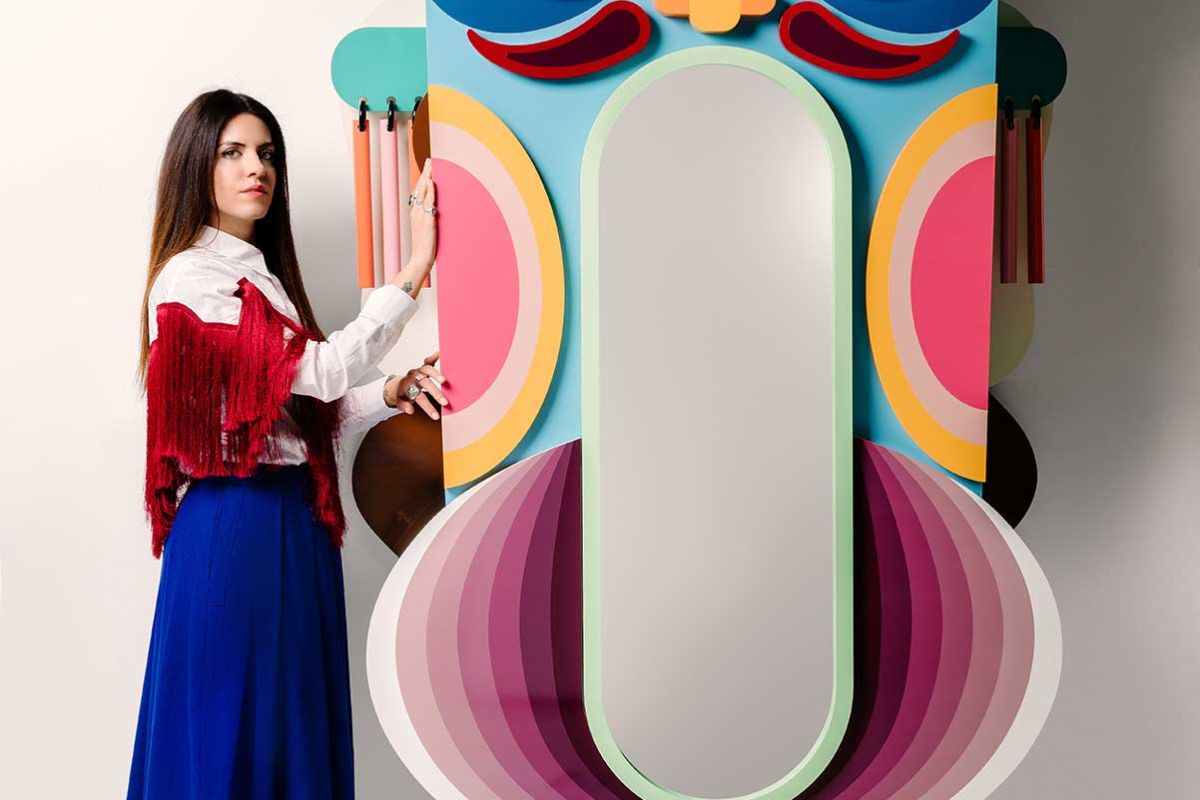
When I talk about emotion as a function of the object, I am not referring to a decorative or superficial element, but to something deeper, because the object must be able to communicate, evoke sensations and create connections, design is above all the transmission of culture. This is what makes it recognisable, memorableand is capable of emerging even within an industrial context.
When dealing with a real brief, obviously the concrete constraints of costs, time and materials come into play. This becomes the terrain on which planning is measured and where it is necessary to understand what of the object can be adapted without compromising its emotional core and what, instead, constitutes its identity. You can, for example, simplify a joint or change a detail to facilitate production, but you cannot alter the shape, color or central idea.
What must never be lost is the concept, the theory that guides the choices, the message that the object must convey, the meaning that guides every decision. Without this, even a technically flawless object risks being cold, anonymous, meaningless.
Texture and three-dimensionality are central to your language. What, for you, is the clear difference between designing a surface and “decorating” it? And what is the most frequent mistake you see today when working with patterns and textures?
The difference between designing a surface and decorating it is not just theoretical but concerns the entire approach to the material, shape and user experience.
When designing a surface , this is an integral part of the project itself. It is not an added element, but the result of a thought that considers depth, curvatures, geometries and visual rhythm as a function of a precise purpose. Every detail has a weight that influences tactility, light, shadow and interaction with the surrounding space.
Decorating , however, is a more narrative, interpretative gesture . We intervene on something that already exists, so the creative act develops as a dialogue rather than a construction. The decoration can surprise, emphasize, tell, but it does not redefine the basic structure. It is an addition, a reading, not a creation from scratch.
Today the most common mistake is to underestimate decoration, considering it secondary. This leads to superficial interventions, without reflection on meaning, aesthetic value and tactile experience. Neglecting the power of decoration means missing opportunities, because there are no hierarchies between designing and decorating, there are only conscious or superficial approaches. I think of decorative art museums, where it is easy to understand how powerful the story of thoughtful surfaces is, capable of exciting and resisting time.
You said that 2017, at the Salone del Mobile in Milan, was a turning point. What really changed from there on: the type of opportunity, the level of pressure, your method, or the awareness of your role?
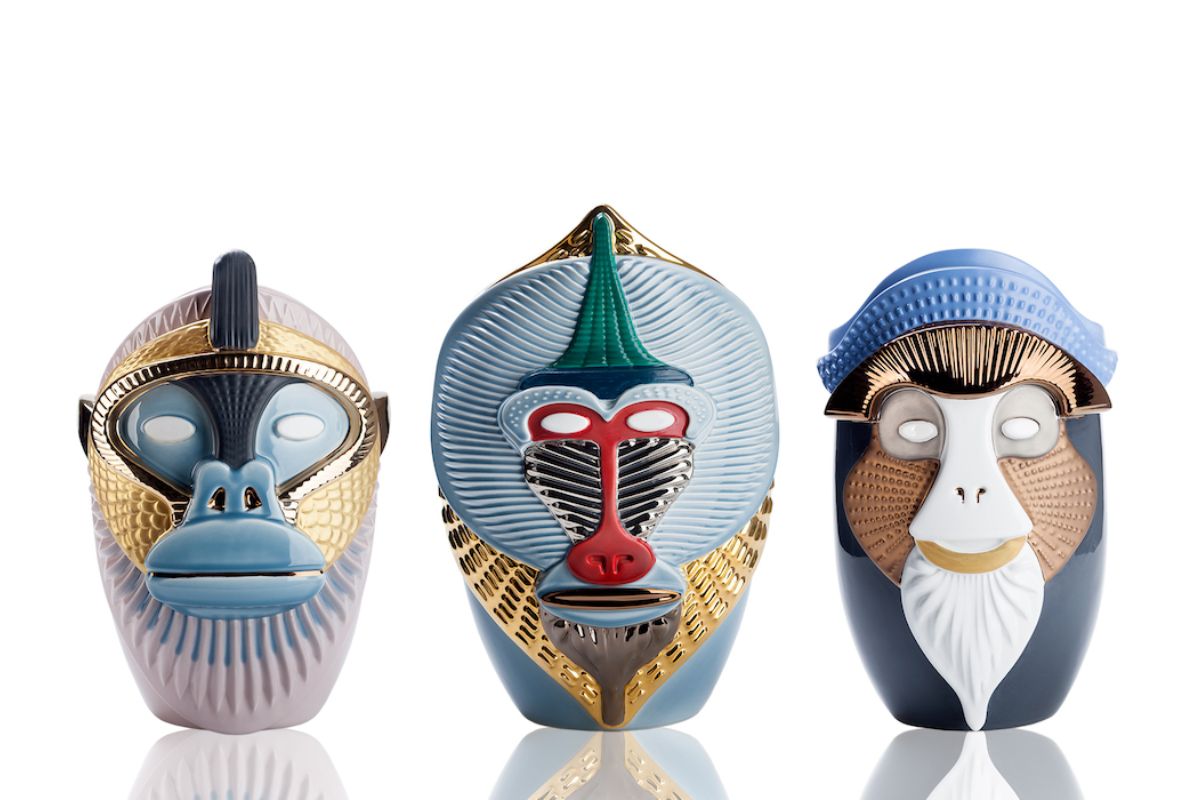
2017 did not represent so much a change of direction as a change of structure. Before, work was a continuous pursuit, looking for contacts, proposing visions, explaining why a certain language made sense. Over time the dialogue has rebalanced. The companies already arrived with a fairly clear idea of ??who I was and what they were looking for in my work. This made the occasions more stimulating.
At the same time, the pressure has increased, because every choice becomes more visible, more observed, more exposed. It is a subtle stress, which does not only concern deadlines but continuity, the attempt to maintain coherence without letting it slip into the manner.
The method, however, remained the sameale out of necessity, in fact I understood how important it was to protect it. The recognition did not push me to change it, if anything they gave me the tools to defend it better, to learn to say no more consciously and to avoid compromises that would have emptied it of meaning.
Finally, the awareness of my role is a topic that I prefer to keep at a distance. The very idea of ??role implies a function, a defined position, a mask. I don’t work to take up space in the system. When you identify too much with a role, you risk working to maintain it instead of following a real urgency. And at that point, at least for me, the work stops being alive.
After that transition, between awards and international attention, how do you remain faithful to your authenticity? What do you do, concretely, to continue evolving without losing coherence?
I remain true to myself by choosing a simple and anything but strategic path, I continue to do what I really enjoy .
Drawing objects, even if it is a serious job, for me remains first of all a wonderful game. A serious game, like the title of the installation I presented in Frankfurt during Ambiente. In those two words there is already all the tension that I am interested in keeping alive.
Fun is essential to growing and pushing yourself beyond what you already know. I see it clearly even with my children, when I try to teach something by imposing rules and expectations, the result is often modest. However, when everything passes through play, curiosity and the freedom to make mistakes, the potential multiplies. In my work it’s exactly the same thing.
The game also has another power, it lowers tension. Rewards, attention and expectations, if taken too seriously, risk turning into a cage. Continuing to play, however, makes them lighter and allows me to stay focused on what really matters, therefore my language and its coherence.
Since 2017 you have also participated in institutional and international contexts such as the Italian Design Day, as World Ambassador of Italian Design. What does it mean for you to represent Italian design outside of Italy? What do you feel you need to bring: aesthetics, manufacturing, culture, or a way of thinking?
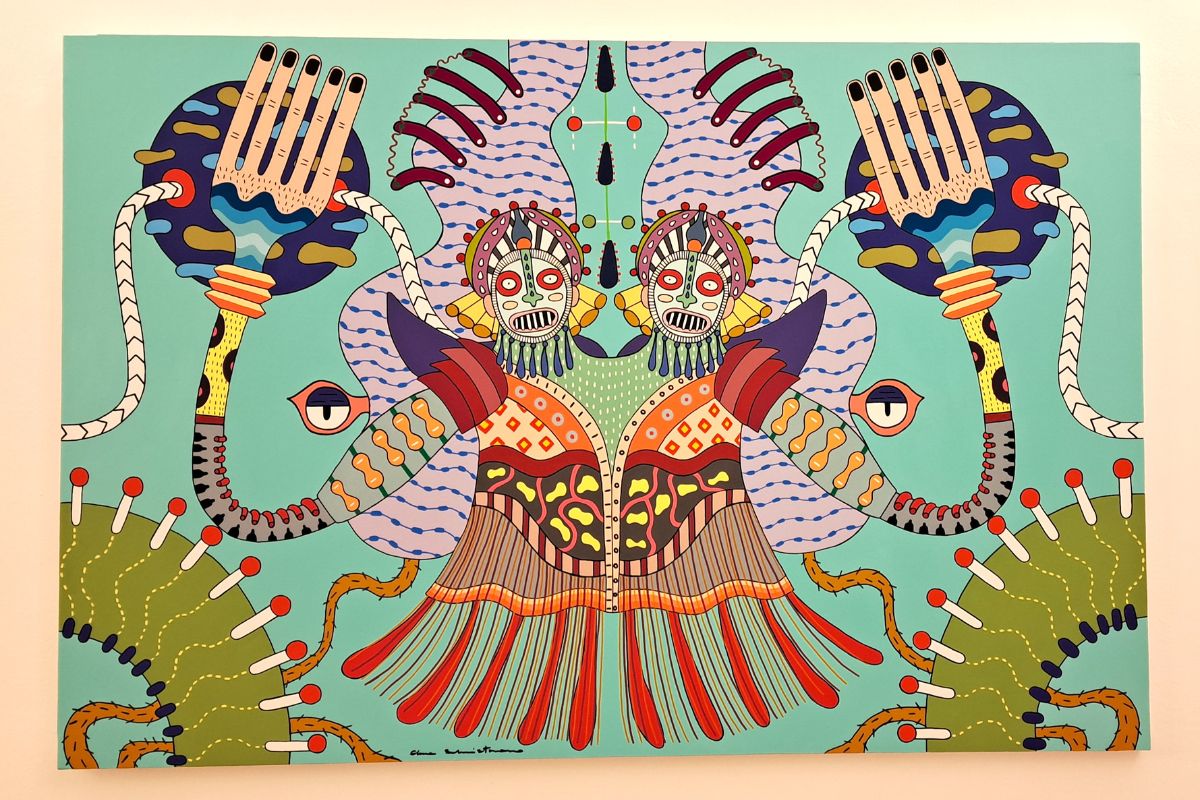
Representing Italian design abroad is always a great responsibility, but above all a great joy. The Italian Design Day is every time a precious occasion, because it changes every year and invites us, as Ambassadors, to tell through our journey what makes Italian design recognizable and unique in the world. And it is inevitable that all the characteristics you mentioned come into play, because Italian design can never be reduced to just one aspect. It is aesthetics and manufacturing, but also culture, thought, intuition and stratification. It is plural, it is capable of bringing together artisanal knowledge and innovation.
Furthermore, for me it is always a moment of personal growth. Talking about your work abroad means questioning it, looking at it from a certain distance and discovering affinities with other countries and other ways of thinking. It is an exchange, not a simple showcase, and each time we return with a slightly broader gaze and a few less certainties, a sign that it is something good.
You have worked with notable global companies Disney, Apple, Vitra, Nike, Ikea, Huawei, Microsoft, Moooi and with Italian companies with a very strong DNA Alessi, Cappellini, Florim/Cedit, Natuzzi, Bosa, De Castelli, cc-tapis, Lavazza, Driade, Technogym, Ceramica Flaminia, Alcantara, among others. What changes for you when the “scale” of the company changes? And what remains unchanged in the way you make decisions?
For me, ideally, nothing changes. Or at least I try.
The real difference between a multinational and a smaller company lies not in the vision, but in the complexity of the system. We go from one or two interlocutors to ten, sometimes twenty. Every decision becomes slower, more mediated, locked in a network of steps and bureaucracy. It’s a structural issue, not a creative one.
Over time, however, I have noticed a clear constant: the more a company grows, the more experimentation tends to reduce. Courage often seems inversely proportional to scale, but not due to lack of talent or intelligence, but because the risk is diluted in a very long chain of responsibility.
Personally, I try to never change the way I make decisions. I don’t let myself be influenced by the “weight” of the name I’m working with. A project remains a project, and must be approached with the same seriousness, curiosity and intellectual honesty, whether it is a large corporation or a family business. Also because the project always remains a team effort and obviously times change, methods change, processes change. But the final result remains the only thing that really matters.
If you had to give a young designer just one, what would you tell him to avoid the most common mistakes and build a solid language?
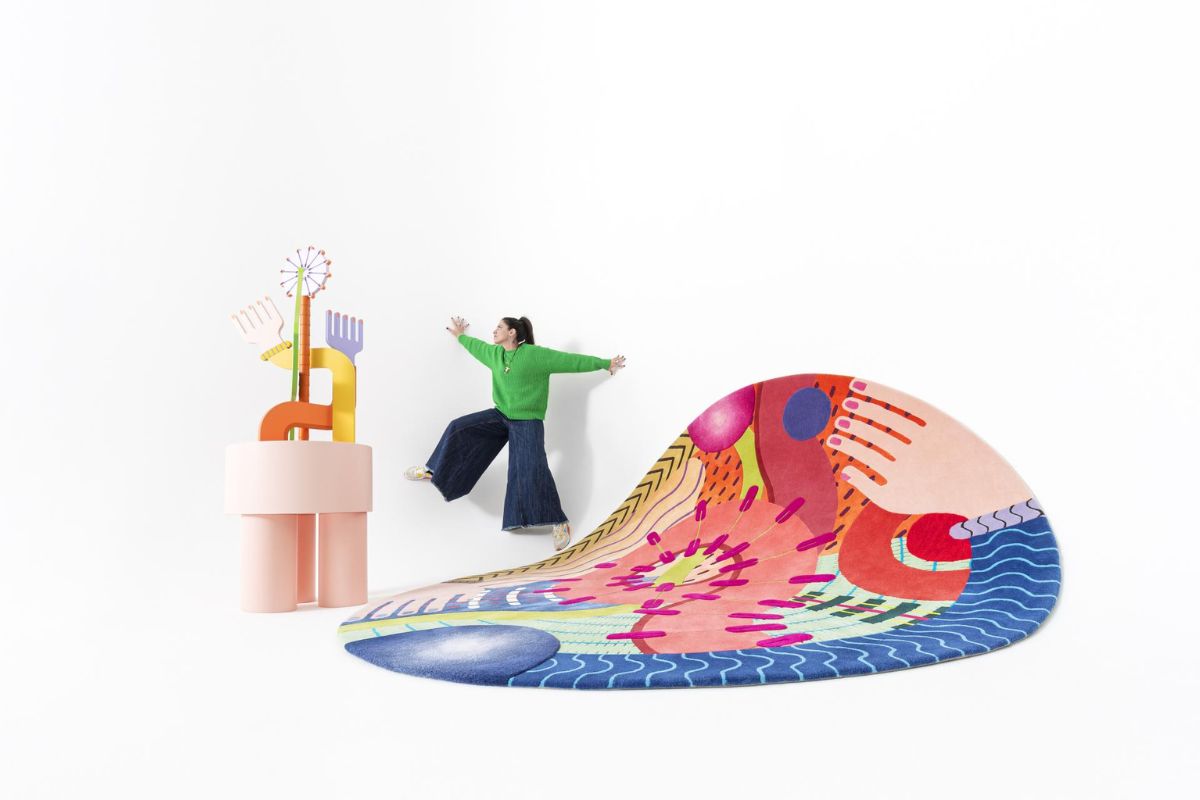
I would advise him not to chase what others are doing or what is considered ‘fashionable’. The really important thing is to cultivate one’s own voice, a personal language that reflects who one is and what one thinks. In the end, uniqueness is worth much more than any rules or external influences.
If you had to choose just one color that represents you today, what would it be? And what does that color allow you to say that others don’t say?
Today I feel like a desaturated violet, but intense. Not that bright purple that immediately catches the eye, but a more thoughtful tone, which remains without the need to scream . A color that brings creativity, suggests ideas, but without haste, and with inner calm.
A color that, unlike other colors, can say that strength does not always have to show itself, that energy can be silent, and that beauty comes from patience and depth.
What is the object that you did not design, but that you would have liked to sign? And, instead, which project of yours are you most proud of and why?
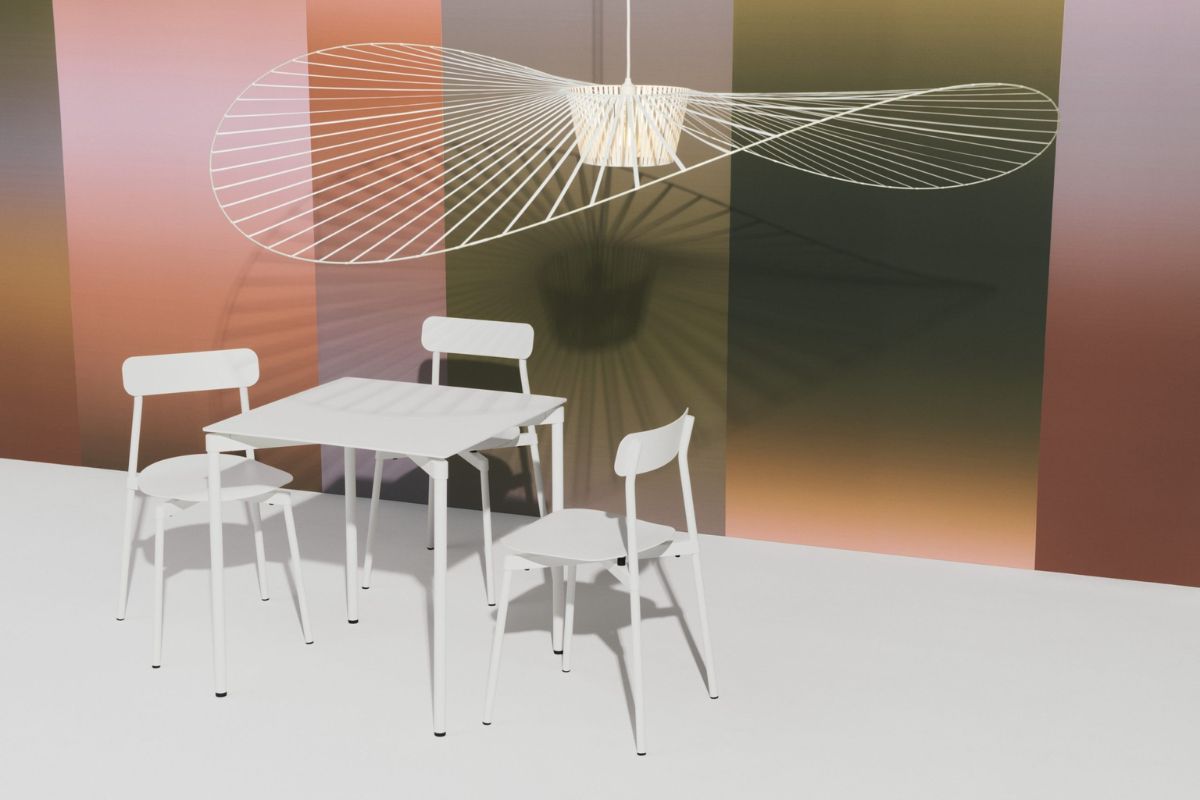
An object I would have loved to sign is the Vertigo chandelier by Constance Guisset . I find it extraordinary, in fact I bought two, one for my studio and one for the house in the mountains, because it has the ability to transform the space with a truly rare lightness and poetry. The idea behind it is simple, but the effect it produces is enormous, it manages to excite and capture the eye immediately.
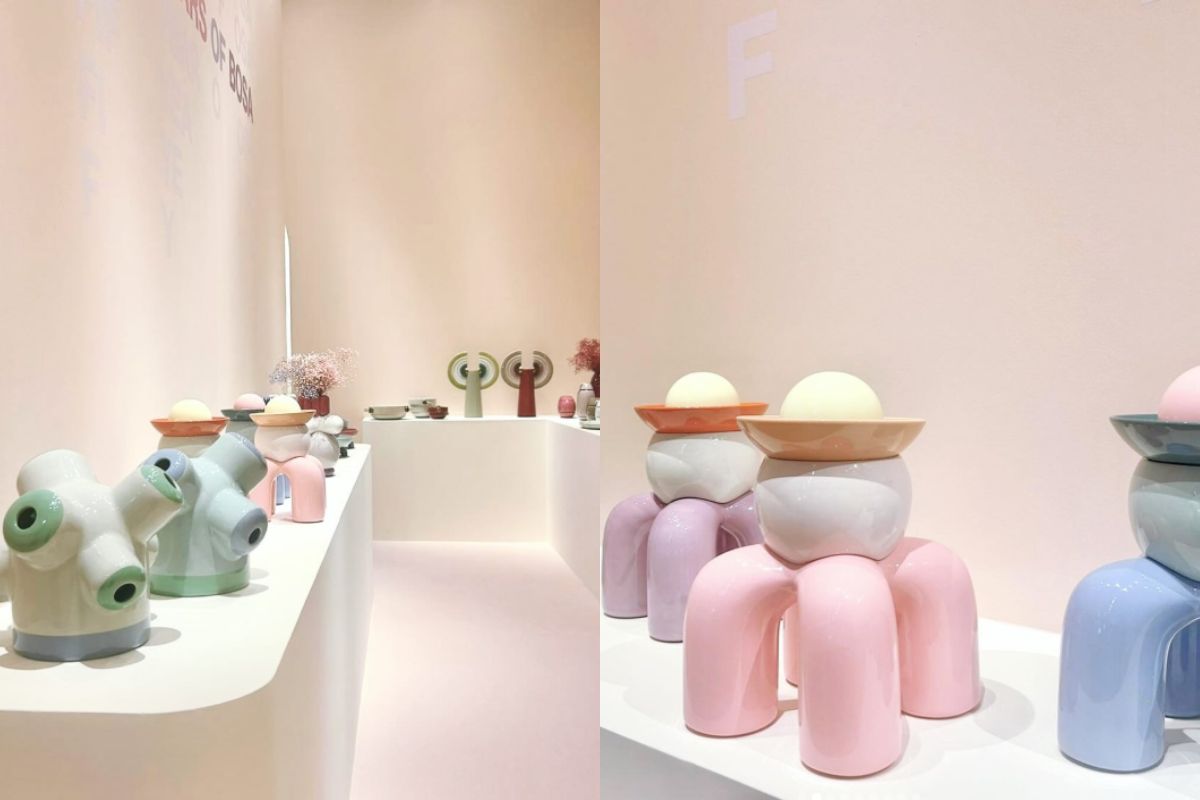
Among my projects, however, the one I am most proud of at the moment is obviously the latest creation, therefore the collection of Succulentia vases designed for Bosa . A collectionwhere I was able to delve deeper into the relationship between nature, shape and color, designing objects that are not just functional.
Looking at the next few years: what does design really need, in your opinion? And what, instead, should we have the courage to leave behind?
In the coming years, design needs to rediscover itself, to rediscover the courage to experiment without fear and the lightness to face challenges with joy . He needs to free himself from that seriousness and useless snobbery that often make him distant, self-referential and closed. We need a design that knows how to play, excite and speak to people without filters , which knows how to dare without taking itself too seriously, and which returns to being a space of discovery and joy.
Leave a comment