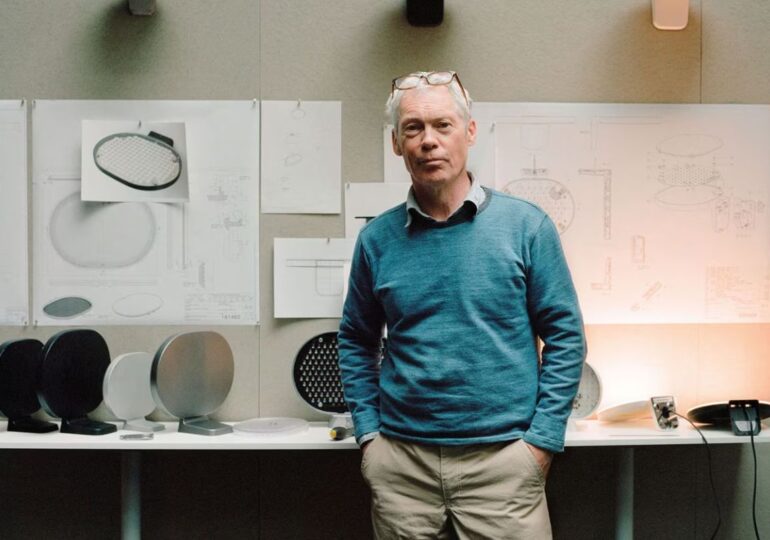
Jasper Morrison (London, 1959) is one of the most influential contemporary industrial designers. Active since the 1980s, he is famous for having redefined the role of the everyday object through a radically essential vision, condensed in the concept of Super Normal : a design idea that rejects the formal exception to make the obvious the most sophisticated expression of the project.
His production, which ranges from furniture for Vitra and Magis to lamps for Flos , from home products for Alessi to collaborations with Muji , expresses a “disarmed” aesthetic, free from superfluous signs, where quality is not flaunted but recognized in use. Morrison thus operates an implicit criticism of spectacular design, constructing a material language capable of merging with reality without overpowering it.
The Super Normal: anti-iconic manifesto of contemporary design
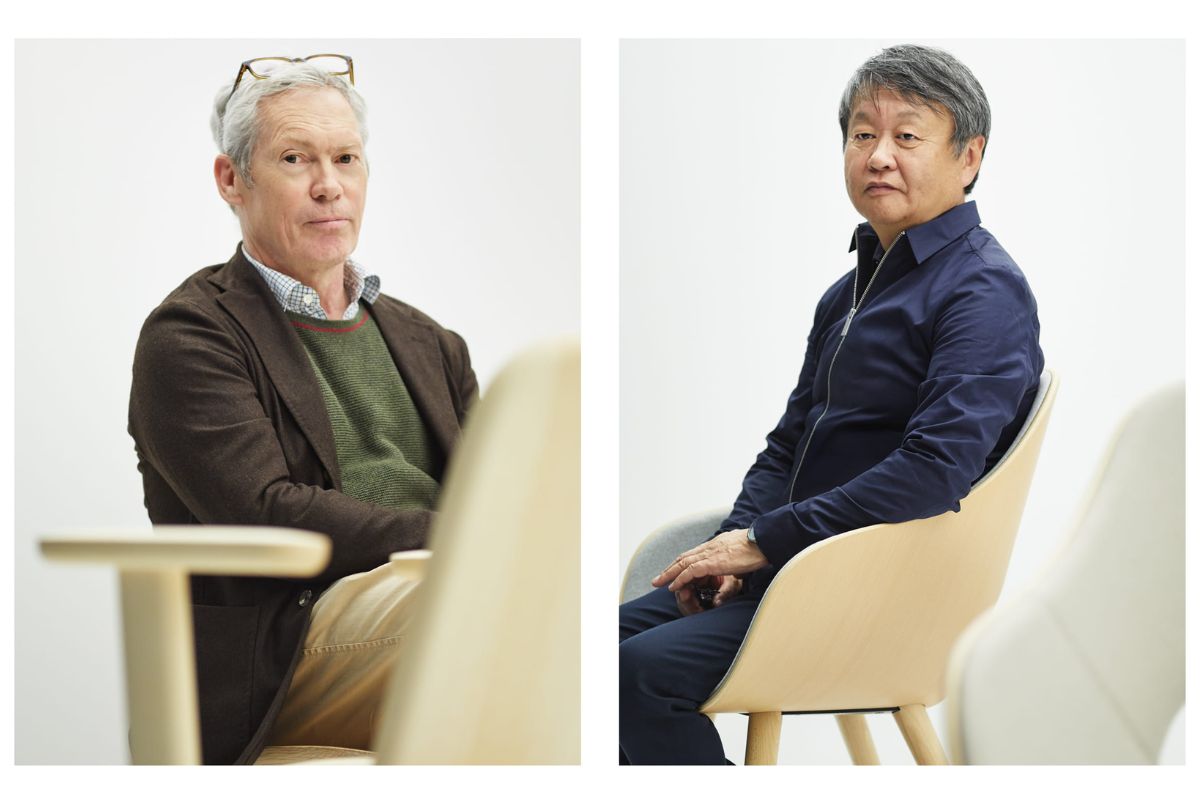
The concept of Super Normal was born in 2006 from the meeting between Jasper Morrison and the Japanese designer Naoto Fukasawa . The two theorize an approach to design that rejects the idea of ??design as spectacle, proposing instead a form of silent typological perfection . The premise is as simple as it is revolutionary: the best objects are not those that catch the eye, but those that become natural through use .
In their essay and related exhibition, held at the Axis gallery in Tokyo and subsequently at MoMA, Morrison and Fukasawa define the “Super Normal” as a rare balance: the object that exists without conceptual weight and without invasive charisma, but which – precisely for this reason – becomes an essential part of everyday life .
Morrison identifies the design value not in the form, but in the behavior of the object: in its ability to be “inevitable”, to replace excess with functionality, to incorporate the gesture without imposing an aestheticizing narrative. It is a critical position towards design as a branding exercise, and a defense of essentiality as a conscious cultural act .
Jasper Morrison and industry: the construction of the inevitable object
The work of Jasper Morrison cannot be understood by dissecting his projects only as a list of products: his research moves at the intersection between industrial practice, material culture and usage behavior. Each collaboration is a fragment of his thought, a further step towards the construction of an inevitable object, perfectly integrated into daily life.
Vitra The role of design as an advanced infrastructure
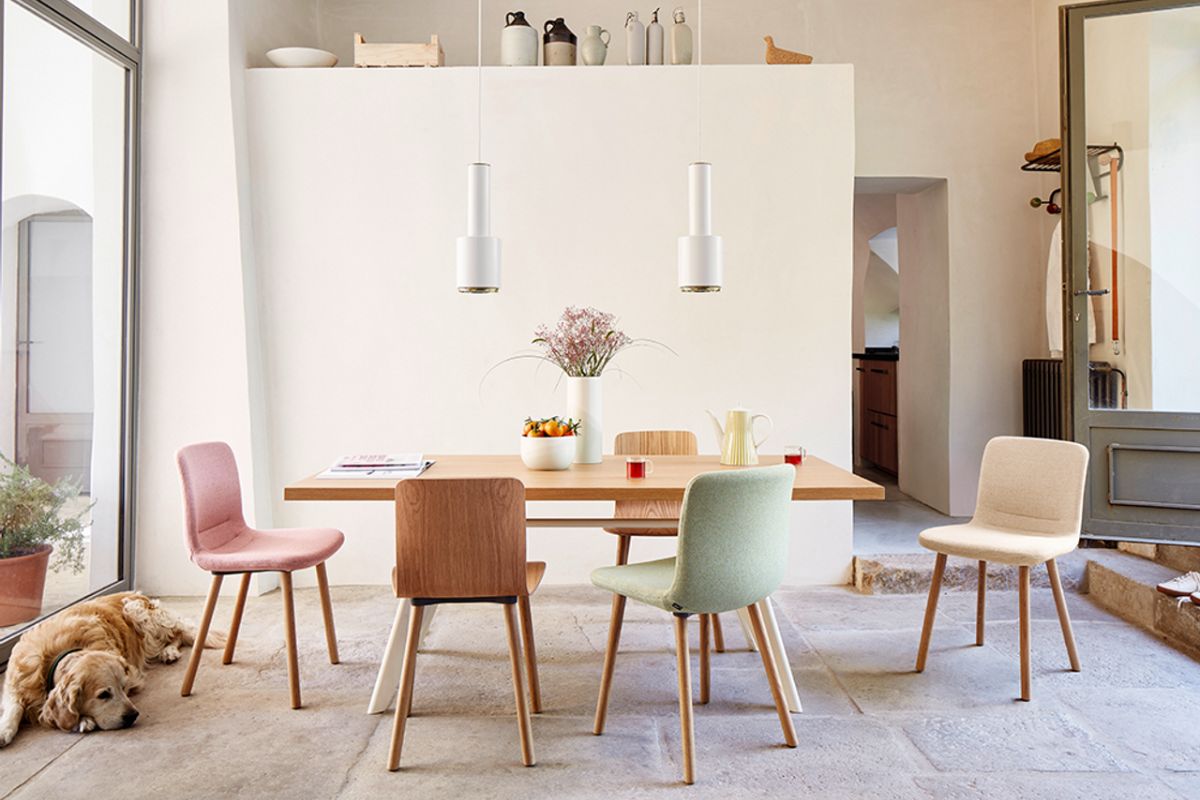
With Vitra , Morrison addresses design as domestic infrastructure , eliminating the category of the icon-object in favor of what he defines anonymous object useful, complete, out of time.
Among the numerous projects the following stand out:
-
HAL (2010) : not a chair, but a global program of sessions, developed in multiple bases, materials and contexts. The polypropylene shell is youtechnically advanced, but visually archetypal. Morrison does not “sign” the form: he normalizes it.
-
ATMOSPHÈRE (2016) : his book and curatorial project for Vitra does not propose a collection, but a constellation of minimal objects which, put together, generate habitable environments. A visual manifesto of his aesthetics of sufficiency.
“In my work for Vitra I try to avoid the exception. I want objects to exist for those who use them, not for those who observe them” . Jasper Morrison
Flos Light as an essential presence
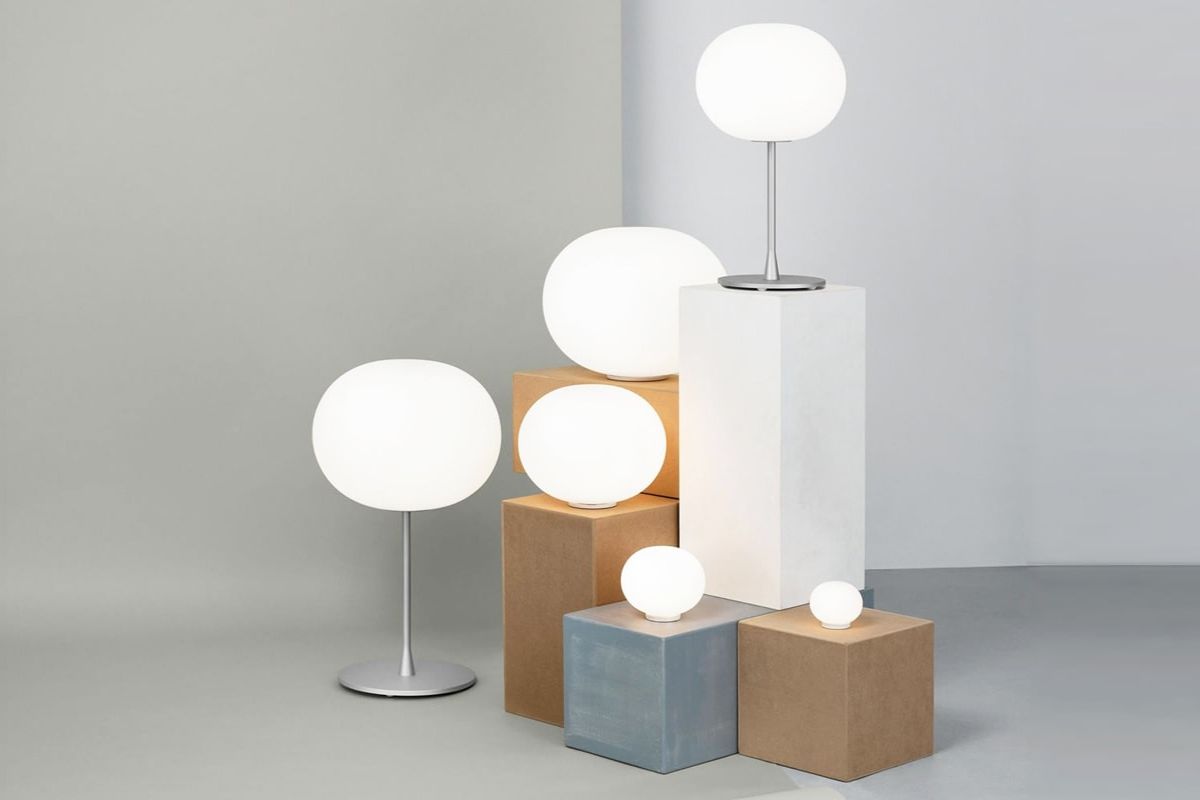
The collaboration with Flos highlights a distinctive trait of Morrison’s poetics: treating light not as an event, but as a condition of existence .
The lamp Glo-Ball (1998) , a perfect globe of blown opaline glass, contains no self-referential gesture. Yet, precisely this extreme subtraction transforms it into one of the most long-lasting and best-selling lamps in the world.
Light, in Morrison’s projects, does not sign the space: it enables it.
Magis Industrial technology as a democratic system
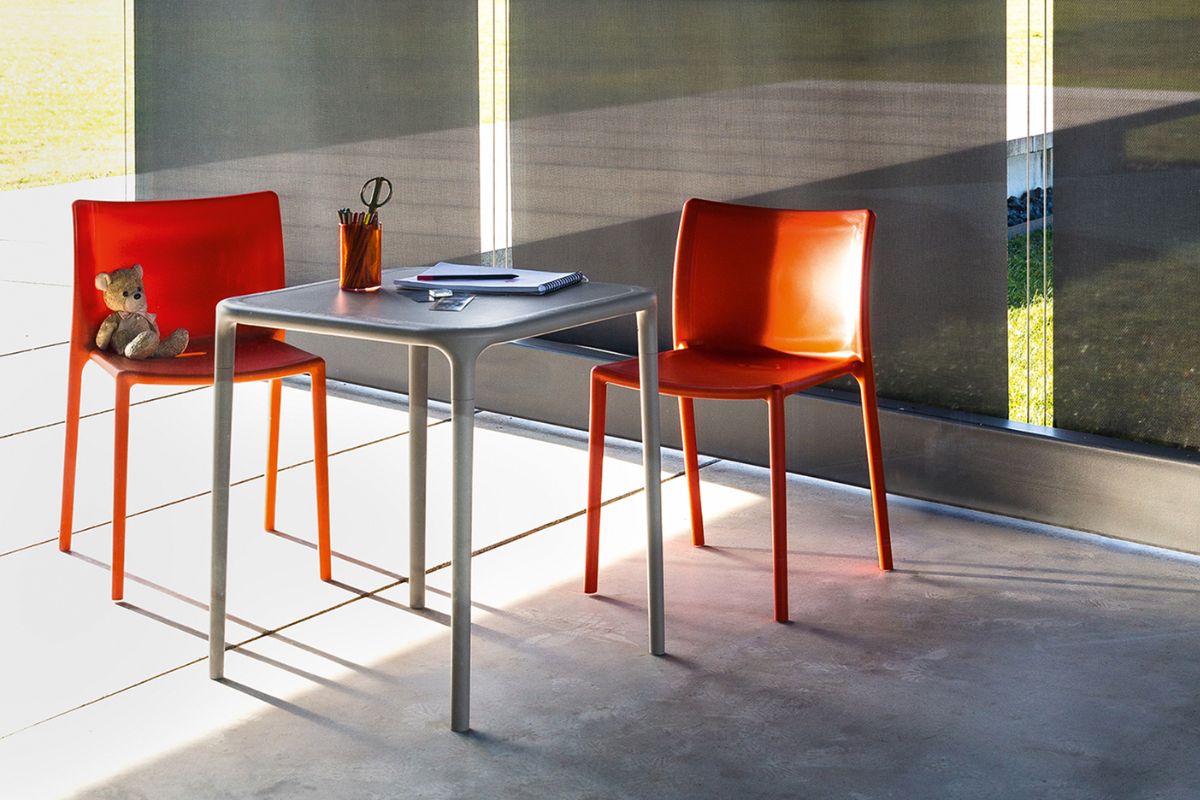
For Magis , Jasper Morrison explores the potential of industrial material rethought in a democratic key.
The Air-Chair (1999) in pressed polypropylene is a breaking point: it uses a complex injection mold to obtain a single-material, economical, stackable object, designed for the general public, not for the luxury market.
The real gesture is not formal: it is industrial. Morrison reduces, simplifies, diffuses.
In this project we can read his conception of design as a public service .
MUJI The design of non-identity à
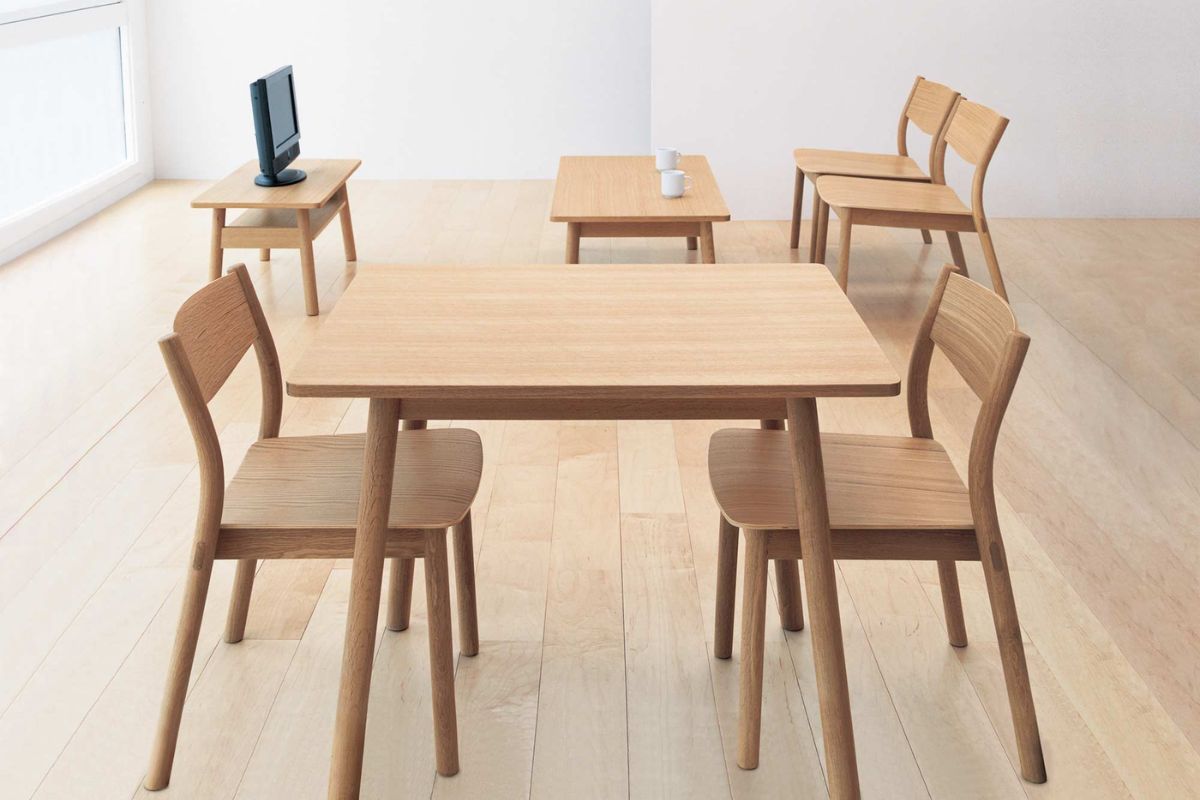
The partnership with MUJI represents the ideal convergence between the zen philosophy of the brand and the post-authorial thought of Jasper Morrison. The series of products from tableware to prefabricated houses are examples of design without design, where the form reaches the highest transparency .
Here Morrison verifies his intuition: an object can be radical “not because it speaks of itself, but because it gives up all its value to use”.
Critical reception: Jasper Morrison and the role of the anti-narrative in contemporary design
The figure of Jasper Morrison occupies a representative position within a “relaxed” post-modernist current, which develops outside the rhetoric of design-experience and the iconic derivatives of the project as the dominant visual language. In this context, his work presents itself as an act of cultural resistance : a proposal that undermines the very presuppositions of contemporary valorization, based on entertainment or on the exception.
The critic and theorist Deyan Sudjic , former director of the Design Museum in London, defines him as «one of the few designers who has understood the need to free design from iconographic dependence», while the filmGerman philosopher Friedrich von Borries identified in his production a “democratic model of objectivity”, where public and product find an ethical before aesthetic balance .
His influence is therefore more intellectual than formal: Morrison does not generate a school of style, but a school of thought , a rarity in the current panorama of design.
A structural critique of talking design
If the market exalts novelty, Jasper Morrison is rather closer to an idea of phenomenological design : the object must not speak, but must function; it must not emerge, but adhere. This is why much of his work is apparently anonymous: it dissolves into behavior .
In a world dominated by symbolic mediators, the object that renounces its ego becomes an almost subversive act.
The echo in the international debate and the internal resistance
Despite his great influence in the academic and theoretical fields, Jasper Morrison’s work is often poorly understood by the general public , accustomed to recognizing quality only through visual evidence.
It is paradoxically in design schools, at the highest levels, that this vision takes root most deeply: for example at the Polytechnic of Milan, at the ECAL in Lausanne and at the Royal College of Art in London, where design “without spectacularity” begins to be conceived as a response to the culture of excessive objects .
Over the last ten years, many emerging designers from Oki Sato (Nendo) to Konstantin Grcic have recognized the methodological importance of Morrison’s thought, which acted not as a style, but as a principle of responsible subtraction .
Jasper Morrison in 2026: normality as radicality

Almost fifty years after his debut on the international scene, Jasper Morrison continues to represent a fixed point in the critical discourse on contemporary design. In an era crossed by material urgencies – from climate change to production excess, from the crisis of use value to the rethinking of the life cycle of objects – his minimalist, essential, functional vision emerges with new evidence.
The super normal object becomes in 2026 a conscious response to overproduction and overexposure . No longer a simple aesthetic of little, but a cultural and political choice: rejecting spectacularity means removing the object from the logic of novelty programmed to last a short time. A design that does not want to be noticed to be used longer aligns perfectly with the contemporary priorities of the industry: reducing waste, restoring value to durability, building active invisibility.
A lesson for the contemporary design industry
The design system, today forced to reformulate its premises, finds a conceptual model in Morrison: an object that does not occupy symbolic space but frees it, allows designers, companies and users to modulate environments without overwriting the complexity of reality .
Thehis work allows us to reread some fundamental pillars of 2026 design practice:
-
Authentic sustainability : not a question of material, but of sobriety and continuous use over time.
-
Cultural function of the product : design not only communicates what it is, but what it chooses not to be.
-
Aesthetic durability : the minimized form does not age because it is not given to be seen, but to be interpreted by everyday life.
Morrison’s concept of invisibility appears disruptive today: it is not an absence of project, but the project taken to its theoretical limit, where the object coincides with its essence of use. In a historical phase in which consumers rediscover the value of the essential, its lesson becomes a grammar for the future .
40 years of project: Jasper Morrison’s parable in 10 objects
Jasper Morrison’s research spans four decades, punctuated by a coherence that is rare in the world of industrial design. Every object that bears his imprint is not limited to its visual form: it is a fragment of his thoughts on the invisible and radically ethical role of the object.
Here are ten emblematic works:
1. 1986 Handlebar Table
Self-produced prototype during the years of study in Berlin, obtained by combining a bicycle handlebar and a glass surface. It is the first testimony of his ability to design without “drawing” , recovering forms already present in reality.
2. 1988 Plywood Chair (Vitra Prototype)
Made of curved laminate, this chair is a manifest object: absolute formal economy, perfect neutrality, entirely concentrated on the relationship between gesture and seat. It foreshadows his work with Vitra.
3. 1989 Thinking Man’s Chair (Cappellini)
One of the rare exceptions in his career: seat in painted metal tube, conceptual in its statement but rigorous in its structure. Paradoxically, it is one of his most cited objects because it embodies the tension between form and formlessness.
4. 1997 Glo-Ball (Flos)
Opaline blown glass globe. No concessions to iconic language: diffused light, absolute purity of the relationship between light source and space. It is a lamp that is not looked at but experienced.
5. 1998 Tray (Muji)
An object minor only in appearance. This polypropylene tray, signed anonymously, establishes the theoretical alliance between Morrison and MUJI: total dissolution of authorship .
6. 1999 Air-Chair (Magis)
Printed in one piece, very light, democratic. It is the perfect application of his functional and industrial aesthetic: an inevitable object , accessible and without an expiry date.
7. 2003 Low Pad Chair (Cappellini / Vitra edition)
Compact seat, with strong reduction, designed for amresidential and collective environments. It is the bridge between the traditional armchair and contemporary domestic use: it lives without asking for attention.
8. 2006 Super Normal Exhibition
Not a product but a curatorial project, carried out with Naoto Fukasawa: everyday objects chosen as implicit models of invisible perfection . Here was born the concept, then book-manifesto, of “The normal is extraordinary”.
9. 2010 HAL Chair (Vitra)
Modular seating program: a polypropylene shell that can be combined with infinite bases. Each part does what it must , in a balance between productive economy and maximum functional use.
10. 2018 Moka (Alessi)
Redesigning an Italian icon, without betraying it or celebrating it. Morrison’s mocha is reduced to pure logic of use: elementary geometry, typological evolution, symbolic subtraction.
Each object in this chronology not only represents a historical moment, but a piece of Morrison’s philosophy: eliminating obvious authorship to “freely plan daily life” , and not one’s ego.
Against the rhetoric of the new, the ethics of the necessary
The design parable of Jasper Morrison establishes itself as one of the most solid points of reference in international design not because of a recognizable formal gesture, but for the exact opposite: his “programmatic” renunciation of visual identity in favor of an authentic centrality of the function of use. In a panorama often dominated by a design-object that raises its voice to be noticed, Morrison has consciously chosen the path of cultured invisibility , of the project that cancels itself together with its author, because it must not talk about itself, but speak to the world .
His work questions the discipline on a radical level: what happens to design if we take away from it the task of standing out? What remains of the object, once the narrative urgency has been removed? Morrison’s answer is only one: everyday life remains, with its gestures, its needs, its naturalness. And it is there that design finally finds its highest role.
Even today, in 2026, his philosophy of the super normal does not sound like a return to the past, but like an anticipation of the possible future: a design made of sufficient, long-lasting, anonymous, functional objects, developed in silent cooperation with the planet and those who inhabit it.
Because, ultimately, there is nothing more revolutionary than well-constructed normality .