Le Corbusier is not just an architect of Modernism: he is a grammar. It took light, proportion, structure and path and transformed them into a recognizable, replicable, questionable way of living. This is why it is still everywhere: in lofts and condominiums, in magazines and schools, in cities that work and in those that do not forgive their mistakes.
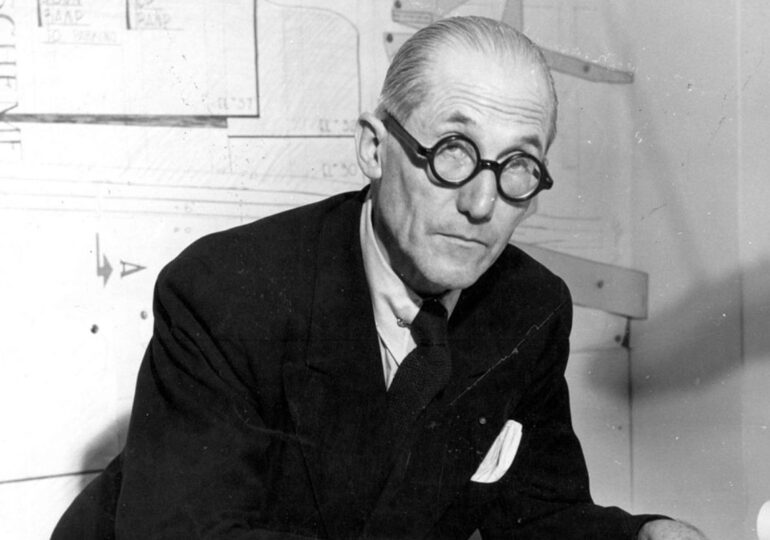
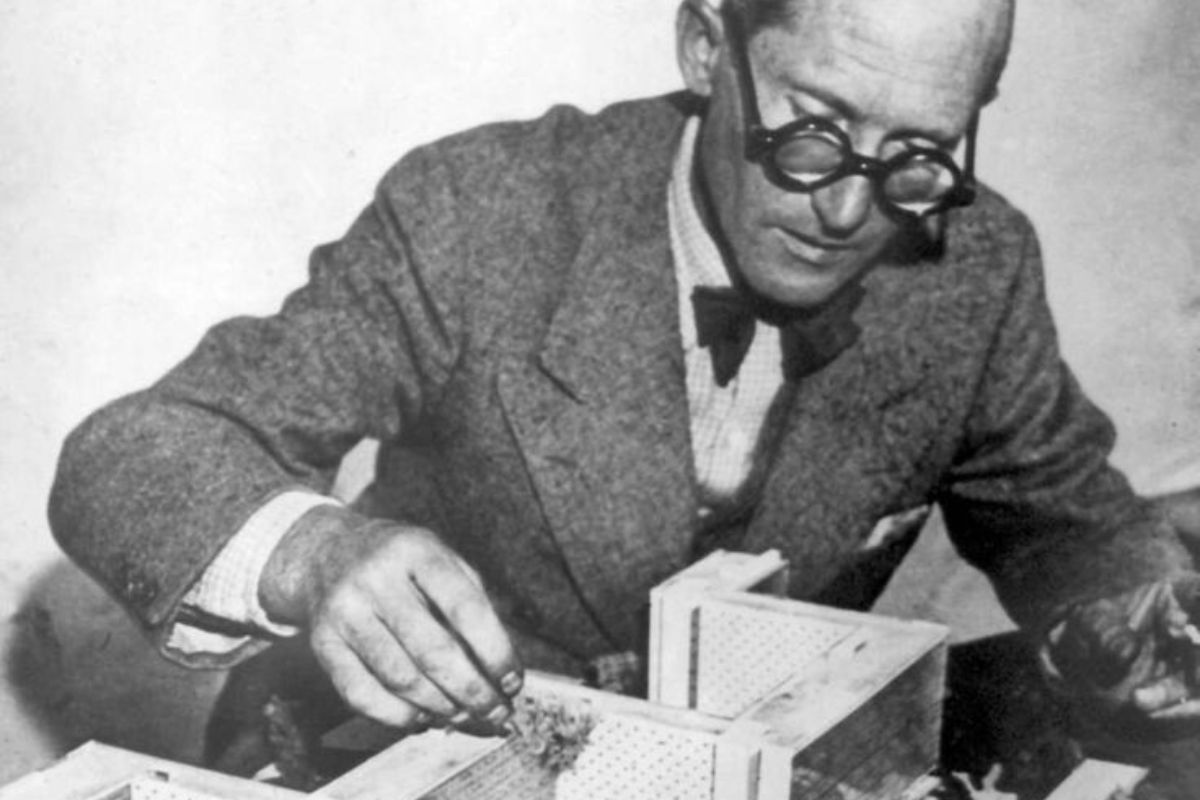
Le Corbusier is one of the most revolutionary figures of 20th century architecture. Born Charles-Édouard Jeanneret in La Chaux-de-Fonds, Switzerland, in 1887, he adopted the pseudonym Le Corbusier to mark his professional identity and launch a new creative manifesto. Architect, urban planner, designer, painter and theorist, he redefined the way of conceiving living space and cities, influencing generations of architects and designers.
«Architecture is the wise, correct and magnificent play of volumes assembled under the light.»
( Vers une Architecture , 1923)
Biography and education of the master of Modernism
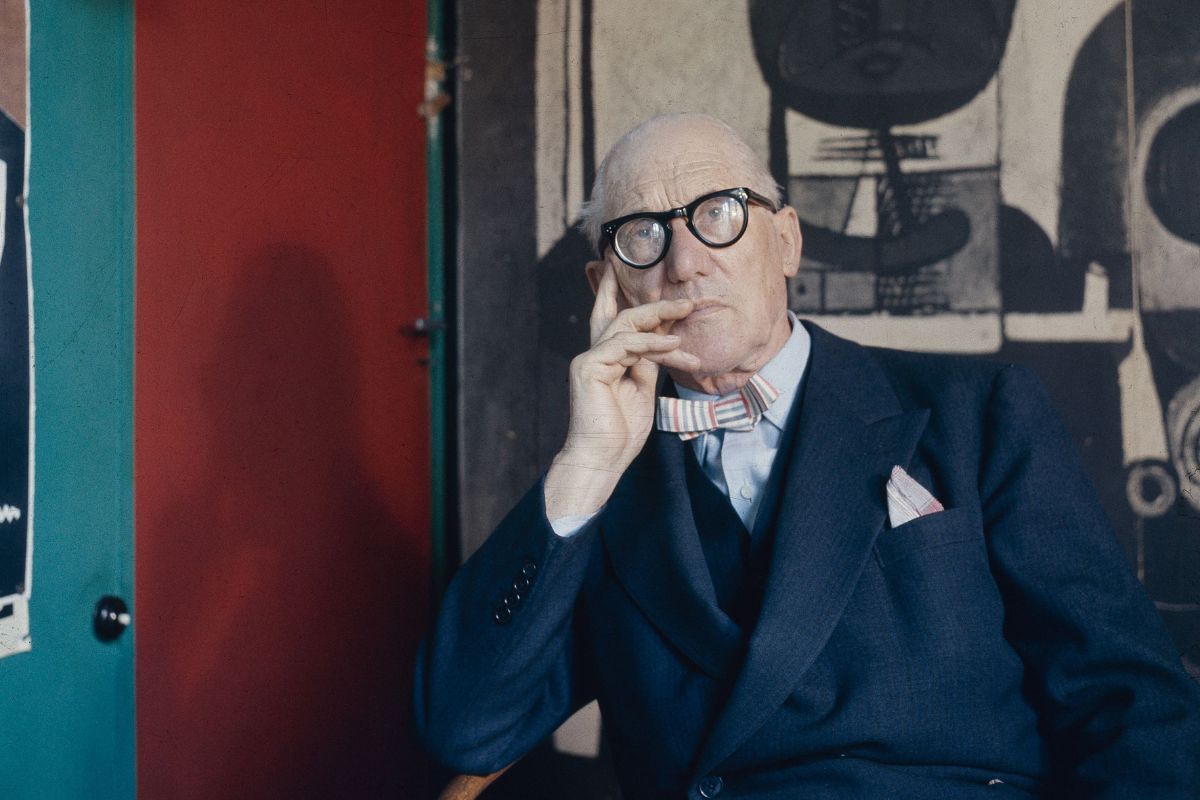
Charles-Édouard Jeanneret-Gris , known throughout the world as Le Corbusier , was born on 6 October 1887 in La Chaux-de-Fonds, a small town in the canton of Neuchâtel, Switzerland. The son of a clock dial decorator and a piano teacher, he grew up in an environment where art and precision craftsmanship were an integral part of daily life. His older brother, Albert, passionate about music, contributed to cultivating in him an aesthetic sensitivity that would express itself in painting, architecture and urban planning.
La Chaux-de-Fonds was then an important center of Swiss watchmaking, immersed in a mountain landscape of silence, clear light and natural rigor. This context will profoundly mark the young Jeanneret: nature will become a constant point of reference for him, and the precision of the craftsmanship will bring him closer to the idea that form must respond to function.
At thirteen he began his education at the École d’Art in La Chaux-de-Fonds, learning engraving and decoration. It is here that he meets Charles L’Eplattenier, the professor who will influence him more than anyone: he will be the one to suggest that he dedicate himself to architecture, sensing the talent of the young student. The first houses designed by Jeanneret for local clients reflect the aesthetics of Art Nouveau and Swiss regionalism, but already show a particular attention to light and proportions.
His training is anything but conventional: he never attends a real architecture school, but learns by observing, drawing, travelling. His long travels in Italy, Greece and the East put him in direct contact with classical temples, Renaissance cities, Byzantine art and Mediterranean culture. This period will mark him forever, teaching him that architecture must be in dialogue with the landscape, with light and with man.
After a period of apprenticeship in Paris with Auguste Perret, pioneer of reinforced concrete, and in Berlin in Peter Behrens’ studio – where he met Walter Gropius and Mies van der Rohe – Jeanneret decided to settle permanently in France. In 1930 he became a French citizen and chose to sign himself with the pseudonym Le Corbusier , inspired by amaternal ancestor: a choice that represents a professional and symbolic rebirth, a way to distinguish one’s identity as an architect and theorist from that of the young craftsman from the Swiss province.
His life will be entirely dedicated to architecture, painting, design and writing. Over 70 buildings built in twelve countries, books that will become manifestos of the Modern Movement and urban plans that continue to be discussed even today. He died on August 27, 1965, at the age of 77, while swimming in the waters of the Mediterranean, near his beloved home in Cap-Martin, leaving a legacy that changed the face of cities forever.
Theory and style
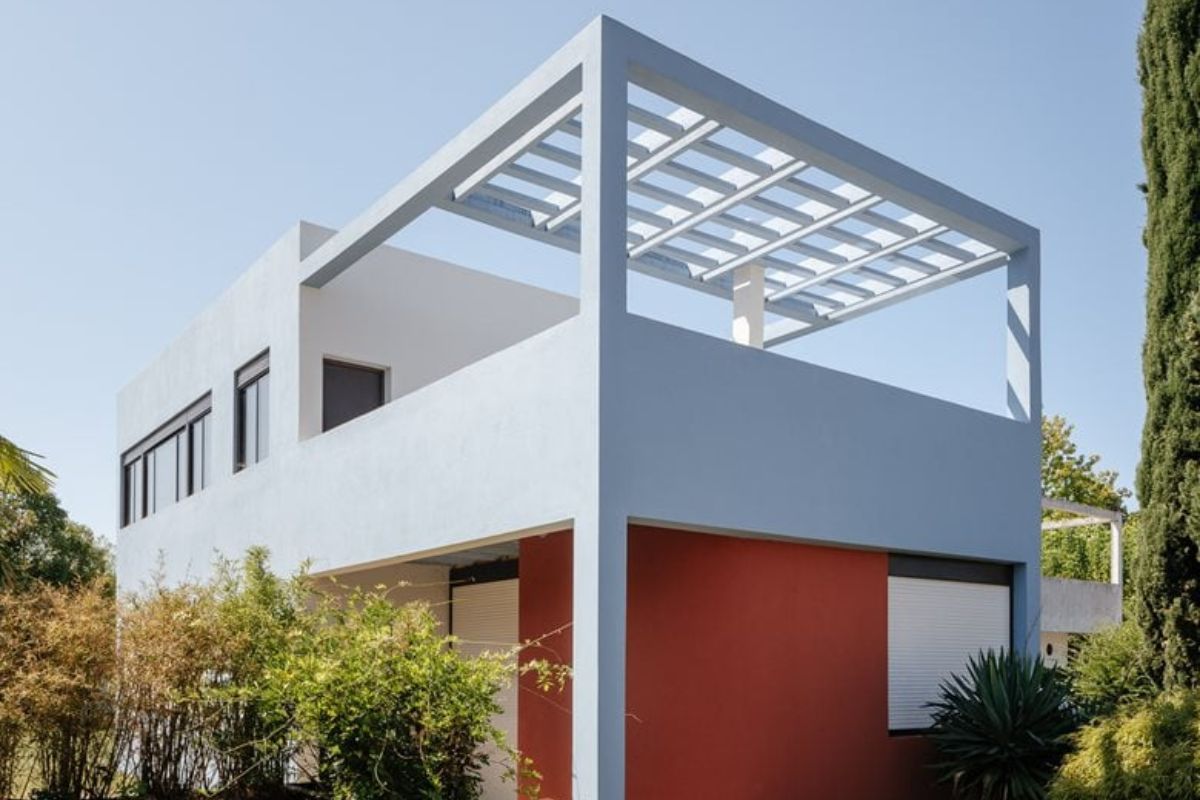
Le Corbusier was not only an architect, but a radical thinker. He believed that architecture should respond to the needs of a modern, industrialized and rapidly changing society. His famous statement, «The house is a machine for living», expresses his idea that the house should be designed as an efficient, functional device, studied down to the smallest detail to guarantee the well-being of those who live there.
In the 1920s he elaborated the Five points of modern architecture , which would become a true manifesto for the Modern Movement. The pilotas free the ground floor and open the space to the landscape, the free plan allows for a more flexible distribution, the free façade becomes a canvas to be composed without structural constraints, the ribbon windows bring light continuously, and the roof gardens restore greenery and nature to the city. These concepts materialize in the Villa Savoye, a building that summarizes his vision: a white parallelepiped suspended on passatellis, open to light and surrounded by the landscape.
However, Le Corbusier did not limit himself to defining formal rules: he introduced the concept of the Modulor , a system of proportions based on the human body, a sort of universal measure that was supposed to guide the architect in the harmonious design of spaces. For him, architecture was an ethical act, capable of improving the quality of life and influencing society.
The Five Points of Modern Architecture
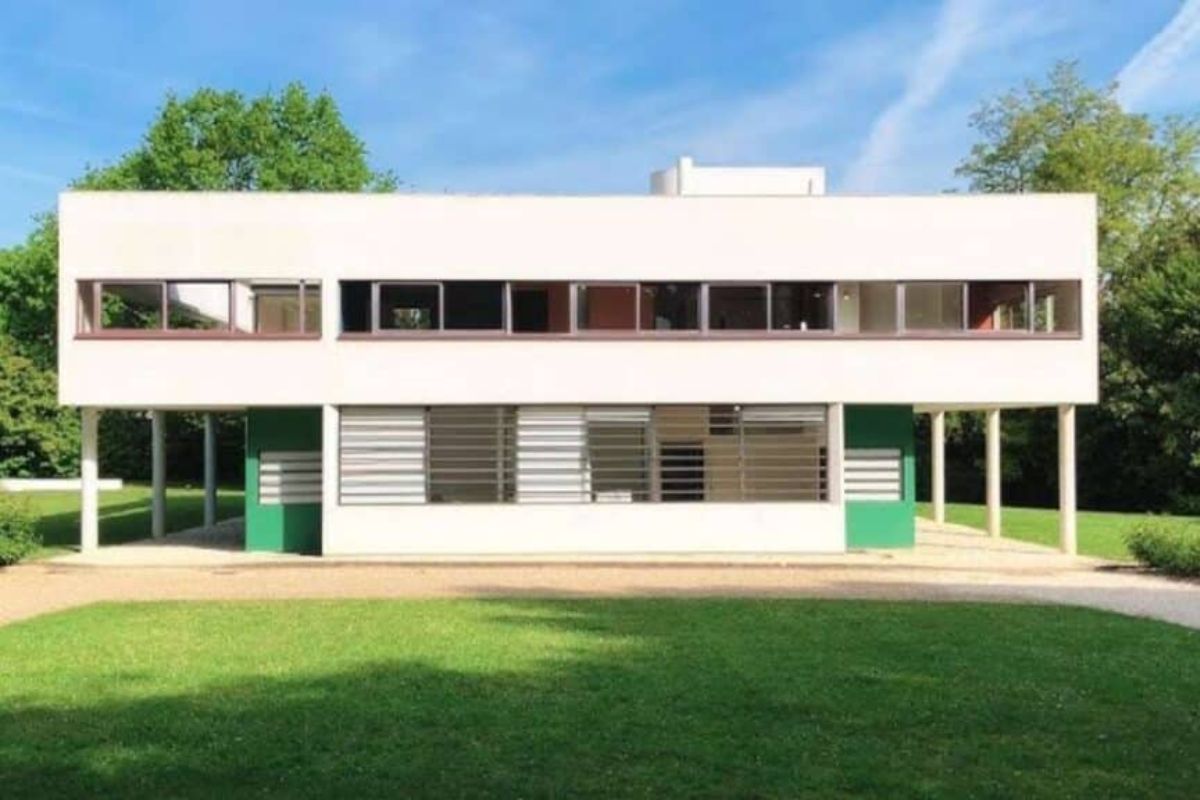
One of Le Corbusier’s most revolutionary contributions is the definition of the Five Points of Modern Architecture , published in 1926 and considered the manifesto of the Modern Movement. It’s not just about technical rules, but about a real paradigm shift: a new way of thinking about buildings, in tune with industrial society and the needs of contemporary man.
1. Pilotis Raise the building from the ground
Thanks to the use of reinforced concrete, Le Corbusier frees the ground floor and makes the building “float” on thin pillars. This creates open spaces, gardens, walkways and a more harmonious relationship with the landscape. The Villa Savoye is the perfect example of this solution: a suspended parallelepiped that seems light and airy.
2. Free plan Fluid and flexible spaces
The load-bearing structure is entrusted to pilotas, and this allows the internal walls to be freed up, which can be distributed without constraints. The architect can design fluid, adaptable spaces, designed for modern life.
3. Free façade A new face for the building
If the walls are no longer load-bearing, the facade can be designed freely, with large openings, glass surfaces and a completely innovative compositional language.
4. Ribbon window Light as an architectural element
The windows develop horizontally along the entire facade, bringing natural light in a uniform and continuous way. This transforms the relationship between inside and outside, amplifies the perception of space and creates a constant dialogue with the landscape.
5. Roof garden Returning greenery to the city
The roof becomes a space to live in: terrace, roof garden, meeting place. It is a way to return the surface occupied by the building to nature and to give the inhabitants an oasis of relaxation.
These five principles, applied together, have given life to a new aesthetic: pure geometric volumes, white surfaces, transparencies and light to flood the interiors. It is no coincidence that the Villa Savoye is still studied today in all architecture faculties as the built manifesto of this vision.
Iconic works
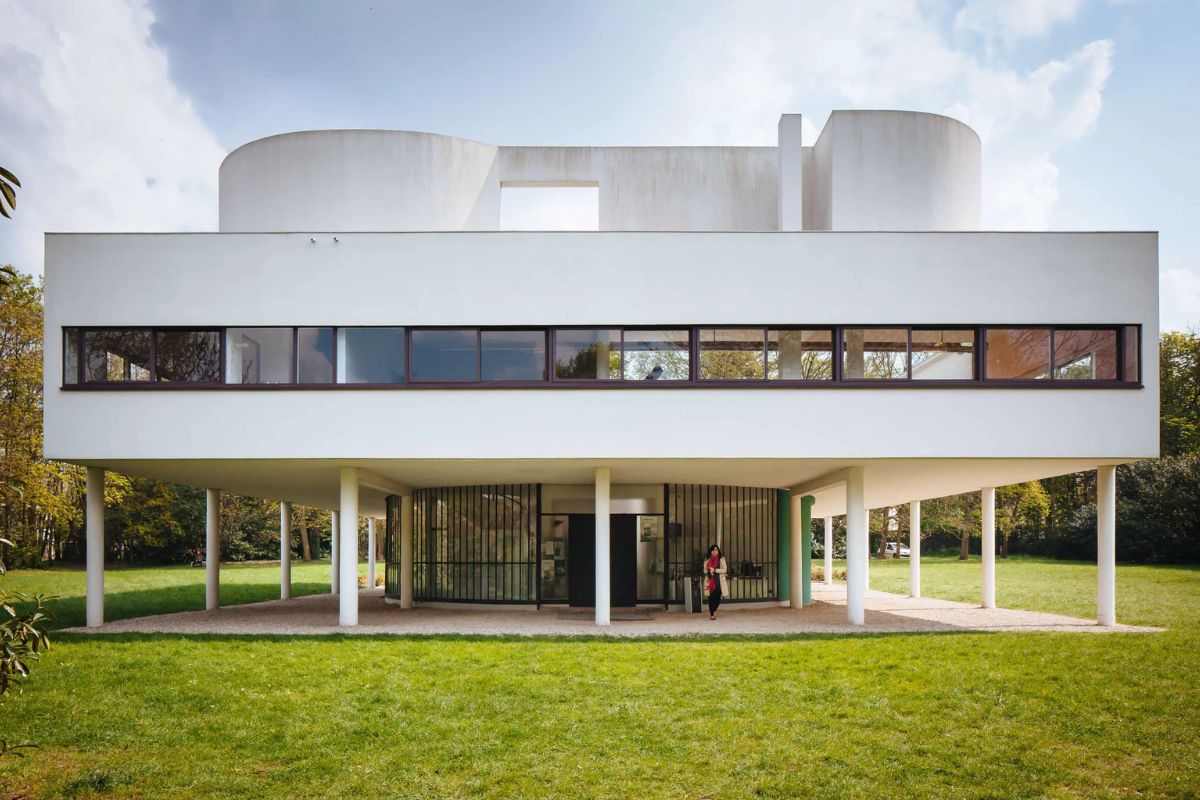
Le Corbusier’s production is vast and touches four continents. Among the most famous works stands out the Villa Savoye (1928-1931), considered the manifesto of Modernism. Here each element ??pilotais, ribbon windows, roof garden is applied with almost didactic precision, creating a pure, essential architecture, immersed in nature.
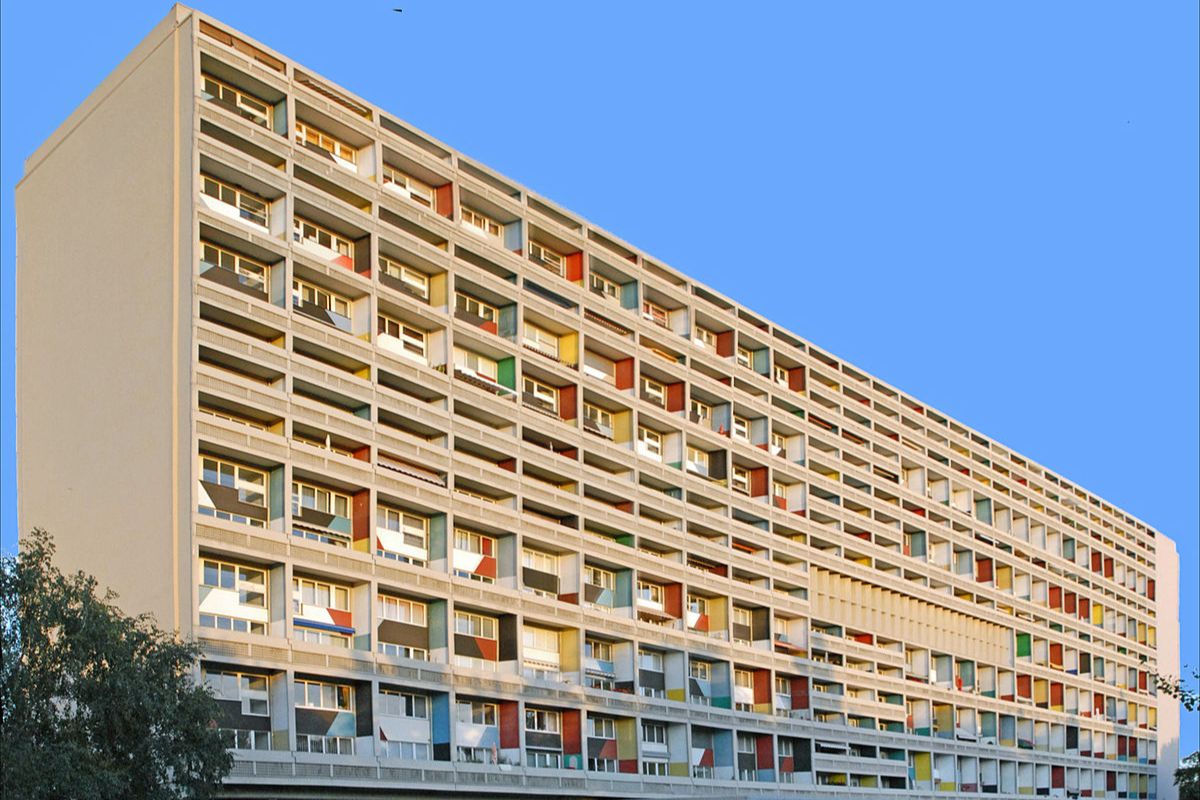
With the Unité d’Habitation (Marseille, 1947-52) he experimented with the idea of a “vertical city”: an exposed concrete building that houses duplex apartments, common spaces, shops, even a school and a gym on the roof. This project will become the starting point for Brutalism and for many post-war residential architecture.
The Chapel of Notre-Dame du Haut in Ronchamp (1950-55) marks a turning point in his poetics: architecture here becomes sculpture, light becomes the protagonist, the curved and thick walls generate a mystical and contemplative atmosphere.
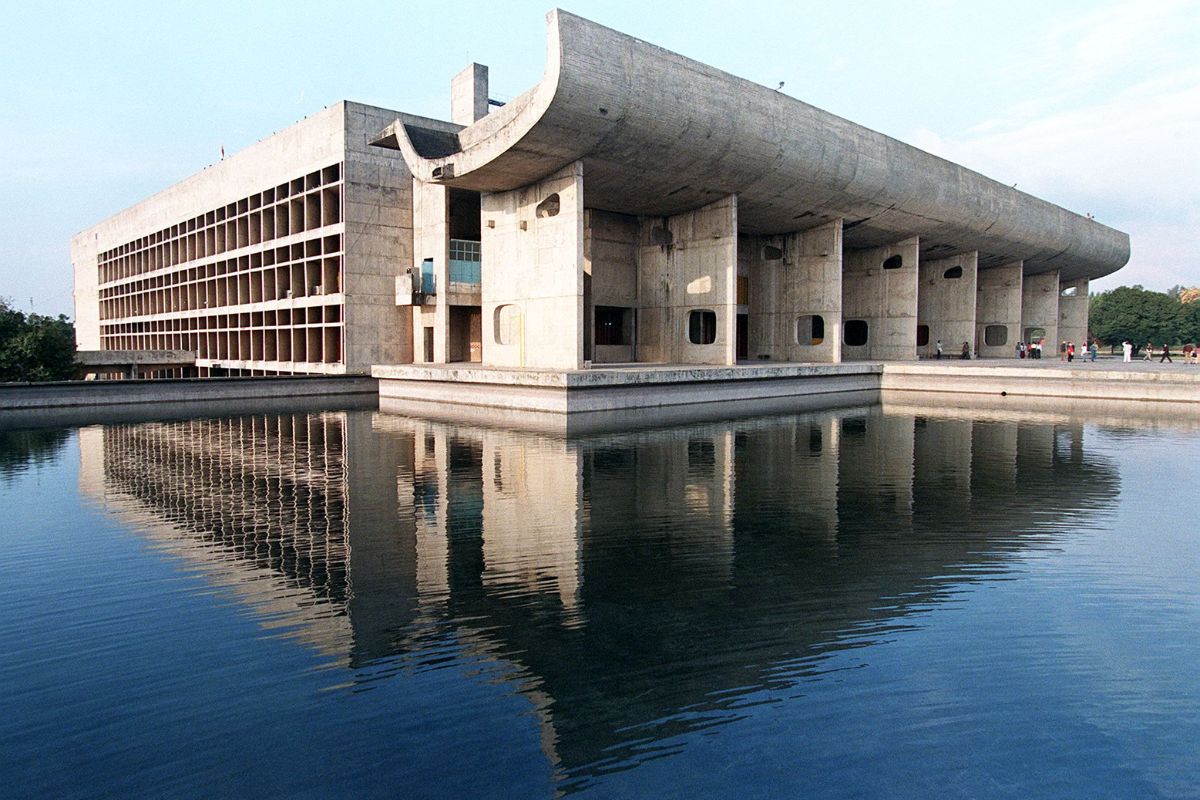
The city of Chandigarh in India, designed almost entirely by him in the 1950s, deserves a separate chapter. It is a modern capital conceived from scratch: a grid of ordered sectors, monumental government buildings and public spaces designed for a new postcolonial society. Chandigarh is perhaps the project that best represents his urban vision.
Design and collaborations
Le Corbusier was also a designer, painter, theorist. His holistic vision led him to design not only buildings but also furnishings, because he believed that the living space should be coherent in every detail. With his cousin Pierre Jeanneret and with Charlotte Perriand he developed a series of furniture that became icons of the 20th century: the Chaise Longue LC4 , the LC2 armchair and the LC7 swivel chair .
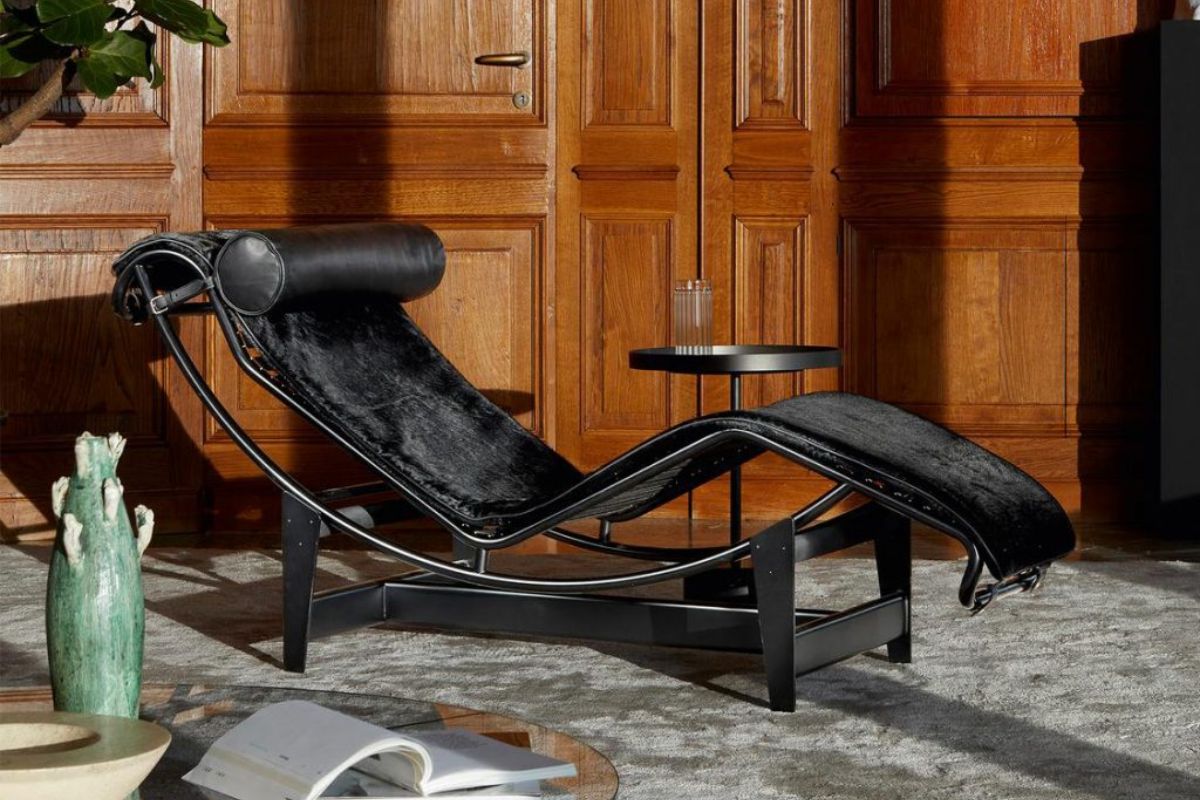
These furnishings, today produced by Cassina in the I Maestri collection, are perfect examples of functional and seamless design.in time. Chromed steel tube structures, minimal padding, proportions designed for comfort: each piece is the result of a reflection on ergonomics and modern aesthetics.
Urban planning and visions
Le Corbusier was obsessed with the idea of reforming cities. In his writings he proposed ambitious, often utopian urban plans, such as the Plan Voisin for Paris, which envisaged the demolition of part of the historic center to build glass and steel towers surrounded by greenery.
With the Ville Radieuse , he theorizes an ideal city with tall and spaced buildings, surrounded by green spaces and connected by rational road axes. For him, the city had to be orderly, functional, efficient, a place where every function – living, working, leisure – had its own defined space.
«A city made for speed is a city made for success.»
The creation of Chandigarh is the opportunity to put these theories into practice: wide streets, functional sectors, public buildings of great plastic strength. A city symbol of the future, but also criticized for its rigidity and excessive monumentality.
Criticisms and controversies
Le Corbusier’s thought was never neutral. If on the one hand he was celebrated as the father of modern architecture, on the other he was accused of having a vision that was too abstract, at times authoritarian, which ignored the social and historical complexities of existing cities. His demolition and total reconstruction projects have made many fear the loss of identity of historic centers.
However, his theories paved the way for a new conception of urban space, influencing urban planners and architects around the world. Even his most radical ideas stimulated a debate that continues to this day.
What he left to the world and recognitions
Le Corbusier’s impact on world architecture was so profound that it was officially recognized by institutions and prizes of the highest prestige. During his career he received the Royal Gold Medal from the Royal Institute of British Architects (1953), the AIA Gold Medal from the American Institute of Architects (1961) and the Frank P. Brown Medal from the Franklin Institute in Philadelphia, honors which celebrate his fundamental contributions to the evolution of architectural thought. In France he was awarded the Légion d’Honneur , first as a Knight in 1930 and then as Officier in 1945.
The most important homage, however, arrived posthumously: in 2016 as many as seventeen of his works in seven countries from the Villa Savoye in Poissy to the Unité d’Habitation in Marseille, from the Ronchamp Chapel to the Capitoline Hill in Chandigarh were declared UNESCO World Heritage Sites as an exceptional contribution to the Modern Movement. This recognition not only celebrates the architectural legacy of Le Corbusier, but confirms the universal value of his ideas, still a point of reference for architects, urban planners and designers today.
Le Corbusier changed our way of living and thinking about the city. Let him be considered a visionaryor a provocateur, remains an essential point of reference for understanding the twentieth century and contemporary architecture. His buildings are not simple constructions, but manifestos of an era and an idea of ??the future. And even today, decades later, his words and works continue to inspire those seeking an architecture capable of communicating with man and time.
Questions that always come back when we talk about Le Corbusier
Why is it considered so important?
Because it made Modernism an operational language: rules, principles, replicable solutions. For better or for worse, after him architecture began to speak “modern” in a systematic way.
What are the Five Points and why do they still matter?
They are a way of freeing space: a structure separated from the walls, a more fluid plan, a lighter facade, more generous light. Even when you don’t see them declared, you find them as a design mentality.
Is Modulor an obsession or a method?
It is an attempt to give measure to architecture starting from the human body. It is not a magic formula, but a question: how do you design for man without losing rigor?
Why does Ronchamp seem like another person?
Because Le Corbusier is not a single style: he is an autonomy. Ronchamp shows that his idea of ??space does not depend on geometry, but on light and perception.
Why is it even controversial?
Because when architecture becomes a system (and above all urban planning), power comes into play: who decides, who is designed for, what is sacrificed. And Le Corbusier, in this regard, is not a “comfortable” figure.