Talking about interior design often means limiting ourselves to aesthetics and functionality, forgetting that the space we live in is much more than a simple container. The rooms we live in tell who we are, influencing our state of mind and our way of living everyday life. But what happens when design becomes a real tool for improving people’s well-being?
Mattia Gazzetta found his answer in a unique and deeply conscious approach: combining interior design with the principles of Feng Shui and Wellbeing Architecture . His is not a simple aesthetic research, but a journey that crosses the identity of each individual to translate it into spaces that reflect who we are and help us live better.
After a professional career in large-scale retail trade, Mattia chose to follow his vocation, moving from the world of commerce to that of interior design. Today, through his method, he helps people create environments that are not only beautiful and functional, but which also promote balance and serenity.
In this interview, Mattia Gazzetta tells us about his vision of design, the profound connection between home and emotions, the transformative power of space and how he built his working method, combining creativity, listening and holistic knowledge.
A dialogue that goes beyond furnishing trends and leads us to reflect on how our home can become the authentic reflection of our inner well-being.
Interview with Mattia Gazzetta: the profound meaning of living well-being

Hi, tell us about your professional path that has brought you here today!
My name is Mattia and today I am an interior designer and holistic operator, specialized in Wellness Architecture and Feng Shui. I have always had a passion for the home. Ever since I was a kid, I spent hours leafing through furniture magazines or browsing real estate websites, attracted by everything related to living. For me the house has never been just a container: it has always been the place in which to express ourselves, a profound reflection of who we are.
Yet, my journey began elsewhere. I worked for years in large-scale retail trade, where I grew professionally by managing teams and developing organizational and relational skills. That job taught me a lot, especially on a human level: I learned to really listen, to understand the needs – even the unspoken ones – of the people I worked with or served.
At a certain point, however, something inside me started to knock loudly. I felt that this path, however safe, was not mine. I wanted to create a deeper connection with people, I really wanted to help them… and I asked myself: why not do it through their home? That’s where I felt the urgency to reinvent myself. I started studying interior design, while continuing to work, with the aim of transforming that passion into a new profession.
Then came the moment of salto. I remember a little inner voice whispering to me that it was time to show myself, to come out into the open. So I opened my YouTube channel, also investing in a course to understand the strategy. It was during the pandemic, a time when we were all forced to return indoors and within ourselves. And while the world closed down, I opened up: my first video came out right then, and from that moment on I haven’t stopped.
Week after week, video after video, the channel grew. The first customers began to arrive, and with them, the first confirmations that that choice was right. I continued to train, but I felt that another step was needed: leaving my old job to dedicate myself completely to what I was building. It wasn’t a sudden decision, on the contrary. I communicated it well in advance, because I wanted to manage everything with respect and responsibility.
Right around that time I discovered that I was going to be a dad. Many thought I was crazy for leaving a safe place in such a delicate moment… but I felt I was perfectly aligned with what I had to do. I studied, I prepared, I approached every aspect methodically. And then, with confidence, I took flight. From that moment, I tasted true freedom: that of building something that truly represented me, day after day.
When did you understand that design was not just aesthetics but also well-being?
I understood this in the field, carefully observing how people experience their spaces. I realized that the environment you live in can have a very strong influence on your mood, your daily energy, even your ability to really concentrate or relax. An environment can also be aesthetically beautiful, but if it is not functional or does not reflect those who live in it, it is not good for you. Indeed, in certain cases it can create internal disharmony.
Functionality can also be designed following general rules, but harmony… that is another thing. Harmony is personal, it must be built starting from who you are at that moment in life. It cannot be standardized.
Over time, I have seen many houses and many different ways of living them, and each time I realized that spaces tell a lot about those who live in them. Sometimes even more than people can tell about themselves. And so I became passionate about this subtle link between space and interiority. I understood that design, if experienced with awareness, can become a powerful tool for personal transformation. It’s not just furnishing well: it’s helping someone find themselves in their own home.
What led you to integrate Feng Shui into your work?
Feng Shui has always fascinated me for a specific reason: the idea that every space has an energy capable of influencing those who live in it. At a certain point I understood that I wanted to go beyond aesthetics and functionality, which are fundamental, to offer my clients something deeper: environments that had a positive impact on their well-being, also on an emotional and energetic level. Feng Shui gave me the tools to do this. It allowed me to design not only beautiful spaces, but spaces that could becomeand allies in the daily lives of those who live there.
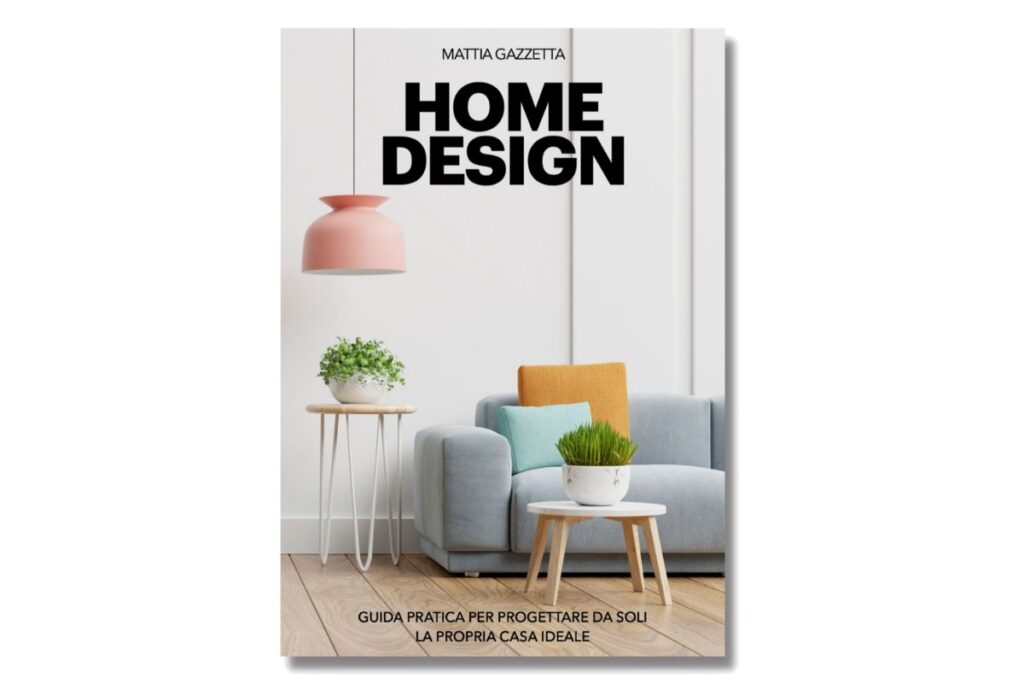
What are the Feng Shui principles that have most impressed you and that you try to apply in your projects?
There are several approaches to Feng Shui. Some are more “simplified”, almost schematic, adapted to Western culture through manuals and fixed rules. I instead chose an approach that is more faithful to tradition: it requires greater listening, sensitivity and perceptive involvement, but it is decidedly more profound and transformative.
One of the principles that struck me most is this: the house is the extension of the body of those who live in it. Like a dress, it tells us who we are, where we are in our life journey. Reading that space – and returning it in a more balanced way – means helping the person who experiences it to find a profound alignment with themselves.
Everything revolves around balance: that between natural elements (water, wood, fire, earth and metal), but also between light and shadow, solids and voids, materials and shapes. My job is to accompany my clients towards a specific, unique harmony, tailor-made for them. Nothing is left to chance, not even the color of a wall or the position of a lamp. Every choice has a symbolic, functional and personal root.
How does your approach differ from that of other interior designers?
What I try to do is create a bridge between interior design and personal growth. I don’t limit myself to designing beautiful and functional spaces: I want every environment to truly promote the physical, mental and emotional well-being of those who live there.
I take the time to listen deeply to my clients. I accompany them in a process in which the house becomes a mirror and an instrument of transformation.
Another aspect that distinguishes me is communication: I try to speak in a clear, reassuring way. My clients often tell me that I make them feel at home from the first meeting. This is my goal: to create trust, empathy, lightness… even when working on profound issues.
Do you have a project that you consider particularly significant for its impact on the client’s well-being?
Each project, for me, is a journey in itself. There isn’t one that hasn’t left a mark on me and the people I’ve worked with. There is a moment, during the design, when everything begins to take shape: I see it in my 3D software, but above all I feel it inside. I smile, because I recognize the potential that is emerging.
And then comes that shared wonder: when I present the project to the client and I see the surprise, the gratitude, the enthusiasm in his eyes.
They often write to me afterwards, as they create piece by piece what we imagined together. They send me photos, updates, emotions. It is in those moments that I feel I have chosen the right path. And this is why I want to continue to grow, to experiment, to discover new ways to improve people’s well-being through the places they inhabit.
The house is the refuge of people: in your opinion, what are the andWhat are the most common mistakes made when furnishing and arranging rooms?
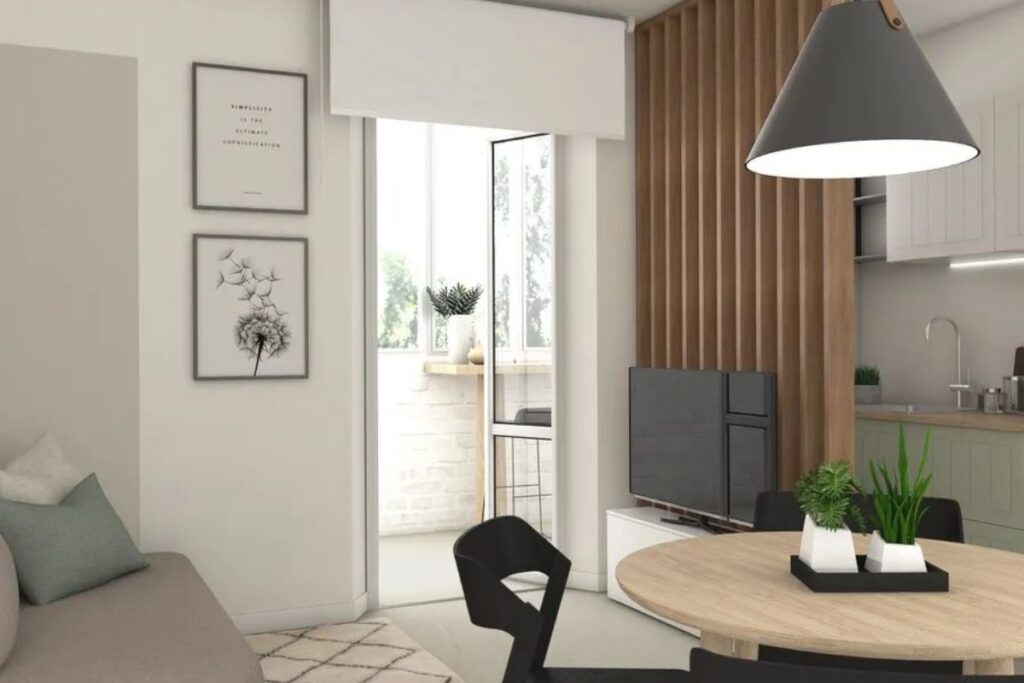
It is often thought that furnishing simply means filling a space. The result? Environments that are too full, chaotic, that take away breathing space rather than offering it. Or the arrangement of the furniture is underestimated: it doesn’t take much to block the fluidity of movement, and this affects, even unconsciously, our balance. Natural light, then, is another aspect that is often overlooked, as is the choice of colours: fundamental elements that profoundly influence our mood.
But the most widespread error, if we want to find a common thread, is the lack of awareness. I don’t say this with judgement, on the contrary: it is absolutely natural. Nobody really teaches us to read the spaces we live in. This is why I believe in the figure of the professional: someone who knows how to accompany you, help you see what you may not be able to grasp on your own. The house is not just a container: it is a mirror. And designing with awareness means, ultimately, also designing a part of one’s life.
How can housing well-being be improved with small changes?
You don’t always need to overturn everything to start breathing better in your home. Sometimes you just need to subtract, rather than add. Getting rid of the superfluous, letting spaces become lighter, can open the door to new possibilities. Even the introduction of natural elements plants, raw fabrics, wood can make a big difference.
Light, for example, can radically transform an environment. And then there are the colours, the scents, the textures… every detail contributes to building a sensation. Often very little is enough to transform a space and make it more welcoming, more authentic, more “ours”.
Are there materials, colors or elements that you always recommend because they promote harmony and positivity?
Rather than always recommending the same things, I like to start from one word: awareness. Every house, every person, every project is different. Having said that, I tend to suggest the use of natural materials, because they convey a more authentic, more rooted energy. Wood, linen, cotton, stone… they are living elements, which speak to our body in a subtle but powerful way.
Plants also have an important role: they purify the air, but above all they rebalance the space with their silent presence. As for colors, I don’t believe in strict rules. Rather, I invite you to avoid monotony: too much white, too grey, too much neutrality risk flattening emotions. We need a vibrant touch, a detail that speaks to our soul. Something that resembles us.
In your work it often happens that you have to “read” the customer. What is the most important aspect of listening in an interior design project?
I don’t think I “read” people. I believe, rather, that it is the house that tells a lot. It is the space that speaks: through objects, choices, silences. My job is to listen to that silent language and share it with those in front of me. Froma comparison, a true dialogue, is born there.
The most important aspect is to reach the deep need. It is not always expressed clearly, on the contrary: it often emerges along the way, between a word and a hesitation, between a look and a memory. I observe how the person experiences his space, what emotions he feels, where he feels good and where he doesn’t. Only in this way can I create a project that is truly tailor-made. Not only beautiful, not only functional: but capable of making that person feel truly at home. Inside and out.
In your opinion, is there a link between the space we inhabit and the changes in our lives?
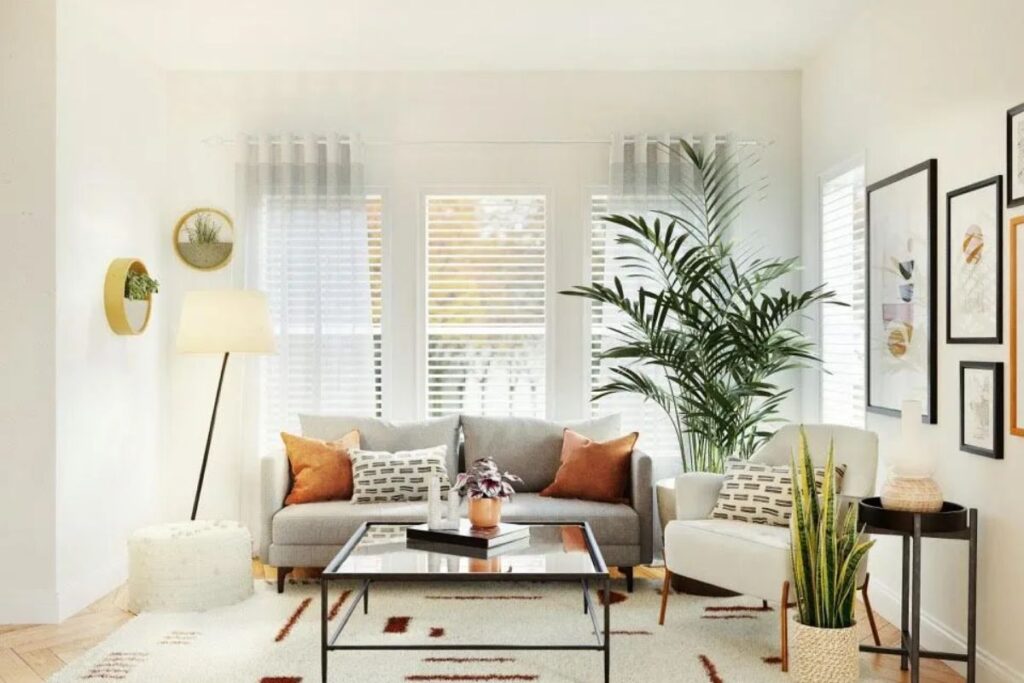
Absolutely yes. The space that surrounds us is never neutral. It reflects our inner state and, at the same time, influences it. It is a two-way relationship, continuous, sometimes subtle, but very powerful. When we live in an environment that resembles us, that welcomes us, that supports us, something inside us aligns. We feel more serene, more motivated, more balanced.
Over time I learned that every small change in space can trigger a larger process. Sometimes the effect is immediate. Other times, like a seed planted in silence, it needs time and care to germinate. But there is one thing that I understood deeply: when a person becomes aware of their own space and internal dynamics, then they can use their home as a tool to activate real transformations in their life.
Where do you want to take your work in the coming years? Do you have a particular professional dream?
My dream is to grow this integrated approach that I have built over time, combining design, well-being, listening and awareness. I want to continue to offer practical and concrete tools, but also deeper paths, for those who want to live better in their home and, consequently, themselves.
I would like to create a space both physical and digital where people can access content, consultancy, workshops, moments of inspiration and discussion. An accessible, authentic place where anyone can learn to bring harmony into their home and, at the same time, into their life. I believe in a design that brings harmony, that accompanies, that listens. And I want my work to go more and more in that direction.
If you could give advice to anyone who wants to transform their home into a place of well-being, what would be the first step to take?
The first step is to look. Stop for a moment, breathe and really observe your home. Not as we are used to seeing it every day, but with new eyes. Ask yourself: “Does this space make me feel good? Does it really represent me?”. We often live in environments that resemble us only by habit, not by choice.
I always recommend starting from there: from a sincere listening. Are there corners where we feel comfortable? Others that we avoid, perhaps without realizing it? Objects that still talk about us, and others that instead tell of a past part that no longer represents us?
Sometimes it is precisely by freeing ourselves of the superfluor that we begin to make room for who we are today. It doesn’t take much: a plant, a new light, a colour. But even before the aesthetic details, the desire to enter into a relationship with the space is needed. Only then does the house stop being a container and truly become a refuge, an ally, a mirror of our evolution.
Your motto is Shape your space, transform your well-being is there an experience that made you realize how true this is?
Yes, and I’m not just talking about my clients, but also about myself. An example that I often give is that of my sofa. For years it had been positioned in the center of the room, as happens in many modern homes. But something didn’t add up: my wife and I realized that we could never really relax. There was always a subtle tension, a feeling of constant activation, as if there was never room to slow down.
Analyzing our environment, I understood that that sofa told a lot about our way of life: always on the move, always ready to do, never really still. So, I decided to move it. I placed it against a “safe”, protective wall. And something changed immediately. I still remember the day my wife, without even realizing it, fell asleep on the couch for the first time. A simple but very powerful gesture. That new arrangement had finally given us permission to rest.
Since then, I have collected many similar stories from my clients: small changes that have brought serenity, lightness, new energy. For me, it’s confirmation that yes, shaping space can truly transform our well-being. And that every home has the potential to become our healing space.
The house according to Mattia Gazzetta: a universe of energies, stories and connections
Mattia Gazzetta has chosen to look beyond the surface of design. For him, a house is never just a house, but a universe made of energies, stories, relationships and intentions. Every environment has a soul, and every detail can become the mirror of who we are or the seed of what we want to become.
In a world where we often design to fill, to amaze or to conform, his approach invites us to make space. Space to breathe, to listen to each other, to truly feel at home inside and out. Because living consciously does not simply mean choosing a sofa or a color, but learning to recognize what is good for us, what really speaks to us.
Improving your space, as Mattia reminds us, also means improving your life. And design, if thought with sensitivity and depth, can become much more than an aesthetic choice: it can become an act of love towards oneself.
If you want to start this path of awareness and transformation through your home , subscribe to his YouTube channel. Every week, Mattia shares practical advice, reflections and inspiration to help you shape your space and, with it, your well-being.
?? EnrollCome here and start experiencing your home in a new way.
Leave a comment