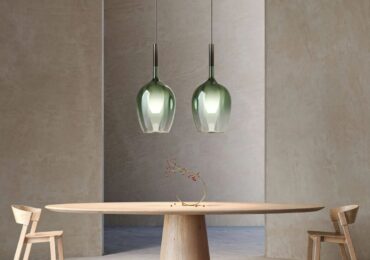
Modern furniture is not simply a question of essential lines and neutral colours. Behind this style lies a precise philosophy, born as a response to the social and economic changes of the 20th century, and which still continues to evolve today, influenced by new needs and technologies.
But what does modern furniture really mean? What are its roots, its principles and its impact on our daily lives? In this article we will explore the concept of “modern” in furniture with a depth that goes beyond the usual stylistic classifications, analyzing its functional, aesthetic and psychological aspects.
Origins and philosophy of the modern furnishing style: more than an aesthetic

Modern design was born at the beginning of the 20th century, in a period of industrial and cultural transformation. Mass production, mechanization and urbanization imposed new ways of living and dwelling. This gave rise to movements such as Bauhaus in Germany and International Modernism , which proposed a design based on function, ergonomics and simplicity, opposing the superfluous decoration of the previous era.
Modernist architects and designers, such as Le Corbusier, Ludwig Mies van der Rohe and Walter Gropius , saw the house as a “machine for living”, a place designed according to human needs and not only to satisfy aesthetic criteria. The principles of modern design were clear:
? Functionality first of all Every piece of furniture had to have a practical role, without unnecessary frills.
? Innovative materials The use of steel, glass and reinforced concrete replaced traditional materials.
? Industrial production Objects were designed to be mass-produced, making them accessible to a wider audience.
? Open and fluid spaces The rigid division of the rooms gave way to flexible spaces, suitable for the needs of an evolving life.
This philosophy is still the basis of modern furnishings today, but with some contemporary reinterpretations that we will see later.
The modern furnishing style today: is it really minimalism?

One of the most common mistakes is to consider modern style synonymous with minimalism. In reality, while minimalism aims for extreme essentiality, modern focuses on a balance between aesthetics and functionality.
In recent years, the concept of modern furniture has undergone significant changes:
- Not just black and white If in the past neutral colors and cold materials dominated, today modern furnishings include broader color palettes, with the introduction of warm shades such as terracotta, sage green or petrol blue.
- Wood and natural textures The coldness of steel and glass is balanced by the use of warm materials, such as solid wood and stone.
- Comfort and modularity The modern sofa is no longer just an object with a geometric and linear design, but a versatile element, capable of adapting to different moments of the day.
This shows that modern furniture is not a rigid formula, but a philosophy that adapts to people’s needs and social changes.
Modern spaces: the dialogue between function and emotion

Modern furnishings are not limited to the choice of furniture and materials, but concern the way in which spaces are experienced. A modern environment is designed to improve the quality of life, promoting a sense of well-being through the arrangement of furnishings and the use of light.
1. The modern house is fluid, modular
Today’s homes no longer have rigidly separated rooms with static functions. The kitchen merges with the living room, the work area integrates with the relaxation area. Open spaces are not just an aesthetic trend, but a necessity linked to new lifestyles.
- A modern open space involves the use of multifunctional furnishings , such as extendable tables or equipped walls that change configuration according to needs.
- Modular solutions allow you to adapt the space to the rhythms of the day, making it more versatile and customizable.
2. Light is the true protagonist of the modern furnishing style
Another fundamental aspect of modern furnishings is the management of light, both natural and artificial.
- Large windows and reflective surfaces amplify the perception of space.
- Artificial lighting is designed to create different scenarios, using adjustable spotlights, hidden LED lights and lamps with adjustable intensity .
- The concept of emotional lighting has made its way into modern design, with the use of warm tones to relax or direct lights to stimulate concentration.
3. Fewer objects, more experiences
Modern furnishings are not just a question of aesthetics, but of living experience . A modern house should:
? Promote connection with the external environment , through terraces, green balconies or the use of indoor plants.
? Being smart , with integrated technologies to improve living comfort (automated lighting, intelligent heating, voice assistants).
? Reflect the personality of those who live there , without becoming an impersonal catalog of trends.
How to furnish in a modern style without upsetting everything

If you want to make your home more modern without doing a complete renovation, you can follow some precautions:
? Intelligent decluttering Remove superfluous objects and favor furniture with simple and well-defined shapes.
? Consistent Materials Choose two or three main materials (for example, wood and steel) and keep them consistent throughout the home.
? Strategic lighting Change the light points to create a more dynamic and functional environment.
? Neutral colors with chromatic accents Prefer a neutral base with livelier details, perhaps playing with cushions, carpetsyou and paintings.
? Technology and comfort Integrate smart devices and ergonomic furniture to make the home more comfortable and functional.
Modern design as an expression of contemporary life
Modern furniture is not just a set of design rules, but a way of experiencing space in a conscious and efficient way. It is a balance between beauty and practicality, between innovation and comfort.
Choosing modern furniture means designing environments that respond to people’s real needs, while maintaining a refined and timeless aesthetic.
If the past has taught us that the house is a machine for living, the present tells us that it must be a place in which to feel good, inspired and in harmony with one’s way of life.
Leave a comment