Light and materials as soft separation tools
The light is the first tool to define functional areas. A scenographic suspension above the dining table creates an immediate visual perimeter, while adjustable spotlights or floor lamps outline the perimeter of the living room. The light temperature helps to strengthen the distinction between work spaces and areas dedicated to relaxation, with a more neutral light in the kitchen and a warmer light in the conversation area.
Materials and textiles complete the separation with the same delicacy. A continuous floor maintains unity, then large rugs come into play which “anchor” the sofa and table and give shape to easily recognizable islands. A change of material between the kitchen and living room, such as stone-effect stoneware combined with natural parquet, creates a perceptible but elegant border.
When the project starts from the kitchen, it is best to choose finishes and volumes with the same logic as the living room, also taking inspiration from a kitchen catalog which collects compositions designed to dialogue with the living area, so the kitchen remains the protagonist without clashing with the rest of the environment.
Bridge furnishings and light wings to organize the space
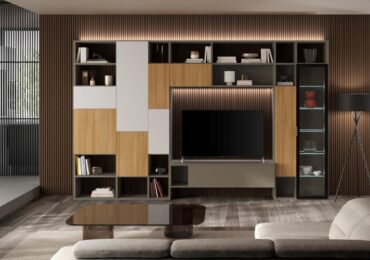
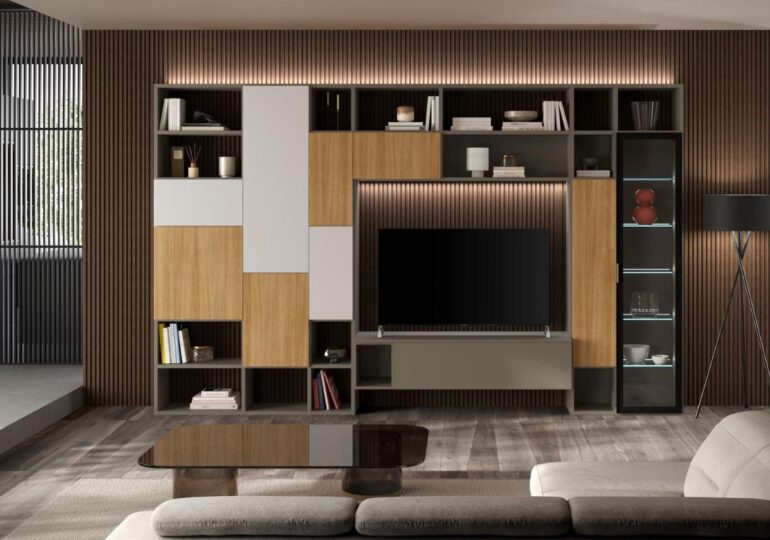
The “bridge” furnishings guide the design of the open space and help to distinguish the functions without raising walls. A bookcase passing between the kitchen and living room defines a clear boundary and lets light circulate. The open design maintains visual continuity and the choice of books, ceramics and objects takes care of the character of the whole, with a personal and credible effect.
Even a sideboard arranged transversally or a sofa with a high backrest creates a legible separation between the areas. The edge between the conversation area and the dining area thus takes on a natural shape, also useful for setting up passages.
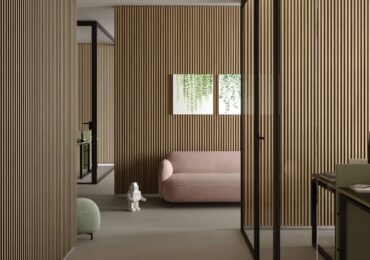
For a clearer division, ribbed glass panels, metal frames with thin grids, vertical wooden slats or elements with stretched fabrics come into play. Solutions of this type delimit without closing and maintain a feeling of openness, with greater visual privacy when needed.
Colors and details to strengthen visual order
The color palette contributes significantly to the perception of order. Neutral shades spread across the main surfaces promote uniformity, while more intense accents identify the different functions. A sage green on the kitchen walls can dialogue with coordinated cushions in the living room and thus create a common thread.
The details complete the project. Coordinated textiles, material complements and consistent finishes between the kitchen and living room consolidate the identity of the open space. The arrangement of objects also plays a strategic role, because an orderly visual organization enhances the whole and reduces the perception of chaos.
An open space projectCarefully designed, it combines light, materials and furnishings in a calibrated balance. The soft division techniques allow you to define distinct environments without sacrificing continuity and giving a modern, functional and harmonious living solution.
Read also: The best brands of dividers for open spaces: design and comfort