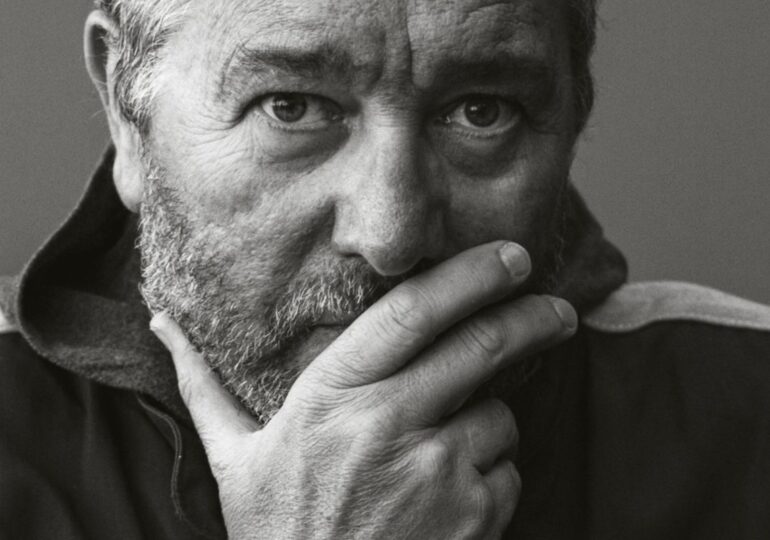
There are those who design objects and those who, like Philippe Starck , design ways of living. Born in Paris in 1949, Starck has become a legend of contemporary design not only for the quantity and heterogeneity of his projects, but for the ability to transform design into a cultural phenomenon, accessible and provocative at the same time.
Who is Philippe Starck? He is a designer, architect, inventor, storyteller. He is the man who brought irony to everyday objects, who reinvented the baroque chair in transparent polycarbonate and who transformed hotels and restaurants into social stages. He is the designer who has built yachts for billionaires and juicers for millions of people, always with the same ambition: to make life better through design .
Over the course of his career, Starck designed everything: furniture, lamps, cutlery, motorbikes, public spaces, yachts and even a house suspended on a tower (Maison Heler in Metz). But the trait that makes him unique is not only his prolificacy, but his ethical vision: Starck speaks of “democratic design”, of objects for everyone, of a future in which we will produce less but better, with greater awareness.
This is the story of a man who made design a popular and political issue, who made lightness and dematerialisation a manifesto, and who continues – over seventy years on – to challenge the world with projects that seem to come out of a dream.
The biography of Philippe Starck: origins and first successes
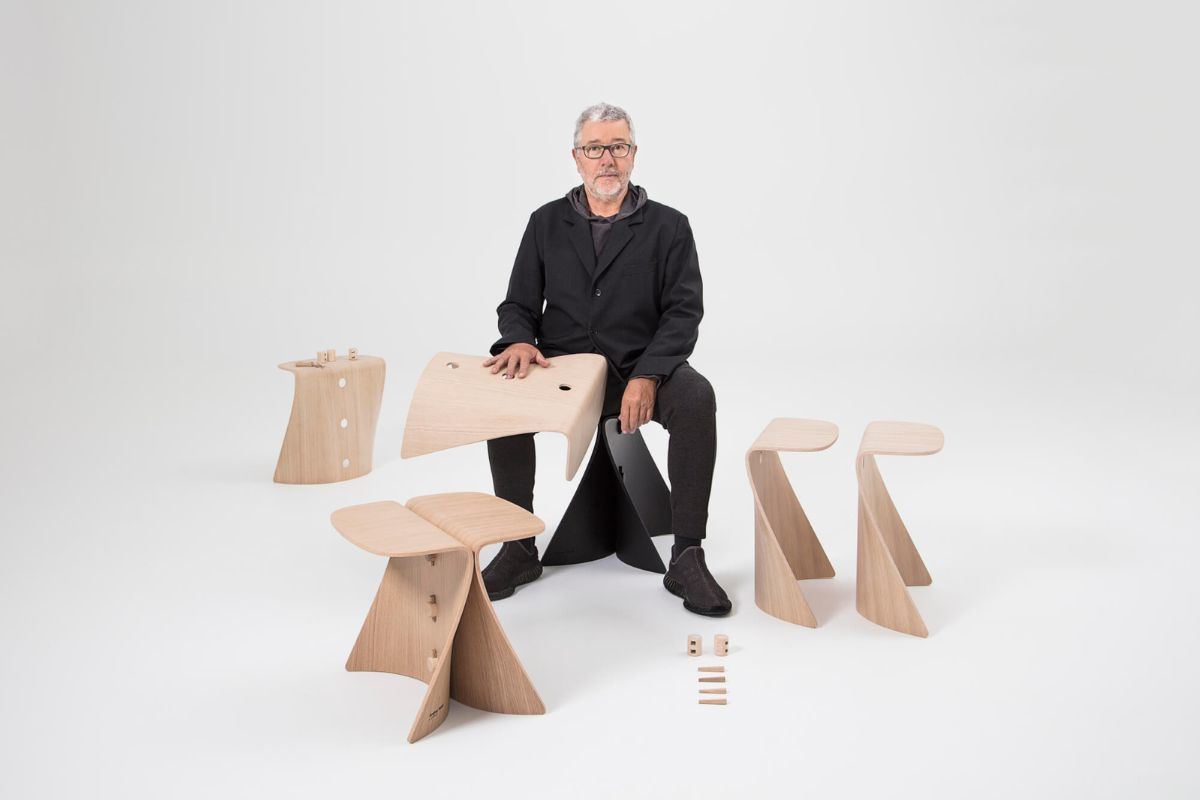
Philippe-Patrick Starck was born in Paris on 18 January 1949, into a family that breathes engineering and creativity. His father, André Starck, is an aeronautical engineer, and in the rooms of the house there are models of airplanes, precision instruments, materials that fuel the imagination of a child destined to design. I owe my father my sense of proportion and my obsession with functionality, he would say years later.
After studying at the École Nissim de Camondo, a prestigious Parisian school of interior design, Starck began working as an art director for furniture companies, but his independent spirit soon led him to found his first company, Starck Product , later renamed Ubik (a reference to the visionary novel by Philip K. Dick, an author he loved for his ability to imagine future worlds).
Already in the 1970s, the young French designer worked on experimental projects that combined pop aesthetics, irony and technological research. He designs inflatable furniture, modular objects, furnishings that can be dismantled and reassembled, long before sustainability became a trend. It is a period of pure experimentation, in which Starck refines his own language: light, democratic, never elitist.
The big leap came at the beginning of the 1980s, when President François Mitterrand called him to renovate the private apartments of the Élysée Palace . It is a symbolic assignment: the young Starck, with his unconventional style, enters the heart of French power. That project established him as the “enfant terrible” of Parisian design and launched him onto the international scene.
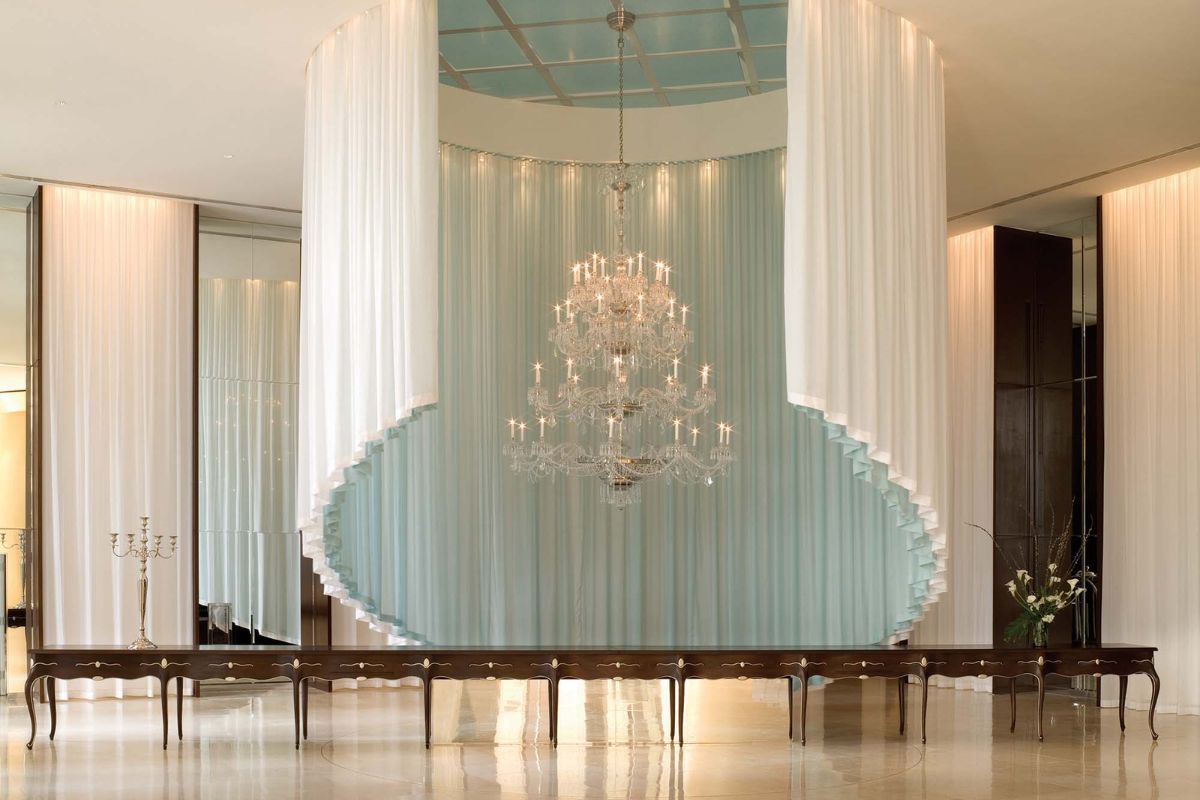
From that moment, his career transformed into an ascending parable: brands courted him, projects multiplied, andPhilippe Starck becomes the face of a design that is no longer exclusive, but popular, which speaks of culture, politics, ethics and the future.
The Philippe Starck style: democratic, ethical and visionary design
To understand Philippe Starck we must start from his greatest obsession: making design accessible to all . Not a luxury for the few, but a right for anyone who desires beauty and intelligence in everyday objects. It is the concept of design pour tous , which made him famous in the 1980s and which still remains the underlying theme of his work today.
His aesthetic language is immediately recognisable: minimalism with soul , essential forms that do not sacrifice personality. Starck has an extraordinary ability to “remove”, to reduce the object to its essence, but without making it cold or impersonal. His is a poetic dematerialization , which strips the object of the superfluous to reveal its function and emotion.
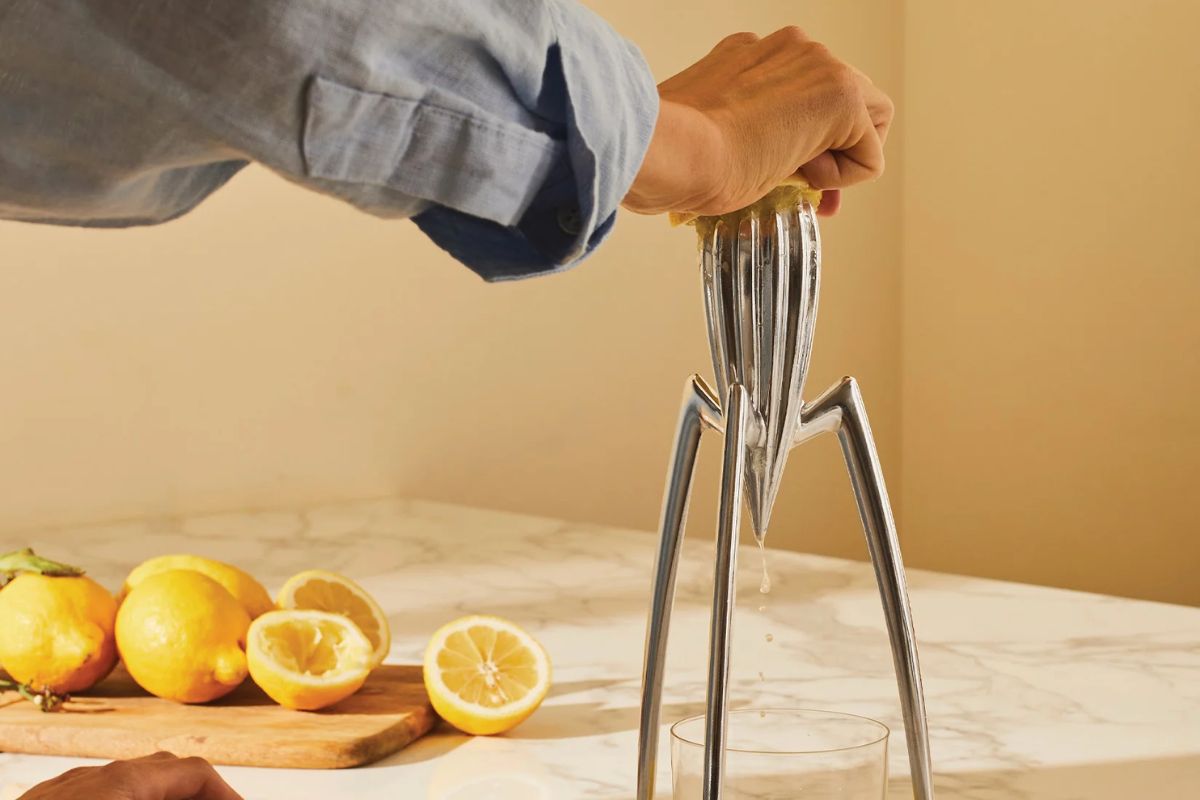
Alongside this search for lightness, there is irony. Starck is a designer who is not afraid to provoke: he plays with shapes, subverts expectations, transforms common objects into small metaphors. The Juicy Salif citrus juicer for Alessi, designed in 1987, is the perfect example: more than a kitchen utensil, it is an alien sculpture that invites conversation. It’s not for squeezing lemons, he once declared, but for starting conversations.
His philosophy is never purely aesthetic: it is ethical . Starck talked about sustainability long before it became a buzzword. In his most recent projects he invites us to produce less, to choose recyclable materials, to create only what makes sense. I don’t draw to add objects to the world, I draw to make the world better, he said.
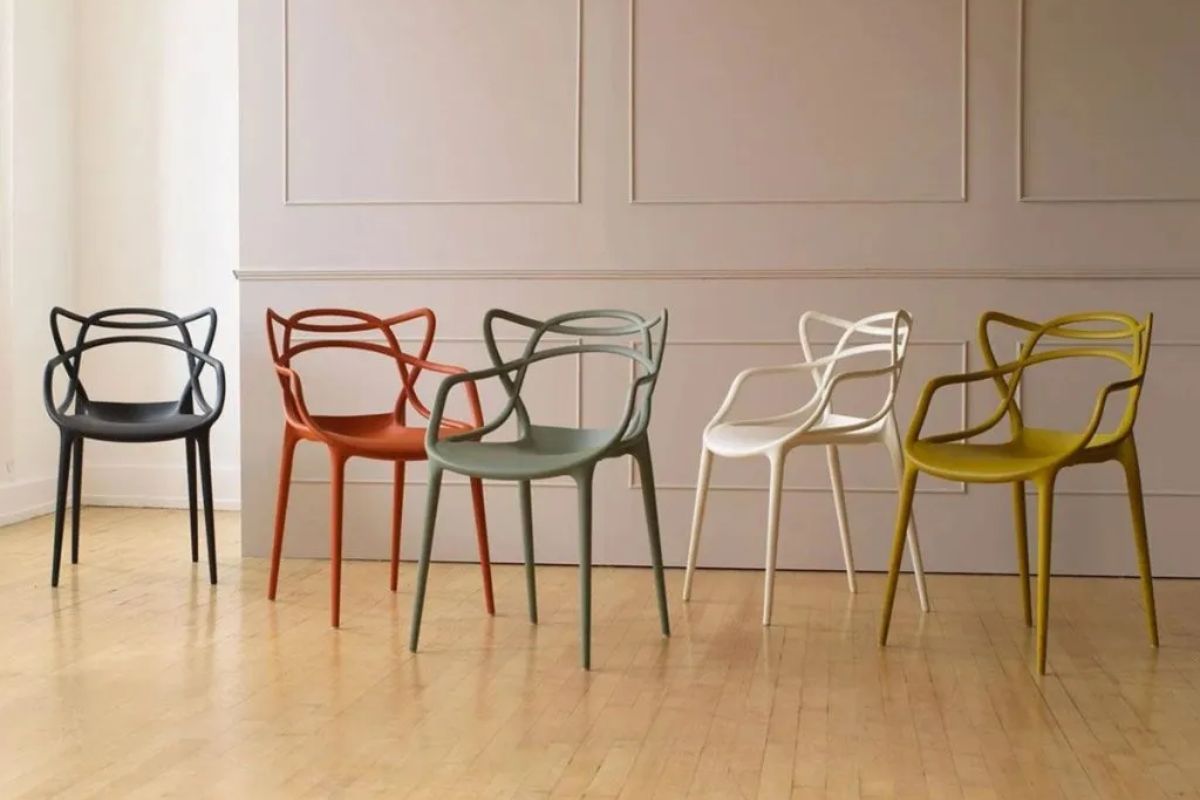
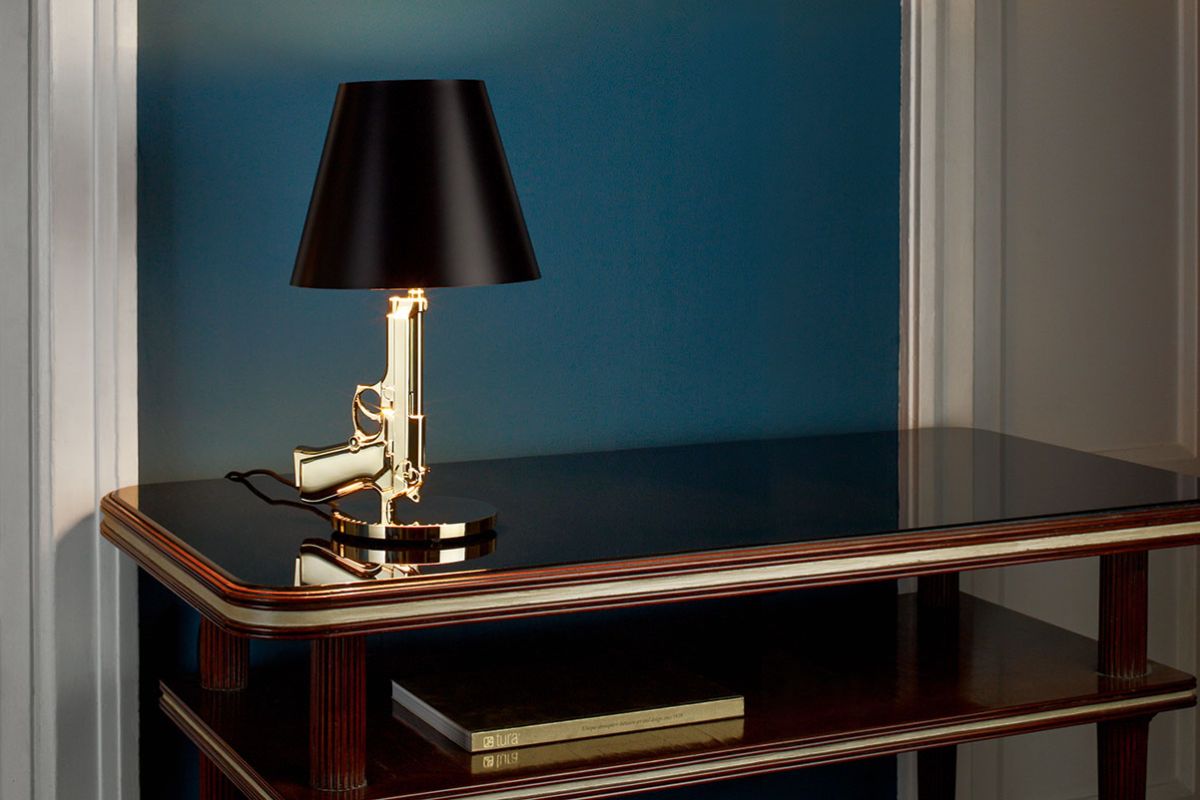
Another distinctive feature is the narrative design : each object tells a story. The chairs become cultured citations (like the Masters Chair for Kartell, which pays homage to Eames, Jacobsen and Saarinen), the lamps become political declarations (the Guns series for Flos, with bases in the shape of golden machine guns, is a criticism of violence and power).
Starck’s style is also hybrid and inclusive : it mixes history and future, craftsmanship and industry, luxury and low-cost. He has designed plastic chairs sold in millions and yachts for billionaires, but his approach never changes: designing to improve life.
Iconic projects and objects: Philippe Starck’s catalog of wonders
Talking about Philippe Starck design means talking about a universe that crosses genres, materials and project scales. From small objects to monumental architecture, everything in his work bears his unmistakable signature: lightness, irony, theatricality.
Objects that have become icons
The most famous is undoubtedly the Juicy Salif (1987), the citrus juicer for Alessi that transformed a household utensil into a conversation piece. It was never meant to be the most practical, but to “squeeze the brain”, to stimulate an emotion. Not surprisingly, many specimens are never used inkitchen, but displayed as sculptures.
Then there are the chairs that have set the example:
-
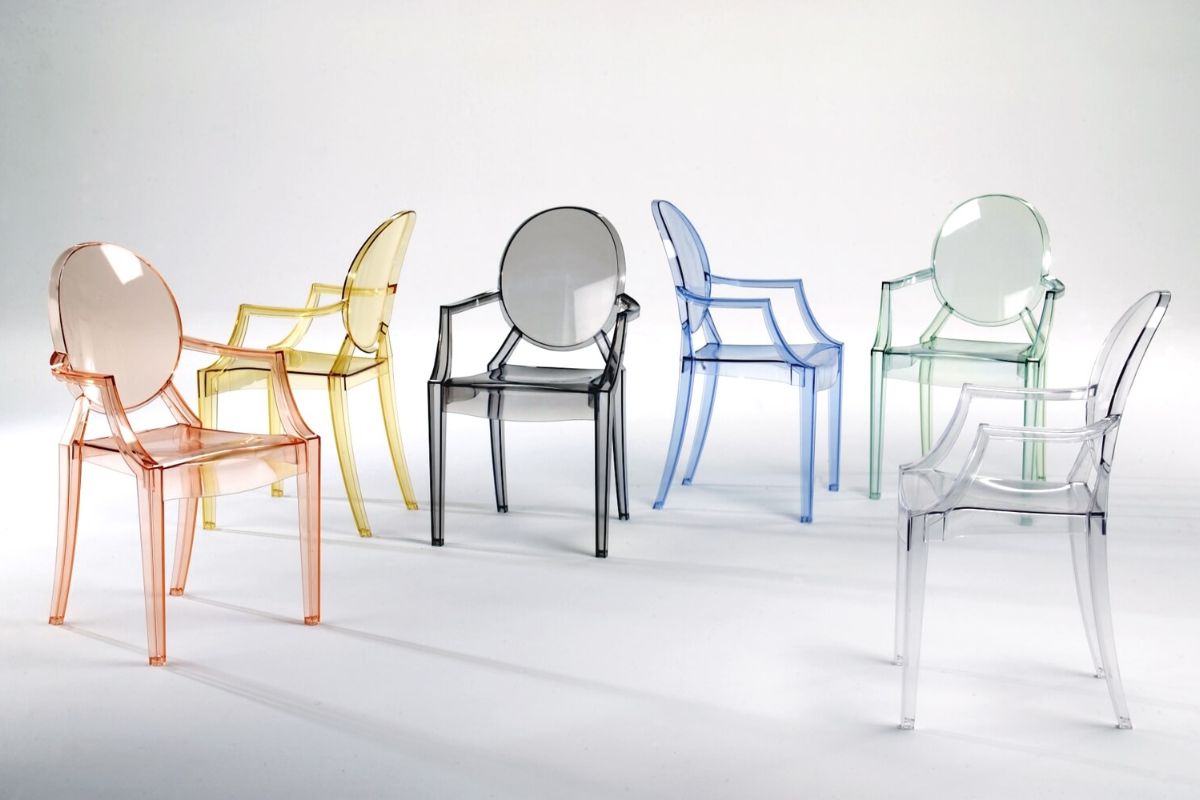
Louis Ghost Chair (2002 for Kartell): transparent, stackable, resistant, a celebration of the baroque made pop. It has been sold in millions and brought contemporary design to homes, restaurants and hotels around the world.
-
Masters Chair (2009): a mix of three icons of the twentieth century (Series 7 by Jacobsen, Tulip Chair by Saarinen, Eiffel Chair by Eames) fused in a single sitting. A tribute and, at the same time, an act of reinvention.
In lighting design, Starck designed some of the most recognizable lamps of the new millennium for Flos: Miss K , with the lampshade that becomes transparent when turned on, and Gun Lamp , which denounces global violence by transforming the object into a political symbol.
Historic hotels
In the 1990s, Philippe Starck invented the concept of design hotel . Before him, the hotel was a functional place; after him, it becomes a space of experience.
-
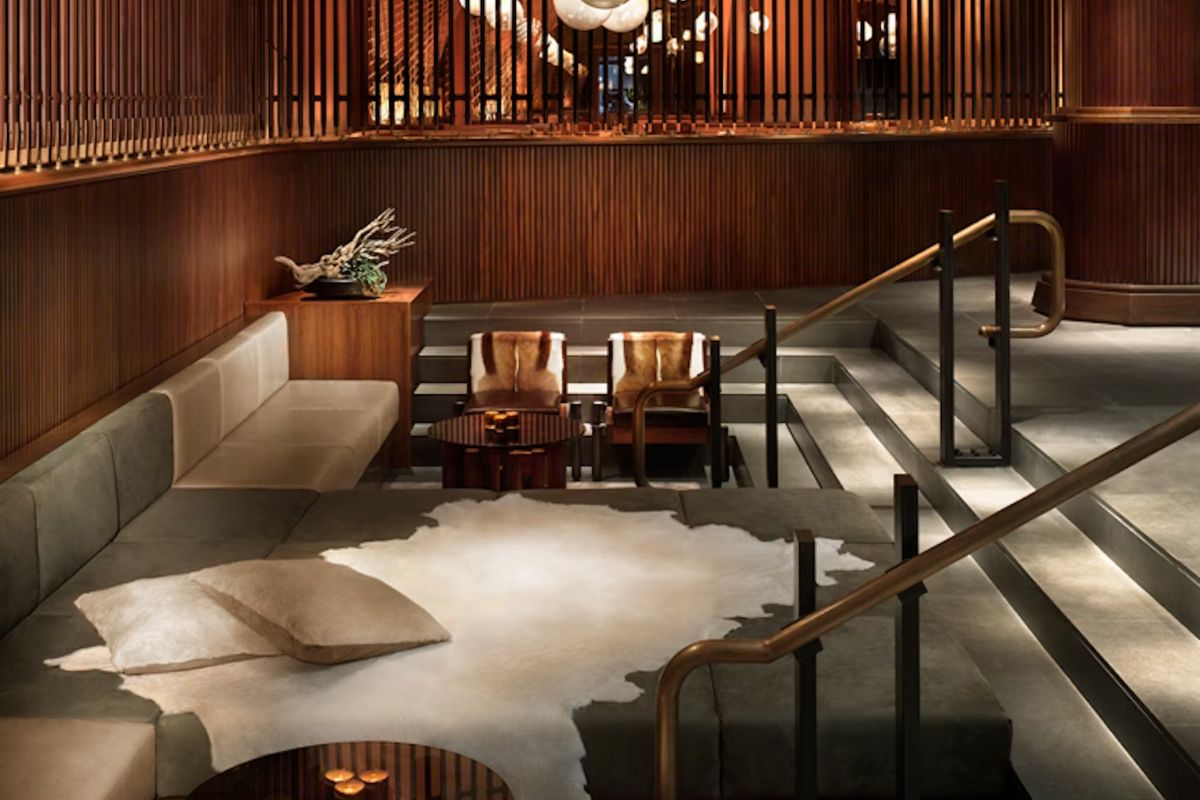
Royalton and Paramount, New York : they redefined the concept of the lobby, transforming it into a social theater, a place to see and be seen.
-
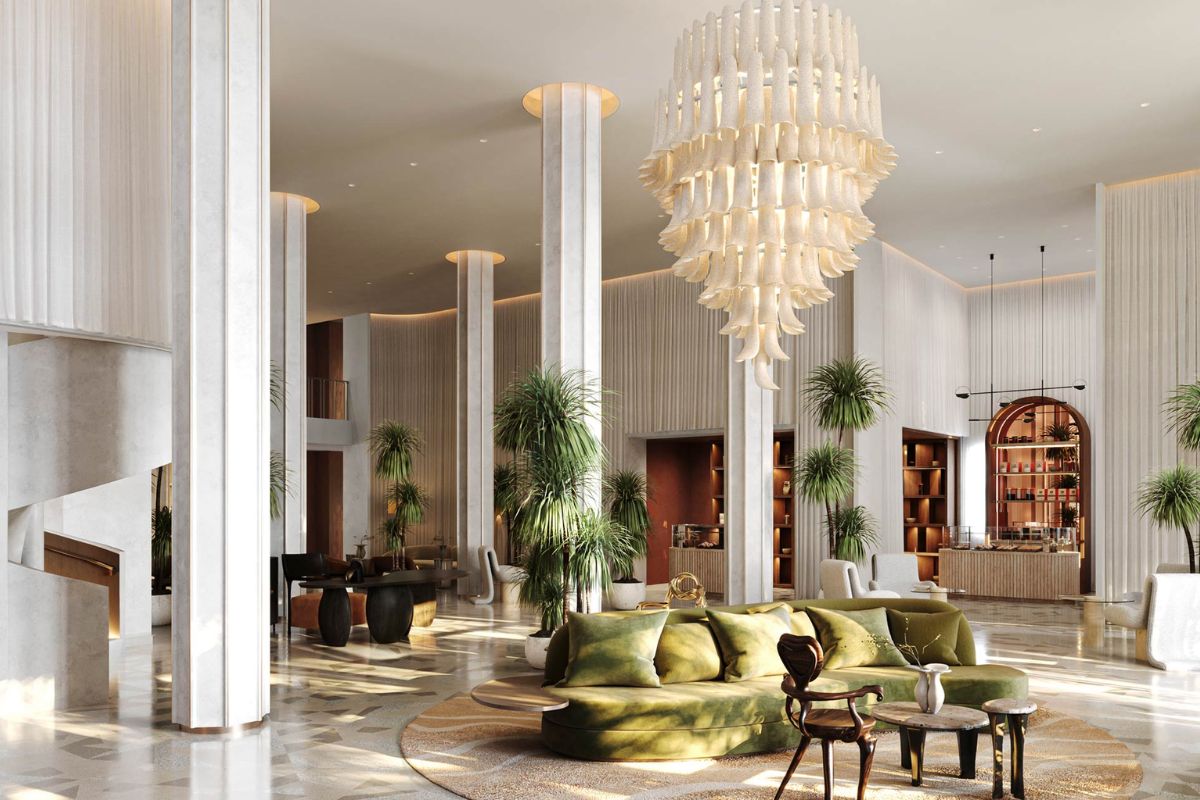
Delano, Miami : a temple of white minimalism, where natural light and the calibrated use of furnishings create an almost cinematic effect.
-
Sanderson, London : a fusion of heritage and innovation, with internal courtyards transformed into winter gardens and a design that looks like a theater set.
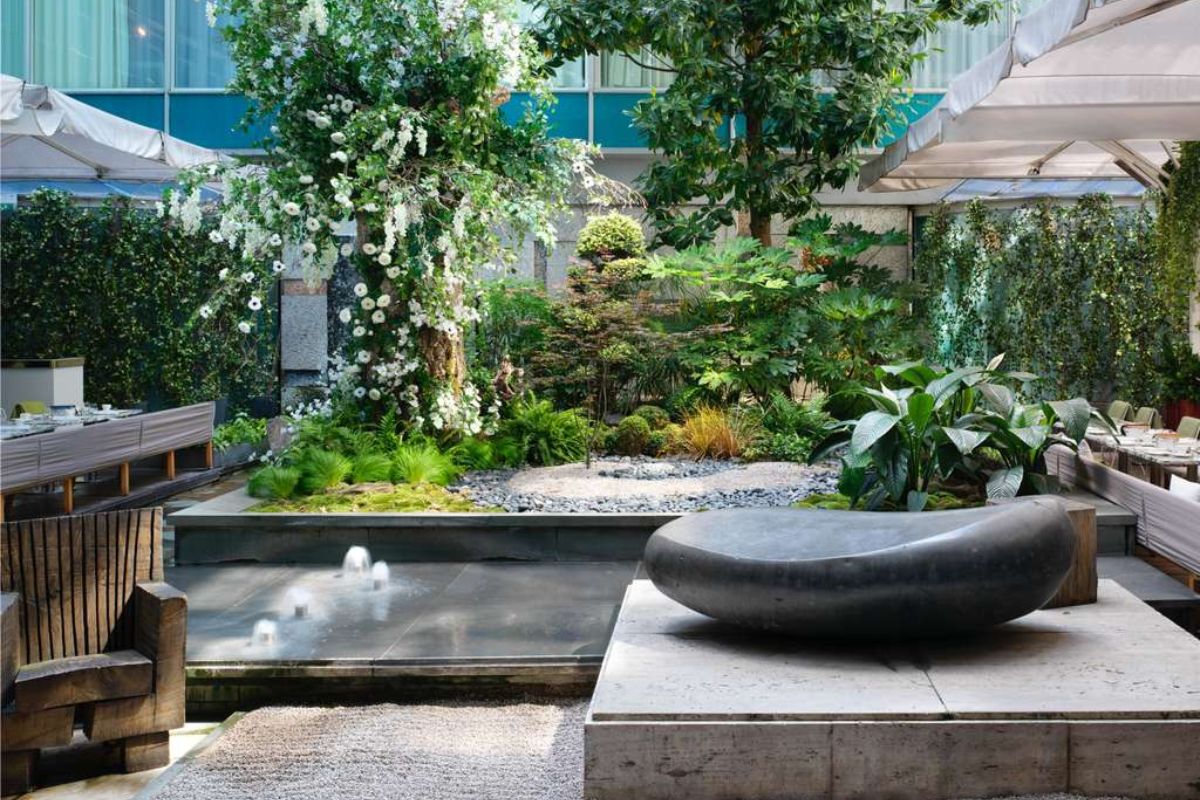
These projects inspired a generation of hoteliers and designers, giving rise to the global boutique hotel boom.
Visionary architectures
Starck has never limited himself to product design. He has designed buildings and projects that defy logic:
-
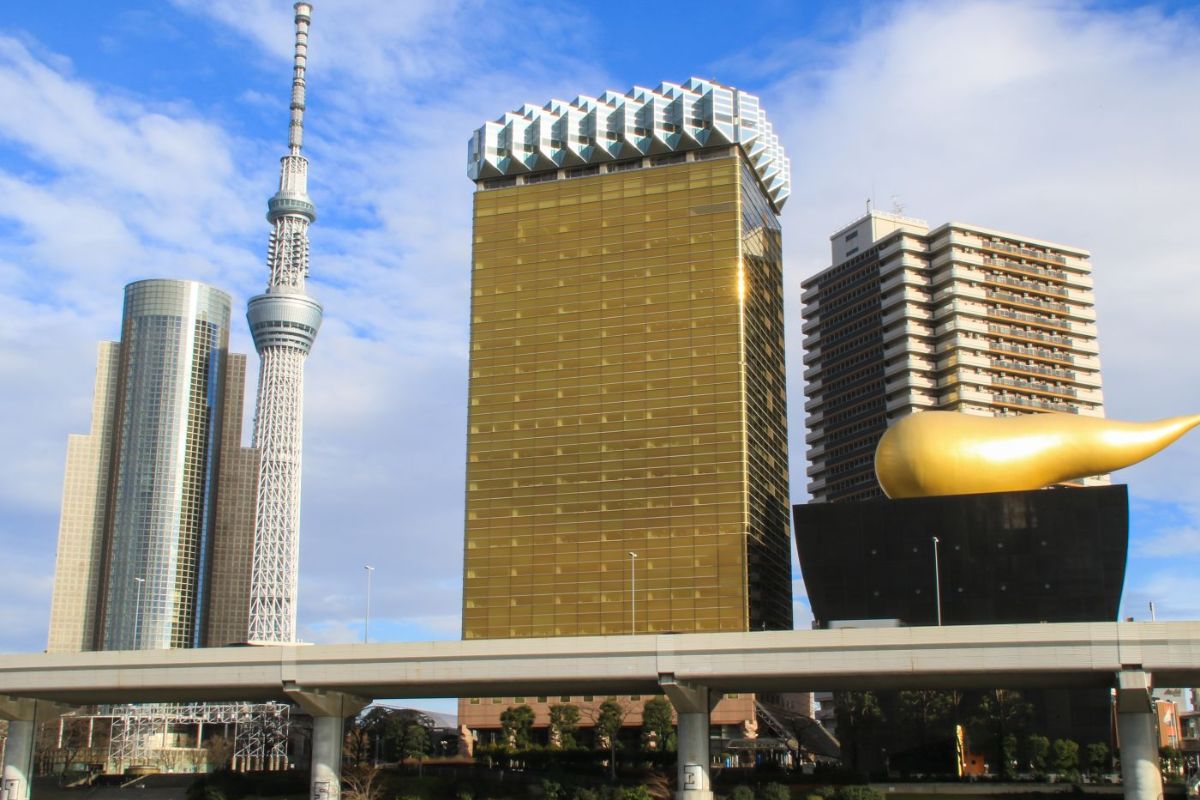
Asahi Beer Hall (Tokyo) : famous for the “golden flame” on the top, symbol of the brand.
-
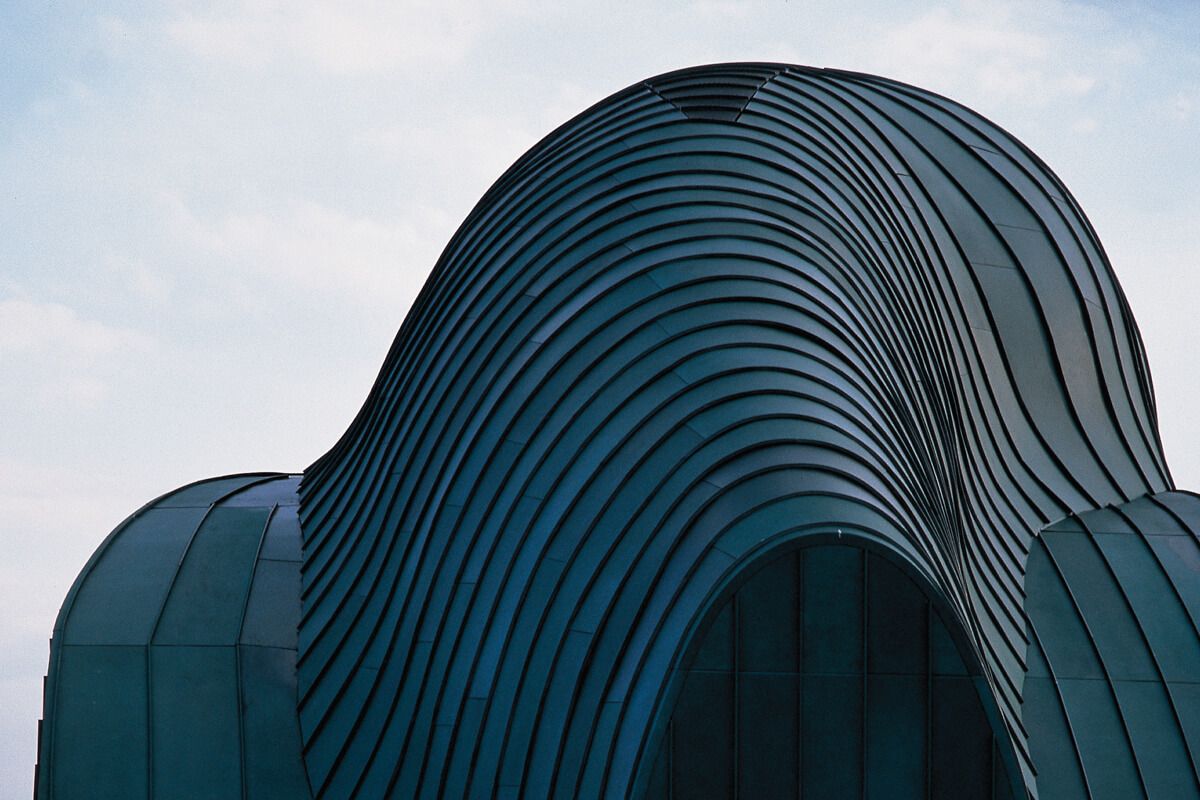
Nani Nani Building (Tokyo) : one of his first architectural experiments, with a biomorphic facade that seems alive.
-
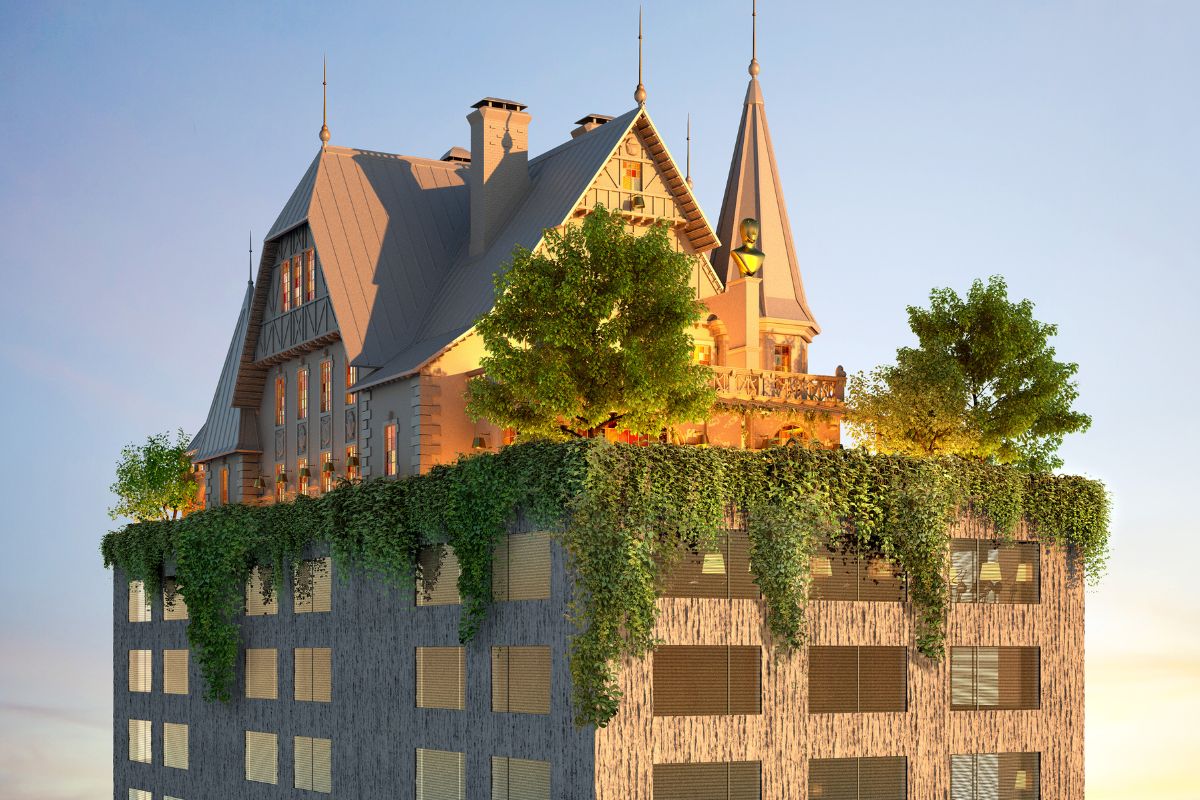
Maison Heler (Metz) : a skyscraper topped by a classic house, as if it had been placed there by a gentle giant.
Yachts and special projects
In the nautical world, Starck designed two of the most radical projects ever:
-
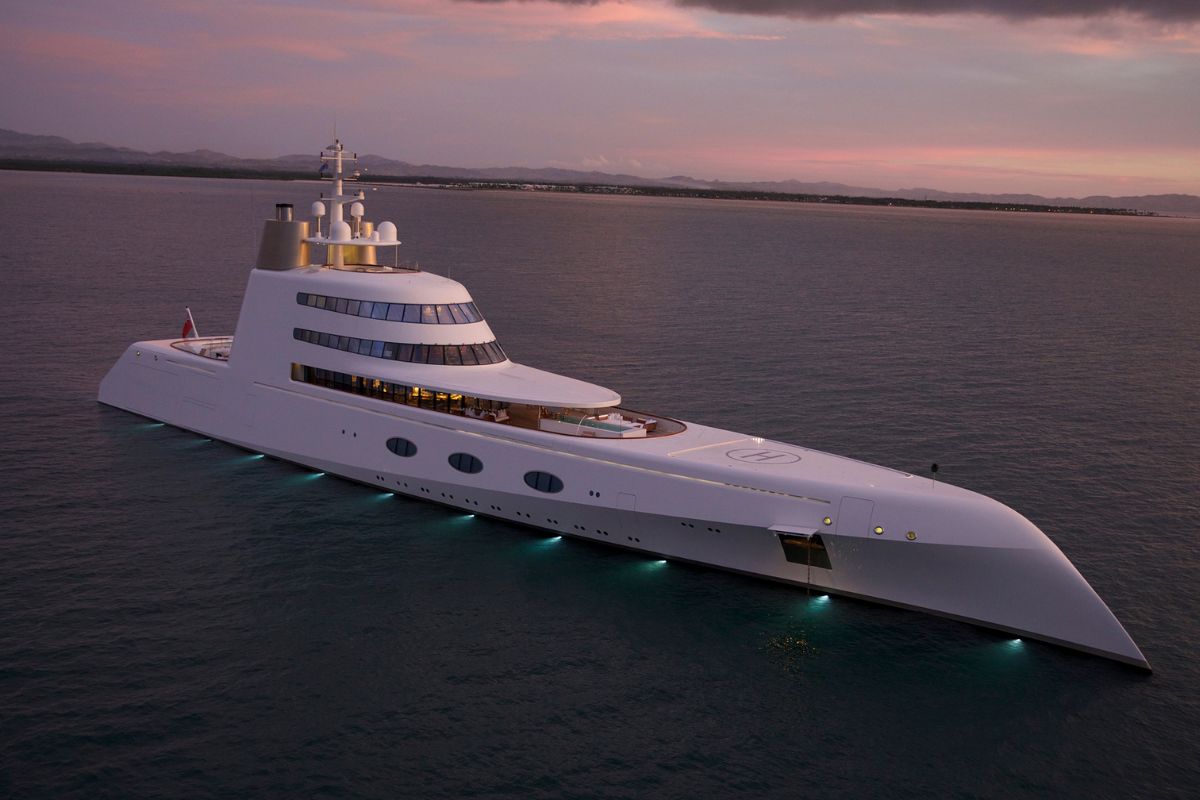
Motor Yacht A (2008): a 119 meter long floating spaceship, with futuristic lines and hyper-minimal interior spaces.
-
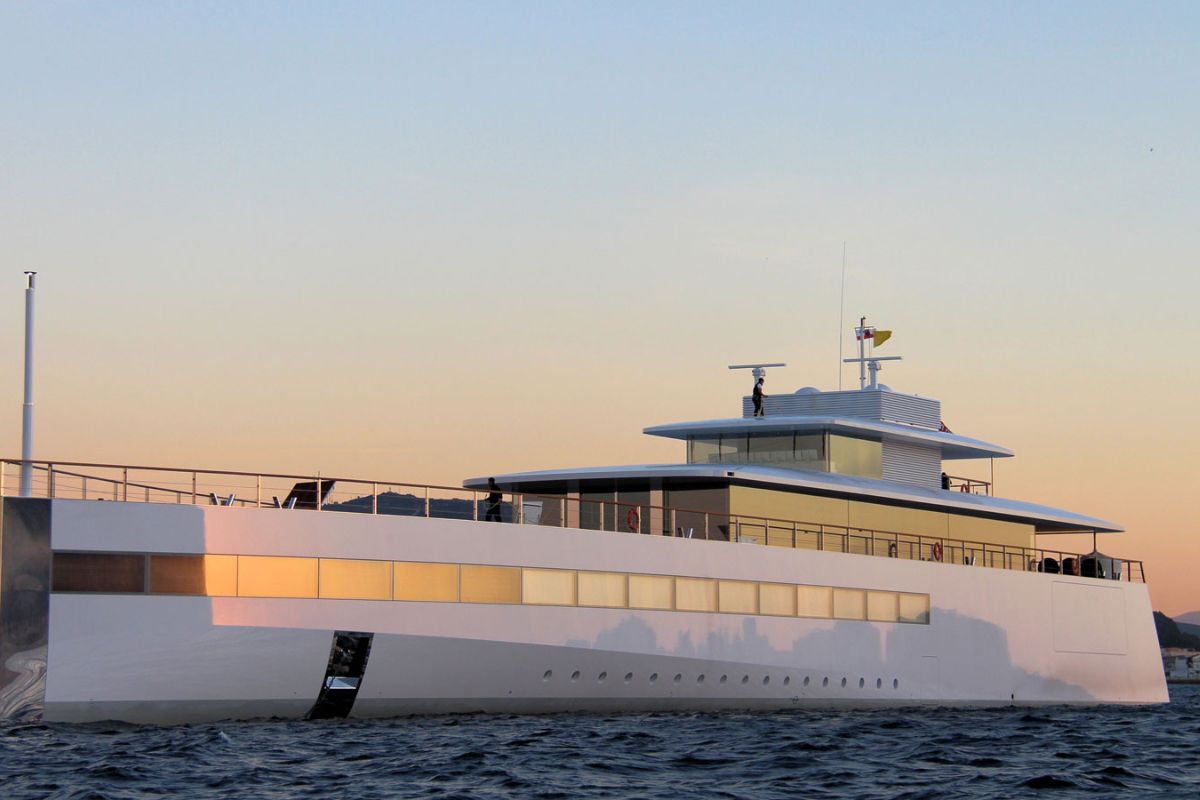
Venus (2012): the yacht commissioned by Steve Jobs, an aluminum and glass boat that looks like a giant-scale Apple product.
Why Philippe Starck continues to dictate the pace of design
Philippe Starck is not a designer of the past: he is a contemporary thinker who continues to provoke, to imagine future scenarios, to push us to look beyond. His objects are never “just objects”: they are declarations, cultural gestures, small acts of daily revolution.
Even today, each of his projects is an invitation to rethink our relationship with things, to ask ourselves if what surrounds us is really useful, if it could be lighter, more intelligent, more joyful. Starck reminds us that design is not a question of form, but of responsibility and poetry : a way to live better, to consume less, to look at the world with curious eyes.
Looking at Starck’s work also means looking forward: towards a home that is not only beautiful, but conscious; towards more livable cities, fairer objects, spaces that make us feel part of something bigger. Perhaps this is its true strength: not proposing an aesthetic to imitate, but a way of thinking about the project as an instrument of freedom.
Leave a comment