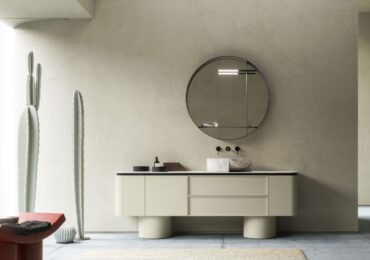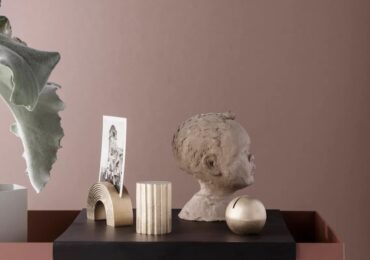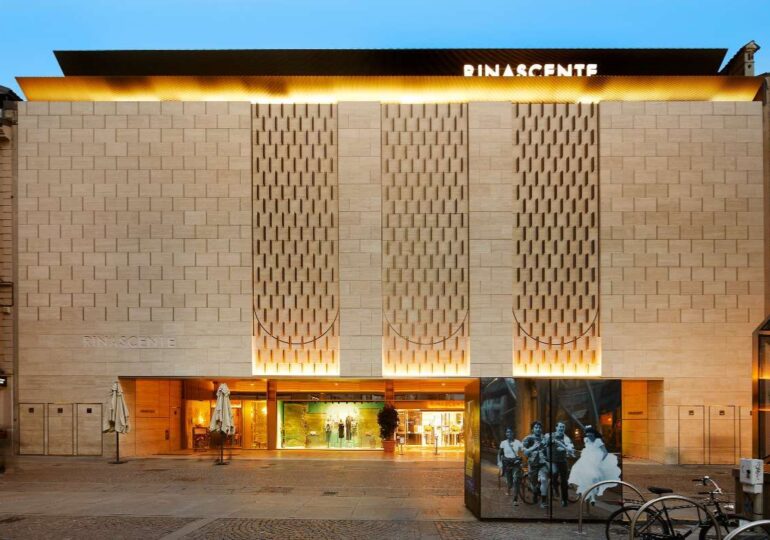
La Rinascente is not just a department store: it is a symbol of Italian culture, a bridge between fashion and architecture, an aesthetic laboratory that has reinvented the experience of luxury in the heart of cities for over a century. Why is it called that? What are its origins? And what does Gabriele D’Annunzio really have to do with this story? Let’s retrace the stages of one of the most fascinating icons of Italian retail, which has become synonymous with elegance, design and international vision.
What are the origins of Rinascente?
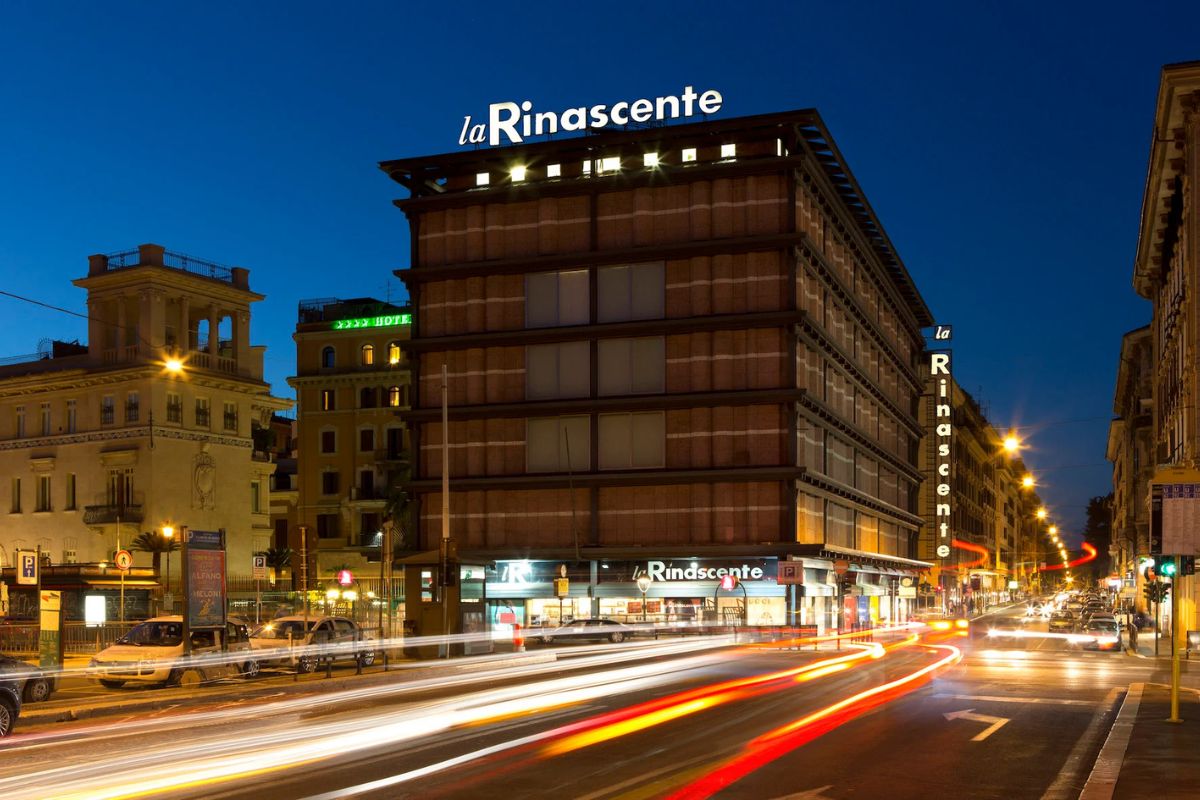
It all began in 1865, in the cultural and urban ferment of post-unification Milan. The brothers Luigi and Ferdinando Bocconi, inspired by French models such as Le Bon Marché, opened a shop destined to change the way of selling clothes forever: “Alle Città d’Italia”, a department store dedicated to the sale of ready-made clothes for men, women and children.
It is the first Italian example of “modern shopping”, with departments, displayed prices, great variety of choice and a shopping experience designed to attract the growing middle class. The format is popular, it expands rapidly and becomes a reference in the city. But not without difficulties.
In the early 1900s, family management began to show its cracks and the company was acquired in 1917 by Senatore Borletti , a Milanese entrepreneur already known for Officine Meccaniche. Borletti dreams of relaunching the store with a new identity and a new name.
Who invented Rinascente? What does D’Annunzio have to do with it?
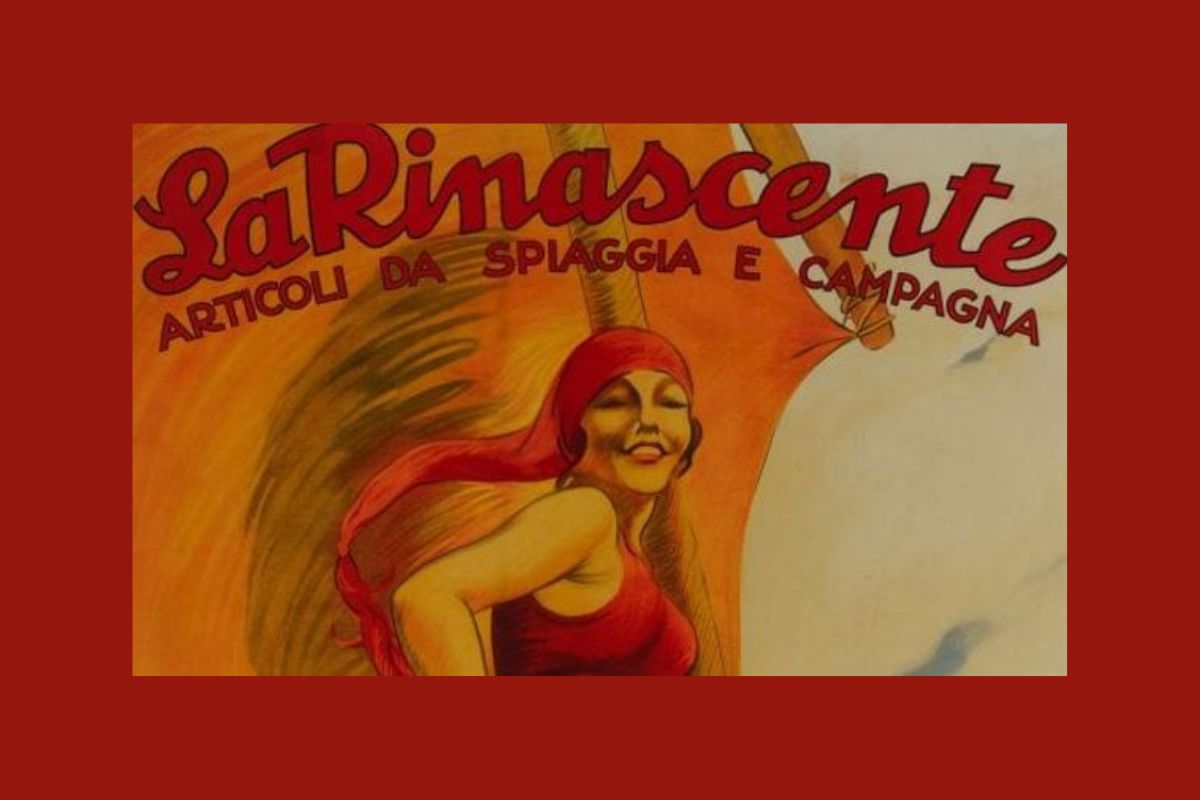
It is at this point that an unexpected figure enters the scene: Gabriele D’Annunzio . Poet, writer and skilled communicator, he was contacted by Borletti himself to find a name that represents a symbolic rebirth of the company. And D’Annunzio doesn’t have to be asked.
Thus was born La Rinascente , a powerful, evocative name, capable of expressing the idea of a company that, from the ashes, regenerates itself. The name was officially registered on September 27, 1917 and the new sign was inaugurated shortly thereafter. The idea was not just aesthetic: it marked a communicative turning point in the history of Italian advertising.
D’Annunzio’s involvement, in addition to the name, contributed to creating an aura of refinement and modernity around the brand, which began to dialogue with the world of culture and art, anticipating what today we would define as a “cross-branding” approach.
From the fire of 1918 to the architectural rebirth
One year after the symbolic rebirth, fate puts Rinascente to the test with a tragic fire that completely destroys the Milan store. The event, which could have marked the end of the project, instead becomes the opportunity for a new rebirth, this time also architectural.
In 1921 the new building designed by Gio Ponti and other great names in Milanese architecture was inaugurated, marking the beginning of the dialogue between fashion and design which from that moment on would become an integral part of the brand’s identity.
The 1950s: Rinascente and Italian design
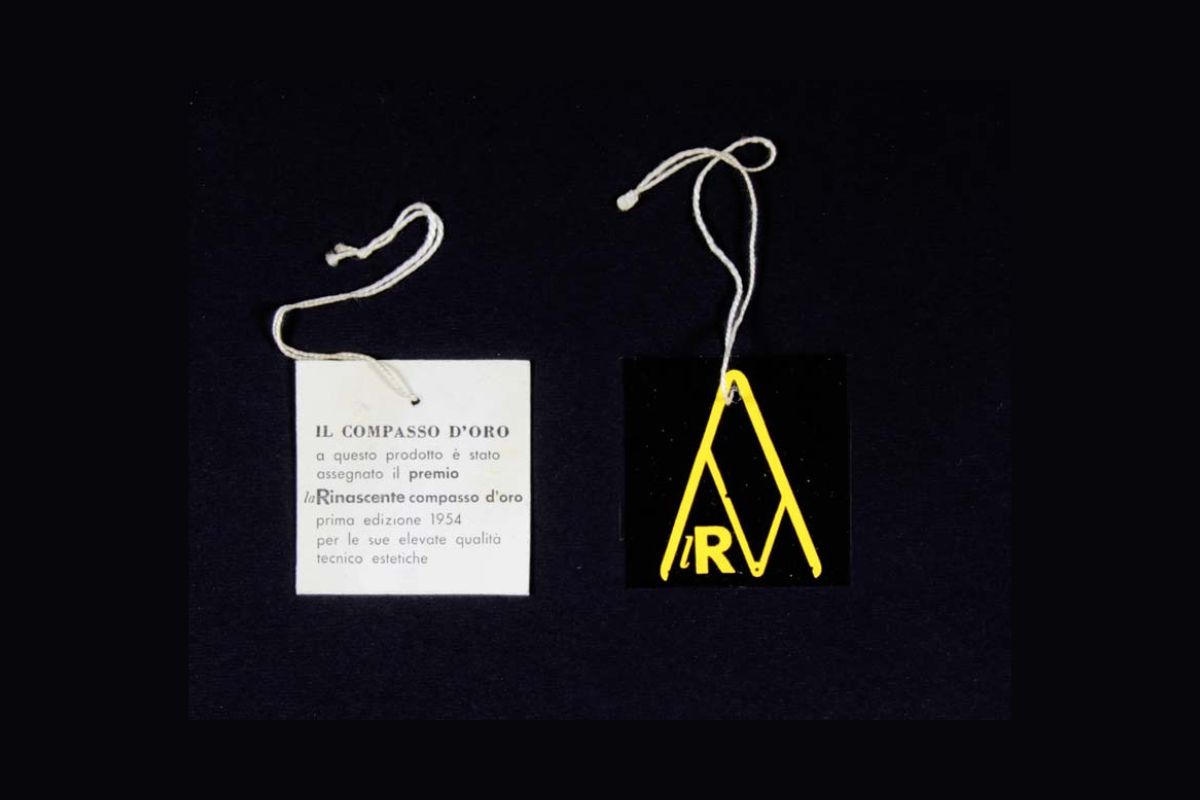
After the war, with the reconstruction of the country, La Rinascente became a protagonist of the Italian cultural and commercial scene. The sign hosts exhibitions, installations, events and editorial projects. In 1954 instit achieves the Compasso d’Oro , still today one of the most important design awards in the world, created in collaboration with the ADI (Association for Industrial Design).
The department store also becomes a showcase for the Italian economic boom, with collections dedicated to furniture, kitchens and textiles, promoting not only Made in Italy, but a true lifestyle.
Who is the owner of Rinascente today?
In the 1990s and 2000s La Rinascente went through several changes of ownership. After a long period under the management of the Agnelli family , in 2005 it passed to the PPR group (now Kering) , before being purchased in 2011 by Central Group , a Thai retail giant.
Today La Rinascente is part of the Central Retail Corporation group, one of the main retail operators in Asia. Despite foreign ownership, the headquarters remained in Milan and the brand’s identity continues to be based on the valorization of Italian taste, design and accessible luxury.
Recent evolution: fashion, art and architecture in the heart of cities
The locations of La Rinascente from Milan to Rome, from Florence to Turin have been the subject of important architectural restyling works, in collaboration with studios such as Studio 2050 and Vudafieri Saverino Partners , transforming the spaces into sensorial and cultural experiences, more similar to art galleries than simple shops.
The Milan flagship store in Piazza Duomo is today a symbol of the hybridization between retail and lifestyle. Here fashion and design merge with temporary exhibitions, site-specific installations and collaborations with international artists and brands.
An icon in constant transformation
Is Rinascente just a shop?
No. It’s much more. It is a meeting point between past and future, between consumption and culture. A continuous experiment in aesthetics applied to everyday life, where furniture, fashion, perfume, food and art contaminate and speak to each other.
Why is it still relevant today?
Because it managed to transform itself, without ever distorting itself. Because he understood before others that physical space is not only functional for sales, but is a story. A visual, sensorial, architectural story.
?? Where are Rinascente located in Italy today?
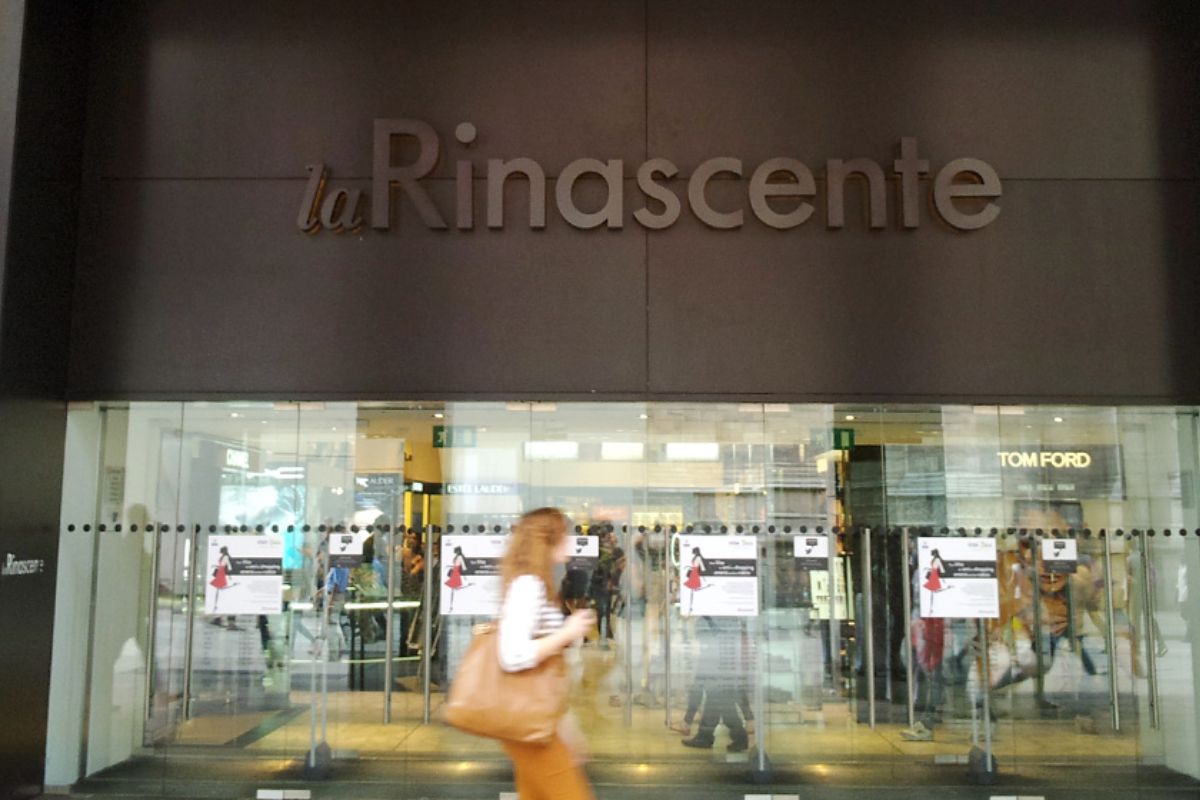
Currently, La Rinascente is present in nine Italian cities , with iconic flagship stores and locations in historic buildings in the heart of urban centres. Each store is conceived as an immersive experience between fashion, design, art and high-end gastronomy.
1. Milan Piazza Duomo
-
?? Address: Piazza del Duomo, 20121 Milan
-
?? Telephone: +39 02 88521
-
?? Hours: MonSat 9:3022:00, Sun 10:0022:00
-
?? Notes: Flagship store on 8 floors, with panoramic terrace overlooking the Duomo, gourmet food hall and design corner.
2. Rome Via del Tritone
-
?? Address: Via del Tritone, 61, 00187 Rome
-
?? Notes: Store on 8 levels, with archaeological remains of the Virgin Aqueduct visible in the basement and a panoramic food hall.
3. Rome Piazza Fiume
-
?? Address: Piazza Fiume, 57, 00198 Rome
-
?? Notes: Designed by Franco Albini and Franca Helg, known for the helical staircase and modernist architecture.
4. Turin
-
?? Address: Via Giuseppe Luigi Lagrange, 15, 10123 Turin
-
?? Notes: Located in the heart of the city, it offers a selection of luxury and design brands.
5. Florence
-
?? Address: Piazza della Repubblica, 4, 50123 Florence
-
?? Notes: Historic building with panoramic terrace, ideal for a break with a view of the Florentine rooftops.
6. Palermo
-
?? Address: Via Roma, 289, 90133 Palermo
-
?? Notes: Modern store with rooftop bar and view of the city, a reference point for luxury shopping in Sicily.
7. Catania
-
?? Address: Via Etnea, 270, 95131 Catania
-
?? Notes: Located along the main commercial artery of the city, it offers a wide selection of high-end products.
8. Cagliari
-
?? Address: Via Roma, 143, 09124 Cagliari
-
?? Notes: Historic building facing the port, renovated with attention to design and functionality.
9. Monza
-
?? Address: Largo Giuseppe Mazzini, 20900 Monza
-
?? Notes: Elegant venue in a historical context, with a selected offer of fashion and lifestyle.
This updated map of La Rinascente locations highlights the brand’s strategic presence in the most important historical and cultural centers of Italy, consolidating its role as ambassador of Italian luxury and design.
Architecture and fashion: why it is a successful combination – Archi & Interiors
Leave a comment