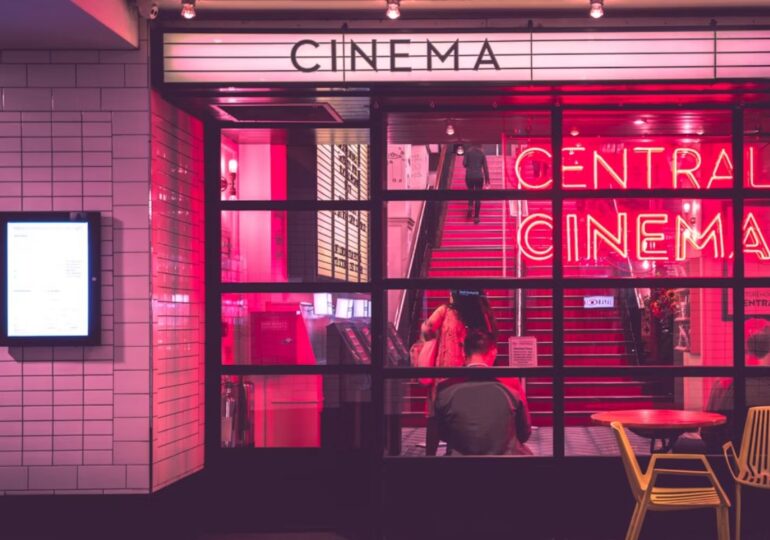
The cinema, in Italy, has never been just a place of projection. It is architecture, memory, collective spectacle. From the multiplexes with thousands of seats that today define mass entertainment, to the Liberty and Art Deco theaters that accompanied the birth of the seventh art, the peninsula preserves a heritage that tells how physical space influences the cinematographic experience.
On this journey, we explore the largest cinemas in Italy : modern temples of technology and historic rooms that have made the history of design and entertainment.
What is the largest cinema in Italy?
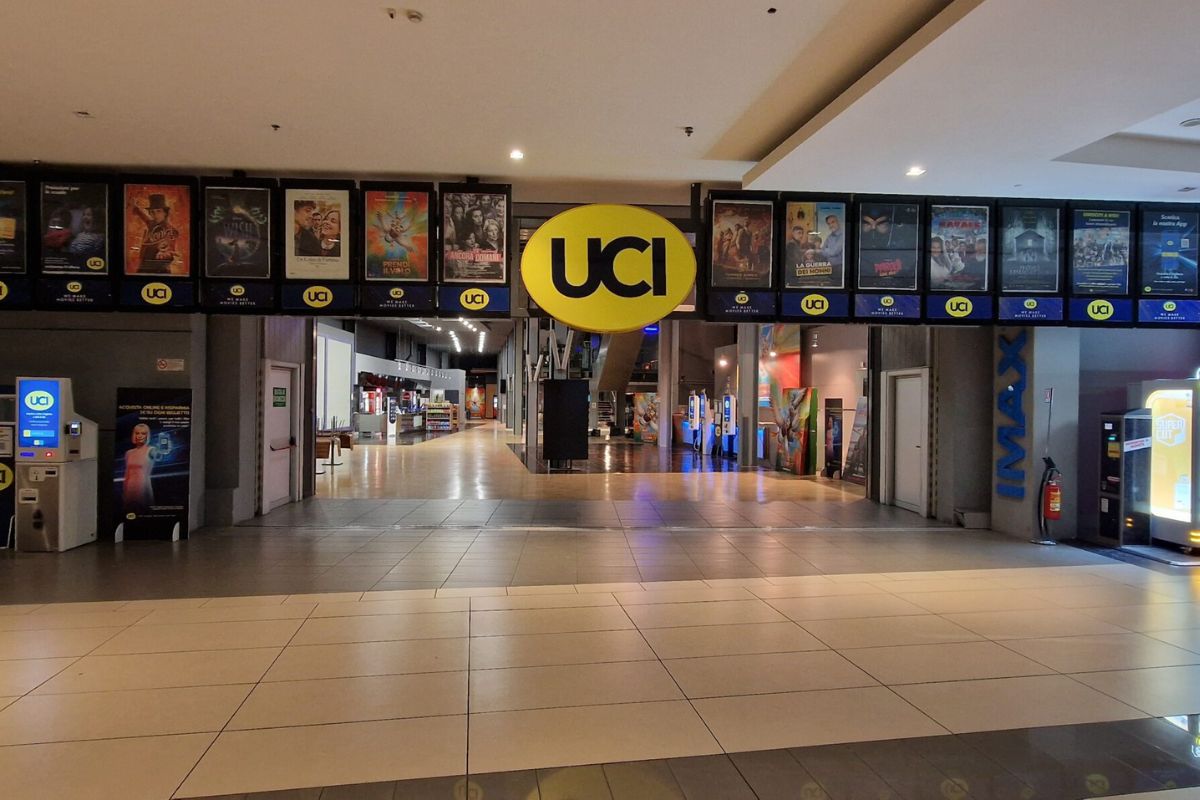
In terms of overall capacity, the record goes to the UCI Cinemas Parco Leonardo in Fiumicino (Rome), a multiplex with over 6,000 seats , the largest in Italy. A true citadel of entertainment, conceived as an experiential center in which screening is only part of a larger retail and entertainment system.
Other giants are:
-
UCI Cinemas Porta di Roma (Rome) approximately 2,500 seats , the hub of one of the busiest shopping centers in the country.
-
UCI Cinemas Pioltello (Milan) with 2,305 seats , represents the metropolitan model of the Lombard multiplex.
-
UCI Cinemas Orio (Bergamo) here is the largest IMAX theater in Italy , with the largest screen in Europe: 450 m2 . A technological giant that transforms vision into an immersive experience like no other.
The definition of larger can refer to various criteria: the number of seats, the size of the screen or the amount of rooms. But in all cases, these structures embody the monumental and technological dimension of contemporary cinema .
Historic Italian cinemas: architecture that becomes entertainment
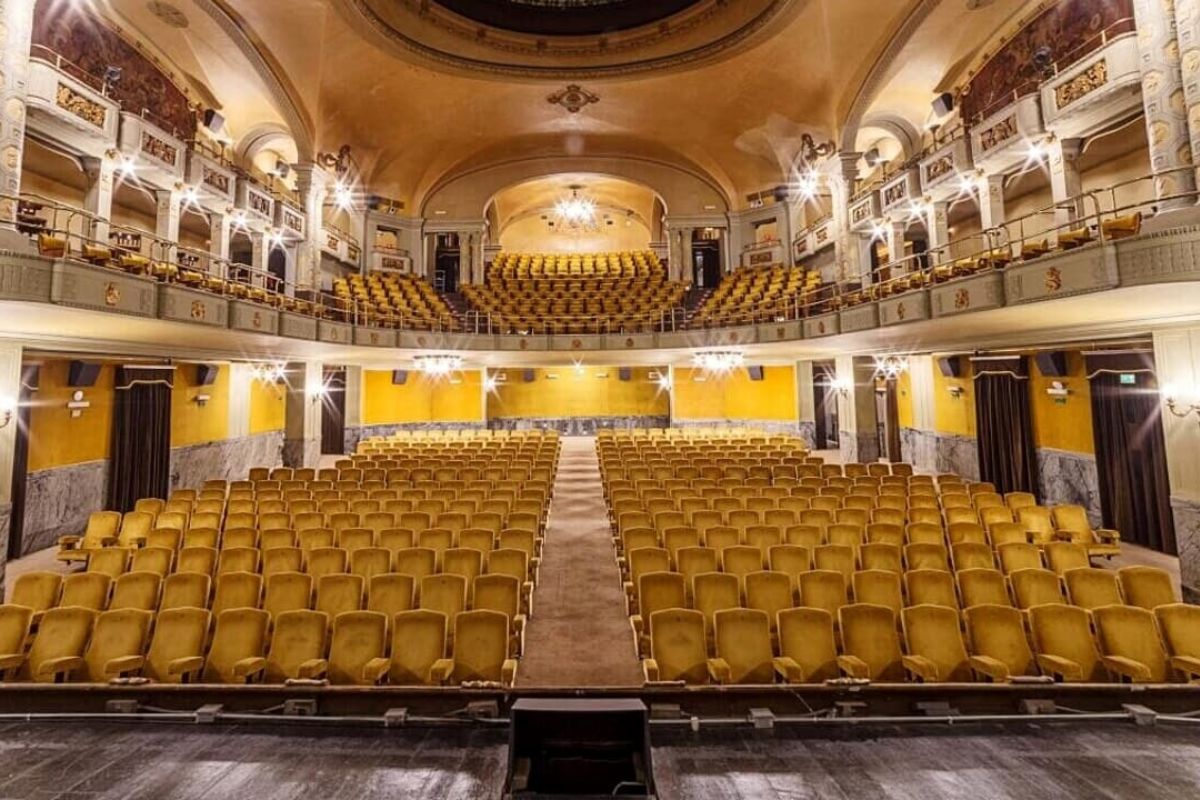
Alongside modern multiplexes, there are places that have made the history of cinema and which still fascinate today for their architectural and symbolic dimension . Historical Italian cinemas are not simple screening rooms, but true works of art , capable of narrating different eras through styles, decorative details and functions that have evolved over time.
Cinema Odeon Florence
Inaugurated in 1922 and designed by Adolfo Coppedé with subsequent interventions by Marcello Piacentini, the Cinema Odeon is considered one of the masterpieces of Italian Liberty. Its interiors tell of the desire to make cinema an immersive experience already outside the screen: frescoes, artistic windows and sculptural decorations transform the room into a permanent stage.
The Odeon has never remained stagnant in its function: in addition to screenings, today it hosts cultural events, festivals and even an international bookshop. It is an emblematic example of how a place created for entertainment knows how to reinvent itself without losing its historical identity .
Cinema Apollo Florence
In the heart of the rationalist Florence of the 1930s, the Cinema Apollo (inauguratedin 1937) became a point of reference for the city and beyond. With its 3,000 seats , it represented one of the largest halls in Italy, designed to accommodate a vast and varied audience.
Its architecture was a manifesto of the time: sober lines, trapezoidal layout and monumental spaces designed to impress the viewer right from the foyer. Here cinema was not just entertainment, but an integral part of urban modernity , in dialogue with the cultural ambitions of the city.
Cinema Lux Turin
Inside the Galleria San Federico , the Cinema Lux (1934) embodied the elegant and bourgeois Turin of the time. With over 1,500 seats , it was one of the symbols of Art Déco architecture applied to entertainment.
Its charm did not lie only in its size, but in the ability to transform anticipation into an aesthetic experience: glass block domes, imposing arches and rigorous geometries which gave the room a luminous and sophisticated aura. Even today it represents a unique case, in which architecture and entertainment merge into a single urban experience.
Cinema Sivori Genoa
The Cinema Sivori , inaugurated in 1896, is the oldest in Italy still in operation. Born with the first screenings of the Lumière Brothers, it is a place that preserves the memory of cinema in its origins .
Its strength lies in its ability to renew itself: today the main room, while retaining its historical charm, is equipped with contemporary technologies such as Sony 4K projectors. Next to it, there is a multipurpose room with 100 seats, which demonstrates how even historic structures can adapt to the new needs of the public. Sivori is a bridge between past and future , capable of recounting over a century of transformations without losing its soul.
Palazzo del Cinema Venice
Built in 1937 on the Lido, the Palazzo del Cinema is the monumental setting of the Venice International Film Festival , the oldest festival in the world. Its Great Hall with over a thousand seats , the imposing foyers and the scenographic staircases tell of the rationalist monumentality of the time, with a sober but majestic style that dialogues with the lagoon.
Over the decades, the Palace has undergone expansions and restorations, maintaining its function as a “temple” of international cinema intact. Every year, when directors, actors and celebrities parade there, the building transforms into a symbol of world cinema culture , confirming not only its architectural but also media centrality.
An architectural and cultural heritage
These places demonstrate that in Italy cinema has been from the beginning an urban design project : the foyers were conceived as covered squares, the ceilings as canvases to be admired, the rooms as theaters of modernity.
If today’s multiplexes represent functionality and technology , historic cinemas embody the emotional and artistic dimension of the collective ritual. Visit the Odeon, the Apollo, the Lux, the Sivori or iThe Palazzo del Cinema does not just mean watching a film, but immersing yourself in an architectural setting that amplifies the sense of spectacle.
They are living witnesses of an Italy that has always known how to combine art, culture and entertainment , transforming even a simple screening into an all-encompassing experience.
Where are IMAX cinemas located in Italy?
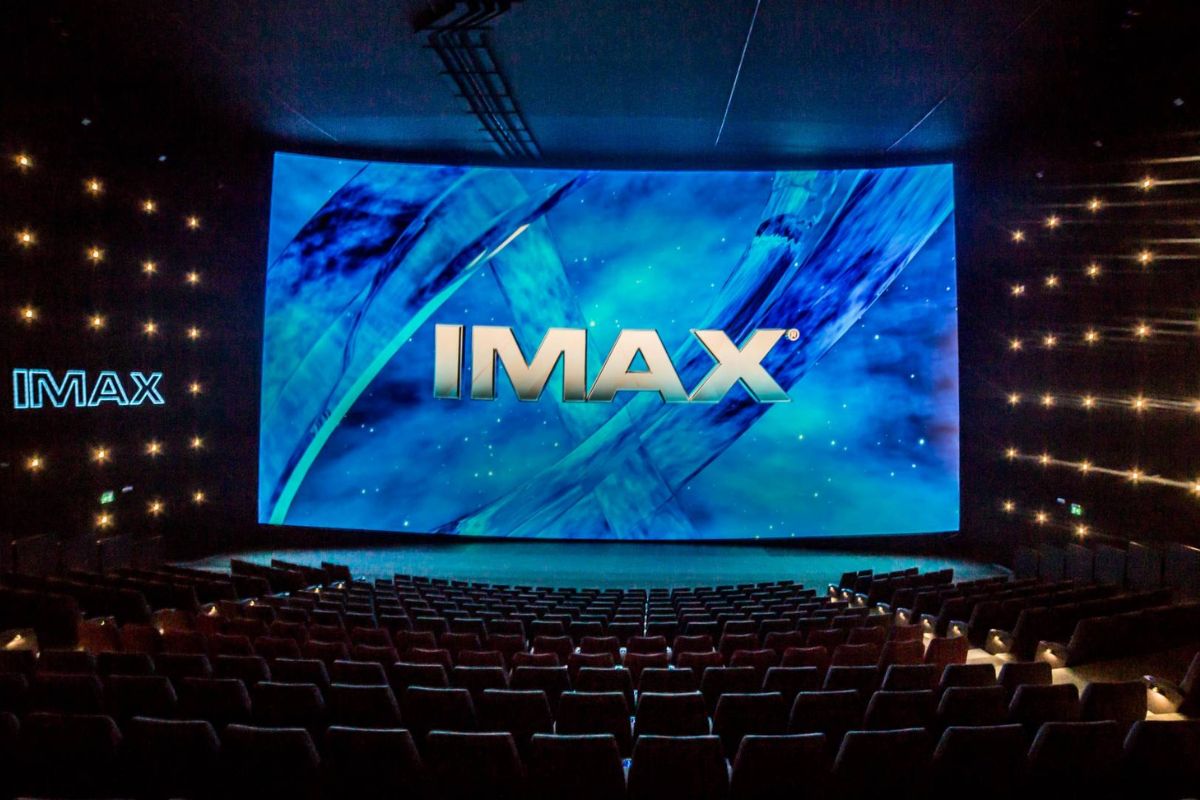
In addition to the giant of UCI Orio (Bergamo) , in Italy there are several IMAX cinemas, including:
-
IMAX UCI Orio (Bergamo) the largest screen in Europe.
-
IMAX UCI Porta di Roma (Rome).
-
IMAX UCI Pioltello (Milan).
-
IMAX UCI Campi Bisenzio (Florence).
The Italian IMAXs represent the meeting point between cinema and technology, offering very high definition images and multidimensional audio.
How many cinemas are there in Italy?
According to the latest findings, in Italy there are over 1,200 active cinemas , distributed between large cities and small towns. Most of the theaters are part of multiplex chains such as UCI and The Space, but a precious fabric of independent and historic theaters survives, guardians of a cinema of proximity and culture.
What is the number 1 film in Italy?
The box office changes from week to week, but the data of recent years shows how the Italian public prizes both the big international blockbusters (Marvel, Disney, fantasy sagas) and the Italian arthouse cinema during festival periods.
Commercial success coexists with the passion for arthouse films, confirming the dual soul of our audience.
Architecture and entertainment: a living legacy
Whether it is the 6,000 seats of the Leonardo Park or the Liberty velvets of the Odeon, the largest cinemas in Italy demonstrate that the architectural dimension is an integral part of the cinematic experience.
In the contemporary multiplex, architecture is functionality and comfort; in historical cinemas it is ornamentation and theatricality . In both cases, the spectator does not just enter a room, but a scenography built to amplify the magic of the film .
And so, in an era of streaming and home screens, visiting these rooms means rediscovering the beauty of the collective ritual of cinema , where architecture becomes spectacle and spectacle becomes architecture.
Leave a comment