The iconic armchairs of famous designs are a symbol of prestige, status and power par excellence. From an emblem of authority, as was the throne in ancient courts, the armchair has evolved to become a furnishing element with an innovative design that often aims to surprise. Crossing eras and cultures, it has been able to reinterpret itself in forms, materials and meanings, maintaining its role intact both in domestic and public spaces.
The armchair combines functionality and style , transforming itself into an icon of comfort and elegance, capable of telling different stories depending on the context in which it is placed and the design that characterizes it.
Iconic armchairs of famous designs: designer pieces that tell stories
A designer armchair fulfills its practical function and proves to be a highly evocative object. It tells of past eras, cultures, artisan traditions, experimental methodologies or advanced technologies. In a living area it represents a fundamental presence: a personal refuge, the celebration of a moment to dedicate to oneself, it is a furnishing detail that fully expresses the personal taste of its owner, helping to give character and style to the entire space it furnishes.
Evolution and meaning of the armchair in modern design
Over time, the modern armchair has been the mirror of social , artistic and technological transformations. It represented a real creative challenge for great masters of interior design , who reinterpreted it through new visions of comfort , aesthetics and materials . This evolution has made the armchair one of the great protagonists of contemporary furnishings .
The Industrial Revolution and innovation in production
The culmination of the evolution of the armchair was reached with the industrial revolution of the 20th century. In this period, artisanal production was accompanied by new techniques of modularity and assembly , introducing innovative materials and experimenting with new, often bold shapes. This transformation has made it possible to combine comfort , style , quality and design , making the armchair an essential element in every interior design project .
Famous iconic armchairs that have marked the history of design
Retracing the history of furniture design , we have made a selection of iconic armchairs which represent the evolution of a furnishing element which has become a symbol of style , innovation and culture . From Bergère , passing through the famous Barcelona Chair by Mies van der Rohe, up to the very recent Twain by Konstantin Grcic and many others, it would be impossible to catalog them all.
Each armchair tells a storya unique classic or modern design and style d’ furnishings .
These icons are not simple seats, but true works of art that continue to influence contemporary trends in the field of interior design . Discover with us how the designer armchair has gained its place of honor in the world of interior furnishings , becoming a must-have for those who wish to combine functionality , comfort , contemporary aesthetics and a illustrious signature .
We present to you the selection of iconic armchairs from which we were inspired: trends that have made the history of interior design and which will continue to dictate the style of the future.
LA BERGèRE – Among the most famous iconic design armchairs
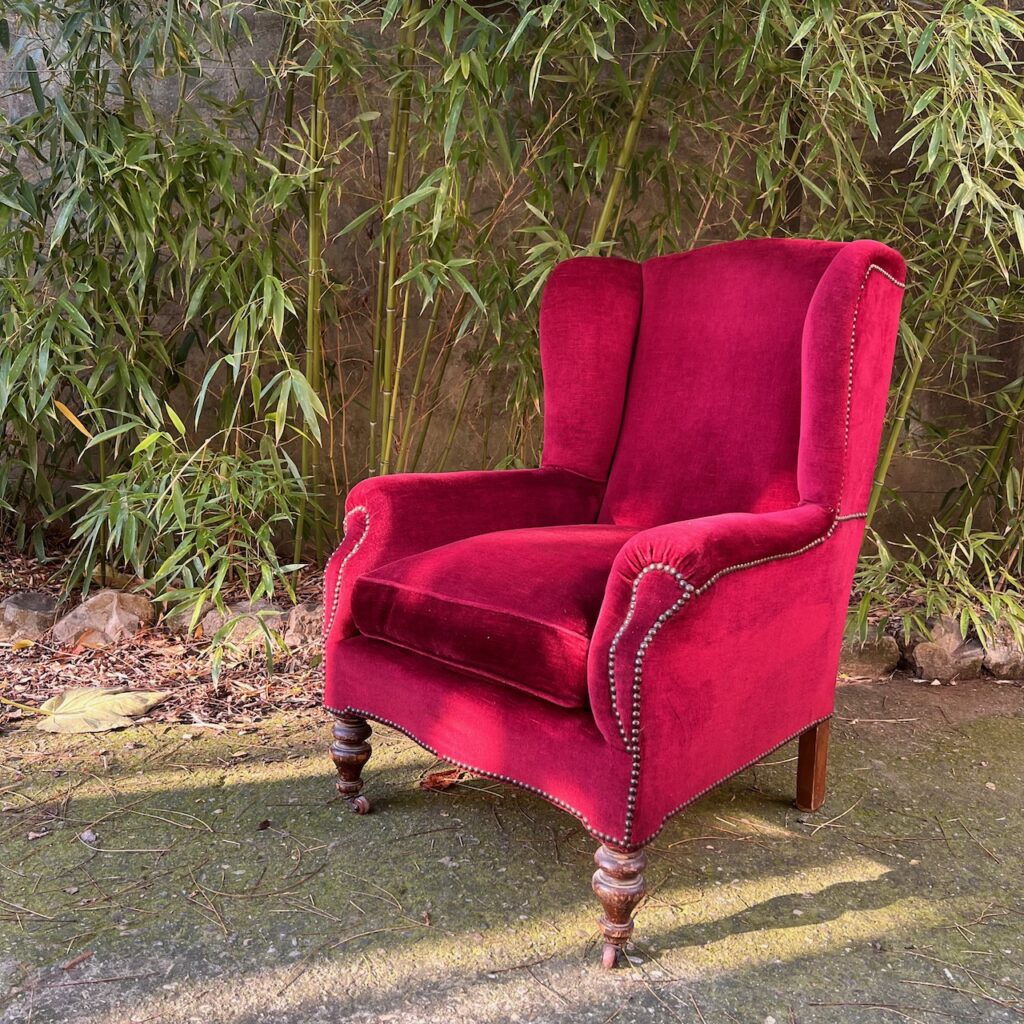
In the collective imagination, the Bergère is considered the armchair par excellence, an icon of style and comfort that has spanned the centuries without losing its charm. Born in France around the mid-1700s, its first versions were richly decorated, a symbol of luxury and opulence typical of the aristocratic furnishings of the time.
With the passage of time, the Bergère style has evolved, adopting lighter and more harmonious lines, capable of adapting to more modern contexts, while maintaining its timeless elegance intact.
This armchair stands out for its padded and capitonné backrest, which joins in a single continuous line to the armrests, offering not only a comfortable seat, but also a refined and sophisticated design.
The most iconic version is the one with “big ears”, also known as à confessional : characterized by lateral headrests that follow the line of the armrests, it embraces the upper part of the body, ensuring enveloping comfort and a feeling of intimacy. Re-proposed by numerous brands in a vast range of finishes, fabrics and colours, the Bergère is today a great classic with timeless elegance and a strong personality. Perfect for embellishing living rooms, bedrooms or reading corners, it represents a versatile furnishing element capable of enhancing both classic and contemporary environments.
1925 WASSILI, MODEL B3 – MARCEL BREUER FOR KNOLL – Among the most famous iconic designer armchairs
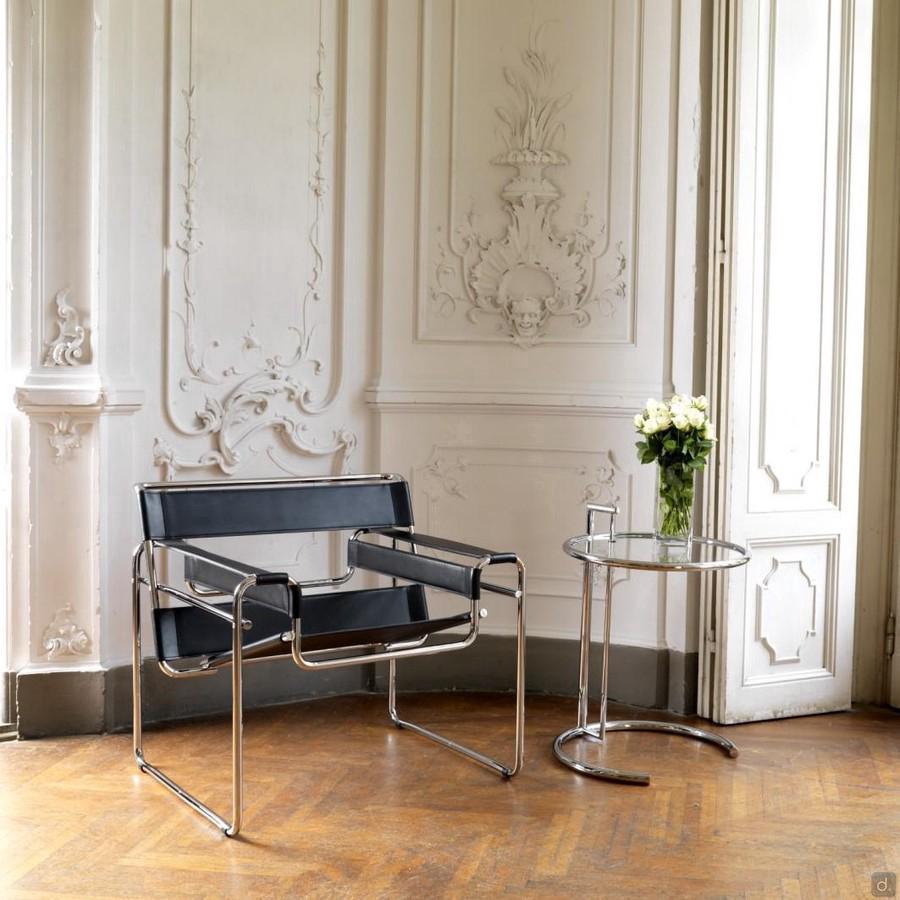
The famous Wassily armchair , also known as Model B3 , was designed in 1925 by the Hungarian architect and designer Marcel Breuer , at the time director of the wood workshop at the Bauhaus in Dessau, a movement of which he was one of the main protagonists.
This work represents a real revolution in the use of materials and production methods. Breuer, inspired by the strength and lightness of the steel tubes used in the construction of bicyclestte, experimented with this material for the first time in the creation of furniture. The result was an armchair with an essential and innovative style, capable of combining functionality, lightness and resistance.
Initially produced in 1926 by Standard Möbel of Berlin, the Wassily Model B3 became an icon of modern design in the 1960s. It was relaunched by Dino Gavina , an Italian entrepreneur and designer, defined by Breuer himself as “the most emotional and impulsive furniture manufacturer in the world” . After meeting Breuer in New York in 1962, Gavina convinced him to re-edit the famous tubular armchair, renaming it Wassily in honor of the artist Wassily Kandinsky , a great admirer of the project.
In 1968, Knoll of New York purchased Gavina Spa of Bologna, including the production of the Wassily, which is still on the market and remains one of the most iconic and recognizable pieces of 20th century design.
Symbolic and timeless , the Wassily Armchair has remained a cult object, beloved by collectors and design enthusiasts for its ability to combine minimalist aesthetics and innovative engineering.
1927 LE CORBUSIER LC FROM 1 TO 9 FOR CASSINA – Among the most famous iconic design armchairs
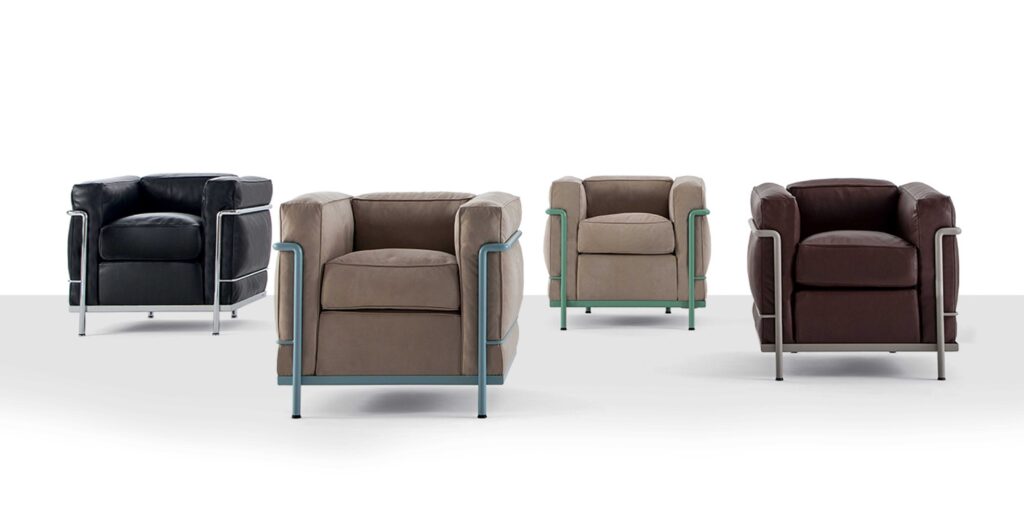
From an intuition of Le Corbusier in 1927, with which through a series of sketches he outlined the positions of the human body to which the seating designs had to respond, a visionary program took shape which saw the contribution of the talented Charlotte Perriand, Le Corbusier’s partner, and Pierre Jeanneret.
Thus was born the famous collection of furniture designed by Le Corbusier, Pierre Jeanneret and Charlotte Perriand.
Iconic pieces among which stand out the Fauteuil Grand Confort armchair , the Chaise Longue Basculante and the tilting armchair Fauteuil Dossier Basculant , to which the swivel armchair was later added Fauteuil Pivotant and the stools Tabouret Pivotant and Tabouret de Salle de Bains , the fruit of the creative genius of Charlotte Perriand.
This collection was a real fever in the sixties, known by the name ” Le Corbusier “.
Initially produced by the Thonet company since 1930, in 1959, the Swiss gallerist Heidi Weber relaunched the collection in Zurich, entrusting its production to local artisans and the acronym “ LC ” – Le Corbusier’s initials – was introduced on each model, making it unmistakable.
In 1964 Heidi Weber entrusted the production of the four main models to Cassina S.p.A. of Meda, with a contract signed on 23 October of that year, the Italian company acquired the exclusive rights to publish and sell the works designed in 1928 by the three visionaries.
Even today, these iconic furnishings representor the ideal of timeless elegance and innovation, beloved by collectors and design enthusiasts all over the world.
1929 BARCELONA MIES VAN DER ROHE and LILLY REICH FOR KNOLL – Among the most famous iconic designer armchairs
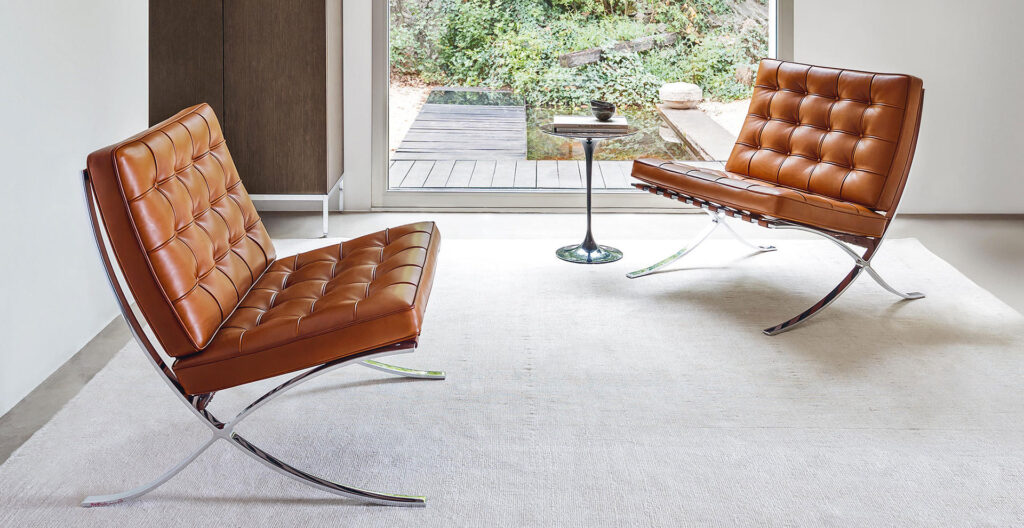
Designed by Ludwig Mies van der Rohe and Lilly Reich for the 1929 Barcelona Universal Exhibition, the Barcelona Armchair has become one of the most famous icons of modern design.
It takes its name from the event for which it was created, designed to welcome none other than the Spanish royals. Mies van der Rohe, a leading German architect and designer of the modernist movement, together with Lilly Reich, created a masterpiece of industrial design inspired by ancient Rome. The lines of the Barcelona recall the classic Roman stools, a symbol of power and prestige, reinterpreted in a contemporary key with an abstract language and unprecedented refinement.
Made with innovative materials for the time, the stainless steel structure – which gives lightness and solidity – combines harmoniously with the leather cushions, made up of 40 identical squares, cut and sewn by hand with precise button quilting, a symbol of craftsmanship and perfection.
In 1950, the armchair was redesigned to improve resistance and aesthetics, thanks to the introduction of a stainless steel structure which eliminated the need for welding. Three years later, in 1953, the Knoll company acquired the production rights, making the Barcelona accessible to a wider audience and transforming it into a timeless icon of luxury furniture. Today, the Barcelona Armchair is considered a milestone in the history of design, a universal symbol of style, refinement and modernity. It perfectly represents Mies van der Rohe’s famous motto: Less is more , where every essential line and every impeccable detail contribute to an aesthetic of pure balance and sober elegance.
1932 – ARMCHAIR 41 PAIMIO ALVAR AALTO FOR ARTEK – Among the most famous iconic design armchairs
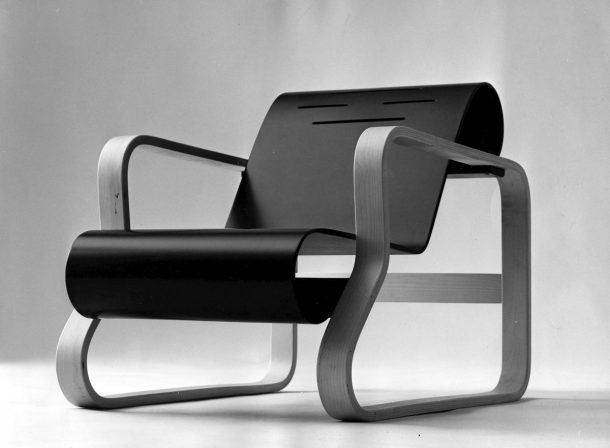
Designed in 1932 by Finnish architect Alvar Aalto , the Paimio Armchair is one of the most iconic works of Scandinavian design.
Created for the tuberculosis sanatorium in Paimio, Finland, from which it takes its name, this armchair, an undisputed aesthetic masterpiece, is above all an object designed to improve the well-being of users: Aalto designed the chair with an inclination designed to facilitate patients’ breathing.
The frame is fixed on four points, while the suspended seat seems to float in the air, giving the structure a light and dynamic appearance. The armrests, made from a single piece of curved wood, highlight Aalto’s mastery in the use of wood, giving it organic and soft shapes, a pioneering technique for the time.
The Paimio has an unmistakable sculptural elegance: its light and organic shape sets new standards in 20th century design, influencing generations of designers. It is considered one of Alvar Aalto’s masterpieces, not only for its aesthetic beauty, but also for the way it combines art, architecture and well-being. Produced by the Finnish company Artek, founded by Aalto himself in 1935, the Paimio Armchair is today recognized as an icon of modern design, a symbol of the Nordic philosophy which favors natural materials, essential lines and functionality designed for the human being.
1938 – BUTTERFLY – ANTONIO BONET, JUAN KURCHAN and JORGE FERRARI HARDOY – Among the most famous iconic designer armchairs
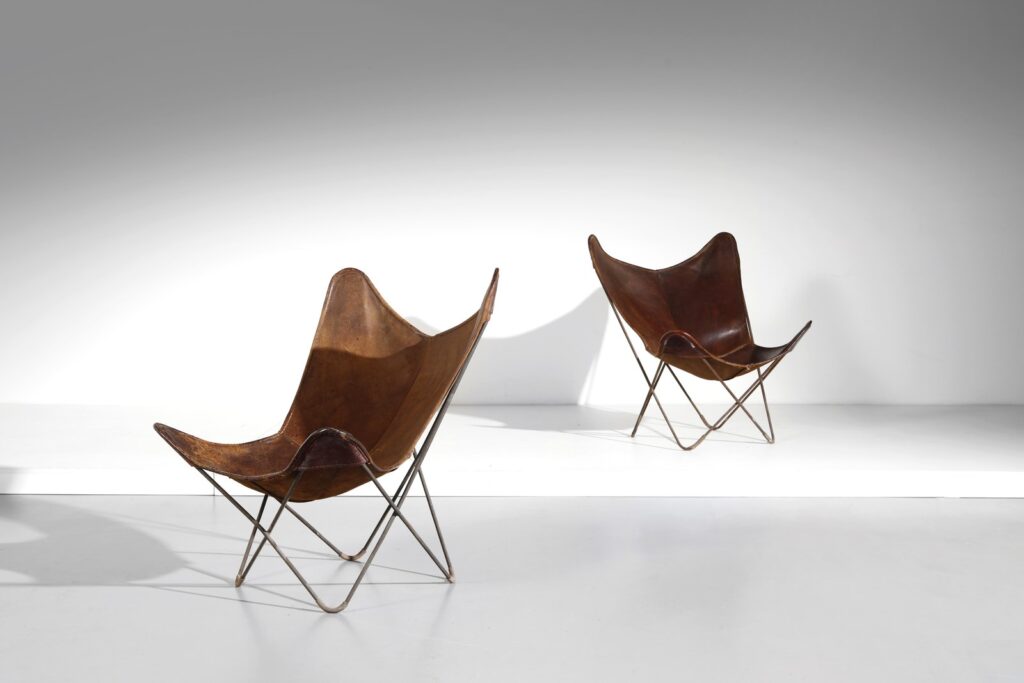
Born in 1938 in Buenos Aries by the genius of the architects Antonio Bonet , Juan Kurchan and Jorge Ferrari , the Butterfly armchair is an absolute classic with functional, clean lines and light, immediately recognisable, with the typical folding frame.
First shown at the MOMA in 1940, Butterfly immediately achieved incredible success; the museum’s then director, Edgar Kaufmann Jr, called it one of the “finest efforts in modern chair design.”
Elegant for both indoor and outdoor furnishings, it can be made in numerous finishes and colours, the Butterfly chair expresses a character that makes it timeless and adapts to any style requirement.
1956 – CHARLES & RAY EAMES – LOUNGE CHAIR FOR VITRA
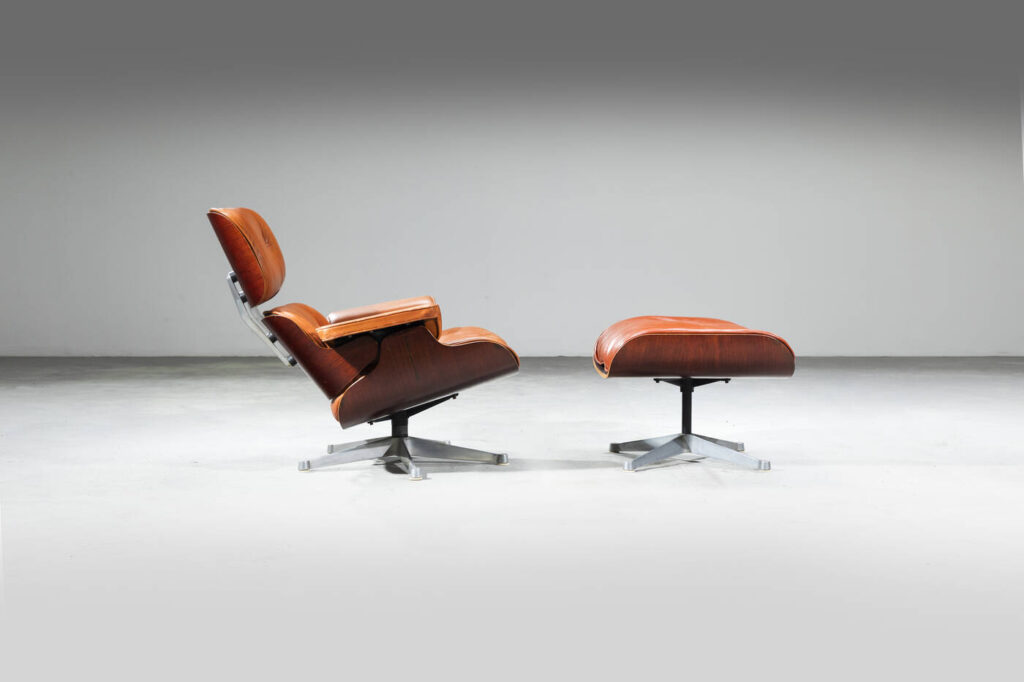
The result of a creative process that lasted many years and culminated in 1956,
the Lonuge Chair , one of the most famous designs of Charles and Ray Eames , set new standards in furniture.
It is lighter, more elegant and more current than the traditional English Club armchair, which Charles & Ray Eames were inspired by reinterpreting his style and the result is a seat that combines refined lines, balanced proportions and precious materials. The curved shapes of the molded wood elements and the softness of the leather cushions create a perfect combination of aesthetics and functionality.
Produced by Vitra since the 1950s with the same artisanal methods as the original, the Lounge Chair is today available in two sizes to adapt to different ergonomic needs and in a wide range of upholstery combinations, including leather and fabric, in the classic black and white colours. The swivel base in polished aluminum is also available in different versions, with coordinated details that add style to the seat.
The Lounge Chair is an icon of 20th century design, exhibited in major museums such as the Museum of Modern Art (MoMA) in New York. Appreciated by a refined public who wishes to communicate style, class and discreet elegance.
1957 EGG ARNE JACOBSEN FOR FRITZ HANSEN
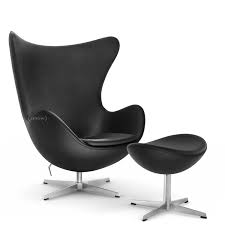
Designed in 1957 by the famous Danish architect and designer Arne Jacobsen , the Egg Armchair is an icon of modern design.
With its unmistakable and sculptural line, it is able to characterize any environment, offering a mix of boldness, elegance and functionality. Its enveloping shape, which recalls an eggshell, celebrates comfort and relaxation, creating an intimate and welcoming space in which to take refuge. Made with high quality materials, the Egg Chair features a fiberglass frame padded with latex foam, which guarantees optimal support and a soft, comfortable seat. The structure is expertly shaped to include a rounded and enveloping backrest, designed to offer maximum comfort and ergonomic support. The central pedestal in polished aluminum, equipped with a star base, guarantees stability and resistance, as well as allowing 360 degree rotation, making the armchair extremely practical and functional. Ideal for both domestic environments and public spaces or representative offices.
Produced by the Danish company Fritz Hansen, the Egg Armchair stands out for its versatility. It is available in a wide range of coverings, including fine fabrics and high-quality leather, with customizable finishes capable of satisfying even the most demanding tastes. Every detail is taken care of to guarantee a design product that combines aesthetics, comfort and durability.
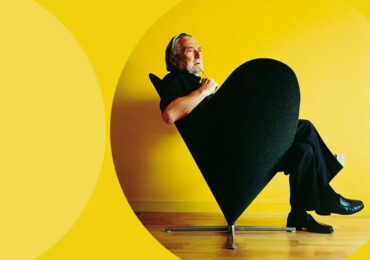
1958 – HEARTCONE – VERNER PANTON FOR VITRA
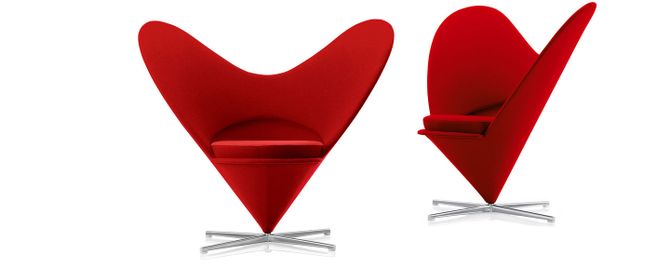
Designed in 1958 by the visionary Danish designer Verner Panton , the Heart Cone Chair embodies the innovative and daring spirit that made its creator famous.
This masterpiece of modern design is a perfect marriage of sculptural aesthetics and functionality, characterized by eye-catching geometric shapes, bright colors and dynamic lines. The evocative name recalls its distinctive heart-shaped silhouette, which combines romantic expressiveness with a futuristic design.
The Heart Cone Chair is not just a seat, but a real style statement: thanks to its unique and charismatic character, it adapts perfectly to modern spaces, giving a touch of personality and becoming the undisputed protagonist of any environment. Equipped with an enveloping seat, it offers optimal comfort thanks to the high padded backrest and the side wings that open in an unmistakable line, the satin stainless steel base guarantees stability.
Produced by Vitra as one of its flagship items, the Heart Cone Chair is considered an avant-garde symbol in the world of interior design. Its scenographic presence and sculptural profile embellish every environment, transforming any space into an expression of sophisticated modernity. This armchair best represents the experimental approach of Verner Panton, who was able to combine bold aesthetics and practicality, anticipating trends and influencing generations of designers.
With HeartCone Chair, Panton offers us a style icon that continues to amaze and fascinate with its playful elegance.
1963 – BALL – EERO AARNIO
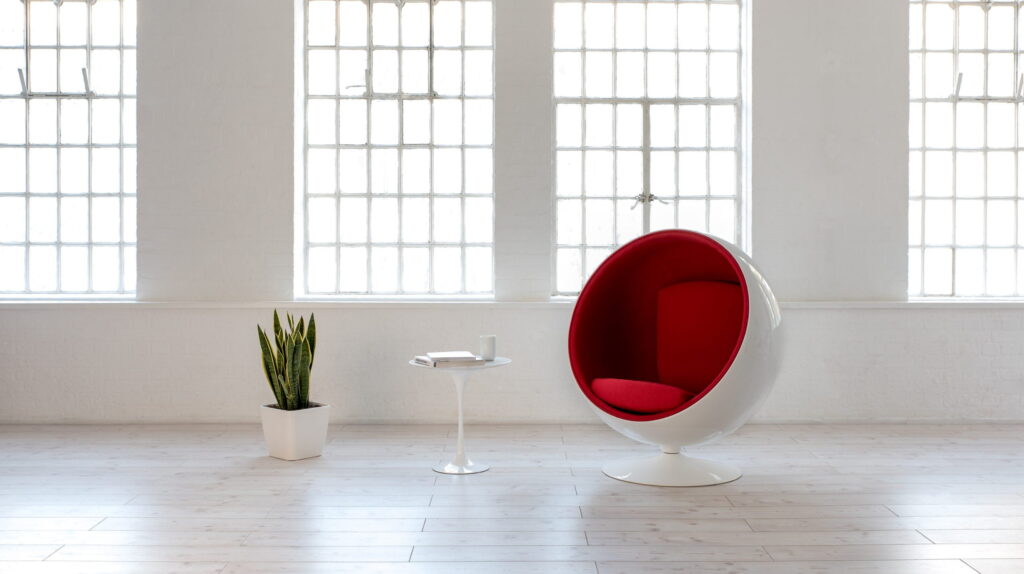
I will make a chair that, when displayed in a shop window, no one will pass by Thus spoke Eero Aarnio , addressing his wife, when he was thinking of making it.
We are at the beginning of the Sixties, the Finnish Eero Aarnio was a still unknown but very ambitious designer, with a great passion for boats, which led him to become familiar with an innovative material for the time: fiberglass with which he planned to build furniture. The first original sketch of the Ball Chair is dated 11 January 1963.
Aarnio needed a company to produce his idea, so he tried to contact Coca-Cola, painted the entire seat red, pasted the famous logo on the back and portrayed a person intent on drinking Coca Cola on the Ball Chair. After an initial enthusiasm, however, the company rejects his (brilliant) “marketing” proposal. The success of the Ball Chair came on the occasion of the 1966 Cologne Furniture Fair, an event in which the designer participated with the Asko company of which he was an employee.
the product received immediate positive feedback, considering that on that occasion alone it was sold in over 30 countries. Finnish journalist Helsingin Sanomat says: The most exciting chair in the world is on display at the Cologne International Furniture Fair.
Since then, an unstoppable climb towards success.
A famous comment by Aarnio referring to the lucky moment: “ It all started from here! “.
the Ball Chair has been defined as “a room within a room” or “a space within a space”, in fact, its seat is a real environment in itself, within which it is possible to isolate oneself, it hides the user almost completely and is also soundproofed, ideal for finding calm and relaxation.
Even today she maintains her iconic status and can be admired in the collections of design museums around the world, she has appeared in several films, covers, music videos… a true design diva!
Today it is produced by Eero Aarnio Originals , a brand founded in 2016 with the aim of bringing the designer’s authentic classics back to Finland.
1968 SACCO – FRANCO TEODORO; CESARE PAOLINI and PIERO GATTI FOR ZANOTTA
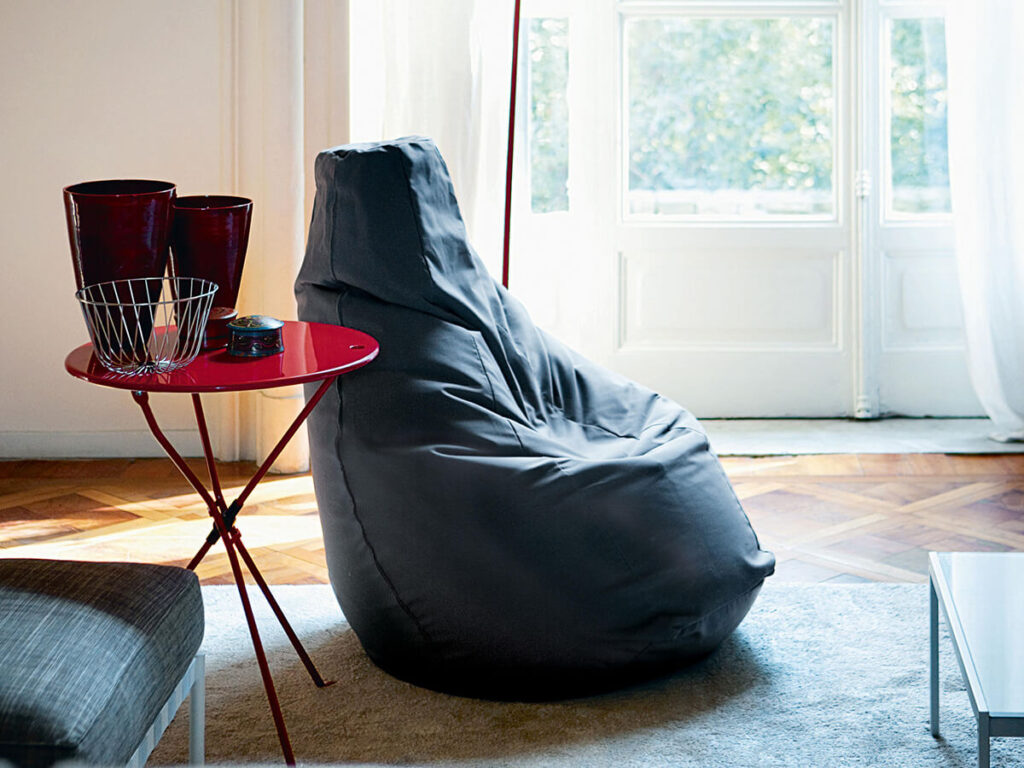
The Sacco armchair , an icon of Pop Art, won the Compasso d’Oro for lifetime achievement of the product in 2020, over 50 years after its birth.
Designed for Zanotta by Franco Teodoro, Cesare Paolini and Piero Gatti in 1968, it is an Italian masterpiece, a contemporary work of art that has revolutionized the design panorama.
Sacco is an anatomical armchair, a seat that changes its shape depending on the position of the person using it; its casing is filled with highly resistant expanded polystyrene balls, it is light, versatile and capable of transforming any environment into a space with ever new shapes.
It is an informal session that conveys the idea of ??therefreedom and lightness, available in different types of covering, colors and patterns.
It entered history with the collections of the MoMa, the Design Museum of the Triennale and the Victoria & Albert Museum.
1969 – UP SERIES – GAETANO PESCE FOR B&B
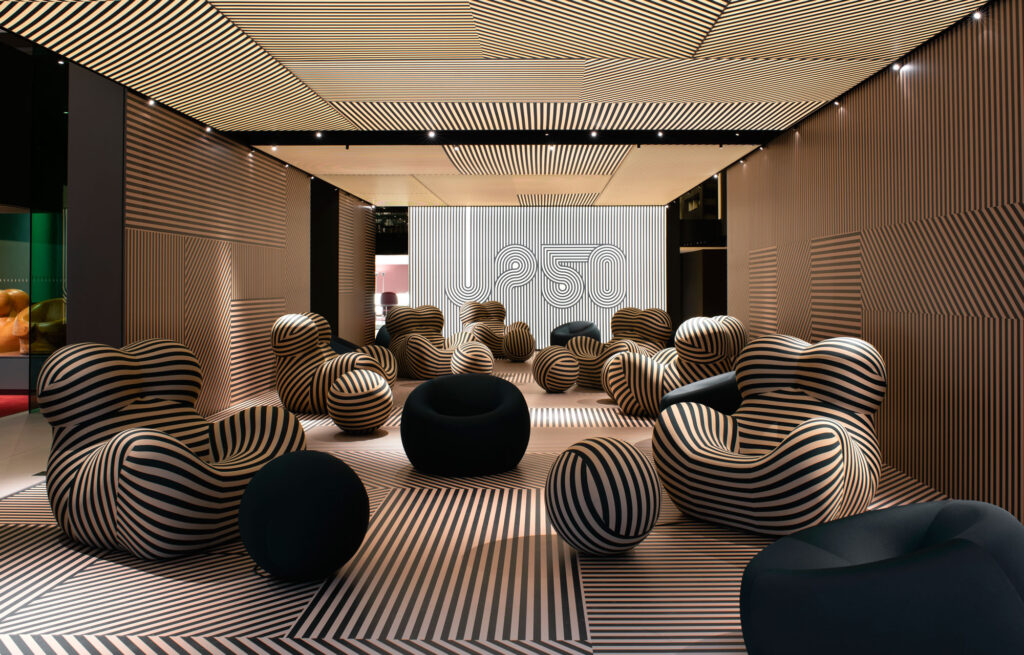
The UP Series created by the GIANT Gaetano Pesce , is his collection of seats from 1969, initially produced by the Italian company C&B (Cassina & Busnelli, later renamed to B&B Italia).
There are 7 pieces in the series: from UP1 to UP7.
She was awarded the prestigious Compasso d’Oro for lifetime achievement in 2022, but she had immediate mass success, even conquering Salvador Dalì, who chose her to pose in a photo shoot.
From 1969 to today, the UP series has never waned.
The ingenuity used both in the choice of materials and in the technical solutions was significant: the expanded polyurethane – by its nature capable of expanding and contracting – assumed its definitive shape once extracted from the vacuum packaging: in contact with the air, given the presence of freon gas inside it, these seats took shape before the eyes, transforming the moment of unwrapping into a truly scenographic experience, which was an integral part of the purchase. Equally spectacular was the advertising campaign which presented the armchair in a futuristic context, emphasizing its innovation and visionary design.
In 1973, however, the ban on the use of Freon gas interrupted its production. Now a cult object, the armchair was reissued by B&B Italia in 2000, reworking it according to new production methods; we therefore choose to abandon the scenographic effect of the swelling in favor of more current materials. Today it is made of cold-foamed polyurethane. This armchair, in addition to its technical value, carries with it a profound meaning:
with this work Pesce wanted to convey other values ??in addition to those of advanced technique, material and comfort, he himself defined it as “the first design object with political meaning”.
The UP5 represents a maternal womb, reminiscent of the statues of fertility goddesses but with a sphere tied to the body.
the UP6 , is the footrest combined (and tied) to the chair, it resembles a heavy ball and recalls the fatigue and weight of life for women, it refers to the idea of ??the prisoner, victim of prejudice, evoking a sense of backwardness and violence. A strong image for the time, but still sadly current.
An armchair that needs no introduction, an undisputed presence wherever it is placed, scenographic and with character as well as being extremely comfortable.