November 25 is one of those days when Italy seems to breathe in unison. Museums, foundations, ateliers, schools and squares become a constellation of different voices that, for an instant, find themselves in the same direction. They don’t shout: they inhabit the space. They populate it with signs, works, objects, gestures that make it impossible to turn away.
This date was not created to commemorate, but to remember clearly. Since 1999 , when the United Nations proclaimed it International Day for the Elimination of Violence against Women , November 25 has become a civil reference point. A symbolic threshold that invites communities – and the visual cultures that represent them – to stop, observe, take a stand.
From North to South, the country translates into installations, exhibitions, performances, design projects, traveling exhibitions which are not simple cultural events, but forms of social expression . Art and design – which by definition absorb, reflect and reinterpret what we experience – on this day become tools of awareness, civic devices capable of transforming experience into memory and memory into responsibility.
And so, this year too, November 25th redesigns the Italian cultural map with initiatives that speak of pain, but also of presence, of care, of possibilities.
Red ceramic shoes: the poetry that passes through Italy
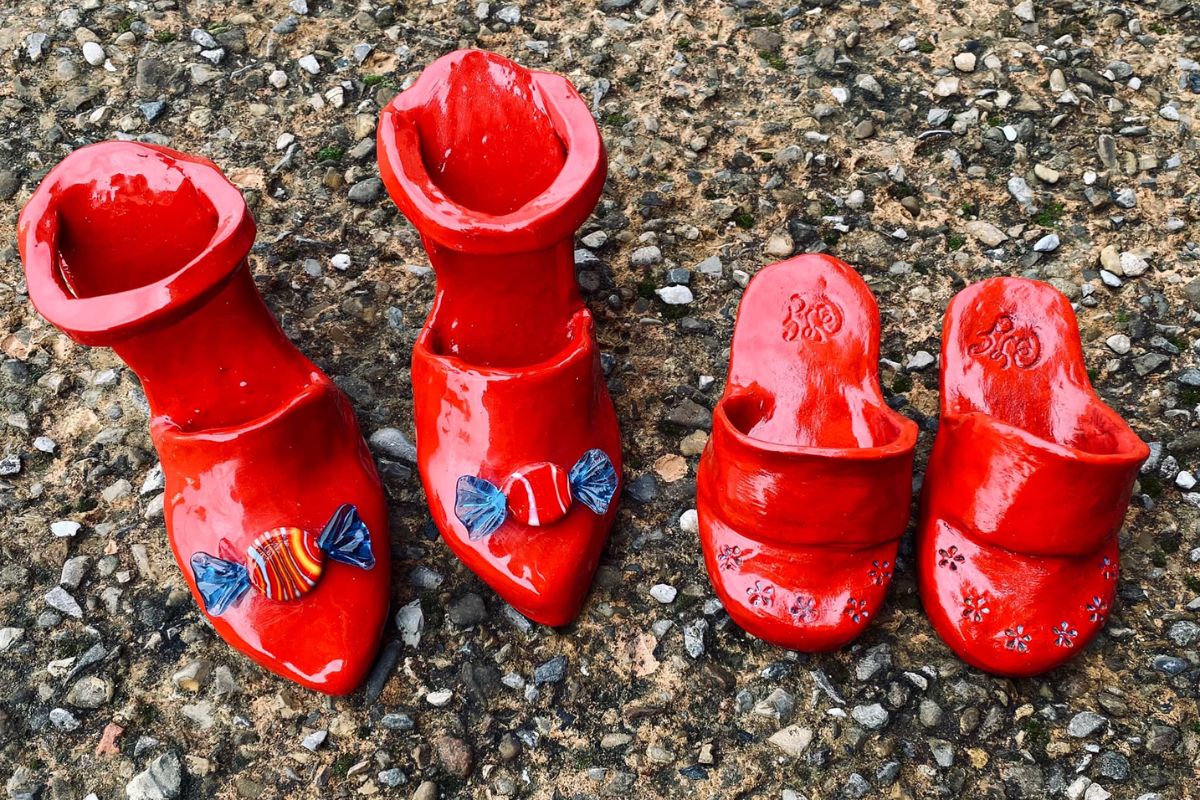
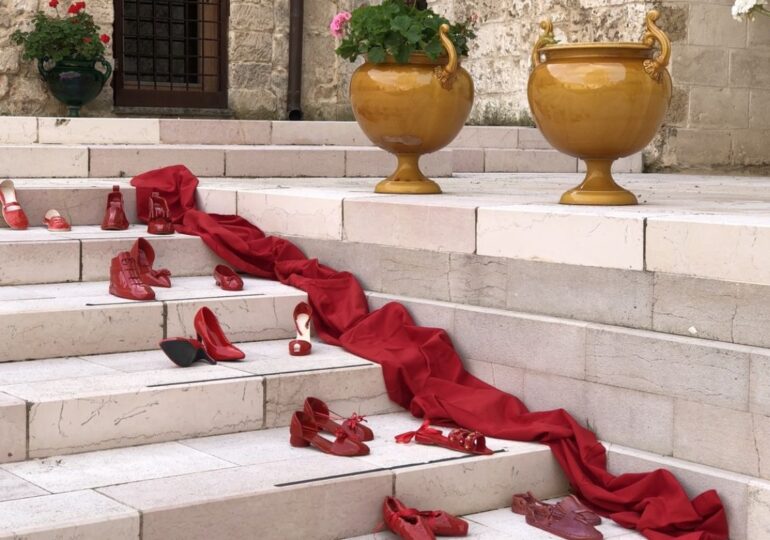
The Red ceramic shoes return for their ninth edition, and now it is as if the whole of Italy knows how to recognize them from afar. Created by the artists of the Italian Association of Ceramic Cities , they appear in the squares of Grottaglie , along the churchyards, in the school courtyards, in the halls of public buildings.
They are small, static, but when you see them you have the feeling that they are waiting for someone who will never arrive again. Next to it, the ceramic plaques dedicated to 1522 , the anti-violence and anti-stalking number, remind us that art can also become civic education.
The project expands this year: performances, readings, workshops, widespread exhibitions , a fabric of initiatives that takes ceramics out of its natural place and into a collective narrative.
www.buongiornoceramica.it
I don’t dance alone: when five cities become a single stage
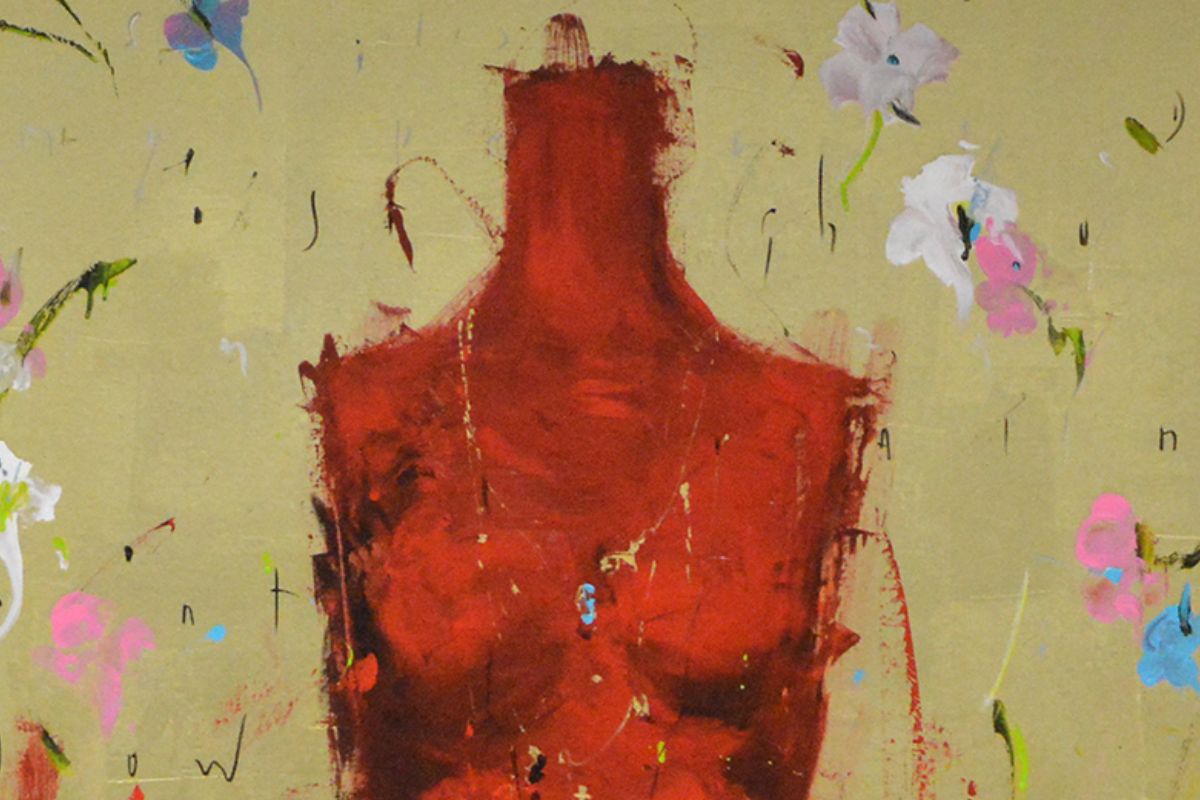
Then there is an exhibition that does not belong to just one place, but to all. Turin, Milan, Florence, Bologna and Verona welcome the seventh edition of I don’t dance alone , a project of the CUBO Corporate Museum of the Unipol Group , created with Fondazione Libellula and the Equal Opportunities Commission of the insurance sector.
From 17 to 27 November , the event runs through the cities like a red thread.
It is not a festival, it is not a traveling show: it is a form of collective sentimental education.
There are artistic performances, theatrical shows, educational activities and talks , all free. A program that doesn’t just want to talk about violence, but ttransform artistic languages ??into prevention tools.
https://www.cubounipol.it/it
Milan responds with design: Ottanio Opendoor and the tailoring that takes care of

Milan has a unique way of reacting: it does so through design. This year it does so with Ottanio Opendoor , a project by the studio Ottanio , in collaboration with the stylist Edoardo Gallorini and with Molce Atelier , a therapeutic tailoring dedicated to women in fragile situations.
The capsule consists of a t-shirt , a scented candle and a handcrafted pouch . Three objects that speak more directly than any poster.
They do not celebrate an aesthetic, but a path: that of women who, through the psychological and training laboratories of Molce Atelier, are rebuilding themselves.
It is design that meets ethics. And it becomes an instrument.
https://www.ottaniodesign.com
https://www.edoardogallorini.com
https://www.molceatelier.it
Vasto: Alice is not afraid, an exhibition that does not kneel
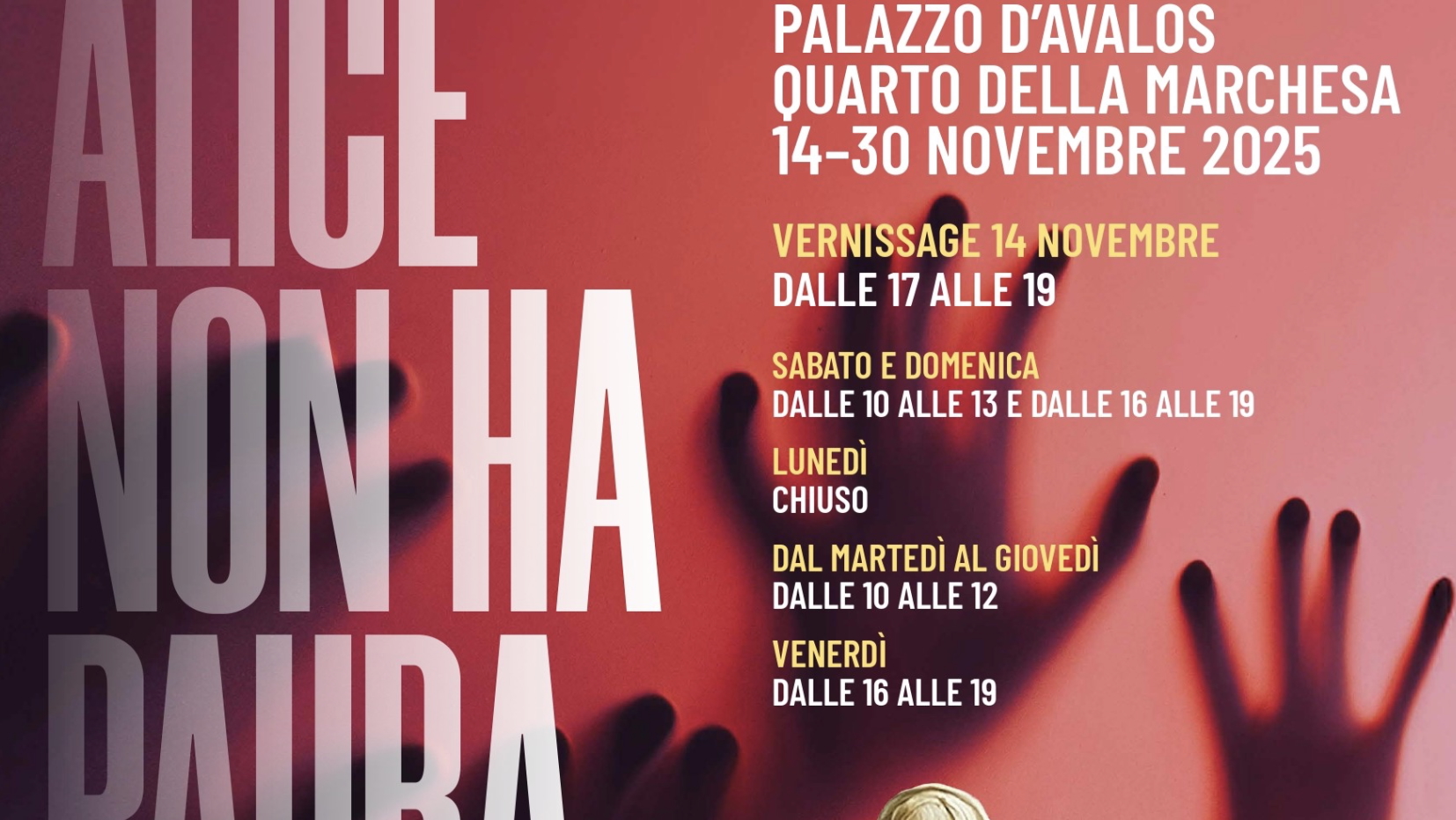
At Palazzo d’Avalos , in the Quarto della Marchesa, Alice is not afraid , a contemporary art exhibition curated by Ilaria Centola , takes place.
It is promoted by the City of Vasto together with the Dafne ETS Association , which manages the DonnAttiva Anti-Violence Centre.
From 14 to 30 November , artists will confront one of the most difficult themes to tackle without falling into rhetoric.
The result is a path that is not intended to console, but to awaken .
It is not just an exhibition: it is a political gesture, in the highest sense of the term. A civil stance that invites those who enter not to exit as they entered.
http://www.museipalazzodavalos.it/
Florence, Museo Novecento: the feminist radicalism of Helen Chadwick
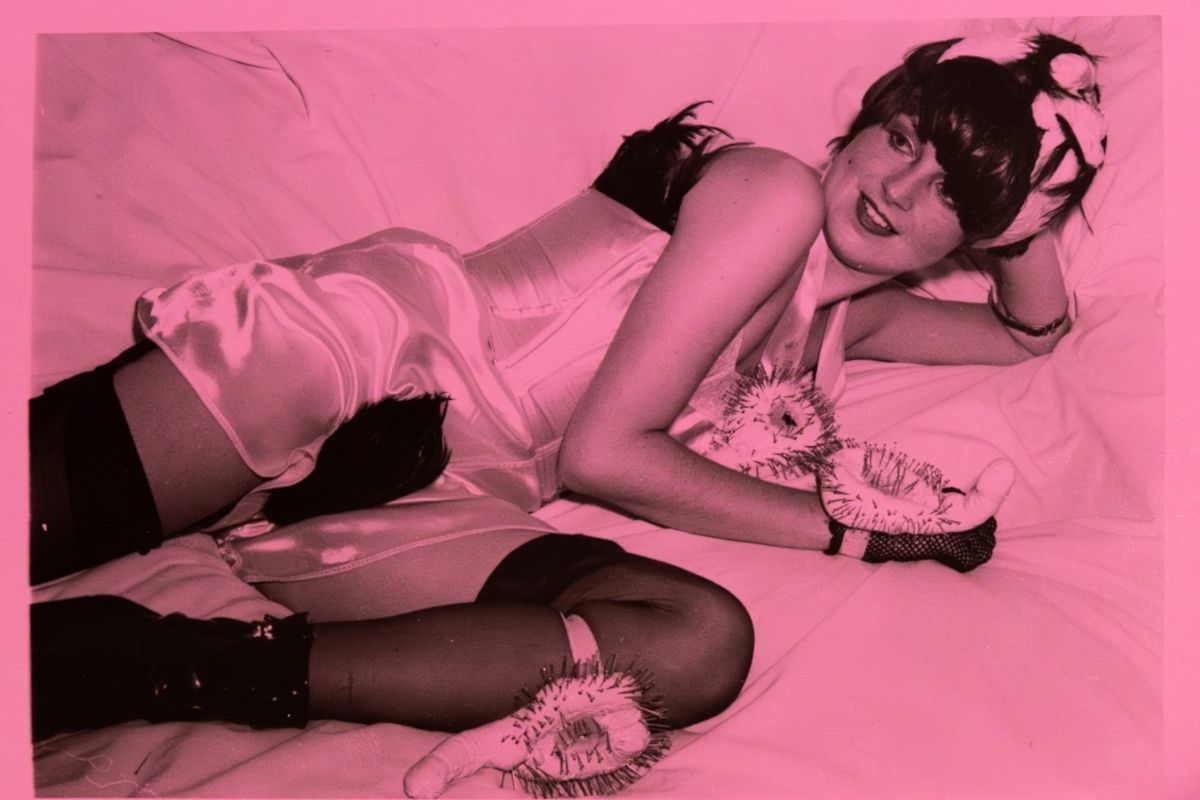
The Museo Novecento chooses to inaugurate on 25 November the first major Italian retrospective dedicated to Helen Chadwick (19531996). An artist who has made the body, form, ambiguity and irony a territory of radical exploration.
The exhibition, Life Pleasures , born in collaboration with The Hepworth Wakefield and the Kunsthaus Graz , traces the artist’s entire career: from experiments with unusual materials – meat, compost, chocolate, body fluids – to the installations that have redefined the British sculptural language.
Chadwick does not represent violence: he subverts it , he rejects it, he dismantles it through desire, pleasure, living matter.
www.museonovecento.it
Turin: Forbidden to Die, the intimacy that is heard
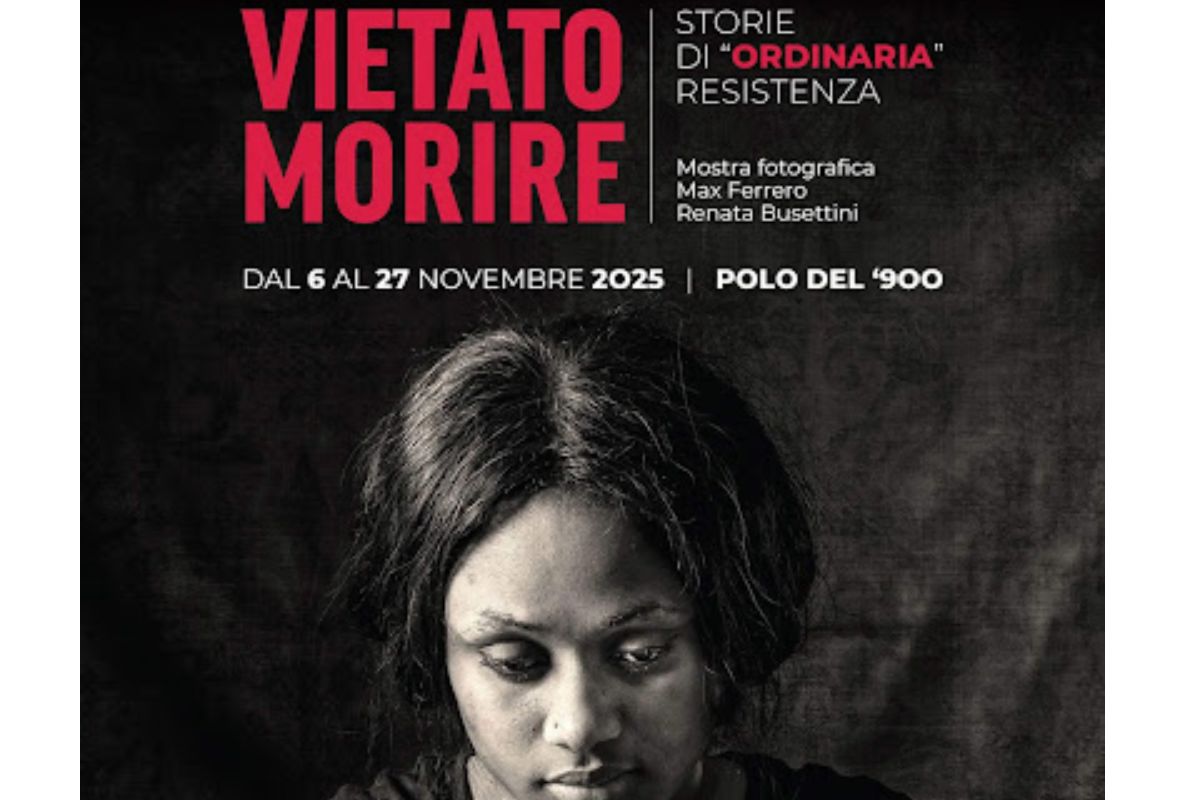
At Polo del ‘900 , until 27 November , arrives Vietato Morire Stories of ‘ordinary’ resistance , photographic projectedited by the SvoltaDonna ODV Anti-Violence Center .
Photographers Max Ferrero and Renata Busettini portray seventeen women who have gone through violence and emerged from it, transforming it into a new space of freedom.
The portraits are in black and white, intense, essential.
Their voices – the real ones – arrive via a QR code: the actress Carla Carucci interprets them and returns them to the public, creating a visual and sound experience that leaves no escape.
It is an exhibition that does not look at trauma: it looks at dignity.
www.polodel900.it/
An Italy that chooses to see
In these initiatives there is a thread that cannot be broken: the idea that art is not used to decorate, but to keep one awake .
November 25th is not the answer to a problem, but a space of possibilities in which Italian cities – from ceramic workshops to company museums, from academies to historic buildings – choose not to forget.
It’s not a celebration. It’s a position.
Leave a comment