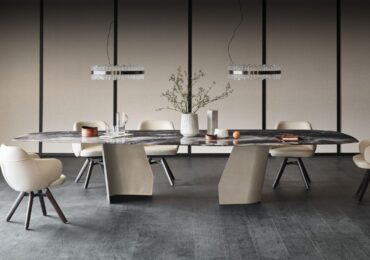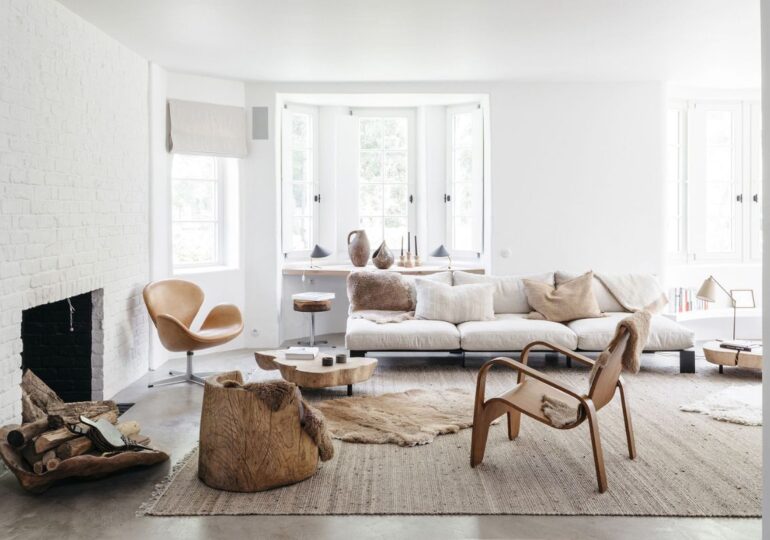
History teaches us that furnishing styles adapt to eras like fashion, reflecting economic, social and cultural transformations.
From neoclassical rigor to the irrationality of postmodernism, every language of living has always been a response to its time : a way of describing the desires, fears and aspirations of a society.
Today we no longer live in a world dominated by a single style, but in an ecosystem of contaminations .
The house is no longer an aesthetic manifesto, but a place that translates the complexity of the present : the need for balance, the search for authenticity, the need for nature, the nostalgia for the past and the fascination
History teaches us that furnishing styles evolve with the eras, just like fashion.
Each period has reinterpreted domestic space according to its own values: the rationality of the 1950s, the decorative euphoria of the 1980s, the minimal purity of the 2000s.
Today, in a time crossed by environmental crises, new forms of work and a growing need for well-being, the home returns to being a story of identity .
Talking about the 10 most loved furnishing styles today means observing how design responds to the complexity of the present:
there are those who seek balance and authenticity, those who rediscover the pleasure of decoration, those who use technology to simplify life.
The boundaries between styles become porous: minimalism becomes warm, classic becomes ironic, natural approaches art.
The most current styles are not superficial trends, but design attitudes .
They interpret the desires of a generation that wants more human, sustainable and sensorial spaces.
This is why rather than “styles”, we should talk about languages ??of contemporary living : ten directions that tell how design, today, is rewriting the relationship between aesthetics, function and culture.
for technology.
In this scenario, talking about “styles” means observing how contemporary identity inhabits space .
Trends are no longer simple formal derivations, but systems of values.
This is why the ten most loved styles today do not just tell the story of taste, but a way of living , of designing and producing.
1. The cultured natural: the silent elegance of the material
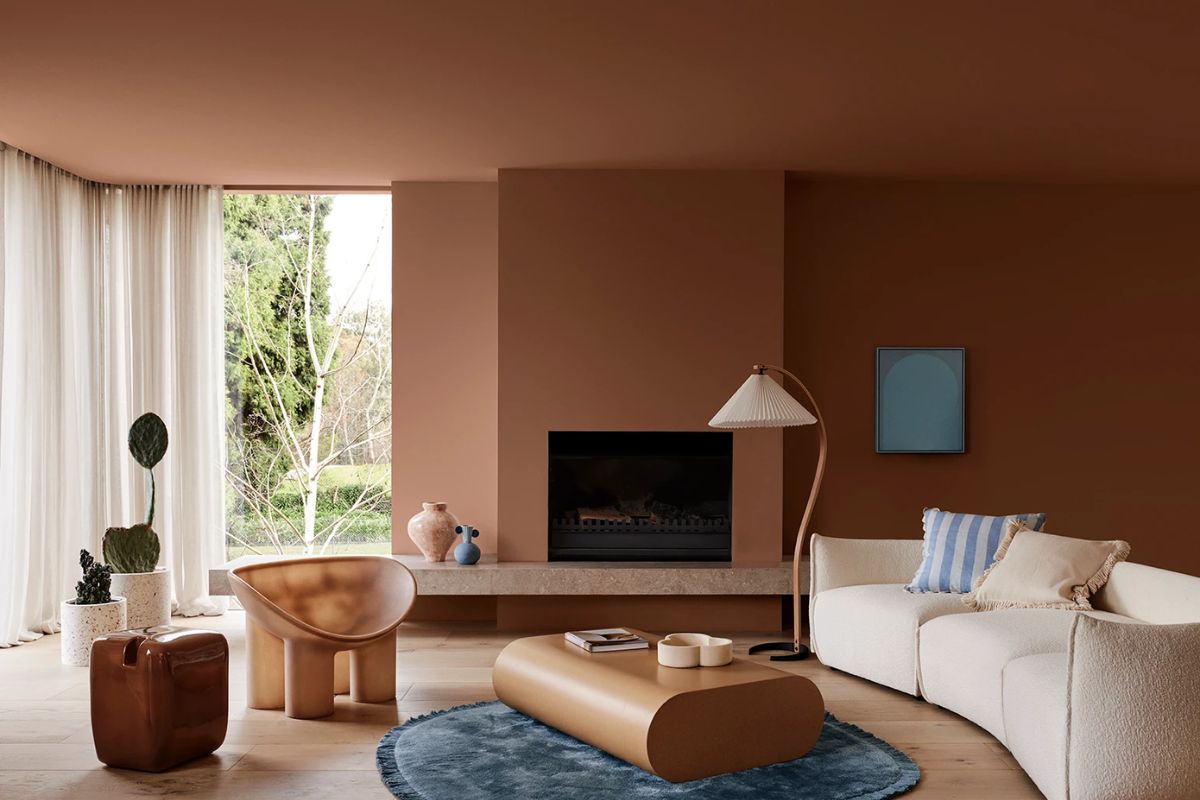
In recent years, the return to the material has not produced nostalgia, but aesthetic awareness .
Wood, stone, lime and linen are no longer rustic citations, but rather tools for creating calibrated, measured and intellectual interiors .
It is the language of a cultured naturalness, which rejects decorative excess but does not give up tactile refinement.
The cultured natural is recognized in pure materials, worked with contemporary techniques: oiled woods, split stones, polished marbles, brushed fabrics, neutral ceramics.
The palettes are warm, but never predictable mineral beiges, pinstriped greys, milk and sand shades.
Diffused light, thin profiles and discreet craftsmanship create a dimension of calmand authenticity , perfect for interiors that want to communicate balance and solidity.
Companies such as Giorgetti, Lema, Roda and Salvatori are interpreting this language with rigor and material sensitivity: surfaces that breathe, textures that can be read with the fingers.
It is an aesthetic that designers like because it does not impose a style, but a cultural posture : attention to detail as a form of respect for the space and for those who inhabit it.
The cultured natural is the answer to the visual saturation of mass design.
It represents a search for tactile and silent truth , in which each material tells where it comes from and why it deserves to stay.
2. The neodecorative: the return of identity through form
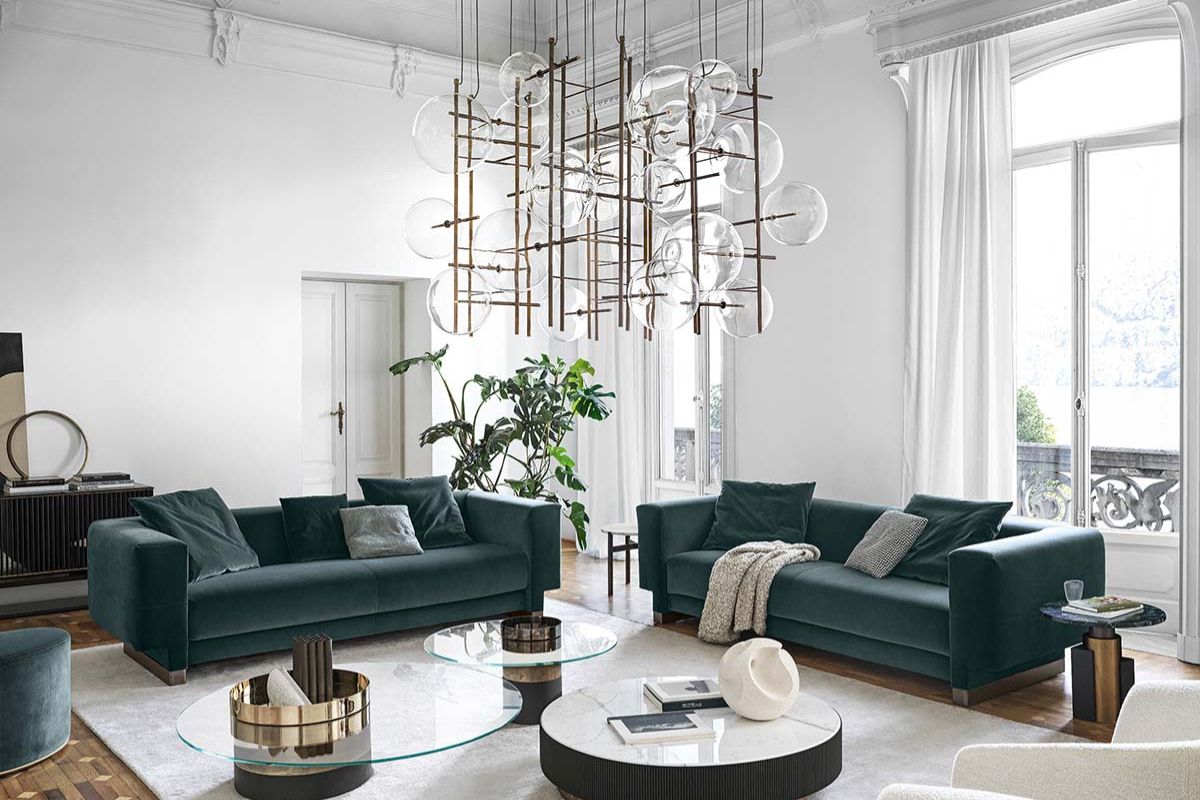
After years of minimalism and visual rigor, the neodecorative style marks the return of identity in interior design.
This is not a regression towards excess, but a cultural evolution: decoration is reborn as a critical language, as a gesture capable of giving depth and memory to space.
The modern classic style and the contemporary decorative blend in a new aesthetic grammar made of stratifications, contrasts and citations.
Surfaces become the protagonists again – marble, onyx, velvet, polished metal – but always with measure and a sense of composition.
It is no longer the time of opulence, but of controlled intensity : a strong colour, a reinterpreted boiserie, a texture that interrupts the visual silence of white.
Companies such as Gallotti&Radice, Baxter, Dimore Studio, Porro and Gianfranco Ferré Home today represent this language with a rare coherence: they reinterpret luxury not as status, but as sensorial and cultural experience .
In their aesthetics, the decoration is a story, the color becomes a calibrated emotion, and the detail – a golden profile, a curvature, a visible stitching – becomes memory.
The neodecorative is the style of those who are not afraid of personality: a way of living that rediscovers the beauty of expressiveness, but with the intelligence of measure.
It is an invitation to rewrite the relationship between project and narrative, where each decorative element does not decorate, but interprets .
3. The new rationalism: order as a form of freedom
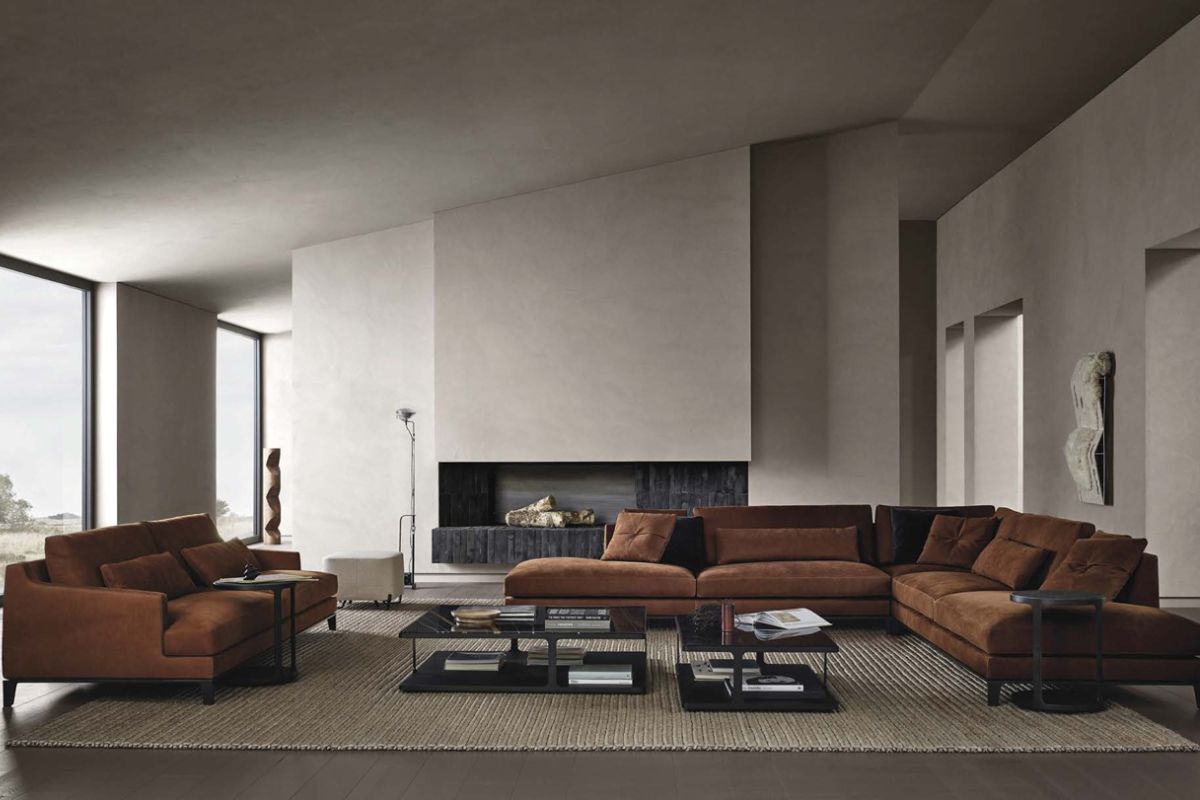
In an era marked by visual noise and excess stimuli, the new rationalism represents a return to clarity, not rigidity.
It is not minimalism in the traditional sense, but a sensitive order , where proportions, light and materials dialogue with everyday life.
This style arises from the belief that simplicity is not deprivation, but design precision .
Today’s rationalist interiors do not try to erase emotion, but to build it through measurement: natural light, the rhythm of volumes, the purity of surfaces.
It is a language that restores balance and legibility to spaces, bringing function back to the center of the project.
Brands like Poliform, Rimadesio, Lema, Molteni&C and Porro perfectly embody this approach: modular systems, calibrated geometries, neutral palettes that enhance the quality of the materials more than the decoration.
The hand of the designers Rodolfo Dordoni, Vincent Van Duysen, Piero Lissoni is recognized in the ability to combine architectural rigor and emotional comfort, rationality and warmth.
The new rationalism is not a style of subtraction, but of awareness: every element has a sense, every proportion a logic.
In this vision, emptiness is not absence, but space to breathe – a rare luxury, in a time that tends towards too much.
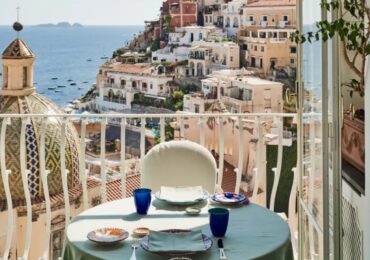
4. The contemporary Mediterranean: light, matter and roots
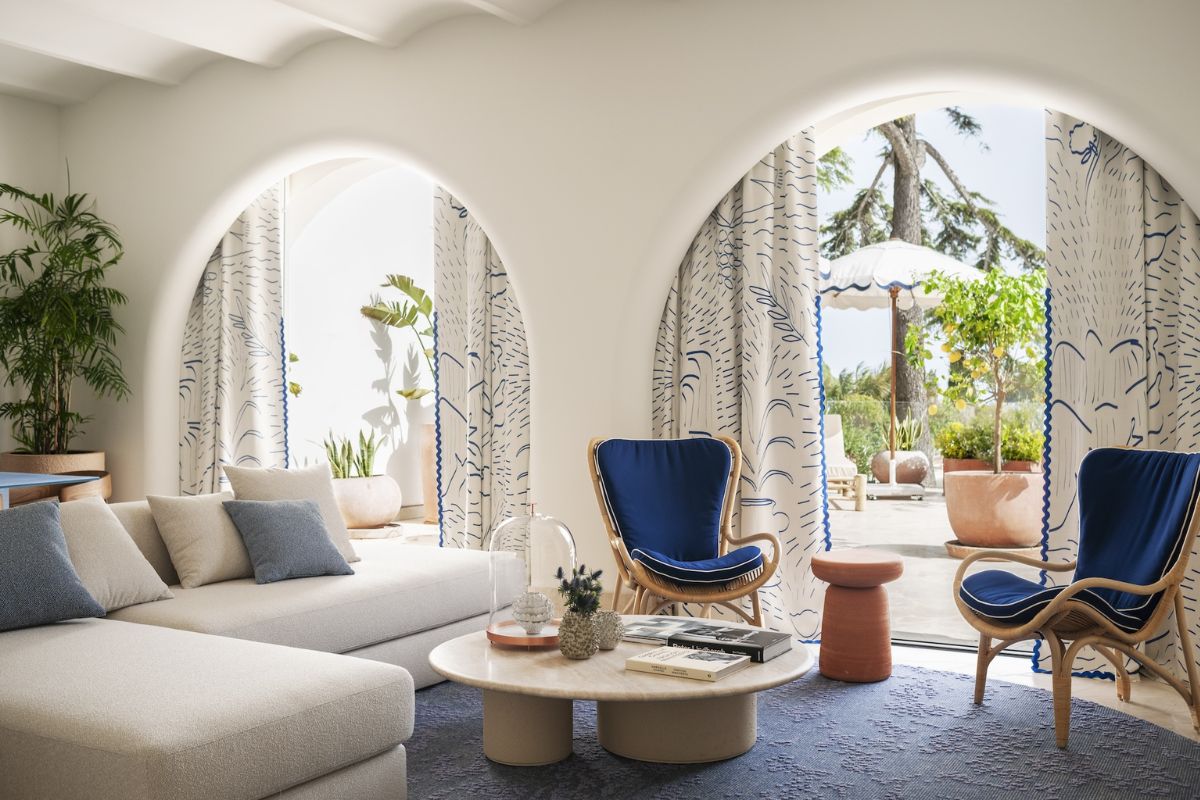
There is a new way of talking about Mediterranean style : less postcard, more architecture.
The limestone white, the porous stone, the filtered sunlight and the sand tones return as protagonists, but with a contemporary sensitivity that combines craftsmanship and technology, tradition and measure.
The contemporary Mediterranean is not nostalgia: it is a design language that tells the relationship between nature, time and comfort .
The surfaces breathe, the materials interact with the light, the spaces open up in continuity between inside and outside.
It is a vision of living that enhances the slow rhythm, the silence, the tactile essentiality of living material.
Projects and companies such as Patricia Urquiola for Mutina , Salvatori , Paola Lenti , Ethimo or Antonio Lupi reinterpret this aesthetic with coherence and refinement: lime walls, polished stone, neutral ceramics and colors that come from the earth.
The result is a warm and luminous minimalism , in which comfort is a question of visual temperature rather than form.
For architects, this style represents a synthesis of roots and future : the Mediterranean not as a geographical place, but as a metaphor of balance.
A way of designing that moves between light and shadow, between matter and void, where the essence is never cold but inhabited by heat .
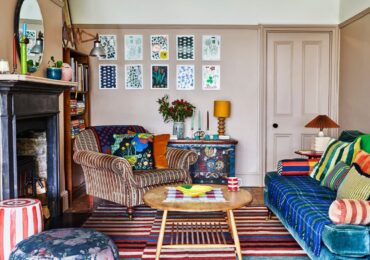
5. Cultured eclecticism: freedom as a design method
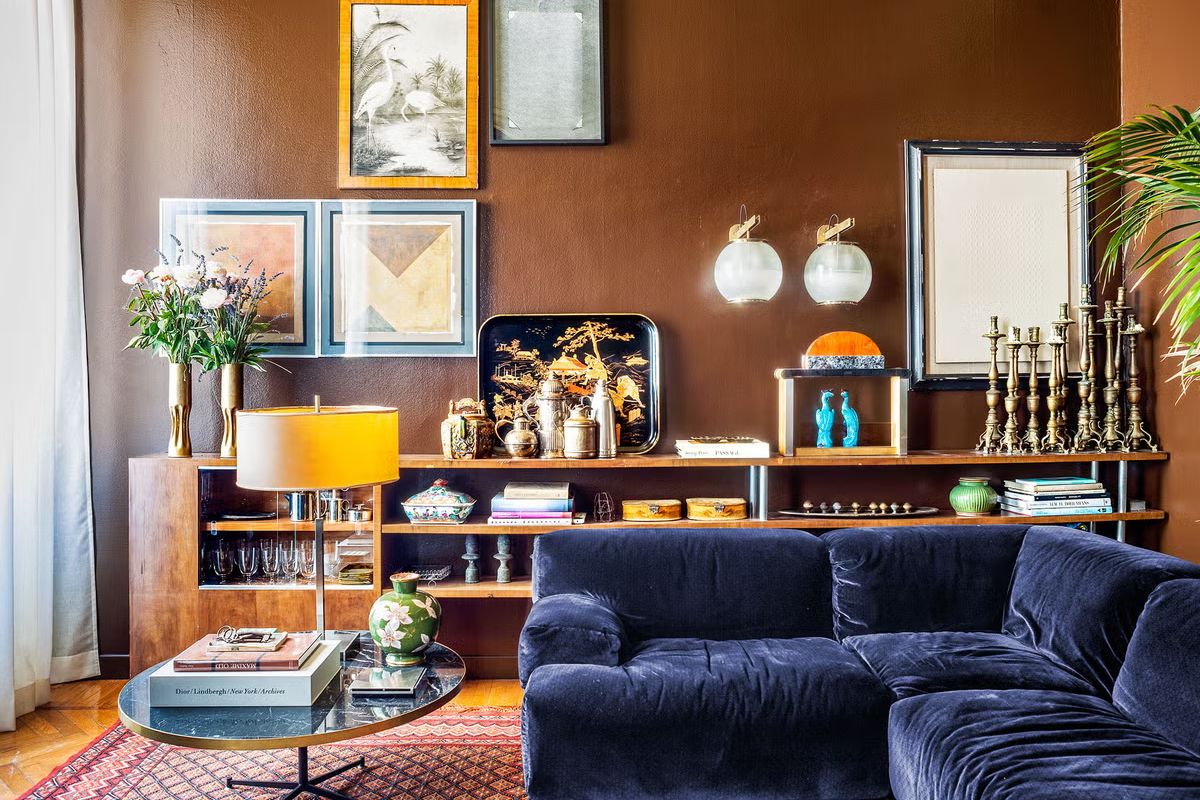
After years of uniformity and predictable palettes, the return of eclecticism marks a stance: freedom has once again become a design value.
But it is not about chaos or accumulation.
Cultured eclecticism is conscious composition , an art of mixing times, cultures and materials while maintaining narrative coherence.
In the new interiors, the contaminations are no longer decorative citations, but dialogues between eras .
A 1970s table coexists with a contemporary sculptural lamp, a Persian carpet meets a sofa with architectural lines.
It is the construction of a visual story that talks about identity, not style.
Designers such as Studiopepe , Dimorestudio , Pierre Yovanovitch and Faye Toogood have transformed thisfreedom in method: color becomes a curatorial language, textures coexist through contrasts, objects take on symbolic value.
The most attentive companies from Baxter to Gallotti&Radice , from Cassina to Gubi interpret this direction through collections in which the single piece becomes an actor and not a simple complement.
cultured eclecticism is the response to the saturation of “instagrammable” design.
It is not measured in chromatic harmony, but in cultural depth: it is the taste of those who know history, but are not afraid of rewriting it.
A way of living that resembles a visual library, where every element is chosen, thought about and experienced.
6. Sensory living: the rediscovery of the body in space
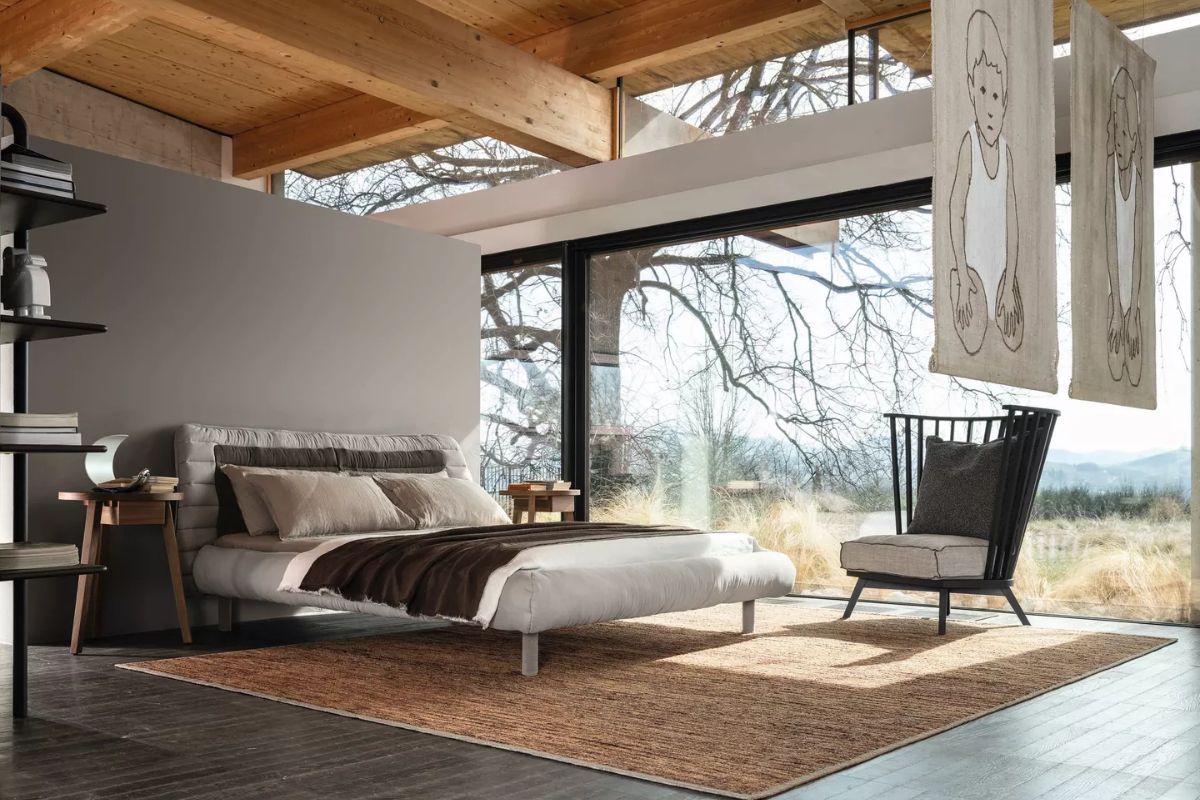
In the most advanced interiors, design is no longer limited to showing , but to making people feel .
sensorial living arises from the awareness that beauty is not only visual, but tactile, acoustic, olfactory and luminous .
In an era of digital hyperconnection, the home becomes the place in which to reconnect with the body – through surfaces, scents, sounds and temperatures that restore perceptive balance.
The palettes become soft, the materials more welcoming: bouclé wool, velvet, natural wood, matt stoneware, polished stone.
The lights modulate in intensity and temperature, creating variable atmospheres like states of mind.
Color does not dominate, but accompanies, choosing dusty and material tones – ochre, terracotta, sand, sugar paper – which calm the mind and stimulate concentration.
Brands such as Gervasoni, Lema, Poliform, Giorgetti and Boffi | DePadova are carrying forward this philosophy with constant research into materials and perceptive comfort.
No longer rigid rooms, but fluid and multisensory spaces , where matter becomes an interface between body and architecture.
For designers, sensorial living is a precious field of experimentation: touch as a new quality parameter, sound as a design component, light as a living material.
A return to the human essence of design: living is not possessing, but perceiving .
7. Domestic brutalism: material and poetic strength of imperfection
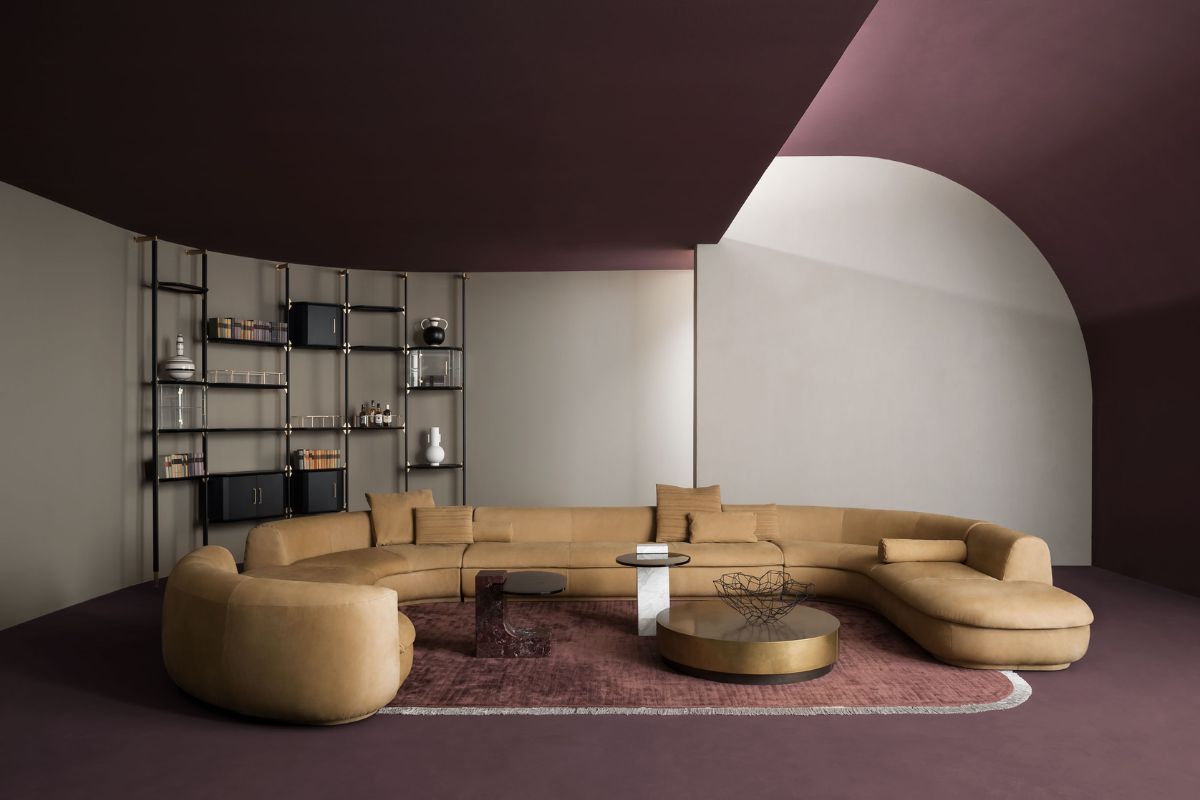
For decades brutalism has been synonymous with angularity and harshness.
Today, in its most intimate version, it instead becomes a language of truth and material honesty .
Domestic brutalism rejects fiction and celebrates bare material: concrete, iron, rough stone, structural glass, darkened wood.
There is no desire to amaze, but to reveal – show how a material is made, what a surface hides, how beautiful the unfinished can be.
In contemporary interiors, brutalism is never aggressive: it is calibrated, sensual, measured.
The architectural proportions become part of the furnishings, the light sculpts the volumes as in an atelier, and the rough textures interact with soft inserts and natural fabrics.
It is the dialectic between strength and comfort that defines this language: a constructive tension that gives the environments a sculptural and tactile presence .
Brands such as Baxter, Salvatori, De Castelli, Zanotta and MDF Italia today interpret this aesthetic with extraordinary sensitivity: hand-made metalwork, brushed stones, oxidized or cement finishes that transform the material into a story.
The result is a powerful minimalism, which does not fear irregularity and accepts time as part of the project.
Domestic brutalism is a form of design sincerity.
He talks about surfaces that do not want to be perfect, but authentic; of houses that don’t try to look new, but alive .
It is the elegance of those who know that true beauty lies in the resistance of the material .
8. Tactile design: the new sensuality of the surface
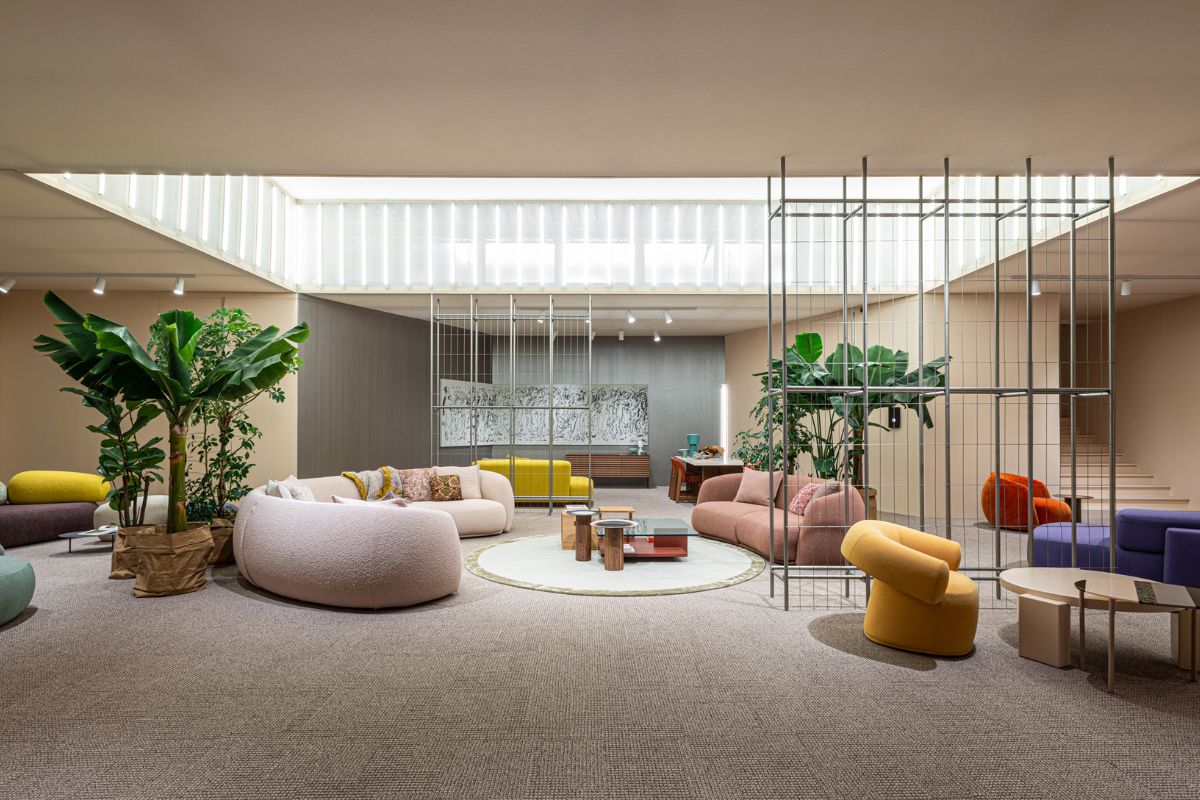
In an era in which sight dominates every experience, design returns to talk about touch .
tactile design is a subtle, yet profound, reaction to digital aesthetics and visual saturation.
Here, the project does not aim at immediate surprise, but at perceptive duration : the ability of a material to invite contact, to generate a physical relationship between object and person.
Brushed surfaces, oiled woods, bouclé wools, waxed leathers, stone-effect stoneware, natural veneers: every detail becomes a sensorial gesture.
Furniture is no longer just form, but an epidermal experience.
Finishes do not decorate they communicate : temperature, consistency, resistance, comfort.
Brands such as Gervasoni, Porada, Moroso, Poltrona Frau and Lema are leading this transformation with sophisticated research into textures and materials.
The objective is not to amaze, but to bring closer: to create furnishings that can be touched, that tell about their material before even being seen.
For designers, tactile design represents a terrain of emotional and sensorial design.
Every surface becomes a story: the porosity of wood, the silk of marble, the texture of wool, the roughness of concrete.
It is a new form of luxury: the one you feel, not the one you show .
9. Discreet digital: invisible technology and intelligent comfort
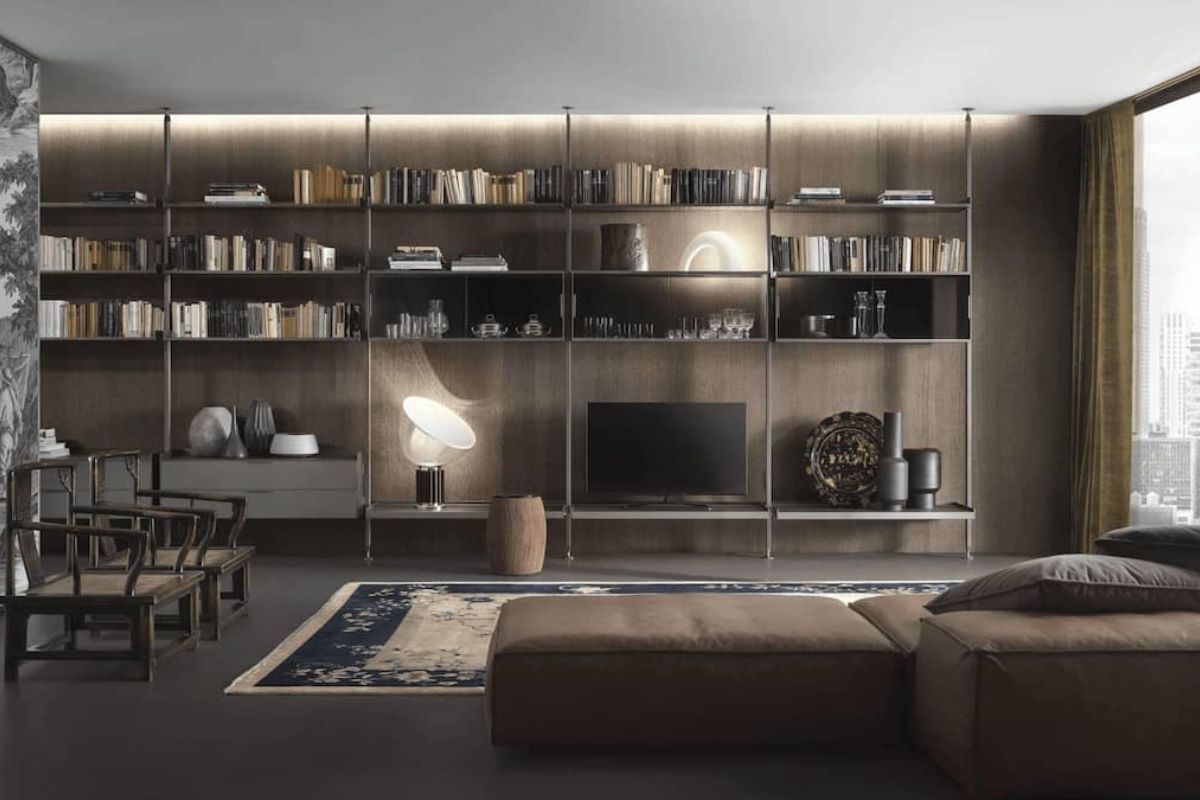
The real technological revolution is not the one that shows itself, but the one that disappears .
In contemporary interiors, home automation is no longer a hi-tech accessory, but an integrated and invisible component.
The discrete digital represents the natural evolution of intelligent design: spaces that adapt, lights that interact with natural light, furnishings that hide complexity behind simplicity.
Technology no longer comes in to amaze, but to simplify .
The house programs itself, reacts to presence, regulates the atmosphere.
The challenge for designers is to bring together innovation and warmth, algorithms and intimacy.
In thisThe direction is taken by brands such as Rimadesio, Lago, Artemide, Flos, Vimar and BTicino , who have made visual lightness and integration their hallmark.
intelligent comfort is not synonymous with technological coldness: it is a new form of empathy between inhabitant and space.
Tactile surfaces interact with sensory systems, lighting becomes circadian, materials incorporate function tables with wireless charging, sound-absorbing walls, interactive glass.
The discrete digital inaugurates a new aesthetic: that of the unspoken .
A design capable of hiding complexity under the grace of simplicity, where technology is no longer an end but a means to restore perceptive freedom .
10. Conscious design: ethics, sustainability and responsible beauty
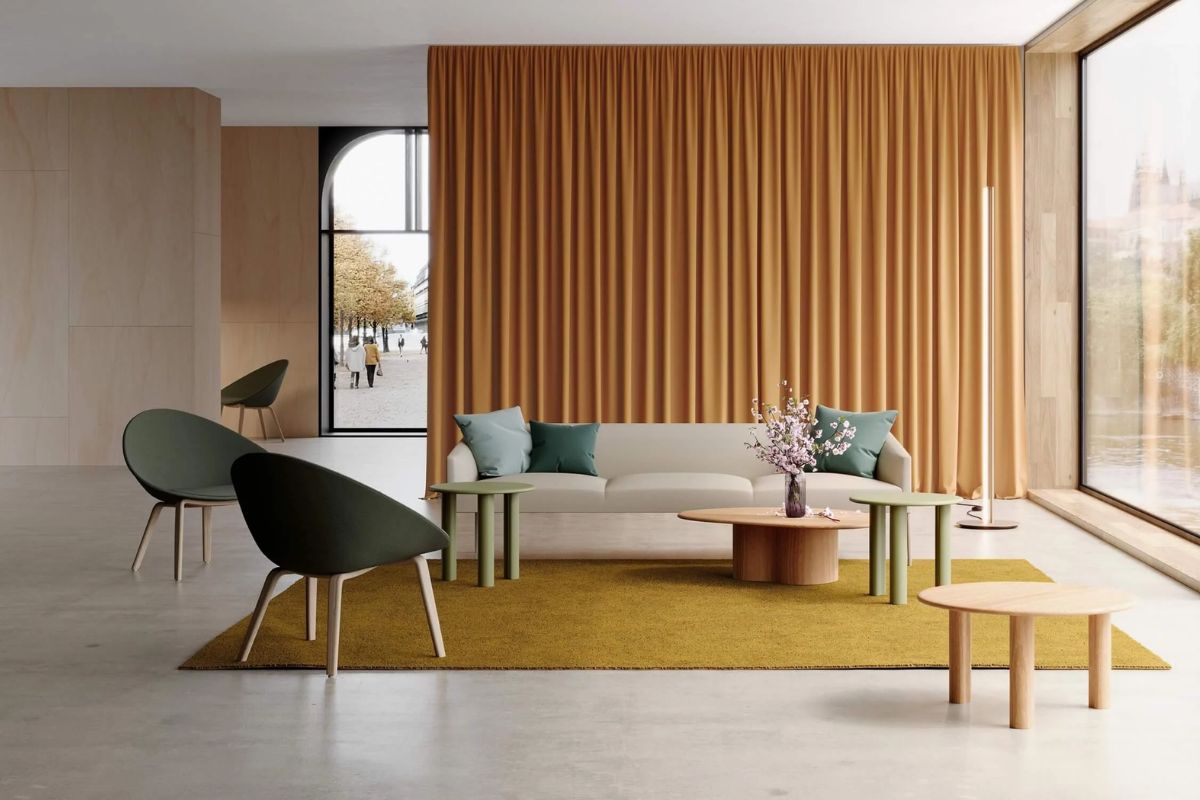
Among the most used and abused words in contemporary design, “sustainability” is the one that risks losing meaning most of all.
But in the language of conscious design it returns to being concrete, measurable, planning.
It does not only indicate recycled materials or virtuous processes, but an ethical vision of living: thinking of beauty as a responsibility, not as a privilege.
conscious design is one that evaluates the impact of every gesture – from the withdrawal of resources to the duration of the object – and builds value over time.
It does not limit itself to reducing waste, but redefines the concept of quality: a product is “luxury” when it lasts, is repaired, and is handed down.
Companies such as Pedrali, Ethimo, MDF Italia, Riva 1920 and Arper are demonstrating how sustainability can coexist with aesthetic excellence: use of FSC wood, regenerated materials, low impact processes, circular economy logic.
But above all, transparency in communication and traceability of supply chains: ethics as an integral part of the visual language.
For designers, conscious design is a new form of culture.
It is not just about “doing less”, but about thinking better : redesigning the relationship between matter, environment and time.
A project is no longer only beautiful when it is innovative, but when it manages to generate a lasting balance between people and their surroundings.
The future of interior design passes from here: not from the aesthetics of the object, but from the poetics of responsibility .
Beyond styles, towards a new humanism of design
Looking at the ten languages of contemporary living, a simple but powerful truth emerges:
design no longer follows trends, interprets them .
Every style – from the cultured natural to the neo-decorative, from domestic brutalism to conscious design – is not a fashion, but a way of reading society, of responding to its most intimate and real needs.
The home has once again become the symbolic center of life, the place where technology and memory, matter and sensation, ethics and pleasure intertwine.
Interior design is no longer an exercise in form, but a form of thought: an act cultural, empathic, evolutionary .
In this scenario, companies and designers share the same responsibility:
to create spaces that not only represent, but reassure , which not only show beauty, but build meaning .
Because the new aesthetics of living is no longer a question of style
it is a question of awareness .
Leave a comment