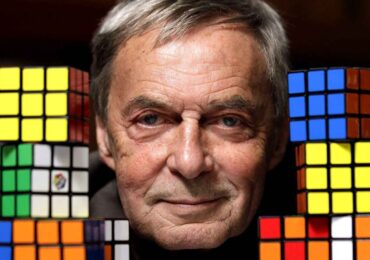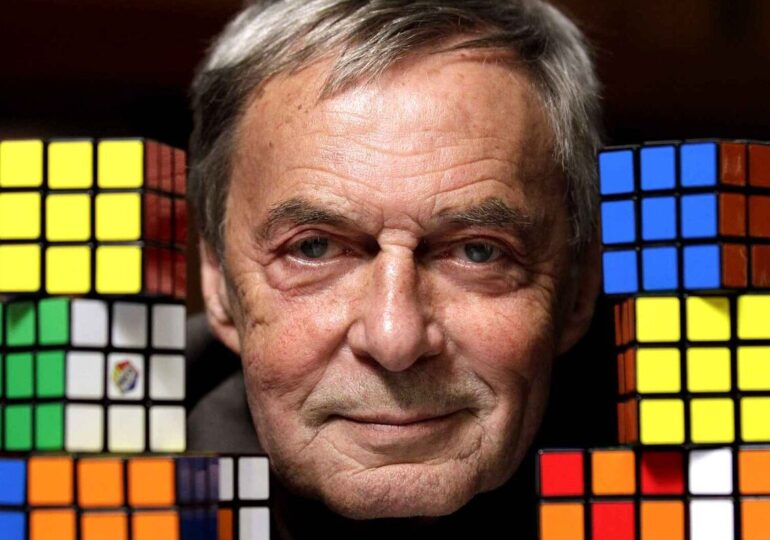
Who really is Ern? Rubik and how did a Hungarian designer-architect manage to create the most famous puzzle in the world? Often remembered only as “the inventor of the magic cube”, Rubik is a multifaceted figure: architect, sculptor, teacher and promoter of scientific culture. Behind the famous puzzle lies a thinker who was able to combine art, mathematics and design, translating the complexity of three-dimensional space into a playful, accessible and universal object.
In this article we tell the story of a designer who transformed a geometry exercise into a cultural icon, capable of spanning generations and continents.
Architect, sculptor and pioneer of playful design
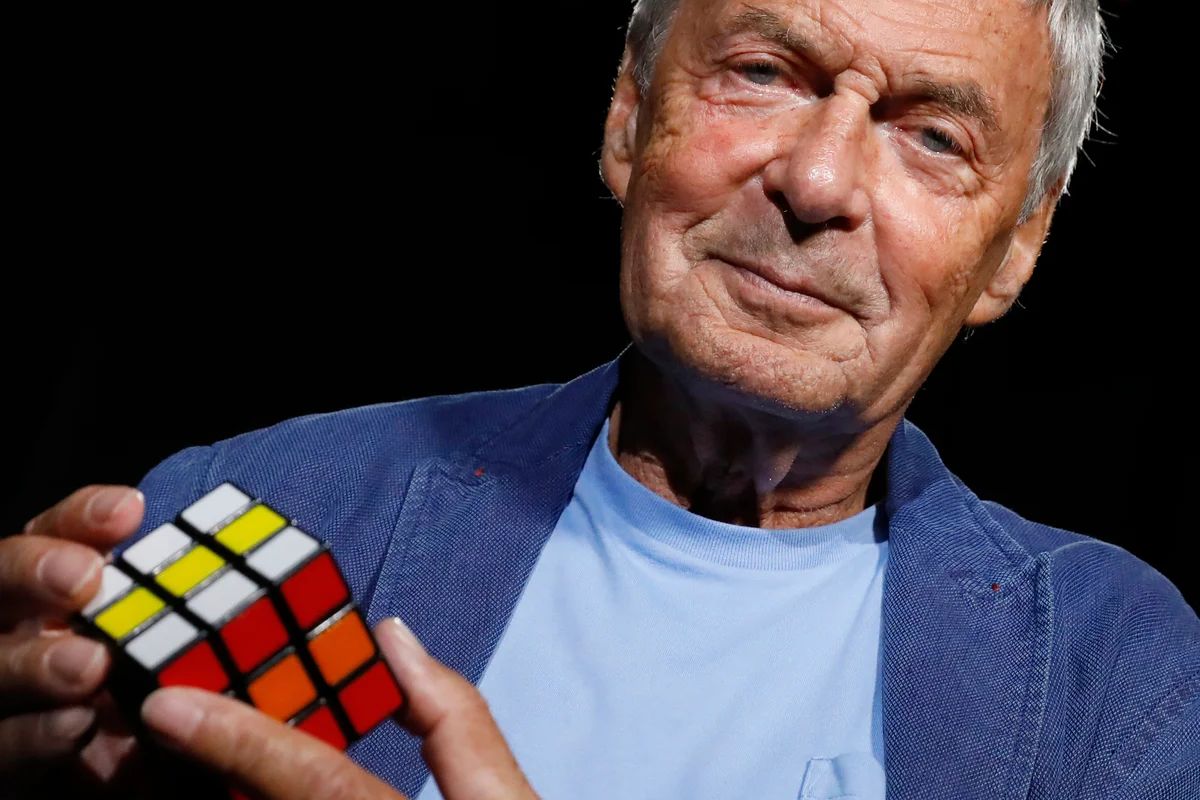
Ern? Rubik was born in Budapest in 1944, into a family context that combines technical ingenuity and artistic sensitivity: his father is an aeronautical engineer, his mother a poet. From a young age he showed an interest in the form, structure and logic of movement.
He studied sculpture at the School of Applied Arts and subsequently architecture at the Budapest Polytechnic. This dual training – between creativity and technical rigor – becomes the basis of his design language. After graduating, he teaches interior design and theory of form, inviting students to think with their hands , to model space to truly understand it.
The intuition that will lead him to invent the magic cube was born in the classroom, while he was looking for a way to explain the principles of three-dimensional rotation .
The birth of the Rubik’s cube or magic cube: from a teaching tool to a global phenomenon
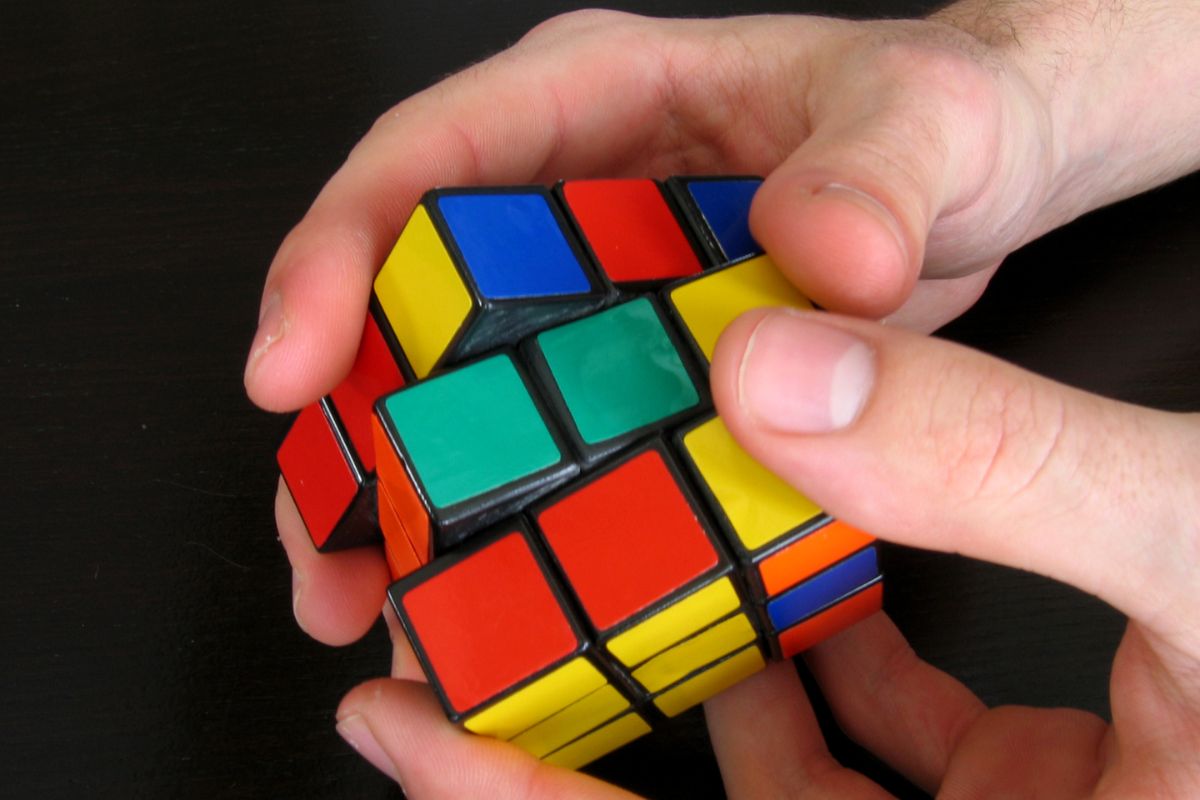
In 1974, Rubik built the first prototype of his puzzle: a small cube of wood and plastic, whose elements could move independently without detaching from the central body. He calls it B?vös Kocka , or magic cube.
The initial goal was not to create a game, but a teaching model to show his students the complexity of spatial transformations. However, when he tried to rearrange the colors after the first few rotations, he realized that he had created a fascinating and almost endless challenge.
The cube was patented in 1975 and, after a few years of local production, it was presented at the Nuremberg Toy Fair in 1979. The following year, under the name Rubik’s Cube , international distribution began. In a short time it became a planetary phenomenon, a symbol of ingenuity, patience and logic.
In the 1980s the cube was everywhere: in shops, living rooms, university classrooms. Millions of people faced it as a personal challenge, while official “speedcubing” competitions were born.
A simple object with a complex mind
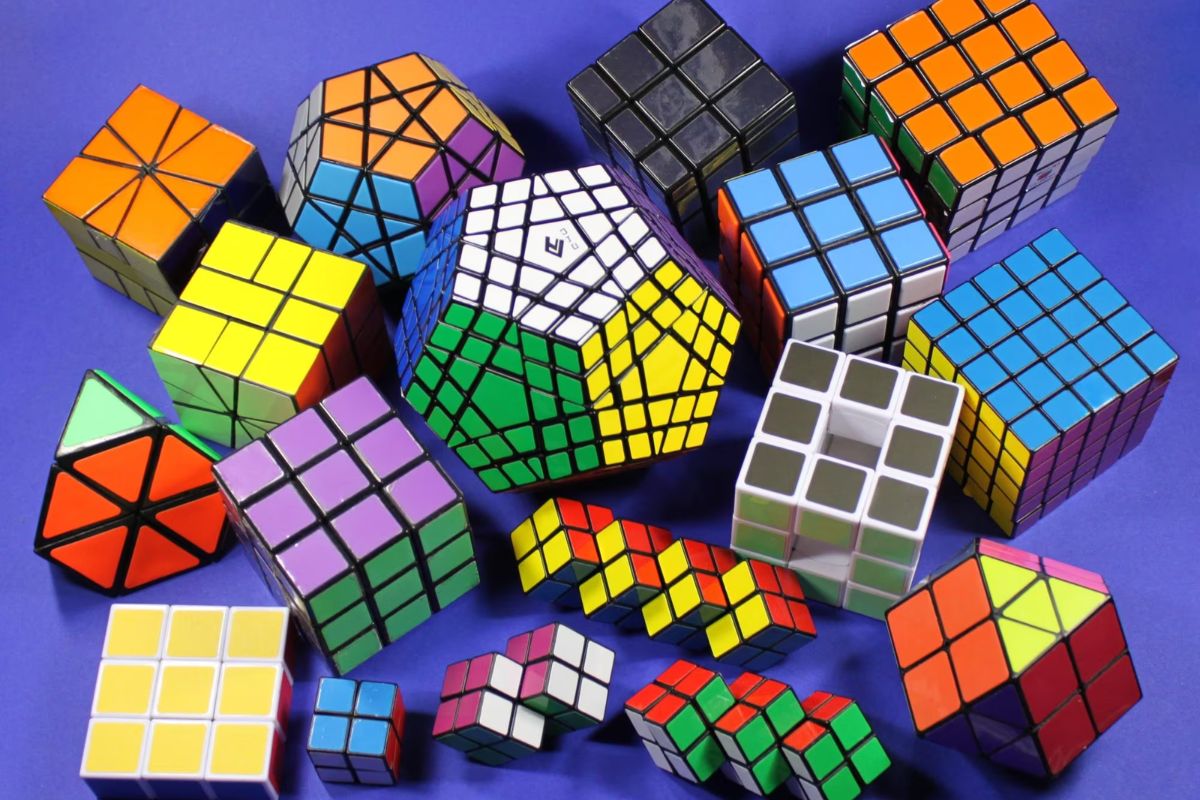
What makes the Rubik’s Cube a masterpiece of design is its apparent simplicity . Six faces, six colors, one perfect shape. But behind this simplicity lies an ingenious structure: 26 visible cubes, an invisible nucleus and over 43 quintillion possible combinations .
It is an example of how an object can become a language of thought . Manipulating the cube means exploring the spacesor, understanding the logic of movements, intuiting the connections between order and chaos. It is not just a puzzle, but a cognitive experience that combines touch, sight and abstract reasoning.
His aesthetic, minimalist and universal, has influenced designers, artists and architects all over the world. For many, the Rubik’s cube is the playful equivalent of the “Thonet chair” or the “Arco lamp”: a perfect, recognizable and timeless object.
Other inventions and the creative laboratory
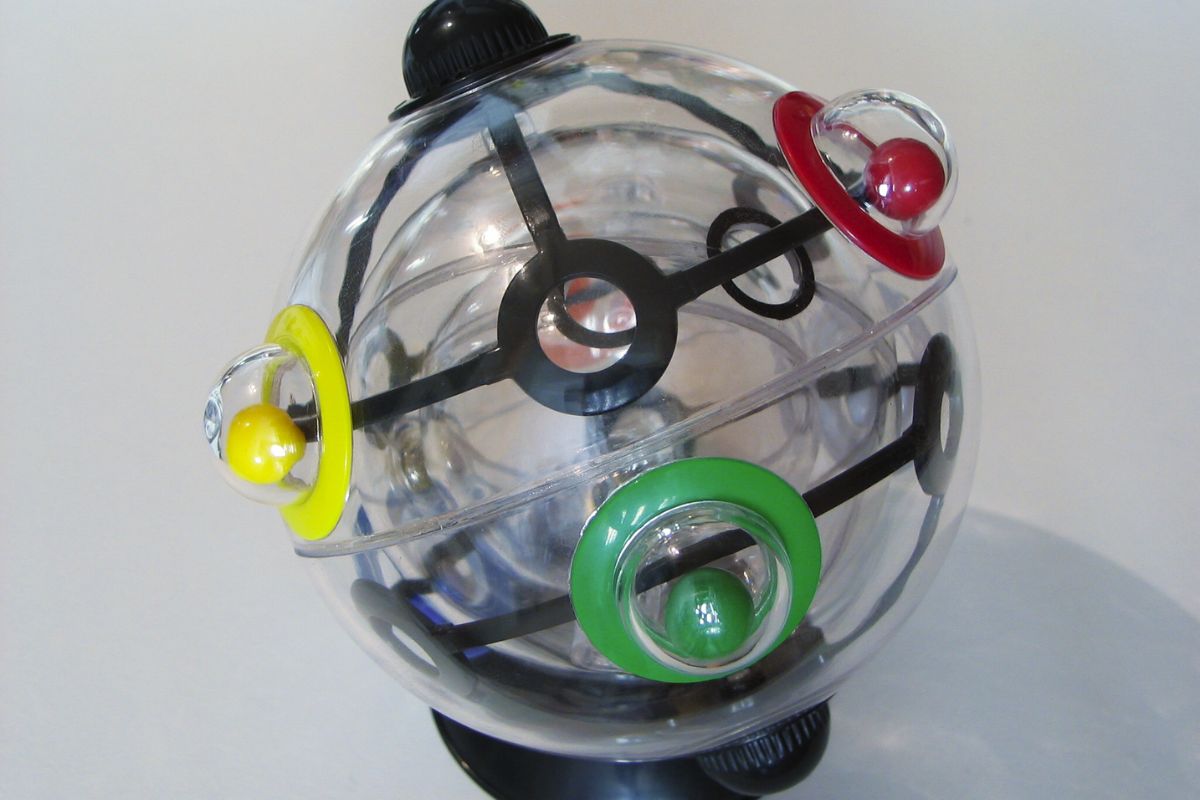
After the success of the cube, Rubik founded his own research laboratory, the Rubik Studio , where he designed new objects linked to movement and logic: the Rubik’s Snake , the Rubik’s Magic and the more recent Rubik 360 .
These creations, while not reaching the fame of the cube, share the same philosophy: to explore complexity through form . Each project is born from the idea that gaming can be an educational tool, a means to understand the physical and mental world around us.
At the same time, Rubik dedicates himself to teaching and dissemination. It promotes cultural and scientific initiatives that combine art, mathematics and engineering, with the aim of stimulating curiosity and creativity in young people .
The designer’s approach: thinking in three dimensions
Rubik never defined himself as an inventor, but as an architect who studies the logic of space . Each of his works is a three-dimensional translation of thought: a dynamic sculpture in which each part dialogues with the other.
His approach is profoundly interdisciplinary. It is inspired by Renaissance art, sacred geometry, but also by the avant-gardes of the 20th century. For him, form is never an end in itself: it is a language, a tangible representation of the complexity of the human mind.
The magic cube, from this point of view, is a miniature mental building , a manipulable architecture that teaches us to think in a systemic, intuitive and visual way.
The cultural phenomenon and its impact on the world of design
From the 1980s to today, the Rubik’s Cube has become much more than a game: it is a universal cultural symbol . It has entered modern art museums, advertisements, films and fashion. Its modular structure has inspired design works, parametric architecture and artistic installations.
The cube represents the perfect union between design, logic and pop culture . It is a democratic object: simple to own, but almost impossible to dominate. Its timeless charm lies precisely in this contradiction.
Its success has spanned generations: from children who solve it today with digital algorithms to adults who remember it as a symbol of their childhood. Today the cube is also a teaching tool used for the development of logical thinking, spatial orientation and concentration.
What Ern? Rubik teaches us about design
Today Ern? Rubik is recognized as one of the greatest innovators of the twentieth century. His contribution goes beyond the toy: he demonstrated that design can be a bridge between art, science and play .
In his book Cubed: The Puzzle of Us All , Rubik recounts his personal journey and reflects on how curiosity and imagination are the true forces that drive human progress.
His vision remains current: in a world dominated by technology, the magic cube continues to remind us of the importance of manual skill, patience and creative thinking . It is an object that defies time, a metaphor for the complexity of life and the beauty of discovery.
The inventor of the Rubik’s cube
Ern? Rubik is not just the creator of a puzzle: he is a designer of ideas . His cube, with its deceptive simplicity and structural depth, has become a symbol of intelligence, perseverance and freedom of thought.
Fifty years after its invention, the magic cube continues to revolve in the hands of millions of people around the world – designers, students, artists – who, by moving its colours, repeat the same gesture that Rubik made in his laboratory in Budapest: uniting logic and beauty in a single movement.
Leave a comment