The moka is a stovetop coffee maker that prepares coffee by letting hot water rise, pushed by steam pressure, through a ground coffee filter. The model that has defined the collective imagination is the Moka Express , invented in 1933 by Alfonso Bialetti : an octagonal shape, in aluminium, designed to bring the ritual of …
The moka is a stovetop coffee maker that prepares coffee by letting hot water rise, pushed by steam pressure, through a ground coffee filter. The model that has defined the collective imagination is the Moka Express , invented in 1933 by Alfonso Bialetti : an octagonal shape, in aluminium, designed to bring the ritual of “home” coffee into a simple, repeatable, industrial machine.
Since then the history of the moka has transformed into a central chapter of Made in Italy product design : the Moka Express is recognized as an icon, also present in international museum collections (including MoMA) and celebrated as a symbolic object of everyday Italianness.
The numbers explain the cultural significance better than any adjective: several authoritative reconstructions speak of over 300 million moka pots sold worldwide, while for decades the object was an almost “standard” presence in Italian kitchens.
Today we retrace the history of the moka from its birth in 1933 to its consecration as an archetype of domestic design, and we closely observe the reasons for its success: proportions and ergonomics, productive intelligence, visual identity (right down to the Little Man with the Mustache), and that very rare ability to become a habit even before an object.
1933: Moka Express is born. An industrial project to change the idea of coffee “at home”
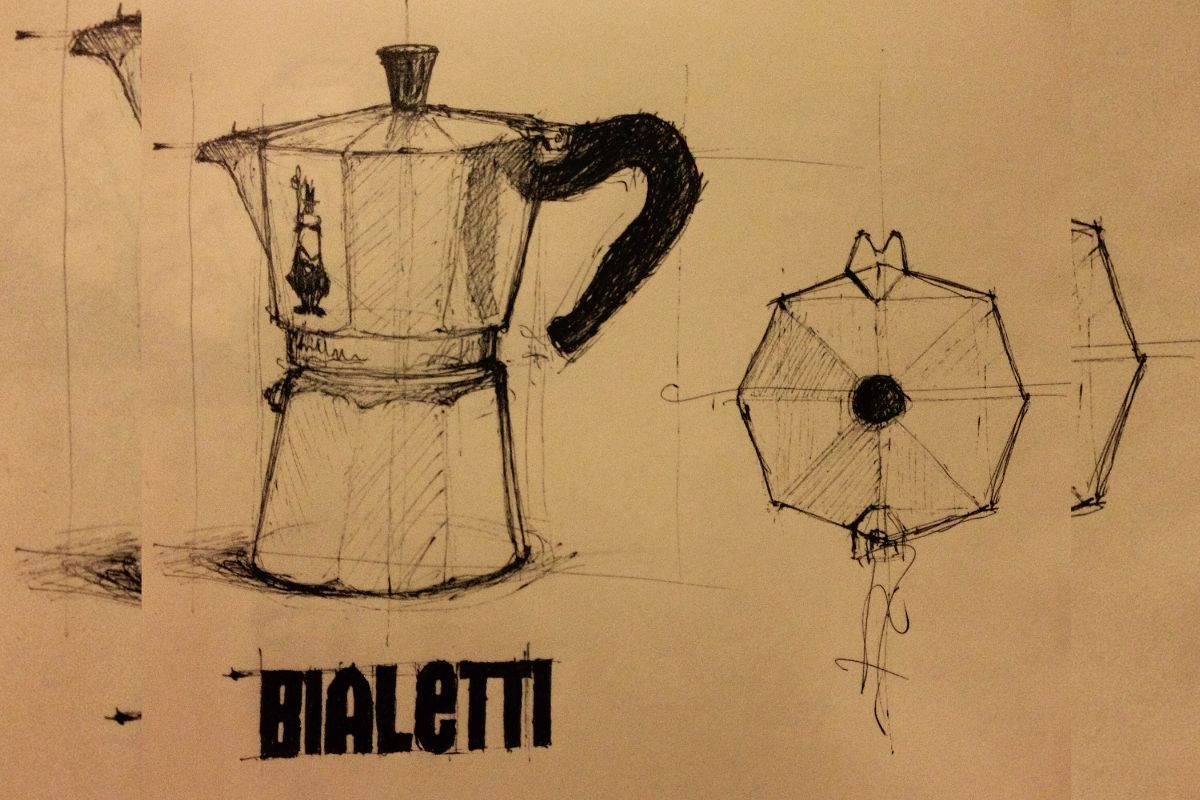
1933 is the date that marks the entry of the moka into domestic modernity: according to the official history of the brand, Alfonso Bialetti gave life to the Moka Express with the aim of revolutionizing the way of preparing coffee at home, creating an object destined to enter the daily routine of generations.
Even the name carries with it a cultural geography: Moka derives from Mokha (Yemen) , a historic area linked to the production of coffee and its commercial imagery. It is a choice of positioning even before a linguistic one: a bridge between cuisine and the world, between a private gesture and the myth of coffee.
Domus, in retracing the Moka Express case, underlines a key point: the object brings “espresso style coffee” into homes and becomes one of the symbols of Italian design, also thanks to a communication strategy intended to set a precedent.
The moka as micro-architecture: shape, functional section, interface
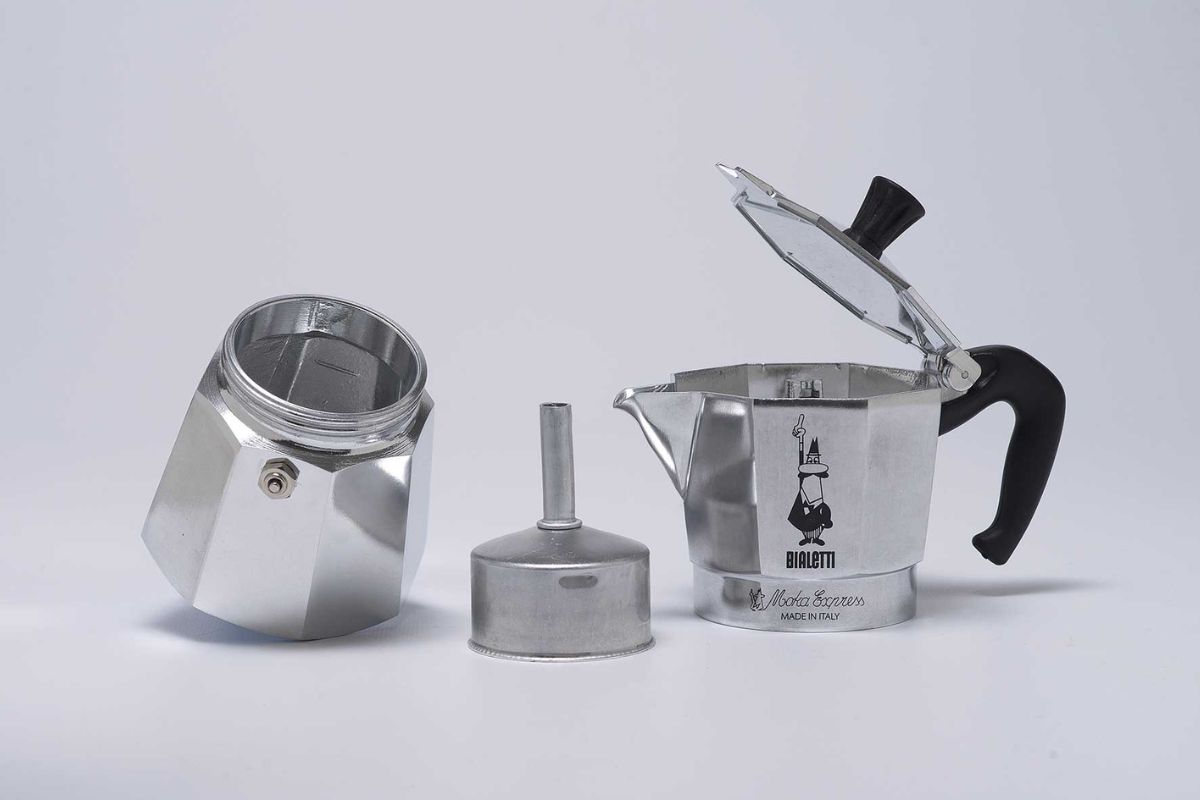
Looked at with the eye of the project, the moka is a small flow architecture: base (water), pressure chamber, filter, collection. Its value lies in readability : functioning becomes form, and form becomes instructions for use.
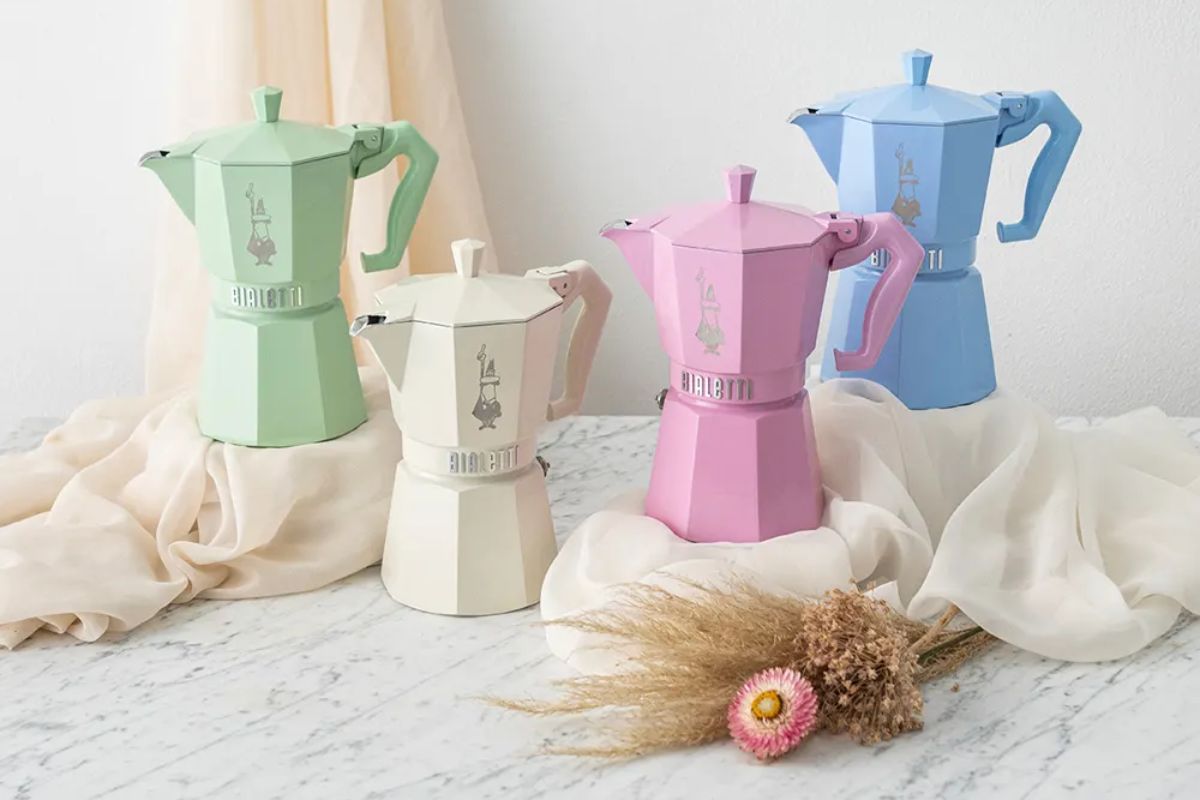
The octagonal profile is one of the most cited details because it is also one of the most intelligent: it facilitates the grip, fragments the light, makes the object recognizable from afar, stabilizes it visually on the kitchen worktop. The Moka Express, in Bialetti’s narration, is even read as an example of Art Déco aesthetics, precisely because of that way of transforming function and geometry into a sign.
On the technical front, the MoMA sheet clearly describes the principle: boiling water creates steam and pressure, the pressure pushes the water through the coffee and brings it to the top. ANDa “mechanism” that can be understood even without being engineers: and this is where design becomes a common language.
Renato Bialetti, the Little Man with the Mustache and Carosello: when design becomes pop culture
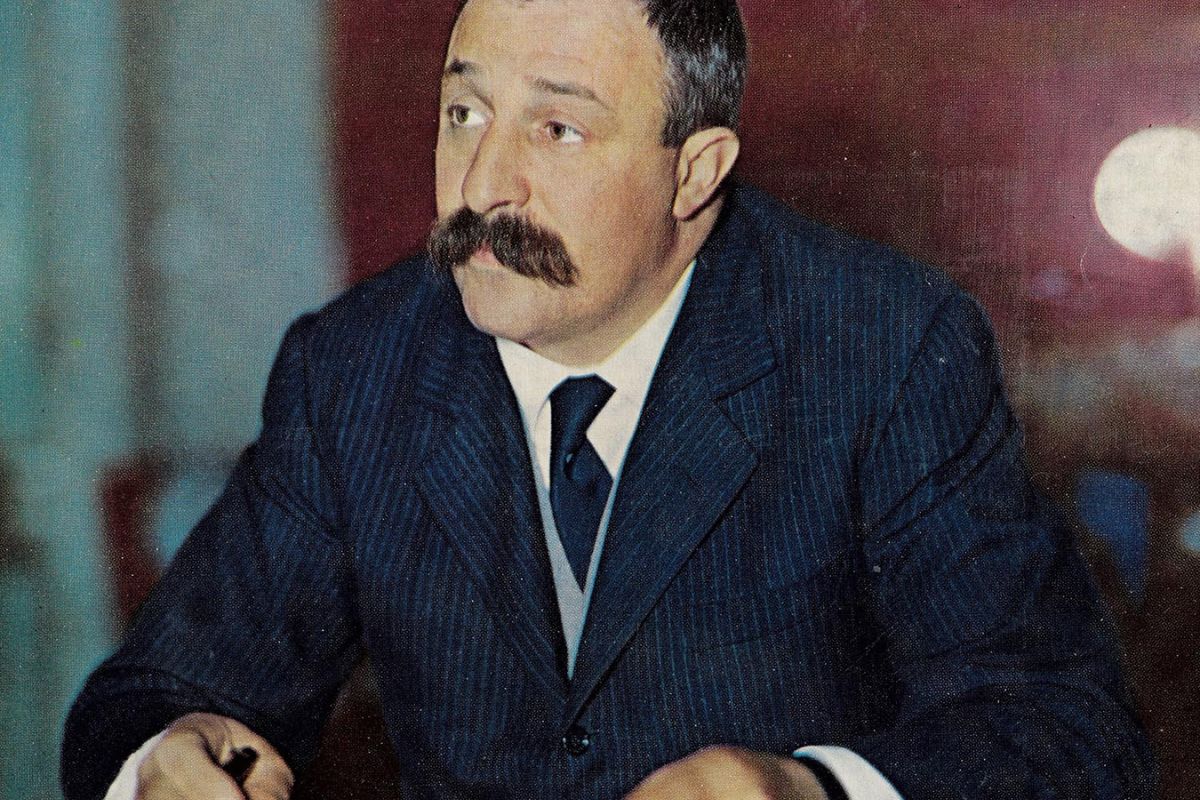
If the birth of the mocha is an act of design, its explosion is also an act of communication . A decisive passage appears in the official Bialetti history: the ambition of his son Renato Bialetti contributed to transforming the company into a major Italian manufacturer, bringing the moka from the domestic scale to that of a national phenomenon.
Then comes the image that closes the circle between object and memory: the Little Man with a Mustache , designed by Paul Campani . Here it is worth being precise about the dates: some sources (including reconstructions linked to the brand archive) link the adoption of the symbol to 1953 , also as a response to counterfeits; television communication and mass popularity were consolidated with Carosello starting from 1958 .

In terms of product design, the point is simple: the moka becomes an object “with a signature”, recognizable as a system (shape + brand + story). It is a school case of brand identity applied to an industrial product, in an era in which Italy builds its global reputation also through objects.
Mind-boggling numbers and museum legitimacy: why the mocha is Made in Italy around the world
The success of the mocha is measurable, even before it can be told. Domus speaks of hundreds of millions of specimens sold, and the figure returns in many reconstructions (with estimates exceeding 300 million).
Added to this diffusion is cultural legitimation: the Moka Express is cited as present in the permanent collection of the Triennale di Milano and of the MoMA in New York in the official Bialetti communication; MoMA, for its part, has a card in its collection that attributes the design to 1933 .
For an audience of companies and designers this step is crucial: the moka shows how a domestic object can cross markets without losing identity, becoming an “ambassador” of Made in Italy precisely because it remains consistent over time.
What is the success of the moka pot: 7 project and industry levers
-
Clear function : an elementary physical principle translated into a daily gesture, legible even at a glance.
-
Recognizable shape : the octagon as a geometric signature, stable over time.
-
Effective industrialization : an object designed for mass production, with a replicable and scalable structure (the point that makes the global numbers plausible).
-
Memorable communication : Little Man + Carousel as an accelerator of pop culture and trust.
-
Ergonomics and safety : identifying elements such as the safety valve and the ergonomic handle appear in the Bialetti product sheet, which update the technical story without changing the formal DNA.
-
Adaptability : the moka crosses different cuisines and different technologies; for example, compatibility with induction hobs occurs via a dedicated adapter, a sign of an archetype that continues to coexist with the evolution of the home.
-
Ritual : coffee time becomes a domestic micro-ritual. It is a cultural value which, in design, corresponds to retention: the object remains because the gesture remains.
The moka pot in kitchen design today: how to use it as a sign (and not as nostalgia)
In contemporary interiors, the moka functions as a “bridge object” between material culture and the composition of space. In an essential kitchen it becomes an accent; in a stratified kitchen it becomes an element of coherence. Its presence speaks of rituality, and rituality is one of the most underestimated variables when designing houses: because it is there that perceived quality is measured.
For hospitality, the mocha is also a positioning detail: it communicates Italianness in an immediate and credible way, precisely because it is a real icon and not a souvenir. Its history, also recognized in museum contexts, makes it an object that holds the scene without the need for captions.
Curiosities about the history of the mocha
Who invented the mocha?
The Moka Express was born in 1933 from an idea by Alfonso Bialetti , with the aim of bringing the ritual of “home” coffee into a simple, recognizable and repeatable industrial object.
Why is it called moka?
According to the official reconstruction of the brand, the name recalls Mokha (Yemen) , an area historically linked to the coffee trade: a geographical reference which, from the beginning, positions the object within an international imagination.
How many mokas have been sold in the world?
The most cited estimates speak of over 300 million units sold globally: a figure which, even more than celebrity, speaks to the solidity of a project capable of remaining stable over time and desirable in very different markets.
When was the Little Man with the Mustache born?
Here the dates vary depending on the sources: some reconstructions link the introduction of the symbol to 1953 , while the official Bialetti timeline places the great communicative push and mass popularity with Carosello starting from 1958 . In any case, the Omino (by Paul Campani ) is one of the rare Italian examples in which visual identity and product become a single system.
Is it true that the mocha is at MoMA?
Yes: the Moka Express is present in the Architecture and Design collection of the Museum of Modern Art (MoMA) , which credits it as a design from 1933.
Today: Was Bialetti “sold to the Chinese”? What really happened (and what it means for mocha)
Yes, control of Bialetti passed in 2025 to NUO Capital , a Hong Kong-linked investor (Pao Cheng/Stephen Cheng family). The operation involved the purchase of approximately 78.6% of thecompany and, subsequently, a takeover bid to achieve almost total control and remove Bialetti from the stock exchange .
However, it is worth being precise here, because saying “sold to the Chinese” is a shortcut: NUO Capital is an international reality (with a structure in Luxembourg) and was also born as a partnership with Exor (therefore with an Italian component in the investment vehicle).
The point “today” is this: after the takeover bid, Octagon BidCo (vehicle of NUO) rose to 96.431% and from 7 August 2025 the Bialetti Industrie shares were delisted (delisting). In practice: is no longer a listed company , but a private company controlled by the new shareholder