From the experience of Erresei, active since 1996 in the lighting sector, Accento was born—a Made in Italy brand that combines technological research and contemporary design. Light here is not just performance: it is atmosphere, perception, chromatic quality. At the center is visual comfort, together with intensity control designed to enhance residential spaces and contract …
From the experience of Erresei, active since 1996 in the lighting sector, Accento was born—a Made in Italy brand that combines technological research and contemporary design. Light here is not just performance: it is atmosphere, perception, chromatic quality.
At the center is visual comfort, together with intensity control designed to enhance residential spaces and contract projects. Guiding this vision is the Hu.Li – Human Lighting philosophy, which places people and their rhythms at the heart of the project.
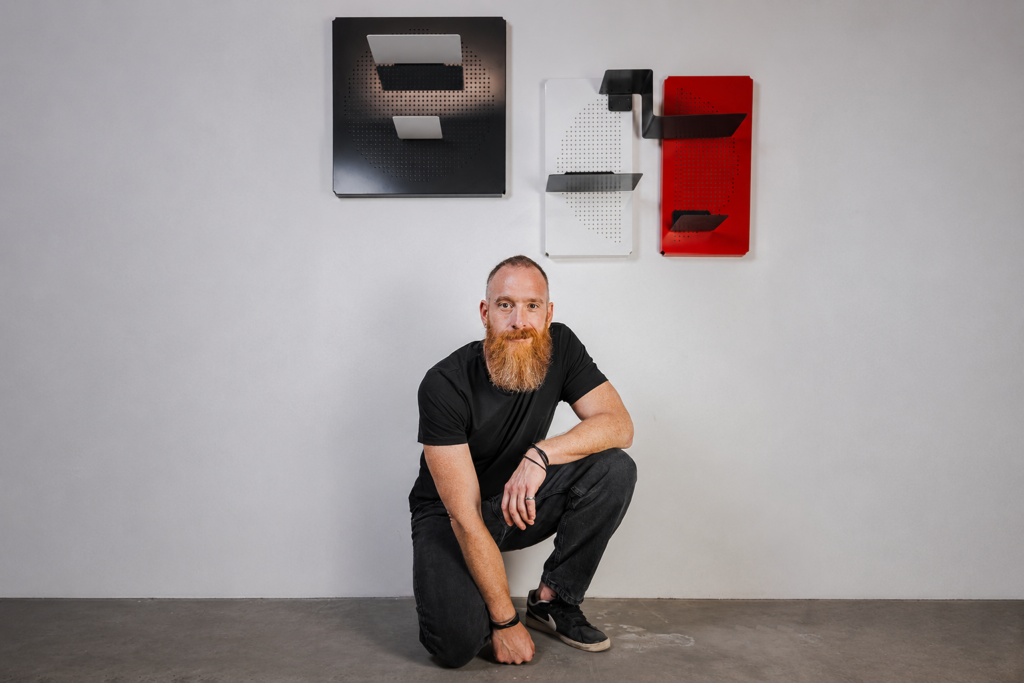
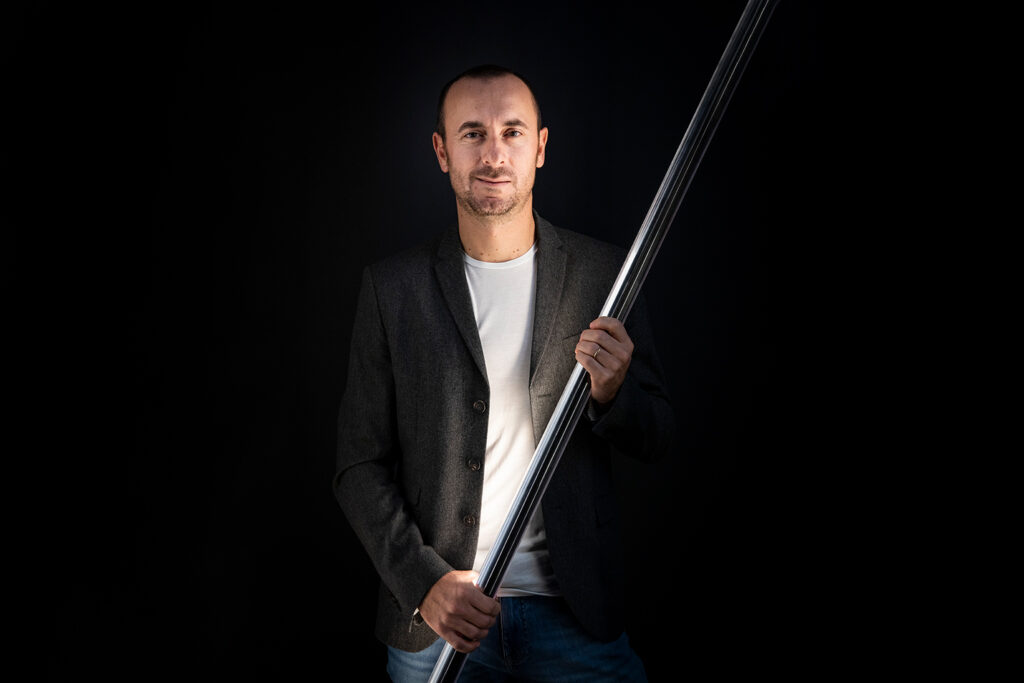
In this double interview, Gianluca Raineri, CEO of Accento, and Roberta Bonaiti, founder of Masina Studio, explain how engineering and artistic direction meet, transforming technology into light to be experienced over time.
Accento was born from the technical experience of Erresei, active since 1996 in architectural lighting.
Gianluca Raineri, which elements of the original culture—internal manufacturing, engineering precision, attention to detail—still form your foundation today?
All of those mentioned are fundamental and present in our daily work. Internal manufacturing for obsessive control in attention to detail, engineering precision in the pursuit of maximum performance, and attention to detail as a distinctive mark of Made in Italy. All of this with the goal of creating and offering the market products that are unique in technology and design.
Roberta Bonaiti, from your design perspective, what have you inherited from that spirit and how have you transformed it into aesthetic language?
When Gianluca Raineri called me to oversee the artistic direction and product design for Accento, I already knew Erresei, renowned in the lighting sector for its great technical capability and attention to detail.
Qualities so alive and rooted in the company’s DNA that it was a natural transition for Accento as well. Every new product is born first from a technical opportunity (a material, a new way of making light, etc.) around which the designer can experiment and express themselves. Accento connects technological language with symbolic language, creating objects that want to be understood, used, and loved over time.
Light has become a cultural language of living.
Gianluca Raineri, what was the moment when you realized that Accento could “shift” the perception of light in the market?
We know the lighting market thoroughly thanks to continuous dialogue with its protagonists, particularly designers and manufacturers. Combined with this, it must be said that our history in the world of LED lighting goes back a long way, with our first patent registered in 2002. For this reason, years ago we realized that attention was shifting from the quantity of light to its quality—understood as high color rendering, control, and visual comfort.
It is from this awareness that Accento was born, as a project oriented toward more conscious light, designed not only to illuminate but to improve the psychophysical well-being of those who experience it.
Roberta Bonaiti, what does it mean to design a lamp that is not just an object, but a visual and sensory narrative?
Creating a narrative for me means thinking about the experience that object will generate.
Visually, I try to create a form that has its own identity even when off and that evokes an imaginary.
On a sensory level, however, I work extensively on the experience of light. A lamp must not be static but must respond to those who use it, which is why I believe interaction is a very important factor. I like to imagine ever-changing scenarios where light can be shaped not only by design but by those who use it.
Hu.Li – Human Lighting is the heart of your philosophy.
Gianluca Raineri, what is the most complex challenge in ensuring visual comfort without technical compromises?
The most complex challenge in ensuring visual comfort without technical compromises lies in the continuous search for components, materials, and solutions, capturing the evolution that has occurred in recent years in the LED lighting sector.
As in haute cuisine, another great expression of Italian craftsmanship, what we seek is not only to choose the best “ingredients” but to assemble them with the utmost care in the aesthetic pursuit of the result.
Roberta Bonaiti, how do you translate the concept of “human” light into forms, materials, shadows, and intensity?
Translating Human Lighting into my work means putting the human being, with their rhythms and vulnerabilities, back at the center of the project. A concept that materializes in the creative process through gentle and non-invasive forms, materials that interact with light softly, and where shadow has the same dignity as light.
Ultimately, translating Human Lighting, for me, means treating light as a living material and allowing those who experience it the freedom to manage and shape it.
The choice of Nichia LEDs is a distinctive feature of Accento.
Gianluca Raineri, why has this “unconventional” choice become a strategic pillar of the brand?
Nichia, the Japanese company that invented the white LED, is not only the world’s largest company in the sector and the only one to have internally the three essential components of the LED—the case, the die, and the phosphors—but is also universally recognized as having the highest quality products.
For this reason, for Accento there could be no other choice to guarantee the performance and reliability of its lamps.
Roberta Bonaiti, what does this enable in terms of color rendering and light quality, especially for decorative projects?
Using high-quality LEDs is a fundamental choice not only in technical terms but also in design, because it transforms light from a simple functional element into an element of aesthetic truth.
In terms of color rendering and quality, it translates into real advantages in color fidelity within the space (just as sunlight would), in the purity of white light, and in the absence of flicker guaranteed by the excellent electronics that accompany it.
The choice of LED therefore becomes very important if you want to achieve light that is not only high-performing but also respectful of the materials it illuminates, thus ensuring excellent visual comfort.
Your collections—Pivò, Pivò Plus, Plissé, Oì Circle Shades—have very different identities. Gianluca Raineri, what was the biggest risk or gamble in launching one of these collections?
Rather than a risk tied to a single collection, I would speak of a shared gamble that has accompanied Accento from the beginning: we wanted to focus on creating fixtures that were unique in performance and light quality, and with Masina Studio we chose to prioritize a deep design dialogue, in which form and performance balance naturally, without compromise.
The gamble was therefore on two fronts: on the design and production of the product, which I would say has been largely won, and on the commercial front where we are gradually gaining the consensus and trust of the market, especially in the mid-to-high segment and in international markets, where the focus is exclusively on product value.
Roberta Bonaiti, is there a design backstory—a mistake transformed into value, a sudden intuition, a hidden detail—that you can share with us?
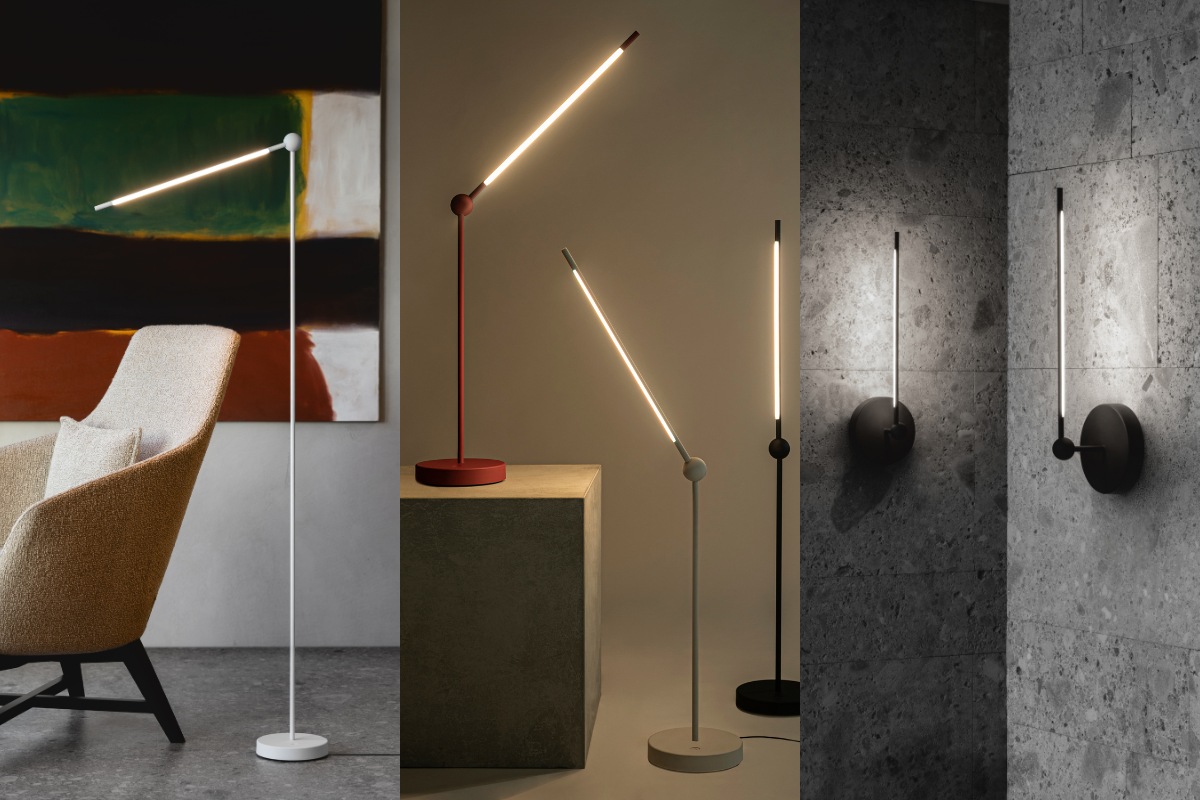
With Pivò, Accento’s first collection, we wanted to create a lamp capable of complete rotation, but we wanted to concentrate all the complex mechanics of movement into a joint of only 4 centimeters in diameter. In such a reduced volume, we had to accommodate the fluidity of the gesture, the stability of the position, and the passage of high-quality LED technology.
We realized that traditional production methods would never allow us to achieve that level of miniaturization and millimetric precision. This is where the intuition was born: we abandoned the well-trodden paths to embrace Multi Jet Fusion (MJF) 3D printing, which over time has become one of Accento’s distinctive qualities.
The dialogue between engineering and design is central to your method.
Gianluca Raineri, how do you manage the balance between production, sustainability, quality, and aesthetic direction?
Our method is based, with respect for roles, on close collaboration between the company and the designer. Accento’s task is to invent and prototype a technical element unique in the market in terms of lighting and dimensional performance, which represents the “building block” on which Masina Studio can work to develop a fixture, seeking the union of performance, functionality, and design.
This is our recipe, in which ESG principles are a concrete and transversal reference: from engineering oriented toward efficiency and product durability, to the choice of responsible production processes and suppliers, to design that prioritizes modularity, repairability, and conscious use of resources. For us, sustainability is not a formal constraint but a design criterion that guides every decision, both technical and aesthetic.
Roberta Bonaiti, what is the exact point where the poetics of light meets technical requirements and becomes “Accento”?
The dialogue between engineering and design is never a compromise but the beating heart of the Accento method. The exact point where these two souls meet is that moment when technical complexity disappears to make way for the emotion of light.
I like to think that when someone turns on an Accento lamp, they don’t think about the technology inside (and I assure you there’s plenty of it), but immediately feel that the light is ‘right.’
Physical prototyping, despite 3D technology, is still fundamental.
Gianluca Raineri, why do you continue to invest in matter, in real testing, in concrete light?
Despite extensive experience and know-how developed by creating solutions in the most diverse fields—situations that allow results to be achieved more quickly—it is essential to resort to physical prototyping, particularly in the field of lighting.
Even if it may seem strange, there are lighting contexts in which not even the most advanced computers and software can provide realistic predictions or acceptable precision of what the result will be. This is why it is essential to invest in research and experimentation, physically testing prototypes and the behavior of light before proceeding to product industrialization.
Roberta Bonaiti, what is the moment when you understand that a project “works”: sketch, model, first prototype, or light test?
None of the above. I understand that a project ‘works’ when, presenting my sketches to Gianluca, I see his expression change and the spark ignites. In him I recognize the great ability to immediately understand the potential and feasibility of a project, which, in addition to being very reassuring on a psycho-emotional level, also has practical implications, positively impacting the product development process. It is no coincidence that to date, every validated concept has been developed and brought to market.
Interior and contract sectors today require very different performance.
Gianluca Raineri, how does Accento respond to the demand for hybrid hospitality—hotels, evolved retail, flexible residences?
Those indicated represent exactly Accento’s target, as its collections offer total freedom of orientation, allowing lighting to be shaped with precision, following the architecture and the needs of the moment. A gesture is all it takes to change direction and a touch to adjust intensity, transforming every environment into a perfect balance between form and perception.
The purpose of Accento lamps is indeed to make light a living material, capable of enhancing details and shaping surfaces.
Roberta Bonaiti, from a design perspective, what changes between a lamp designed for a domestic living room and one for a boutique hotel?
Obviously in such different contexts the relationship between individual and space changes greatly, but for me, in both cases, the goal remains the same: whether it’s a hotel room in Bern or a living room in a house in Milan, the lamp must make the guest or owner feel at the center of an atmosphere designed specifically for them. This is what I call ‘light comfort.’
Brand identity and creative vision work together.
Gianluca Raineri, how do you guide a direction that must be coherent, recognizable, yet at the same time open to innovation?
With Masina Studio it was easy to find this balance, as technique and innovation are in Accento’s DNA, and Roberta was able to capture this identity and shape it both in the development of the lamps and in the brand’s communication, where everyone also recognizes the consistency that has distinguished us so far, as it will in the future.
The brand and product “common thread” is expressed in three elements: the essentiality and simplicity of forms, visual comfort, and finally the technological soul that enables smart and intuitive light management.
Roberta Bonaiti, what is the greatest freedom and what is the greatest responsibility in being Art Director?
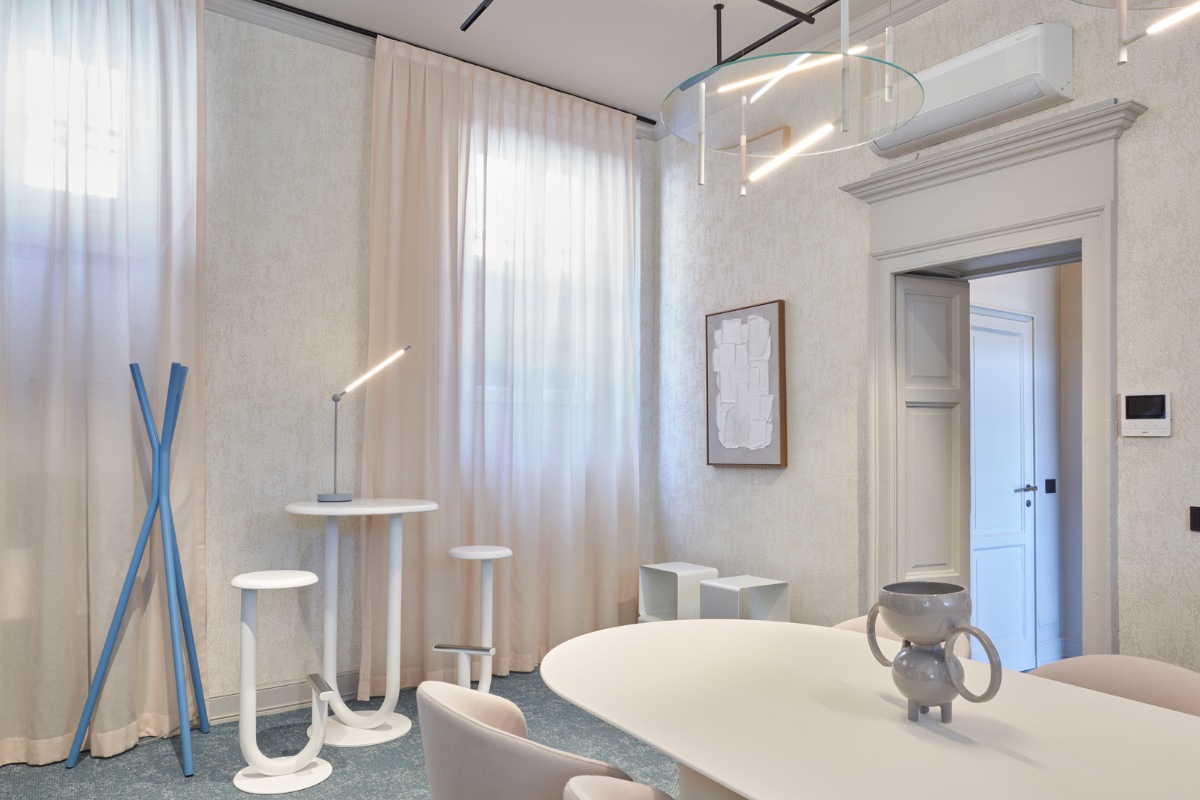
In my work as Art Director, I feel first and foremost a tremendous sense of responsibility toward the company and the people who work there, even before the ideas.
When Gianluca called me to collaborate, the most precious freedom was being able to start from a blank page: to define a coherent aesthetic, to transform an intuition into a distinctive brand, and to create objects that embody it.
With my work, I have the opportunity to build an entire imaginary around the brand. I have the freedom to decide what emotion a catalog should evoke, what rhythm a video should have, or what ‘tone of voice’ the brand should use to speak to the world.
In a world saturated with visual stimuli, however, the responsibility I feel most acutely is the need to protect Accento’s integrity: every image, every stand, every graphic choice must reflect its identity. If the narrative betrays the reality of the product, or if the image is disconnected from the technical quality, the brand loses credibility. Being Art Director therefore means being the guarantor of this balance: the visual promise we make must always correspond to the product we offer.
If you had to choose a single “iconic” product or project that truly represents Accento.
Gianluca Raineri, which product embodies your vision of light as invisible technology and everyday comfort?
It’s difficult for me to identify a single product, but, trying to get to the core of Accento’s identity, I would naturally speak of two creations that embody our vision, despite having had different paths: Pivò, particularly the table and floor versions, and Plissé.
The first for its absolute essentiality and adjustability, and the second for its unique aesthetic among table lamps, so much so that a European design registration was also obtained. Both were also winners of the Archiproducts Design Award, confirming their value.
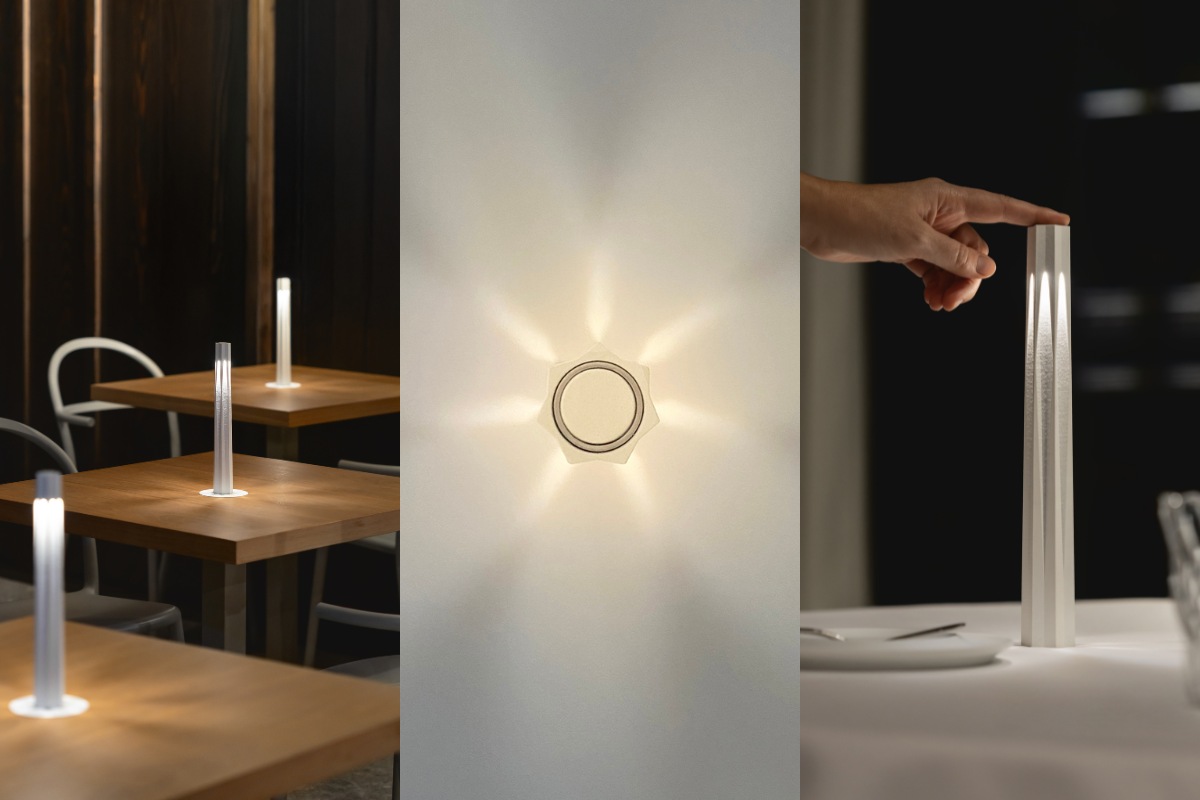
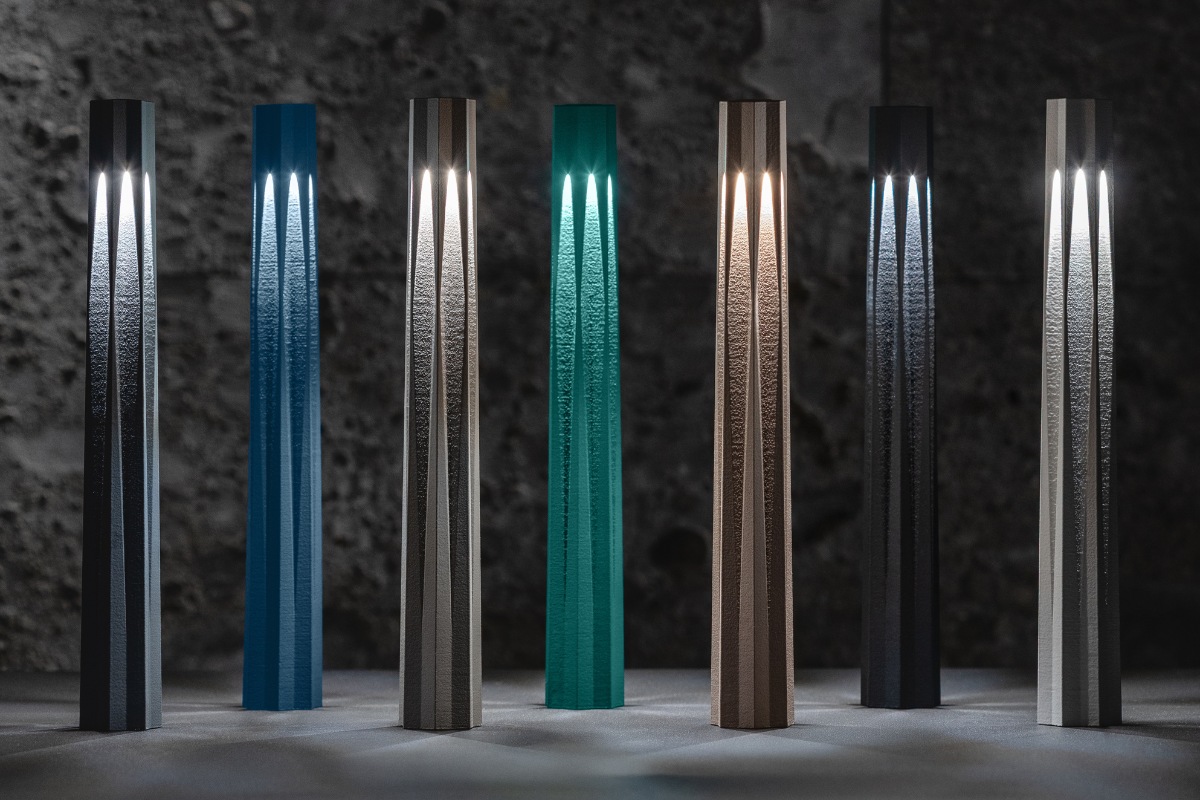
Roberta Bonaiti, could you share with us a sketch, a study, a formal research that tells how one of your lamps is born?
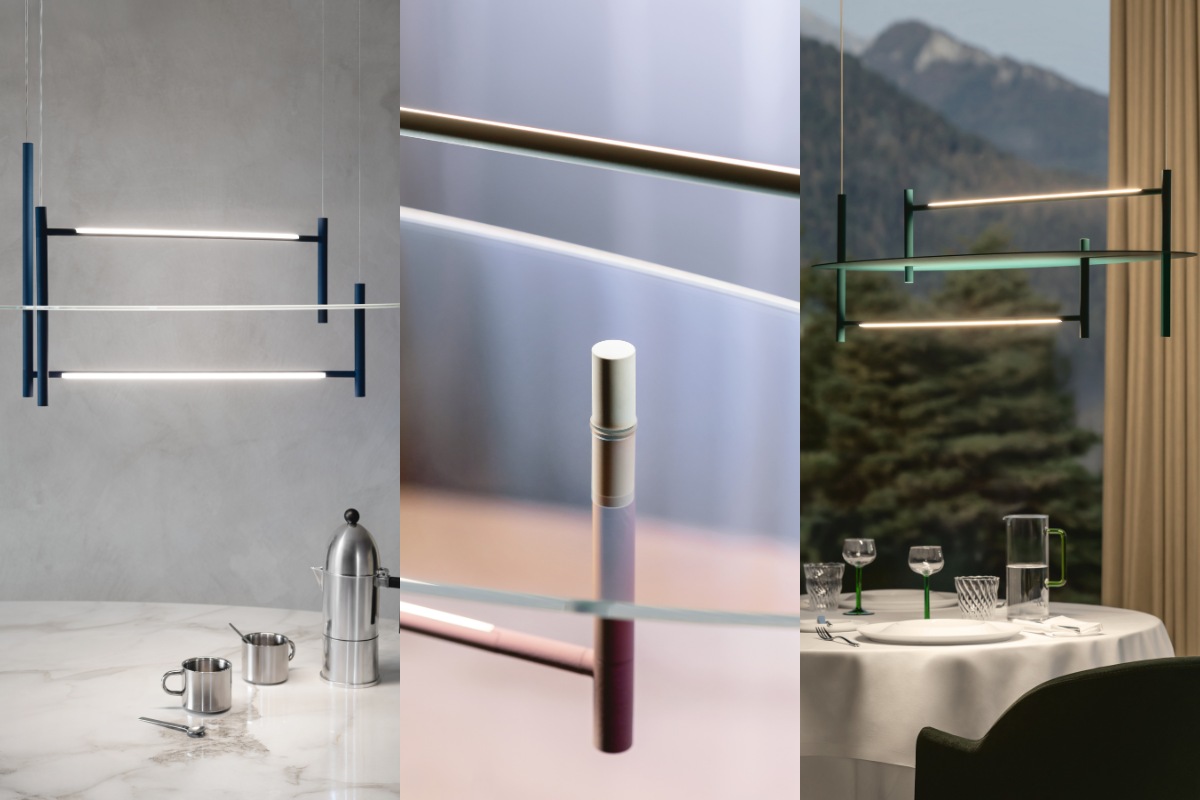
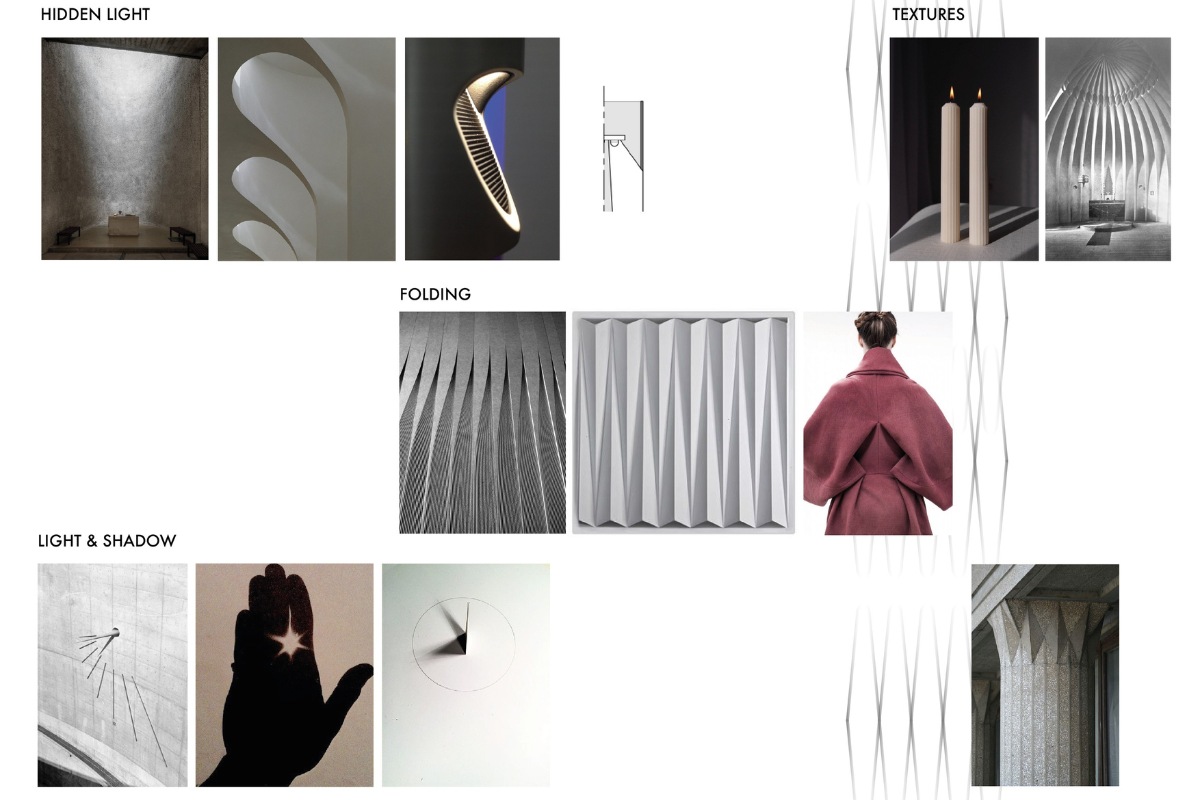
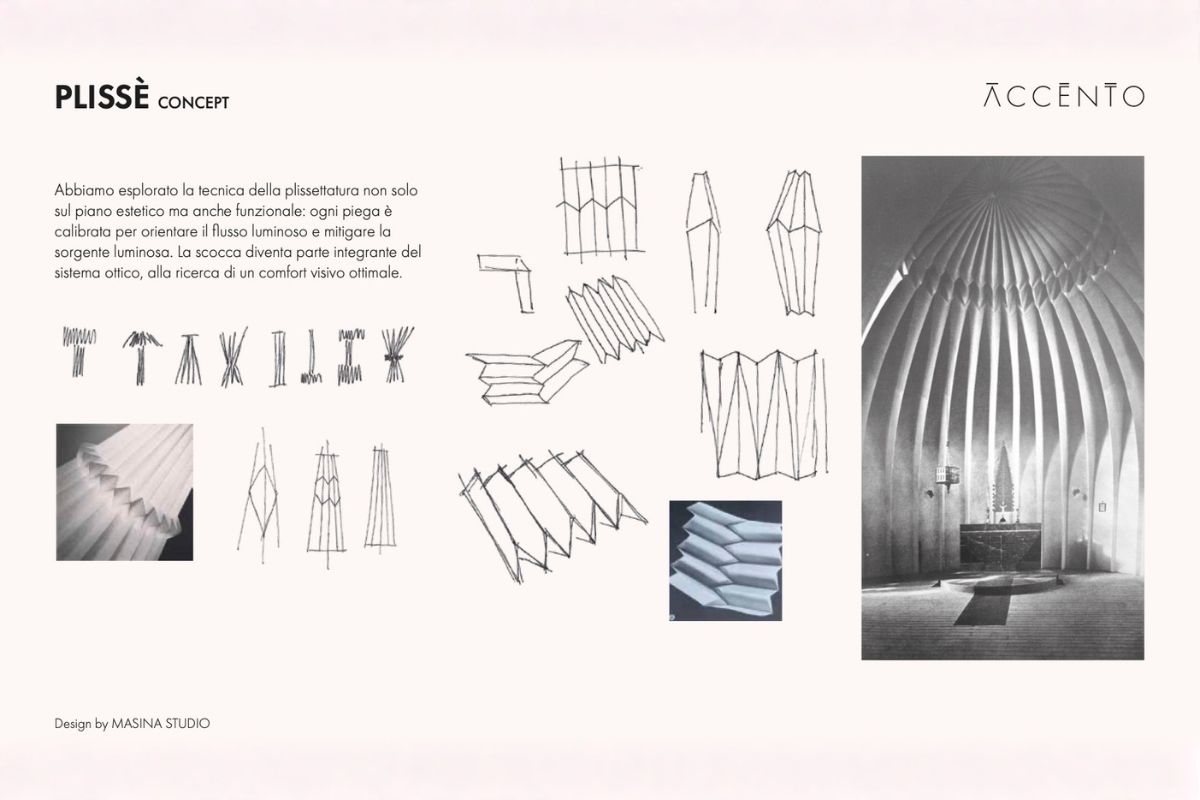
Plissé, the latest lamp developed for Accento, was born from the desire to create a lamp where the light source was our starting point: a light that exists but is not seen. From the beginning I thought of Le Corbusier’s Chapel at Ronchamp, the folds of kirigami, and the play of light and shadow that emerges from it. The result: a form suspended between tradition and technique, a light that is both high-performing and poetic.
Internationalization: lighting markets have changed.
Gianluca Raineri, where is demand for contemporary Made in Italy lighting growing today?
Accento has received considerable interest from abroad since its inception, both in Europe and on other continents. Currently, the greatest response for us comes from nearby countries such as Switzerland and Austria, as well as from Northern and Eastern Europe.
Recently we have also undertaken projects in the United Arab Emirates, particularly fascinated by Made in Italy, where significant development is expected.
Roberta Bonaiti, what cultural differences do you perceive in the way people “see” and experience light?
The way people experience light is certainly a cultural matter, concerning people and their habits.
My challenge is to create a language that is as respectful as possible of these differences. Whether for a Swedish cottage or a Dubai penthouse, my goal is for the light to adapt to different cultural rituals, always carrying with it Accento’s identity.
Let’s imagine we’re in 2035.
Gianluca Raineri, what will remain essential in Accento’s DNA?
Accento’s advantage is extensive experience poured into a new and fresh vision of the world of light, not conditioned by past identity legacies. This has meant that from the beginning there has been an orientation toward what are, and will be, the future trends in the lighting world related not only to design but to human well-being and home automation interaction.
For this reason, I am certain that Accento will be able to embrace all the innovations that await us while keeping these defining aspects unchanged.
Roberta Bonaiti, what revolution—aesthetic, technological, or typological—would you like to bring to the world of lighting?
Whatever revolution it may be, I only want to think it can be silent and gentle.
Perhaps the true revolution today is not a light that imposes itself: it is a light that listens. A precise yet non-invasive presence, capable of respecting rhythms, restoring truth to materials, and leaving space for shadow—as part of the same grammar. If Accento has a recognizable “future,” it is here: in technology that knows how to be silent, and in design that does not demand attention but earns it over time.