In 2025 the Christmas table returns to the protagonist, in a measured balance between tradition and design. Sober colours, tactile materials and signature details define a mise en place that dialogues with the space and takes up its aesthetics. The dishes become more sculptural, the cutlery explores satin or burnished finishes, the glass returns to …
In 2025 the Christmas table returns to the protagonist, in a measured balance between tradition and design. Sober colours, tactile materials and signature details define a mise en place that dialogues with the space and takes up its aesthetics.
The dishes become more sculptural, the cutlery explores satin or burnished finishes, the glass returns to being blown, while the textiles are inspired by fuller textures: washed linen, hemp blend, woven cotton. We are no longer looking for a spectacular effect, but for tactile and visual quality, with an attention to detail that has always characterized the most refined homes.
The table becomes a domestic landscape: built with chromatic stratifications, calibrated volumes and objects that have a precise presence – never decorative, but essential.
This Christmas, the mise en place does not ask to surprise. It asks to be thought about.
Style tips for the 2025 Christmas table
(and the objects that are worth the beauty of the choice)
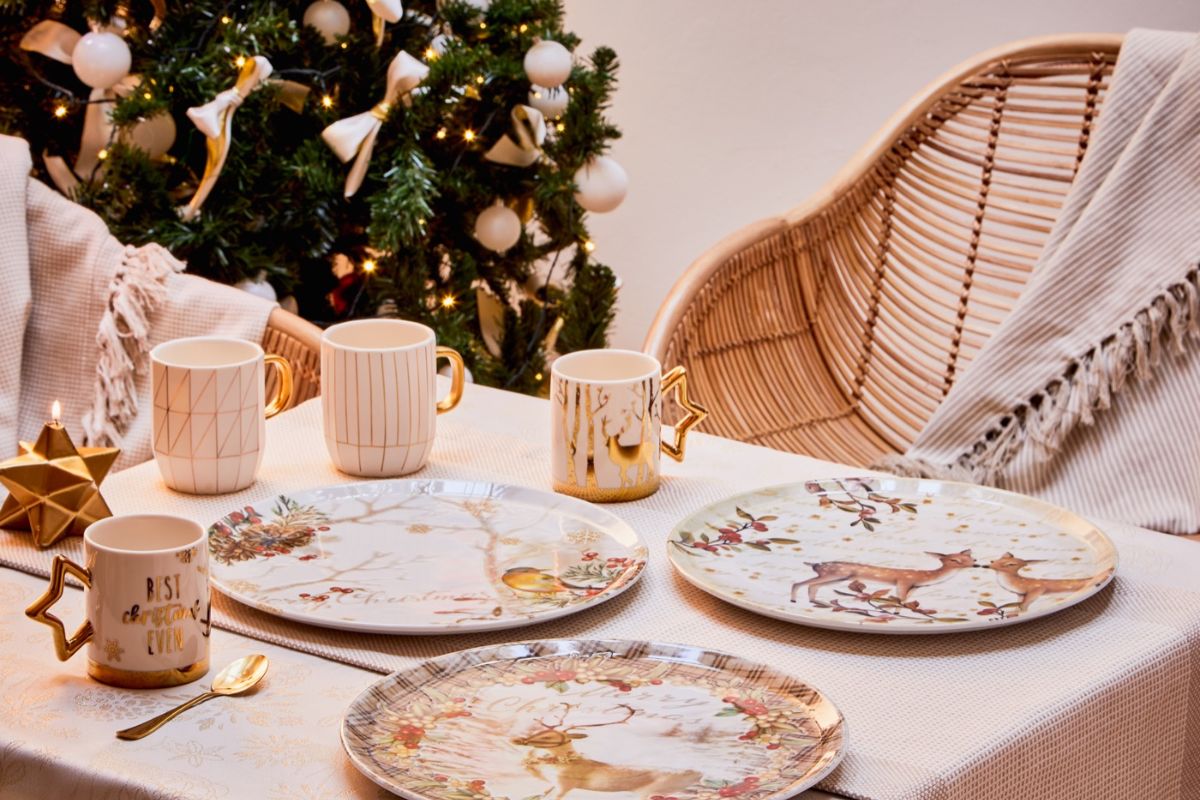
The 2025 Christmas table becomes a truly light architectural object, designed in relation to the space it occupies, the light it absorbs, the rhythm it imposes on the eyes of those who sit.
To build it you need material awareness and a precise idea: you don’t set up a concept, but a domestic scene where each element – be it tacit or protagonist – builds a balance. Here is a thoughtful selection of objects and materials with which to compose a coherent table, deeply rooted in the culture of contemporary design.
The 2025 Christmas mis en place – Dishes: where it all begins
-
Richard Ginori Italian East

In hand-painted white porcelain, with iconic decorations inspired by the dream of the East. It is a service that brings history into the contemporary: it resonates in Milanese buildings as in lived-in homes, with its unmistakable and timeless character. Appropriate for those who want to introduce a sign, but without falling into decorative redundancy. Setting a Ginori plate today means recognizing the value of the object as a guardian of identity.
-
Brunello Cucinelli Set of natural stone plates
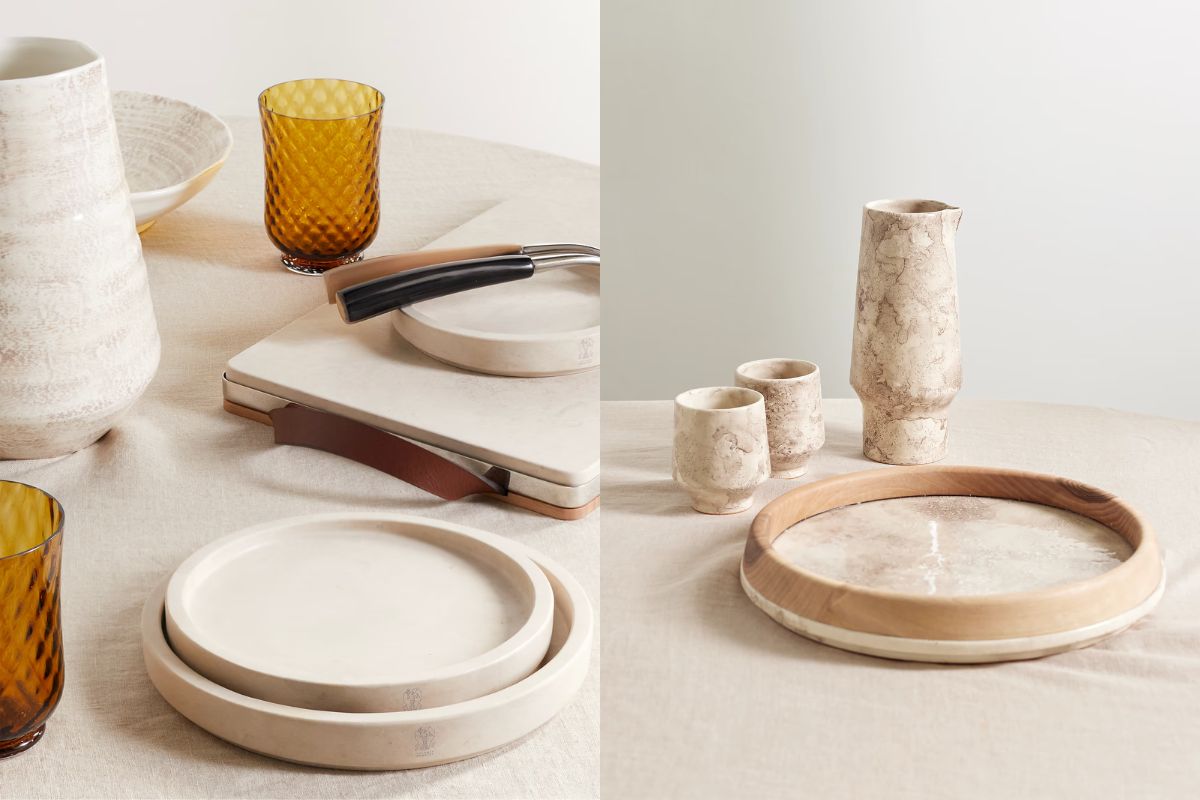
Interpret the table as an architect would. Neutral colour, silky surface, discreet volume. Designed for those who want a rigorous, material, lived-in table. The stone does not communicate through contrast, but through assonance: it is an element that absorbs light and returns a visual silence of rare balance.
The 2025 Christmas mis en place – Cutlery: touch and presence
-
Barazzoni Zaffiria satin line

They are cutlery that rethinks the gesture of serving: light, velvety, essential. The satin finish does not attract the eye, it accompanies it. They are cutlery that disappears when needed, and re-emerges when the touch of the fingers encounters the difference: shiny/opaque, solid/light.
Cutlery today is no longer “service”. They are the most intimate instrument on the table, the one that comes into contact with the hand and mouth. This is where the quality of the experience is measuredence.
The 2025 Christmas mis en place – Glasses and goblets: glass that becomes light
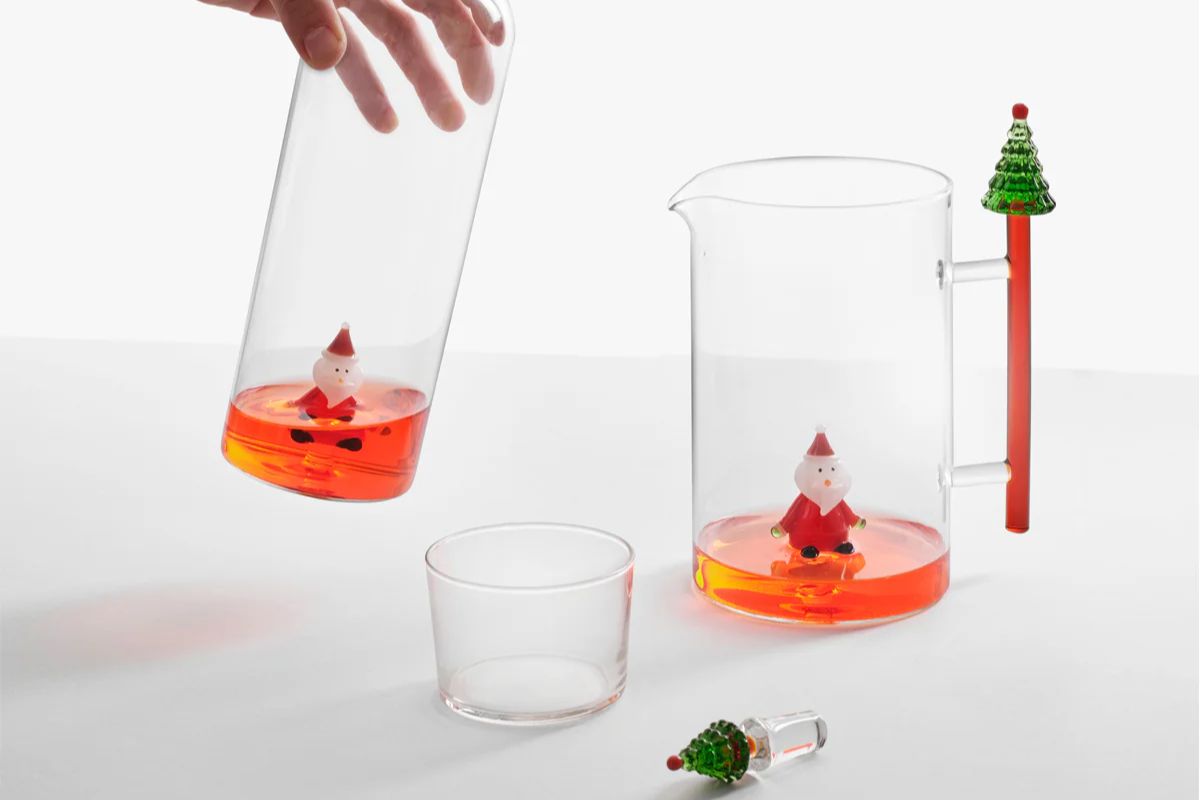
In 2025, glass becomes the absolute protagonist again. It is not just a means to contain wine or water: it is an object that shapes the light, cuts the scene and introduces a third rhythm to the table, that of transparency.
-
Ichendorf Milano : colour, irony, great visual agility without falling into easy decoration.
-
Nude Glass : purity of line, blown glass perfect for architectural, almost museum-like mise en places.
-
Vetrerie Empoli : historic Tuscan tradition reinvented in a contemporary key, with green and smoky shades that add depth to the landscape of the table.
The 2025 Christmas mis en place – Candles: light as matter

Light is no longer an accessory, but a design component. Candles today are sculptures, micro-architectures of wax that bring free three-dimensionality and do not require decoration.
-
Lex Pott Twist Candle
A single gesture, two ends, a central twist: not an object, but a visual residue of movement. -
Fazeek Decorative candles in blown glass and natural wax
Conceptual objects that are between applied art and interior styling. They bring color and gesture without stealing meaning from the scene.
The mis en place of Christmas 2025 – Textiles: textures that breathe
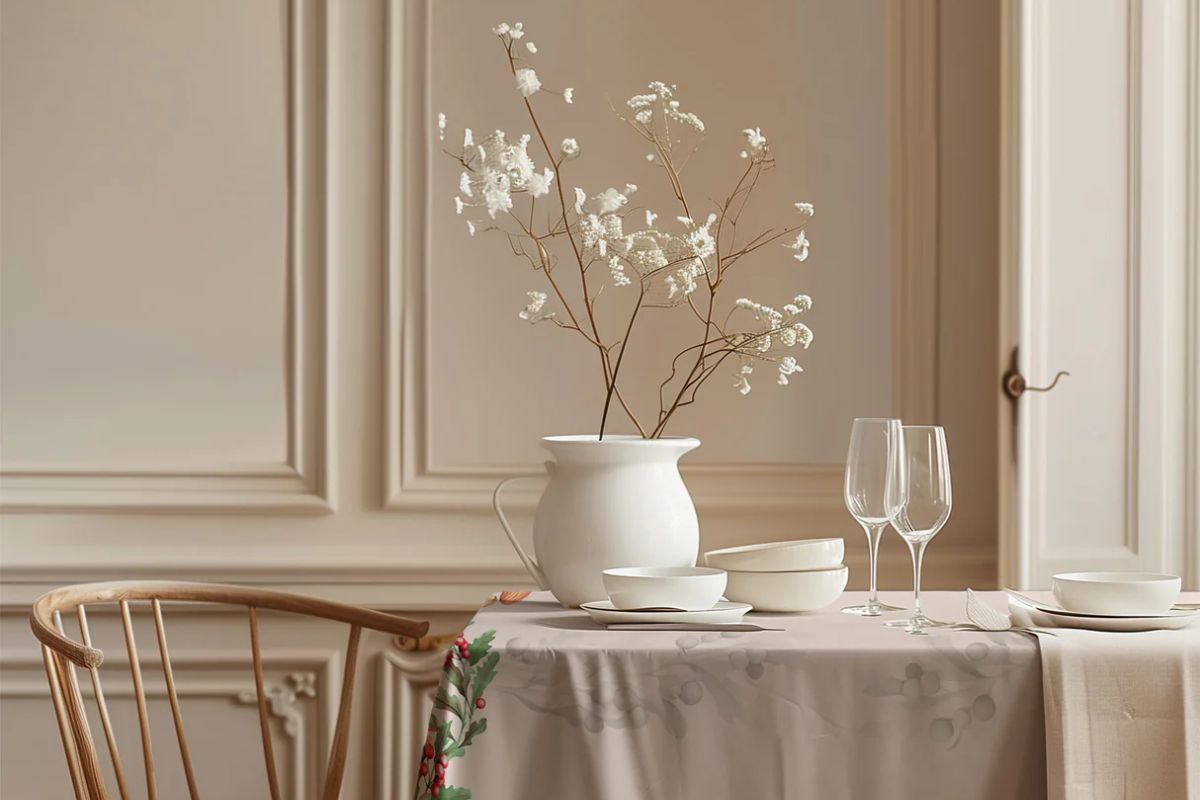
The fabric on the table no longer serves to “dress”, but to let the porcelain, steel and glass breathe. The 2025 trend is clear: smooth is not enough. You need body.
-
Washed linen in milk, lime, ice and sand tones.
-
Raw hemp for those who love a more decisive material approach.
-
Hand-edged cotton for those who insert an evident line of care into the gesture of setting the table.
Textiles mix together as surfaces that welcome or isolate, modulate or absorb. I am not a complement: I am a visual horizon.
Style ideas for the 2025 Christmas table
(the kind of matches you didn’t think you could do)
It is not the Christmas theme that guides this year’s table, but the identity of the house and those who live there. Color does not impose itself, it integrates. The materials do not decorate, they communicate. Here are some ideas to steal from those who set up sets or design environments, to reinterpret with objects that you already have or that you can look for with a new eye.
1. Underplate in raw wood + historic porcelain
A warm and lively base, which lets the plate breathe and diffuses light at the center of the table. Natural wood takes away formality, adds visual rhythm and makes even the most precious service more domestic. It works with Ginori, but also with a dish recovered from a family trousseau.
The trick: not perfectly centered plates, but slightly rotated, as if you had “propped” them.
2. Burnished cutlery + smoke colored glasses
Black and gray are not “cold”, if balanced by a milk cotton or raw linen tablecloth. The contrast is not harsh but calibrated – and avoids Christmas “lacquered” in gold and red.
Combination to try: satin black cutlery by Mepra + smoked glass by Ichendorf Milano .
3. Green centerpiece without flowers
Olive or eucalyptus branches, wild berries, waxed leaves: you don’t need colour, you need life. A single tone of green, varied by texture.
To be placed directly on the tablecloth, without bases, for a genuine gesture that does not “overwhelm”.
4. Linen runner + bordered napkins
The runner is a visual column, it separates the guests but unites the scene. At Christmas 2025, it often replaces the tablecloth. And it works well if the napkins have a colored or embroidered border.
Napkin to keep in your lap or on the plate, never left randomly on the side of the placemat.
5. Mismatched glasses
THE NEW TREND: glasses not necessarily the same. They can have different shapes (but similar materials), or shades of color that create a sequence.
Only one glass for wine, no flute: even sparkling wine can go in a short glass, if it is of quality.
6. Candles as sculptures, not as light
Tall, twisted candles, in natural wax and desaturated colours: light ash, rope, dull burgundy, hydrangea. No tea lights or low candles: they are “off scale” compared to the 2025 table.
Repeat them in an asymmetrical row and use identical candle holders. Seriality creates rhythm, not boredom.
7. The gesture of the right void
The mistake is always adding. The work of design, even on the table, is to remove. It leaves voids that let the eye breathe: a side of the table without decoration, a space between the plate and the glass, a microzone without color.
8. The dessert plate does not rest on
The dessert plate is not a hat of the dinner plate. Either it is elsewhere – as a deco object next to the place setting – or it arrives later, at the right time.
Yes to the stoneware or glass saucer on which to place only a dried fig, a flower or a handwritten note.
The best brands for designer Christmas mise en place
The Christmas table of 2025 is not a decorative exercise, but a project of balance between materials, shapes and proportions. A successful mise en place arises from conscious choices, quality objects and a coherent visual whole. Here are some useful references from which to build a refined and timeless table, with brands that combine research, care and identity.
Glasses and glasses
-
Ichendorf Milano borosilicate glass, light and essential.
-
Nude Glass clean lines, pure transparencies, contemporary versatility.
-
Venini Murano mastery: colour, shape and light as design elements.
Plates and ceramics
-
Ginori 1735 decorated Italian porcelain, history and fine craftsmanship.
-
Serax stoneware and material ceramics, with a natural aesthetic.
-
Brunello Cucinelli Home stone surfaces, warm tone and tactile texture.
Cutlery and metals
-
Cutipol light silhouettes, also in matte black or satin finish.
-
Barazzoni brushed steel with a discreet design, always current.
-
Mepra burnished and golden finishes, for more intense details.
Candles and light
-
Lex Pott candle-sculptures, soft volumes, material shades.
-
Fazeek combinations of glass and wax, between light and formal presence.
-
Loewe Home Scents natural wax, refined palette, subtle essences.
Table textiles
-
Society Limonta washed linen tablecloths and napkins, tailored finishes.
-
Cami + Olla runner and tablecloth in natural fibre, handcrafted.
-
Maison de Vacances lived-in fabrics, neutral palettes, Mediterranean vein.
Mistakes to avoid in the Christmas mise en place
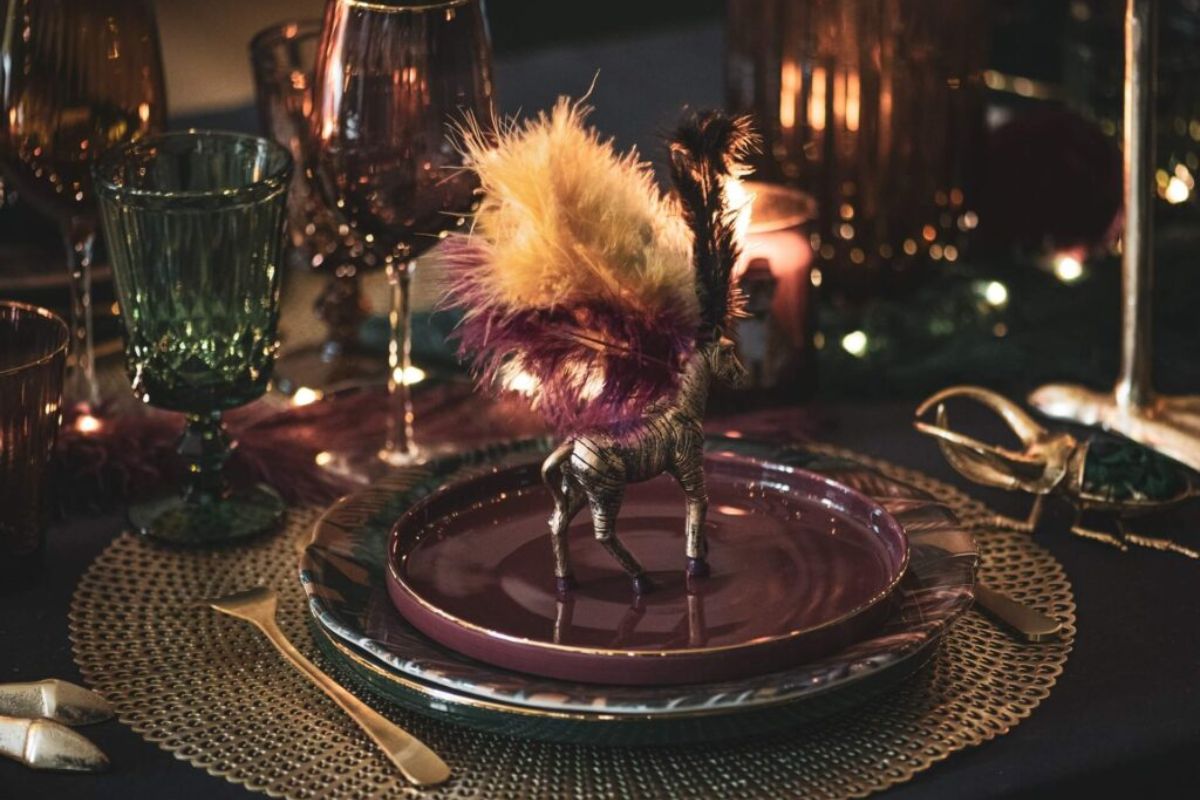
A well-set Christmas table is never the result of chance. It is an aesthetic project, built by stratification: materials, volumes, light, proportions. At the same time, a few wrong choices are enough to weaken even the most beautiful object. Here are the most common mistakes when building a design mise en place, and how to avoid them with awareness.
1. Follow a theme, rather than a vision
Choosing a Christmas theme that is too explicit – such as stars, reindeer, glittery writing – risks impoverishing the space and fragmenting the project. Better to think in terms of atmospheres and materials, not “motifs”. Christmas can be evoked through the beauty of blown glass, a full-bodied linen, an essential conifer branch: there is never any need to declare it.
2. Think in terms of the complete set
A board doesn’t work better because everything is coordinated. On the contrary, the excess of visual unity creates rigidity. The calibrated combination of materials – ceramic, glass, metal, fabric – generates depth and identity. What really matters is the relationship, not uniformity.
3. Confusing decoration with furnishings
Bulky centerpieces, voluminous decorations or purely ornamental elements take away the breath from the table. Every object should be useful or sensible: a low lamp that creates atmosphere, a plate with formal beauty, a neatly folded napkin. The rest is noise.
4. Ignoring aspect ratios
Tables that are too full, glasses that are disproportionate, plates that are too large: everything that breaks the visual scale disturbs the experience. The mise en place is not a performance, but a choreography of balance. Wherever the gaze lands, it must find coherence.
5. Forgetting the “empty” as a design tool
Every truly thought-out table leaves empty spaces. Emptiness is not lack, it is breathing: it serves to bring out the materials, to enhance the gesture of those who sit, to maintain lightness. Excess, on the table as in the interior, is almost always counterproductive.
6. Neglecting light
A good table thrives on low, warm, localized light. Low candles, opaline glass lanterns, small punctual lights. Avoid cold or diffused lights: they flatten the material and eliminate intimacy.
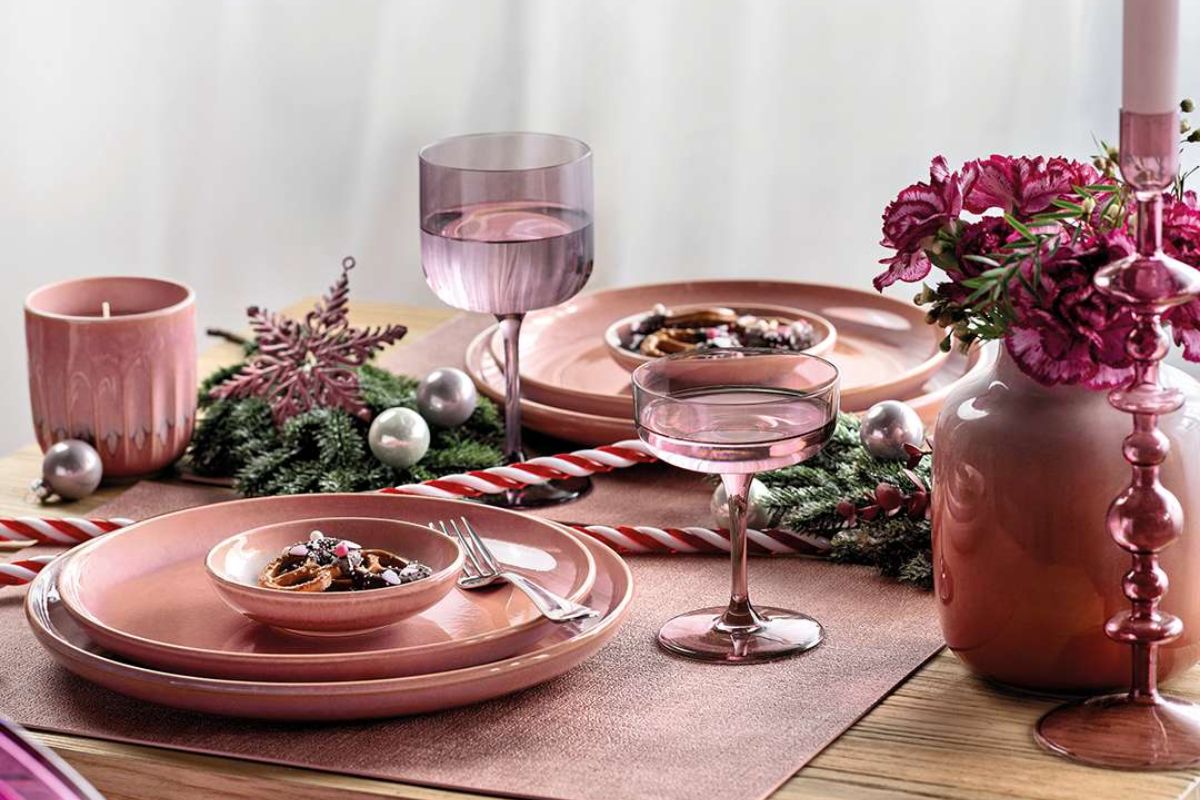
Mise en place is not just what you place on the table, but everything you choose not to put on it.
The unsaid, even in design, is a gesture of style.