The cities of the future will be neither vertical nor horizontal, but porous : living spaces that breathe, adapt and change together with those who live in them. After a century of static models - densified metropolises, extended suburbs, rigidly separated functional zones - contemporary urban planning is entering a new phase. A phase in …
The cities of the future will be neither vertical nor horizontal, but porous : living spaces that breathe, adapt and change together with those who live in them. After a century of static models – densified metropolises, extended suburbs, rigidly separated functional zones – contemporary urban planning is entering a new phase.
A phase in which sustainability is no longer an objective, but a condition , and in which architecture must return to being a social infrastructure, not just an aesthetic or technological one.
The future of living will not be measured in square meters, but in relationships : between space and nature, between technology and the body, between the individual and the community. The task of architecture will be to translate these relationships into flexible, intelligent, humanly sustainable places . Cities will not only have to host, but welcome ; not just function, but feel .
Today, designing the urban future means addressing a more radical question: not how to build more , but how to live better . And this question, which runs through the experiences of studios such as BIG, Kengo Kuma & Associates, Stefano Boeri Architetti or Carlo Ratti Associati, opens a new design scenario made of hybridizations, permeability, biophilia and adaptability .
The cities of the future, therefore, are not a technological utopia, but a sensitive experiment in progress.
And to understand its logic, it is necessary to read three key dimensions of change: the environment , technology and the community .
What will the city of the future be like?
1. The environment as architecture: from greenwashing to biourbanity
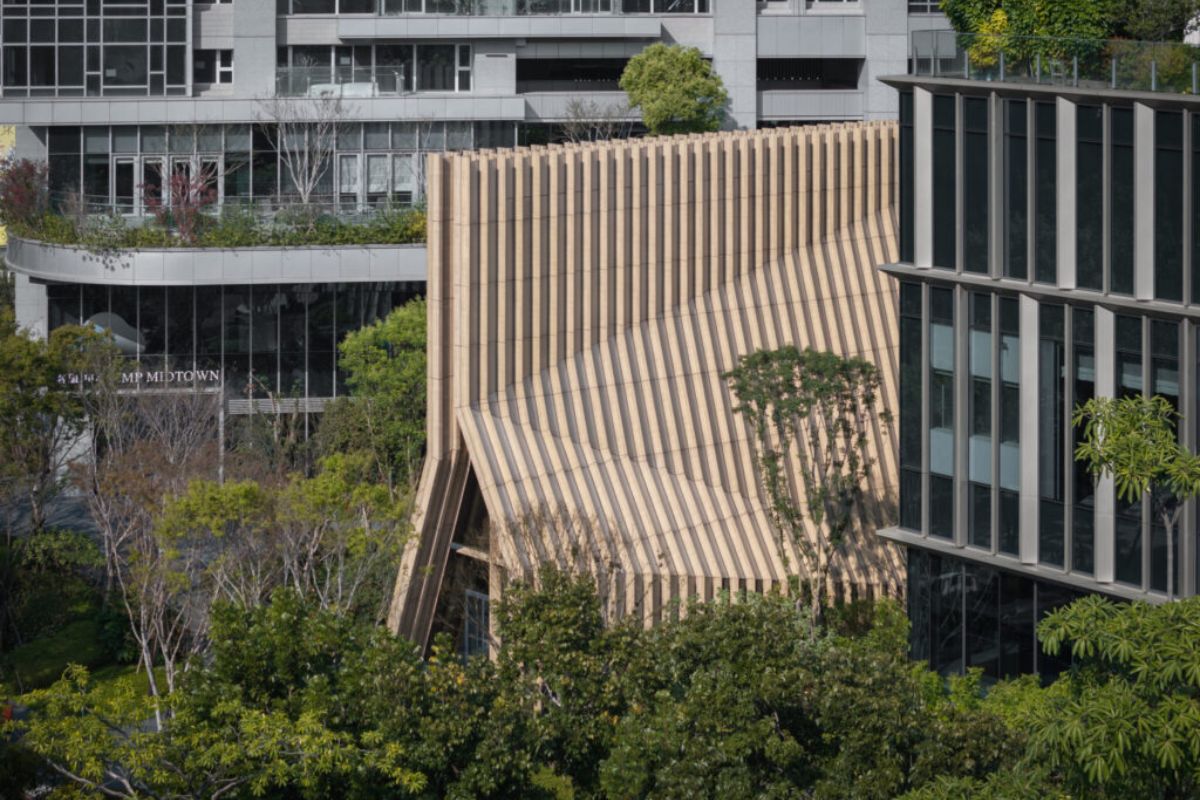
To understand what the cities of the future will be like, we must first abandon the idea that nature is an element to be added to the project. It is no longer a “decorative greenery”, nor a certification obligation, but an architectural matter . The environment becomes infrastructure – thermal, visual, social – and redesigns the relationships between space and time.
The bio-urban city no longer opposes the natural to the artificial: it hybrid . Trees are not planted, they are integrated; the facades are not covered in green, but breathe. In this logic, the landscape ceases to be a background and becomes a supporting structure. Projects such as the Bosco Verticale by Stefano Boeri Architetti , the Vertical Venice by Carlo Ratti Associati , or the Valley Tower by MVRDV demonstrate that nature it can function as an urban self-regulation system: shade, ventilation, sound absorption, microclimate, biodiversity. No longer gardens applied to buildings, but vertical and horizontal ecosystems that participate in the metabolism of the city.
The next step is that of biourbanity : a vision in which the city itself behaves like a living organism. Architecture no longer imposes form, but favors processes. Water is collected and reused, surfaces absorb CO?, plants become climate sensors, materials react to light. The architectures of Kengo Kuma or Heatherwick Studio tell this story betweennsition towards an intelligent porosity , where each element – solid or natural – participates in the life cycle of the place.
This new project ecology also imposes a change in language: “green” is no longer enough as an aesthetic.
We need a multi-layered environmental design , capable of considering microclimatic comfort, budget-neutral materials and social dynamics of inclusion.
The environment is not the theme of the future, but its grammar .
2. Empathetic technology: from automation to the sensitive city
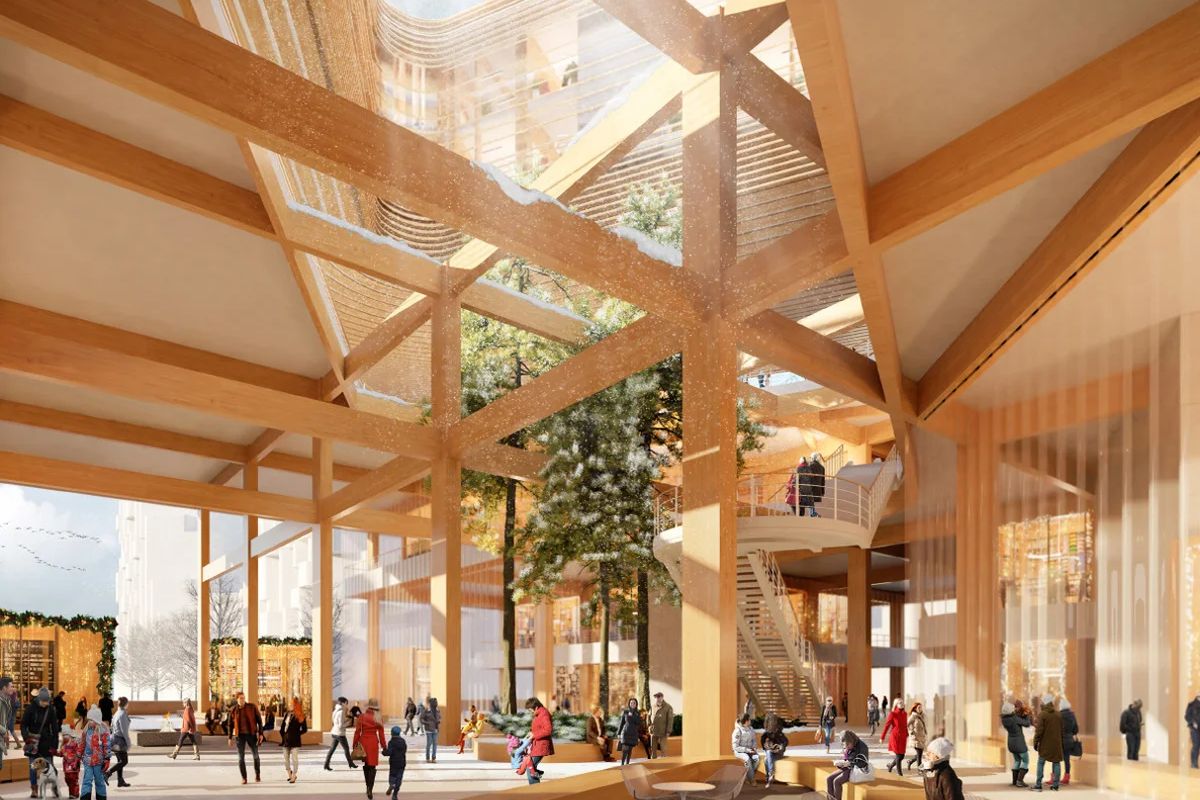
For years, technology has promised efficiency. Today, however, it promises empathy . It is no longer a question of automating behaviors, but of listening to needs : designing systems that perceive, interpret and respond to human presence. It is the difference between an intelligent city and a sensitive city .
The first generation “smart city” was an organized machine: data, networks, algorithms at the service of control and logistics. But living is not just a functional process – it is experience, perception, emotion. Today the objective of digital architecture is to make technology invisible : to integrate it into the urban fabric like a second skin, capable of regulating comfort, light, noise, flows.
The paradigm is that of digital twins , digital models that allow the city to “observe” itself and correct itself in real time. Projects like Google’s Sidewalk Toronto or the NEOM The Line district in Saudi Arabia represent the most radical version of this. But in European metropolises the vision is more discreet: Milan, Copenhagen or Barcelona are experimenting with digital infrastructures that improve daily life without erasing urban complexity.
The future is not the hyper-connected city, but the city that dialogues . Sensors that detect noise and reduce acoustic traffic, reactive facades that open and close based on the sun, pavements that produce energy from human steps: these are architectures that do not simply respond, but interact .
From this perspective, technology becomes a liquid architectural material , like light or air.
Artificial intelligence does not replace the project, but expands its sensitivity. The architect’s task is no longer to “use” AI, but to dialogue with it : design parameters, establish limits, preserve the humanity of space.
Because the real technological revolution will not be that of chips or servers, but that of perception .
A city capable of reading our presence, of adapting to our rhythms, of understanding when we need shade or silence, is a city that does not command, but accompanies. And this, more than a futuristic vision, is a new form of urbanity: ethical, sensorial, relational .
3. Community and proximity: the city as a social organism
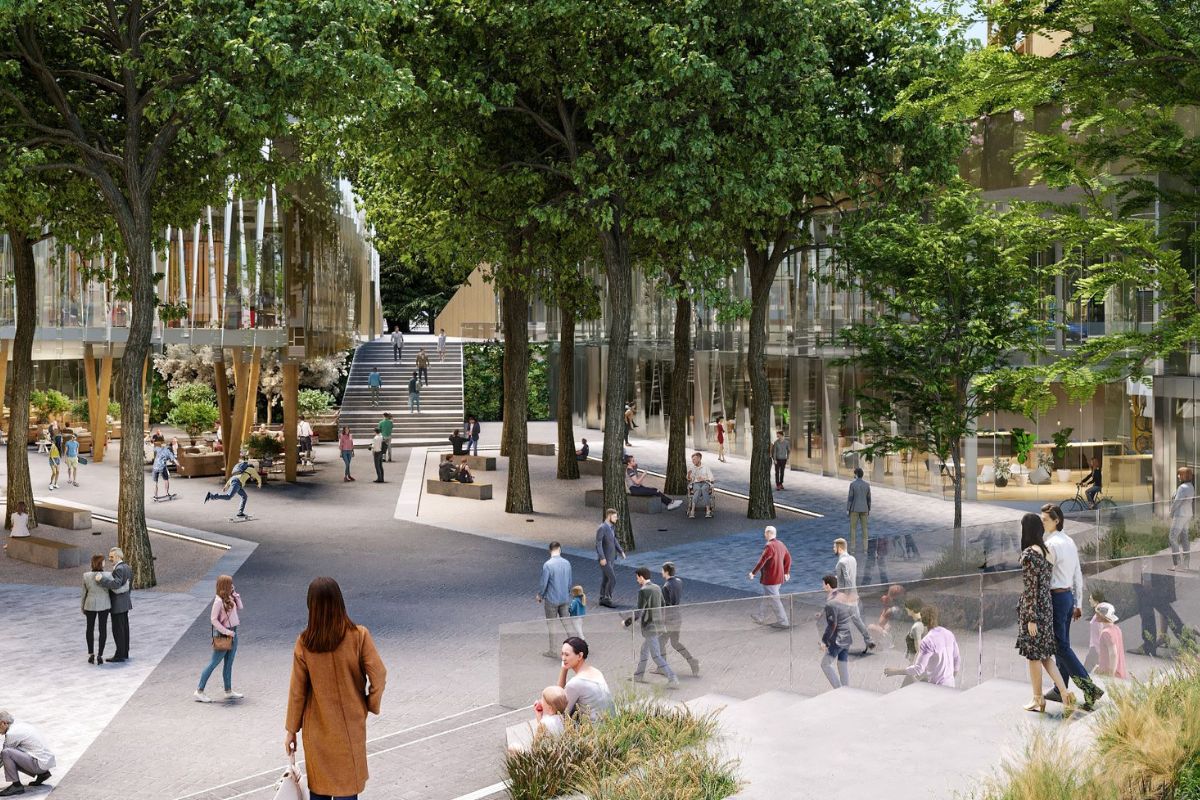
The future of architecture is not just technological or ecological. It is social . After decades of centrifugal growth, the city is rediscovering the value of proximity : the neighborhood as an ecosystem, the human scale as a measure of the project, shared space as a form of well-being.
Contemporary urban planning thus returns to look where it was born: in relationships . Not in skylines or master plans, but in the places where everyday things happen a square, a sidewalk, a courtyard, a garden. The city to come will not be defined by density, but by the quality of the void : the breath between buildings, the permeability of borders, the ability of a place to welcome without imposing.
The emerging model is that of the 15 minute city , theorized by Carlos Moreno and now tested in many European capitals. A city where everything you need – work, school, health, culture – can be reached on foot or by bicycle. But behind its apparent simplicity lies a profound transformation: the return to slowness as a design value.
A slowness that is not inefficiency, but attention : to time, to people, to the landscape.
The most sensitive architects from Anne Lacaton and Jean-Philippe Vassal to Francis Kéré , from Alejandro Aravena to Tatiana Bilbao have put the community back at the center of the project. Their works do not seek the icon, but cohesion : accessible, adaptable spaces, capable of growing with those who inhabit them. Houses that expand over time, schools that become squares, public buildings that function as social infrastructures.
Even in Italy, the new sustainable neighborhoods such as SeiMilano by Mario Cucinella Architects or the MIND Milano Innovation District reinterpret this logic of functional mix : living, working, cultivating, meeting. Not fragmented cities, but ecosystems of life where technology and nature converge around the person.
Because the urban future is not made of skyscrapers or algorithms, but of proximity and trust . A city that works is not one that optimizes flows, but one that generates belonging . And belonging, in architecture, is measured in meters of light, in shared sounds, in spaces that restore dignity to living together.
The inhabitant of tomorrow and the changing house
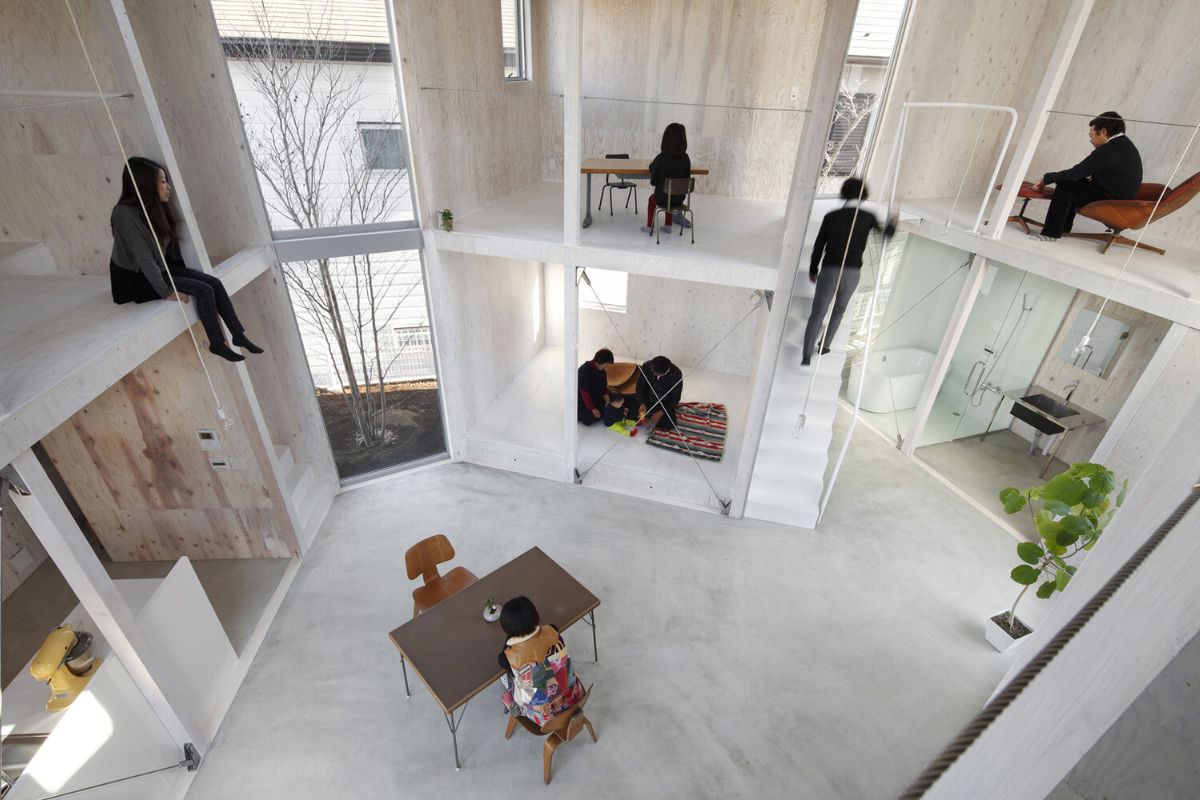
If the cities of the future are porous and adaptive organisms, those who live in them will also have to change with them.
The inhabitant of tomorrow will not be defined by a fixed address, but by a condition of constant mobility physical, professional, emotional. What changes is not only the shape of the city, but the structure of housing desire: flexibility, proximity, sensorial quality and relationships become the new units of measurement of living.
New needs, new logics
According to Global Housing Monitor 2025 by Ipsos, 70% of young people under 35 believe that it is now “more difficult to access stable housing” than the previous generation. This fact, apparently economic, is actually architectural: precariousness transforms the house from a place of permanence to a space of transition , modulable, hybrid, regenerable.
The homes of the future will no longer be “finished”, but in progress . They must be able to expand or contract, change function, open up to sharing. The model is no longer that of the isolated accommodation, but of the connective unit a node within a larger system, the city.
The housing market: numbers and directions
Globally, the real estate market is experiencing an unprecedented evolution: according to JLL Global Real Estate Outlook 2025 , the shortage of new housing construction will worsen in the coming years, pushing towards smarter housing density . In the United States, the median home price increased 45% between 2020 and 2025, reaching $408,000 ( Morgan Stanley, Housing Market Outlook 20252035 ). In Europe, the demand for sustainable and “human scale” housing is growing by 9% per year, with a notable increase in co-housing and urban regeneration projects .
These numbers reveal a clear trend: the house is no longer a stable asset, but an adaptive service , inserted in a network of environmental and social values. This is how new housing typologies are born: modular micro-apartments, hybrid residences, multifunctional neighborhoods where work, free time and nature coexist in the same space.
From possession to experience
For the inhabitant of tomorrow, the value will no longer be in the property, but in the experience: in the perceptive quality of the space , in the light, in the acoustics, in the possibility of personalizing one’s environment. The house will become a “dialogical” space, capable of recognizing those who live there and adapting to their habits.
Environmental sensors, intelligent materials and empathic automation systems will form the basis of responsive living , where comfort and sustainability coincide.
Homes as sensitive nodes of the city
The homes will no longer be fences, but active nodes within the sensitive city. They will produce data, energy, clean air, and become part of the urban metabolism. Each building will behave like a small ecosystem: it will collect water, regulate the temperature, manage energy consumption, and at the same time offer shared and accessible spaces .
The home of the future will therefore not be a destination, but an interface between the individual and the city: a place that listens, breathes and adapts. And for those who design, the task will be twofold shaping flexibility and designing resilience .
What will the cities of the future be like?
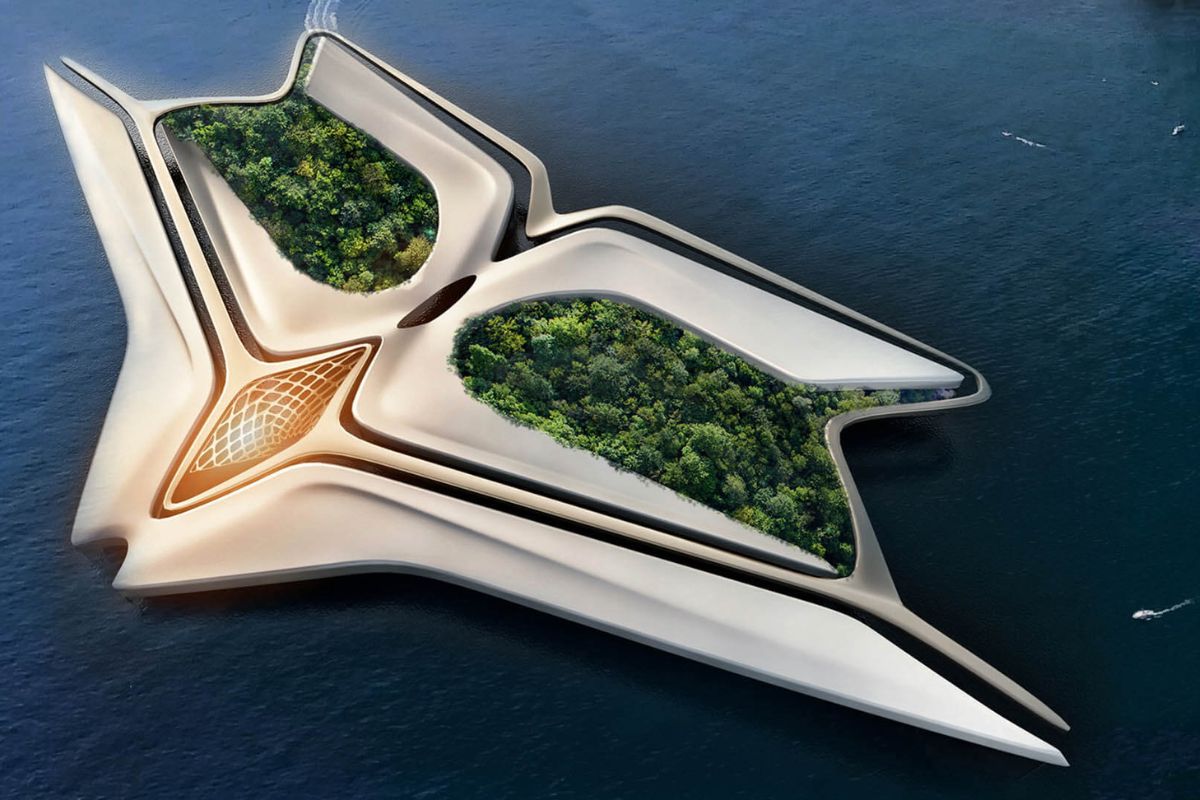
What will the city of the future be like?
It will be a city more sensitive than smart : designed to react to human and environmental needs.
Not just technology and data, but porosity, integrated nature, proximity and adaptive spaces that promote well-being and social connections.
Will we live more in the city or in the suburbs?
Neither exclusively in the city nor in the suburbs: we will live in widespread urban ecosystems , where the boundaries betweenat the center and margin they fade.
Cities will expand into networks of self-sufficient neighborhoods, with proximity services and slow mobility.
Will there be robots in the cities of the future?
Yes, but not as protagonists.
Robots and artificial intelligence will be invisible support systems : they will manage energy, waste, logistics and maintenance, leaving the perceptive and relational part of living to humans.
Will the cities of the future be sustainable?
They will have to be by necessity, not by choice.
Sustainability will be structural , integrated into every process: balance-neutral materials, renewable energy, bioclimatic architectures and public spaces designed to absorb and regenerate.
How will housing change?
Homes will become flexible and adaptive : capable of transforming over time, hosting new functions, communicating with those who live in them.
They will be smaller but smarter, with integrated energy management and sensory comfort systems.
How will we move in the cities of the future?
Mobility will be hybrid and shared : electric bicycles, autonomous vehicles, modular microtransports and shaded pedestrian paths.
The real innovation will be in continuity of movements , not in speed.
What role will architecture have?
Architecture will return to being a social act , not a formal gesture.
It will design relational spaces, urban microclimates, green infrastructures and sensory environments that connect body, nature and technology.
What will daily life be like in future cities?
More collective and quieter.
The house will be a node in the urban network, the neighborhood an extension of domestic life.
Public spaces will be places of well-being and culture , not just places of transit.
How much will the house count in the city of the future?
Much more than today.
The house will become an urban micro-infrastructure : it will produce energy, collect water, regulate the internal climate and participate in the metabolism of the city, like a living organism in the urban body.
What is the biggest challenge for cities of the future?
Designing the balance between technology and humanity .
The risk is not building too much or too little, but forgetting the meaning of living together.
The city of the future will only be sustainable if it is able to be inclusive, empathetic and sensorial .