The Velasca Tower (BBPR, 19561958) is a 106 m skyscraper in the heart of Milan, famous for its projecting "cape" which recalls the medieval towers of Lombardy and for its structure of external struts and braces . Declared a protected property in 2011 , it was the subject of a integral restoration 20212025 led by …
The Velasca Tower (BBPR, 19561958) is a 106 m skyscraper in the heart of Milan, famous for its projecting “cape” which recalls the medieval towers of Lombardy and for its structure of external struts and braces . Declared a protected property in 2011 , it was the subject of a integral restoration 20212025 led by Asti Architetti with Hines , which regenerated facades, systems and the pedestrian square, introducing new uses mixed-use (hospitality, catering, offices). Today Velasca returns to dialogue with the city, without giving up its identity.
Why talk (again) about Torre Velasca
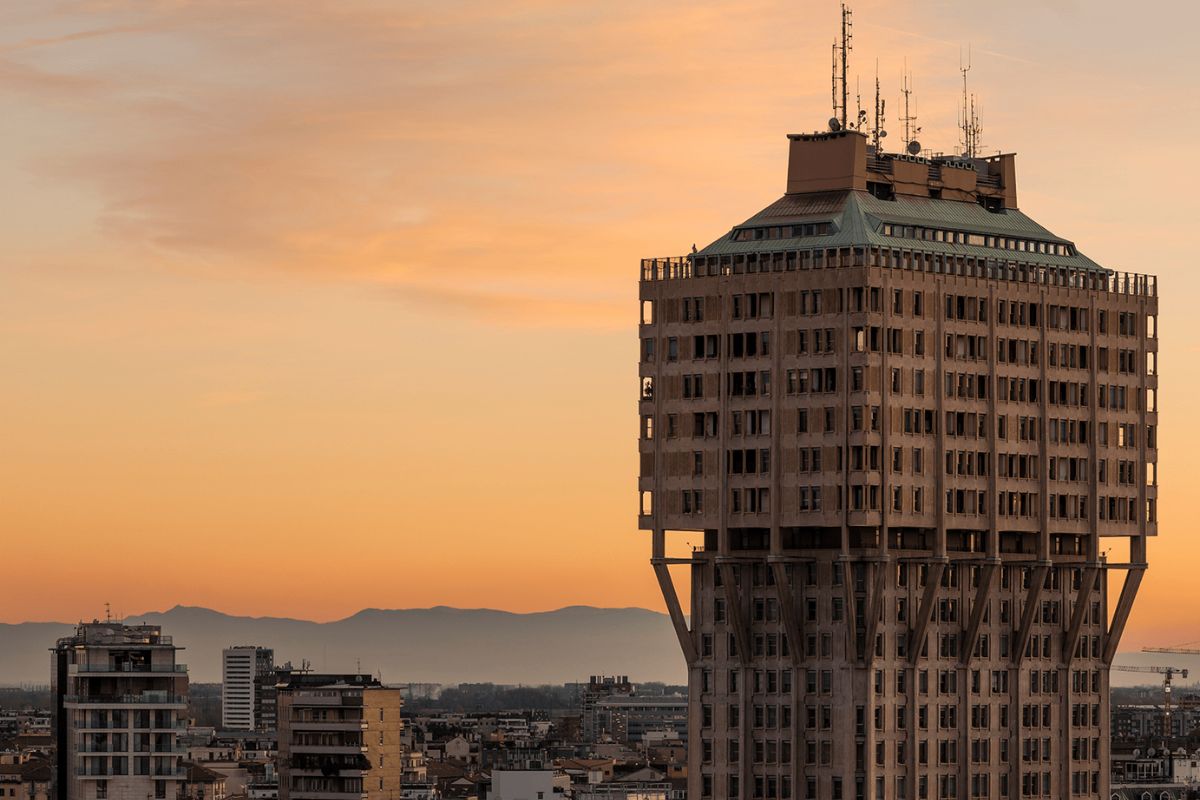
For those who design in Milan today, the Torre Velasca is not just a landmark: it is a method. It demonstrates that it is possible to graft high architecture into a historical context without camouflage, working on continuity, typologies and structure as urban language . The recent cycle of works – from mineral skin to refounded square – is not a makeover: it reactivates a piece of the city, updates performance (up to LEED Gold ), restores quality of use and public space.
Origins: BBPR and reconstruction
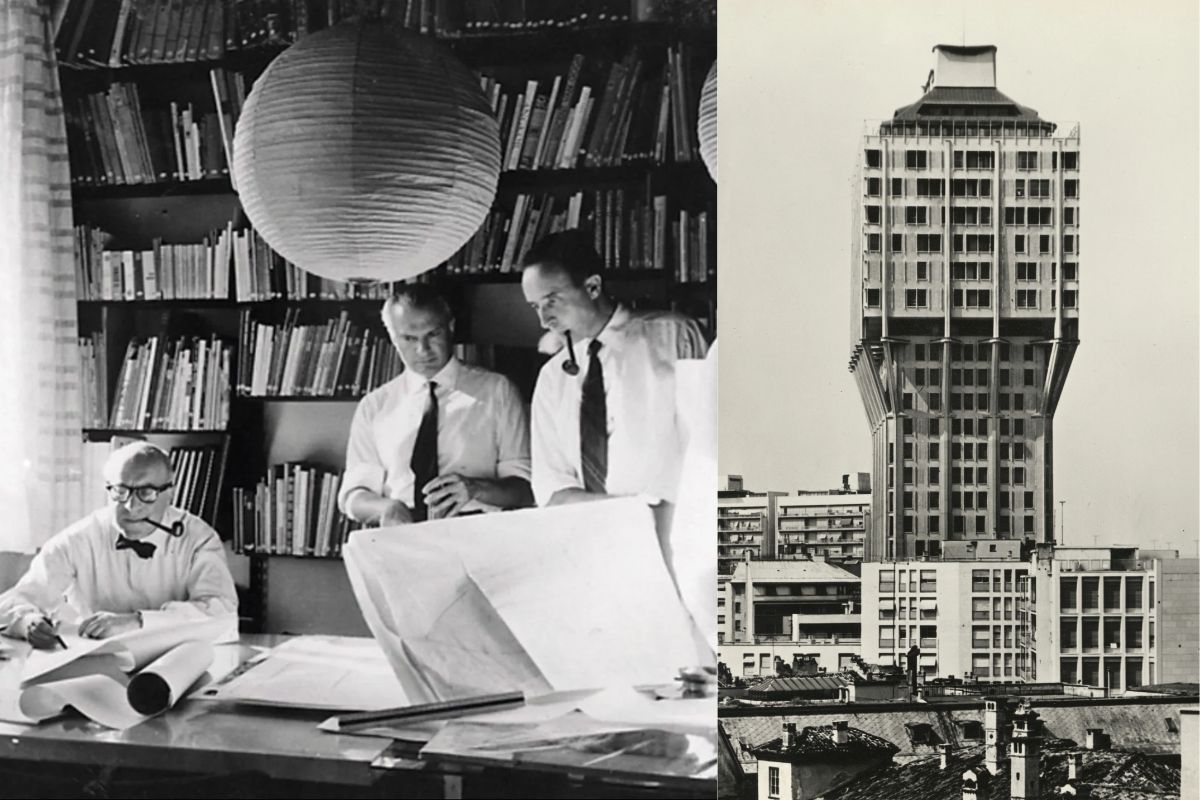
Designed by the studio BBPR (Banfi, Belgiojoso, Peressutti, Rogers) between 1956 and 1958 , the Velasca was born in the Milan of reconstruction . The idea: a mixed tower (shops/offices at the bottom, accommodation at the top) that cites the profile of the Lombard fortifications, without denying modernity. Not an imported International Style, but a Milanese way to contemporaneity.
Protection. In 2011 the Superintendency affixed the monumental restriction : the Velasca entered the list of assets of historical-artistic interest. Since then, every intervention must measure itself against the authenticity of the artefact.
The section that makes the shape: how the head works
The mushroom shape is not a plastic whim: it is structure that becomes expression. BBPR sew together two volumes: a slimmer body and a wider top body (the houses). A crown of diagonal struts of three floors starts approximately from the 15th level and unloads onto the framework of the stem; V-braces embrace the struts at the height of 18° . Inside the “head” there are 72 original apartments under a copper attic crowning . It is a mixed typological-structural device that translates the theme of continuity with the historical landscape into statics.
Measurements, typologies, cities
-
Height: 106 m (26 floors above ground according to technical sources).
-
Location: between Corso di Porta Romana and Via Larga , a stone’s throw from the Duomo, in Piazza Velasca .
-
Original use: commercial/tertiary base; residential top part. skyscrapercenter.com Wikipedia
Material and colour: why Velasca is “pink”
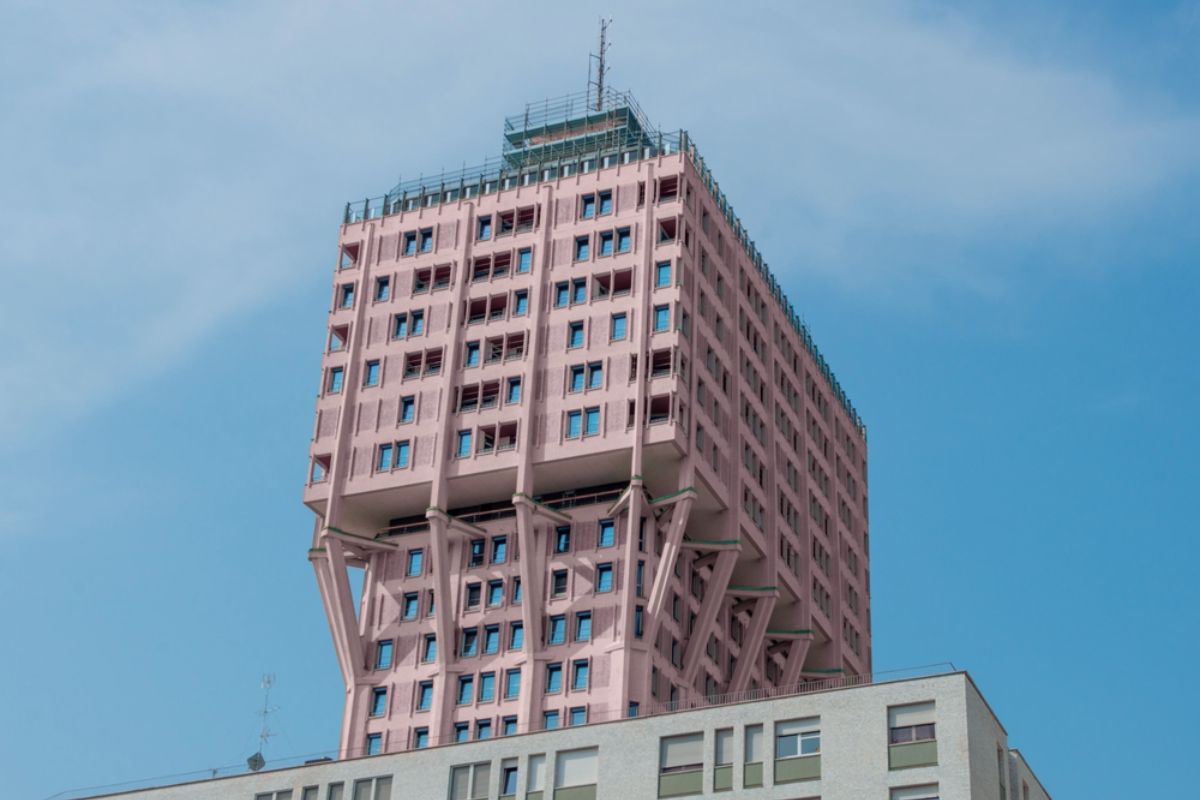
Decades of pollution had turned the tower grey. The restoration removed the deteriorations and restored the mineral finish with an ad hoc binder ( Legante Intonaco Velasca developed by Mapei) to restore the original color (pink-grey) , which varies with the light. It is a lesson on archival sampling , stratigraphies and compatible restorations .
From restoration to regeneration
The 20212025 intervention (Asti Architetti with Superintendency) replaces the systems, renews facades , fixtures and elevators , releases the key technical floors, redesigns the square with stone floors and furnishings that cite the BBPR design (integrated lighting on seats), and take away space from cars in favor of pedestrianism and greenery . It is the transformation from the isolated tower to the tower that takes place .
New uses: catering and hospitality at altitude
The ground floor and the basement accommodate functions open to the city . On the first floor is coming SUSHISAMBA , the first Italian restaurant of the international brand. On the upper floors (1926) the reconfiguration will host 72 suites & residences managed by Sunset Hospitality Group with the METT brand, with opening announced for Q4 2025 : a sign of the hybrid (livinghotelcatering) turning point that characterizes the towers contemporary.
Note: the development is led by Hines (investor/developer), who coordinated the process of valorization and refunctionalization of the property and the urban surroundings.
Criticisms, loves, debates
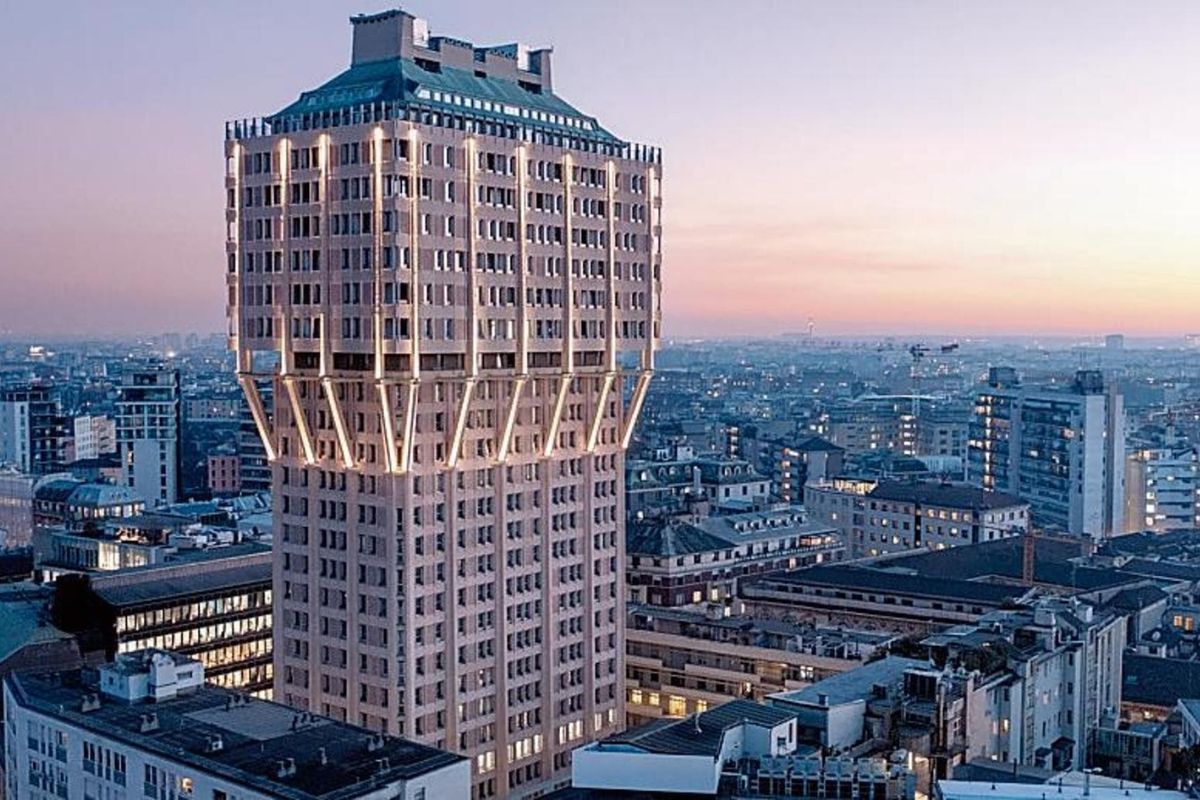
Every generation has had its Velasca: monster for some, masterpiece for others. But precisely this ambivalence made it a watershed in the Italian debate – anti-mimetic compared to the “glass-steel” of the time, rooted in the Lombard tradition without becoming historicist. Today, among international studies and reports, the building is read as a critical icon capable of resisting time and producing meaning in the contemporary city.
What we learn as designers (5 operational takeaways)
-
Mixed typology as vertical urbanism. The clear separation between the public base and the residential/receptive “head” is a rule of functional composition which generates shape and skyline.
-
Structure as language. Struts and braces are not an effect: they make the organism legible and anchor the building to its static system .
-
Matter as archive. The recovery of the original tonenal is not aesthetic: it is document ; it is done with research, samples and dedicated binders.
-
Ground floor = city. Regeneration passes through the square : pedestrian traffic, light, seating, trees, chosen retail. The building lives if the ground is welcoming .
-
Protection as a driving force. The constraint does not block: orients. Here he guaranteed quality restoration and permanence of identity.
Key data on the Velasca tower project
-
Architects: BBPR (Banfi, Belgiojoso, Peressutti, Rogers)
-
Years: 19561958
-
Height: 106 m
-
Floors: 26 above ground
-
Original use: commercial/offices + 72 apartments at the top
-
Protection: restriction 2011
-
Regeneration: 20212025, Asti Architetti with Hines ; new pedestrian square; environmental targets; hybrid functions (catering, hospitality).
Frequently asked questions about torre velasca (FAQ)
How tall is the Velasca Tower?
106 meters .
Why does it have that mushroom shape?
To separate the functions (public at the bottom, residential at the top) and to support the top body with a mesh of struts and braces which makes the structure legible on the facade.
Where is it?
In Piazza Velasca , between via Larga and Corso di Porta Romana, a few minutes from the Duomo (MM3 Missori ).
Is she bound?
Yes, since 2011 it has been well protected by the Superintendency.
What is inside the Velasca Tower today?
Commercial spaces and restaurants (coming soon SUSHISAMBA on the first floor) and, on the upper floors, residential hospitality (72 suites & residences METT by Sunset Hospitality Group , opening indicated Q4 2025).
Torre Velasca: what this project teaches, as designers, for the city
The Torre Velasca teaches that modernity can arise from pre-existences , not against them. Its strength lies in the dialogue : between ancient forms and modern techniques, between structure and typology, between protection and innovation of use. It is a reminder for those who design today: there is no regeneration without urban design, conscious material and typological courage . And there is no icon without care .