Water is mobile, everyday, essential. And yet, in contemporary design, it has also become language, gesture, precision, and atmosphere. Designing water does not simply mean controlling its flow; it means turning it into an experience: a domestic presence, a measure of comfort, a balance between technology and formal sensitivity. Cristina Rubinetterie’s journey fits precisely within …
Water is mobile, everyday, essential. And yet, in contemporary design, it has also become language, gesture, precision, and atmosphere. Designing water does not simply mean controlling its flow; it means turning it into an experience: a domestic presence, a measure of comfort, a balance between technology and formal sensitivity.
Cristina Rubinetterie’s journey fits precisely within this perspective. Founded on the shores of Lake Orta and grown in one of the symbolic territories of Italian manufacturing, the brand has built a solid industrial history rooted in a deep culture of making. Today, that history is entering a new phase: more aware in terms of brand identity, sharper in its design language, and increasingly focused on the relationship between supply chain, innovation, well-being, and identity.
In this conversation with Luca Poletto, Sales & Marketing Manager at Cristina Rubinetterie, the portrait emerges of a company that is reinterpreting itself without cutting ties with its origins. What takes shape is a concrete, far from decorative reflection on product culture, catalog coherence, Made in Italy quality, dialogue with designers, and that idea of Functional Elegance which, today more than ever, asks design to combine vision with responsibility.
Cristina was founded in 1949 on the shores of Lake Orta. What are its origins, and which values has the company preserved over time? How does its relationship with the Caleffi Group fit into this story?
Cristina was founded in 1949 on the shores of Lake Orta, in the heart of an area that, already in the 1950s and 1960s, was known for metalworking and alloy processing, especially brass. It was within this context, rich in manufacturing expertise and technical know-how passed down over time, that the Cristina family founded the company and developed it as a business deeply rooted in the Novara faucet district.
From the very beginning, several values have remained unchanged: attention to product quality, a strong connection with the local area and the people who work there, and the decision to keep production in Italy.
These elements made Cristina’s entry into the Caleffi Group in 2017 a natural step: a transition that strengthened the company’s industrial and organizational structure while preserving its original identity.
The acquisition was driven by the desire to protect a productive and human heritage: to maintain local labor, continue developing products within the territory, and guarantee an authentic Made in Italy approach.
Today, Cristina is a more structured company and part of a solid, innovative group. However, it remains a brand with a DNA strongly connected to Lake Orta and to the manufacturing culture that has shaped its history.
In recent years, faucets have evolved from technical products into increasingly central design elements within interiors. How has Cristina contributed to this transformation?
It is true that, in recent years, faucets and fittings have increasingly become design elements. However, for Cristina, the technical component has never stopped being essential. Today, our strength comes precisely from the union of these two dimensions: an idea of Functional Elegance in which aesthetics and technology coexist in a balanced way, giving shape to products designed to be reliable, intuitive, and long-lasting.
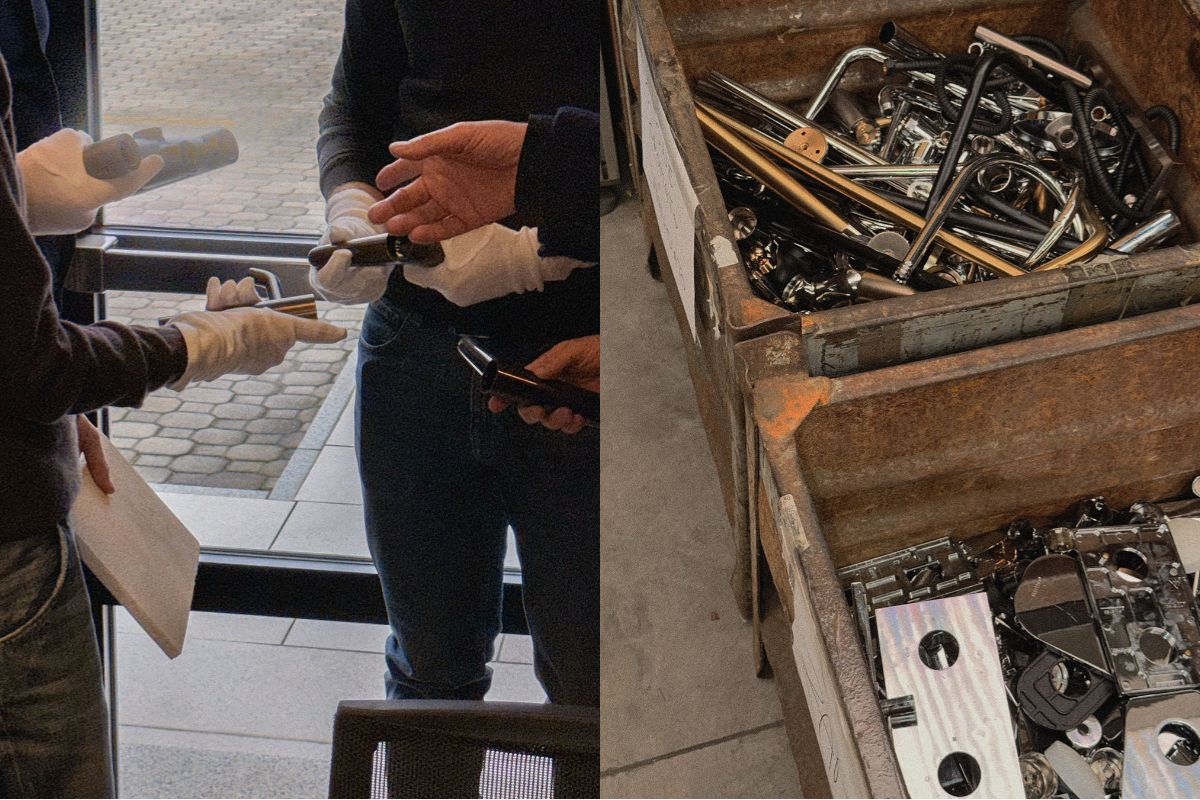
Cristina has contributed to this transformation by embracing a broader vision of the product: not simply faucets, but solutions designed to improve everyday well-being. This approach is made possible by the fact that a large part of our production is internalized, allowing us to control every stage, guarantee consistent quality, and respond flexibly to the needs of designers and architects.
At the same time, over the past few years we have worked intensively on product design, developing collections with a more defined aesthetic language, consistent with our DNA.
One significant example is “Tricolore Verde,” a historic series that represents an important part of our identity. At Salone del Mobile 2026, we will present it in a new design interpretation, introducing a more modular approach focused on bathroom customization.
Today, the market demands products that are beautiful, but also intelligent, functional, and capable of responding to people’s real needs. Cristina positions itself exactly in this space: a space that reflects how the way we live has changed, where in-house production, supply chain control, and construction quality become tools for creating products that go beyond simple aesthetics and become part of the everyday home experience.
Cristina now offers bathroom, kitchen, and outdoor collections, all characterized by a strong balance between aesthetics and technology. At the same time, you manufacture cartridges and stainless-steel components internally. In your view, what is the true balance between aesthetics and performance, and how important is supply chain control?

As mentioned, design is fundamental for Cristina, but it cannot exist without the technical dimension. Today, true value lies in the meeting point between aesthetics, performance, and well-being: an idea of elegance born from precision, durability, and the quality of the user experience.
A faucet should not only be beautiful. It must work flawlessly, last over time, and respond to the real needs of the people who use it.
Supply chain control is what allows us to achieve this balance. The proximity of our production facilities — all located within just a few kilometers of our headquarters — enables us to oversee every stage directly: from brass processing to cartridge production, through to stainless steel and finishes, which are produced in-house thanks to our new electroplating facility. This means consistent quality, reliable timing, better-controlled sustainability, and a very fast response capacity.
In addition, it allows us to create complete solutions: from shower and wellness systems to kitchens and outdoor environments, where stainless steel becomes a distinctive element. In this area as well, collections such as Tricolore Verde represent a new level of flexibility, thanks to a modular approach that expands design possibilities. Internal production allows us to offer a wide, high-performing range that remains harmonious in its aesthetic identity.
In a market that increasingly demands customization and tailor-made projects, especially in contract and hospitality, this flexibility is decisive. This is where design meets technology: in the ability to transform a product into a daily experience that is reliable, elegant, and consistent with our DNA.
Looking at your catalogs, one notices a wide variety of proposals. What is the process behind the creation of a new collection today? Do you collaborate with external designers, or is development handled internally?
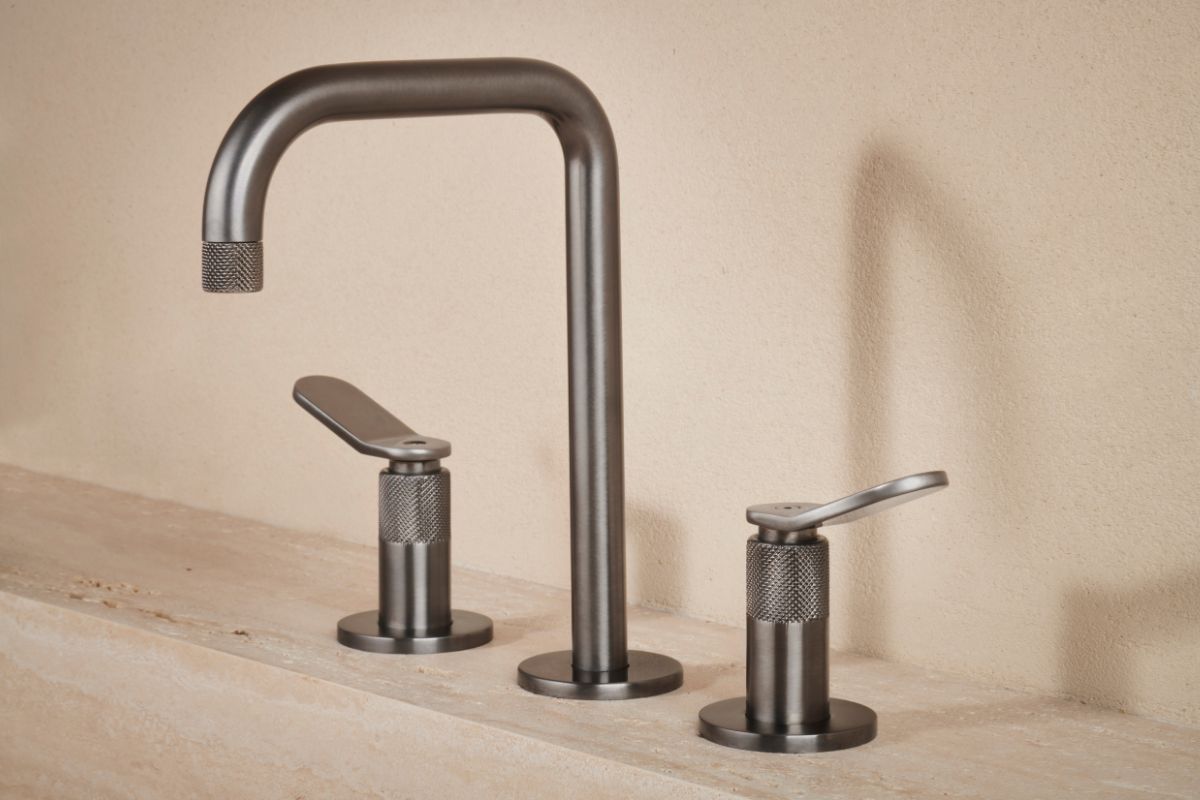
The process through which a Cristina collection is born has changed profoundly. In the past, we worked very much in response to the market: we collaborated with different designers and developed products that answered a specific request or trend. These were valuable collaborations that enriched the company, but they were not always part of a unified brand vision.
Today, the starting point is completely different: a collection is born from Cristina’s strategy and DNA. We ask ourselves what we represent, what we want to become, and which real customer need we can satisfy.
It is a cultural shift. Before, designers expressed themselves through Cristina; today, designers must express Cristina through the products. This is not a closure, but an alignment. The brand returns to the center, with a clear, elegant, and functional identity that guides every design decision.
For this reason, we have chosen to rely on a defined art direction, led by Prospero Rasulo, whose design thinking deeply reflects the style we want to pursue. This approach is part of the company’s natural evolution, with the aim of creating collections that do not live as isolated products, but belong to a shared, coherent, and recognizable language.
We are also reviewing some existing collections — always together with the designers who originally created them — in order to bring greater consistency to the entire offering.
Salone del Mobile 2026 will be the moment when this new vision takes concrete form. For us, it will be the first major stage of Cristina’s new era.
Four production facilities in the Novara area, a showroom in Milan, and almost entirely Italian production. What is the real challenge today in maintaining such an integral Made in Italy model?
Made in Italy has always been a cornerstone for Cristina, but today maintaining it is a concrete challenge. Not so much because of aesthetic preferences, but because of a profound market shift: on one side, there are commercial products, often imported, with very low prices; on the other, there is an increasingly informed consumer who recognizes quality but whose purchasing power has changed due to the general rise in costs.
In this context, producing in Italy means taking responsibility for defending a value:
- working with specialized local personnel
- controlling every stage of the supply chain
- guaranteeing consistent quality
- investing in technology and sustainability
It is a more complex commitment than simply “commercializing” products, because it requires organization, expertise, machinery, certifications, and a solid industrial vision. However, it is precisely what allows us to offer not just a beautiful object, but a product with thought behind it: ethical, safe, and made with attention to materials and their impact.
Today, our strength lies exactly in this choice. The values of the territory, combined with the structure of the Caleffi Group, allow us to support the investments needed to face major transformations in the sector — from the transition to new materials such as eco-brass to the development of water-saving technologies.
It is certainly a challenge, but it is also what sets us apart. For us, Made in Italy is not a slogan: it is the most authentic way to tell who we are and the story we want to continue building.
Your history is linked to important innovations: from the thermostatic mixer to the single-lever mixer, through to the evolution of internal cartridges. Today, which technologies are you developing or observing with the greatest interest in order to anticipate the needs of tomorrow’s living spaces?
The bathroom has become one of the most important areas of the home: an intimate space where we prepare, regenerate, and take time for ourselves. For this reason, the technologies we are developing move in two precise directions.
The first concerns benefits and solutions dedicated to personal comfort. In the shower environment, for example, we are working on configurations that respond to real needs: targeted body jets, waterfalls, therapeutic sprays, and systems designed to relieve tension in the neck or legs, with combinations conceived to offer a personalized and concrete experience. The goal is not to add functions for their own sake, but to create genuine moments of daily comfort.
The second direction concerns technological evolution. New generations are used to digital interaction and smartphones, and this will gradually lead to the introduction of more advanced systems.
We are studying solutions related to smart control:
- shower management through intuitive interfaces
- preset temperatures
- integration with home automation systems
- smart or scheduled activation
We are not yet at the point of introducing all of this on a large scale, partly because an important part of our clientele still prefers traditional mechanics. Our task, therefore, is to maintain a balance between technology and ease of use, always guaranteeing reliability and quality.
The structure of the Caleffi Group supports us in this evolution: companies such as Ekinex and the new research center, the “red cube,” allow us to explore areas related to electronics and, more recently, artificial intelligence applied to domestic systems. Cristina remains a brand with its own independent identity, but it can rely on very high-level technical expertise to develop truly innovative solutions.
Therefore, we look toward a future in which the bathroom will become an increasingly personal, transformable, and intelligent environment, where technology and comfort coexist to improve people’s daily lives.
The market increasingly demands modular, high-performing, and sustainable products, especially in contract and hospitality. How are you responding to the growing demand for customized solutions for hotels, spas, high-end residences, and outdoor spaces?
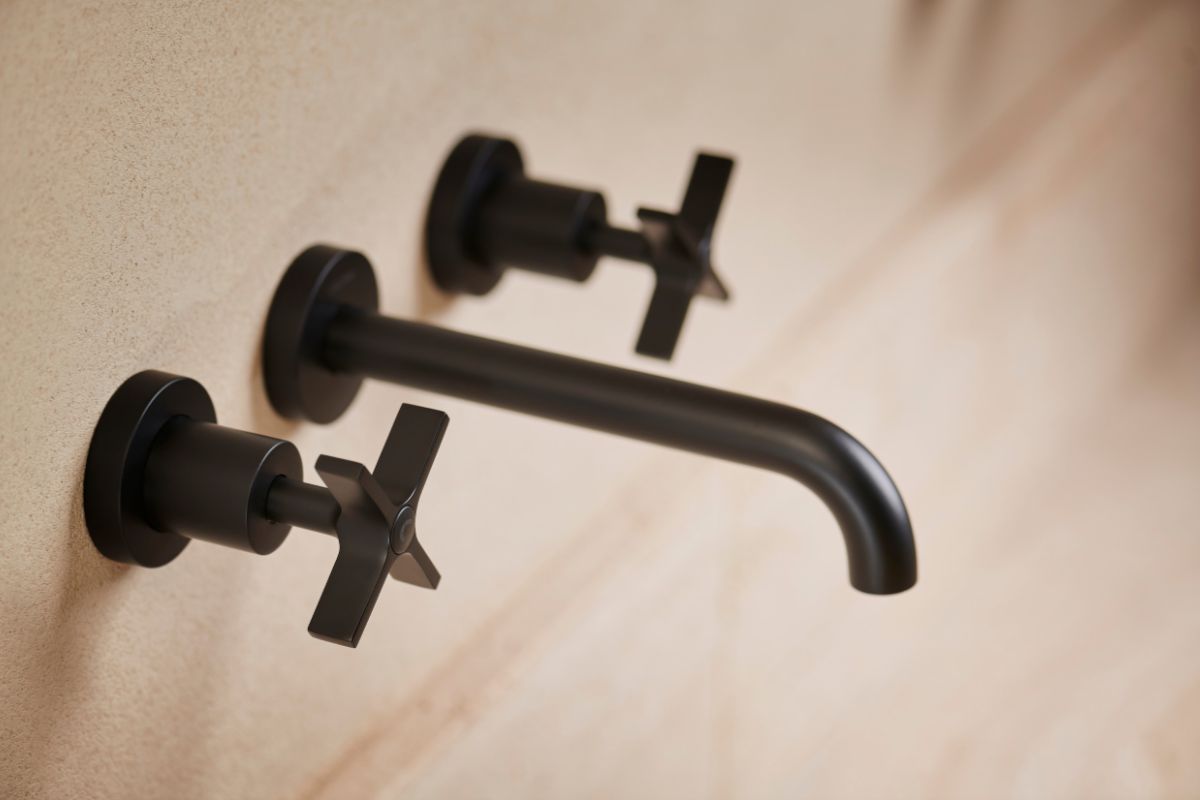
The world of contract and hospitality is one of our main observation points, because it brings together very clearly the needs of designers and the expectations of end users. Today, offering a beautiful product is not enough: what is needed is a solution that adapts perfectly to the context, while being high-performing, customizable, and sustainable.
For this reason, in recent years we have worked on a complete reconsideration of our offer: a deep effort involving the price list, variants, technical configurations, and aesthetic coherence across the different product families. The goal is to provide architects with tools that are simple to use and, at the same time, versatile enough to integrate into any type of project.
Customization takes place on two levels:
- Technical customization. In the shower world, for example, we offer modular solutions — body jets, waterfalls, showerheads, wellness functions — that can be combined according to the needs of the project. In the kitchen, we offer filtering mixers and specific configurations for professional environments or high-end residences. Outdoors, stainless steel delivers high performance, resistance to weather conditions, and an aesthetic that is coherent with the space.
- Aesthetic customization. Thanks to our new electroplating facility, we produce our finishes internally, with direct control over quality, durability, and also the sustainability of the production process. This allows architects to choose from different tones and achieve a perfectly coordinated result.
At the same time, we are carrying out significant work on sustainability: reducing plastic in packaging, optimizing water use in electroplating, using digital catalogs to limit printing, integrating water-saving aerators, and developing filtering mixers that help reduce domestic plastic consumption.
For us, customization does not simply mean “adapting a product.” It means designing an ecosystem of solutions capable of truly interpreting people’s lives and the needs of professionals. And this is the direction that defines Cristina’s new era.
If you had to choose one iconic Cristina product or collection, which would it be?
If we speak about “iconicity” in a historical sense, the answer can only be Tricolore Verde. It is a collection that belongs to Cristina’s DNA: recognizable, versatile, able to adapt to different styles, and deeply loved by the public. It is not just a series; it is an identity marker. And that is precisely why, at Salone del Mobile 2026, we will present it in a new interpretation, more complete and more consistent with the brand’s current vision.
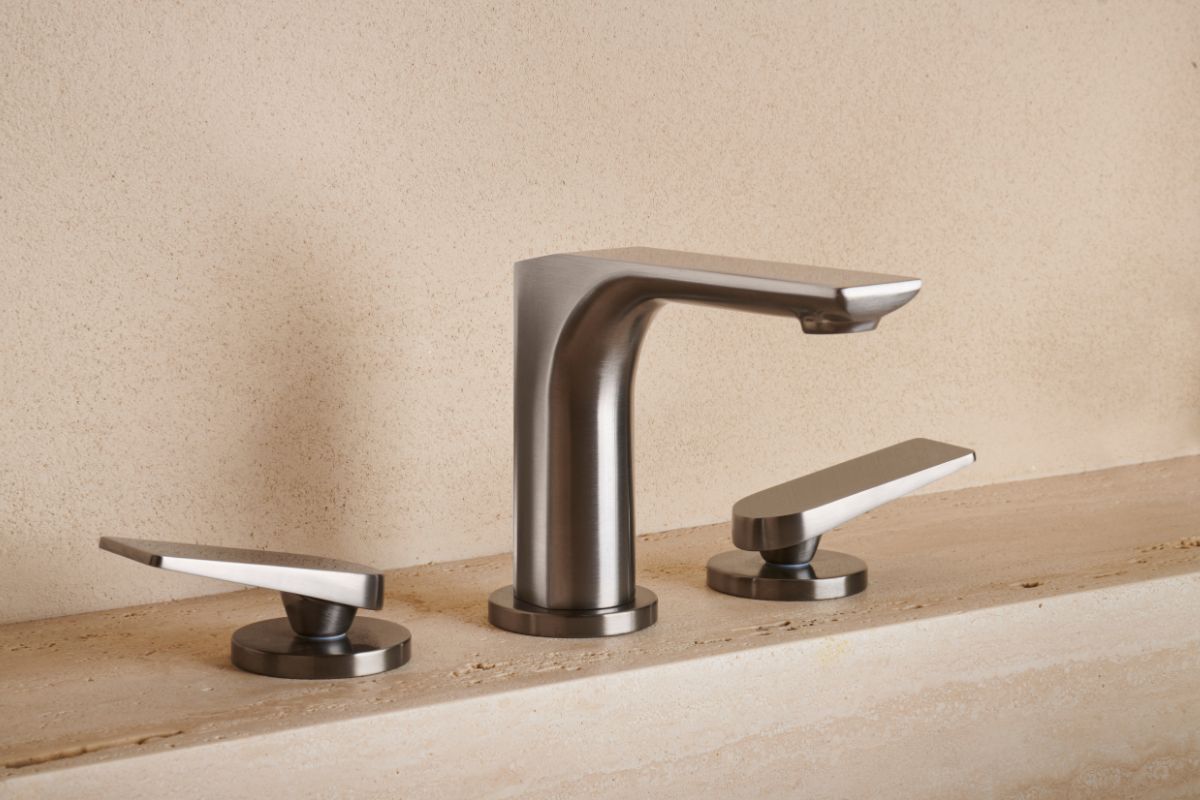
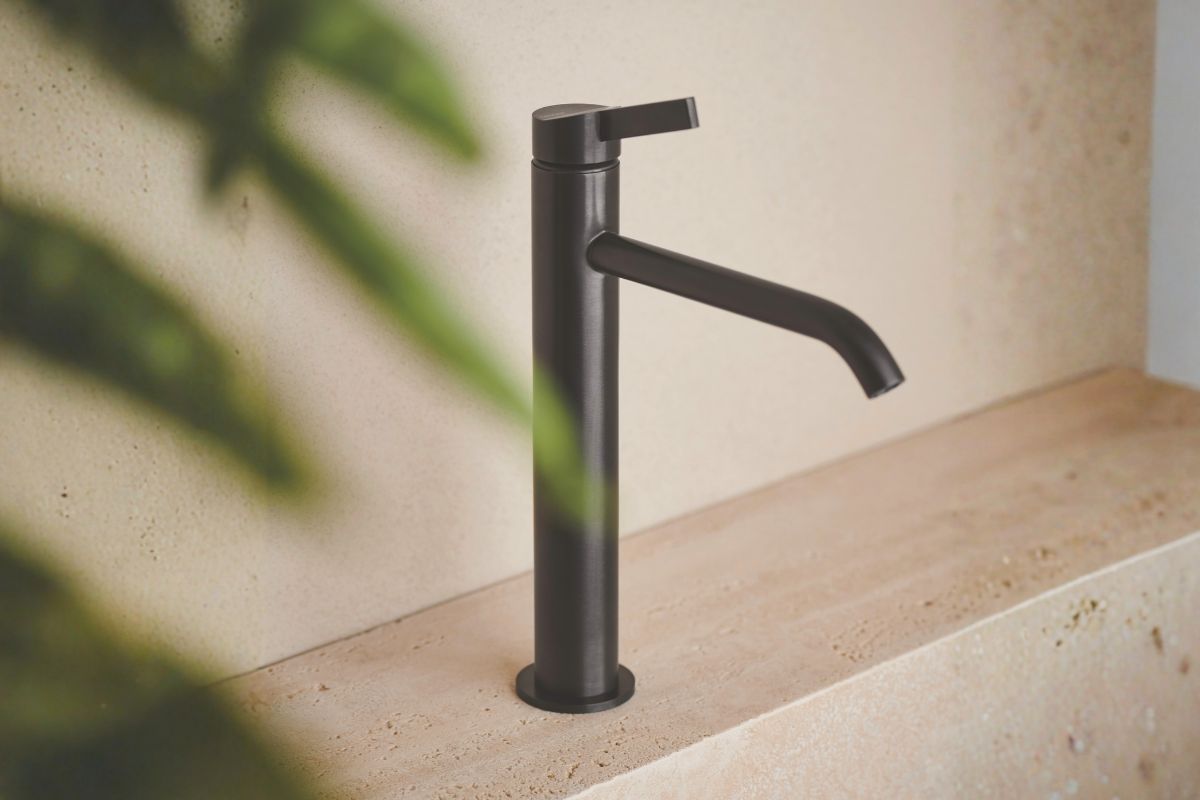
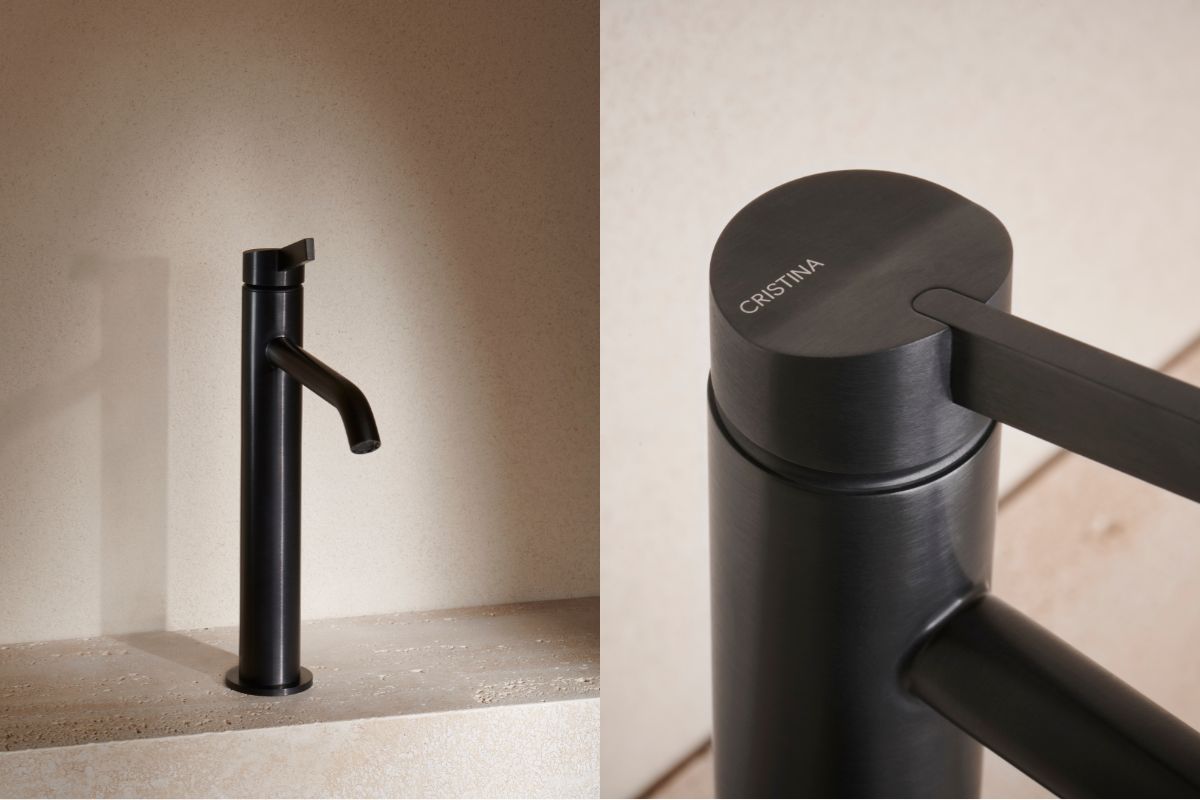
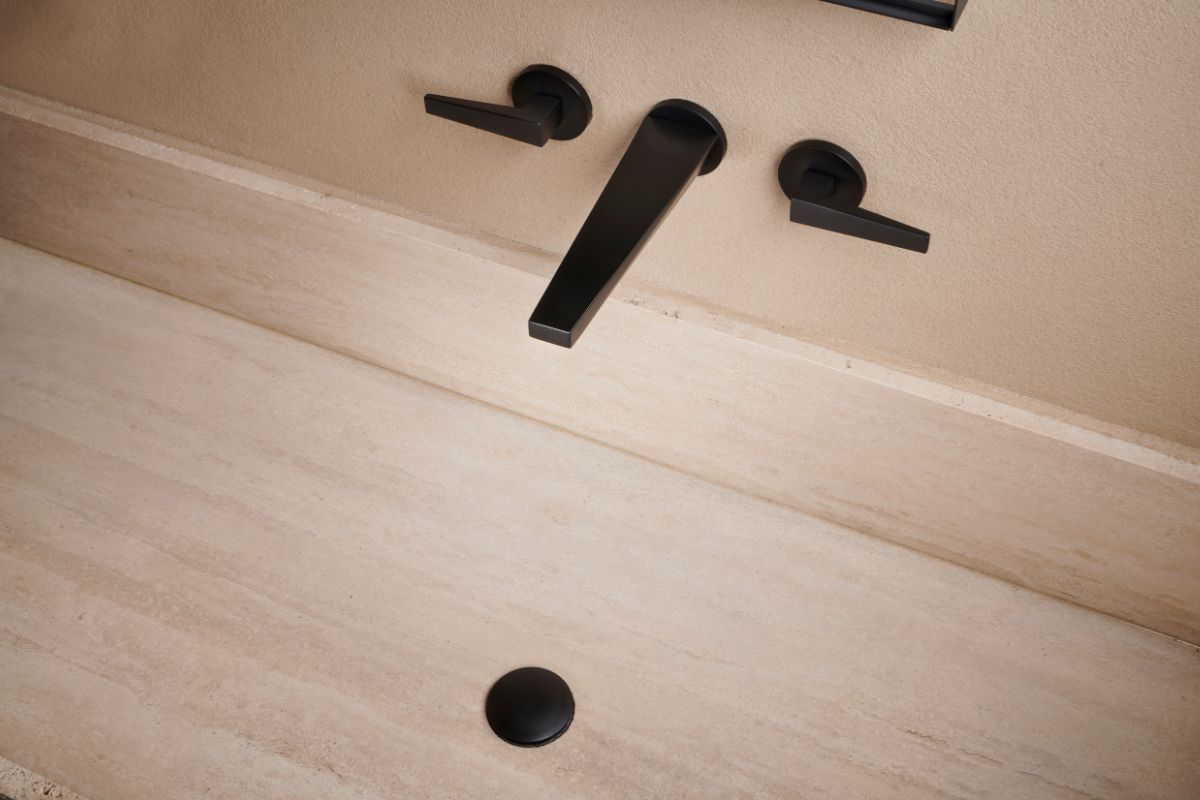
Alongside its history, however, there are collections that represent even more clearly what Cristina wants to be today and tomorrow. Piega, for example, perfectly expresses our expertise in stainless steel: a noble, resistant material that is increasingly in demand in both bathroom and outdoor settings.
Italy, on the other hand, interprets a contemporary neoclassical language, with a detail that few people know: its handles are inspired by old perfume bottles, whose facets they reinterpret. It is an elegant, delicate reference that clearly reflects our attention to aesthetics without giving up functionality.
We could say that Tricolore Verde preserves our history, while Piega and Italy reflect our future direction. Together, they represent Cristina’s journey: a balance between solid roots and a more mature, conscious, and coherent design vision.
Are there sketches or drawings behind your collections? Is there a particular anecdote or story linked to their creation?
Every collection is born from a structured design journey made of discussion, research, and interpretation of our DNA. Some also have fascinating stories behind them. One example is Italy, which carries a little-known detail: its handles are inspired by old perfume bottles. The facets, the play of light, the material presence — everything comes from that elegant, timeless imagery, reinterpreted through a contemporary lens. It is one of those cases where the story of the product perfectly matches its aesthetic.
As for Tricolore Verde, since it is a historic collection that we will present in a new form at Salone del Mobile 2026, we cannot yet share drawings or previews. It will be an important reinterpretation, bringing together different areas of expertise and shaping a proposal that is much more complete than in the past.
We do, however, have sketches and materials related to some of the collections that represent our current identity, and we are happy to share them selectively. We are also putting together a list of products that best express the brand’s new direction, so that we can tell not only the object itself, but also the process and thinking behind its development.
The relationship with architects and interior designers has become increasingly central. How do you engage with professionals, and how does communication change when you address the final consumer instead?
For us, professionals are essential: they are the meeting point between the brand and the final customer. They are the ones who interpret the needs of contemporary living and transform our offer into concrete solutions. Our dialogue with architects and interior designers is continuous, structured, and above all based on clarity: a rational price list, reduced and understandable variants, well-organized technical tools, and collections that are coherent with one another. This allows designers to work easily, choosing products that solve aesthetic and functional needs without unnecessary complexity.
When we communicate with the final consumer, the perspective changes. Today’s customer is more informed, curious, and willing to explore: they research materials, solutions, and meanings before making a choice. The customer does not necessarily need to know every technical or production detail, but they do want to understand the experience, the quality of the materials, durability, and attention to detail.
In this sense, the professional remains an essential mediator, capable of interpreting and translating the product’s value in a simple and personalized way. Our task is also to offer final consumers clear access points to the story of the brand and the product, without overloading them with complexity.
Looking ahead to 2035, how do you imagine Cristina ten years from now? What will the brand’s identity and long-term direction be?
If we imagine ourselves in 2035, we see a brand that will have completed the transformation process begun in recent years. The work we are doing now — on catalog coherence, aesthetic language, design, and supply chain strengthening — is aimed precisely at building a stronger, more recognizable, and more contemporary Cristina in the long term, with product, communication, and identity perfectly aligned.
Our strength will continue to be supply chain control. We believe that in 2035, the value of Made in Italy will be even more relevant, especially in a market that will require sustainable, traceable products made with specialized expertise. In this sense, investments in materials such as stainless steel and new production technologies — including in-house finishes — will allow us to confidently face the regulatory changes already underway, from the transition to eco-brass to more advanced water-saving solutions.
We also imagine Cristina becoming increasingly solution-oriented: shower environments and wellness systems capable of integrating with the smart home, intuitive digital interfaces, and products designed to improve the everyday experience without losing the ease of use that our audience appreciates.
The synergies with the Caleffi Group will be a natural accelerator: they will allow us to continuously explore areas such as electronics, sensors, and intelligent water management, while maintaining a fully autonomous and recognizable identity.
By 2035, we see a company that will have consolidated its positioning:
- an authoritative design brand, thanks to a strong and coherent art direction;
- a reference point for architects and interior designers, thanks to a clear and customizable range;
- a solid industrial company, capable of producing in Italy with a sustainable and responsible approach;
- a brand close to the final customer, chosen for daily well-being, quality, and reliability.
We imagine a Cristina that will not only have evolved its products, but will also have built a mature, conscious, and relevant design culture within the international landscape.
For those who wish to explore this new phase of Cristina Rubinetterie in person, Milan Design Week 2026 will be an interesting moment to follow, between Salone del Mobile.Milano and CRISTINA Brera, in the heart of the city.
On Archi&Interiors, it is also possible to visit Cristina Rubinetterie’s dedicated page, featuring additional materials, catalogs, and useful references to discover the company more closely.