In 2026, talking about outdoor design furniture does not simply mean chasing the latest seasonal launches. It means recognising which pieces have already passed the hardest test of all — the test of time — and still continue to shape the visual language of gardens, terraces and open-air living spaces today. True outdoor design icons …
In 2026, talking about outdoor design furniture does not simply mean chasing the latest seasonal launches. It means recognising which pieces have already passed the hardest test of all — the test of time — and still continue to shape the visual language of gardens, terraces and open-air living spaces today. True outdoor design icons are not just successful garden furniture pieces: they are objects that introduced a new design language, a new idea of comfort, and a new relationship between material, landscape and outdoor life.
Some were created in the post-war years, when outdoor spaces began to break free from the logic of purely functional furnishing; others emerged later, reflecting a more refined, architectural and sophisticated way of living outside. Today, while the market continues to multiply collections, finishes and reinterpretations, certain pieces remain untouchable. Not because they belong to the past, but because they still speak with remarkable precision to the present.
From Willy Guhl to Richard Schultz, from Brown Jordan to Fermob, and including those collections that turned outdoor seating into a true style statement, here are five icons that in 2026 still define the outdoor space with a rare kind of strength: the strength of classics that do not need to follow fashion in order to be chosen.
What really makes outdoor furniture iconic
In outdoor design, an icon is not necessarily the most sold or the most photographed product. A piece becomes iconic when it introduces a recognisable shape, an innovative use of material, a different posture for the body, or a new idea of comfort that did not exist with such clarity before. Over time, that object stops belonging only to its brand or its era and begins to live on as a cultural reference.
Today, at a time when outdoor spaces are becoming more essential, less noisy and more architectural, these icons feel especially relevant. Not only because they carry a strong history, but because they offer an increasingly rare quality: they give character to a space without overloading it. They function almost like landscape devices — pieces that define presence, rhythm and atmosphere.
Loop Chair by Willy Guhl: the sculptural seat that taught outdoor design the power of essential form
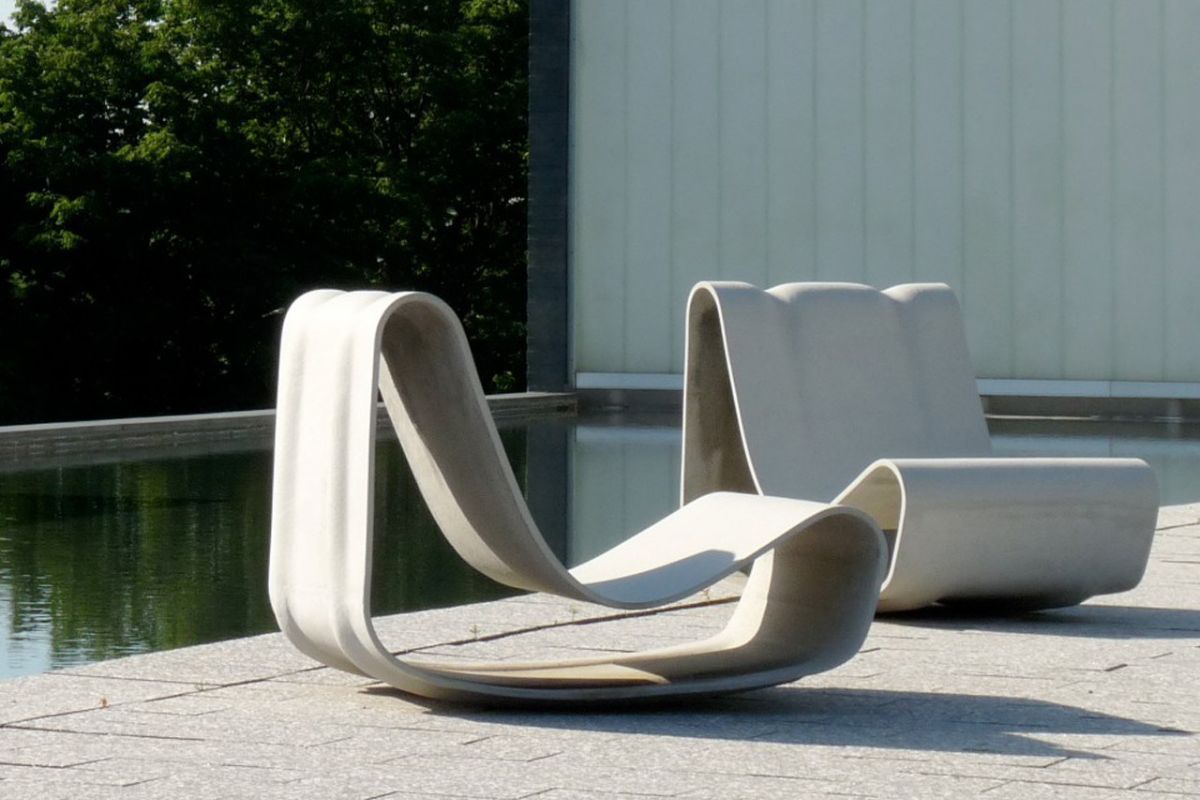
Among the great icons of 20th-century outdoor furniture, the Loop Chair by Willy Guhl holds a special place. Designed in 1954, it was developed in collaboration with Eternit as part of a study into the possibilities of fibre cement. Guhl envisioned a loop-shaped seat made from a continuous folded sheet, creating a silhouette that is minimal, expressive and unexpectedly powerful. Architectural Digest still describes it as one of the most celebrated examples of innovative mid-century design, while its return in a safe reissued version by Swisspearl confirms its historical and design relevance.
What makes the Loop Chair so important is that it does not look like ordinary outdoor furniture. It looks like a sculptural presence — almost like a small inhabitable artwork. That ambiguity is exactly what keeps it so current in 2026, in a landscape where the best outdoor design furniture increasingly merges function, material and architectural gesture. Its simplicity is never cold: it feels tactile, physical, almost geological. Beside a pool, in a mineral courtyard or within a contemporary dry garden, it still delivers a visual force that very few pieces can match.
Luxembourg by Fermob: the chair that transformed a public design archetype into a global classic
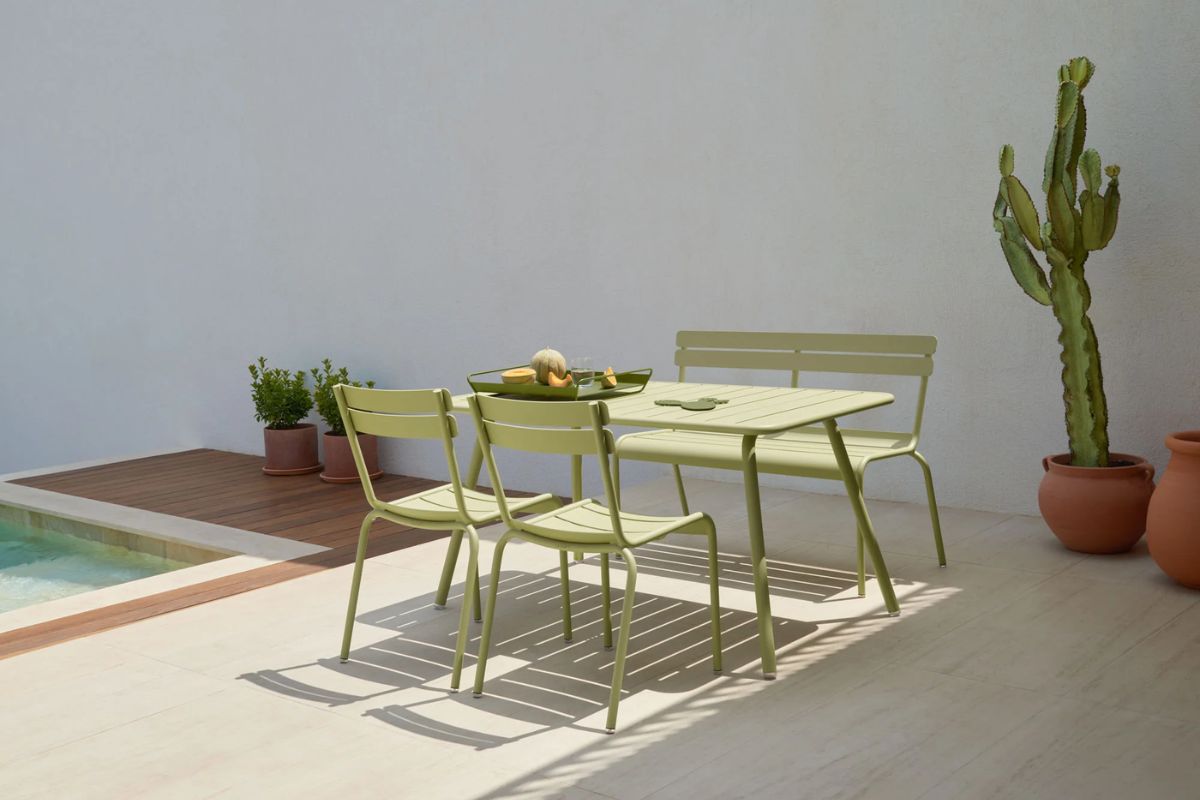
Some objects become iconic not because they were conceived as revolutions, but because they reinterpret collective memory with intelligence. The Luxembourg collection by Fermob belongs to this category. The brand explains that in 2004, Frédéric Sofia was commissioned to reinterpret the legendary chairs of the Jardin du Luxembourg in Paris, originally created in 1923 by the city’s workshop, translating them into a contemporary aluminium collection that is both lightweight and durable, with the signature curved slats that define the seat.
The success of Luxembourg lies in its balance. It is recognisable without being heavy, urban without losing lightness, historical without becoming nostalgic. In 2026, it remains relevant because it answers one of the strongest needs of contemporary outdoor living: designer garden furniture that is practical, colourful, durable and sophisticated at the same time. Its hybrid character — part public furniture, part Parisian memory, part international design classic — makes it equally suitable for compact terraces and refined outdoor dining areas, where a discreet but recognisable icon is needed.
1966 Collection by Richard Schultz for Knoll: when modern outdoor furniture truly began
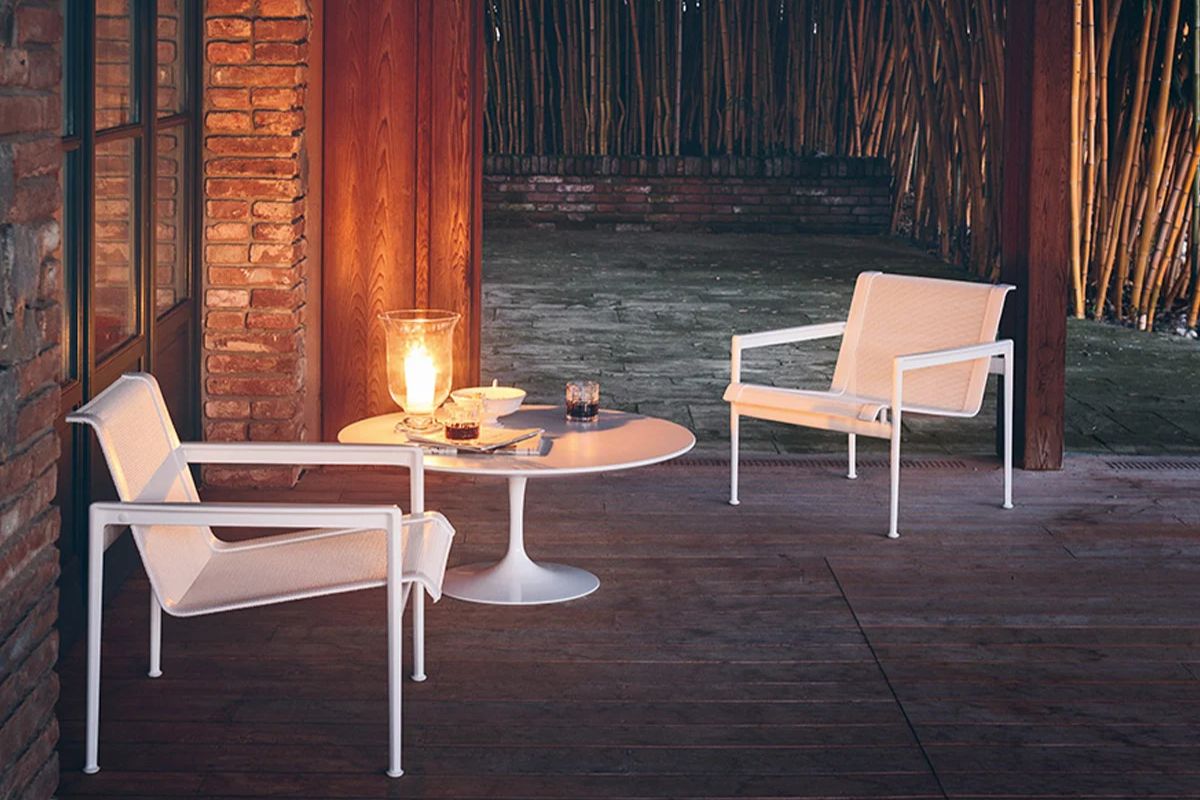
If one had to identify the moment when modern outdoor furniture took shape with full design awareness, the 1966 Collection by Richard Schultz for Knoll would remain one of the strongest references. Knoll explains that Schultz designed the collection at the request of Florence Knoll, who wanted outdoor furniture that was beautifully designed yet able to withstand the corrosive sea air of Florida. The company itself describes it as “the first truly modern outdoor collection” and notes that it is part of the permanent collection of the Museum of Modern Art in New York.
The 1966 Collection matters not only for its story, but for what it still represents today: restraint as a form of luxury. There is no unnecessary decoration, no nostalgic garden romanticism — only structure, proportion, durability and a dry elegance that has lost none of its sharpness. In 2026, as outdoor spaces increasingly move closer to the language of interior architecture and comfort is no longer confused with excess, Schultz’s collection still feels strikingly current because it never tries to please too much. It is modern in the most demanding sense of the word: it does not age.
Walter Lamb Collection by Brown Jordan: the American classic that shaped relaxed poolside elegance
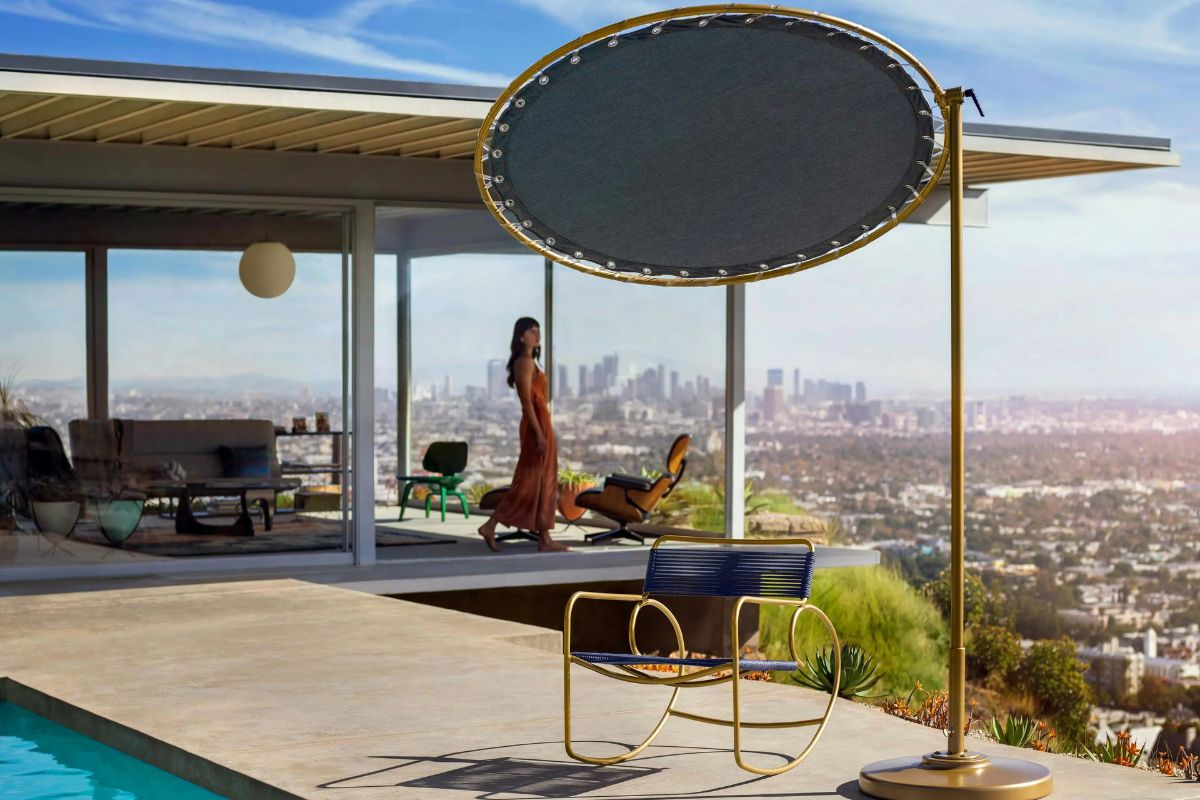
If the 1966 Collection represents the rigour of modernism, the Walter Lamb Collection by Brown Jordan tells a different story in the history of iconic outdoor furniture: one rooted in cultivated American leisure, openness to the landscape and relaxed sophistication. Brown Jordan presents it as its “original icon” and traces its origins back to 1948, highlighting the pioneering use of bent aluminium tubing and nautical rope.
Even today, this collection maintains a very particular appeal because it works through a contradiction that feels highly contemporary: it is sophisticated and relaxed, technical and artisanal, carefully designed yet never rigid. In the language of outdoor living in 2026 — a language that values long-lasting materials, authentic comfort and continuity between architecture and nature — Walter Lamb still suggests a form of luxury that is not ostentatious. It is made of open lines, shadows, lightweight surfaces and time spent outdoors without theatricality. It is one of those rare cases in which a classic does not need to assert its pedigree. It simply inhabits space beautifully.
Tropicalia by Patricia Urquiola for Moroso: the contemporary icon that made outdoor design more sensory and graphic
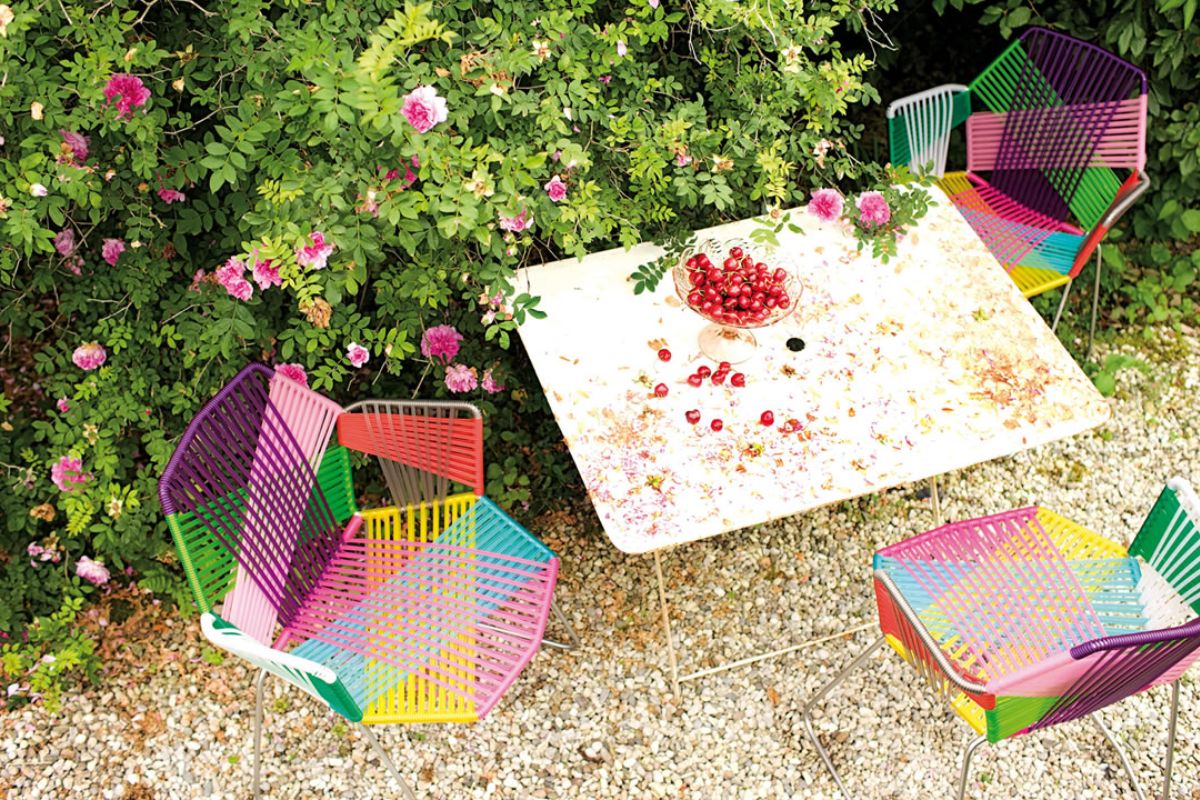
When discussing outdoor design icons, there is no need to look only at historical classics. Contemporary design, too, has produced pieces that are clearly destined to leave a lasting mark. That is why we chose to include Tropicalia, the collection designed by Patricia Urquiola for Moroso in 2008: a project that, while more recent than other pieces in the canon, has already expressed a distinct and recognisable vision of outdoor living.
What makes it instantly identifiable is its woven structure, developed from the earlier Antibodi project. A faceted tubular steel frame becomes the support for a refined weave made of solids and voids, rhythm, transparency, colour variation and tactile depth. The result is a rare balance between lightness and visual presence, between structure and vibration.
Tropicalia helped move outdoor furniture towards a more emotional, sensory and visually expressive dimension, without ever giving up elegance. It does not belong to the register of nostalgia, but to that of an informed and layered contemporary design language. In 2026, it continues to speak with great precision to the design of outdoor spaces, reminding us that comfort can also have a graphic dimension, that decoration can become structure, and that designer outdoor furniture can support aesthetic complexity without ever becoming superficial.
Why these pieces still define outdoor trends in 2026
The reason these icons remain central is not only historical. It is deeply connected to design itself. Each of them, in a different way, answers what outdoor spaces demand today: durability, identity, proportion, comfort and quality of presence. At a time when gardens and terraces are designed as true extensions of the home, and when people increasingly prefer to invest in a few meaningful pieces rather than many forgettable ones, the objects that have stood the test of time become the most credible again.
The Loop Chair brings a sculptural, almost primal force to the outdoors. Luxembourg introduces an urban, cultivated sense of lightness into open-air living. The 1966 Collection still represents the clearest expression of modernist outdoor furniture. Walter Lamb preserves the relaxed elegance of great American outdoor living. Tropicalia, finally, reminds us that the contemporary can also be vibrant, tactile and sophisticated.
These are five different ways of understanding design, but they share one common lesson: the best outdoor furniture pieces do not age when they stop being new. They age when they stop having something to say. And these icons, in 2026, still have a great deal to tell.