With the arrival of spring, terraces and outdoor spaces once again become some of the most enjoyable areas of the home. The light changes, the days grow longer, and there is an almost instinctive desire to spend more time outside, even in the city. And yet, understanding how to furnish a terrace in a harmonious …
With the arrival of spring, terraces and outdoor spaces once again become some of the most enjoyable areas of the home. The light changes, the days grow longer, and there is an almost instinctive desire to spend more time outside, even in the city. And yet, understanding how to furnish a terrace in a harmonious way is not always so straightforward. All too often, furniture, planters and accessories are added without an overall vision, resulting in a space that feels unwelcoming, impractical or simply confused.
A well-designed outdoor area, however, is not defined only by budget or square footage. What matters most is the balance between function, proportion and atmosphere. A terrace can be small and beautifully resolved, or spacious yet oddly dispersive. It can have real potential and still feel cold because it lacks shade, greenery or a properly defined lounge area. Spring is the ideal time to rethink it more carefully, addressing real problems and turning them into concrete design choices.
Whether it is a penthouse terrace, a covered terrace, an open-air space or an outdoor area meant to be used every day, the point is not to fill it, but to shape it. More than ever, furnishing outdoor spaces today means aiming for a contemporary aesthetic while also creating comfort, flexibility and an immediate sense of wellbeing.
How to furnish a terrace in spring, starting from the right foundations
How to understand how you really want to use your terrace
Before choosing outdoor furniture, colours or plants, it helps to begin with a simple question: how do you want to use this outdoor space? It could become a breakfast spot, a place to read, entertain friends, enjoy dinner outdoors or simply carve out a greener, more relaxing corner.
The most common mistake is trying to make too many functions coexist in the same space, especially when square footage is limited. It is better to identify one main function and one secondary one. If the terrace is meant primarily for entertaining, the table and seating will be at the heart of the project. If relaxation is the priority, then a terrace sofa, comfortable armchairs, an outdoor rug and soft evening lighting should take the lead.
How to choose terrace furniture without getting the proportions wrong
One of the most frequent mistakes is buying beautiful pieces that are completely out of scale. On a small terrace, furniture that is too deep makes movement difficult and overwhelms the space. On a large terrace, by contrast, pieces that are too slight can look visually lost and leave the whole setting feeling unfinished.
To avoid this, it is essential to measure carefully and always leave breathing room between the various elements. An outdoor project works when every piece has enough space to exist and movement remains fluid. Tables, chairs, planters and lighting points should relate to one another, not compete for space.
How to furnish a terrace based on size, shape and layout
How to furnish a small terrace without making it feel overcrowded
When looking for ideas on how to furnish a small terrace, the most common risk is trying to include too much. Small tables, chairs, plants, storage pieces and lanterns may all seem useful, but the result can quickly feel cluttered.
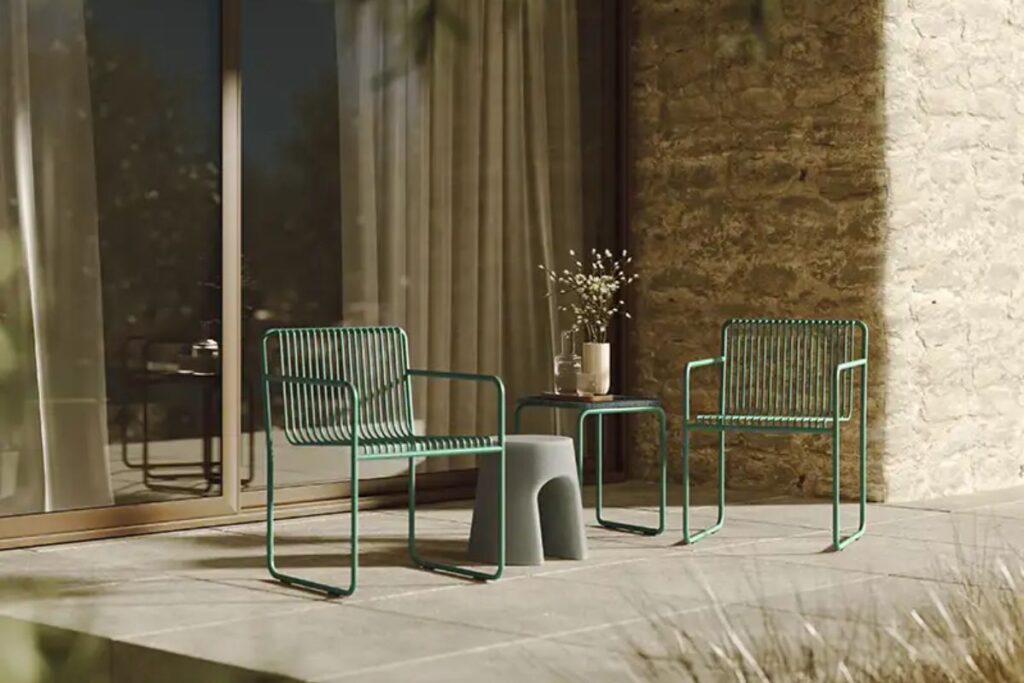
A more selective approach works far better here. A storage bench, a simple bistro set, two well-designed chairs or a folding table can be enough to make the space more liveable. Greenery should also be handled with restraint: it is better placed along the perimeter or arranged vertically, rather than taking over the centre of the terrace.
If the goal is a cleaner, more contemporary look, planters and sculptural elements can add character without weighing the space down. In this sense, brands such as Plust Collection offer interesting inspiration for those drawn to more graphic volumes and an outdoor style with a modern design language.
How to furnish a large terrace without letting it feel too dispersed
On a spacious terrace, the issue is not fitting furniture in, but giving the space structure. If you do not define clear zones, even a beautiful terrace can end up feeling empty, cold or temporary.
The key is to divide the terrace into functional areas: a dining space, a lounge area, a more scenic green corner and perhaps a more intimate spot for reading or an aperitif. There is no need for rigid separation. Often, an outdoor rug, the orientation of the sofas, alternating planters or the use of lighting are enough to make the layout feel more considered and complete.
How to furnish a long, narrow terrace in a functional way
A long, narrow terrace is one of the trickiest layouts to manage. People often try to fight its shape, when in fact it is much more effective to work with it.
In these cases, it is best to follow the linear flow of the space. A bench or slim table placed against the wall, lightweight seating, planters arranged along one side only and carefully measured accessories will work much better. When the central walkway remains clear and the composition develops in a coherent way, even a narrow terrace can feel far more elegant than expected.
How to furnish a long, narrow terrace in a functional way
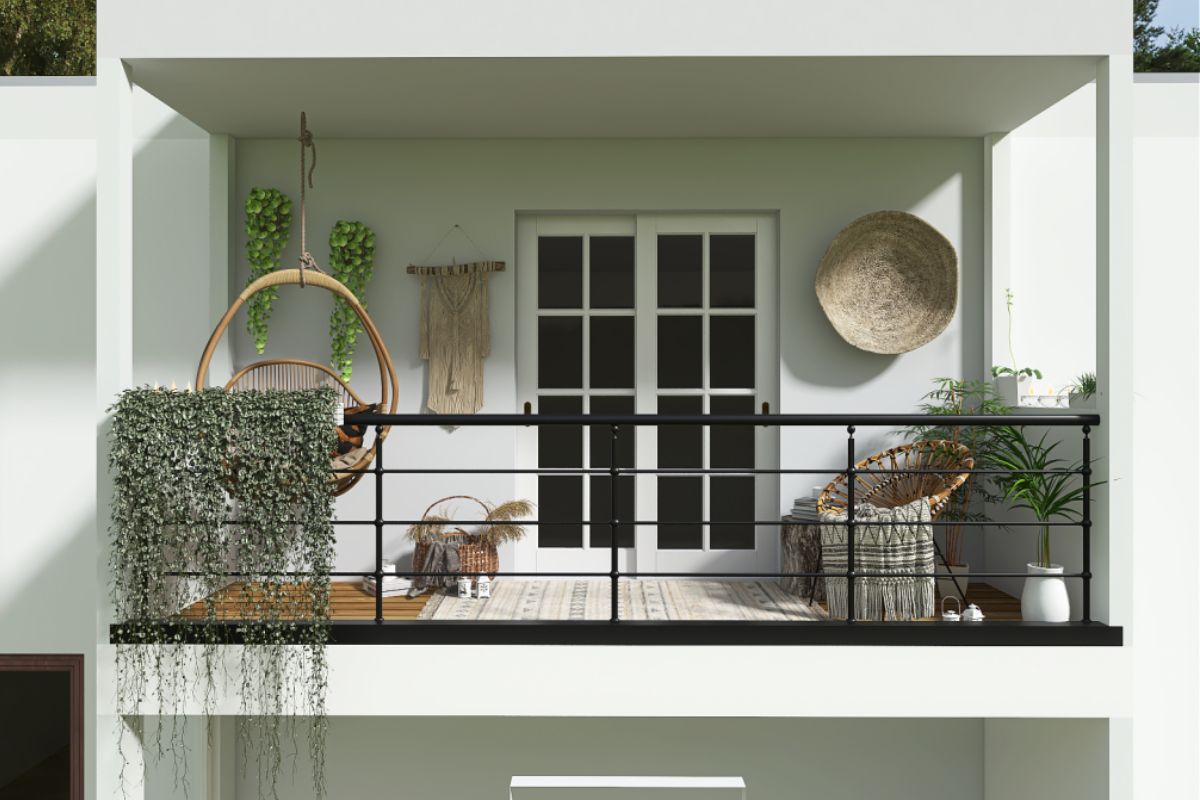
When you have between 20 and 30 square metres to work with, a very interesting opportunity opens up: you can create a truly multifunctional outdoor space. The real question, in these cases, is how much room to dedicate to entertaining and how much to relaxation.
The most balanced solution is often a hybrid layout. On one side, a well-proportioned table for outdoor lunches and dinners; on the other, a small lounge area with armchairs or a compact sofa. If space allows, greenery can also work as a screen, making the setting feel more private. In this type of project, brands such as Unopiù, Gervasoni or Varaschin can be valuable references for anyone seeking an outdoor setting with a more refined and coherent aesthetic.
How to furnish covered and uncovered terraces in spring
Ideas for furnishing an uncovered terrace
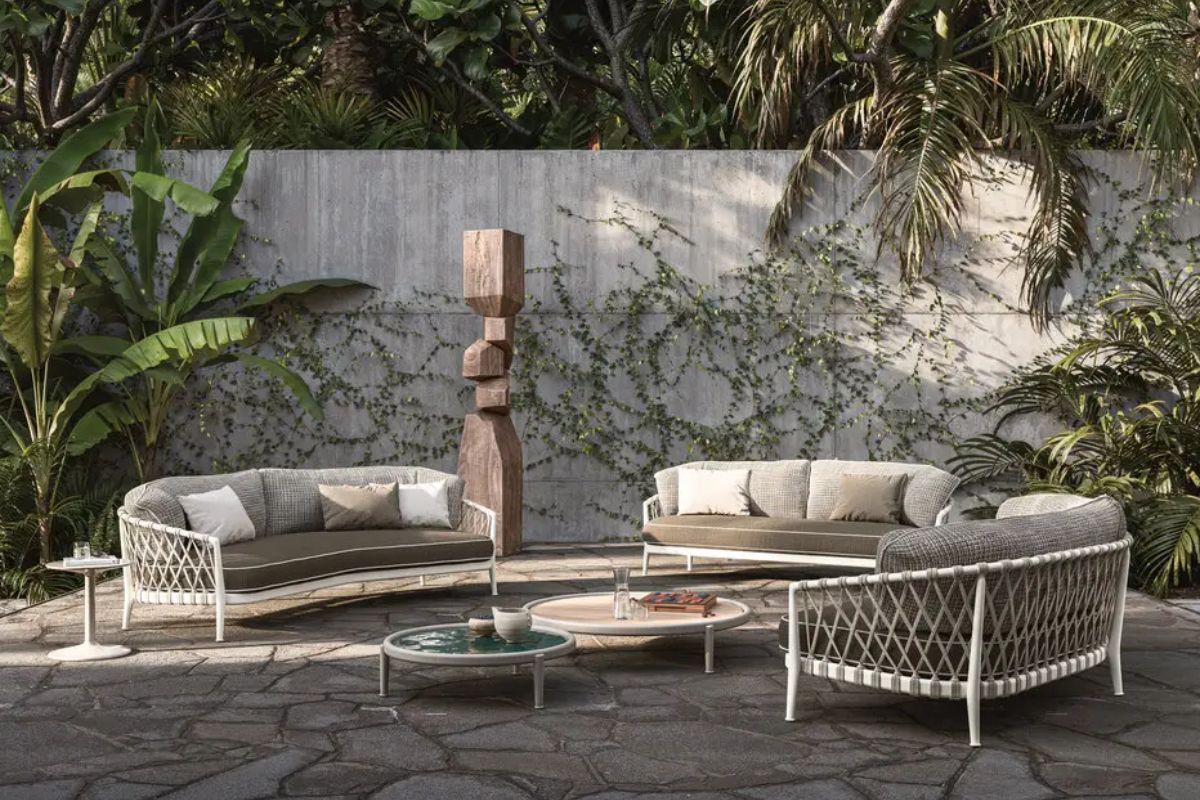
Anyone looking for ideas on how to furnish an uncovered terrace usually comes up against the same issue: plenty of potential, but very little protection. Direct sun, wind and greater exposure make everything more delicate, both practically and aesthetically.
Here, it is essential to choose materials that are genuinely made for outdoor use and to plan shade and comfort with care. Tables and seating need to be durable, textiles must be suitable for the outdoors, and finishes should be easy to maintain. On top of that, you need an element that can manage exposure: a parasol, shade sail, pergola or lightweight awning, depending on the setting.
How to furnish a covered terrace in a more refined way
A covered terrace has a major advantage: it allows for more atmosphere, decorative detailing and layering. The risk, however, is that it can become an in-between space, neither truly outdoors nor fully indoors.
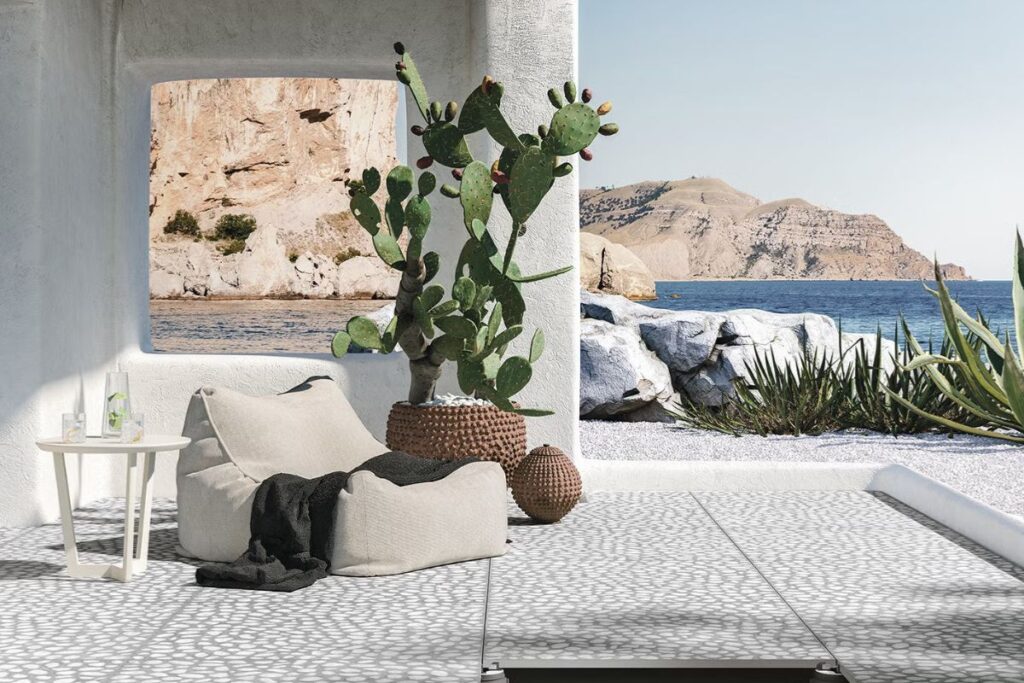
For this reason, it should be treated like an open-air room. An outdoor rug, well-chosen side tables, a more enveloping seat, soft lighting and a few decorative accents can completely transform the perception of the space. In this kind of setting, more expressive pieces also work beautifully, such as statement vases, decorative lamps, cachepots, centrepieces or small sculptural objects that add depth and character. On a covered terrace, collections such as those by Adriani e Rossi can become a striking accent, provided they are used with restraint and in dialogue with the rest of the furnishings.
How to make a terrace feel more welcoming and contemporary
How to make a terrace feel inviting with greenery, lighting and textiles
Making a terrace feel welcoming does not mean filling it with objects. It means building a sense of comfort. The problem, more often than not, is the overall rigidity of the setting: hard surfaces, uncomfortable seating, too little shade and a lack of softer details.
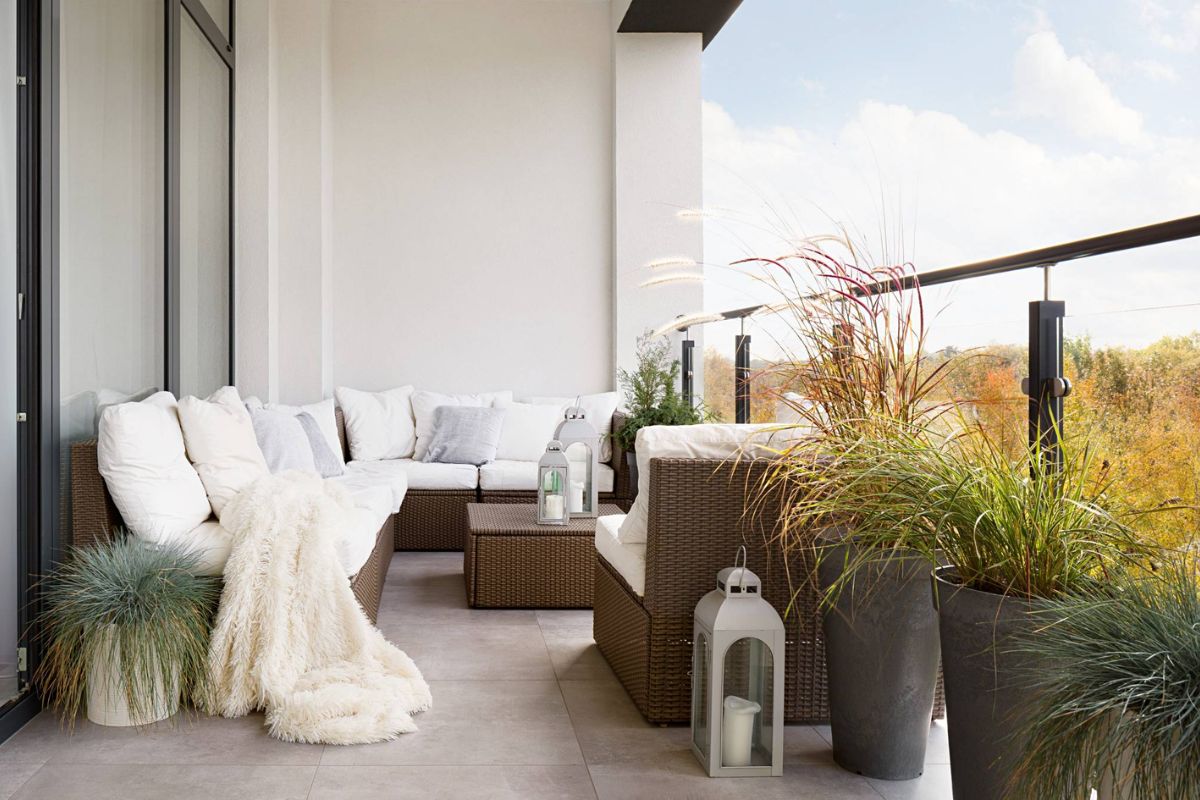
The most effective approach is to work in layers. First, define the main seating. Then add cushions, lightweight throws, an outdoor rug, a few lanterns or a rechargeable lamp, and finally greenery. It is this combination that makes the terrace feel more hospitable and much more enjoyable to live in throughout spring, both by day and in the evening.
Decorating terraces with greenery to instantly improve the overall look
Among all the possible solutions, greenery is probably the most effective way to truly transform an outdoor space. The problem begins when plants and pots are chosen at random, without a clear composition in mind.
It is better to think of greenery as an integral part of the design. A few well-repeated varieties almost always work better than a collection of unrelated elements with no visual link between them. In spring, aromatic herbs, jasmine, ornamental grasses, potted olive trees where possible, small citrus plants and Mediterranean varieties are all excellent choices. The container matters too: coordinated pots or matching planters immediately give the terrace more order and presence.
How to choose outdoor lighting, textiles and accessories
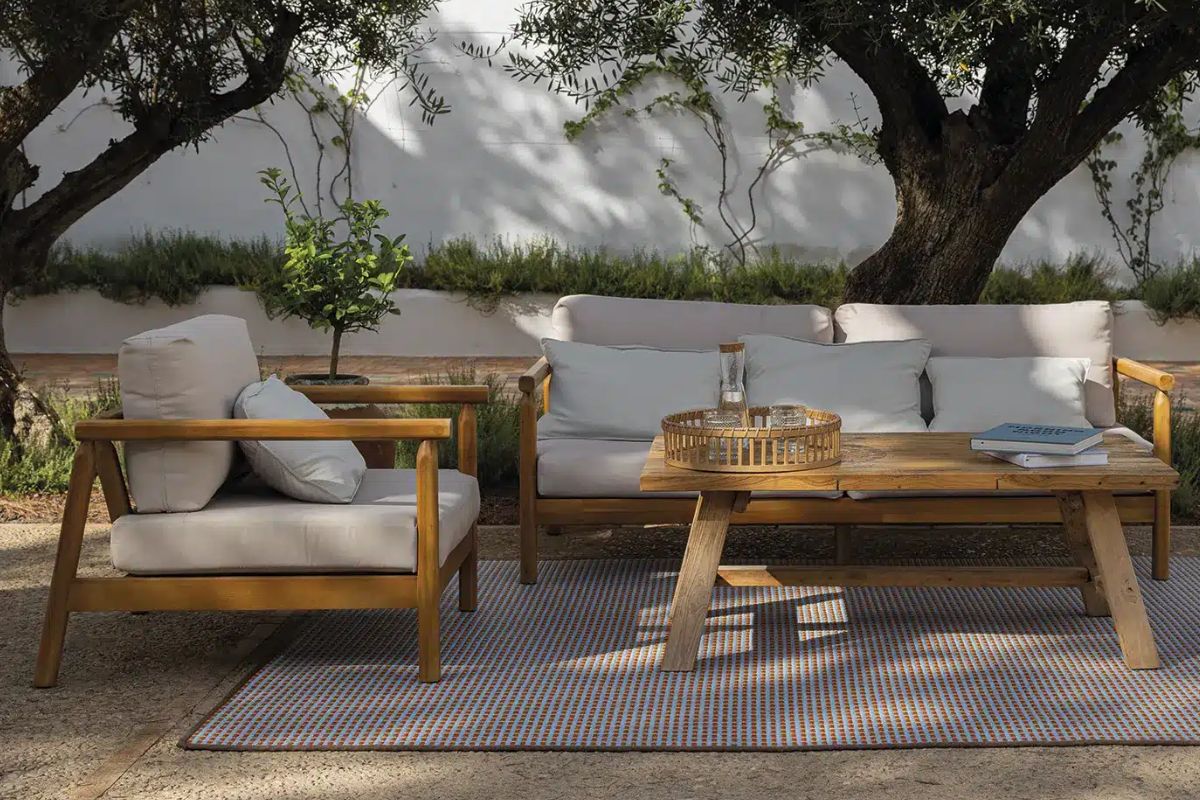
People often think a terrace is complete once the table and seating have been chosen. In reality, without accessories and lighting, the space still feels unfinished.
Fortunately, it only takes a few well-chosen elements. An outdoor rug helps define the area. A cordless lamp makes the terrace more enjoyable in the evening. Two or three carefully selected cushions soften the overall look. A large vase or decorative accessory introduces a more editorial touch. It is precisely these details that make a terrace look more polished, more contemporary and less improvised.
How to improve a terrace without major work and with the right budget
What to put on a terrace instead of tiles
Many terraces look dated primarily because of the flooring. The problem is that replacing it is not always possible, either financially or practically.
In these cases, lightweight yet effective solutions can be implemented. A large outdoor rug already significantly changes the perception of the space. Alternatively, floating surfaces, interlocking decking, or outdoor platforms can be considered, making the floor feel warmer and more modern without turning everything into a construction site.
How to cover a terrace on a budget
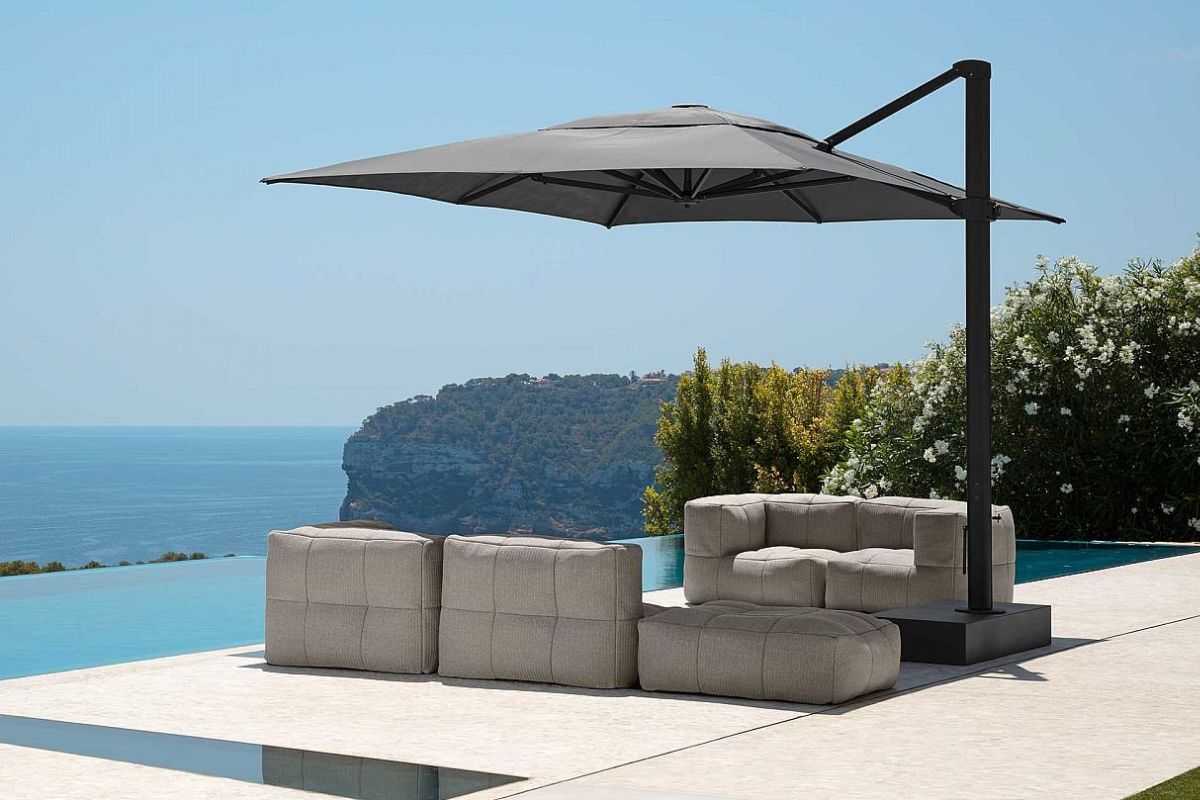
One of the most frequent questions concerns covering. Finding shade without immediately undertaking a major structural intervention is often the first practical need of the season.
The simplest approach is to start with lightweight yet well-proportioned systems. A cantilever umbrella, a shade sail, or a well-integrated awning are often more effective than makeshift solutions that end up detracting from the terrace’s aesthetics. If, however, the project is more extensive and you wish to give the space a more architectural look, a pergola or a dedicated structure can make a real difference.
How to renovate a terrace at a low cost
When trying to furnish a terrace on a budget, the most common mistake is spreading the funds across many small, disconnected purchases. Instead, it is better to invest in a few strategic elements: a more comfortable seat, some well-chosen plants, a rug, a rechargeable light, and matching pots.
Even a simple spring refresh can work very well if approached thoughtfully. Often, it is enough to lighten what is already there, eliminate the superfluous, and add only what truly improves the quality of the space.
How much does it cost to furnish a terrace?
Understanding the budget helps in making smarter choices and better distributing the investment. Furnishing a terrace in spring can mean a simple refresh or a more structured project, with new seating, a dining area, greenery, lighting, and coverings. The difference, more than the absolute figure, lies in how the expenditure is organized.
| Budget range | What can be done | Ideal for |
|---|---|---|
| From €300 to €800 | Light refresh with outdoor rug, cushions, pots, plants, rechargeable lights, and a small table | Balconies, small terraces, rental homes |
| From €800 to €2,000 | Table and chair set or mini lounge area, umbrella, more structured greenery, coordinated accessories | Medium-sized terraces, daily use in spring and summer |
| From €2,000 to €5,000 | More complete project with dining, relaxation, lighting, large pots, and quality furniture | Medium or large terraces, more polished outdoor spaces |
| Over €5,000 | Articulated outdoor space with multiple zones, coverings, design elements, and a more architectural layout | Penthouses, large terraces, high-end projects |
This distinction is primarily useful for understanding one thing: there is no need to spend indiscriminately. A terrace is successful when seating, shade, greenery, and atmosphere are conceived together. That is how a truly convincing outdoor space is born, even with a mid-range budget.
Ideas for furnishing outdoor spaces in spring
Furnishing a terrace in spring means much more than choosing some outdoor furniture. It means understanding how you want to live in the space, what problems you want to solve, and what atmosphere you want to create. A small terrace can become elegant if it is minimalist. A large terrace can feel more welcoming if it is well-divided. A covered space can gain personality with intelligently chosen accessories. An open space can become much more comfortable if shade, materials, and greenery are well-planned.
Ultimately, the secret is simply this: do not add, but select. Do not fill, but give shape. This is what transforms an outdoor space in spring into an environment that is truly more polished, contemporary, and pleasant to live in.