Seven Italian walk-in wardrobe and closet brands, with practical advice on structures, fittings, room layouts, lighting and buying internationally.
A successful walk-in wardrobe makes getting dressed easier. Clothes are visible, drawers open without obstruction and every shelf has a purpose. Its appeal comes from that everyday order as much as from timber, glass and lighting. Our selection of Italian walk-in wardrobe brands includes Rimadesio, Porro, Lema, Poliform, Pianca, Novamobili and Caccaro: seven companies worth comparing through a realistic layout, shaped around the room and its contents.
Seven Italian walk-in wardrobe brands compared
This shortlist considers documented systems and configuration options. It is not a durability ranking based on tests carried out by our editorial team. Some ranges are especially interesting for architectural integration; others offer different approaches to fittings, structure or coordination with bedroom furniture. In North America, the same category is often described as a walk-in closet system.
| Brand | System to explore | Main comparison |
|---|---|---|
| Rimadesio | Hedon | The wardrobe as an architectural room |
| Porro | Storage Dressing Room | Continuity between open and closed storage |
| Lema | VentiTre and Open | Structure and bedroom coordination |
| Poliform | Ubik | Wall panelling and adjustable profiles |
| Pianca | Anteprima | Layouts with or without back panels |
| Novamobili | Break and Ben | Open structures or divided modules |
| Caccaro | Cabina within Freedhome | Integrated storage modules |
Rimadesio: treating the wardrobe as a room
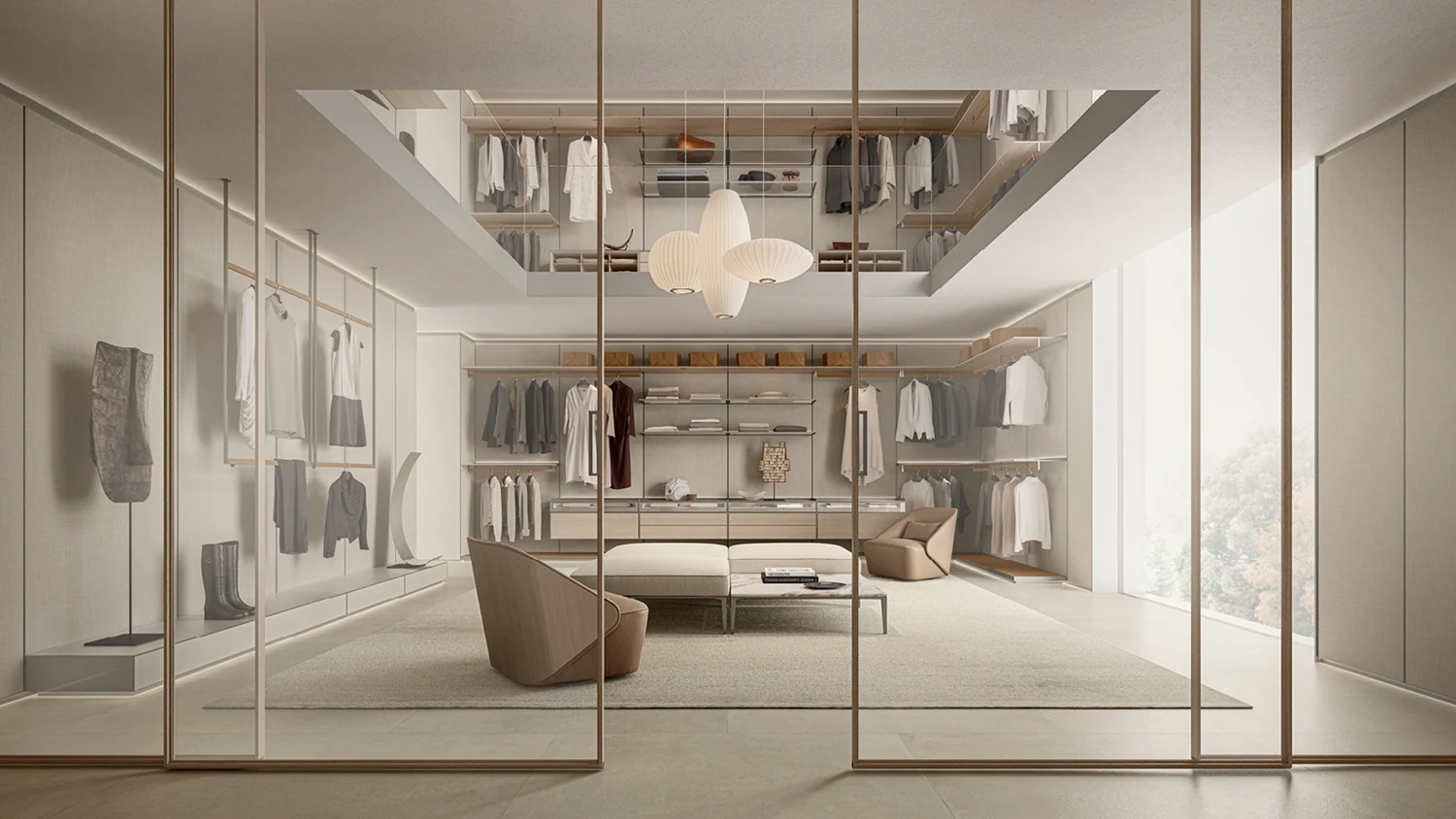
Hedon approaches clothing storage as a complete interior. Structure, back panels, shelves and drawer units form a coordinated composition, with finishes that can connect the dressing area to the rest of the home. The value lies in the whole arrangement: an elegant frame cannot resolve awkward proportions or poorly positioned lighting.
It is a range to consider when the dressing room has a visible architectural role. The working drawings should also address the less photogenic details, including fixings, cable routes, driver locations and access for adjustment.
Porro: Storage balances display and containment
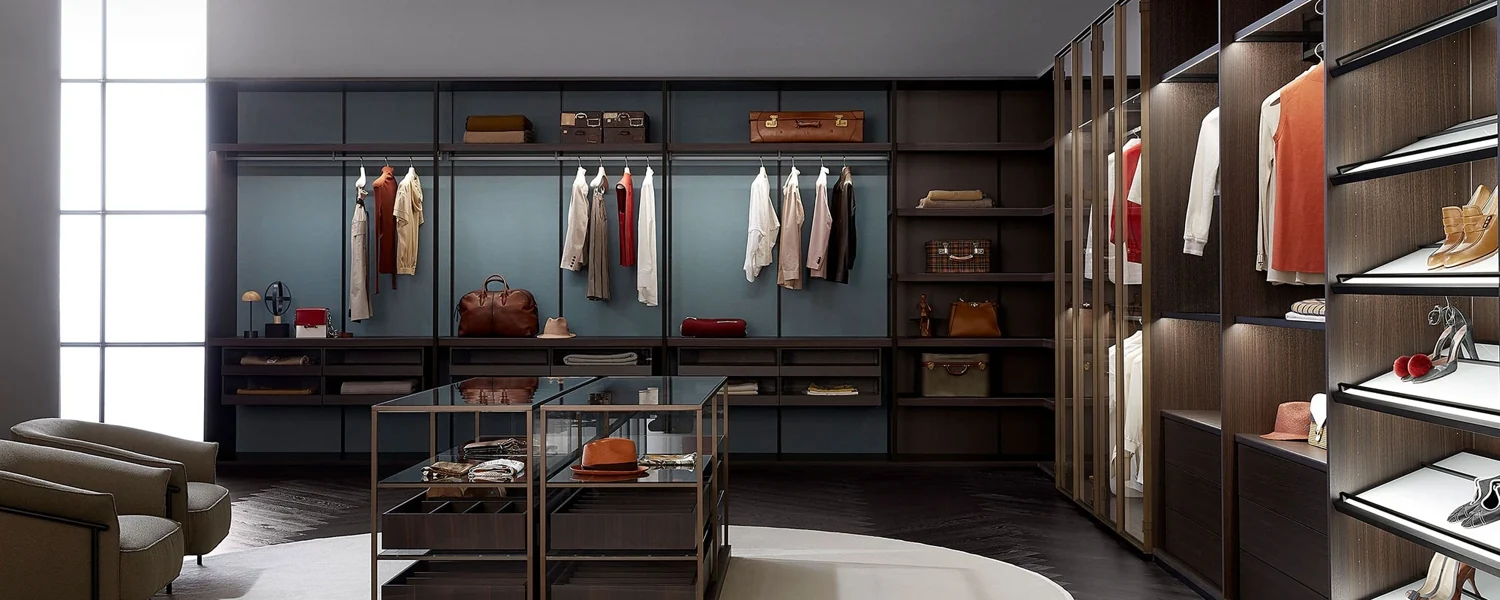
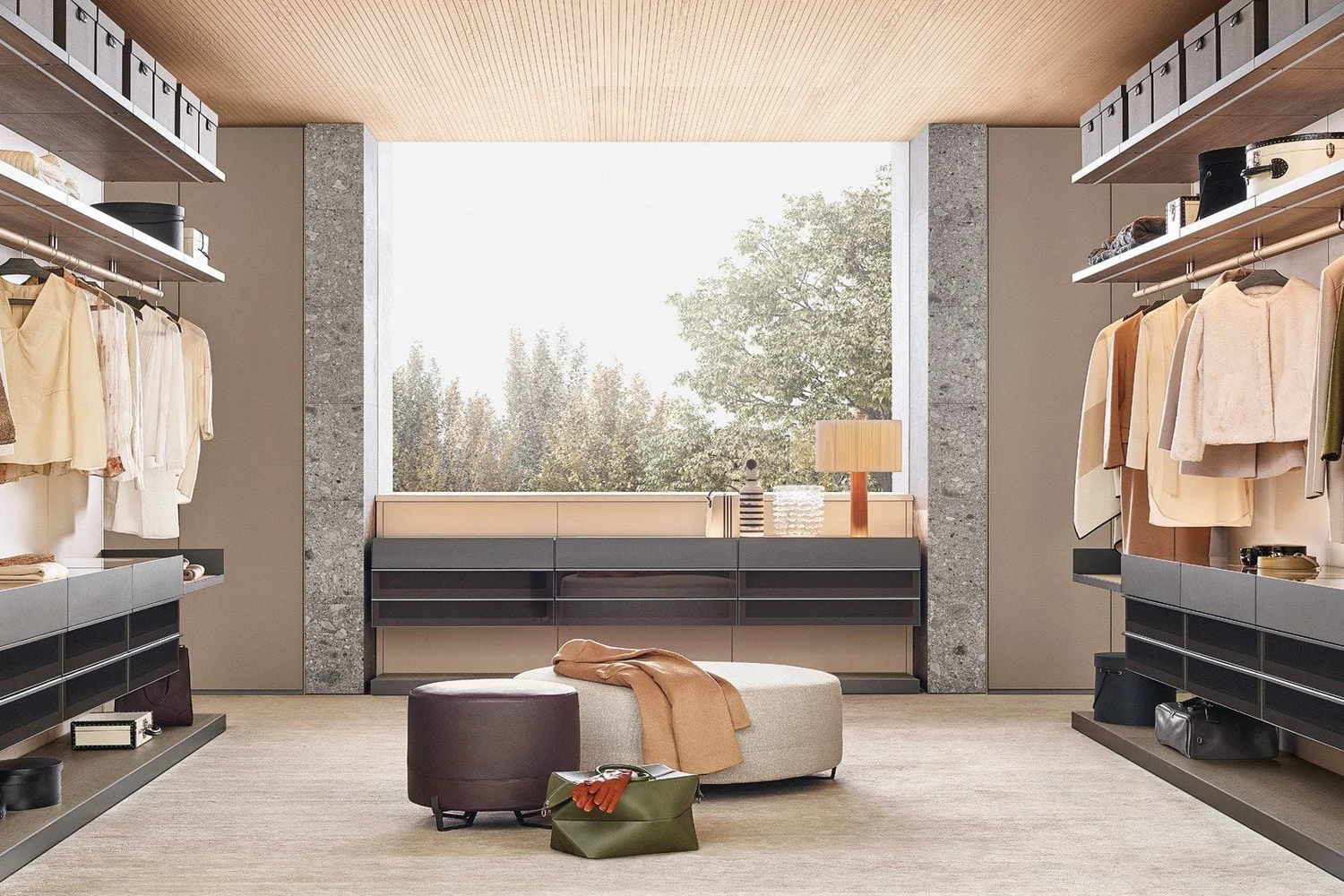
Storage encompasses wardrobes, walk-in systems and dressing rooms. Its Dressing Room version emphasises an open structure and the visibility of the contents, allowing clothes and accessories to contribute to the room’s appearance.
That openness works best when the fittings reflect actual habits. Hanging shirts, folded knitwear and handbags need different spaces. Open compartments offer an immediate overview, while drawers and enclosed sections can protect less frequently used belongings and reduce the amount of exposed storage to maintain.
Lema: connecting the dressing room with the bedroom
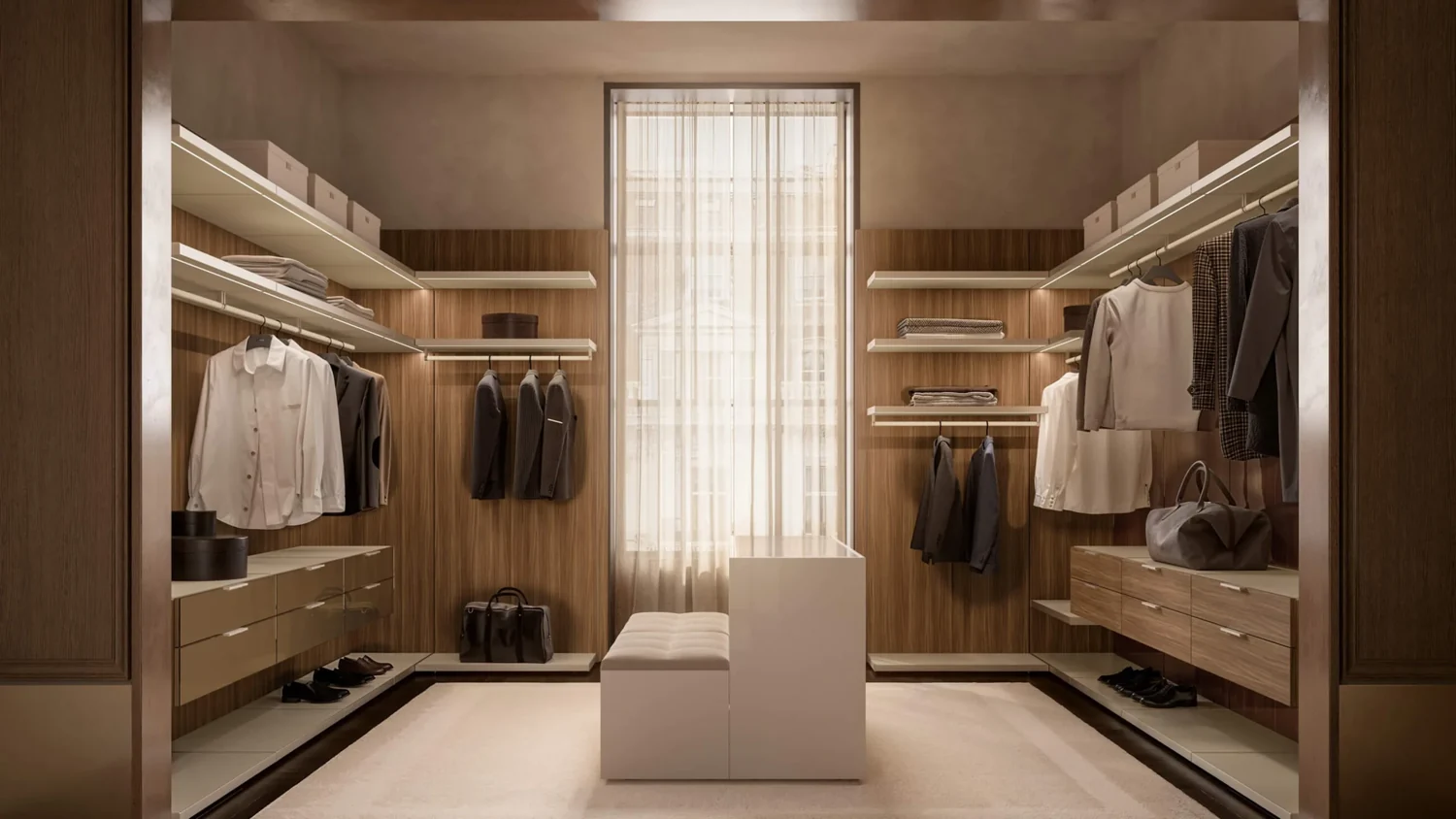
Lema’s offering includes VentiTre, designed by David Lopez Quincoces, and Open, alongside fittings and islands for organising clothes. The relationship between structures, storage elements and finishes allows the dressing room to become part of a coordinated bedroom interior.
Comparisons should begin with the supporting structure and the distribution of fittings. A central island becomes useful when there is enough room to walk around it and open the drawers. In a narrow space, the same feature may remove more convenience than it adds.
Poliform: Ubik organises the wall
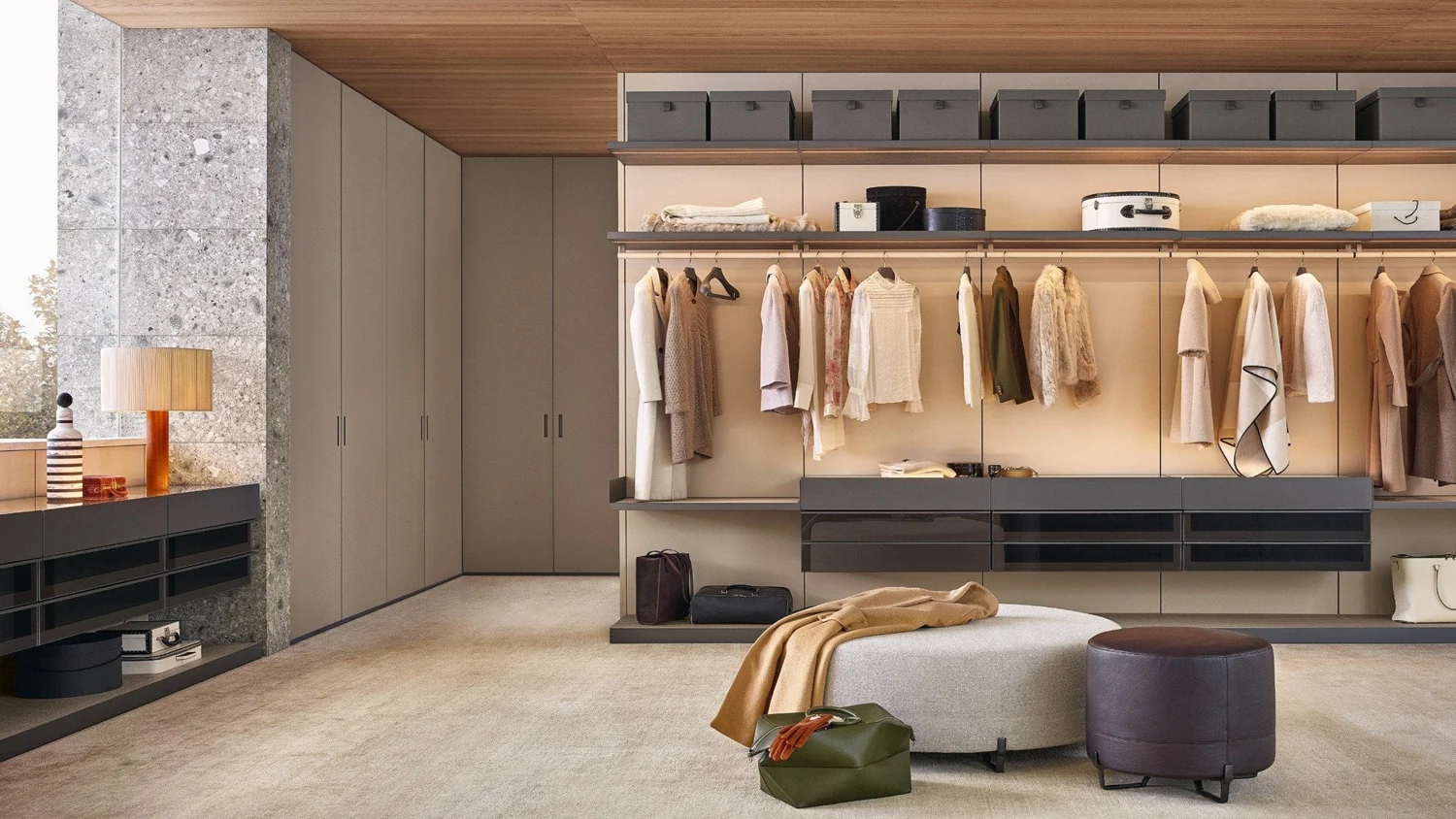
Ubik combines wall panels and upright profiles with shelves and accessories. Trays, drawers, pull-out shoe racks and trouser fittings allow the layout to be organised around different contents. The back-panel finishes substantially change the atmosphere, from warm and tactile to lighter and more reflective.
A broad fittings range is useful when each element answers a need. Filling every available space with accessories is rarely necessary: a few well-proportioned components can be more convenient than a crowded specification that is difficult to use or adapt.
Pianca: Anteprima with or without back panels
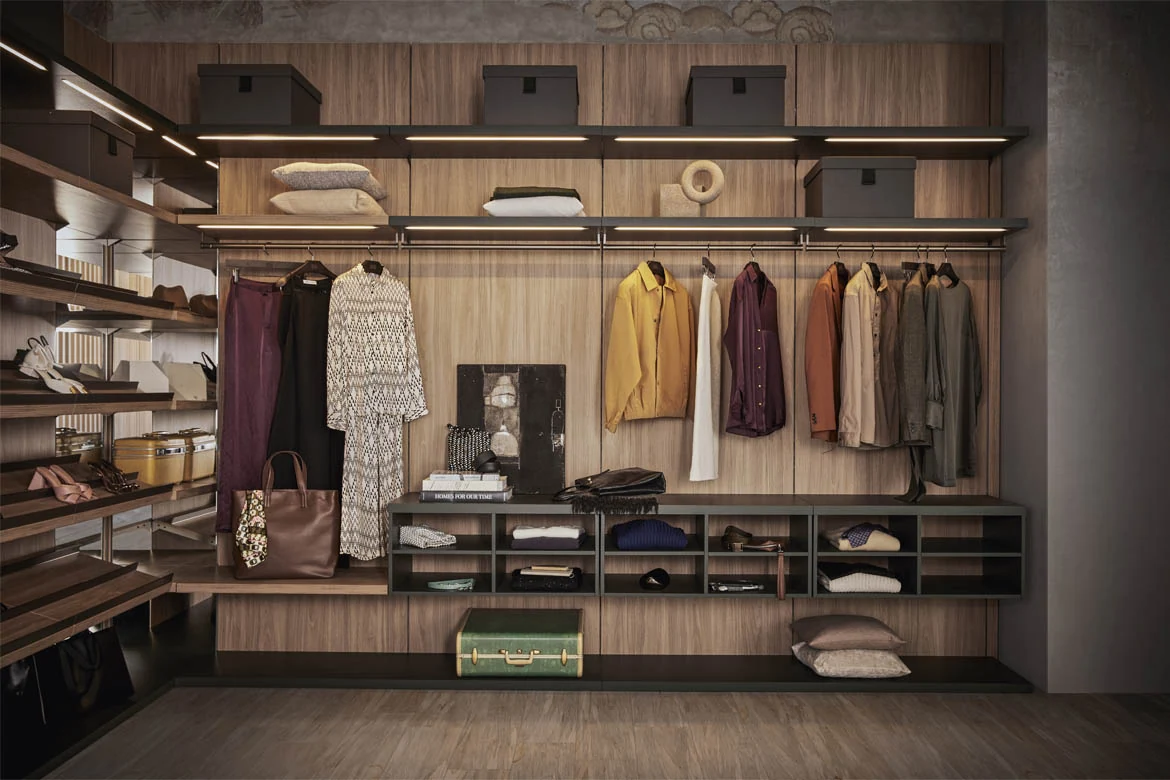
Anteprima is available with or without back panels and can be equipped with shelves, drawer units, suspended elements and hanging rails. This choice affects both appearance and room preparation. Where the wall remains visible, its finish, flatness and socket positions become part of the composition.
Material samples are most informative under the room’s own lighting. A dark background can set off pale clothing but needs evenly distributed light; reflective surfaces can expand the perception of space while making fingerprints and reflections more noticeable.
Novamobili: two structural approaches with Break and Ben
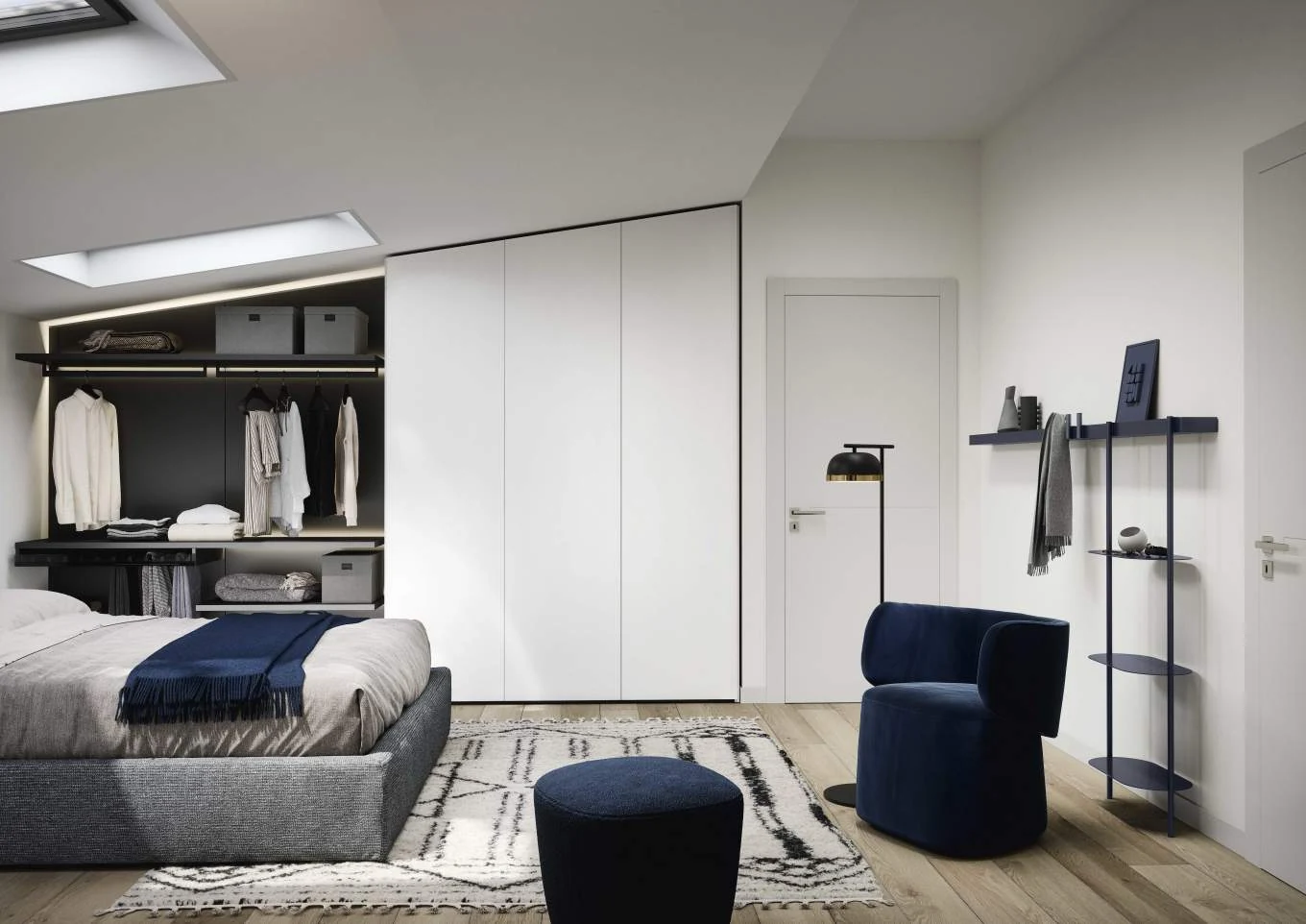
Novamobili distinguishes Break, an upright-based system without side panels, from Ben, which uses side panels. This makes a useful comparison for anyone still developing the layout: removing vertical divisions gives a more open reading, while side panels define separate storage modules.
Fittings and LED lighting depend on the ordered configuration. Clothing quantities and everyday use should guide the specification. The ability to add shelves or change a hanging section later can be just as valuable as the initial appearance.
Caccaro: a walk-in wardrobe within Freedhome
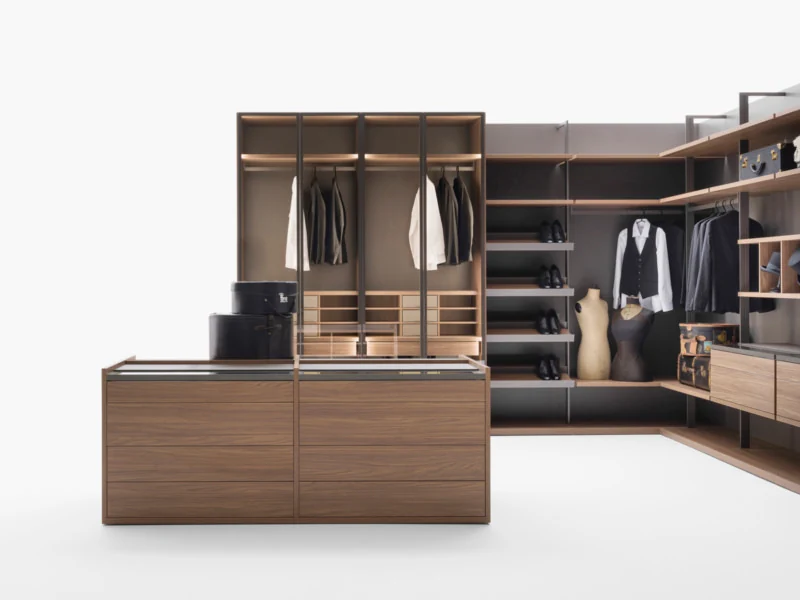
Caccaro offers linear and corner layouts, as well as compositions with an island, that can integrate with other Freedhome modules. Open and enclosed elements allow clothing storage to become part of a wider interior scheme.
This approach is particularly relevant when the room accommodates several functions or opens directly onto the bedroom. Separately itemised modules, finishes and fittings make the quotation easier to understand and reveal what changes between an essential layout and a more fully equipped version.
How much space does a walk-in wardrobe need?
A floor-area figure alone cannot establish whether a room will work. Its shape, the depth of the fittings, doors, windows and circulation all matter. Storage on opposite walls requires enough clearance between the units to move comfortably and use drawers. A single-sided layout may be more successful in a long, narrow room.
The survey should include skirting boards, uneven corners, sockets and lighting points. Long dresses need a different hanging compartment from jackets; shoe storage depends on actual quantities and heights. Leaving a little spare capacity can make the room more adaptable than filling every available space from the outset.
Open or enclosed: dust, lighting and maintenance
An open system offers easy access but exposes more contents to dust. Doors or separating panels can help protect clothing, although they do not make a dressing room airtight. Surfaces need to remain accessible for cleaning, and densely packed clothes should not prevent air from circulating.
General lighting serves the room; integrated lighting helps reveal shelves and colours. Position matters more than the number of light sources: lighting behind the user can leave the storage in shadow. Drivers and controls should remain accessible without dismantling the installation.
Costs, quotations and where to buy
These systems need a configured quotation. Wall length, height, materials, drawers, fittings, lighting and islands all influence the total. A price per linear metre is of limited use without depth and specification. Comparing two equivalent layouts provides a clearer basis, with furniture, delivery, installation, taxes and bespoke work separately identified.
Specialist dealers and showrooms can coordinate samples, surveying and ordering. Building work, partition doors, decoration and electrical installation may require separate suppliers. For an international purchase, the local dealer’s responsibility for measurement, fitting, replacement parts and after-sales adjustments matters as much as shipping. An Italian catalogue price is not a universal installed cost. The strongest choice is a system that makes room for the people using it as comfortably as for their clothes.
Where space is limited, our guide to small bedroom layouts and storage considers how wardrobes relate to the bed and circulation.