Seafoam green is a soft blue-green that can range from pale, glassy shades to muted tones with a gray undertone. The example used in this guide is #80C8BA (RGB 128, 200, 186). Warm oak can bring out its green side, while cool whites and steel can emphasize the blue. The Italian term verde acqua is …
Seafoam green is a soft blue-green that can range from pale, glassy shades to muted tones with a gray undertone. The example used in this guide is #80C8BA (RGB 128, 200, 186). Warm oak can bring out its green side, while cool whites and steel can emphasize the blue. The Italian term verde acqua is broad and can also describe brighter aqua shades.
Seafoam green vs. aqua, aquamarine, turquoise and mint
| Color | HEX reference | How it reads |
|---|---|---|
| Seafoam green | #80C8BA | Our muted blue-green sample |
| Aquamarine | #7FFFD4 | A bright, saturated CSS reference |
| Turquoise | #40E0D0 | A vivid CSS reference that reads bluer than the aquamarine sample |
| Mint green | #A9D5BA | Our sample of a softer shade that reads more clearly green |
In interiors, aqua often describes a brighter or bluer blue-green, while seafoam green usually suggests a softer shade. Paint brands use these names differently. Compare physical samples side by side, especially if you are matching paint, upholstery or tiles. The digital values for aquamarine and turquoise come from the CSS named-color reference.
Is seafoam green the same as Tiffany Blue?
Seafoam green covers a range of soft blue-greens. Tiffany Blue® is the jewelry house’s signature color, for which Pantone created the custom reference 1837 Blue. Some brighter aqua shades can recall the box. Read the story of Tiffany Blue.
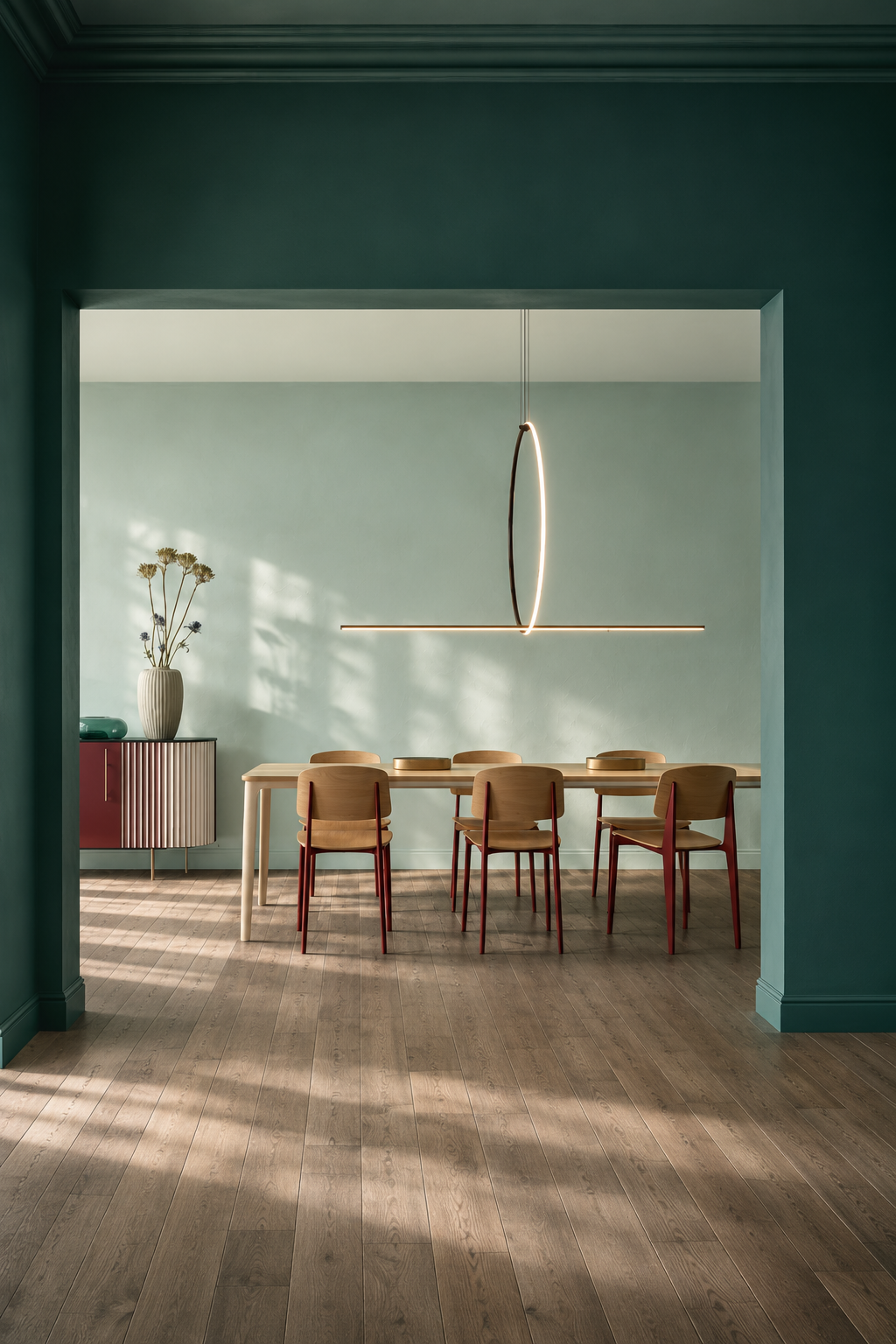
A pale seafoam can cover an entire wall behind a linen sofa. A more saturated version can hold its own on a single piece of furniture or a band of tile. To carry the same hue from paint to glazed ceramic, hold both samples upright. The glaze catches more light and can make the color look brighter.
What colors go with seafoam green?
Seafoam green, ivory and natural oak
In a bright kitchen, try ivory walls, seafoam base cabinets and a pale countertop. Natural oak brings warmth through the floor or open shelves. If the flooring already has a golden cast, take the cabinet sample down to floor level. A grayer seafoam often sits comfortably beside warm oak.
Seafoam green, terracotta and natural linen
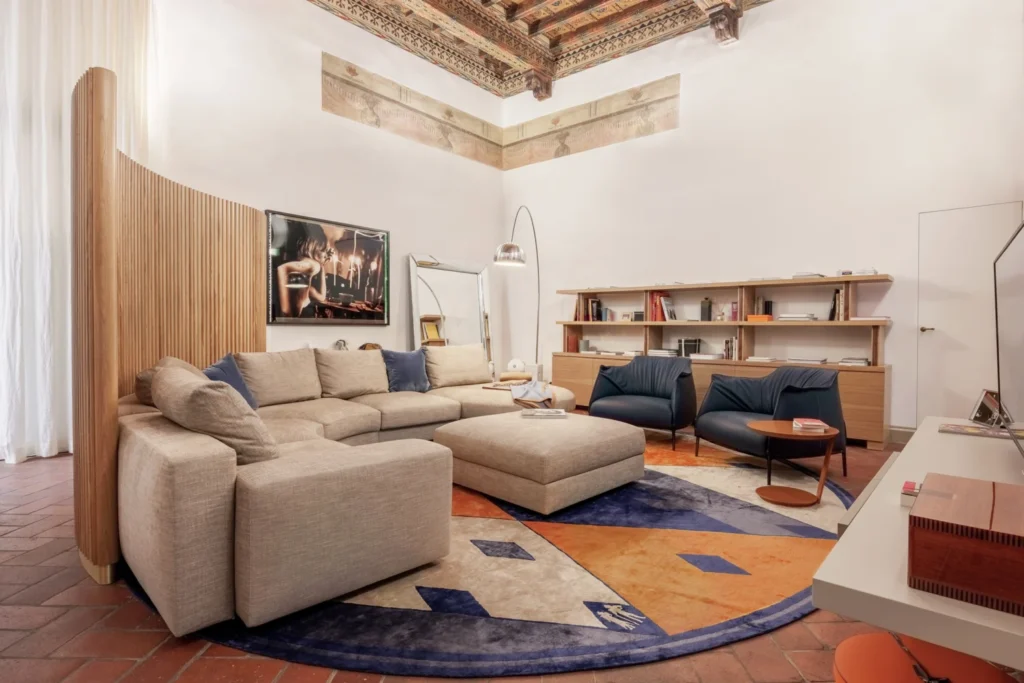
In a living room, use seafoam in a niche or behind a sideboard. Introduce terracotta through a lamp, a vase or a small piece of furniture. Natural linen softens the meeting of warm and cool tones. If you already have a terracotta floor, a muted seafoam gives that large warm surface room to show.
Seafoam green, midnight blue and brass
In a bathroom, try seafoam tiles in the shower and a midnight-blue vanity. Echo the brass in the faucet or mirror frame. If the room gets little daylight, keep the deepest blue on one piece and leave the surface opposite the mirror light.
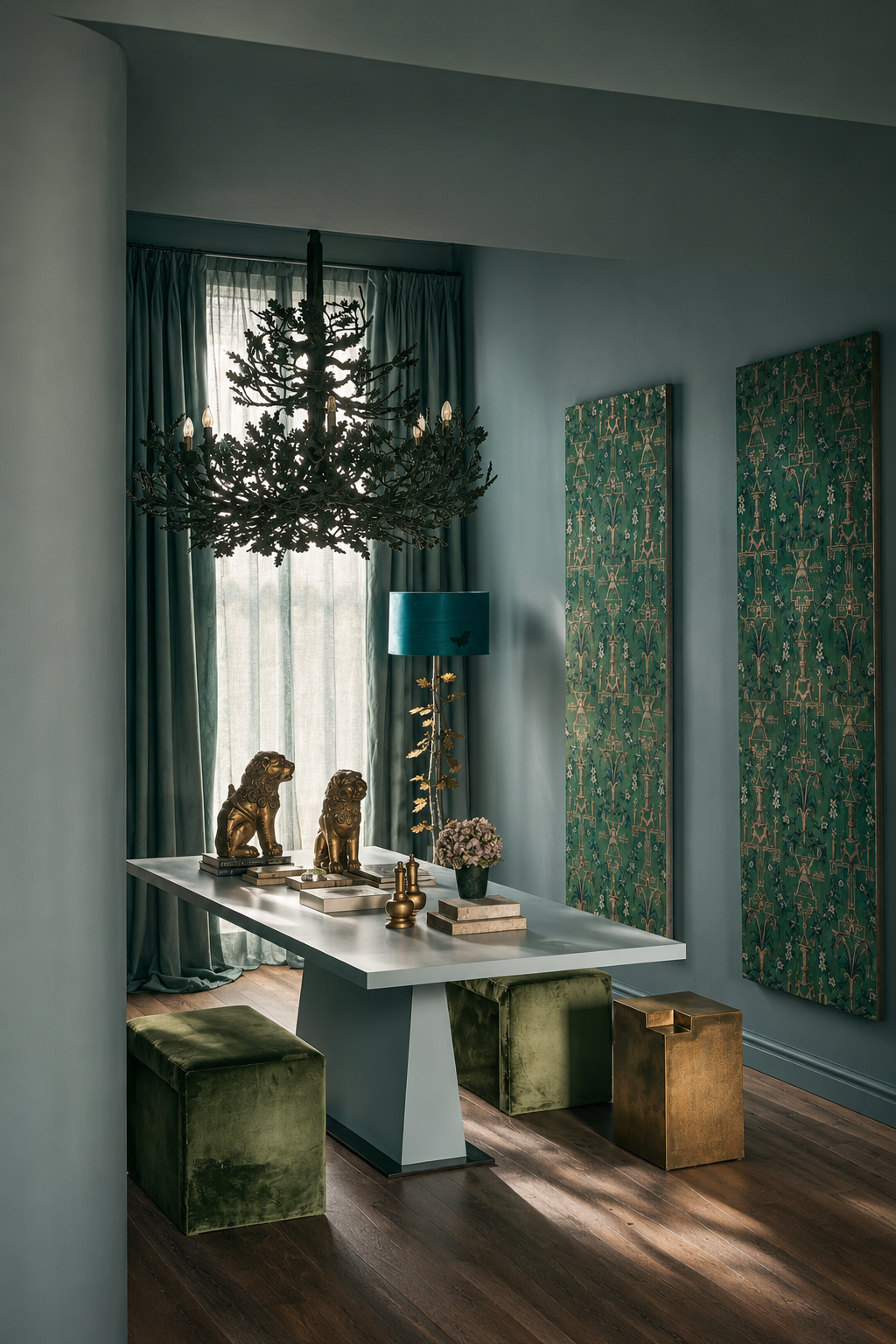
How to use seafoam green on walls, cabinets and tiles
Choosing seafoam green paint for walls
In a bright room, the palest version can read almost as a neutral. For more presence, test a medium, muted shade. Paint a large sample and view it by the window, on a shaded wall and with your usual lamps switched on. Hold it against the flooring or fabric that will stay in the room.
In a bedroom, start with the wall behind the headboard and let ivory bedding and curtains frame it. In a living room, use the color to draw attention to an oak sideboard or a low bookcase. If several doors interrupt the walls, a well-defined niche offers a more continuous surface.
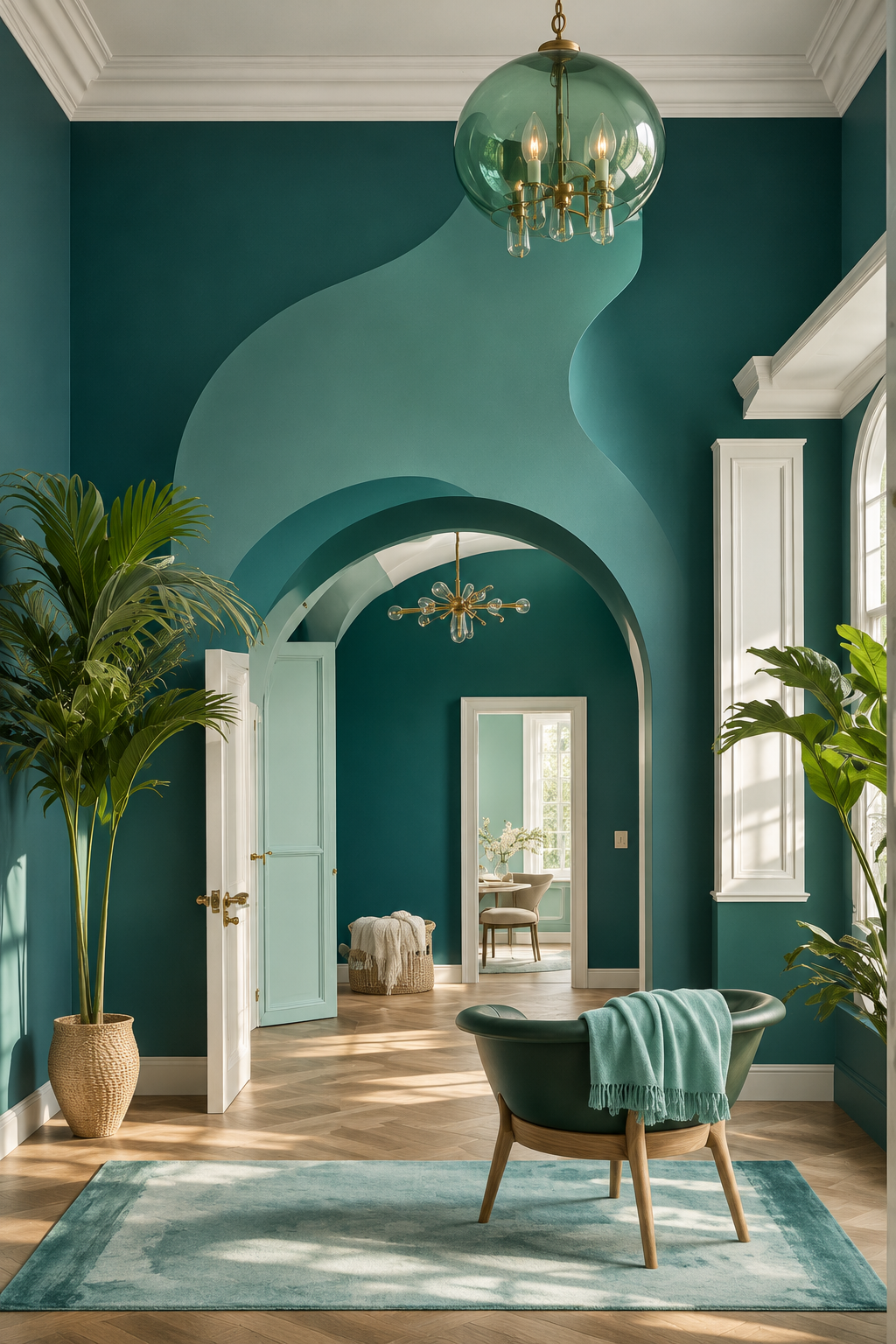
Seafoam green kitchen cabinets or walls?
Matte paint gives the room a continuous background. On lacquered doors, joints, handles and reflections break up the color. Ask for a sample in the actual finish. A glossy cabinet near a window can appear noticeably brighter than matte paint in the same shade.
In a kitchen with tall units, try seafoam below the counter and ivory on the tall cabinets. If the countertop has strong veining, hold a door sample beneath it and step back to the kitchen entrance. That is where you will see the materials together.
Seafoam green bathroom tiles and grout
Glazed tiles catch the light and reveal variation from one tile to the next. Grout close to the glaze color gives the wall continuity. A paler grout makes the individual tiles more visible. Compare both beside the mirror, under the room’s usual lighting.
In a small bathroom, you can cover the back wall of the shower in seafoam and repeat it inside a niche. Full-height tile creates one continuous surface. A narrow band behind the sink makes the color an accent, seen up close beside the faucet and mirror.
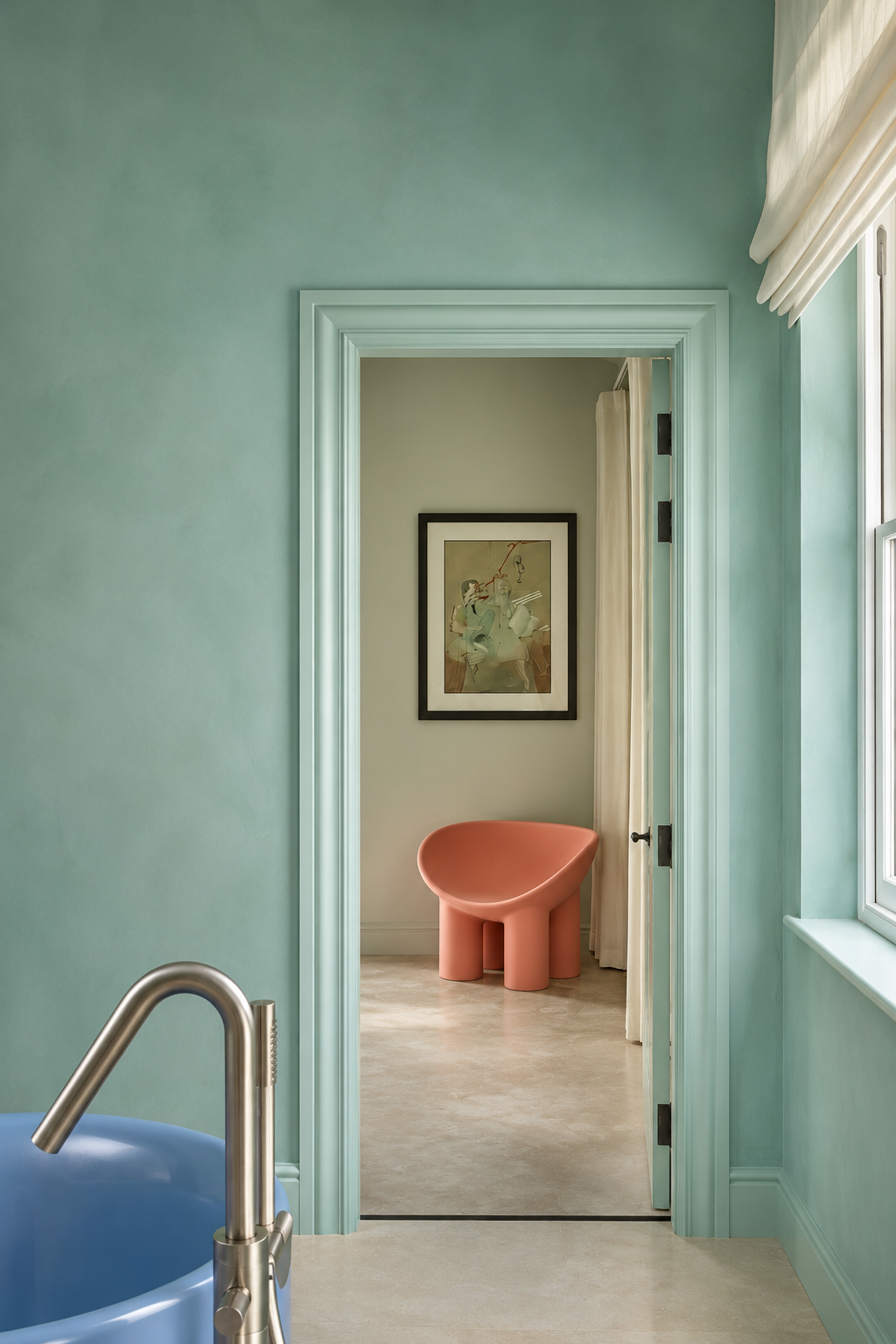
Seafoam green FAQs
Is seafoam green warm or cool?
Its blue undertone usually makes it feel cool. A muted shade can sit comfortably beside ivory, golden wood and natural fabrics.
What is the HEX code for seafoam green?
#80C8BA is the illustrative reference in this guide. For a paint match, use a physical sample from the manufacturer in the finish you plan to apply.
What wood goes with seafoam green?
Natural oak keeps the palette light. Walnut creates a deeper contrast, useful for a sideboard or frame. If the wood leans orange, compare a muted seafoam with a brighter one under the same light.
Explore another cool shade in our guide to indigo color in interiors.