How to choose a bed for two that lasts: mattress sizes and the real footprint of the frame, frame materials, a slatted base that supports the spine and a headboard that organizes lighting and storage.
A good night’s sleep directly shapes the quality of your day, which makes choosing a bed one of the most important decisions when planning a bedroom. When shopping for a new double bed, it is easy to be swayed by looks alone and overlook crucial factors such as posture, the bed’s real footprint and everyday practicality. Knowing how to choose a bed means weighing all of these together.
A piece of furniture designed for sleep must provide proper anatomical support while also fitting the size of the room without getting in the way of everyday life. Looking carefully at the available sizes and the sturdiness of the frame helps you find a reliable model that will last for years and give you restful nights.
How to choose a bed size: sleeping surface versus floor space
The first decision is the width of the mattress, which needs to balance freedom of movement with the physical limits of the surrounding walls. To help you find your way among brands and technologies, we have selected the best mattresses of 2026.
In Europe, the classic 160×190 cm standard (extended to 160×200 cm in the Queen Size version) offers comfortable, roomy sleep for the average couple, while the 140×200 cm format (known as the French size) is a practical space-saving alternative for smaller apartments. Those with larger bedrooms can opt for the 180×200 cm King Size, ideal for maximum comfort at night. Note that these European sizes differ slightly from US mattress standards.
Remember, however, to factor in the overall thickness of the bed frame and the depth of the headboard, which add several centimeters to the total footprint. Checking that enough free space remains around the bed prevents clashes with electrical outlets, windows and the path to the door, and makes it easier to move around when tidying up and making the bed.
Sturdy materials and a stable bed frame
How long a double bed lasts depends largely on the quality of its components and the strength of its connecting hardware.
Frames made from high-density melamine-faced panels or solid wood parts offer excellent resistance to repeated mechanical stress, providing solid support that does not creak annoyingly when you change position during the night.
Reinforced corner brackets and a central lengthwise beam in galvanized steel help distribute body weight evenly to the floor, keeping the structure aligned over the long term and the slats perfectly level and stable for years.
Slatted bases and sleep ergonomics
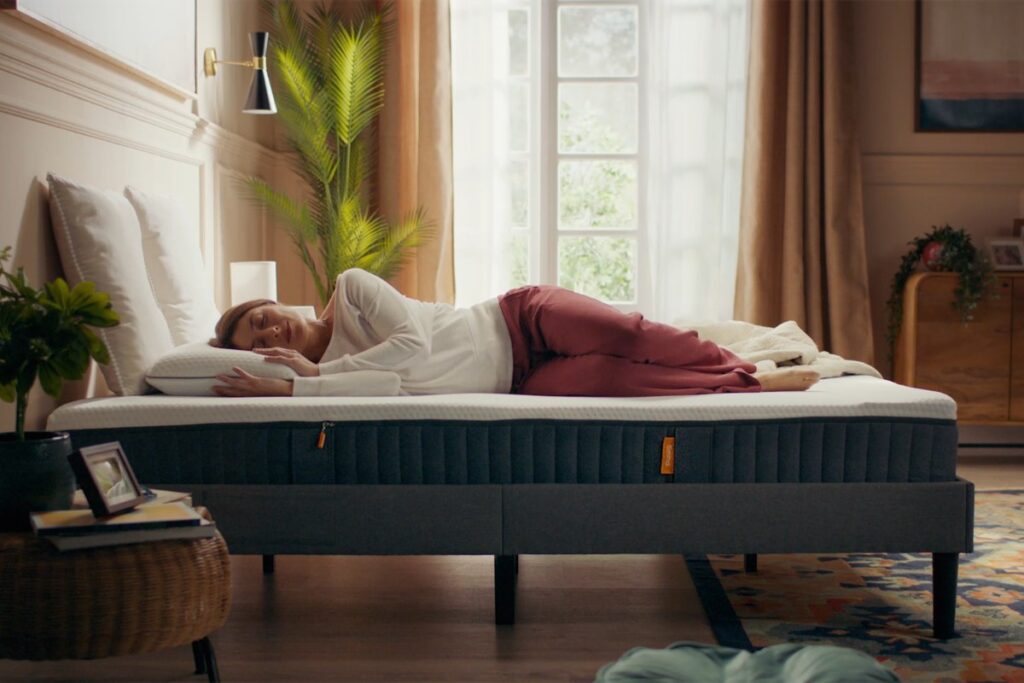
How well you feel you sleep depends on a balanced partnership between the frame, the slatted base and the mattress you choose.
Plywood slats in birch or beech, steam-bent and mounted on flexible holders, follow the natural curves of the spine, spreading body pressure evenly and avoiding pressure points on the shoulders and hips. A base with well-spaced slats also ensures continuous airflow from below, which is essential for dispersing the moisture released during sleep and keeping the mattress and padding fresh for longer.
Choosing a double bed that gets these technical details right ensures a dry microclimate and well-calibrated support, for optimal sleep season after season.
The role of the headboard and built-in bedroom lighting
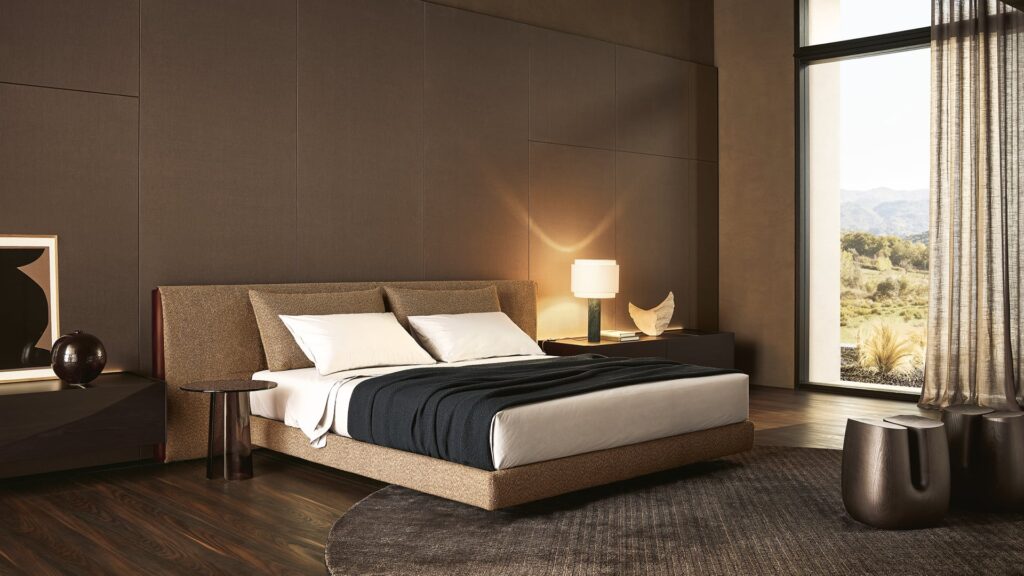
Beyond providing stability and postural comfort when you read in bed at night, the headboard defines the visual identity of the bedroom, acting as the focal point of the whole wall.
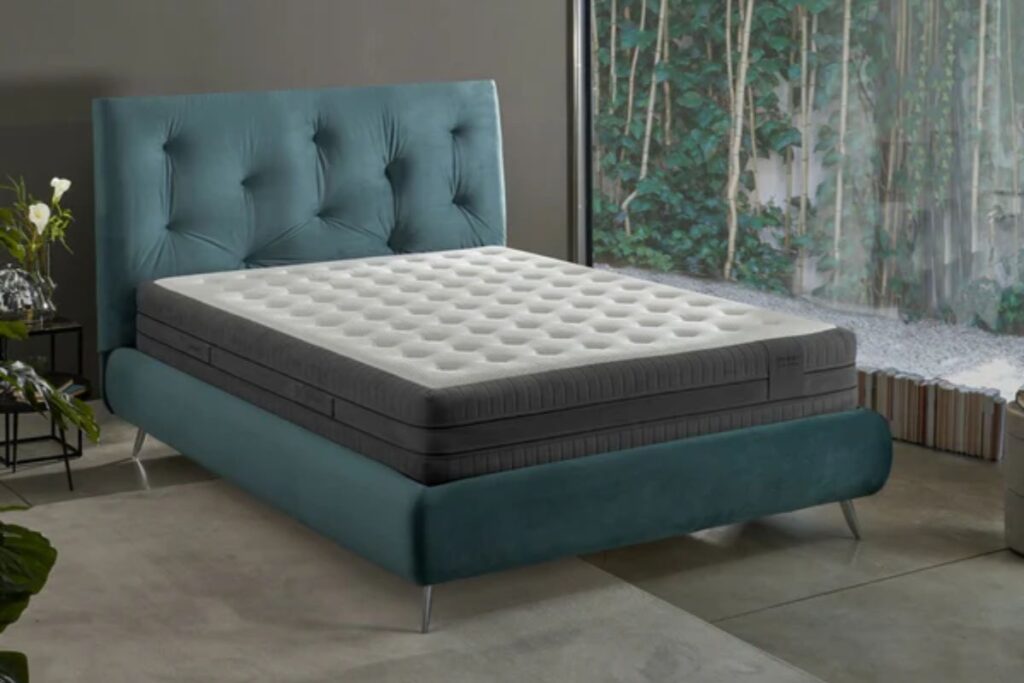
Upholstered headboards with removable, washable covers feel instantly soft to the touch, protect the wall from direct contact and improve the room’s sound insulation. By contrast, headboards in wood or shaped panels favor clean, geometric lines, perfect for those who prefer a minimal, uncluttered look.
Lighting around the bed is a key consideration: choosing frames that can take small adjustable LED spotlights, or finishes that gently reflect the light of wall sconces, prevents uncomfortable glare on your face.
Open side compartments or built-in shelves can easily replace traditional nightstands, giving you somewhere to put books, an alarm clock and glasses without taking up extra floor space. This clever use of volume keeps the floor around the bed completely clear, making it easier to reach the windows and speeding up regular cleaning.
The combination of visual ergonomics and everyday practicality turns the wall behind the bed into a carefully styled, welcoming backdrop that enhances the overall harmony of the bedroom with understated elegance.