Launched at Orgatec 2026, Session by Doshi Levien for Brunner is a modular system of 23 repairable elements that shapes work, meeting and privacy within a single space.
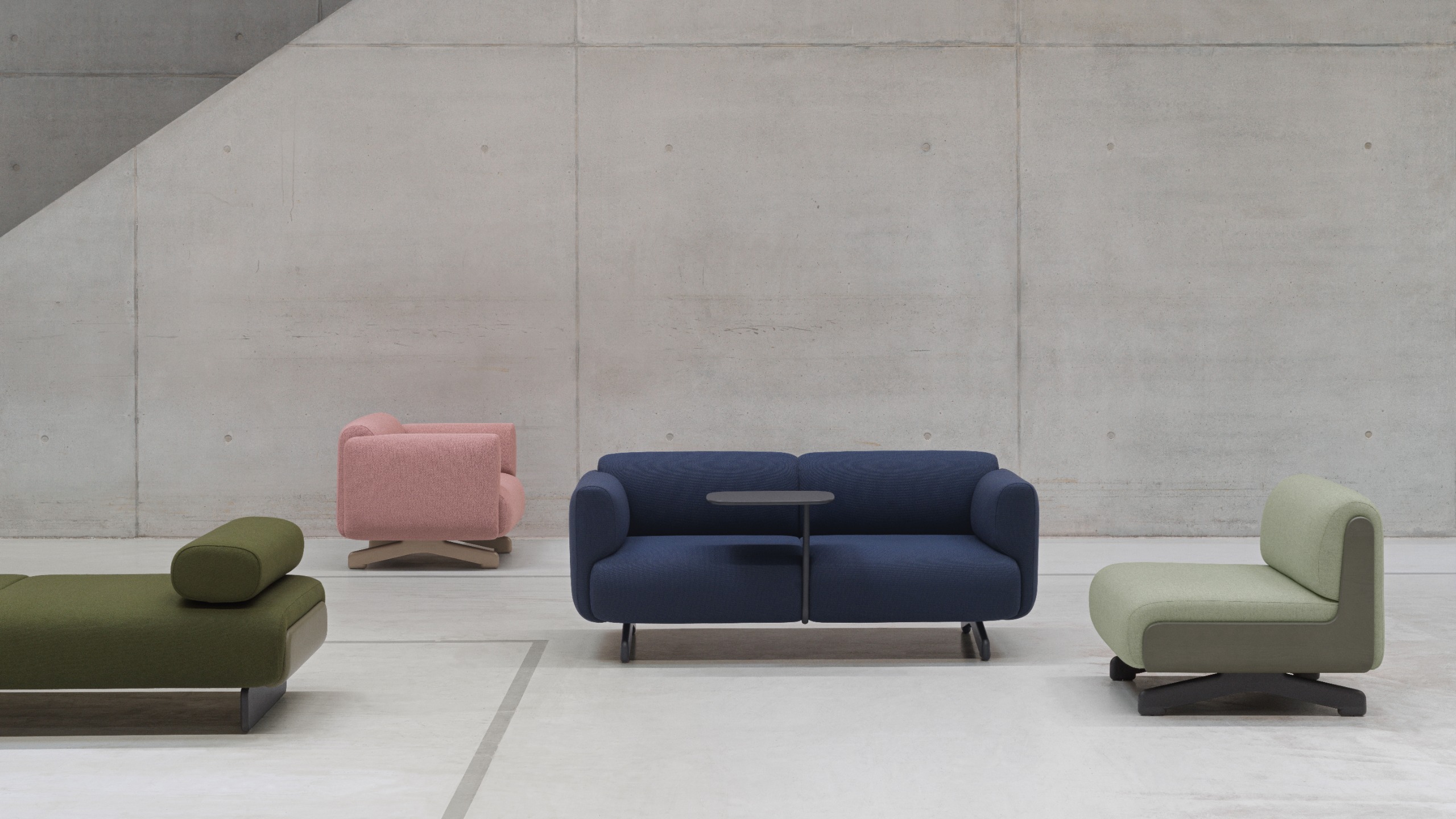
The contemporary office is not turning into a living room. Rather, it is looking for more convincing reasons to be inhabited. That distinction is what makes Session interesting: the new modular system designed by Doshi Levien for Brunner was unveiled in Cologne at Orgatec 2026, the office furniture trade fair that closed on October 30, 2026. Doshi Levien Session has the softness of a domestic interior, but it is not used as comforting decoration. Instead, it becomes a tool for organizing meetings, breaks, focused work and informal tasks without making the space rigid.
Session is the first collaboration between the London studio founded by Nipa Doshi and Jonathan Levien and the German furniture company. It arrives at a moment when workplace furniture is expected to resolve a very practical contradiction. People want comfort and choice; companies need spaces that are adaptable, durable and easy to manage. Session tries to reconcile both through 23 elements that can be separated, replaced and repaired, with removable upholstery. Not a single sofa, then, but an open design language.
The sofa becomes a floor plan
The family includes armchairs, sofas, curved modules, poufs, daybeds and side tables. Configurations can be standalone, linear or wraparound, so the same formal vocabulary can create a small waiting area, a conversation for two or a larger seating landscape. Its signature feature is an L-shaped element that supports and frames the upholstered volumes: a graphic detail, but also the device that allows side surfaces, storage compartments and swivel tablets to be integrated.
This is where Session goes beyond the category of seating. Optional panels increase visual privacy; built-in surfaces bring the system closer to a temporary workstation; curves and changes of direction separate different activities without the need for walls. The furniture takes on an almost architectural role while remaining fully reversible. In an interior project, this means the density or character of an area can be changed by reworking the modules rather than calling in the builders.
For those specifying contract furniture, the comparison is not just with a lounge chair. It is with a set of micro-architectures that need to work alongside desks, meeting rooms and office chairs designed for long hours of work. Session occupies the space in between: activities that do not require an assigned desk, but do not belong in a purely informal setting either.
Soft modular office seating with a contract logic
Doshi Levien plays wood, leather and fabric against one another so that the whole never becomes indistinct. The feel is welcoming, but the design keeps a legible structure: the base, the L-shaped element, the upholstered volumes and the accessories all remain distinct components. The fact that parts can be separated and fabrics removed matters, because it builds maintenance into the design instead of leaving it as a problem for later.
The promise of repairability, however, has to be measured against the specification sheet. Lifespan of the supply, availability of spare parts, how covers are removed, cleaning, fire rating and acoustic performance are the details that turn a good concept into a professional choice. The public launch makes the system’s approach clear, but neither the full technical data nor the price list is available yet: a limitation to weigh before specifying it, not a minor detail.
Privacy also calls for precision. A panel can reduce visual distractions and create a psychological threshold, but it is no substitute for proper acoustic design. The real value of Session lies in the ability to adjust the degree of openness: more exposed configurations for exchange, more enclosed ones for a phone call or a short task. It is a way of designing for different intensities rather than for rigidly separated functions.
From rooms to relationships
The setting of its debut helps explain the project. Orgatec 2026 brought more than 550 exhibitors from 39 countries and over 40,000 trade visitors to Cologne. The theme of the edition, “From rooms to relationships,” shifted the focus from the sum of individual spaces to the relationships those spaces make possible. Session translates this idea to a close-up scale: how two people sit, the distance between a group and a walkway, the option to perch for a few minutes or settle in for longer.
Hospitality, by now a buzzword in workplace design, only becomes useful when it has measurable spatial consequences. Adding cushions or warm lighting is not enough. What is needed are clear thresholds, a choice between exposure and retreat, surfaces that are genuinely usable and components that can keep up with change. Seen this way, Session’s message is less about style than it appears: it suggests specifying scenarios of use and durations, not just product categories.
For designers and companies, the most productive question is therefore which relationship each configuration should support. A curve can encourage conversation; a linear arrangement can anchor a wide corridor; a daybed can create a longer break; a tablet can turn a seat into a workspace for half an hour. The hospitable office does not imitate the home: it recognizes that work involves different postures, time frames and degrees of sociability. Session gives that variety a coherent and, above all, adaptable form.
Sources
- Brunner, official presentation of Session at Orgatec 2026
- Orgatec, final figures and theme of the 2026 edition
- Wallpaper*, October 30, 2026
- Stylepark, Orgatec 2026 review