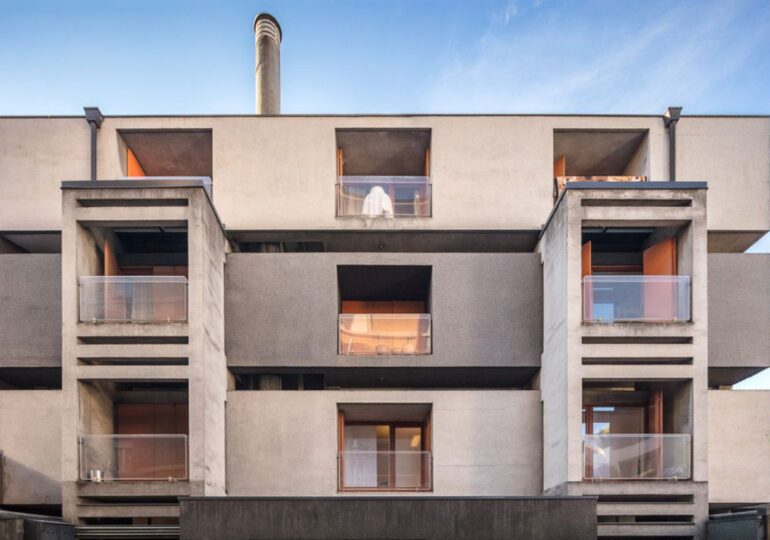
Talking about architecture of the 70s means entering a complex, stratified territory, anything but nostalgic. It is a decade in which the project is not limited to responding to the functional needs of living, but becomes a terrain of cultural clash: energy crisis, technological revolution, birth of postmodernism, radical Italian experiments, global urban expansion, new forms of prefabrication, plastic materials and a different idea of ??formal freedom.
The 1970s are the last moment in which architecture had the strength to be “visionary” without the mediation of digital. It is a decade in which architecture attempts to change the world while changing itself: from the megastructures imagined by Italian radicals to the brutalist towers of Northern Europe, from the first high-tech gestures of Renzo Piano and Richard Rogers up to Japanese metabolist utopias.
These are years in which everything moves simultaneously: ideologies, materials, cities, languages. Yet, today – in the heart of the 1920s – those forms, those tensions and those atmospheres are returning. Not as an aesthetic revival, but as an archive of principles: rigor, material sincerity, typological research, experimental courage. 70s architecture is not a trend: it is a lens. And, like all lenses, it serves to better understand the present.
The movements and languages that defined the architecture of the 70s
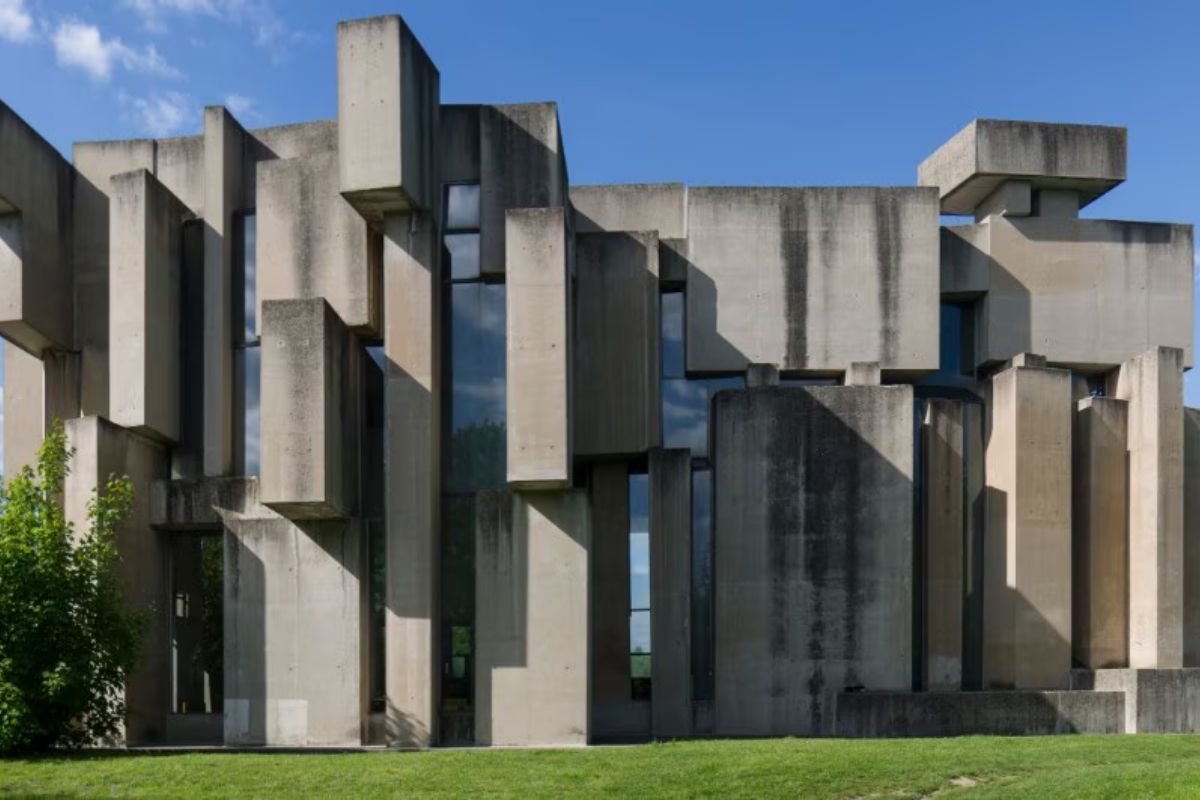
The 70s are not a single style, but a field of forces. Maps of that decade show intersecting lines: brutalism, nascent postmodernism, emerging high-tech, Japanese metabolists, Italian radicals. It is a heterogeneous landscape, apparently contradictory, but animated by a common question: what should architecture be in a world that changes at an accelerating pace?
The power of the 1970s lies precisely in this: in the absence of a single direction and in the presence, instead, of many trajectories that we recognize as fundamental today.
Brutalism: the truth of the material as a political act
The brutalism of the 70s is not just exposed concrete: it is an ethical statement.
In Europe, especially in the United Kingdom and the Scandinavian countries, it becomes a language capable of conveying constructive sincerity and trust in the public dimension of architecture.
The material is not disguised, but exhibited; the structure is not hidden, but made part of the form. It is an architecture that rejects ornamentation and embraces urban complexity, often with projects intended for universities, libraries, residential complexes and civic spaces.
The postmodern that is born: architecture as a language
At the same time, Postmodernism appears in Italy and the United States.
The 1970s were his incubation: the first projects described an architecture that returned to dialogue with history, with archetypal forms, with symbolism and with an idea of ??the city that no longer wanted to be a tabula rasa.
It is the season in which a new architectural vocabulary is formed which will explode in the 1980s, but which has its roots right here.
High-Tech: lightness as a revolution
Whilein Europe the massive forms of brutalism are consolidated, another current takes its first steps: High-Tech.
Iconic is 1977, when Renzo Piano and Richard Rogers complete the Center Pompidou in Paris. It is a manifesto, not a building: an architecture that brings its structure outside, transforming technical systems and pipes into expressive elements.
In the 1970s, High-Tech was a disruptive gesture: it reinterpreted technology not as an industrial mechanism, but as aesthetics.
Japanese Metabolism: cities that grow like organisms
The Japanese architects of the 60s and 70s – Kurokawa, Kikutake, Tange – proposed a radical idea: modular buildings, expandable organisms, architecture designed to be updated over time.
Metabolism is the Asian response to urban growth and density: a reflection that anticipates very current themes such as modularity, flexibility, resilience of spaces.
The iconic Nakagin Capsule Tower (1972) is the most famous example: a building that today we see as futuristic and melancholy at the same time.
Italian Radical Architecture: utopia as a project
If there is one movement that truly defines the 1970s, it is Italian Radical Architecture.
Superstudio, Archizoom, UFO, 9999: groups that reject the idea of ??architecture as construction and transform it into a manifesto, vision, political narrative.
Their imaginary megastructures, conceptual collages, the idea of a world without objects are anything but utopian fantasies: they are ferocious criticisms of consumer society, anticipations of contemporary visual culture, theoretical seeds that we find today in the research of major international studios.
The radicalism of the 70s does not build buildings, but builds ideas. And that’s why it’s still so relevant.
Materials, techniques and innovations that defined the architecture of the 70s
The 1970s did not introduce a single symbolic material, but a constellation of innovations that radically changed the way of building and perceiving spaces. It is a decade suspended between heaviness and lightness: on the one hand reinforced concrete and industrial prefabrication, on the other the explosion of plastics, synthetic materials, lightweight panels, shiny surfaces and polymers.
Unlike the 1960s – dominated by the utopian enthusiasm of modernity – the 1970s are more ambivalent. The energy crisis of 1973 and the unstable political climate lead many architects to question the relationship between resources, cities and construction. And the materials become the first answer to these questions.
Concrete as a language, not as a neutral material
Reinforced concrete in the 1970s was no longer just a structural material: it became an aesthetic language.
In European and South American brutalism, the idea of ??”honest” concrete was established, left exposed, with the texture of formwork, with wrinkled, full-bodied, expressive surfaces.
It is the era of large sculpted volumes, monumental partitions, full fronts.
It is the last historical moment in which a heavy material manages to convey concepts such as transparency, truth, democracyacy of public spaces.
Prefabrication and modules: the push towards faster architecture
The 1970s were also the season in which prefabrication entered architectural design not as an economic choice, but as typological research.
In Europe and Japan the following are being tested:
-
modular panels
-
quick coupling systems
-
replaceable housing modules
-
structural frames that allow internal flexibility
The Japanese metabolist dream replaceable capsules, cities that grow in parts is also echoed in the Western world, which seeks faster and more controllable solutions for urban growth.
Plastics and polymers: the lightness revolution
Plastics, already protagonists of design in the 1960s, exploded as architectural materials in the 1970s.
They spread:
-
polycarbonate panels
-
geodesic domes in plastic materials
-
lightweight membranes
-
colored and reflective surfaces
It is not a pop aesthetic: it is a new idea of architecture as a light system , easily transportable, dismantled, transformable.
Buckminster Fuller, geodesics, American experimental studies and the first tensile structures mark an epochal transition: architecture does not necessarily have to be heavy to be significant.
Glass, metal and transparencies: the dawn of High-Tech
If concrete represents the “earthly” dimension of the 70s, glass and metal embody the tension towards a new technological future.
The Center Pompidou of Piano & Rogers (1977) is the most evident gesture: colored tubes, structures brought outside, transparent skins that reveal the mechanical complexity of the building.
It is a revolution that was born in the 70s, even if it exploded in the 80s and 90s.
It is the beginning of architecture as a flexible machine, as a dynamic device.
Colors and interior surfaces: the visual culture of the decade
Inside buildings, the 70s brought a new aesthetic made of:
-
warm color scales (ochre, rust, burgundy, deep greens)
-
shiny surfaces and solid colors
-
synthetic boiseries and technical materials
-
soft textures, velvets, graphic patterns
It is an aesthetic that returns forcefully today, reinterpreted in a contemporary key.
Not as nostalgia, but as a response to the desire for warmer, more material, deeper environments.
The iconic works of architecture of the 70s
The 1970s were not a decade of half measures: every important building was a gesture, an affirmation of identity, a stance on the city and on the way of life. In an era marked by an energy crisis, tensionslitics and social transformations, architecture responds with powerful, courageous, often polarizing forms.
These are not “icons” in the aesthetic sense: they are cardinal points in the history of the project.
Works that still speak to the present today, and which continue to inspire architects, designers and scholars.
Center Pompidou, Paris (1977) Piano & Rogers
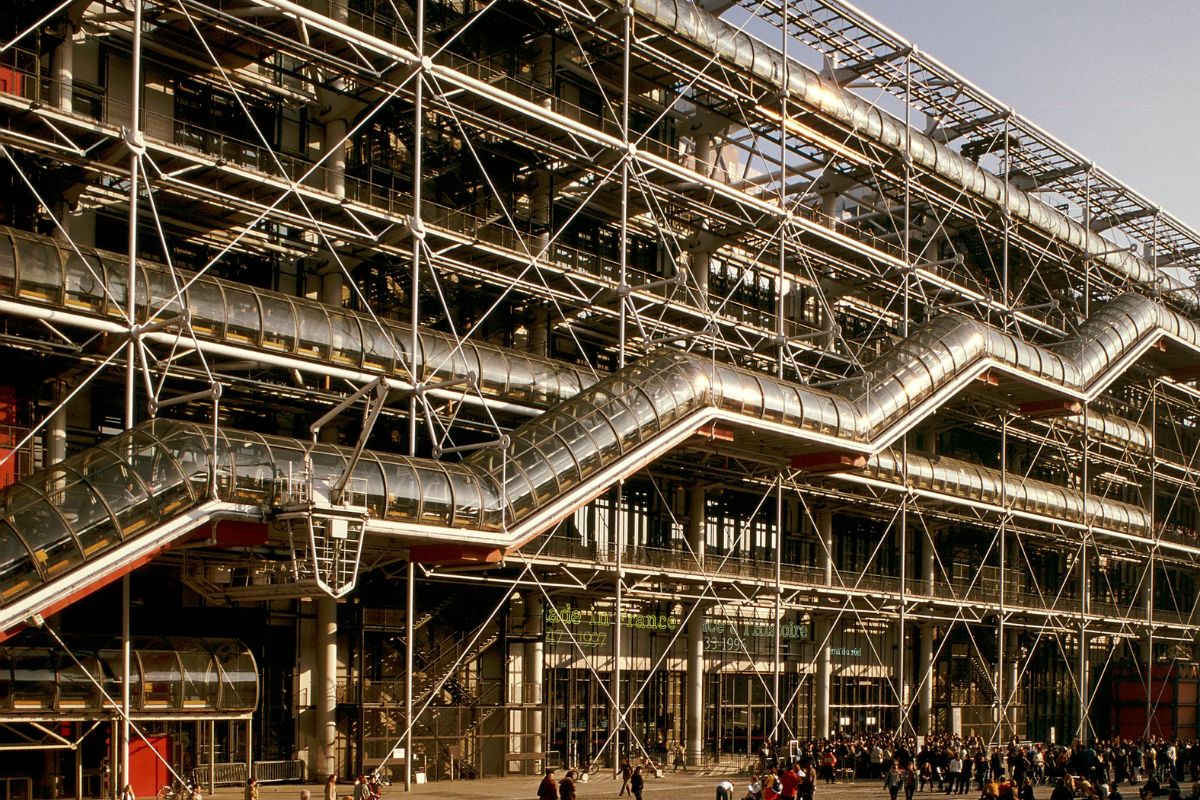
The Center Pompidou is the turning point of contemporary architecture.
His language – exposed structure, colored systems, transparent skins – was not created to amaze, but to overturn the relationship between building and city.
The museum becomes an urban machine, a public square, an open organism.
It is a political and poetic statement at the same time: culture is not a closed temple, but a democratic space.
Nakagin Capsule Tower, Tokyo (1972) Kisho Kurokawa
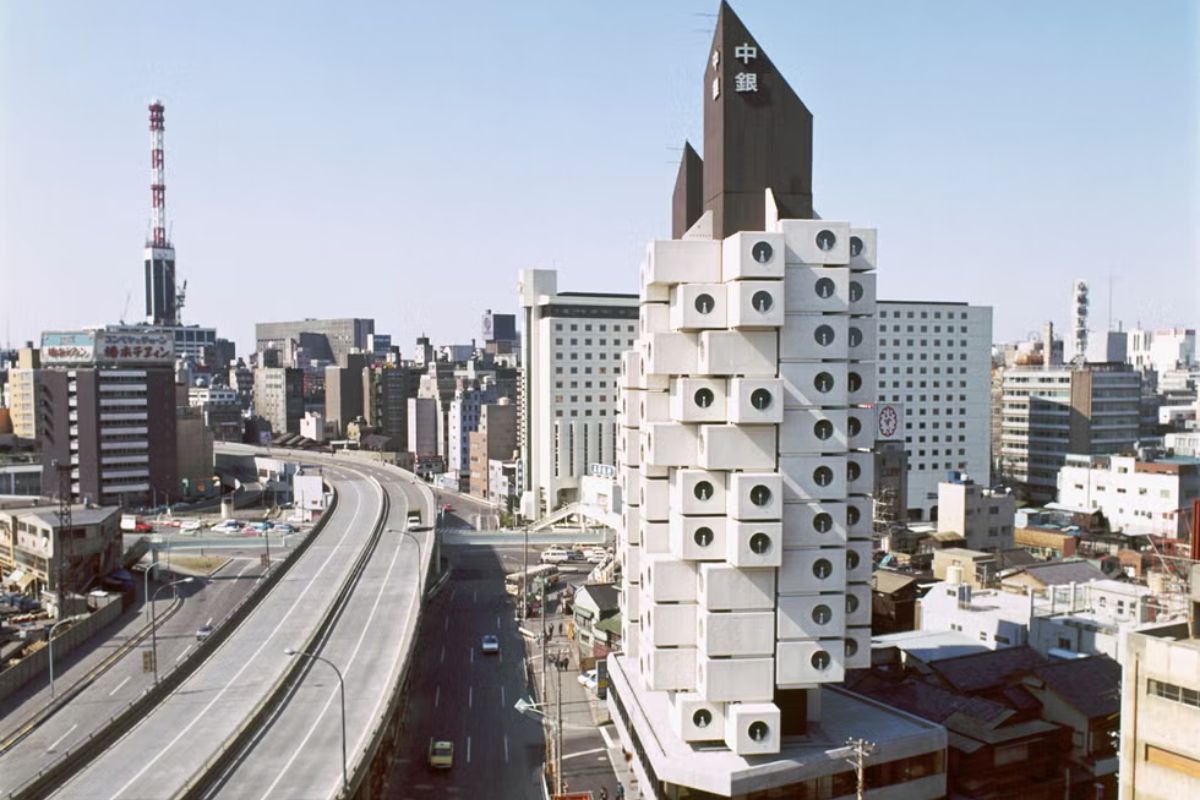
The most visionary building of the 1970s is neither a skyscraper nor a monument, but a modular organism.
Each capsule is an independent living unit, designed to be removed, updated, replaced.
It is the manifesto of Japanese Metabolism , the current that imagines the city as a living entity.
Today the Tower no longer exists, but its cultural impact is enormous: it anticipated themes such as modularity, sustainability, optimization of spaces – still relevant in contemporary micro-architectures.
Habitat 67 (1970s phase), Montreal Moshe Safdie
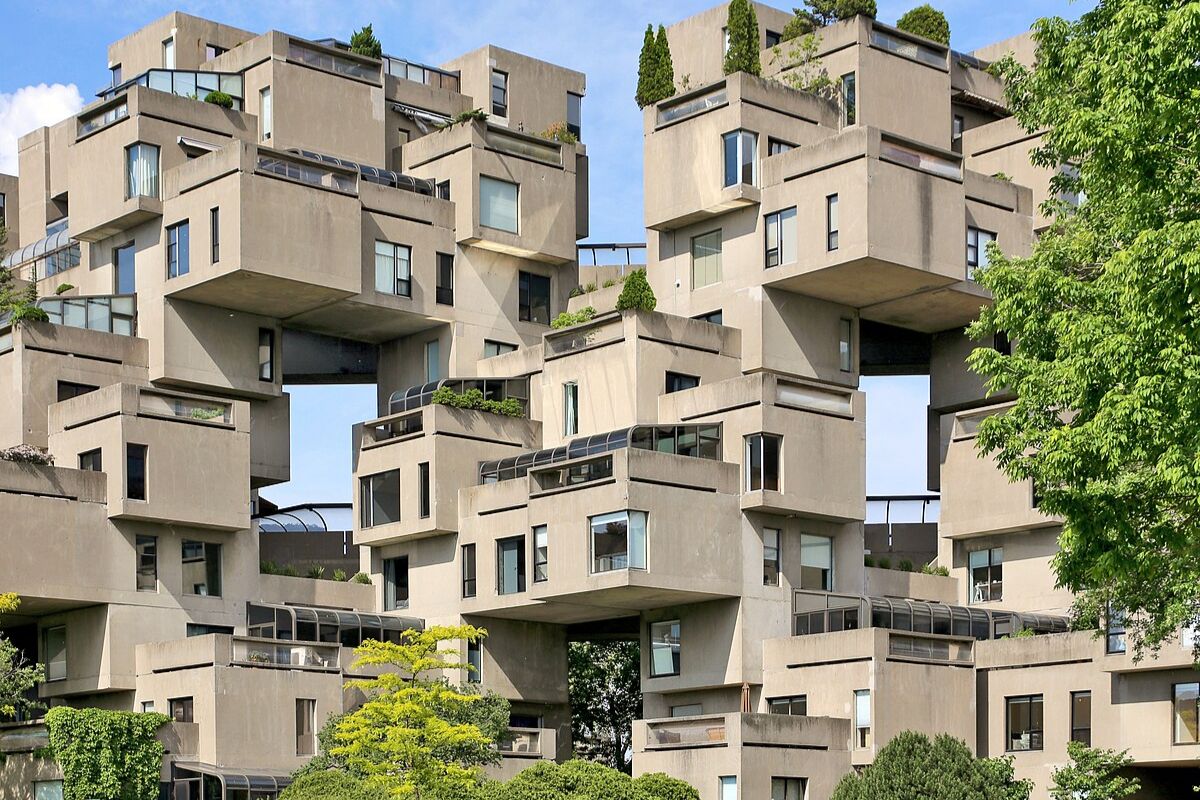
Born for Expo ’67 and further developed in the 1970s, Habitat is one of the boldest projects in the history of residential architecture.
Stacked modular blocks, suspended gardens, units each different from the other: a vertical city that questions the monotony of post-war public housing.
It is a habitable utopia, still studied today in universities around the world.
Torre Velasca, Milan BBPR (continuity 1960s1970s, cultural role)
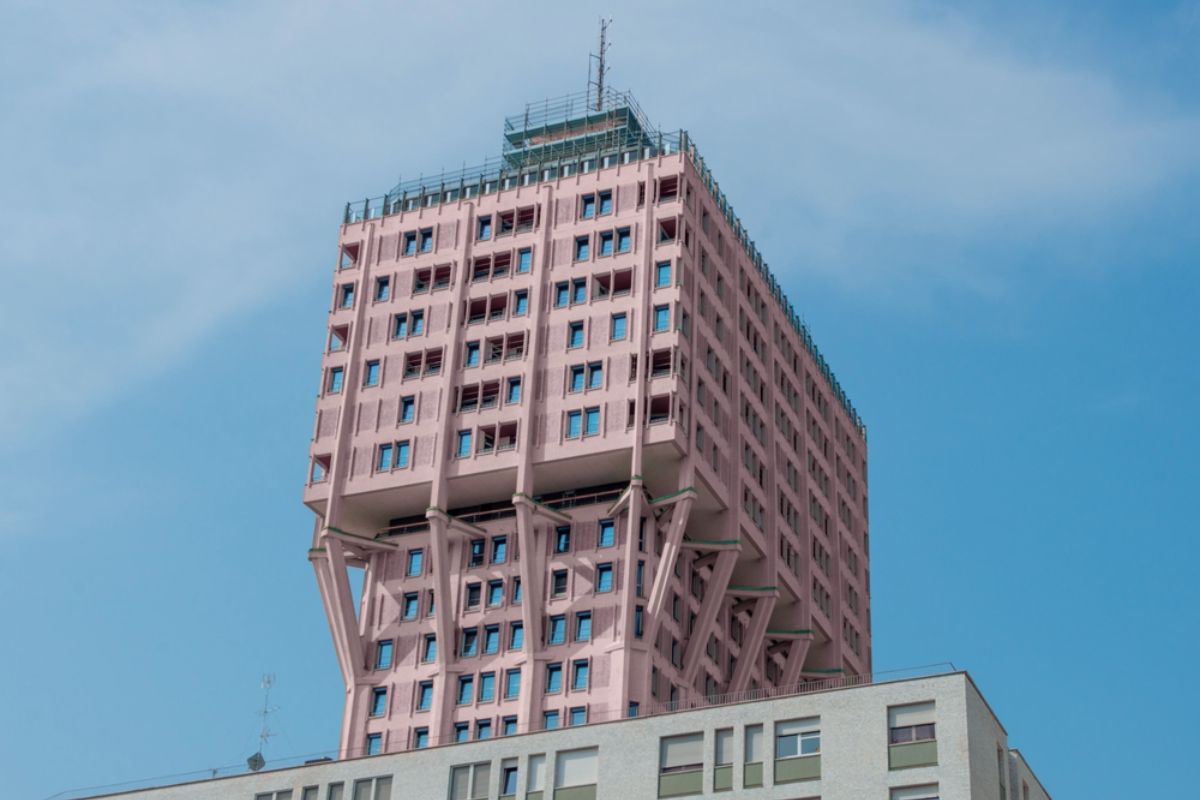
Although completed in 1958, the Torre Velasca found its cultural consecration in the 1970s. In that decade it became a symbol of Milanese resistance to the modernist tabula rasa and of the idea that the city can evolve without losing its memory.
La Velasca is, in an architectural sense, more 70s than 50s: courageous, rough, with an identity.
The National Library of Buenos Aires (19711976) Clorindo Testa
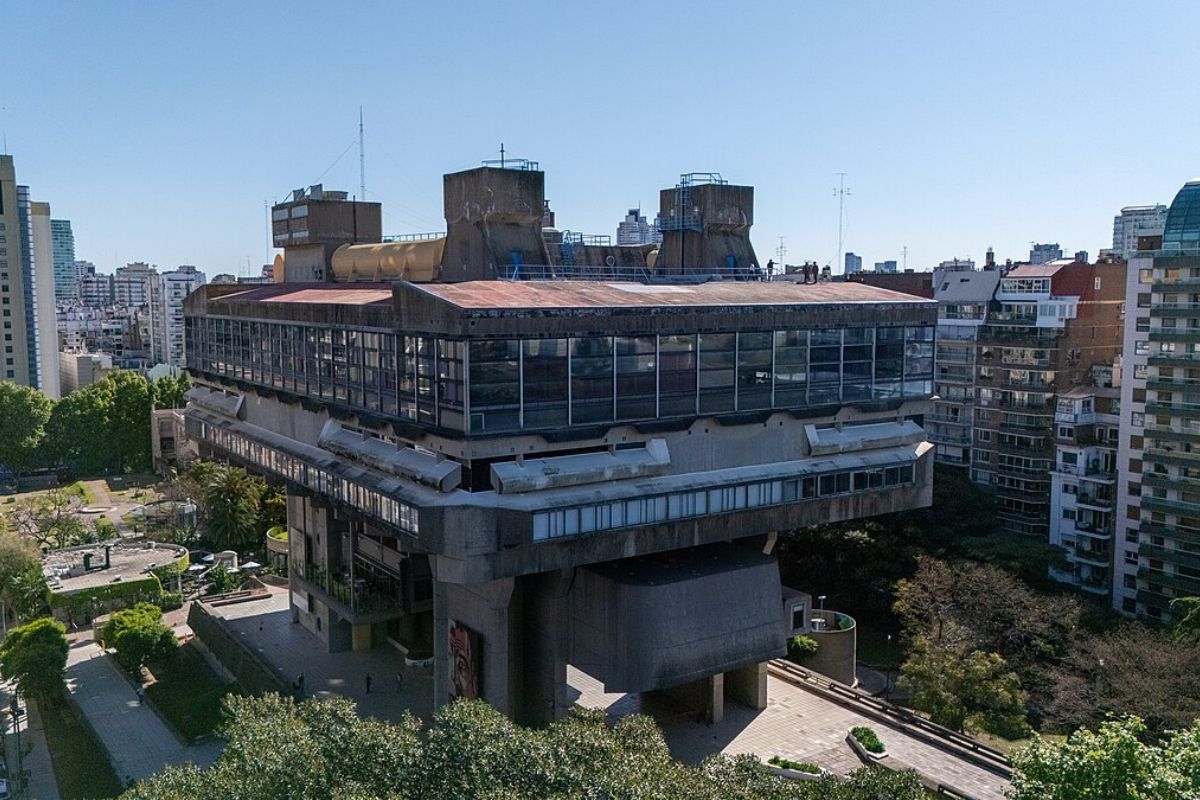
A suspended monolith, a brutalist organism that seems to levitate over the city.
Clorindo Testa does not build a library: he builds a mental landscape.
Heavy volumes, exaggerated passatellis, geometric and unsettling internal spaces.
It is one of the most radical symbols of South American brutalism.
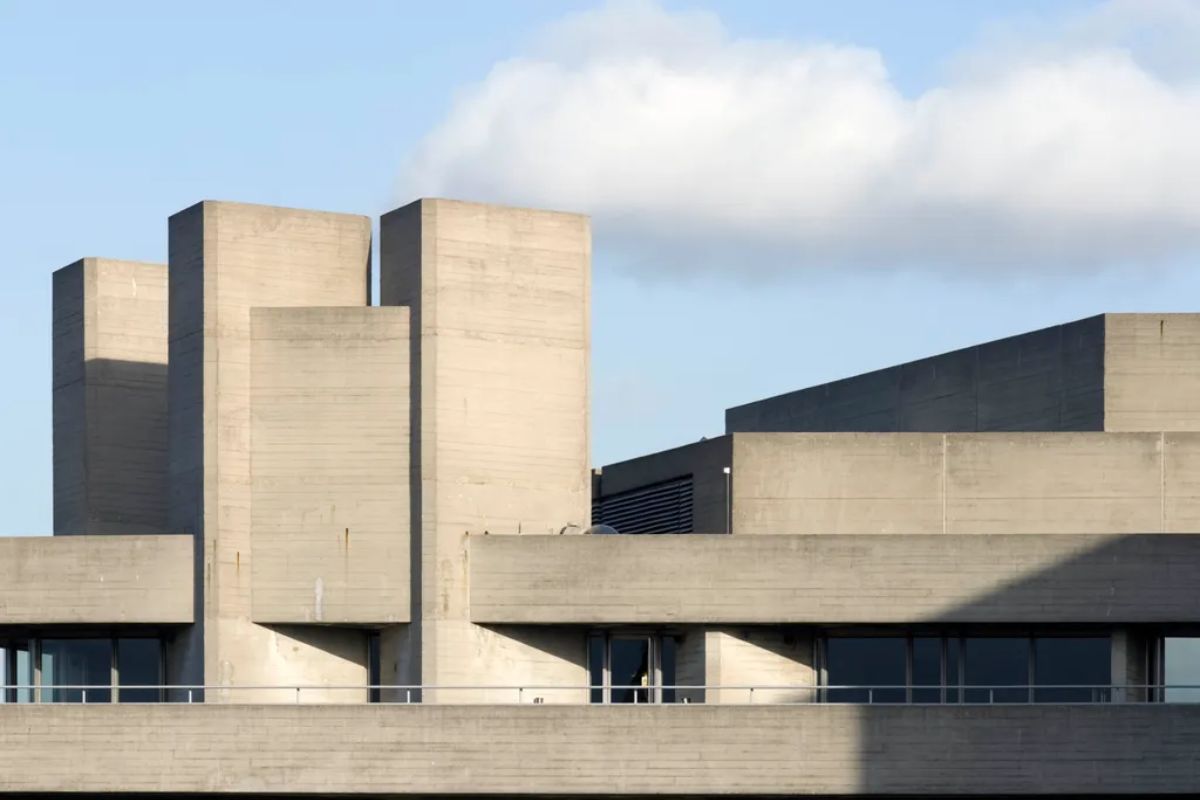
National Theatre, London (1976) Denys Lasdun
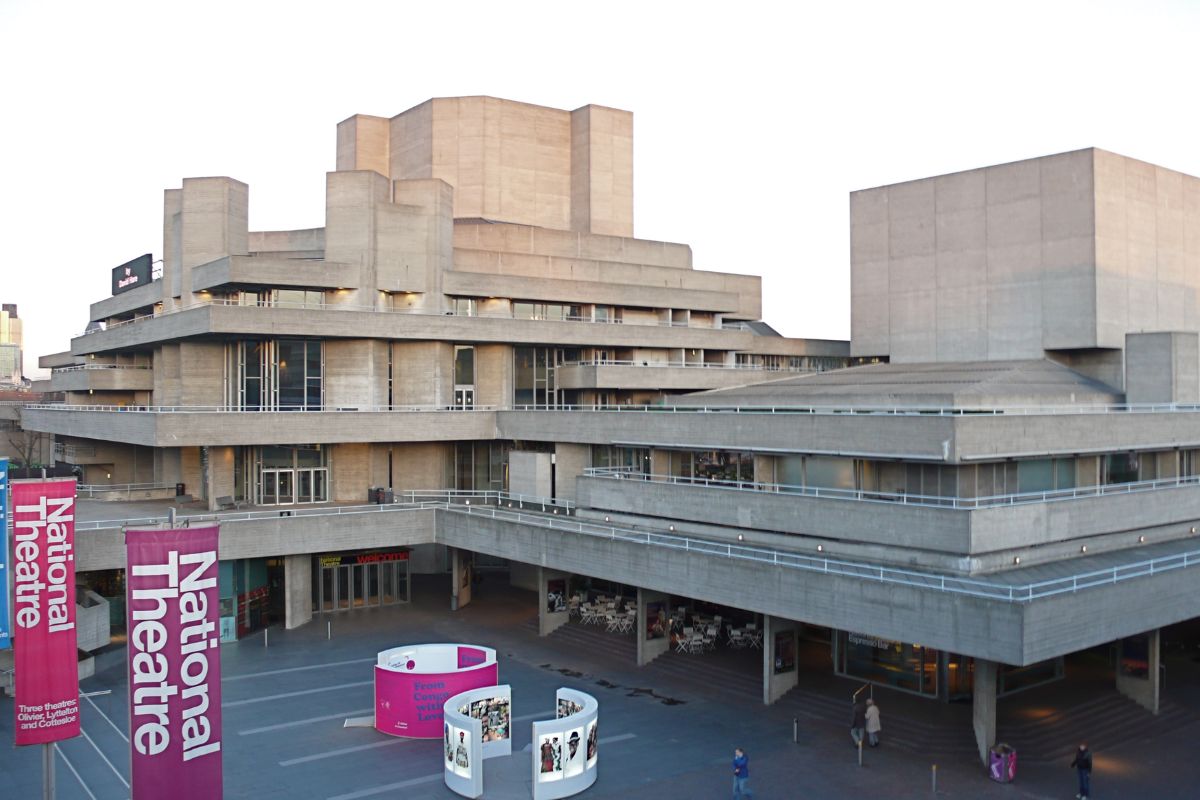
Few buildings have polarized public opinion like the National Theatre.
It is massive, multifaceted, angular, almost hostile. Yet, it is precisely in this hardness that its elegance liesa: the ability to transform concrete into architectural scenography.
Today it is considered a masterpiece of English brutalism.
Seattle Kingdome (1976) NBBJ (demolished)
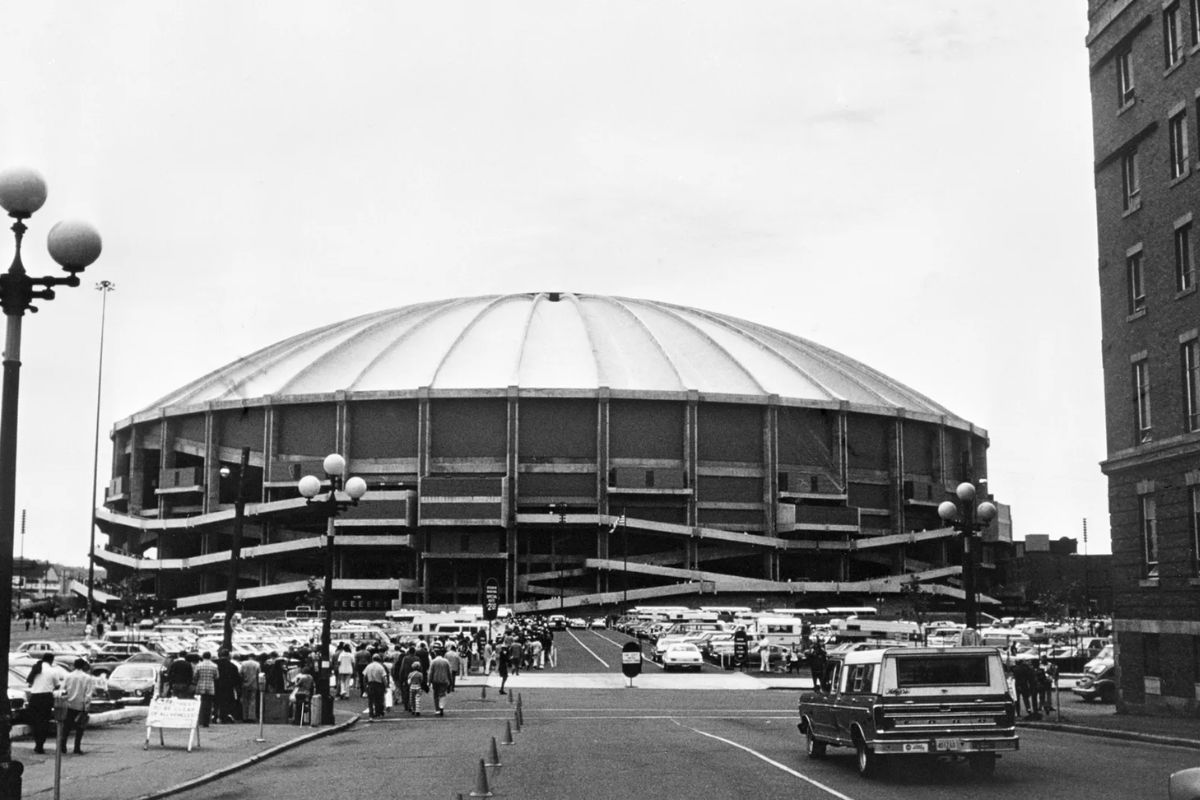
With its prestressed concrete dome, the Kingdome represents one of the largest structural experiments of the decade.
It was not a “beautiful” building according to traditional standards, but it was an extraordinary engineering machine, capable of hosting tens of thousands of people under a single large span.
It is the symbol of how the 1970s pushed the limits of structural technology.
Monumental Complex of Gibellina Nuova (1970s1980s) Ludovico Quaroni, Pietro Consagra & co
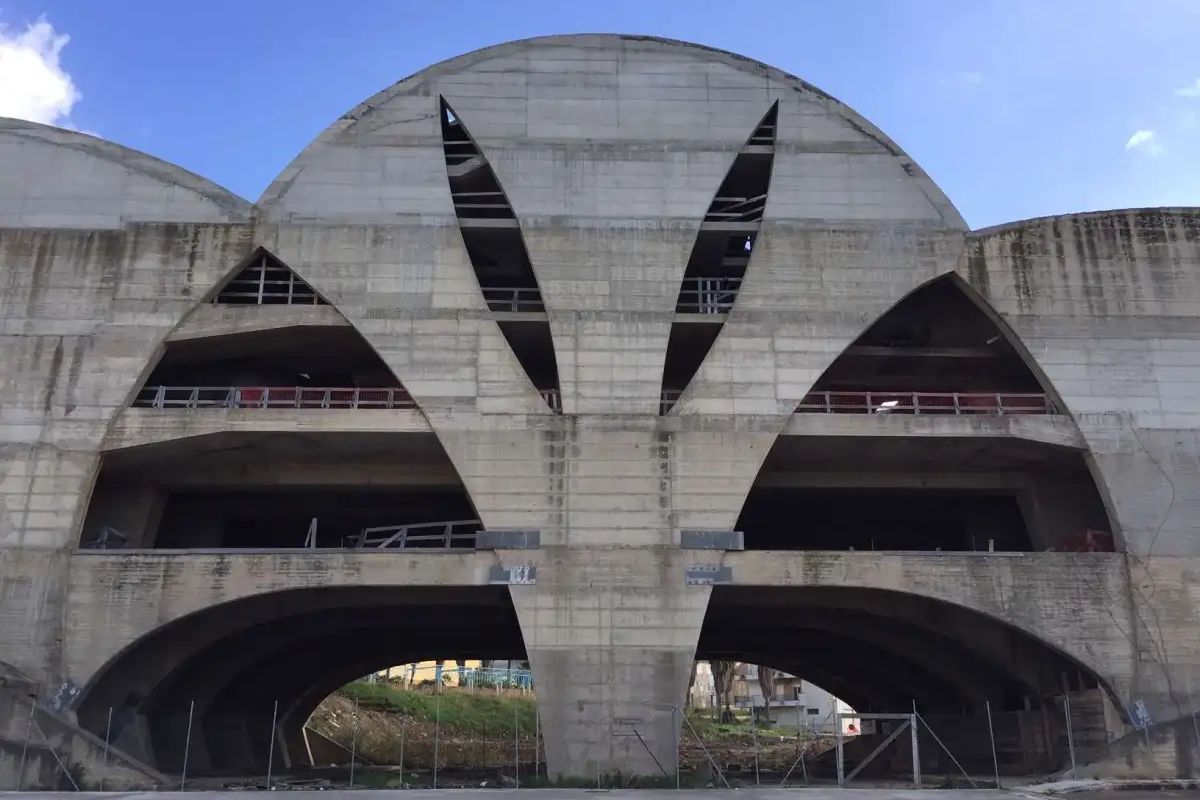
After the Belice earthquake (1968), Gibellina became the most ambitious urban laboratory of the time.
Artists, architects, urban planners create a landscape that mixes visionary architecture, public art and social experimentation.
A unique case in the world panorama, still the subject of critical studies today.
Quartiere Gallaratese 2, Milan (19701974) Aldo Rossi and Carlo Aymonino
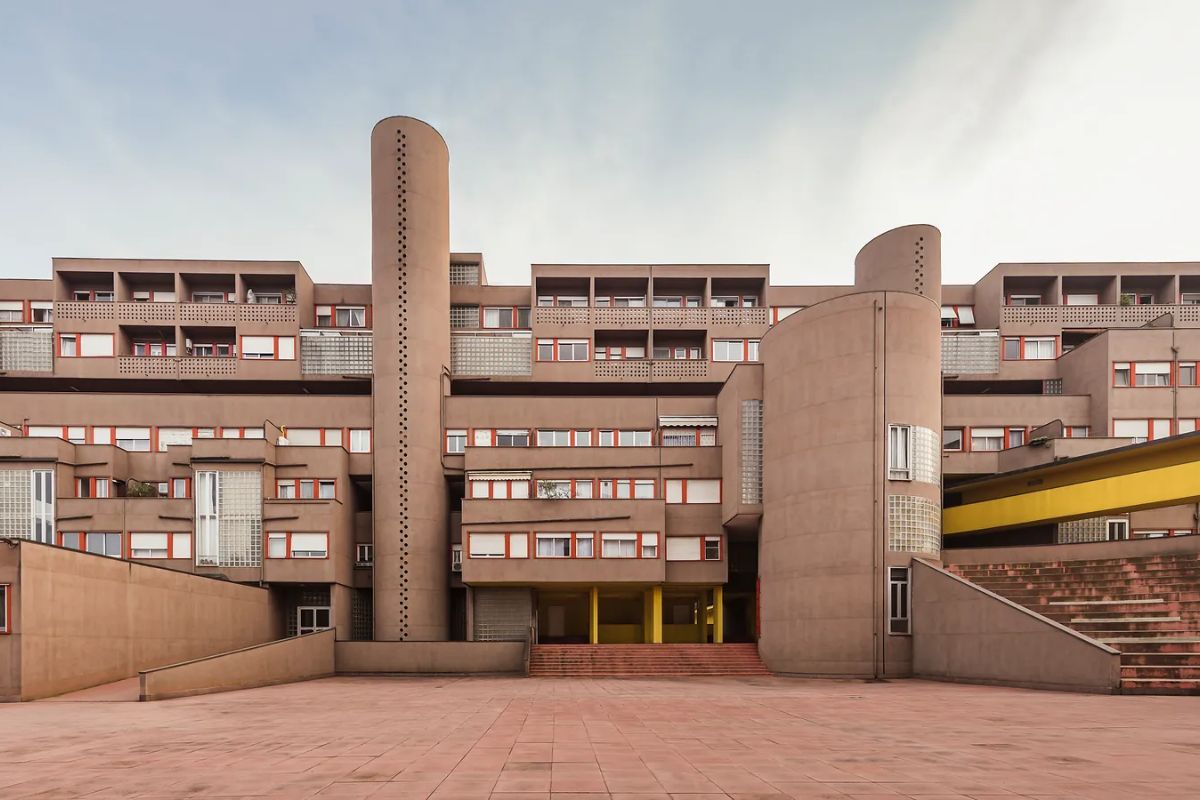
A masterful dialogue between building types, public spaces, urban memory and compositional research.
The Gallaratese is the most cultured Italian response to the crisis of the modern city:
it does not propose easy solutions, but a profound reflection on the relationship between architecture, living and urban form. It is one of the most studied Italian works in the world.
Why the architecture of the 70s continues to speak to us today
The 1970s keep coming back not because they are “fashionable”, but because they asked questions that we haven’t stopped asking ourselves yet. Every time society goes through a moment of uncertainty – economic, climatic, technological – the dialogue with that complex, harsh, visionary decade reopens. And it is precisely in this ambivalence that his strength lies.
The architecture of the 70s speaks to us because it was born from a conflict: between utopia and reality, between technique and identity, between vision and limit. It is an architecture that does not seek to please, but to understand. Which doesn’t simplify, but layers. Which doesn’t anesthetize, but provokes. And this tension is dramatically relevant today.
Because it speaks to us of sincerity
Brutalism reminds us of the truth of the material in an era in which everything risks becoming an image. In a world dominated by light surfaces, perfect renderings, glossy architecture, that rough and imperfect materiality brings substance back to the centre.
The 70s teach us that beauty can also be uncomfortable, honest, unpolished.
Because it talks to us about mental freedom
Italian radicalism, with its collages, its continuous cities, its impossible utopias, gives us a rare quality: the right to think without constraints.
Today, as design is increasingly constrained by budgets, protocols and algorithms, the radical visions of the 1970s return as a reminder:
architecture is first and foremost imagination.
Why does d. speak to us?i flexibility
Japanese metabolism and modular utopias suddenly seem contemporary to us. Today, when we talk about transformable houses, fluid spaces, sustainable micro-architectures, it is clear how much the 70s were an anticipatory laboratory.
Nakagin was not an excess: she was a prototype of our present.
Because it tells us about urban complexity
The postmodernism that was born in the 1970s is not a game of styles, but a reflection on the city as a stratified organism.
Today, while we discuss urban regeneration, the identity of places, collective memory, that research becomes indispensable.
Because it speaks to us about courage
The 70s were not afraid of courage. They were not afraid of error. They weren’t chasing consensus.
These were decades in which architecture still had the ambition of saying something about the world – not simply reflecting its trends.
And this is perhaps what we lack most today: the project’s ability to be a cultural stance.
Because our time is similar to theirs
Energy crisis, work transformations, technological revolutions, new materials, urban models in search of balance: the 70s and 20s of the 21st century are closer than we think. This is why that architecture continues to speak to us: because it also speaks about us .
Leave a comment