The German industrial designer Dieter Rams (1932) is considered one of the most influential of the 20th century. Historic head of design of Braun and author of the famous manifesto of the 10 principles of good design , Rams revolutionized the concept of industrial design, leaving a timeless imprint. His works defined the modern minimalist style, influencing entire generations of designers and iconic brands such as Apple .
Who is Dieter Rams?
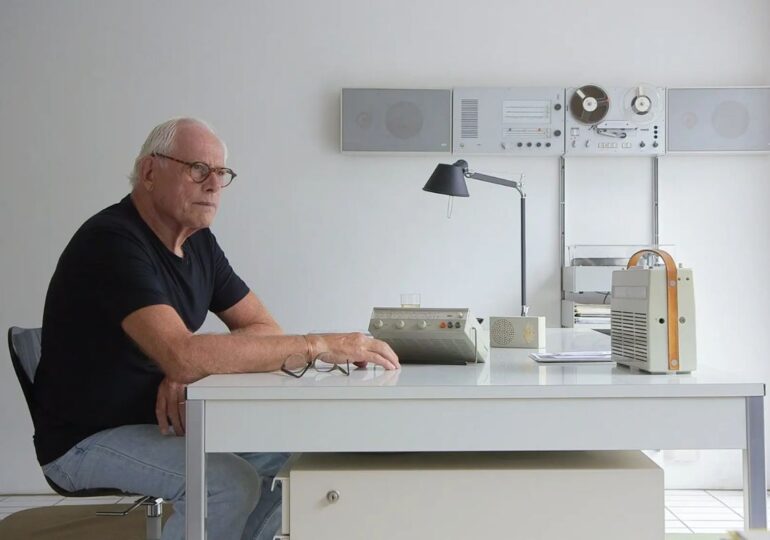
Born in Wiesbaden, Germany, in 1932, Dieter Rams led the design department at Braun from the 1950s until the early 1990s. In that period he designed objects that have become icons of a new language: the Braun T3 radio, the Atelier stereo system, the Sixtant electric razor . Products essential in form but innovative in function, capable of redefining the canons of industrial design.
Rams’ influence on Apple and Jonathan Ive
One of the most fascinating aspects of Rams’ legacy is his direct influence on Jonathan Ive , the historic chief designer of Apple . The iPod, with its clean interface and formal essentiality, is a clear homage to the Braun T3 radio. Rams’ philosophy simplicity, clarity, utility has become an integral part of Apple’s visual identity and continues to guide the design of contemporary technology products.
An ethical and essential design
For Rams, design has never been simple aesthetics, but responsibility . Since the 1950s, in collaboration with the Ulm School , he has developed a design language where form and function coexist with a strong ethical value. Sustainability, respect for resources, reduction of waste: principles that today appear very current, but which Rams had intuited decades in advance.
Dieter Rams’ 10 principles of good design
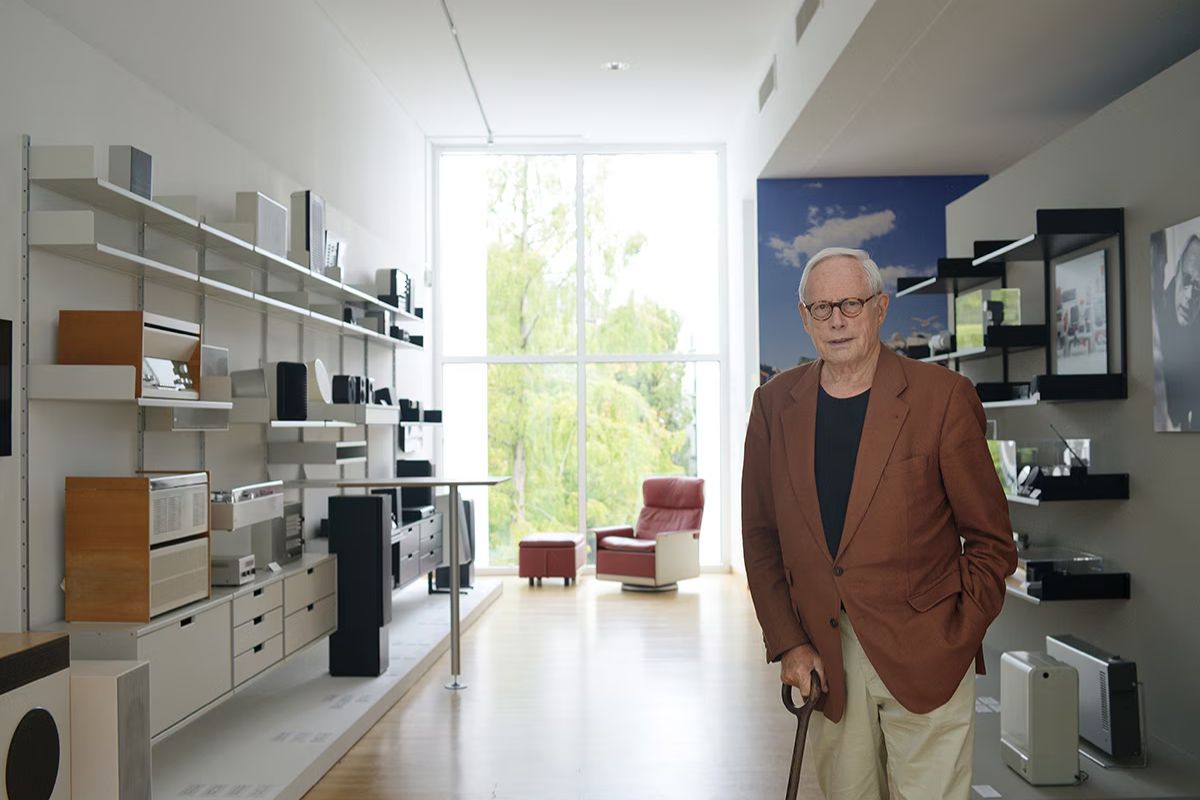
In 1993 the magazine Domus published for the first time the manifesto that consecrated Rams as the undisputed master of minimalism: the Ten principles of good design . More than rules, they are an ethical compass for designers of yesterday and today.
-
Good design is innovative : it leverages technologies to improve lives.
-
Good design makes a product useful : it responds to functional and aesthetic needs.
-
Good design is aesthetic : beauty is an integral part of utility.
-
Good design makes a product understandable : it clarifies functions and structure.
-
Good design is discreet : objects as functional tools, never intrusive.
-
Good design is honest : it does not promise more than it delivers.
-
Good design is long-lasting : it resists time, it does not chase passing trends.
-
Good design is taken care of in detail : nothing is left to chance.
-
Good design is environmentally friendly : it reduces waste andconsumption.
-
Good design is the least possible design : less, but better .
The timeless legacy
Today, Dieter Rams’ legacy is not limited to Braun products or industrial design: his principles are applicable to web design, visual communication, architecture and digital design . Its motto less, but better continues to be a beacon for designers, brands and companies who want to combine functionality, aesthetics and responsibility.
In a world dominated by rapid consumption and planned obsolescence, Rams reminds us that true design must be ethical, essential and sustainable : an invitation to design for the present with an eye towards the future.
Leave a comment